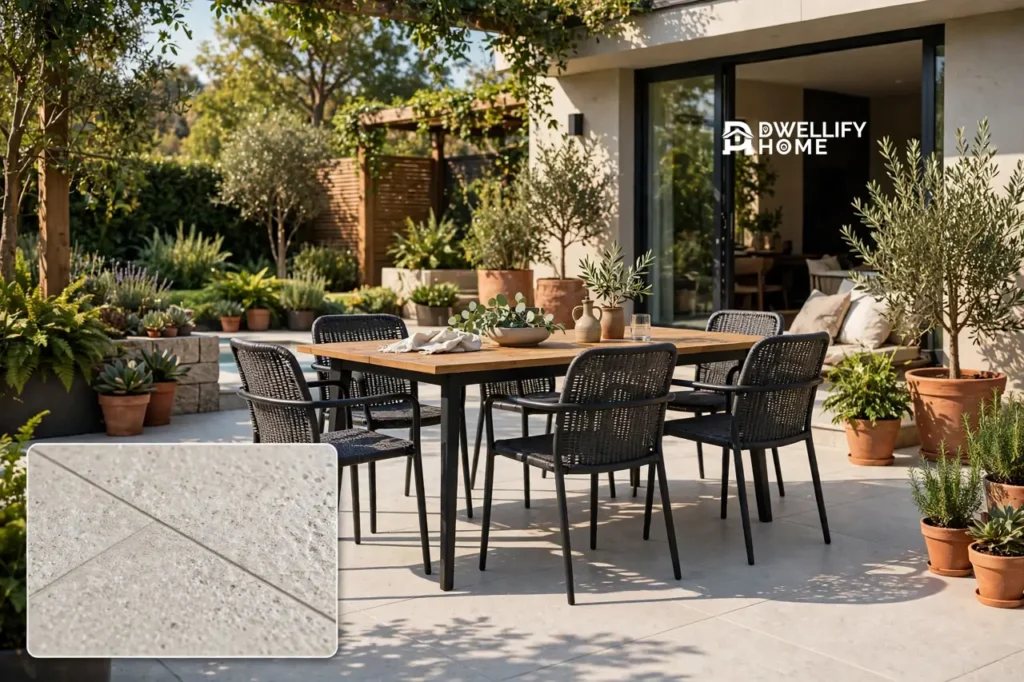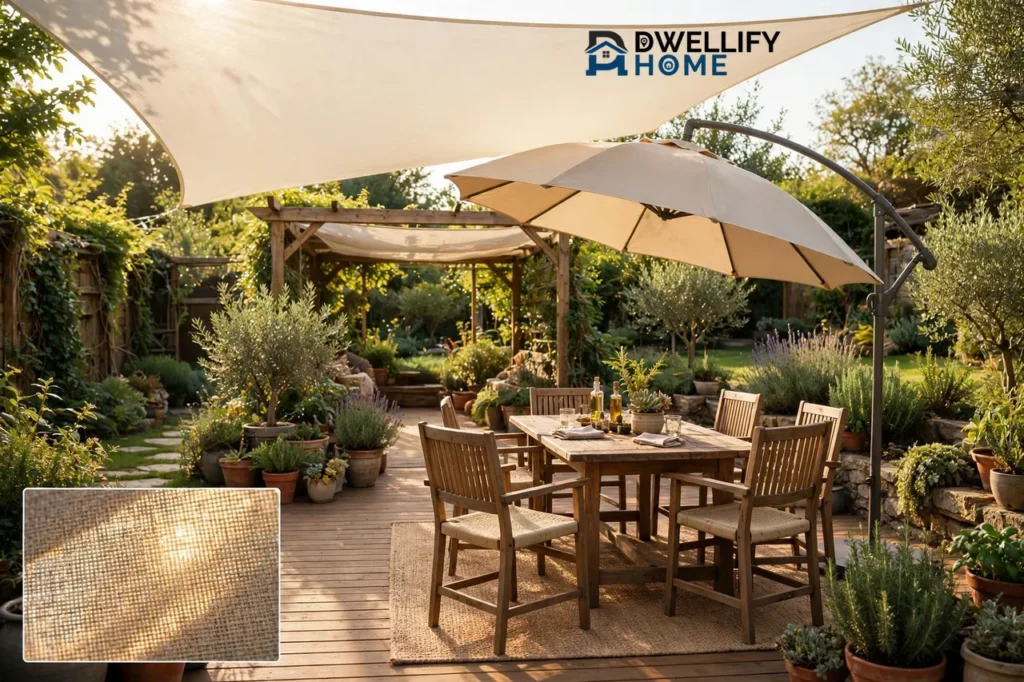
A shade sail or a cantilever umbrella can turn a patio you avoid at noon into the coolest seat in the yard in a single afternoon. Shade does more than feel nice. The U.S. Department of Energy reports that awnings can cut solar heat gain by up to 65% on south-facing windows and 77% on west-facing windows, so blocking the sun outside helps the rooms inside your home stay cooler too.
This guide covers 19 patio shade ideas, from a cheap shade cloth you hang in an hour to a full pergola that lasts for years. You will find sun shade for patio ideas for every budget, ideas for shade in the backyard that renters can use, and simple ways to block the sun from a patio that faces west. Pick the spot you actually sit in, shade that spot first, and your patio becomes a room you use every day.
Start Here: Pick Shade That Fits Your Patio, Not Someone Else’s
Before you buy anything, watch the sun for one day. Check your patio at 9 a.m., at noon, and at 4 p.m., and note which seats sit in full sun at each time. A patio can look well shaded at noon, when the sun sits high, and then turn brutal at 4 p.m. when low sun slides under the edge of a cover. Shade the seats, not the whole slab, and you spend less and stay cooler.
Next, measure the area you sit in, then add 18 to 24 inches on every side so chairs can slide out without leaving the shade. Note your budget, whether you can drill into the house or set posts in concrete, and how windy your yard gets. Renters need freestanding shade, like an umbrella or a pop-up canopy. Check HOA rules before you build.
Finally, think about rain and winter. Most fabric shade blocks sun, not rain, and it must come down or be tied back in a storm.
Shade Sails: Big Coverage for a Small Price
A shade sail is a triangle or rectangle of strong fabric pulled tight between three or four anchor points, like posts, a tree, or the side of your house. It is one of the cheapest ways to cover a large patio, and it looks clean and modern. Good shade sails use HDPE mesh fabric, which blocks up to 95% of UV rays while still letting a breeze pass through, so the air under a sail stays cooler than the air under a solid roof.
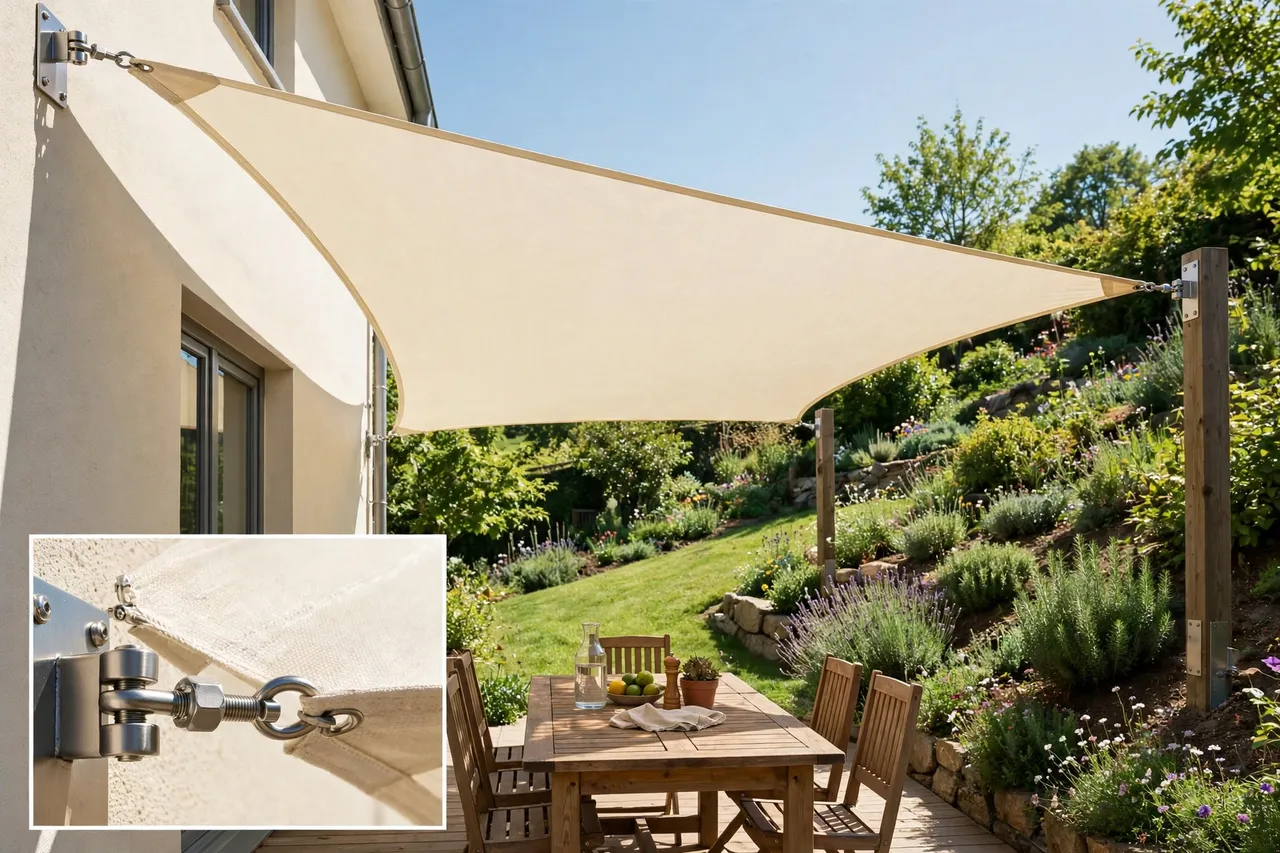
Hang a sail with a clear slope, high on one side and lower on the other, so rain runs off instead of pooling. A flat sail sags, holds water, and tears. Use stainless steel hardware and posts set in concrete, because a sail catches wind like a boat’s sail. Take it down before a big storm. For a big patio, overlap two sails at different heights for wider cover and a layered look. The same idea works over a pool deck, where a sail cools the seating area without a roof; see our swimming pool landscaping ideas for the full layout.
A shade sail suits you if you want lots of shade for little money and you have solid anchor points. It suits you less if your patio is wide open with nowhere to attach it, because posts and hardware add cost fast.
Umbrellas and Cantilever Umbrellas: Shade That Moves With the Sun
A patio umbrella is still the fastest shade you can buy. A table umbrella drops into the hole in your patio table and shades lunch in five minutes. A cantilever umbrella, also called an offset umbrella, hangs its canopy from a curved arm on the side, so no pole blocks the middle of your table or your view. Many models rotate 360 degrees and tilt, so you can follow the sun without moving your chairs.
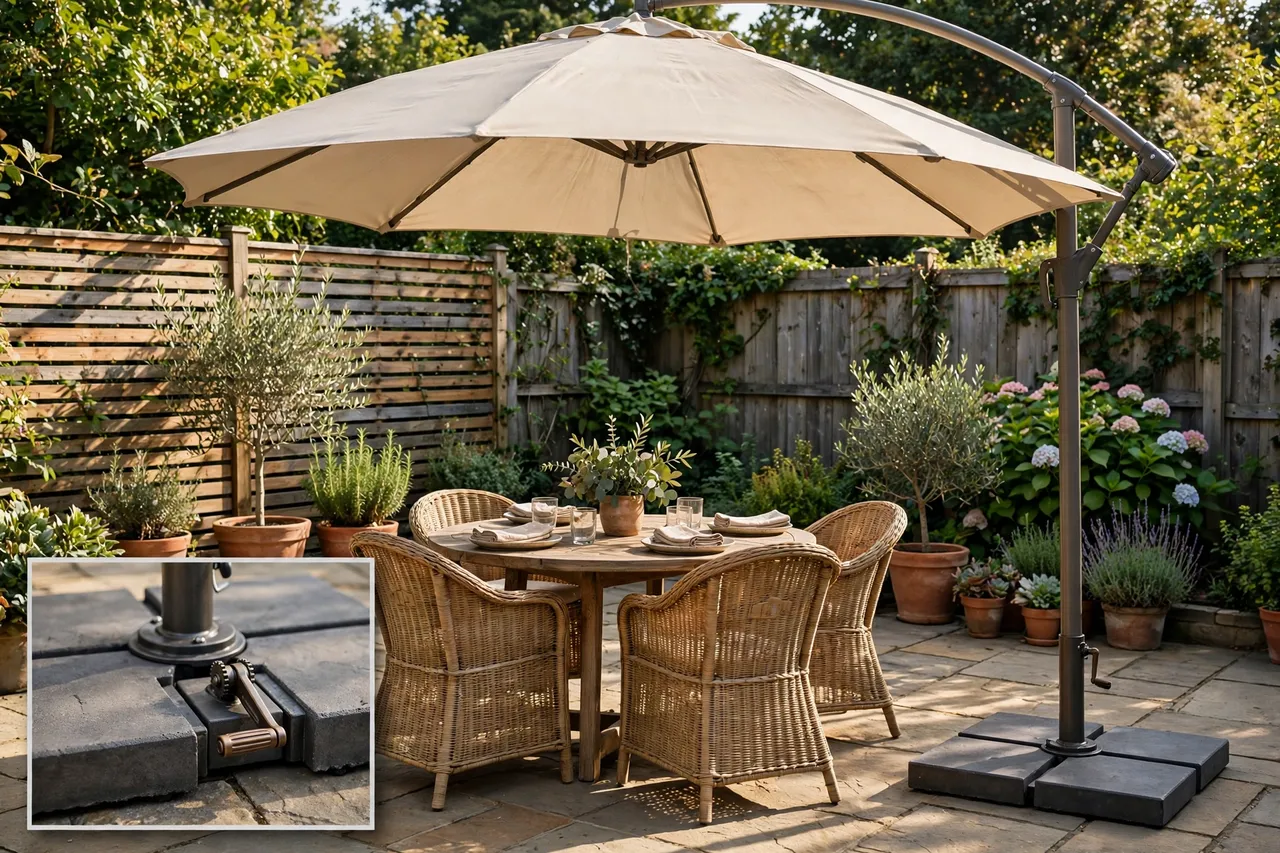
Buy the base first, then the umbrella. A standard 9-foot umbrella needs at least 50 pounds of base weight, and a big cantilever needs more. A light base is the most common reason umbrellas tip over and break. Look for fade-resistant fabric like solution-dyed acrylic, and a crank or tilt handle you can work with one hand. Close any umbrella when the wind picks up and before a storm, and store it dry in winter so the fabric does not grow mold.
Umbrellas are the best pick for small patios, renters, and anyone who wants shade today with no tools. Their weak spot is size. One umbrella shades a table, not a whole patio, so big patios need two, or an umbrella paired with a sail.
Pergolas, Canopies and Awnings: Shade That Stays Up All Season
A pergola is an open frame of posts and beams that gives your patio structure and filtered light. On its own it shades only part of the sun, so most people add a cover: a fabric canopy, shade cloth, or retractable top. That turns a pergola from decoration into real shade, and you can roll the cover back on a mild evening.
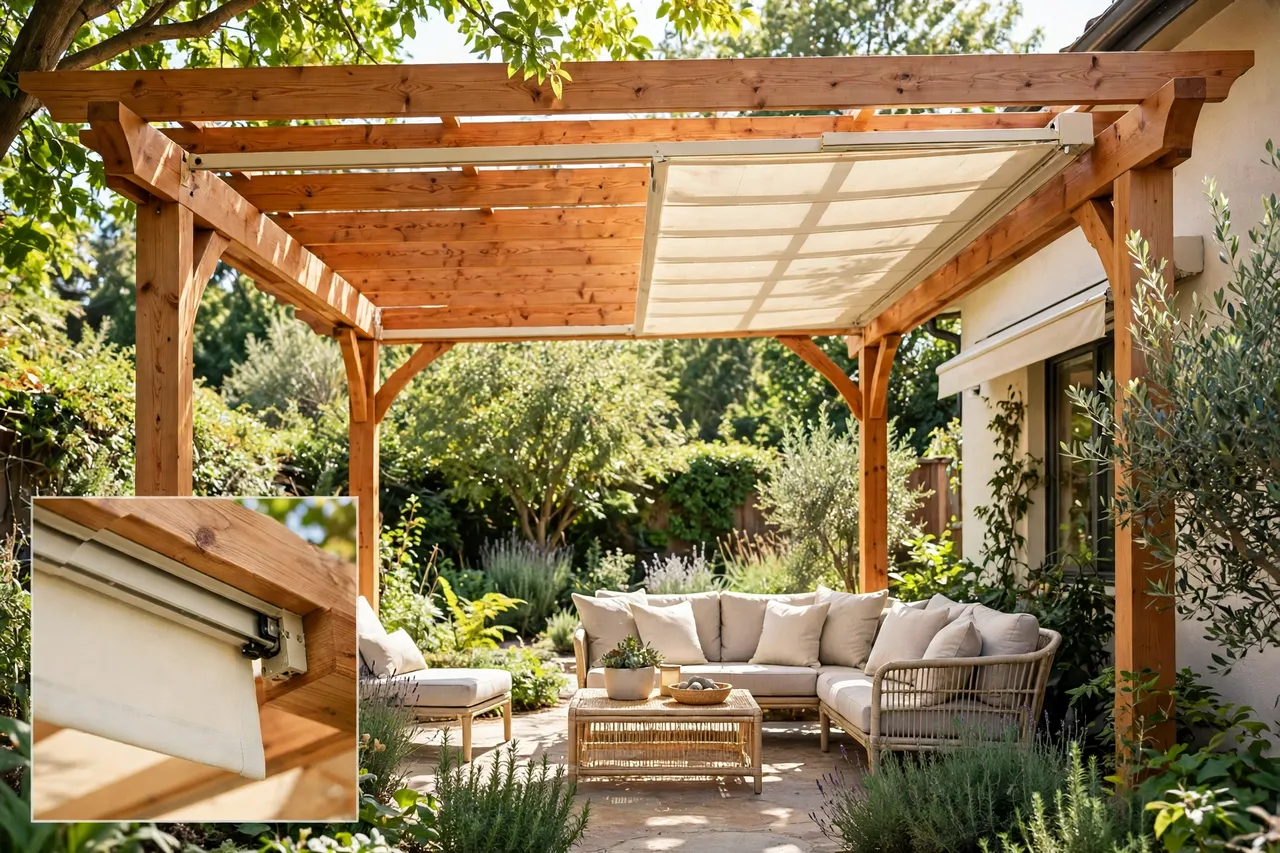
A retractable awning mounts on the wall of your house and rolls out over the patio when you need it. The U.S. Department of Energy lists awnings among the most effective exterior shade, and notes they can reduce solar heat gain by up to 65% on south-facing windows and up to 77% on west-facing windows.
Choose a pergola with a cover if you want shade plus style and you plan to stay in the home for years. A louvered pergola roof, with slats you open and close, gives shade on demand and rain cover when it shuts. Choose a retractable awning if your patio sits right against the house and you want shade on demand with no posts in the way. A fixed patio overhang or a solid patio cover gives the most reliable shade of all, and it also shelters you from rain, but it costs the most and usually needs a pro to build. Check your local building rules before you build anything attached to the house, because permits and HOA approval can apply.
Outdoor Curtains, Screens and Roller Shades: Stop the Low Afternoon Sun
Overhead shade fails at one job: the low sun. At 4 p.m. the sun comes in sideways, under your sail or awning, and straight onto your face. That is when side shade earns its keep. Patio curtains, outdoor roller shades, and exterior screens hang from a pergola beam or a wire and block the sun from the side. They also add privacy, which matters on a small patio close to neighbors.
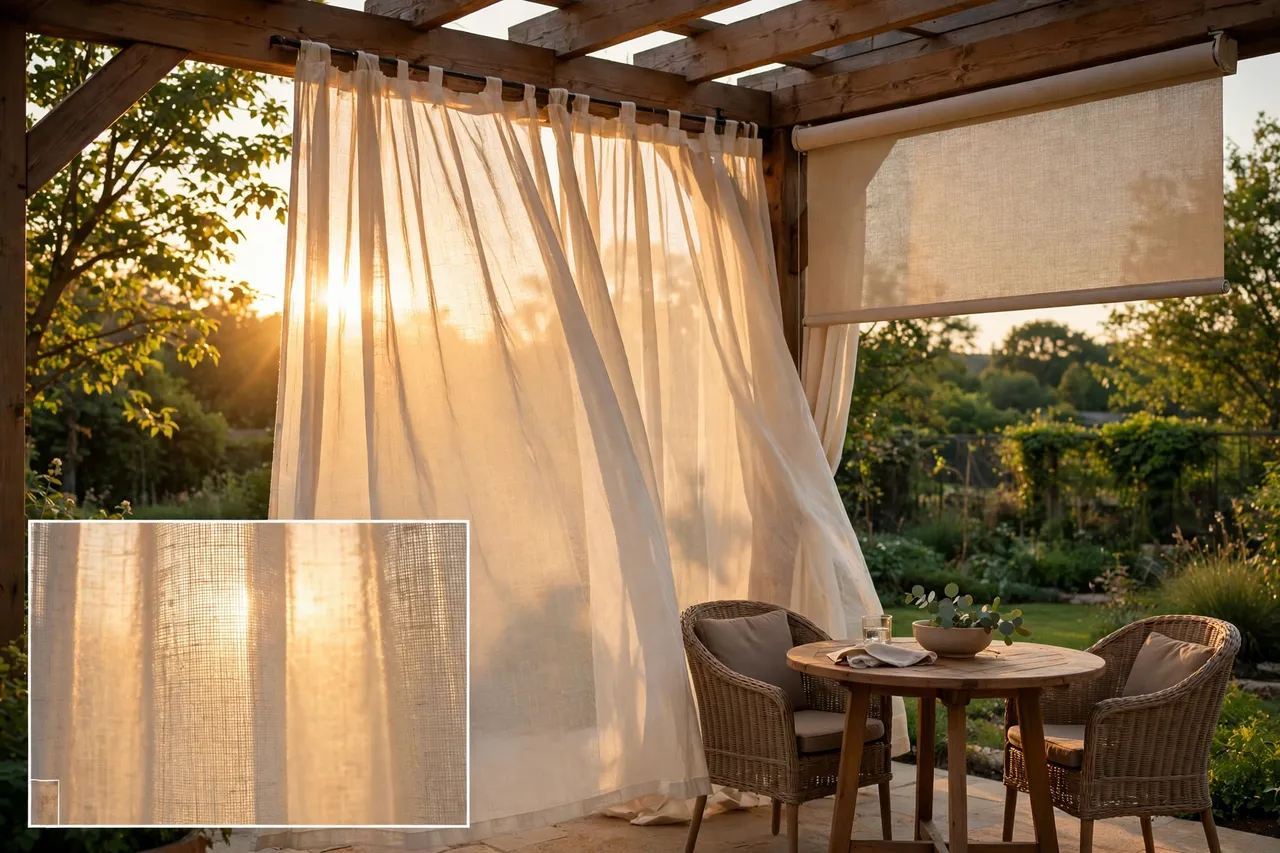
Outdoor curtains work best in soft, flowing fabric that you can tie back when you want the breeze. Roller shades and solar screens work best where the sun hits hardest, usually the west side, because you can roll them down for the hot hours and up again at dinner. Look for outdoor-rated fabric that resists mold and fading, and weigh the bottom hem so the panel does not flap in the wind. Screened patio shades also keep some bugs out, which makes evening meals much more pleasant.
Side shade is a smart add-on, not a starter. Put your overhead shade up first, live with it for a week, and then add curtains or a screen exactly where the low sun still reaches you.
Living Shade: Trees, Vines and Bamboo That Cool the Air
Plants shade a patio in a way fabric cannot: they cool the air itself. The U.S. Department of Energy notes that air temperatures under trees can run as much as 25°F cooler than over nearby blacktop, because leaves block the sun and release moisture into the air. A small tree in a large pot, a vine on a trellis, or a bamboo screen can change how a patio feels on a hot day.
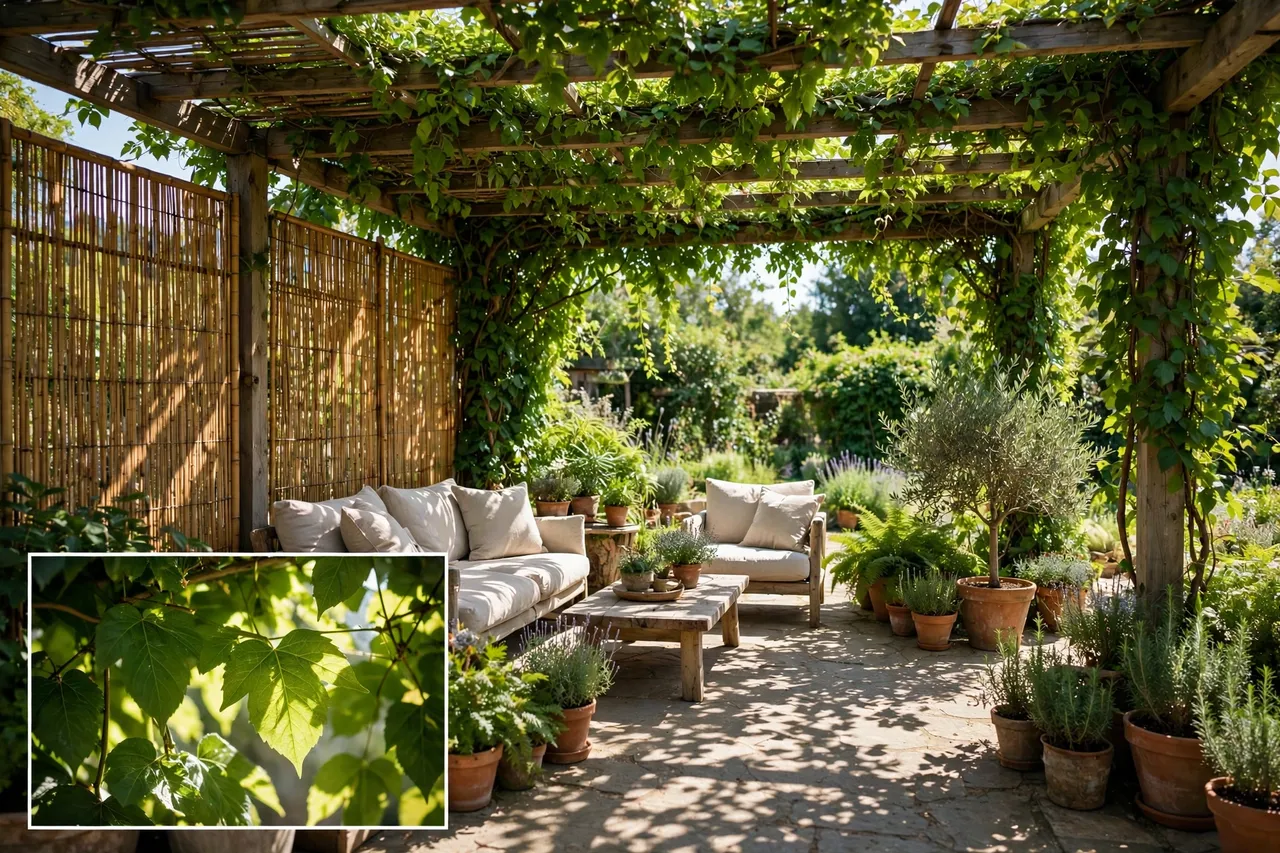
For fast results, plant a vine like jasmine, grape, or climbing rose on a simple wire trellis or a wooden frame over the seating area. In one or two seasons it forms a green roof that smells good and drops the temperature. Bamboo shade for a patio works as a screen or a roll-up blind: bamboo poles filter the sun, add privacy, and suit a natural garden look. Pick plants that fit your climate and your patience, because a tree that needs ten years to grow will not help this summer.
Living shade needs water, pruning, and time, and it drops leaves. Pair it with a fabric shade for this summer, and let the plants take over more of the job each year. A vine-covered pergola is the prettiest shade structure you can own, and our small backyard garden guide shows how to fit plants into a tight yard.
Cheap and DIY Patio Shade Ideas That Actually Work
You do not need a big budget to shade a patio. A pop-up canopy sets up in about 15 minutes, costs little, and covers a party or a weekend project. Shade cloths for a patio, sold by the foot with grommets, stretch over a simple frame of posts or clip onto a pergola you already own.
Try these low-cost moves first:
- Hang a shade cloth over the seating area. Clip it to a pergola, a fence, and a post, and pull it tight so it does not sag.
- Set up a pop-up canopy for the hot hours, then fold it away. It is the cheapest patio cover idea for renters and for parties.
- Build a simple DIY shade structure from four posts and a sail or a cloth top. One weekend, basic tools, and rated hardware are all it takes.
- Use a large outdoor umbrella you already own, and add a secondhand one for the other end of the table.
- Hang bamboo or reed screening on the sunny side for instant filtered shade and privacy.
- Pitch a freestanding gazebo or cabana for a weekend gathering. It gives full shade and rain cover, then folds away.
Cheap shade works best when you respect wind. Anchor everything, take fabric down in storms, and never trust a shade cloth to hold in a gust.
How to Cool a Patio That Still Feels Hot
Shade blocks the sun, but a patio can still feel hot from the heat stored in stone, concrete, and dark furniture. Start with the floor. Hose the pavers down in the late afternoon, and the evaporating water drops the surface temperature fast. Light-colored cushions, rugs, and furniture absorb less heat than dark ones, and they stay comfortable to touch.
Add moving air next. A ceiling fan under a covered patio or a standing outdoor fan makes shade feel several degrees cooler, because moving air carries heat off your skin. A mister on a hot, dry day cools the air around the seats, but skip it in humid weather, where it only adds damp. Potted plants cool the air a little too, and they make the space feel like a garden rather than a hot slab.
Finally, change when you use the patio. The CDC notes that UV rays are strongest from 10 a.m. to 4 p.m. daylight saving time, and it recommends staying in the shade under an umbrella, tree, or other shelter. Plan lunch in the shade, and save the sunny hours for morning coffee or evening dinner, when the light is softer and the air is cooler.
What Patio Shade Costs: A Quick Comparison
The table below gives typical cost ranges to help you plan. Prices vary by size, brand, and where you live, so treat these as planning estimates and check current prices before you buy. If your patio floor needs work too, our paver patio renovation cost guide breaks down what a new surface costs per square foot.
Typical patio shade costs (estimates, 2026):
| Shade option | Typical cost | Best for | Main limit |
|---|---|---|---|
| Pop-up canopy | $60–$200 | Parties, renters, fast shade | Weak in wind, take down after use |
| Shade sail with hardware | $120–$600 | Big coverage, low cost | Needs strong anchor points |
| Table or cantilever umbrella | $100–$900 | Small patios, movable shade | Covers one table, not a whole patio |
| Pergola with canopy | $400–$6,000+ | Style plus lasting shade | Costs more, needs a level base |
| Retractable awning | $500–$3,000+ | Patios against the house | Needs a solid wall, pro install often |
| Outdoor curtains or screens | $40–$300 | Low afternoon sun, privacy | Side shade only, not a roof |
| Living shade (vine, tree) | $30–$300 | Cooling the air, beauty | Takes seasons to grow |
Notice the pattern: fabric shade buys you comfort this weekend, while a built structure buys you comfort for years. Many patios end up with both, and that is a sensible way to spend.
Mistakes to Avoid When You Add Patio Shade
Most patio shade fails come from five avoidable mistakes. First, people shade the wrong spot. They cover the middle of the patio while the chairs sit in the sun. Shade the seats first, then the walkway. Second, people hang fabric flat. A flat sail or cloth holds rain, sags, and tears. Always slope fabric so water runs off.
Third, people under-build for wind. A sail, a canopy, or a big umbrella is a sail in a gust. Use rated hardware, heavy bases, and posts set in concrete, and take fabric down before a storm. Fourth, people forget the grill. Never cook under fabric or a wooden cover. The National Fire Protection Association says to place a grill well away from the home, deck railings, and out from under eaves and overhanging branches, and to keep children and pets at least three feet from the grill area.
Fifth, people buy for looks and ignore the sun. A pretty pergola with open beams shades almost nothing at noon. If you want real shade, add a cloth, a canopy, or a solid top to the frame. Test any shade at 4 p.m. before you call the job done, because that is when weak shade shows itself.
Related Guides
If you are planning the whole patio, not just the shade, these guides help with the next step. Our patio ideas guide shows 23 designs that turn a bare backyard into a favorite room. When the sun goes down, our patio lighting ideas make the shaded space usable at night. If you want a roof over the whole area, read our covered patio ideas before you build. And if your shaded patio becomes your cooking spot, our outdoor kitchen ideas keep the mess outside the house. If your shade has to cover a deck, see our deck shade ideas. Balcony owners can use the same ideas at a smaller scale — see our balcony cover ideas. For the floor under the shade, see our outdoor patio tiles. When the sun goes down, our patio string lights ideas show evening looks for a shaded patio.
Frequently Asked Questions
What is the cheapest way to shade a patio?
A shade sail or a pop-up canopy gives you the most shade for the least money. A good sail often costs under $100 before hardware, and a pop-up canopy costs about the same and sets up in minutes. For a lasting fix on a small budget, add outdoor roller shades to a structure you already own.
Do shade sails block rain?
Most standard shade sails do not block rain. They use breathable mesh that lets water pass through, which is what keeps the air under them cool. If you want rain cover, buy a waterproof sail made of tightly woven coated fabric, and hang it at a steep angle so water runs off instead of pooling and tearing the sail.
Can I add shade without building a permanent structure?
Yes. Umbrellas, shade sails on freestanding posts, pop-up canopies, and retractable awnings all add shade with no permanent building. These are the best choices for renters and for anyone who wants shade this weekend. They also come down easily in winter or before a storm.
What is the best shade option for a windy area?
A pergola with a solid frame, a retractable awning fixed to the house, or a heavy cantilever umbrella with a strong base handles wind better than a light sail or a pop-up canopy. Use rated hardware, keep fabric tight, and retract or take down fabric shade when winds rise. Never leave a big umbrella open in a gust.
How do I clean patio shade fabric?
Brush off loose dirt, then wash the fabric with mild dish soap and lukewarm water using a soft brush. Rinse it well with a garden hose and let it air dry fully before you fold or store it. Never put outdoor shade fabric in a dryer, and check the label first, because some coated fabrics need gentler care.
Will a pergola make my patio cooler?
A pergola helps, but only a little on its own. Its open beams filter the sun instead of blocking it, so the patio still heats up at noon. Add a canopy, shade cloth, or retractable top to the pergola, and it becomes a real shade structure that cools the seating area through the hot hours.
Your Next Step: Shade the Spot You Actually Sit In
Start small and start today. Watch the sun for one afternoon, measure your seating area, and put up one shade sail or one good umbrella over the chairs you use most. Live with it for a week, then add side shade where the low sun still reaches you.
A quick note: shade fabrics, structures, and local rules vary, so check your product labels, your HOA rules, and your local building codes before you build anything attached to your home. When in doubt about a permanent structure, ask a local pro before you drill or pour concrete.