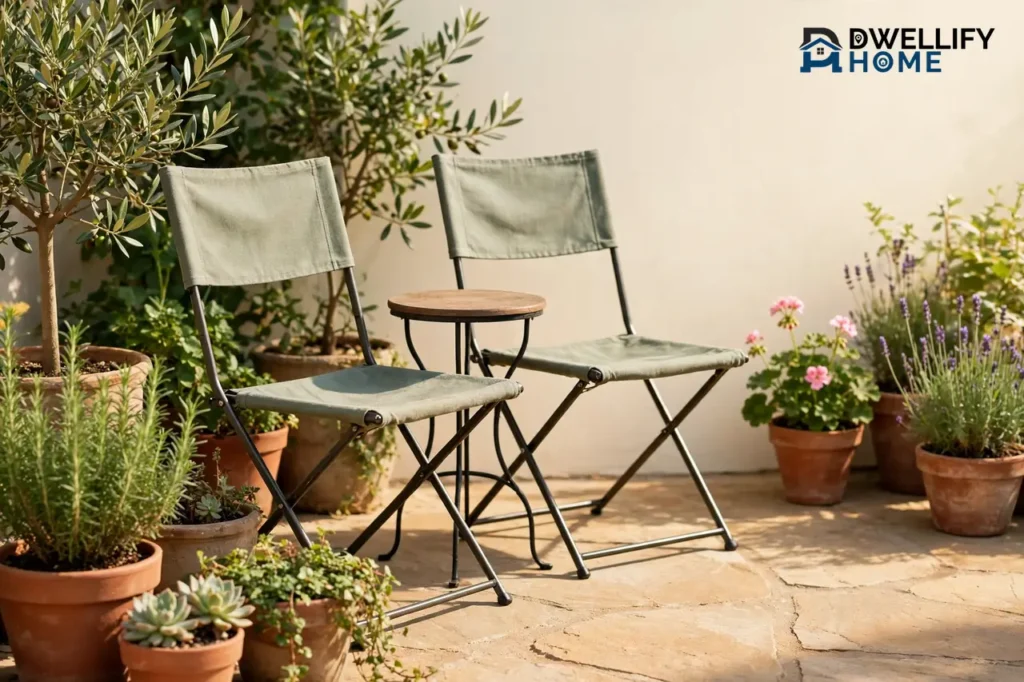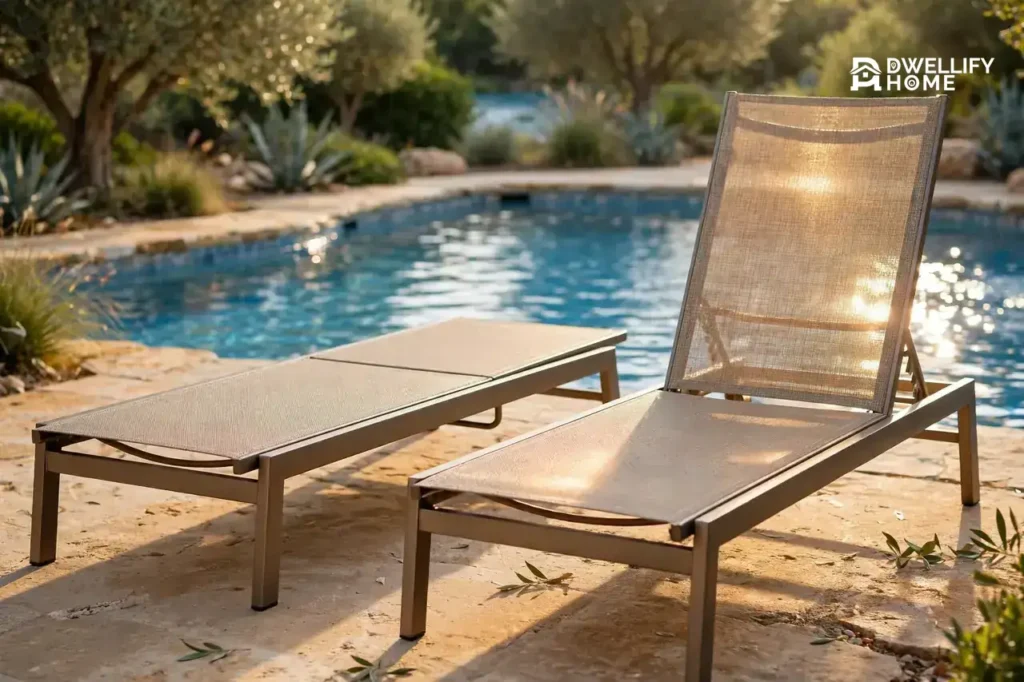
A reclining patio chair is an outdoor chair with an adjustable backrest that moves from upright to flat, and most models offer 5 to 6 reclining positions, support 250 to 400 pounds, and cost $100 to $220 for a set of two. The number that matters most is not the position count but the lock: a chair whose backrest locks firmly at every angle is a chair you can trust, while a chair whose lock slips is a chair that dumps you backward the first time you relax. Check the lock before you check anything else.
One feature quietly tells you whether a reclining chair is built for real relaxing or only built to look adjustable in a photo, and most buyers never test it. It sits in the positions section below, next to the zero-gravity test that decides whether the chair actually takes pressure off your back. First, you need the three types straight, because “reclining” means three different chairs.
What Is a Reclining Patio Chair?
A reclining patio chair is an outdoor chair whose backrest tilts backward through several locked positions, from upright for reading to flat for napping. It differs from a fixed lounge chair because you change the angle without standing up, and it differs from a chaise lounge because it folds flat for storage when the season ends.
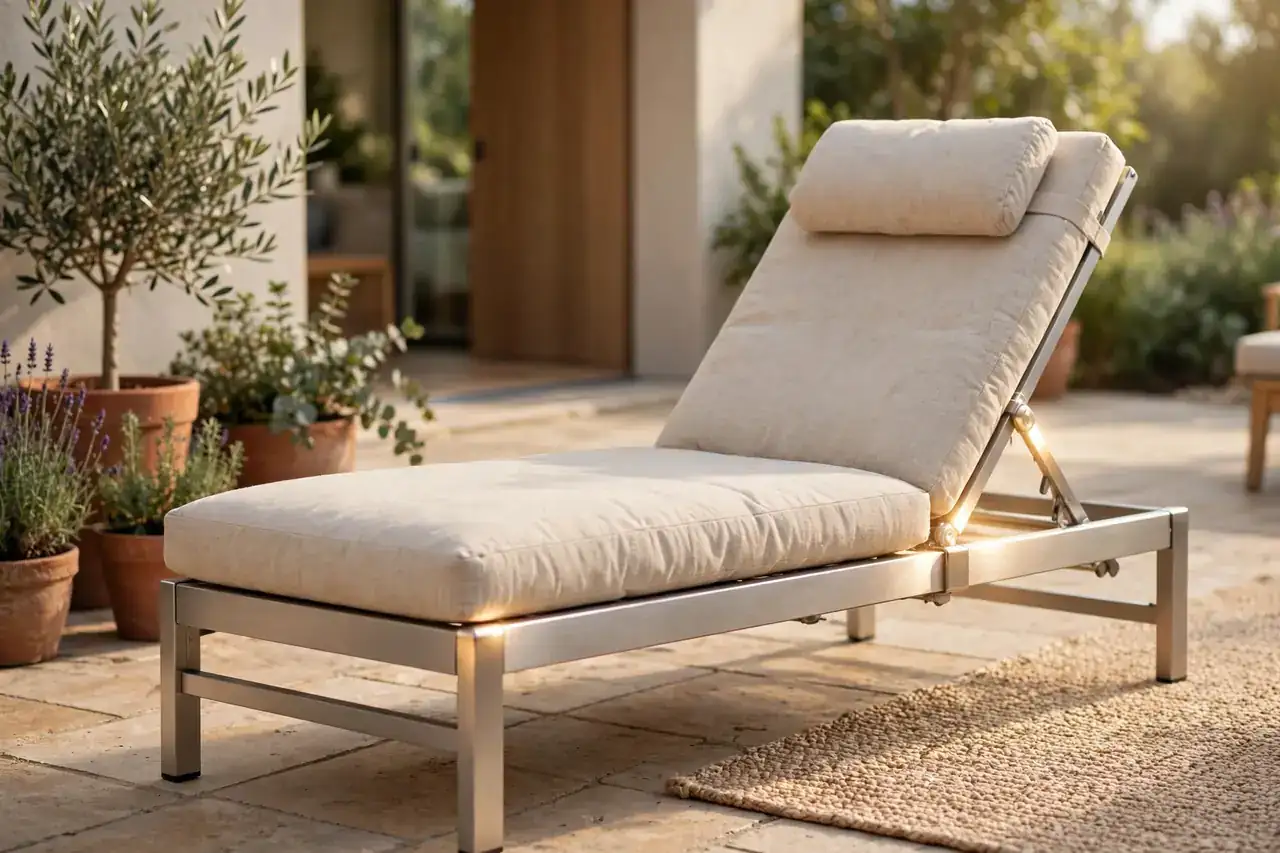
Shoppers meet three types. A reclining chaise lounge is the long chair with a 5-to-6-position backrest, a breathable sling seat, and often rear wheels for moving it around the pool; it is the poolside classic. A zero gravity chair is the folding recliner that locks into a position where your knees sit slightly above your heart, which takes pressure off your lower back; it folds flat, weighs little, and travels well. And a reclining patio armchair is the upright chair with a tilting backrest and a footrest, built for a porch or a balcony where a full chaise will not fit.
The mechanism is the whole product. A good recliner moves smoothly, clicks firmly into each position, and stays locked where you set it, even when you shift your weight. A cheap recliner moves stiffly, skips positions, or slowly sinks backward while you sit in it. Before you buy, read the buyer reviews for one word: “lock.” If owners say the lock slips, skip the chair no matter how good the price looks.
Comfort comes from the seat, not the recline. Look for a breathable textilene sling that dries fast and stays cool in sun, or a padded cushion with a removable, washable cover. A chair with a lumbar pillow and a headrest suits long sits; a chair without them suits short sunbathing sessions. And check the seat width: a 19-inch seat fits most adults, while a wider seat suits anyone who wants room to shift.
The lock is the chair. Positions mean nothing if the backrest will not stay put.
How Many Reclining Positions Do You Need?
Five to six reclining positions cover every real use: upright for reading, two mid angles for relaxing and talking, a deep recline for sunbathing, and fully flat for napping. More positions do not add comfort after six; fewer than four leave you stuck between too upright and too flat.
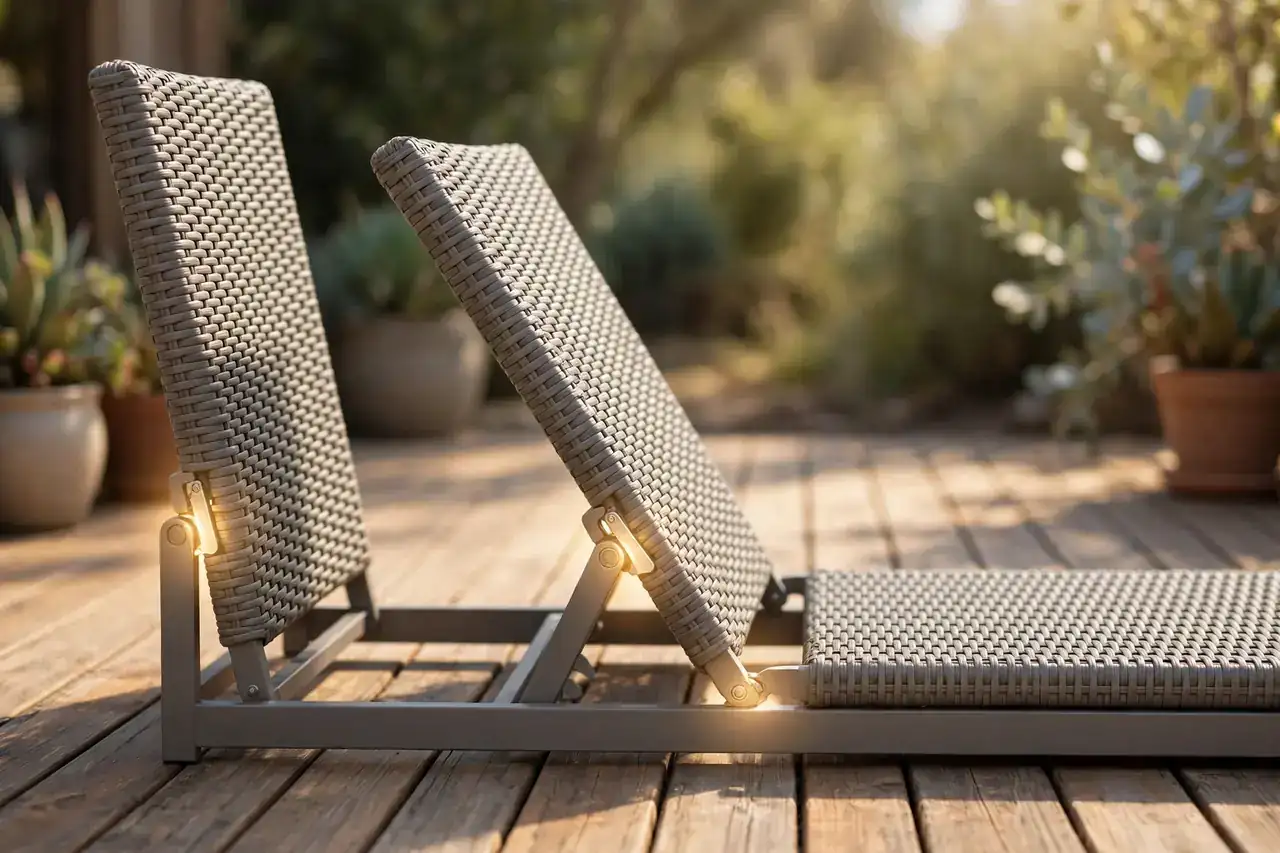
Real listings show the standard. A Crestlive chaise lounge chair at Target offers 5 angled positions plus fully flat, with a powder-coated metal frame and a breathable textilene sling, and owners praise the smooth, locking adjustment in review after review — see the listing at Target’s Crestlive adjustable chaise lounge set. A HAPPYGRILL rattan recliner offers 6 reclining positions, a 400-pound capacity, and a thick cushion with a lumbar pillow, listed at Amazon’s HAPPYGRILL rattan recliner. A Canpsky folding beach chair offers 5 positions including lay-flat, with a 350-pound capacity. The pattern is consistent: 5 to 6 positions, one of them flat, and a lock at every stop.
Zero gravity is a separate idea from position count. A zero gravity chair reclines to about 170 degrees, where your knees sit slightly above your heart and your weight spreads evenly across the chair. Best Choice Products’ zero gravity set uses a lockable reclining system that moves smoothly into that position and supports 250 pounds per chair. The position feels weightless because it is: the chair carries your body instead of your spine carrying it. If you buy a zero gravity chair, test the lock at the full recline, because that is the angle where a slipping lock hurts.
The test that matters is a physical one, and you can do it in a store or on delivery day. Sit in the chair, recline to the middle position, and shift your weight forward and back. Then recline fully flat and sit up again without touching the lever. If the backrest stays where you set it through both moves, the mechanism is sound. If it creeps, clicks, or drops, send it back.
Five positions plus flat is enough. The lock at each one is what you are really buying.
How Much Weight Can a Reclining Patio Chair Hold?
Most reclining patio chairs support 250 to 400 pounds per chair, with single zero gravity chairs at 250 to 300 pounds, chaise lounges at 270 to 400 pounds, and heavy-duty models at 400 pounds or more. Your own chair’s label always wins over a general range, and the frame, the fabric, and the lock must each be rated for the same load.
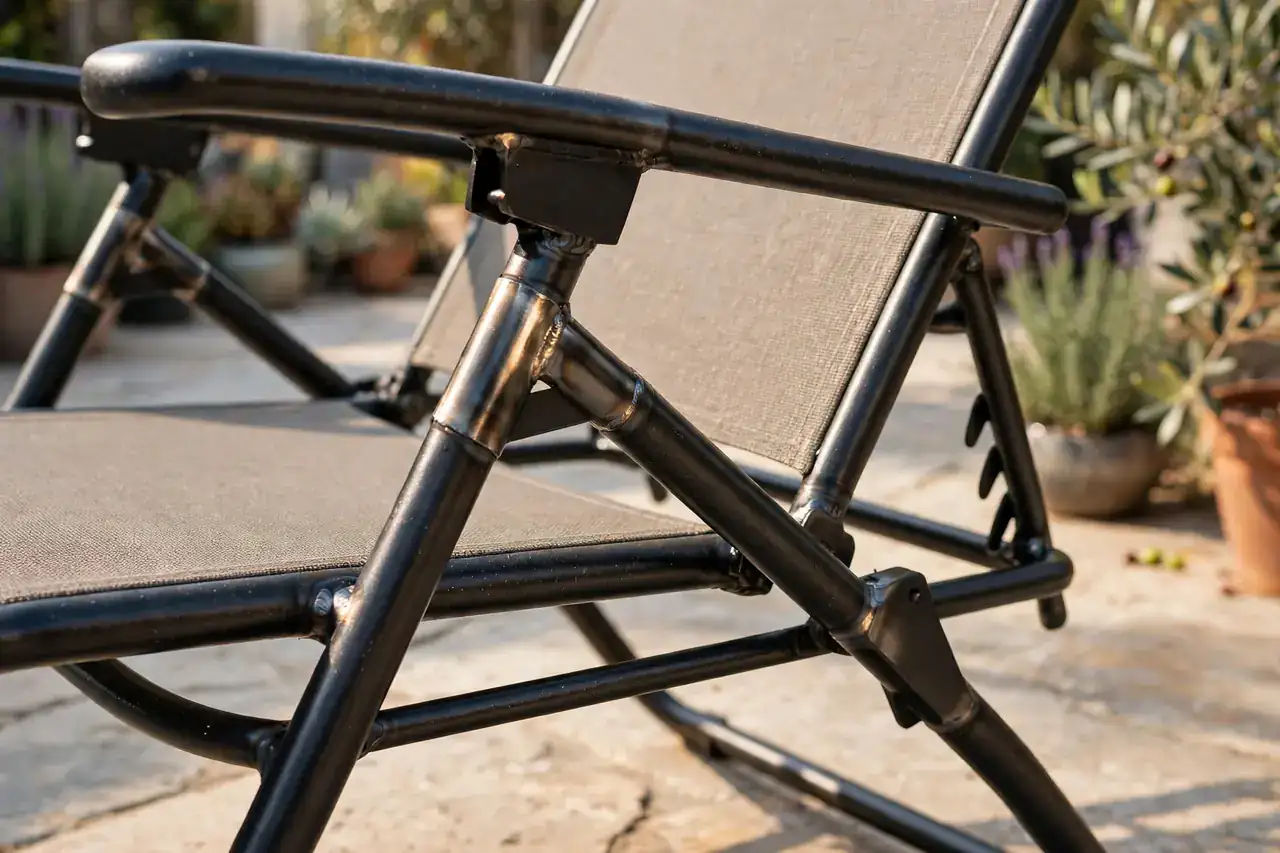
The numbers vary by type. A Best Choice Products zero gravity set supports 250 pounds per chair. A Crestlive chaise lounge at Target supports 270 pounds in one listing and 400 pounds in another, which shows why you must read the specific listing, not the brand name. A HAPPYGRILL rattan recliner lists a 400-pound capacity, and a Lacoo zero gravity chair lists 300 to 400 pounds depending on the model. Two chairs with the same brand and the same photo can carry different ratings, because the frame thickness changed between production runs.
Weight capacity is also a comfort signal. A chair rated for 400 pounds uses a thicker frame and a tighter sling than a chair rated for 250 pounds, and the thicker chair feels steadier even for a lighter person: less flex, less creak, less wobble when you shift. If two chairs cost nearly the same and one is rated 150 pounds higher, buy the higher-rated one.
Check the frame material alongside the rating. A powder-coated steel frame resists rust and carries the most weight, but it is heavy to move. An aluminum frame is lighter and never rusts, but it flexes more under load. A rattan or wicker shell over a steel frame looks warm and carries a high rating, but the wicker fades in full sun after a few seasons.
Read the listing, not the brand. Two chairs with the same name can carry different ratings.
How Much Do Reclining Patio Chairs Cost?
Reclining patio chairs cost $100 to $220 for a set of two, with zero gravity sets at $100 to $160, chaise lounges at $150 to $220, and single premium recliners at $150 to $300, all checked November 16, 2026. Sets of two almost always cost less per chair than singles, and the lock quality, not the fabric, drives the price.
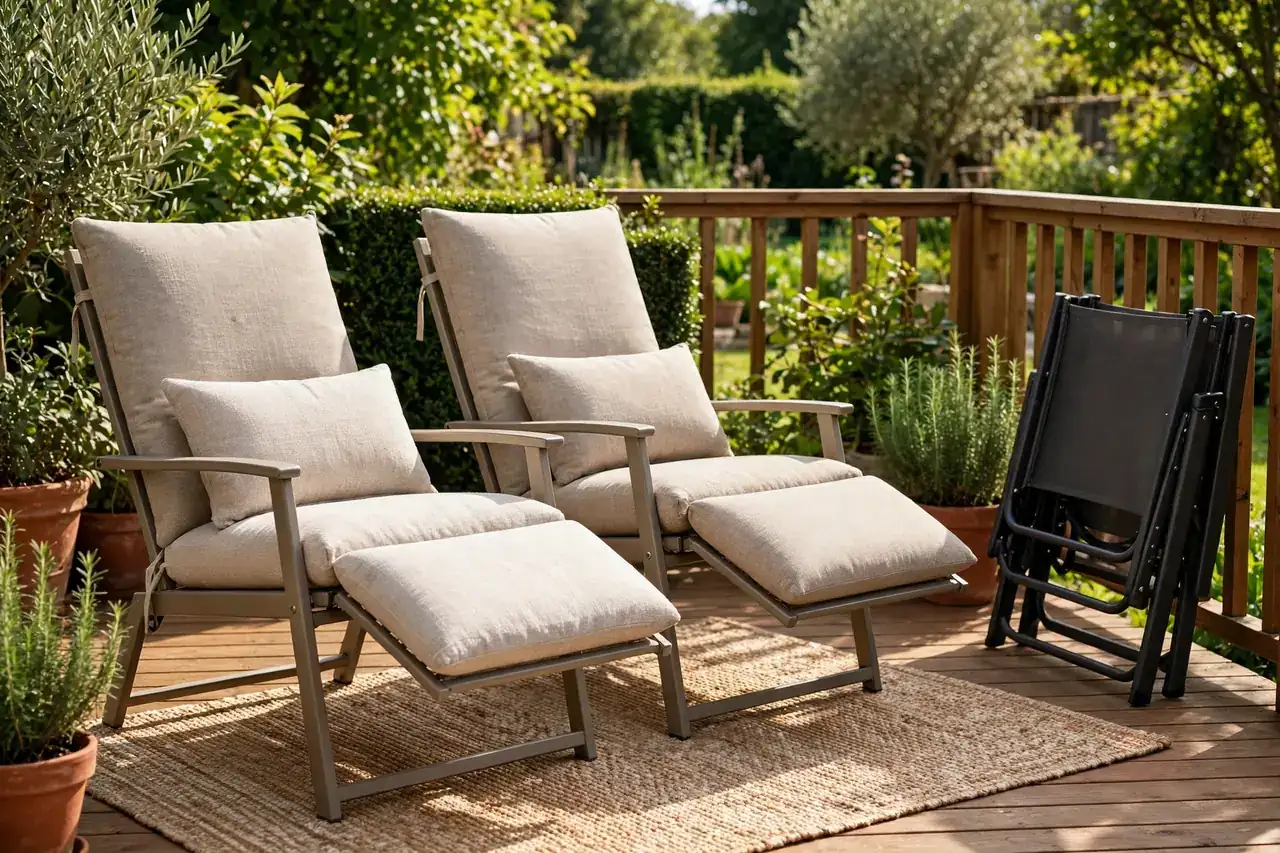
Real listings show the range. A Crestlive set of two adjustable chaise lounge chairs at Target lists at $216.99, with 5 reclining positions, a powder-coated metal frame, and built-in rear wheels. Best Choice Products’ zero gravity set of two, with pillows and cup holder trays, sits in the same band at major retailers. A single HAPPYGRILL rattan recliner with a thick cushion and lumbar pillow lists in the $100-to-$150 range, and a single premium recliner with a padded cushion and a footrest can reach $250 to $300.
Three things push the price up. A thicker frame and a higher weight rating cost more to build. A padded cushion with a removable, washable cover costs more than a bare sling seat. And rear wheels, a side table, a cup holder, and a headrest each add a little — but together they turn a $120 chair into a $220 chair, so decide which extras you will actually use before you pay for all of them.
Compare the cost per season, not the price on the tag. A $100 set whose lock slips in year two costs $50 a season and ends in frustration. A $217 set whose lock holds for five summers costs about $43 a season and works every single day. The expensive chair is the one you replace because the mechanism failed, not the one with the higher price.
Cost per season beats price per chair. The lock is the number that decides it.
What Most People Get Wrong About Reclining Patio Chairs
Most people get reclining patio chairs wrong in the same three ways: they buy by position count and ignore the lock, they buy a chair that is too narrow or too short for their body, and they leave the chair out all winter with the mechanism exposed. All three mistakes are easy to avoid once you know them.
The lock mistake is the big one. A chair with 6 positions and a slipping lock is worse than a chair with 3 positions and a firm lock, because the slipping chair is a chair you cannot trust. Read the reviews for the word “lock” before you buy, and test the lock on delivery day: recline, shift, sit up, and check that the backrest stays where you set it.
The size mistake is the quiet one. A chaise lounge that is 22 inches wide and 72 inches long fits most adults, but a taller person needs a longer chair, and a wider person needs a wider seat. Measure your height against the chair’s length before you buy: if your feet hang off the end when the chair is flat, the chair is too short for napping, no matter how many positions it offers. BestReviews’ reclining beach chair guide makes the same point: the most comfortable chairs pair padded seats with adjustable positions and ergonomic design, and brands like Tommy Bahama, Zero Gravity, and KingCamp are known for getting that combination right. Read it at BestReviews’ best reclining beach chairs guide.
The winter mistake is the expensive one. A reclining mechanism left out all winter collects water in its joints, and the first freeze turns that water into rust and seized parts. Bring the chairs inside before the first frost, or cover them with a breathable cover and oil the moving joints in spring. Our how to store outdoor furniture guide covers the full winter routine, and our outdoor storage bin guide shows where to stash the cushions.
Positions are marketing; the lock is the product. Test it before you trust it.
Where to Put Reclining Patio Chairs
Put reclining patio chairs where they have room to go flat: a poolside deck, a sunny patio corner, or a garden spot with 6 feet of clear length behind them. A chair that cannot recline fully because a wall sits behind it is a chair you paid for and cannot use.

Poolside is the classic spot, and it is where the chaise lounge earns its name: a breathable textilene sling dries fast after a swim, the rear wheels let you chase the sun, and the flat position is made for napping. Keep the chairs a foot back from the splash zone so chlorinated water does not spot the frame, and pair them with a low side table for drinks and sunscreen. Our outdoor furniture for small spaces guide shows how two chaises and one table can anchor a small pool deck.
The sunny patio corner is the reading spot. A zero gravity chair in the corner, facing the garden, turns an unused triangle of patio into the best seat in the house. It folds flat when guests arrive and the corner needs to be a walkway again, which is the zero gravity chair’s real advantage over a fixed chaise: it disappears.
The balcony is the small-space spot. A single folding zero gravity chair fits a balcony that a chaise lounge never could, folds flat against the wall when the balcony needs sweeping, and travels to the beach in a car trunk. Our apartment patio ideas guide shows how one folding chair can anchor a whole balcony layout, and our patio shade ideas guide shows how to keep that chair in the shade instead of the sun.
For the full lounge corner, pair the recliners with deep seating from our outdoor sectional couch guide, and keep the cushions fresh with our replacement cushions for patio furniture guide.
Room to go flat is the feature. Measure the length before you buy the chair.
Related Guides
If you are planning the whole outdoor space, these guides pick up where this one leaves off:
- Outdoor Sectional Couch — deep seating for the lounge corner beside your recliners.
- Outdoor Furniture for Small Spaces — seven layouts that make a tiny patio feel big.
- How to Store Outdoor Furniture — keep it clean, dry, and ready for spring.
- Outdoor Storage Bin — stash cushions where they stay dry.
- Apartment Patio Ideas — make a small balcony feel like a room.
- Patio Shade Ideas — keep the whole patio cool, not just one chair.
- Replacement Cushions for Patio Furniture — get the fit, fabric, and price right the first time.
- Balcony Cover Ideas — stay dry and cool on a small balcony.
Frequently Asked Questions
What is a zero-gravity chair?
Zero gravity chairs generally refer to seats or recliners designed to provide extra comfort and reduce the effects of fatigue on the body. They put the body in its neutral position, inspired by the relaxed posture of weightlessness in space, with support from the hips up to the shoulders.
How do zero gravity chairs alleviate back pain?
Zero gravity chairs lift the legs and recline the back so the spine decompresses naturally, reducing pressure on the discs and vertebrae. Doctors value the 127-degree position because it spreads weight evenly and takes pressure off the lumbar muscles that stay engaged when you sit upright.
Can a zero gravity chair cure my back pain?
It is not a cure, but it can significantly alleviate discomfort by reducing spinal compression and muscle tension. A patio zero gravity chair is a comfort feature, not a medical device, so anyone with a back condition should check with their own clinician before relying on it for relief.
How long should I sit in a zero gravity chair?
Start with 15 to 30 minutes and listen to your body. Many people comfortably lounge for hours in a zero gravity position, but if you feel stiff or numb when you stand up, you sat too long in one angle — shift positions or take a short walk before you settle back in.
Is it healthy to sleep in a zero gravity chair?
Occasionally, yes. Some people with chronic back pain find sleeping in a zero gravity position relieves discomfort, because the elevated legs and reclined back take pressure off the spine. Always consult your healthcare provider first if you have chronic health conditions.
Disclaimer: This guide gives general advice for choosing and using reclining patio chairs, not professional medical or structural instructions. Check weight limits before use, never exceed the chair’s rated capacity, and hire a qualified pro for any structural patio work.
Test the lock, measure the length, and buy the rating for your body. A chair with 5 firm positions beats a chair with 8 slipping ones, a chair that goes flat beats a chair that stops short, and a chair that folds away beats a chair that rusts in the rain. Do that, and the recliner you buy this year is still the best seat on the patio five summers from now.