The best apartment patio ideas start with one seat you will actually use every day, one rug to warm the floor, and one soft light for the evening. Add privacy on the side that bothers you most, move plants up onto the railing and walls, and pick pieces you can fold, stack, or carry with you when you move. You do not need a big budget or a drill to make a small apartment patio feel like a real outdoor room.
This guide shows you how to do it step by step. You will measure first, pick one job for the patio, choose furniture that fits, and layer in plants, privacy, light, and shade without breaking a single lease rule. Every idea here works in a rental, and most of them cost less than a night out.
Apartment Patio Ideas at a Glance
An apartment patio is usually a small concrete slab, a ground-floor pad, or a narrow balcony-sized space outside your door. Most of them measure between 40 and 100 square feet, so every inch has to earn its place. The trick is to treat the patio like a small room with a job, not like a leftover strip of concrete.
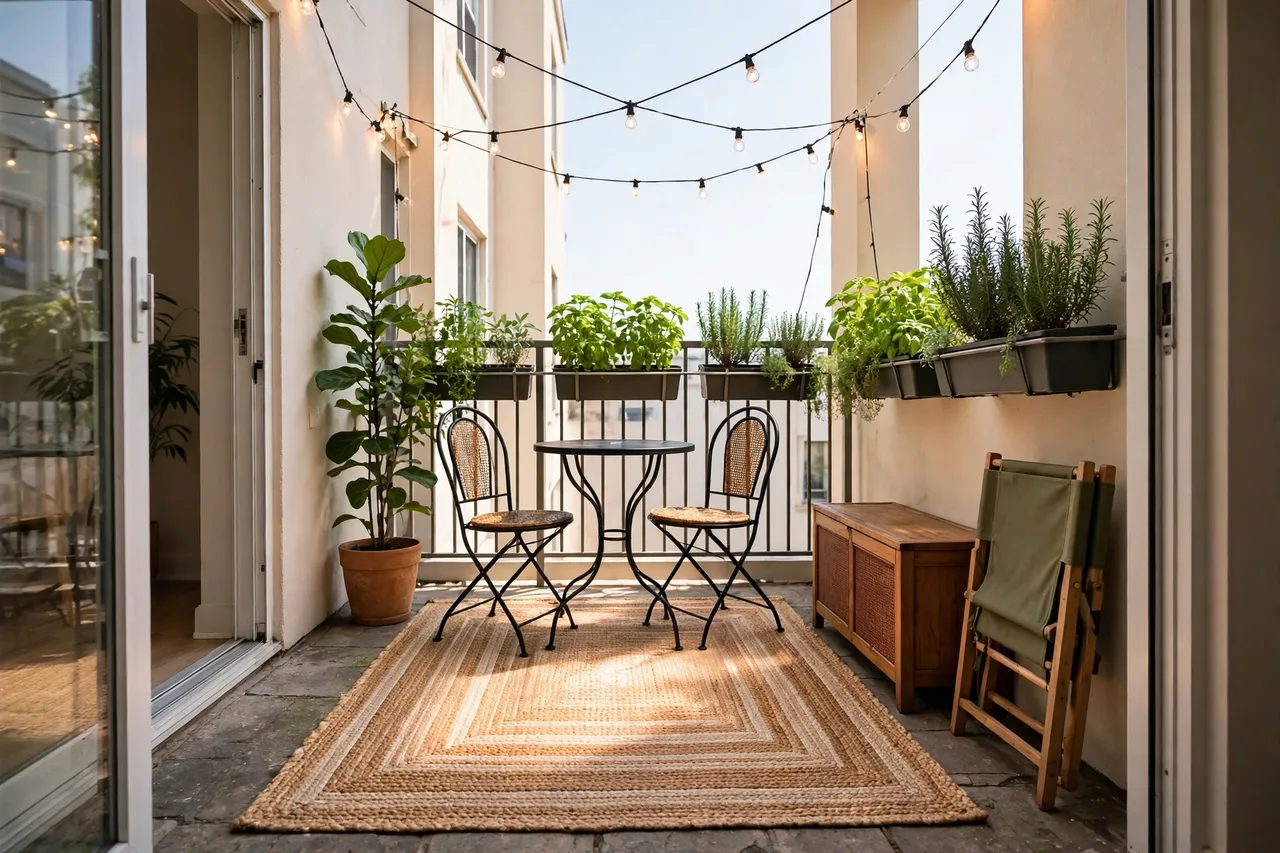
The table below sums up the whole plan. Start at the top, work down, and stop when the patio feels done. You do not need every row to love the result.
Apartment patio ideas at a glance
| Step | What to do | Typical cost | Effort |
|---|---|---|---|
| 1. Rules | Read the lease, check weight limits | Free | 30 minutes |
| 2. Measure | Measure the slab and the door | Free | 15 minutes |
| 3. Seat | One bistro set or small loveseat | $60 to $200 | One afternoon |
| 4. Floor | Outdoor rug or interlocking deck tiles | $25 to $150 | Under an hour |
| 5. Plants | Railing planters and one tall pot | $30 to $100 | One afternoon |
| 6. Privacy | Curtain, tall plants, or trellis | $25 to $120 | Under an hour |
| 7. Light | String lights and solar lanterns | $20 to $60 | 30 minutes |
| 8. Shade | Half umbrella or shade sail | $40 to $150 | Under an hour |
One seat, one rug, and one light change the whole patio. Everything after that is comfort and style, not a requirement.
Start With the Rules: Lease, Weight, and Safety
Before you buy anything, read your lease and your building rules. Most apartments ban drilling into walls and railings, painting, and anything bolted to the building. Many also limit what can hang outside the railing, and some ban grills on balconies and patios outright. A quick check now saves you a fine and a lost deposit later.
Weight matters more than most renters expect. A balcony or raised patio slab is built for a set load, and a big ceramic pot full of wet soil can weigh 80 pounds or more. Use light pots made of resin, fiberglass, or plastic on any raised patio, and keep heavy stone and concrete pieces on ground-floor slabs only. If your lease lists a weight limit, treat it as a hard rule, not a suggestion.
Fire safety is the one rule you never bend. The U.S. Fire Administration says plainly: do not store or use a grill on a porch or balcony, and keep any grill at least 3 feet from siding, deck railings, and eaves. Read the full guidance at the U.S. Fire Administration’s outdoor fire safety page. If your building bans grills, skip the grill and enjoy the patio another way. An electric tabletop cooker used indoors is the safer swap, and it keeps the patio free for sitting.
Also check the drain. Most apartment patios have a small drain or a gap under the railing where rain runs off. Never block it with a rug edge, a planter, or a storage box. Standing water stains the slab, breeds mosquitoes, and can leak into the unit below yours.
Read your lease before you buy anything. The best patio plan is the one your building actually allows.
Measure First, Then Pick One Job for the Patio
Grab a tape measure before you shop. Measure the length and width of the slab, the width of the door you will carry furniture through, and the height of the railing. Write the numbers on your phone. A chair that will not fit through the sliding door is a return trip you do not need.
Next, pick one main job for the patio. A patio that tries to be a dining room, a lounge, a garden, and a gym all at once ends up as a storage corner. Choose the job you will use most: morning coffee, dinner for two, an evening reading spot, or a small garden. Everything else plays a supporting role.
Leave a clear path from the door to the railing. You need about 24 inches of walking space to move without turning sideways. On a patio under 50 square feet, that path is the whole design: one seat against one wall, one table beside it, and plants on the railing instead of the floor.
Watch the sun for a day before you plan the layout. Note which corner gets morning light and which side bakes in the afternoon. Put the seat where the light is kindest in the hour you will use it most, and save the sunny corner for plants that love the heat.
Measure the door as well as the patio. Furniture that cannot get outside is just indoor clutter.
Furniture That Fits a Small Apartment Patio
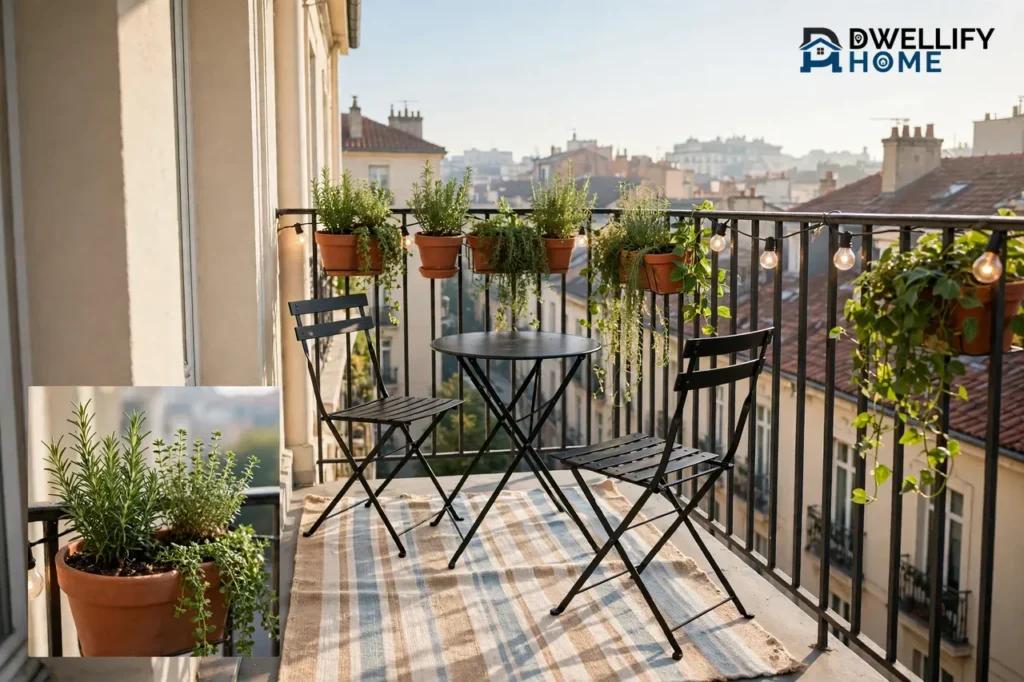
Small patio furniture works when it is light, foldable, or does two jobs at once. A bistro set is the easiest anchor for a small apartment patio: two chairs and a small round table give you coffee and dinner for two without eating the floor. Fold the chairs flat when friends come over, and the patio opens up again. Lowe’s apartment patio guide makes the same point, recommending a compact dining setup with room to move around it; see Lowe’s apartment patio ideas for their full list of small-space setups.
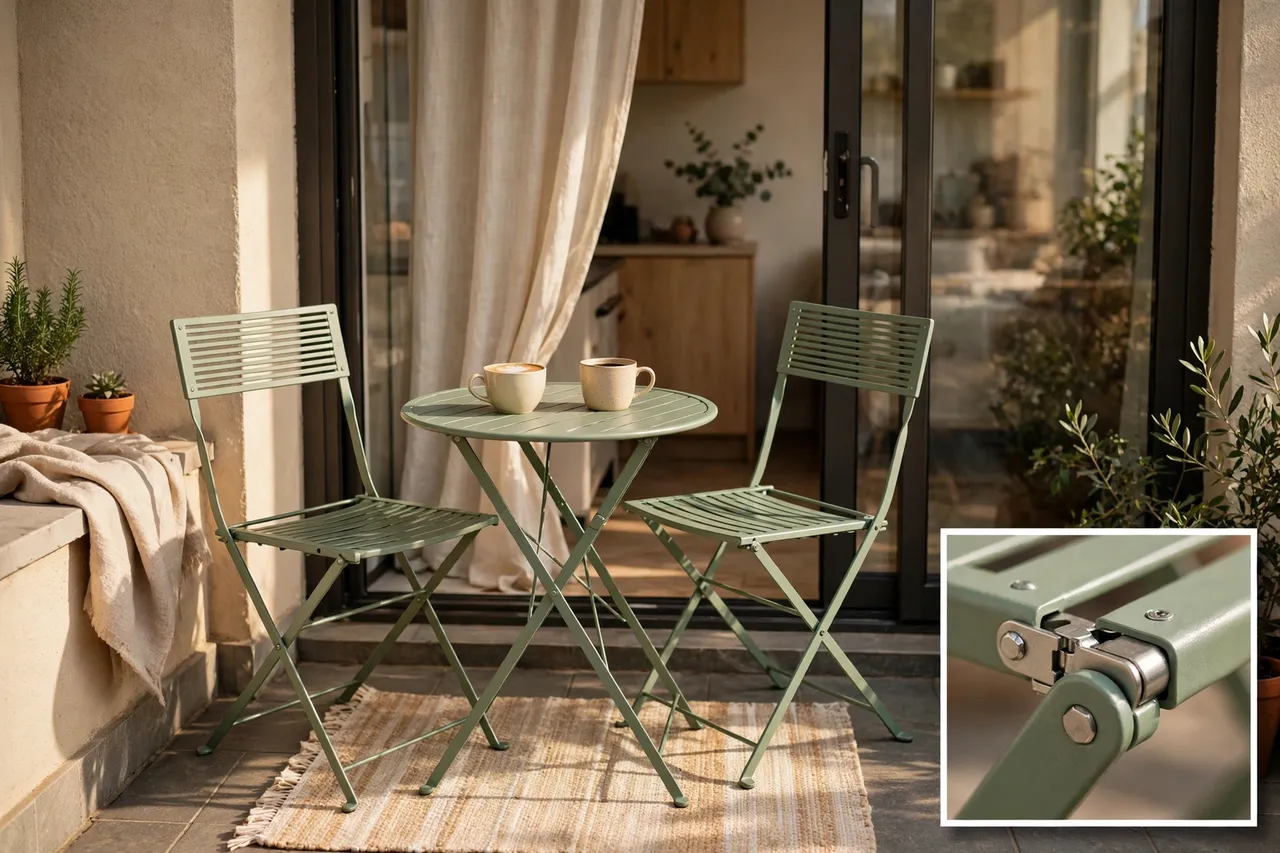
A small loveseat or two-seat outdoor sofa suits a patio you will lounge on. Keep it under 48 inches wide so it leaves room to walk past it. Pair it with a side table instead of a coffee table, and you keep the middle of the patio open. A storage bench does double duty: it seats one person and hides cushions, tools, and toys inside.
Skip the oversized sectional. Deep, wide lounge furniture swallows a small patio and leaves no room to move. The same goes for a full dining set with four chairs. If you host often, keep two folding chairs in a closet and bring them out only for dinner.
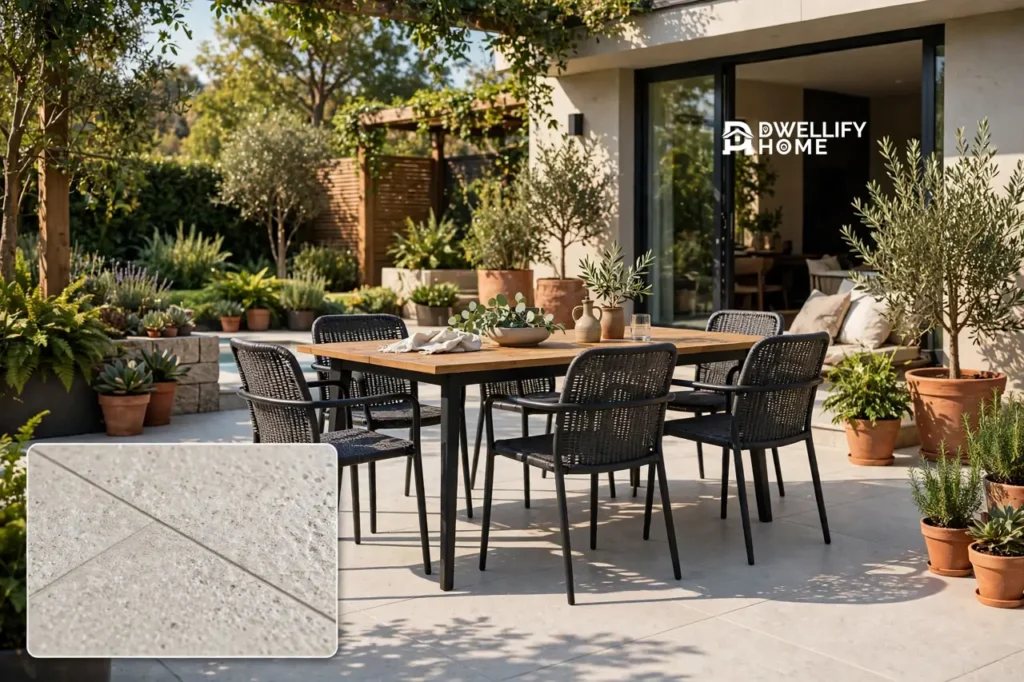
Pick materials that survive the weather and the move. Powder-coated metal and resin wicker dry fast after rain and weigh little. Acacia and teak look warm and last well with a yearly oiling, but they are heavier to carry. Whatever you buy, check that it folds, stacks, or comes apart, because you will carry it through a door someday.
For more layout ideas across every size of patio, browse patio ideas and small patio designs to see how seating, rugs, and plants work together in a small space.
Give the Floor a Finished Look
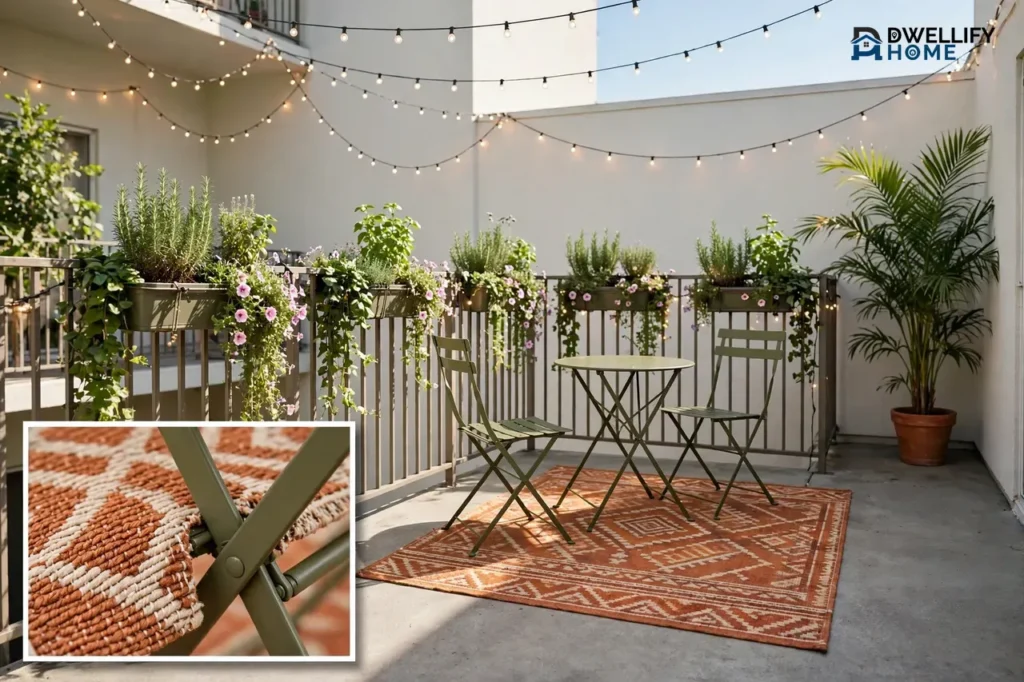
A bare concrete slab makes a patio feel unfinished, and it stays cold under bare feet. An outdoor rug is the fastest fix. It warms the floor, defines the seating area, and adds color in one move. Pick a rug a little smaller than the patio so a border of slab shows around it; that border makes the space feel bigger, not smaller.
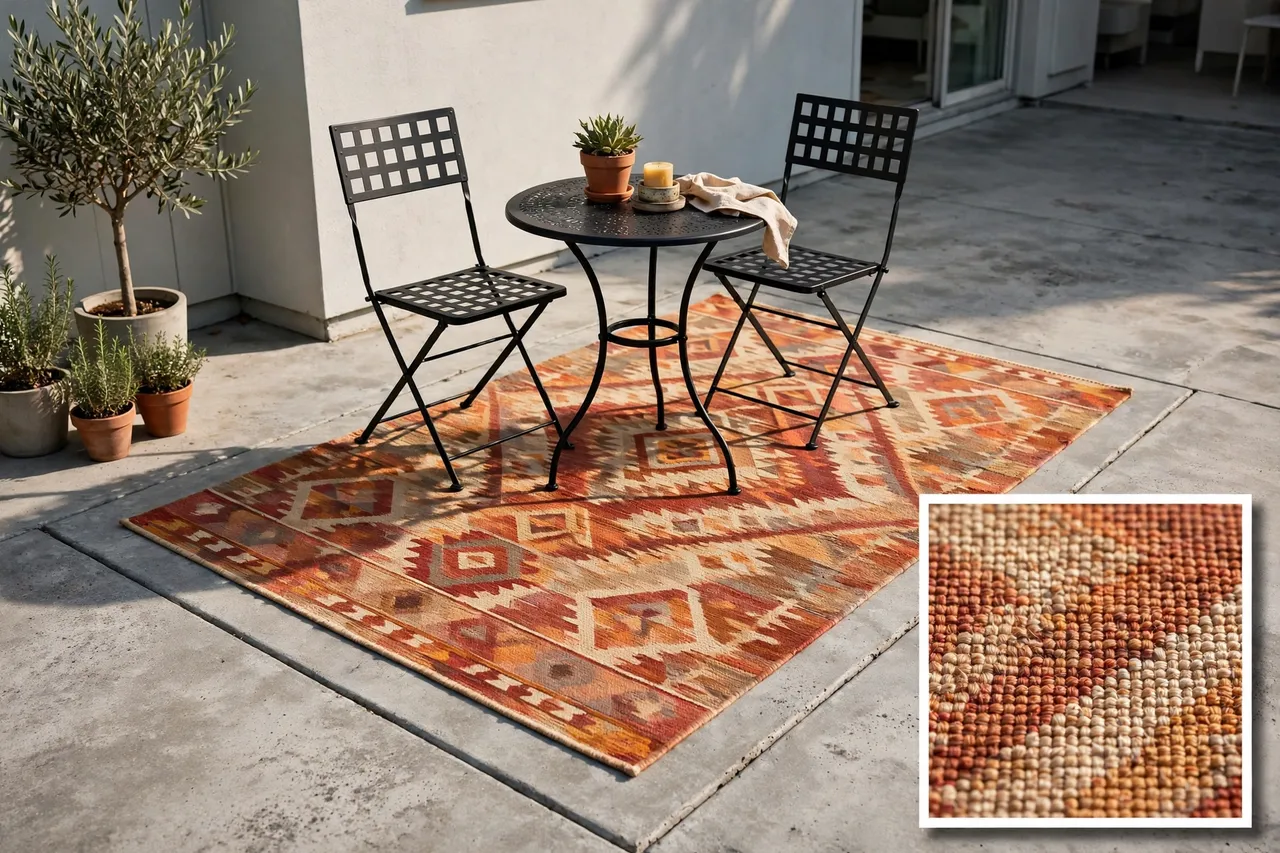
Choose a rug made for outdoors, with a flat weave that dries fast and shakes clean. A 5 by 7 foot rug suits most apartment patios and costs about $25 to $60. Skip thick indoor rugs: they hold water, grow mildew, and take days to dry. Our guide to indoor outdoor rugs covers sizes, materials, and care in detail.
Interlocking deck tiles are the next step up. These wood, composite, or stone-look tiles snap together over the old concrete with no glue and no tools, and you lift them up and take them with you when you move. They cost more than a rug, about $100 to $150 for a small patio, but they turn a cracked gray slab into a warm wood floor in an afternoon.
Keep the floor easy to clean. Sweep it once a week, shake the rug out, and lift a corner of the tiles now and then to clear leaves underneath. A clean floor is what makes a small patio feel cared for, and it costs nothing but ten minutes.
The rug does more work than any other single piece. Buy it first, and the rest of the patio falls into place around it.
Plants Without Losing the Floor
Plants make an apartment patio feel alive, but pots on the floor eat the little space you have. Move the garden up, not out. Railing planters hook over the top rail and hold herbs, trailing flowers, and small greens without touching the floor at all. A wall-mounted planter or a narrow vertical panel does the same trick on a blank wall.
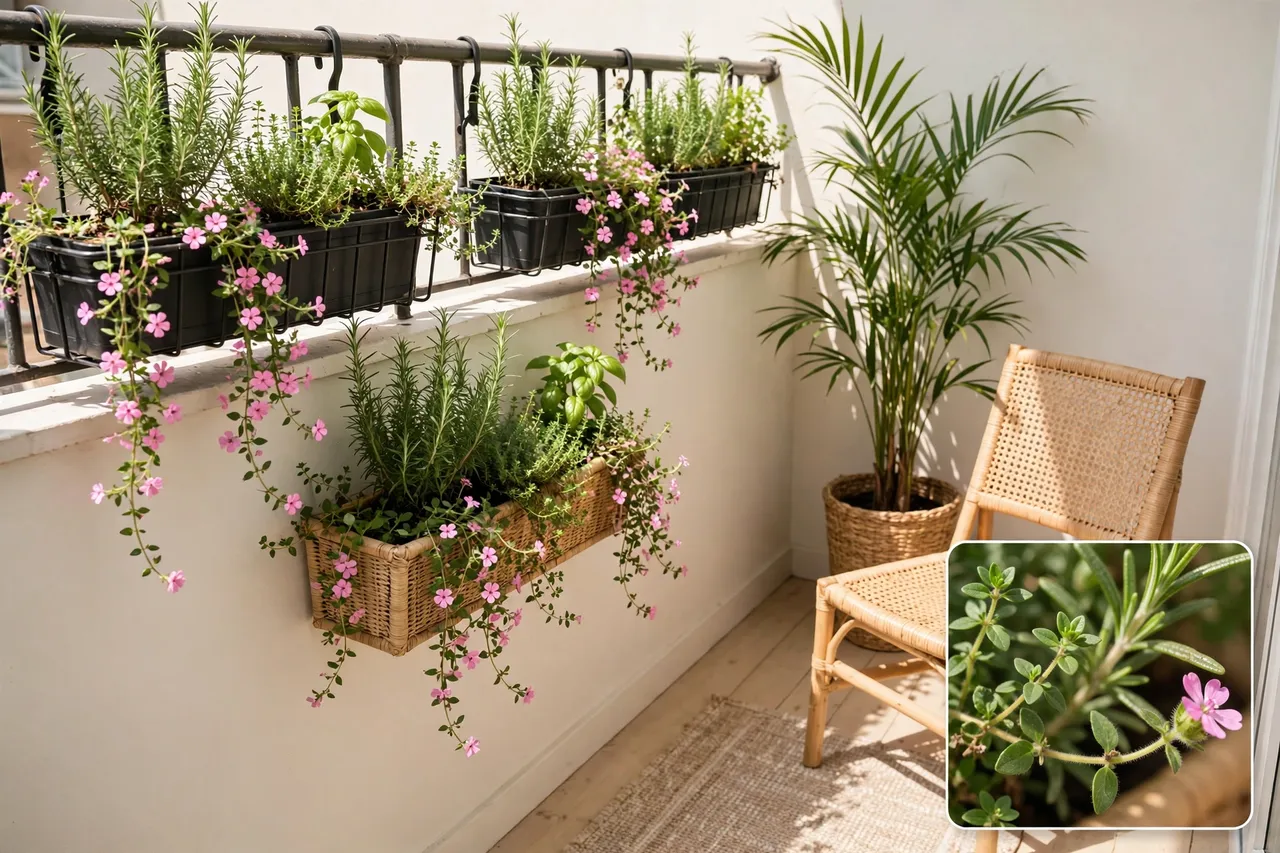
Use three heights of greenery to make the patio feel deep. Trailing plants hang from the railing, medium plants sit in corner pots at knee height, and one tall plant, like a potted palm or a small olive tree, anchors a corner and gives the eye somewhere to rest. Three heights beat ten pots at the same height every time.
Pick plants for your sun, not for a photo. A sunny patio loves herbs like basil, rosemary, and mint, plus succulents and petunias. A shady patio suits ferns, hostas, and impatiens. If you are new to plants, start with three pots and learn how they drink before you buy ten.
Water with care. Always use pots with drainage holes and a saucer underneath, so water never pools on the slab or drips onto the neighbor below. Water in the morning so leaves dry before night, and check the saucers after rain so they do not become mosquito pools.
If you want a garden that feeds you, a few herbs in railing planters are the honest start. They need little space, they smell wonderful, and you will actually use them. For a bigger planting plan, see small backyard garden ideas and shrink the layout to fit your pots.
Privacy That Comes Down When You Move
Most apartment patios face a neighbor, a parking lot, or a walkway. You do not need to wall the whole space in. Block the one direction that bothers you, and leave the rest open for light and air.
An outdoor curtain on a tension rod is the fastest privacy fix. It covers exactly one side, slides open when you want the view back, and comes down without a mark on the wall. Pick a weatherproof fabric in a solid color that matches your cushions, and hang it a few inches above the floor so it does not drag in the rain.
Tall potted plants make a living screen that also happens to be pretty. A row of bamboo, tall grasses, or a potted evergreen in a corner blocks the sightline without blocking the breeze. A freestanding trellis does the same job and gives climbing plants like jasmine something to hold. None of these touch the building, so none of them break a lease.
Keep privacy light and airy. A solid screen pressed tight against the railing traps heat, blocks airflow, and makes a small patio feel like a box. Leave a gap for the breeze, and the patio stays cool and open. For more screen ideas that suit a rental, read privacy screen for a balcony.
Block one view, not the whole patio. Privacy should feel like a cozy corner, not a fence.
Light It for Evenings
Good light is what turns a patio from a daytime spot into your favorite evening room. String lights do most of the work. Hang them along the railing, zigzag them overhead, or drape them from a tall plant to a wall hook. Warm white bulbs, around 2700K, give a soft glow that flatters everyone and everything.
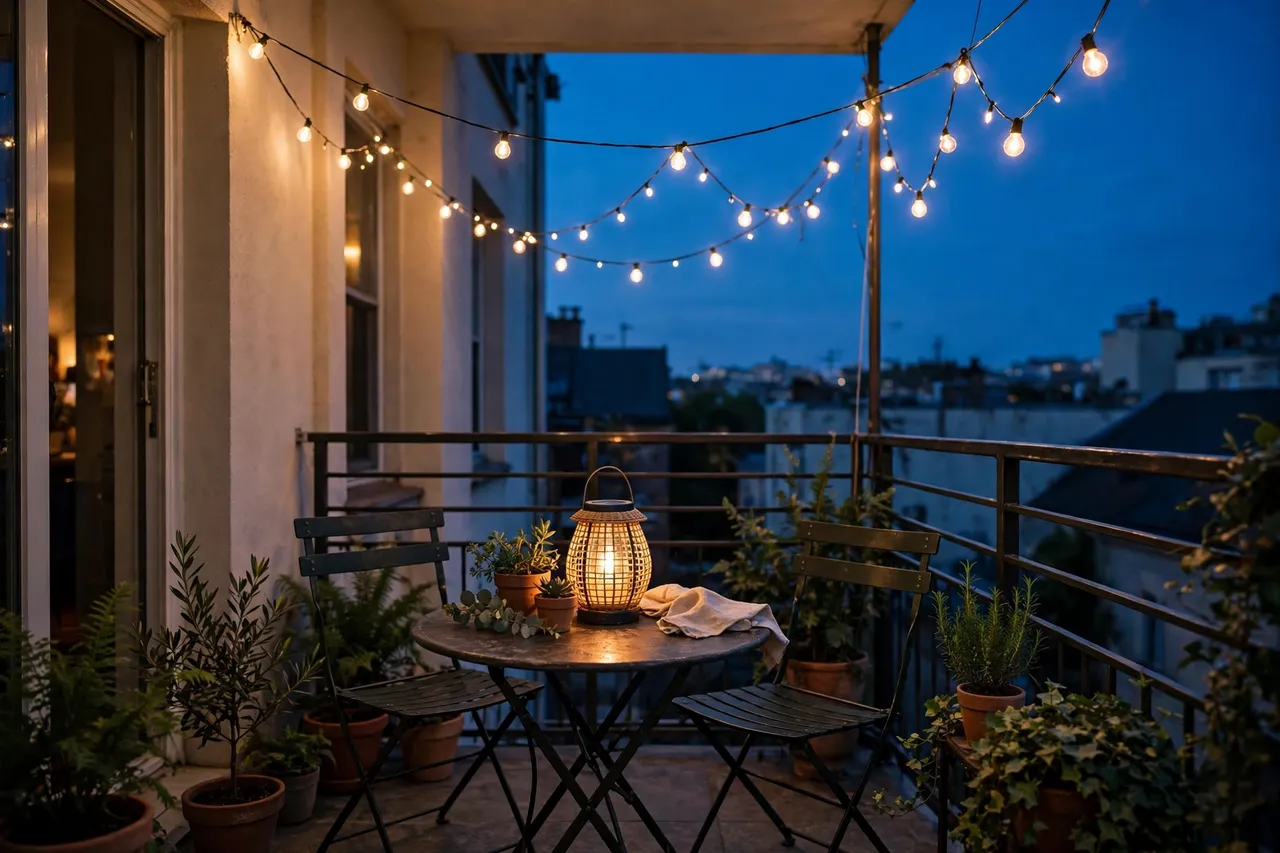
Use lights that need no outlet and no drilling. Solar string lights charge by day and glow at night, and battery lights work anywhere. Hang them with removable outdoor clips or adhesive hooks rated for outdoor use, and take them down in one pull when you move. Never staple or nail a light cord to the building.
Layer a second, lower light. A solar lantern on the table, a pair of battery candles in glass jars, or a small lantern on the floor gives the patio depth after dark. One overhead glow plus one low glow feels warm; one bright overhead light alone feels like a parking lot.
Keep the light soft and the neighbors in mind. Aim the glow down at your own table and chairs, not out at the next building. A dimmer or a shorter string is kinder than a floodlight, and it makes your own patio feel calmer too.
Warm light at two heights makes the evening. One string overhead and one lantern on the table is enough.
Shade and Weather Without Drilling
A sunny apartment patio can get too hot by mid-afternoon, and a rainy one is no fun at all. You can fix both without drilling a single hole. A half umbrella sits flat against the wall and shades a small patio without eating floor space. A cantilever umbrella swings over the seating area and folds away when the sun moves.
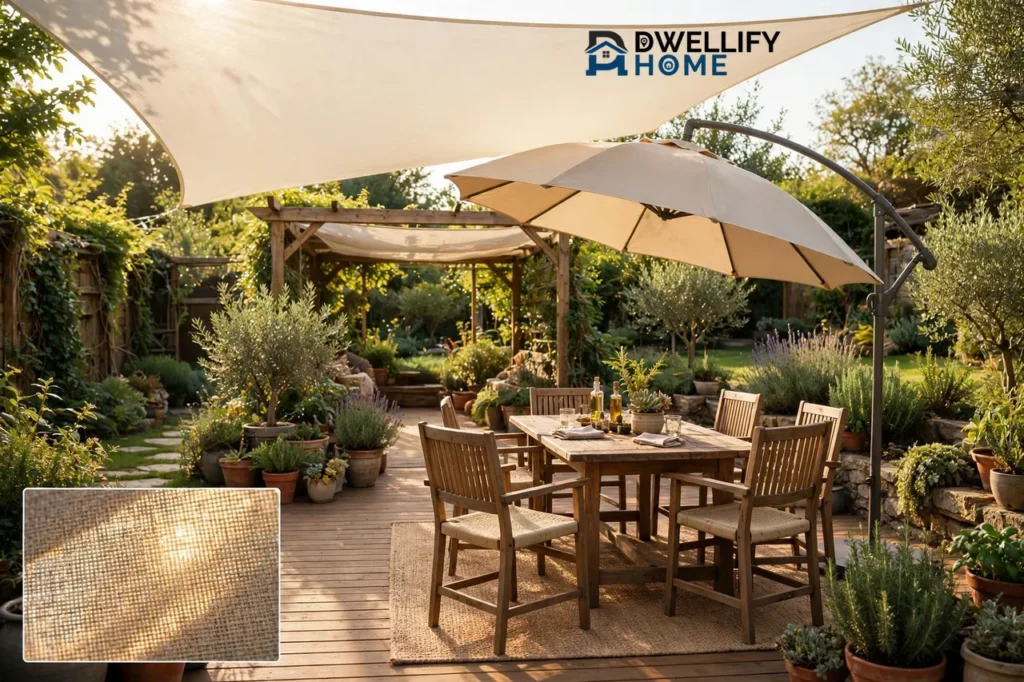
A shade sail is the lighter option. It clips to the railing on one side and to a tall plant stand or a removable pole on the other, and it gives a big triangle of shade for little money. Take it down before a storm, because wind turns a sail into a kite. A retractable shade cloth on a tension rod works the same way and rolls up when you want the sun back.
Cover the furniture when rain comes. A fitted cover keeps cushions dry and doubles their life, and a small storage bench holds the cushions out of a storm in seconds. If your patio has a roof or an overhang, you have more freedom: a covered floor stays dry, so a softer rug and lighter colors stay practical. See covered patio ideas for layouts that pair a roof with furniture that lasts.
Shade should move with the sun. A fixed cover fights the weather; a movable one works with it.
Style It Like an Outdoor Room
Style is what makes a patio feel finished instead of furnished. Start with one simple color palette and repeat it. Two main colors plus one accent, repeated across cushions, pots, and the rug, make a small space feel calm and put together. Warm neutrals with one bold accent, like terracotta or teal, suit most patios and most seasons.
Add softness in layers. Outdoor pillows, a folded throw over the chair arm, and a small cushion on the bench make hard furniture feel like a living room. Pick fabrics rated for outdoors so they dry fast and keep their color. Bring the pillows inside during a long rain, and they will last for years.
Hang something on the wall. An outdoor mirror makes a small patio feel twice as big, because it bounces light and reflects the plants. A piece of metal wall art, a woven hanging, or a small shelf with a lantern adds personality without taking floor space. Use adhesive hooks or a leaning shelf, never a drill.
Finish with one personal touch. A candle in a jar, a small tray on the table, a favorite mug waiting by the door: these are the details that make the patio yours. Keep the surfaces clear enough to use, though. A table covered in decor is a table you cannot eat at.
Repeat two colors everywhere and the patio looks designed. Random color in every piece looks like a yard sale.
3 Budget Makeovers for an Apartment Patio
You do not need a big budget to change a patio. The three plans below use typical US prices from late 2026, labeled as estimates because prices move with sales and seasons. Each plan assumes you already own nothing and builds the patio from empty.
Apartment patio budget makeovers (estimates, late 2026)
| Plan | What you buy | Estimated total | Best for |
|---|---|---|---|
| Under $75 | Outdoor rug, two outdoor pillows, solar lantern | $50 to $75 | A patio that already has chairs |
| Under $150 | Bistro set, outdoor rug, string lights | $120 to $150 | A bare patio, first makeover |
| Under $300 | Bistro set, rug, lights, railing planters, half umbrella | $250 to $300 | The full outdoor room |
Start with the smallest plan that fixes your biggest complaint. If the floor feels cold and bare, buy the rug first. If you have nowhere to sit, buy the seat first. If evenings feel dark, buy the lights first. One good purchase beats five rushed ones, and you can add the next piece next month.
Shop secondhand for the big pieces. A folding bistro set, a storage bench, or a set of planters often turns up barely used, and a quick wash makes it look new. Save the new-purchase money for the pieces that touch your skin: cushions, pillows, and the rug.
Spend on the rug and the light first. They change how the patio feels more than any chair does.
7 Mistakes to Avoid on an Apartment Patio
Most apartment patio regrets come from a short list of avoidable mistakes. Check your plan against this list before you order anything.
- Buying furniture before measuring. A chair that will not fit through the door is a return trip.
- Choosing oversized furniture. A full dining set or a deep sectional swallows a small patio and leaves no path to walk.
- Drilling into the wall or railing. It breaks most leases, risks your deposit, and leaves holes you must repair.
- Using heavy ceramic or stone pots upstairs. Wet soil and stone weigh far more than they look, and a raised slab has a weight limit.
- Grilling on the patio or balcony. Many buildings ban it, and fire guidance says never to store or use a grill on a porch or balcony.
- Blocking the drain. A rug edge or a planter over the drain traps water, stains the slab, and can leak below.
- Filling every inch. A patio with no empty space feels cramped, not cozy. Leave one corner open and let the patio breathe.
The patio should feel bigger after you furnish it, not smaller. If it feels tighter, remove one piece.
Disclaimer: Homes, leases, and building rules vary, so check your own lease and building rules before you buy or hang anything. Weight limits, grill bans, and railing rules differ by building, and your lease is the final word. For any heavy, fixed, or structural change, ask your landlord first, and get help from a qualified pro when a job is beyond a simple, removable setup.
Related Guides
If you are planning the whole patio, these guides pick up where this one leaves off:
- Patio Ideas — layouts, styles, and features for every size of patio.
- Small Patio Designs — layouts that make a tiny patio feel bigger.
- Indoor Outdoor Rugs — sizes, materials, and care for rugs over concrete.
- Covered Patio Ideas — roofed patios where furniture and tile stay dry.
- Privacy Screen for a Balcony — screens that suit a rental and come down clean.
- Small Backyard Garden — planting ideas to shrink down to pots and planters.
- Small Patio Decorating Ideas — rugs, furniture, and planters for a small patio.
- Patio Shade Ideas — shade for a small apartment patio.
- Ideas for Balcony Design — design ideas for the same small space.
- Balcony Decor Ideas — decor for a small outdoor space.
- Poles for String Lights — hanging lights with no wall to drill.
Frequently Asked Questions
What furniture works on a small apartment patio?
Pick one main seat for how you will use the space: a bistro set for coffee and dinners for two, or a small loveseat under 48 inches wide for lounging. Add a side table and a storage bench that hides cushions. Skip oversized sectionals and full dining sets, because they leave no room to walk on a patio under 100 square feet.
How do you get privacy on an apartment patio?
Block the one direction that bothers you instead of boxing in the whole patio. An outdoor curtain on a tension rod, a row of tall potted plants, or a freestanding trellis all add privacy with no drilling, and you can take every one of them with you when you move. Leave a gap for airflow so the patio stays cool.
Where do plants go on a tiny patio?
Move plants up and off the floor. Railing planters hold herbs and trailing flowers, wall planters use a blank wall, and one tall pot in a corner anchors the space. Use three heights of greenery: trailing plants at the railing, medium pots at knee height, and one tall plant in the corner.
Can you decorate an apartment patio without drilling?
Yes. Almost everything in this guide goes up without a single hole: tension rods for curtains, railing planters that hook over the top, freestanding trellises, removable clips for lights, and furniture that just sits on the floor. Check your lease before you start anyway, since some buildings do not allow anything on the outside of the railing.
What are some affordable decor ideas for an apartment patio?
Start with an outdoor rug, warm string lights, and a few outdoor pillows, which together cost under $150. A 5 by 7 foot outdoor rug runs about $25 to $60, solar string lights about $20 to $40, and outdoor pillows a few dollars each. Those three pieces change how the patio feels more than any single piece of furniture.
How can I add lighting and privacy to my apartment patio?
Combine the two jobs in one plan: hang warm white string lights along the railing for evening glow, add one solar lantern on the table for low light, and screen the nosiest side with a curtain or tall plants. Use solar or battery lights with removable clips so nothing needs an outlet or a drill.
Your apartment patio does not need to be big to be loved. Measure it, give it one clear job, and add one seat, one rug, and one warm light. Then layer in plants, privacy, and shade one piece at a time. Start this weekend with the rug and the lights, sit outside with your morning coffee, and let the patio tell you what it needs next.