
An egg chair is a suspended, cocoon-shaped seat you curl into, and the number that decides whether it is safe for you is its weight limit: most single hanging egg chairs hold 250 to 350 pounds, and two-person chairs hold 400 to 800 pounds. The chair hangs from a stand, a ceiling beam, or a fixed base, and the weakest link in the chain — the stand, the spring, the hook, or the ceiling — decides the real limit, not the basket. This guide covers weight limits, types, real prices, safe hanging, and the care routine that keeps an egg chair swinging for years.
One hanging mistake can drop a chair with someone in it, and it happens when buyers trust the basket’s rating and ignore the hardware. It sits in the safety section below, and most buyers never check it because the hardware looks strong enough. Before that, you need the weight decision right, because a chair rated for 265 pounds is not a chair for a 300-pound sitter.
What Is an Egg Chair?
An egg chair is a rounded, partly enclosed seat shaped like an egg, designed for one or two people to curl into, that hangs from a chain or rope so it swings gently. Outdoor versions hang from their own stand, from a ceiling beam, or sit on a fixed base, and the shell is usually woven PE rattan or olefin rope over a powder-coated steel or aluminum frame, with a thick removable cushion.

The shape is the point. The high, curved back wraps around you, blocks the wind, and makes a small patio feel private, while the gentle swing turns sitting into relaxing. A single egg chair seats one person, a double or loveseat egg chair seats two, and the double needs a wider base, a stronger stand, and more floor space. Some models add a leg rest, and some are stationary — a deep cocoon seat on a fixed base that looks like an egg chair but does not swing at all.
Egg chairs work indoors and outdoors, and the same chair can move between a patio in summer and a living room in winter. Outside, they suit patios, pool decks, balconies, and gardens, and they are the single most relaxing seat on a patio for reading, napping, or an evening drink. The cushion is where you spend all your time, so its quality decides comfort: look for thick, plush cushions with UV-resistant, removable, washable covers. If your patio is small, our outdoor furniture for small spaces guide shows seven layouts where one statement chair earns its footprint, and our papasan chair guide covers the closest indoor cousin if you want the same curl-up feel inside.
The curve is the comfort. A chair that wraps around you beats a chair you sit on top of.
How Much Weight Can an Egg Chair Hold?
Most single hanging egg chairs hold 250 to 350 pounds, with budget models at 220 to 265 pounds and sturdier models at 300 to 350 pounds, while two-person egg chairs hold 400 to 800 pounds depending on the frame. The number on the listing is the limit for the whole chair, and exceeding it risks structural failure, voids the warranty, and creates a real safety hazard.
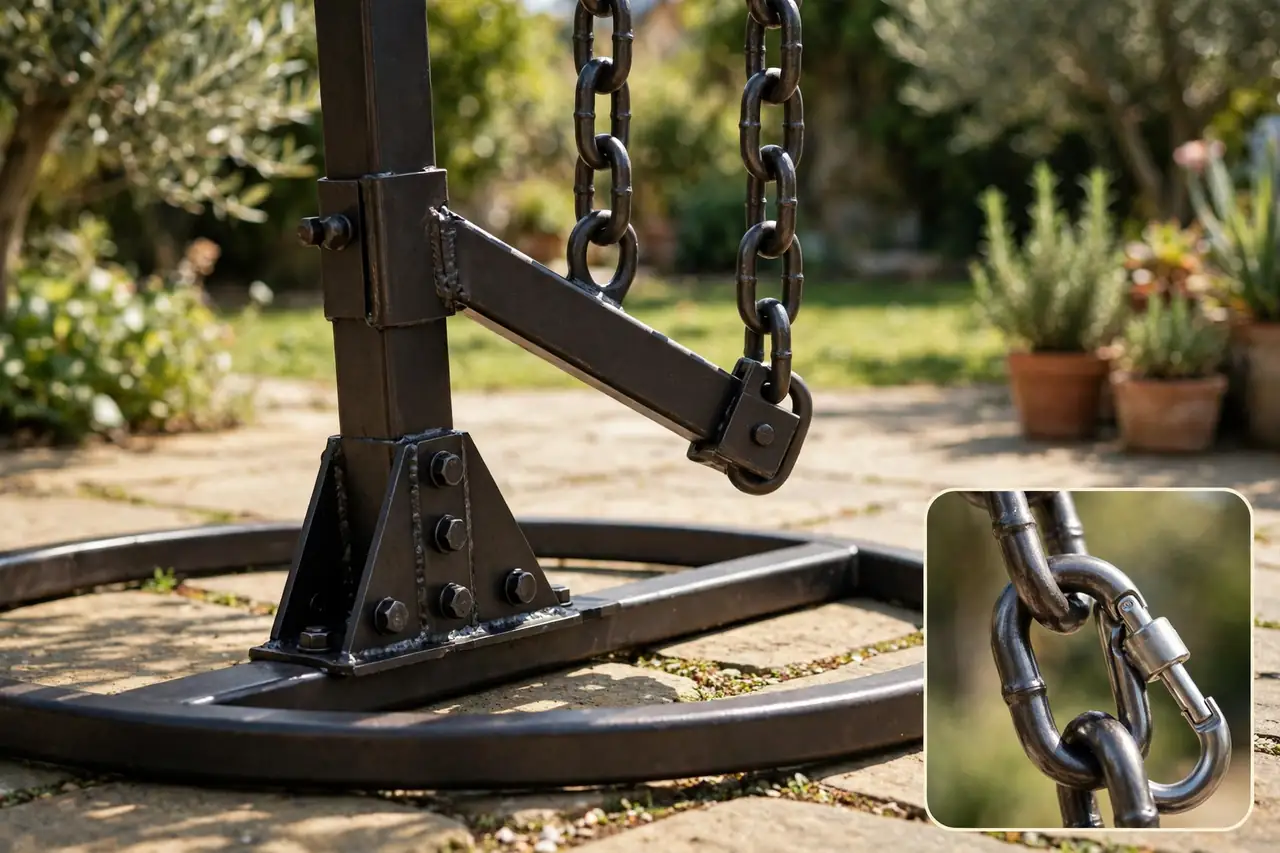
What actually decides whether a swing chair is safe is the weakest link in the chain: the frame, the rope or chains, the hook, and whatever it hangs from. A 350-pound basket on a 265-pound stand is a 265-pound chair, and a chair hung from a ceiling joist is only as strong as the joist and the hardware. The spring and hook wear out first on most chairs, so check them every season, because a small part that fails drops the whole chair.
Weight limits at a glance
| Egg chair type | Typical weight limit | Seats |
|---|---|---|
| Budget single, with stand | 220–265 pounds | 1 |
| Standard single, with stand | 250–350 pounds | 1 |
| Heavy-duty single | 350–450 pounds | 1 |
| Double / loveseat | 400–800 pounds | 2 |
Weight ranges in this table come from the swing chair weight guide at Kingmake Outdoor, checked November 16, 2026. Real listings back them up: the SWITTE double egg swing chair supports up to 600 pounds on an alloy steel frame, the NICESOUL double egg chair supports up to 680 pounds, and the Best Choice Products wicker egg chair supports 440 pounds. The standard spec for contract-grade chairs is 200 kilograms, about 440 pounds, per seat. See the full weight breakdown at Kingmake Outdoor’s swing chair weight guide.
Buy with a safety margin. Choose a chair rated at least 50 pounds above the heaviest person who will use it, because the rating covers the user plus anything they bring into the chair, and swinging adds force beyond body weight. If two people will share a chair, buy a double rated for their combined weight plus a margin, not a single rated for one of them. And if a listing gives no weight limit at all, do not buy it: a chair without a printed rating has not been tested, and an untested chair is a guess.
The weakest link decides. Stand, spring, hook, and ceiling all have to pass, not just the basket.
Which Type of Egg Chair Fits Your Space?
A hanging egg chair with a stand fits most patios, because it needs no drilling, it moves to follow the shade, and it needs only a level surface and about 1.5 by 1.5 meters of floor space. A ceiling-hung egg chair fits covered patios and pergolas with a solid beam, and a fixed-base egg chair fits balconies where swinging room is tight.

The stand version is the best-seller for a reason. The curved frame sits on the ground, the shell hangs from it, and you get the gentle movement of a hanging chair with no installation beyond assembling the stand, which typically takes 30 to 60 minutes with a second person helping. The trade-off is footprint: a single chair needs about 1.5 by 1.5 meters, and a double needs more, plus 60 inches of clearance diameter for safe swinging, and up to 80 inches for a two-person model. The stand is also heavy — 60 to 87 pounds for many models — so moving it around takes effort.
A ceiling-hung chair looks the lightest, because the shell hangs on a chain from a structural beam, a patio roof, or a pergola, with no stand on the floor at all. But it needs a fixing point that can carry the chair and the person in it, and once it is up, it stays in that spot. Hang it from a solid wooden joist or beam, never from drywall or eaves, and use hardware rated for at least twice the combined weight of the chair and the heaviest person. If you rent, skip the ceiling version: the stand version moves with you.
A fixed-base egg chair is the third option, and it suits small balconies best. The shell sits on a base instead of hanging, so it does not swing, but it still gives you the cocoon shape and the privacy, and it needs the least clearance of all. If the chair will anchor a lounge corner, pair it with an outdoor sectional couch so the seating area reads as one space, and read our balcony cover ideas guide if the chair will live on a small balcony, because a covered spot doubles the life of the cushion.
Stand for flexibility, beam for lightness, base for tight spaces. The fixing point decides, not the look.
How Much Does an Egg Chair Cost?
An egg chair costs $150 to $700, with budget single chairs at $150 to $300, standard single chairs with a stand at $300 to $450, heavy-duty singles at $400 to $550, and two-person doubles at $400 to $700, all checked November 16, 2026. A good single chair with a stand usually runs $250 to $400, and a double usually runs $500 to $700.
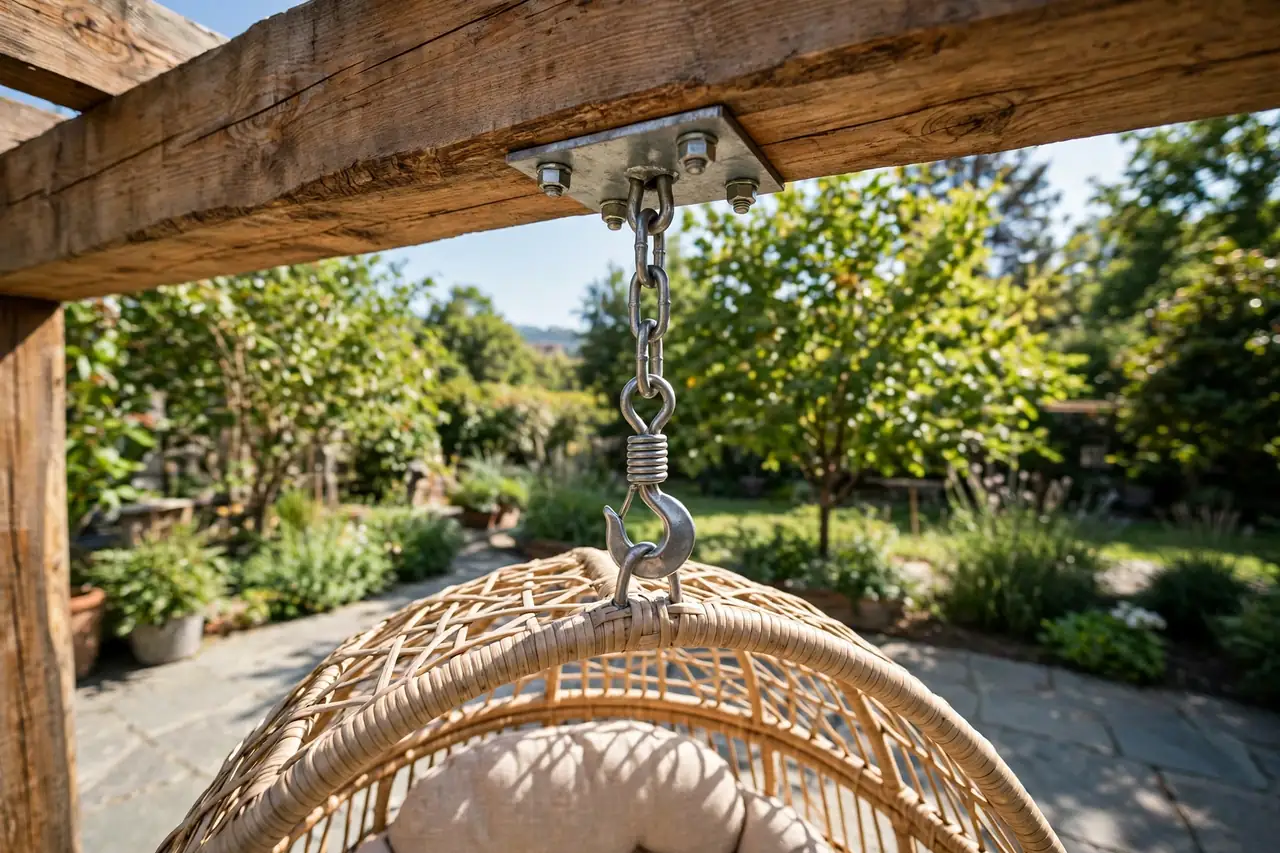
The price tracks three things: the frame, the weave, and the cushion. A powder-coated steel or aluminum frame with PE rattan weave and a thick UV-resistant cushion costs more than a thin steel frame with PVC weave and a thin cushion, and the difference shows up in year two, when the cheap chair’s frame rusts and its cushion fades. The SWITTE double egg swing chair, for example, pairs an alloy steel frame with a 600-pound capacity and a UV-resistant cushion, while the NICESOUL double supports 680 pounds with a powder-coated iron frame and PE rattan wrap.
Three things push the price up beyond the size. A double chair costs more because it needs a wider base, a stronger stand, and dual hooks for stability, and it weighs far more: a NICESOUL double weighs 119 pounds against 47 pounds for a Best Choice Products single. A leg rest adds cost and comfort, and a set with two chairs costs roughly twice a single. Assembly is usually straightforward at 30 to 60 minutes, with all tools included, but a second person is recommended for attaching the chair to the stand.
Do not buy the cheapest chair with the highest weight number. A listing that claims 400 pounds on a thin steel stand has not been tested the way a 350-pound chair from a known maker has, and the standard spec for contract-grade chairs is 200 kilograms per seat with repeated-load testing on the hook and stand. The expensive chair is the one that drops someone, so buy the rating you can verify, not the number that looks best. See real models and prices at Dryer Enthusiast’s best egg swing chair roundup.
Buy the rating you can verify. A tested 350 pounds beats a claimed 400 every time.
What Most People Get Wrong About Egg Chairs
Most people get egg chairs wrong in three ways: they exceed the weight limit, they hang the chair from drywall instead of a beam, and they leave the cushions out in the rain. All three mistakes cost money or safety, and the first one is the most dangerous.
The weight mistake is the big one. A lot of budget egg chairs are rated for around 265 pounds, and some makers say outright in the manual that their chair is not for heavier users, but buyers see a roomy basket and assume it holds anyone. It does not. The basket is the strongest part; the stand, the spring, and the hook are the weakest, and they fail first. Check the rating on the product page, add a 50-pound safety margin, and stay under it every time.
The hanging mistake runs the other way: a ceiling-hung chair needs a solid wooden joist or beam, and drywall is not strong enough to support a hanging chair safely. Use a stud finder, drill a pilot hole into the center of the joist so the eye bolt bites into solid wood, and use hardware rated for at least twice the combined weight of the chair and the heaviest person. When you swing, the force on the hook spikes well above your body weight, especially when you drop into the seat, which is why the 2x rule exists.
The cushion mistake is the quiet killer. Even “weather-resistant” chairs last significantly longer when covered during extreme weather or stored indoors during winter, and the cushions should always be brought inside or covered during heavy rain, because water-resistant does not mean waterproof. A cushion left out through a wet season grows mildew on the underside, and no spray brings it back. Store cushions in a dry outdoor storage bin or indoors, and keep the chair under a breathable cover when it will not be used for a while.
Rating, beam, cushions — in that order. Skip one and the chair pays for it.
How to Hang an Egg Chair Safely
Hang an egg chair safely in five steps: find a solid joist or beam with a stud finder, drill a pilot hole into its center, install an eye bolt or mounting plate rated for at least twice the combined weight of chair and sitter, hang the chair from a chain or spring rated the same, and test it empty with a hard push before anyone sits in it. For a stand chair, set the stand on flat, level ground and check every bolt before the first sit.
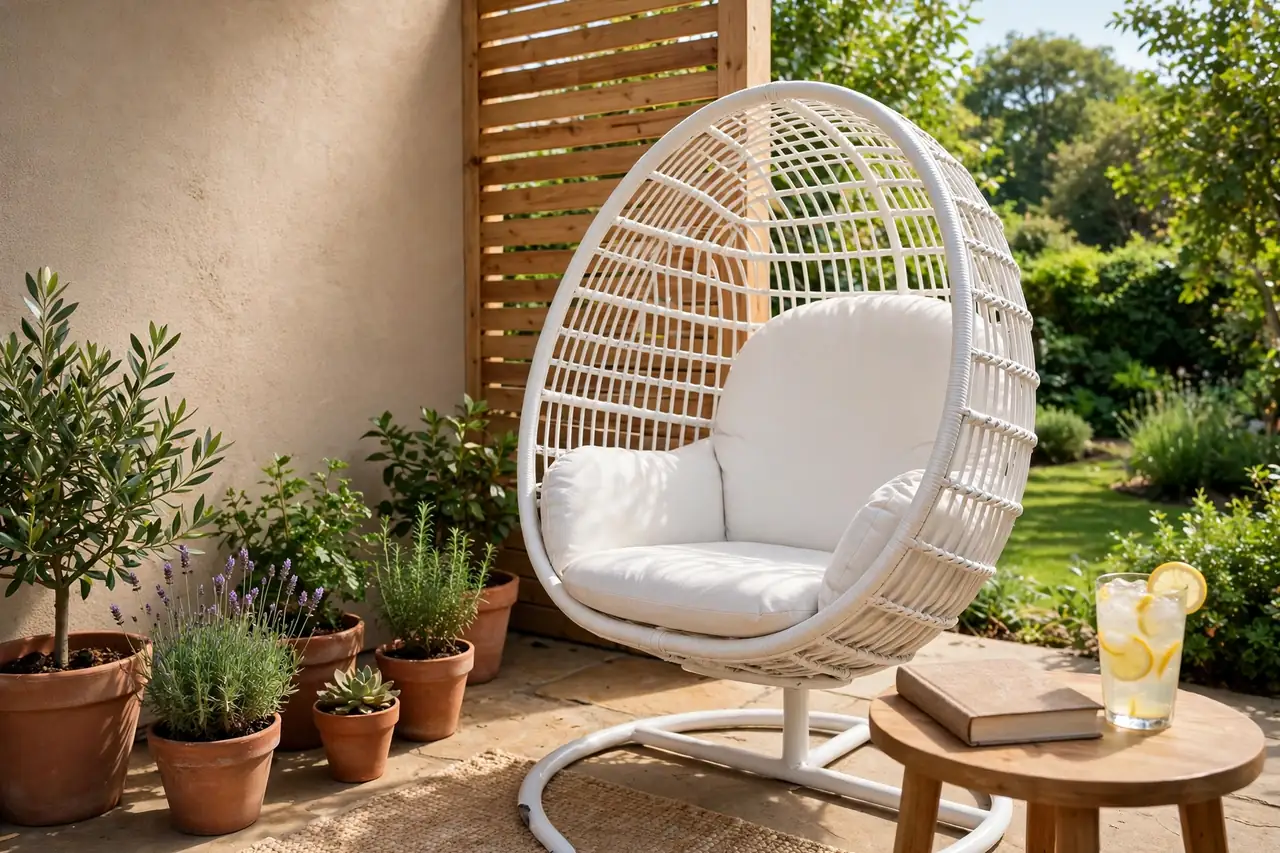
Start with the fixing point, because it carries everything. For a ceiling-hung chair, locate a solid wooden joist or beam, drill a pilot hole into the center of the joist, and install the eye bolt or mounting plate so it bites into solid wood. Never hang from drywall, eaves, or a hollow ceiling: they will not hold a swinging load. If the rating on your hook or chain is not printed on the packaging, do not use it.
Then check the hardware chain. The spring, the hook, the chain, and the stand must each be rated at least as high as the chair, because the weakest link decides the limit. A 350-pound basket on a 265-pound stand is a 265-pound chair, and a spring that has rusted or stretched is a spring that will fail. Check bolts, hooks, and chains at the start of every season, tighten anything loose, and replace any part that shows rust, wear, or stretching.
Test before you trust. Push the empty chair hard and watch the fixing point, the stand, and the base: the chair should swing smoothly without jerking, the stand should not rock, and the base should not lift. If the stand rocks on uneven ground, move it to a level spot or shim the feet, because a rocking stand tips when someone gets in from the side. A wide cross base or round dish base resists tipping best. And keep the swing zone clear: 60 inches of clearance diameter for a single chair, 80 inches for a double, with nothing hard in the swing path.
Test it empty, then sit in it. A hard push tells you more than a spec sheet.
How to Care for an Egg Chair
Care for an egg chair by rinsing the wicker shell with a hose, washing it gently with mild soapy water and a soft brush, bringing the cushions indoors during rain and winter, and covering the chair with a breathable cover when it will not be used for a while. Check the bolts, hooks, and chains at the start of every season.
Weekly care takes five minutes. Brush off leaves and dust from the weave, wipe the frame with a damp cloth, and dry any standing water in the seat deck. Monthly, inspect the hardware: tighten loose bolts, check the spring and hook for rust or wear, and look at the stand’s feet for wobble. A spring that has stretched or a hook that has rusted is a part to replace, not a part to ignore.
Seasonal care depends on the material. Synthetic PE wicker is made for outdoor use and resists sun and moisture, while natural rattan dries out, fades, and turns brittle outdoors, so it is better kept inside. Wash the cushion covers when the label allows, dry them fully before storing, and never put a damp cushion back on the chair. If the cushions need replacing, our replacement cushions for patio furniture guide shows how to get the fit and fabric right.
Winter care is where egg chairs live or die. An aluminum frame with HDPE rattan can stay out all year, but the cushions cannot: bring them in or use a breathable cover, because even weatherproof cushions fade and mildew if left out through a wet winter. In rainy or snowy areas, disassemble the stand and store the chair indoors, or cover it with a breathable cover and keep it off bare ground. Follow the full seasonal routine in our how to store outdoor furniture guide, and if the chair sits under a patio shade or a pergola, it will last years longer than the same chair left in open weather.
Five minutes a season beats a new chair every two years. Check the hook, dry the cushion, cover the chair.
Related Guides
If you are planning the whole outdoor space, these guides pick up where this one leaves off:
- Outdoor Sectional Couch — deep seating for the lounge corner beside your egg chair.
- Outdoor Furniture for Small Spaces — seven layouts that make a tiny patio feel big.
- Papasan Chair — the closest indoor cousin to the egg chair’s curl-up feel.
- Replacement Cushions for Patio Furniture — get the fit, fabric, and price right the first time.
- How to Store Outdoor Furniture — keep it clean, dry, and ready for spring.
- Outdoor Storage Bin — stash cushions and covers where they stay dry.
- Balcony Cover Ideas — stay dry and cool on a small balcony.
- Patio Shade Ideas — keep the egg chair cool at noon.
Frequently Asked Questions
How much weight can a hanging egg chair hold?
Standard single-person hanging egg chairs typically hold 350 lbs, which accommodates most adults. Oversized models may support up to 450 lbs with reinforced frames, while two-person hanging egg chairs typically support 600–700 lbs. Always check the specific manufacturer’s rating before purchasing.
Can hanging egg chairs be left outside?
Hanging egg chairs can be left outside depending on their construction quality and materials. Chairs with powder-coated steel frames, UV-resistant PE rattan, and weather-resistant cushions are designed for outdoor exposure, but even weather-resistant chairs last longer when protected during extreme weather or stored indoors in winter.
What is the weight limit on a hanging egg chair?
The standard weight limit on most single hanging egg chairs is 350 lbs, which includes your weight plus any additional items like books or drinks. Two-person models typically have weight limits of 600–700 lbs combined. Exceeding the limit risks structural failure and voids warranties, so choose a chair rated at least 50 lbs above your weight.
Can I leave my outdoor egg chair outside all year?
It depends on climate. In dry, mild regions, yes — with regular cleaning. In rainy or snowy areas, disassemble and store cushions indoors, and cover the chair. Extended exposure shortens lifespan regardless of material claims, so a breathable cover is worth it.
Are two-person egg chairs stable?
Yes, if designed for dual occupancy and within weight limits. However, movement becomes less smooth with two people, and the chair needs a wider base and stronger stand. Check that the stand and hooks are rated for the combined weight, not just the basket.
Disclaimer: This guide gives general advice for choosing and hanging outdoor furniture, not professional safety or structural instructions. Always follow the manufacturer’s weight limits, hang ceiling chairs only from a solid joist or beam with hardware rated for twice the load, check the spring and hook every season, and replace any worn part before use.
Ask the weight question first, then buy the chair. A tested 350 pounds, a stand on level ground or a beam that holds twice the load, and cushions that come inside when it rains. Do that, and the egg chair you buy this year is still the best seat in the garden ten summers from now.