You can secure windows without bars by layering three upgrades: stronger locks that stop the sash from moving, security film that holds broken glass together, and a sensor or light that makes an attempt loud and visible. Bars work, but they block escape routes, spoil the look of a home, and cost far more than the fixes below. Most windows need only two or three of these layers to become a hard target.
This guide covers each layer in the order that pays off fastest, cheapest first, and shows which fix fits each window type in your home.
Why Skip the Bars?
Fixed bars create a new problem while they solve one. A bedroom window with fixed bars is no longer a fire escape. If a fire blocks the door, that window must open fast, and bars turn it into a wall. Families with small children face the same worry in reverse: a child cannot climb out through bars in an emergency. SafeSoundSecurity’s guide to securing windows without bars starts with the same warning and the same two questions this guide uses: how the window opens, and whether it must stay openable as an escape.
Bars also change how a home looks and feels. They read as fear from the street, they block light and cleaning access, and they cost hundreds of dollars per window once fitted. The goal is a window that resists entry and still works as a window. Locks, film, and sensors do that job without caging the room.
Before you buy anything, answer two questions for each window. First, how does it open: up and down, sideways, or outward on a hinge? Second, must it stay openable as a fire escape? Your answers decide which fixes below are safe to use on that window.
Start With the Lock
The latch that came with your window is a weather seal, not a security lock. On a double-hung window, a burglar with a thin blade can flick a basic sash latch open from outside. Upgrading it is the cheapest real improvement you can make.
Replace the basic flip latch
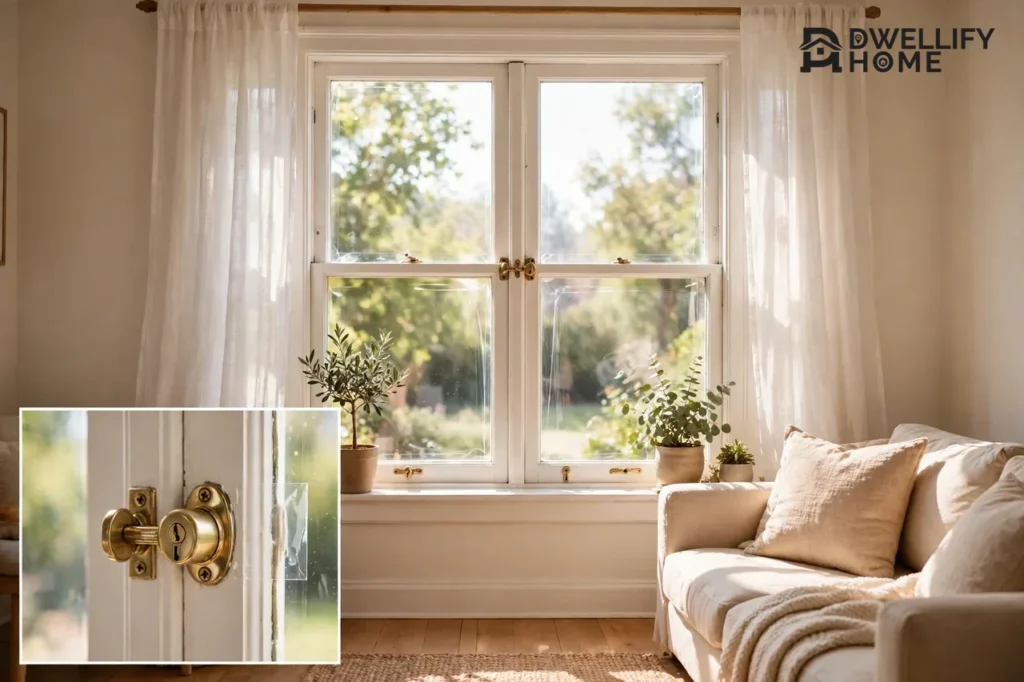
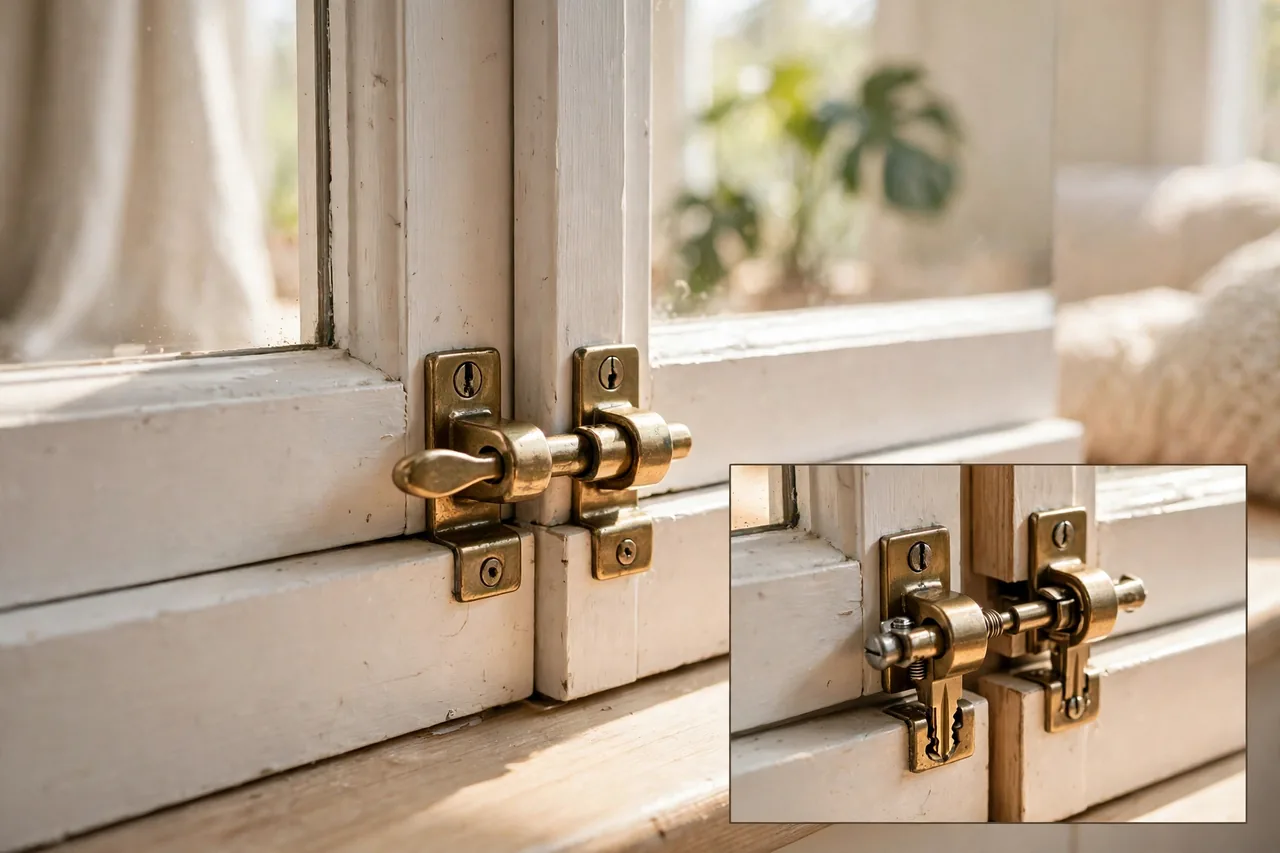
Swap the single twist latch for a stronger sash lock. A keyed sash lock needs a key to open, so breaking the glass does not help an intruder reach in and flip it. A turnbuckle lock twists into place and holds the sashes far tighter than a flip latch. Either one costs little and fits with a screwdriver in minutes. Bob Vila’s nine-step guide to securing windows without bars makes the same point: a good lock leaves an intruder only the noisy option of breaking the glass.
Add a ventilation lock
A ventilation lock holds the window open a small gap, usually 2 to 4 inches, for fresh air while stopping it from opening further. It suits bedrooms and ground-floor rooms where you want air at night without an open invitation. Fit one on each side of a wide window so the sash cannot twist past it.
Match the lock to the window type
Sliding windows take bolt locks or jaw-style locks that clamp the track. Casement windows, which crank open outward, are already among the hardest windows to force, because there is no leverage point to pry, so a keyed lock on the crank is usually enough. The lock must fit how your window moves, or it will not hold.
Pin the Sash So It Cannot Move
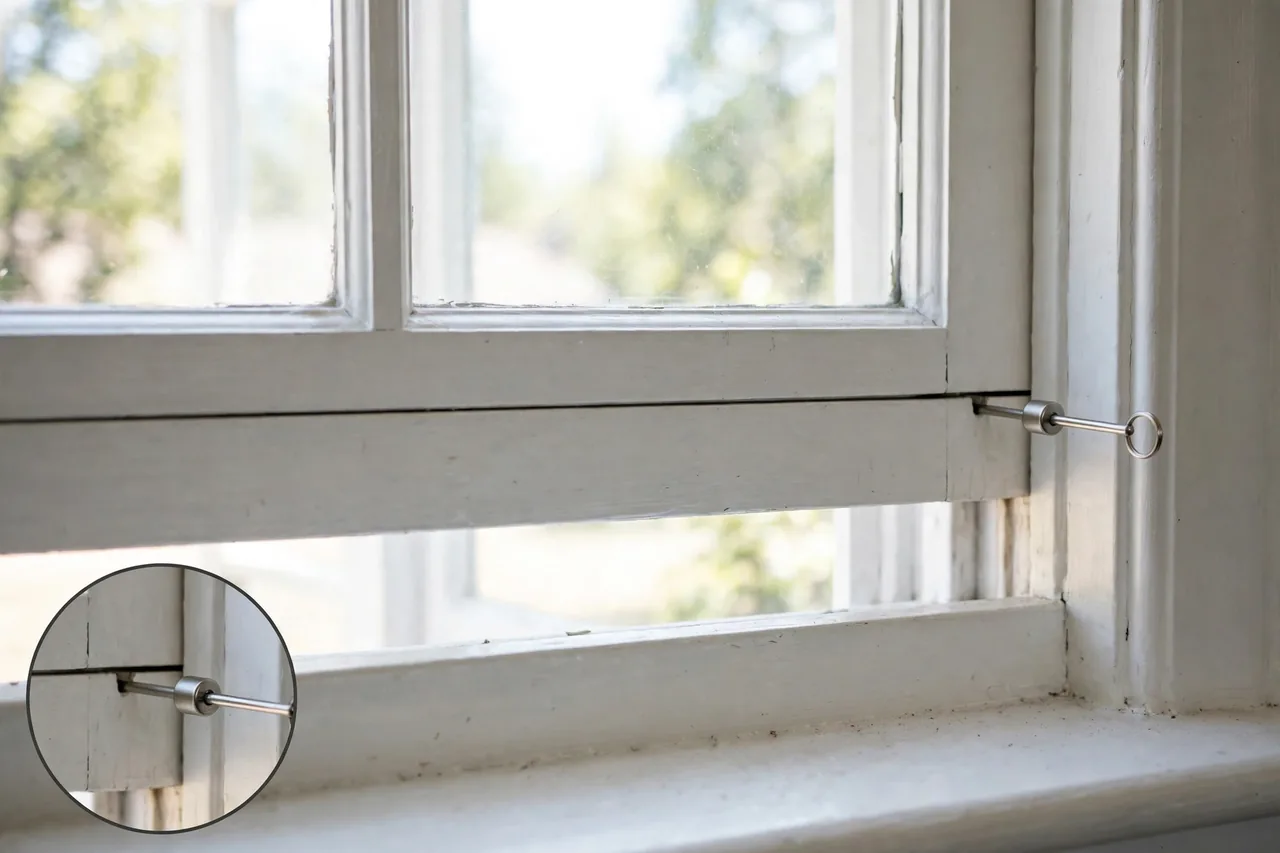
A lock holds the meeting point of the sashes. A pin holds the sash to the frame. Together they leave an intruder no quiet way in.
On a double-hung window, drill a hole through the inner sash and partway into the outer sash or frame, then slide in a hardened steel pin or a strong wooden dowel. One pin near the top and one near the bottom stops the sash from opening even if the latch fails. The job takes minutes and the pins pull out when you want the window open.
For sliding windows, cut a dowel to lie in the bottom track so the sash cannot slide. For windows that hinge open, a hinged wedge lock swings into place to block the sash and swings away when you want it open. A sash jammer does the same job on windows that open inward or outward, and it needs only two screws.
Keep one rule in mind on every bedroom window: anyone inside must be able to open the window fast without a key hunt. A pin you can pull with your fingers passes that test. A keyed lock whose key lives in another room does not. Put the key on a hook beside the window, where every adult in the home can find it in the dark.
Strengthen the Glass
Locks stop the window from opening. Glass is the other way in, and plain annealed glass breaks in one hit. Security film and better glass change that math from seconds to minutes.
Security film: the renter-friendly upgrade
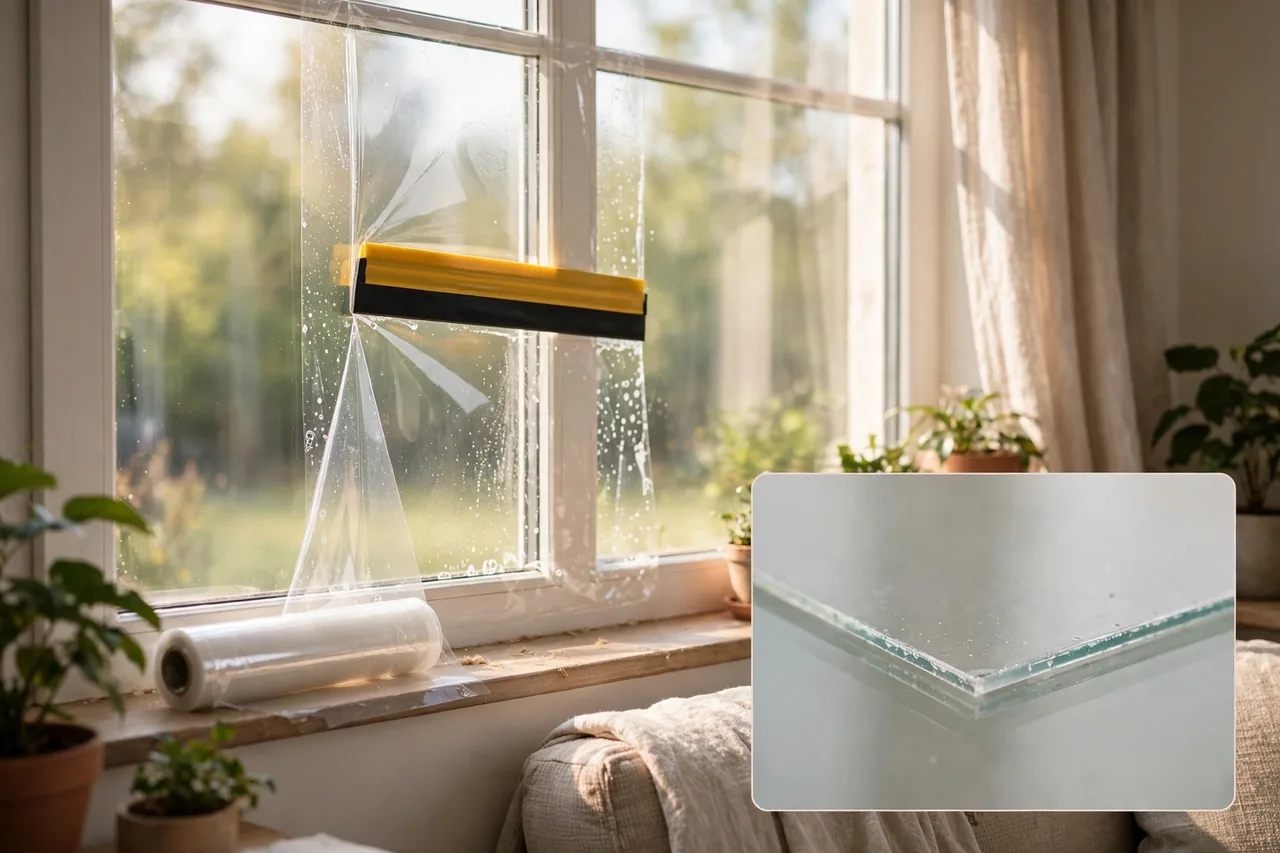
Security film is a clear polyester sheet stuck to the inside of the glass. When the glass breaks, the film holds the shards together, so the window does not fall out of the frame and no hand can reach through quickly. It does not make glass unbreakable. It buys time and noise, and time is what burglars hate.
Film thickness is measured in mils. A 4-mil film holds against a single hard hit. A 7 to 8-mil film is the standard pick for homes: it stands up to repeated blows and turns a quick smash into a two- or three-minute job. A 12-mil film carries forced-entry ratings such as ASTM F1233, but it is overkill for most homes and harder to fit well yourself. MakeMyHomeMyFortress’s window security breakdown rates the same thicknesses the same way, and warns that film alone is never enough without locks and sensors. For most homes, 7 to 8-mil film is the sweet spot.
DIY fitting takes about an hour per window the first time: clean the glass well, spray the slip solution, lay the film, and squeegee out the bubbles. Professional fitting runs about $7 to $15 per square foot and is worth it for windows you cannot reach easily. Either way, fit the film edge to edge, because a gap at the edge is where a peel starts.
Laminated and tempered glass: the permanent upgrade
If a window needs replacing anyway, choose laminated glass. It has a plastic layer baked between two panes, so it works like security film built into the window from the factory, only stronger. Tempered glass is four to five times stronger than standard glass and breaks into small dull pieces, which is safer, though it does not hold together the way laminated glass does.
Film wins on cost for windows that are otherwise sound. New glass wins when the window is failing, drafty, or due for replacement. Do not pay for new glass just for security when film gives you most of the benefit for a tenth of the price.
Add Noise: Alarms and Sensors
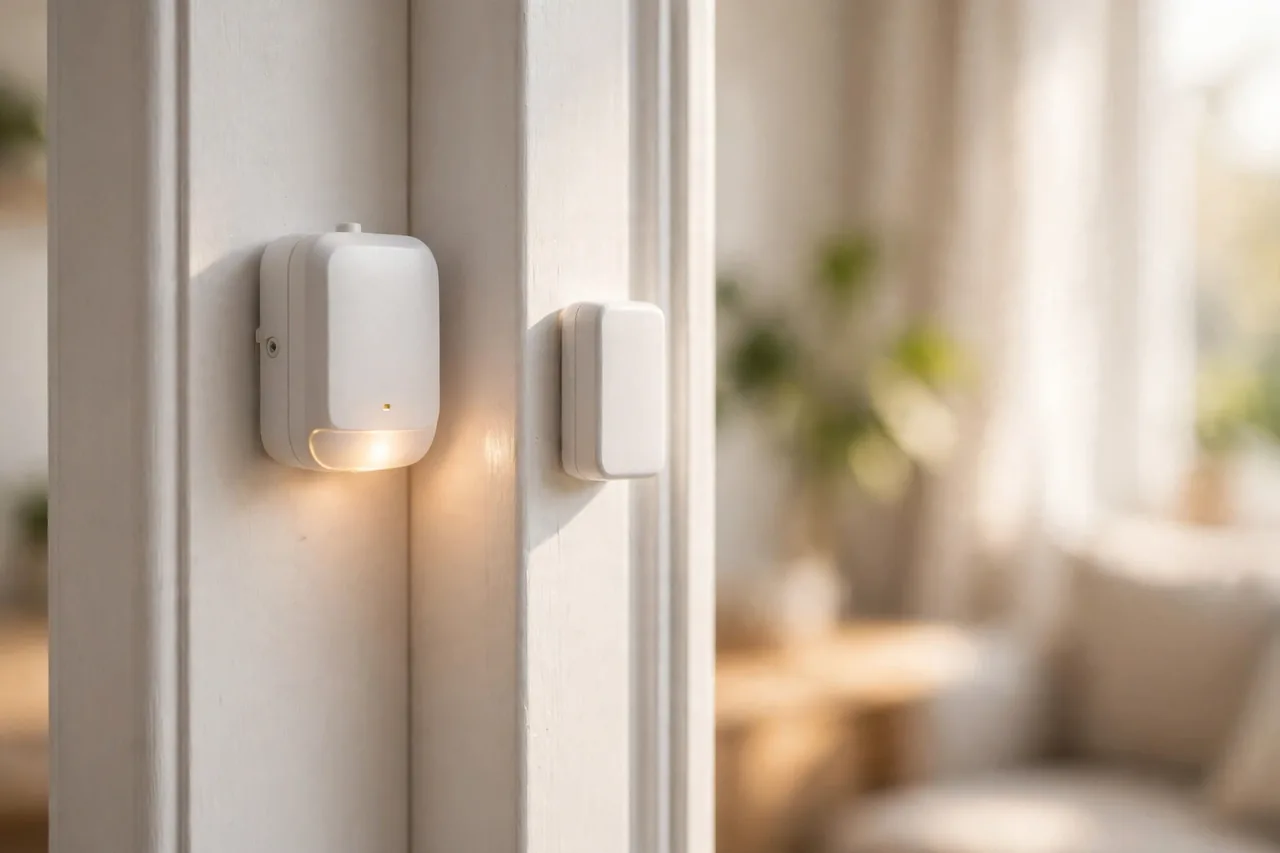
A lock delays an intruder. An alarm ends the attempt. Most burglars leave the moment a loud noise starts, because noise brings attention and attention brings risk.
A small magnetic sensor on each ground-floor window sounds when the sash moves. A glass-break sensor listens for the sound pattern of breaking glass and trips even if the window never opens. Battery versions of both cost little, stick on with no wiring, and move with you if you rent. Our guide to glass break alarms explains how the sensor tells breaking glass apart from a dropped plate.
Wire the sensors into your alarm system when you have one, so a trip alerts you by phone as well as by sound. If you have no alarm system, standalone sensors with a loud built-in siren still do the job. Test each sensor monthly by opening the window while the alarm is armed, and change the batteries the moment the low-battery chirp starts.
Light, Eyes, and Plants Outside
The outside of a window matters as much as the hardware on it. A burglar picks the dark, hidden window, not the lit one a neighbor can see.
Fit a motion-sensor light above ground-floor windows, aimed so it switches on before someone reaches the glass. Light alone will not stop a determined intruder, but it removes the cover of darkness that quiet break-ins need. Our guide to outdoor landscape lighting shows how to layer lights so the yard stays bright without blinding your neighbors.
A visible camera at the front and back doors changes the same calculation. It does not need to be expensive: a doorbell camera or a single outdoor camera watching the most hidden window is enough. See our best home security camera system guide for picks that cover a whole house, or our wireless outdoor camera guide for a renter-friendly start.
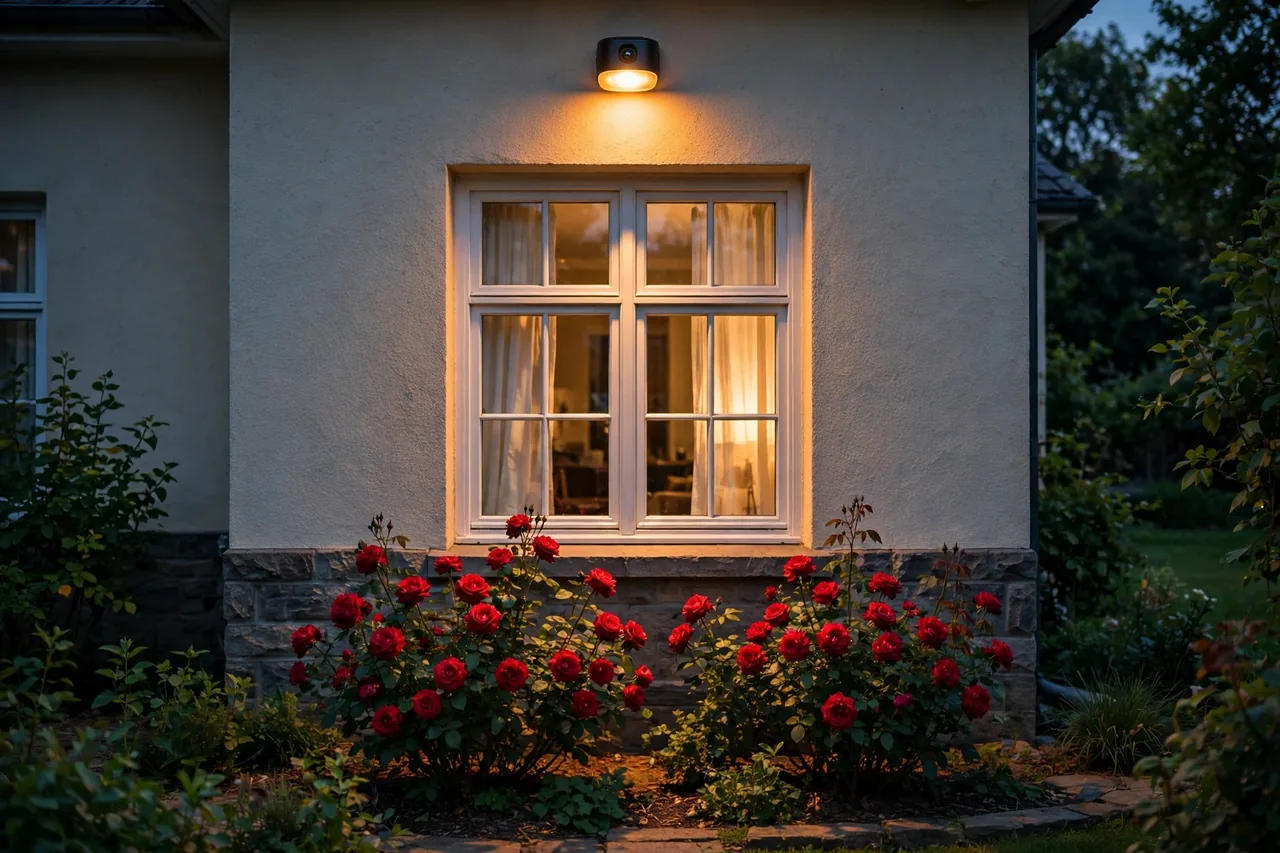
Thorny bushes under ground-floor windows add a low-tech layer that costs almost nothing. Roses, barberry, or holly planted tight under the sill make standing at the window painful, and they look like ordinary garden planting. Keep them trimmed below the sill so they do not block light or give cover, and keep the path to the window clear of anything worth climbing on.
Which Fix Fits Your Window Type?
Window type, first fix, and the layer to add next.
| Window type | First fix | Add next | Escape note |
|---|---|---|---|
| Double-hung | Keyed sash lock | Security film, 7 to 8 mil | Keep pins finger-pullable |
| Sliding | Track dowel or bolt lock | Film and sensor alarm | Dowel lifts out fast |
| Casement | Keyed crank lock | Film and motion light | Crank opens outward freely |
| Awning | Keyed latch | Sensor alarm | Small opening already limits entry |
| Fixed picture window | Security film | Glass-break sensor | Not an escape route; film freely |
| Basement hopper | Keyed lock and pin | Sensor alarm and light | Keep an escape path in bedrooms |
How Much Does It Cost?
Securing a window without bars is cheap compared with bars, which run hundreds of dollars per window fitted. A keyed sash lock costs about $10, a pair of steel pins costs about $10, and a magnetic sensor alarm costs $10 to $25. A roll of 7 to 8-mil security film covers a standard window for a few dollars per square foot when you fit it yourself, while professional fitting runs about $7 to $15 per square foot. A ground-floor window secured for under $50 beats a $300 set of bars that blocks your fire escape.
Spend the money in this order: locks first, film second, sensors third, light fourth. Each layer adds real protection, and the first $30 buys most of it.
What Not to Do
Three mistakes undo good hardware. First, do not fit fixed bars or screwed-shut windows on any bedroom without a second way out. A room needs two escape routes, and a nailed window removes one. Second, do not rely on film alone. Film without a lock leaves the sash free to slide, and a lock without film leaves the glass one hit from open. Layers work together; one layer alone leaves a gap.
Third, do not hide the security. A visible sensor, a camera, and a lit yard warn an intruder before they touch the glass. Hidden hardware only helps after the attempt starts. Let the outside of your home say the windows are protected, and most attempts will never start.
Related Guides
- Glass Break Alarm: How the Sensor Hears a Break-In Before It Happens
- Best Home Security Camera System: 6 Picks for 2026, With the Real 5-Year Cost
- Wireless Security Cameras Outdoor: Placement, Wi-Fi Range, and the Best Picks for 2026
- Best Outdoor Landscape Lighting Ideas: Make Your Yard Safe and Beautiful After Dark
- Door Locks Security: How Locks Fail and What the Ratings Mean
Frequently Asked Questions
Is window security film effective?
Yes, for what it is made to do. Film holds broken glass together so a burglar cannot reach through after one hit, turning a 15-second smash into a noisy two- or three-minute job. It does not make glass unbreakable, so pair it with a good lock and a sensor for real protection.
How much does window security film cost?
DIY film costs a few dollars per square foot plus an hour of your time per window. Professional fitting runs about $7 to $15 per square foot. A 7 to 8-mil film is the usual home pick, and it costs far less than replacing the window with laminated glass.
Can you secure windows in a rental without bars?
Yes. A track dowel, clamp-style sash locks, stick-on sensor alarms, and security film all fit without drilling or permanent change. Add a motion light only if your lease allows exterior fittings, and keep every original part so you can restore the window when you move out.
Do window alarms deter burglars?
Yes, because most burglars leave when noise starts. A magnetic sensor sounds when the sash moves, and a glass-break sensor sounds when glass breaks. Neither stops entry by itself, so use alarms with locks and film, not instead of them.
What windows are hardest to break into?
Casement windows are among the hardest openable windows to force, because they crank open outward and give an intruder no edge to pry. Fixed picture windows with laminated glass are harder still, but they cannot open at all. For openable windows, a casement with a keyed lock and film is a strong combination.
Stay Safe While You Work
Keep every bedroom window openable from inside without a key hunt. Fit the locks and film on ground-floor windows first, where break-ins happen most, then work upward. Check your local fire code before fitting anything that could block an escape route, and ask a locksmith to check any window that still feels loose after new hardware. This guide gives general home advice, not professional security advice.
Start this weekend with one window: a keyed sash lock and a dowel. That single window will show you how fast the whole house gets safer.