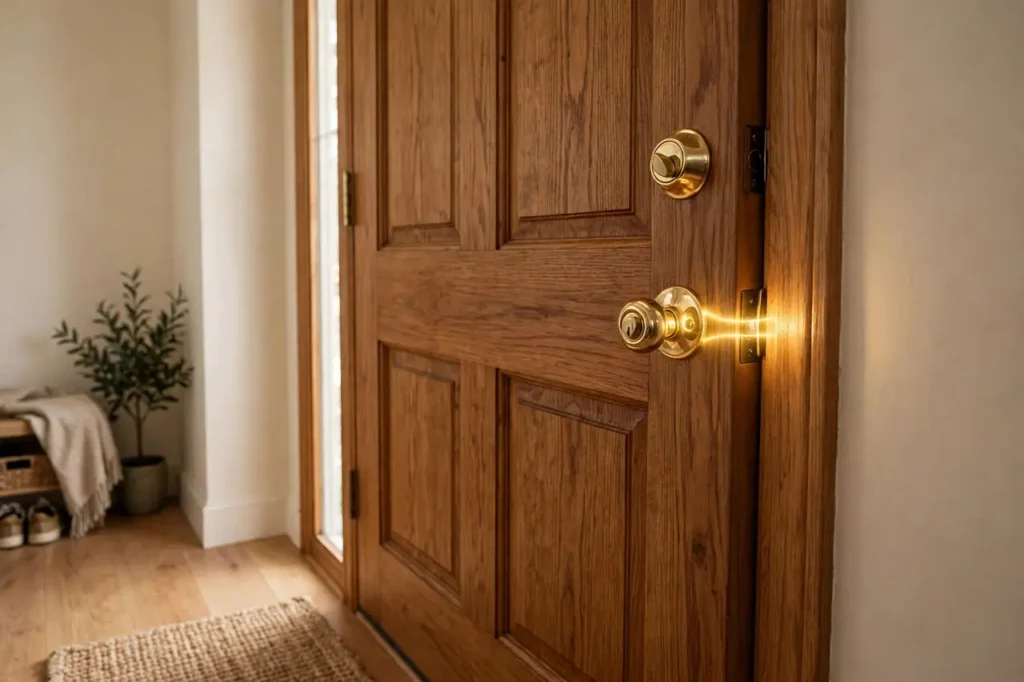
A single cylinder deadbolt is a lock with a key cylinder on the outside of the door and a thumb turn on the inside. You lock and unlock it with a key from outside, and with a simple twist from inside. It is the deadbolt fitted to most home entry doors in the United States.
There are two honest reasons it became the standard. From inside, anyone can open the door in seconds without hunting for a key, which matters most in a fire. And it has one real weakness you should know before you buy: glass near the lock. This guide explains how the lock works, how it honestly compares with a double cylinder deadbolt, where the safety lines sit, and how to choose one that fits your door.
What Is a Single Cylinder Deadbolt?
A deadbolt is a separate lock that usually sits above your door knob or handle. The knob latch only keeps the door pulled shut. The deadbolt is the part that does the real resisting when someone tries to force the door.
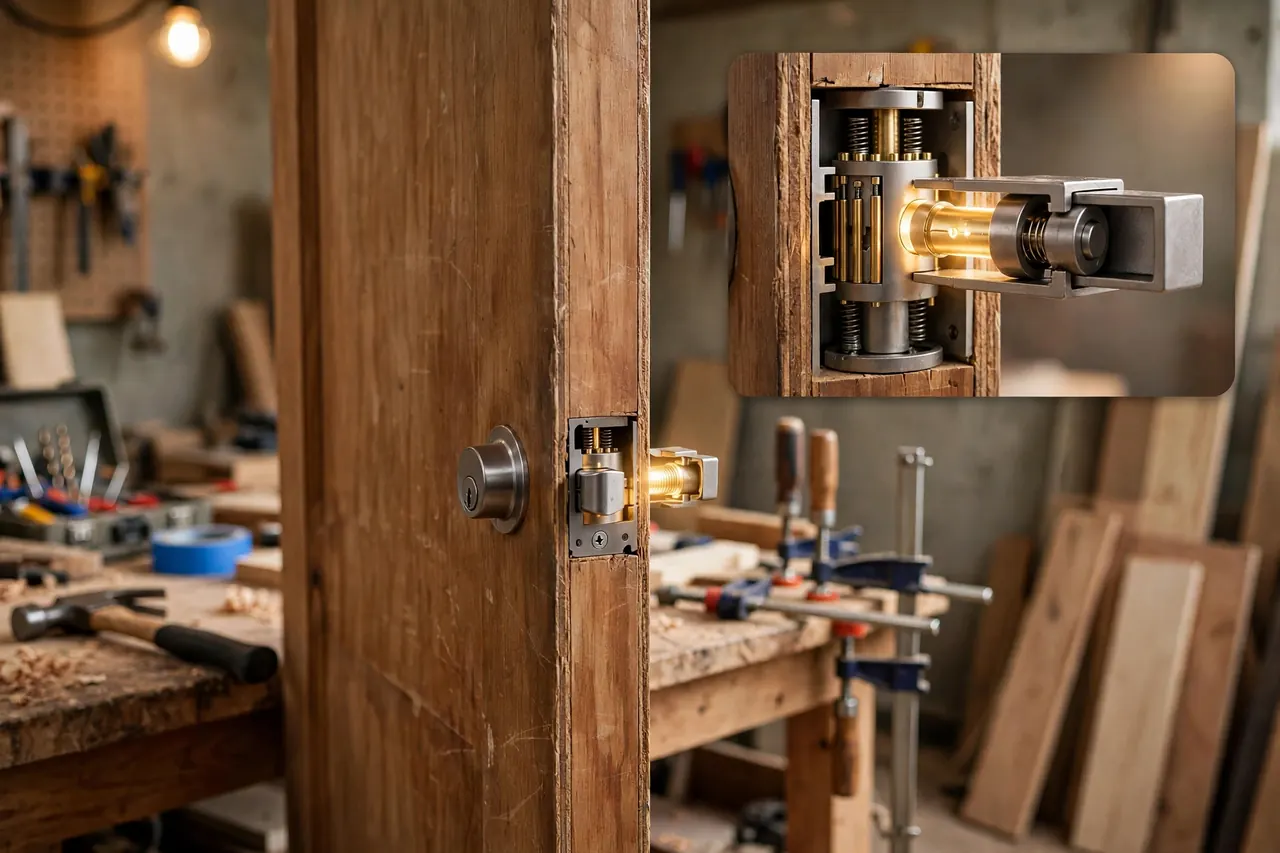
“Single cylinder” describes how the lock is operated. There is one keyed cylinder, and it faces outside. On the inside there is no keyhole at all, just a thumb turn, a small lever you grip and rotate. If you want to see where each piece sits, our guide to door lock parts names every component of a typical lockset.
The main parts are simple:
- The exterior cylinder, the round housing where your key goes in.
- The interior thumb turn, connected through the door to the same mechanism.
- The bolt unit, which slides a solid metal bolt in and out of the door edge.
- The strike plate and strike box, fitted into the door frame where the bolt lands.
How It Works, Step by Step
Inside the cylinder are small spring-loaded pins. Your key has cuts at different depths, and those cuts lift the pins into a straight line. Only then can the cylinder rotate.
When the cylinder turns, it moves a flat bar called a tailpiece. The tailpiece reaches through the door and turns the bolt unit. The thumb turn on the inside is connected to that same tailpiece, which is why a quick twist does the same job as the key.
The bolt itself is a solid bar of metal with no spring behind it. A normal knob latch has a spring and a slanted face, so it can be pushed back. A deadbolt cannot be pushed back at all. It stays out until you turn the key or the thumb turn. That is where the word “dead” comes from. On most models the bolt extends a full 1 inch into the frame, which is a big part of why it resists kicking and prying so much better than a latch.
Single vs. Double Cylinder Deadbolt: The Honest Difference
A double cylinder deadbolt has a keyed cylinder on both sides of the door. There is no thumb turn. You need a key to lock or unlock it from inside and outside alike.
Here is the side-by-side picture:
Single cylinder vs. double cylinder deadbolts at a glance
| Feature | Single Cylinder | Double Cylinder |
|---|---|---|
| How it opens from inside | Thumb turn, no key needed | Key required |
| How it opens from outside | Key | Key |
| Emergency exit | Fast, one twist | Slower, you must find and use the key |
| Glass in or near the door | Weak point: broken glass can let a hand reach the thumb turn | Reach-through trick does not work |
| Building and fire codes | Fits the usual exit-door rules | Restricted on exit doors in many areas; check local code |
| Typical cost | Lower | Usually higher |
| Best fit | Solid doors and main home entries | A narrow set of glass-door cases, where code allows |
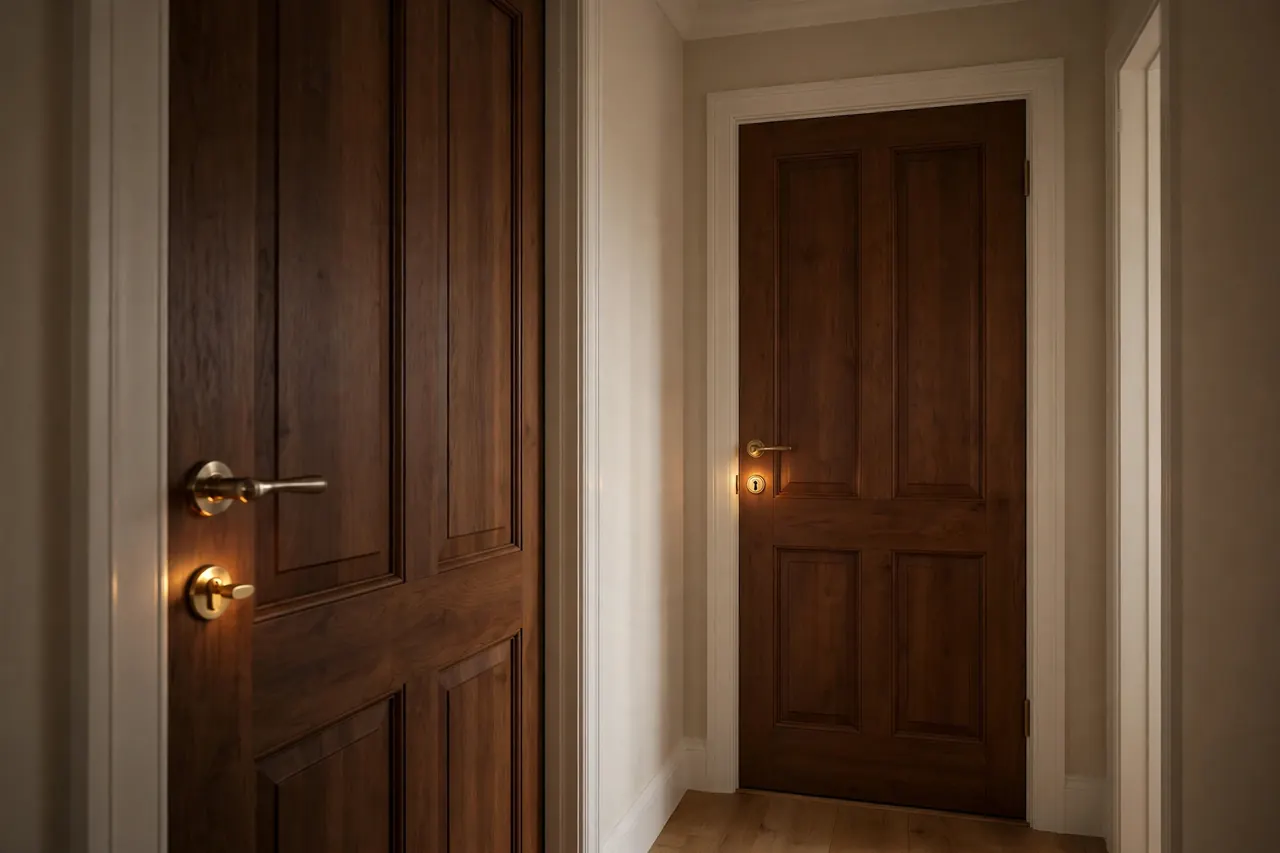
Neither type is “better” in every home, because they trade different things. A single cylinder trades a little theoretical security for speed of exit and daily ease. A double cylinder trades that speed for protection against one specific attack: a broken pane followed by a reaching hand.
One point is often missed. Both locks use a similar bolt and a similar cylinder on the outside. A double cylinder does not make the outside of your door stronger. It only changes what happens on the inside face of the door.
Cost is rarely the deciding factor. Angi puts typical single cylinder deadbolt prices at about $20 to $70 for the lock itself, with double cylinder models usually costing more (checked October 20, 2026). Fit and safety should drive your choice, not a small price gap.
There is also a family point to weigh. A thumb turn is easy for a small child to learn, and some toddlers do let themselves out. A keyed inside lock stops that, but it creates the fire problem covered next. Most families solve the child issue with a door alarm or a high latch used only while an adult is awake and nearby, rather than by keying the main exit.
The Safety Question: Getting Out Fast in a Fire
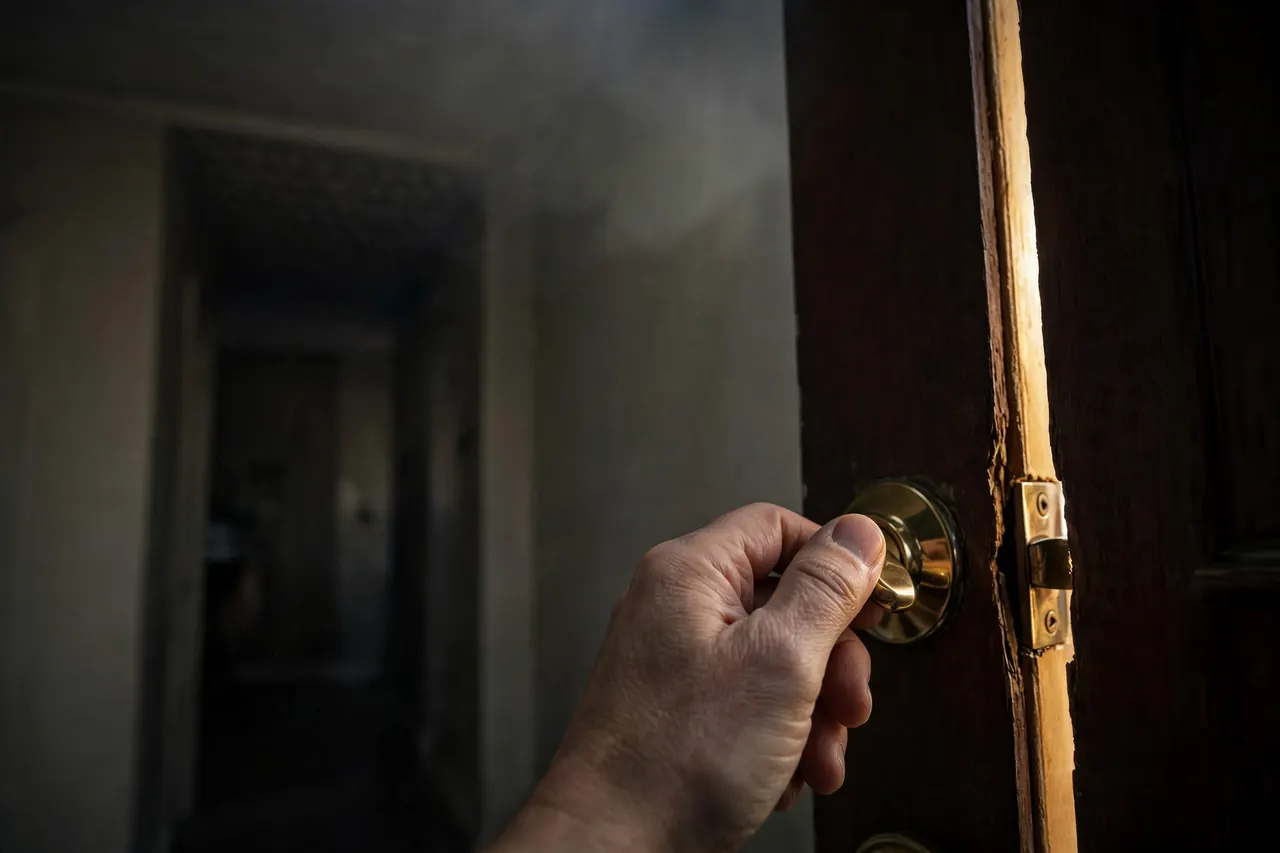
Picture the worst two minutes in a home. Smoke is dropping from the ceiling, the hallway is dark, and everyone is half awake. At the front door, a thumb turn opens in one motion, even with shaky hands. A lock that needs a key needs the key found, held the right way up, pushed in, and turned, in the dark, while breathing smoke.
That scenario is exactly why exit doors are regulated. The model building and fire codes used across the United States are built on one plain rule: a door you rely on to get out must open from the inside without a key, without a tool, and without special knowledge or effort. Code specialists at Allegion explain the same point for home entrance doors: a security device on such a door must be openable from the inside without a key or tool, so a double cylinder deadbolt does not meet that requirement on those doors.
Local rules are not identical everywhere. Some areas ban keyed-inside deadbolts on exit doors in new homes but say little about existing ones. Others restrict them more broadly. Your local code is the one that counts, so check with your city building or fire department before fitting a double cylinder deadbolt to any door your household uses to escape.
A single cylinder deadbolt passes this test by design. The thumb turn is always there, always works the same way, and needs nothing in your hand. That is the main reason it is the default choice for front and back doors, and why the rest of this guide treats it as the normal pick.
The Glass-Door Exception: When a Double Cylinder Gets Considered
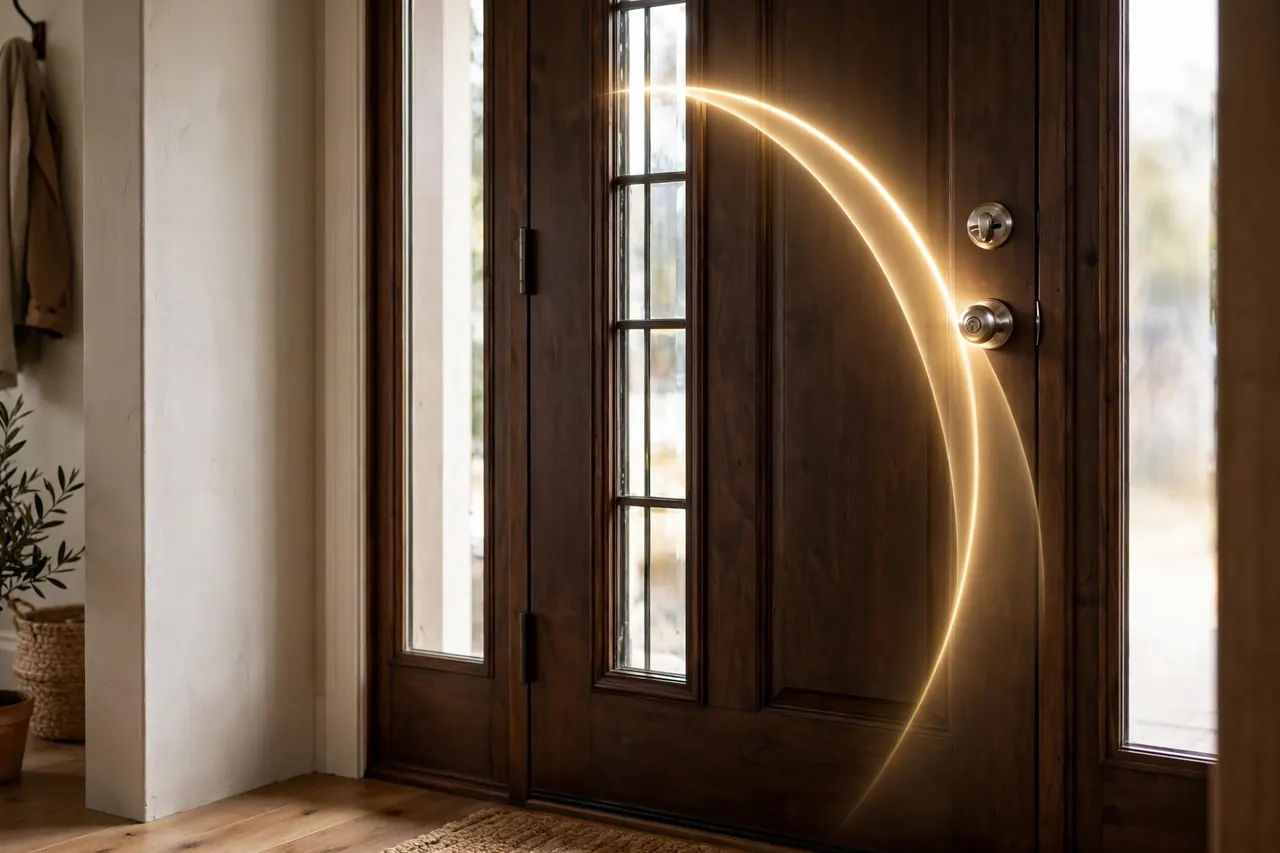
There is one situation where a double cylinder deadbolt enters the conversation honestly: glass that a hand can reach through. If your door has a glass panel, or a sidelight window beside it, an intruder can break the glass, reach in, and turn a thumb turn in seconds. The deadbolt then adds almost nothing.
Locksmiths use a rough reach guideline here. If breakable glass sits in the door or beside it within about 40 inches of the lock, the thumb turn is considered reachable. Solid doors, and doors whose nearest glass is well beyond that distance, do not have this problem.
Caution: before you fit any lock that needs a key on the inside of an exit door, check your local code first, and think hard about the fire risk described above. Keeping a key hanging near the door does not fix the problem. Keys get moved, guests do not know the habit, and smoke makes a simple search very hard. Treat a double cylinder as a last resort for one problem door, never as a whole-house upgrade.
Before you go there, try the fixes that keep your fast exit intact:
- Replace a fragile pane near the lock with laminated glass, which holds together when struck instead of falling out in pieces.
- Choose a Grade 1 single cylinder deadbolt, so the outside of the lock is as hard to defeat as it can be.
- Reinforce the strike and frame, as described below, so the door itself resists force.
- Consider a security film professionally fitted to the existing glass, which makes reach-through much slower and noisier.
If, after those steps, a double cylinder still looks like the only answer for one glass door, limit it to that door, confirm your local code allows it, and make sure every adult in the home knows exactly where its key lives. Never fit one to a bedroom door or to the only exit from any part of the home.
How to Choose a Single Cylinder Deadbolt: Fit First, Then Grade
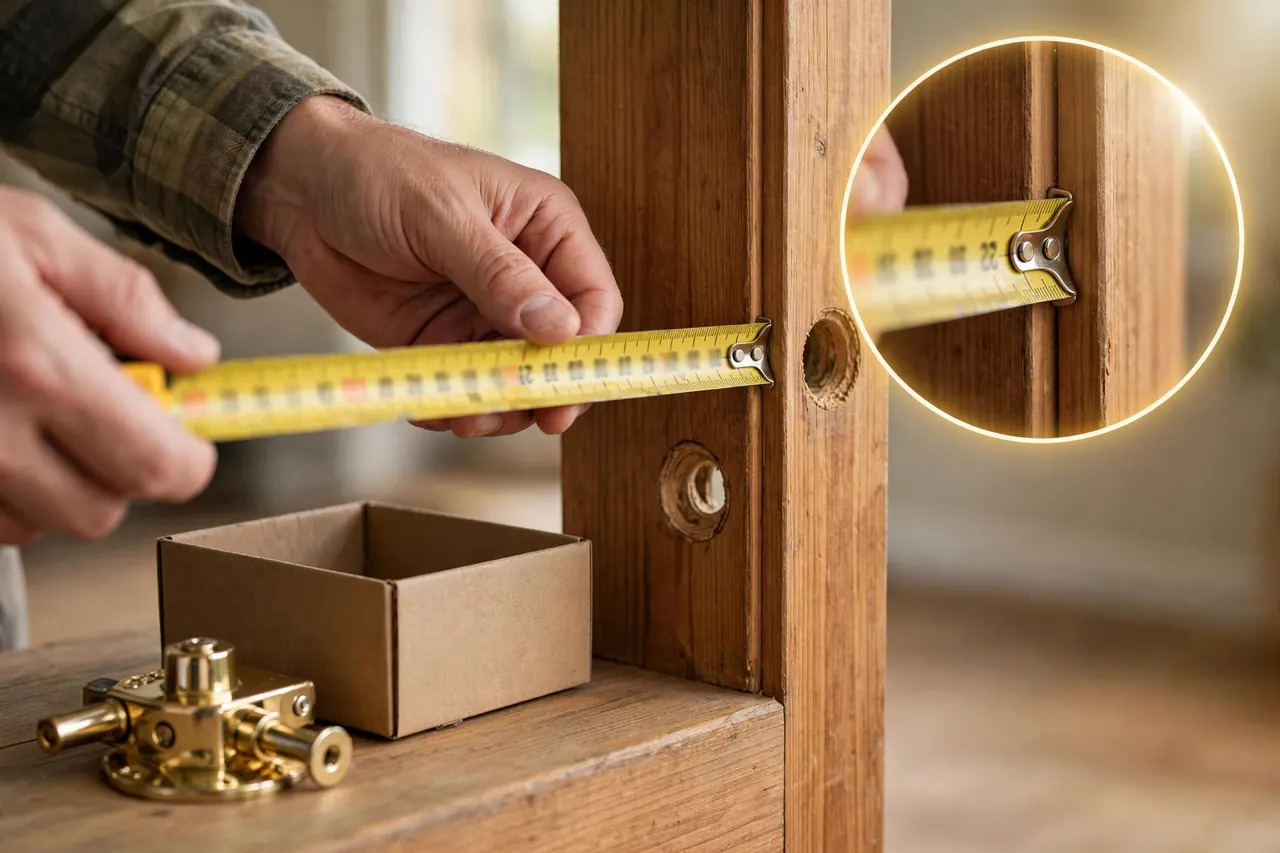
Most deadbolt disappointment is a fit problem, not a quality problem. A good lock in the wrong size binds, rattles, or will not throw fully. Measure first, in this order:
- Measure the backset. This is the distance from the edge of the door to the center of the round hole the lock sits in. On US doors it is almost always 2-3/8 inches or 2-3/4 inches. Most deadbolt latches adjust to fit both, but confirm on the box.
- Check the bore holes. The big hole through the door face, called the cross bore, is 2-1/8 inches on standard doors. The hole through the door edge is 1 inch. Manufacturer fitting guides, such as the deadbolt installation instructions used for common retail models, are built around these same standard sizes.
- Measure the door thickness. Most US entry doors are 1-3/8 inches or 1-3/4 inches thick. Most single cylinder deadbolts fit that range out of the box, some fit up to 1-7/8 inches, and thicker doors need an extension kit from the lock maker.
- If you are replacing an old deadbolt, match these three numbers to the old unit and the swap is usually a screwdriver job with no new drilling.
Pick an ANSI/BHMA Grade
Deadbolts are graded under the ANSI/BHMA A156.36 standard, which tests how many times a lock can cycle and how much abuse it survives. Grade 1 is the strongest, Grade 3 the basic minimum.
ANSI/BHMA deadbolt grades at a glance
| Grade | Minimum cycle test | Hammer-blow test | What it means for you |
|---|---|---|---|
| Grade 1 | 250,000 cycles | 10 blows | Commercial-grade strength. The best pick for a main entry door. |
| Grade 2 | 150,000 cycles | 5 blows | Solid residential quality. Fine for most doors, including many front doors. |
| Grade 3 | 100,000 cycles | 2 blows | Basic builder grade. Meets the minimum standard; best kept to low-risk doors. |
A simple rule works for most homes: Grade 1 on the main entry, Grade 2 as a sensible minimum everywhere else, and treat Grade 3 as the lock you upgrade away from when you can. As one example of the top tier, Schlage rates its B60 single cylinder deadbolt at ANSI/BHMA Grade 1, with a 1-inch bolt and a fit range of 1-3/8 to 1-7/8 inch doors. Whatever the brand, look for the grade printed on the packaging rather than marketing words like “heavy duty,” which have no standard meaning.
Look at the Cylinder Itself
Within the same grade, cylinders differ. A few checks separate a thoughtful pick from a random one:
- Pin count and security pins. Five pins is standard; six pins and anti-pick or anti-bump features raise the effort needed to manipulate the lock.
- Hardened protection. Better cylinders add hardened steel inserts that resist drilling.
- Keyway match. If your other locks use the same keyway, a locksmith can often key the new deadbolt to your existing house key, so one key runs the home.
- Rekey options. Some cylinders are made to be rekeyed in minutes with a simple tool, which is handy after moving in or losing a key. Ask before you buy if that matters to you.
Renters should pause before any of this. In most leases you need the landlord’s written permission to change a lock, and fire rules still apply to whatever is fitted. Get the agreement first, and hand over a copy of the new key if your lease requires it.
The Lock Is Only as Strong as the Frame
A Grade 1 bolt landing in a weak frame still fails early, because forced entry usually splits the wood around the strike, not the lock itself. When you fit or upgrade a deadbolt, finish the job on the frame side:
- Use a heavy strike plate with a reinforced strike box behind it.
- Drive 3-inch screws through the strike so they bite into the wall stud, not just the thin frame. Many quality deadbolts include these longer screws in the box for exactly this reason.
- Check the hinge screws too. Short hinge screws can be swapped for 3-inch screws the same way.
This is also where a deadbolt earns its keep compared with a locking knob alone. A correctly fitted deadbolt door lock, bolt thrown a full inch into a reinforced frame, is the simple setup that defeats most casual forced entry.
Frequently Asked Questions
What is a single cylinder deadbolt?
It is a deadbolt with one keyed cylinder, facing outside, and a thumb turn on the inside. You use a key to get in, and a twist to lock up or get out. It is the most common deadbolt on US home entry doors, because it pairs real bolt strength with a fast, keyless exit.
Which is better, a single or double cylinder deadbolt?
For most homes, single cylinder. It gives the same bolt and outside cylinder, with a far safer and easier exit. Double cylinder only answers one narrow problem, glass a hand can reach through, and it brings a fire risk plus possible code trouble. Choose it only for that case, and only where local code allows.
Are double sided deadbolts safe without a key?
Not fully. A double sided (double cylinder) deadbolt cannot be opened from inside without its key. In a fire, with smoke and panic, finding that key can take the seconds you do not have. That is why safety guidance and many local codes push against them on exit doors, even when a key is kept nearby.
Are two door locks better than one?
Not automatically. One good deadbolt, fitted well into a reinforced frame, gives most homes a high level of protection. A second weak lock adds little, and a second lock that needs a key from inside can make your exit less safe. Spend the money on one Grade 1 or Grade 2 deadbolt and a strong strike instead.
Are double cylinder deadbolts legal?
It depends where you live. Many US areas restrict them on required exit doors, especially in new homes, because exit doors must open from inside without a key. Some places allow them on existing homes. There is no single national rule for houses, so check with your local building or fire department before installing one.
The Bottom Line
For a normal solid entry door, the decision is short: a single cylinder deadbolt, Grade 1 if the budget allows, Grade 2 at minimum, measured to fit your bore, backset, and door thickness, and landed in a reinforced strike. Keep the double cylinder idea only for the rare glass door where a hand can truly reach the lock, and only after local code and safer fixes have had their say.
Your next step takes five minutes: measure your door’s backset and thickness, and check the grade printed on your current deadbolt. Those three facts tell you exactly what to buy, and whether the lock you already own is quietly doing its job.
Disclaimer: This guide is general information for US homeowners, not legal or code advice. Building and fire rules vary by city and state, and they change over time. Check your local code before changing any lock on an exit door, and use a licensed locksmith or your local fire department’s guidance for anything involving fire safety or a door you are unsure about.