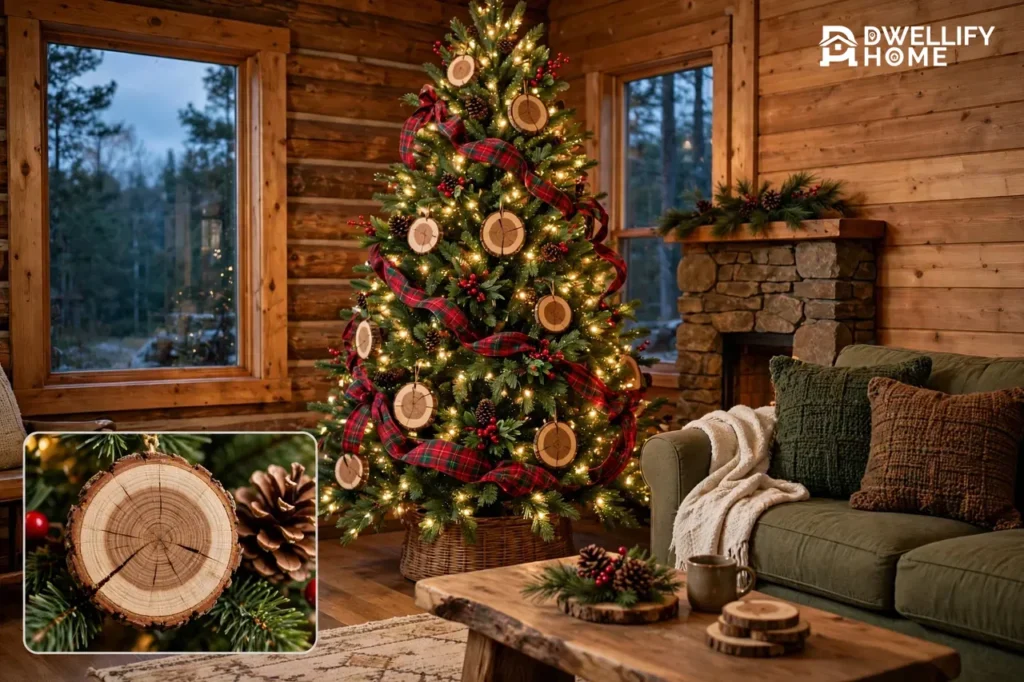
Rustic Christmas tree decorations turn a plain green tree into a cozy cabin scene. You build the look with natural wood, pinecones, plaid ribbon, deep reds and greens, and warm white lights, then you add soft, natural textures until the tree feels like a walk in the woods. Start with lights, add ribbon and garland, hang large ornaments deep inside the branches, and finish with small woodland touches and a simple wooden topper.
This style suits a beginner because it forgives small mistakes. A pinecone that sits a little crooked still looks right. A handmade wood slice still looks charming. You do not need fancy ornaments or a designer budget. You need a clear palette, a few natural materials, and a simple order to follow, and this guide gives you all three.
What Makes a Tree Rustic?
A rustic tree feels gathered, not bought all at once. It looks like someone walked through the woods, stopped at a cabin, and brought home the best parts of both places. The branches carry rough bark, soft wool, woven ribbon, and warm wood. The colors stay deep and earthy. Nothing shines too hard, and nothing looks too perfect.
Think of rustic as the woodland cabin style. You see natural wood slices, pinecones, berries, dried orange slices, cinnamon sticks, and small deer or bird figures. You see plaid in deep red, green, and cream. You see a woven basket at the base instead of a shiny skirt. The whole tree smells faintly of pine and spice, and it invites you to sit down with a warm drink.
Rustic Christmas tree decor also leaves room for family pieces. A handmade ornament from your child fits right in next to a carved wooden star. A felt owl looks at home beside a pinecone. That mix of old and new, bought and made, gives a rustic tree its warmth. No two rustic trees look exactly alike, and that is the point.
How Rustic Differs From Similar Tree Styles
People often mix up rustic with a few close cousins, so here is the simple split. Farmhouse style leans on burlap, galvanized metal, and soft neutrals, and it feels like a farm kitchen. Flocked style means snow-dusted branches, and the snow does most of the work. Miniature style means small trees, and wooden style means wood itself is the main material, even on a modern tree.
Rustic is broader than all of those. It uses wood, yes, but it also uses pinecones, plaid, berries, wool, and cabin colors to build a woodland mood. A rustic tree can hold a wood ornament, but it does not stop there. If you want help choosing between the big theme families first, our guide to Christmas tree themes compares them side by side.
Choose Your Rustic Palette First
Pick your colors before you buy a single ornament. Rustic trees look best with two main colors and one small accent. Deep green comes free with the tree itself, so your palette really means the colors you add on top of that green.
Start with warm browns and creams as your base. Wood, twine, burlap touches, and natural pinecones give you brown. Cream ribbon, wool, and candlelight tones soften the brown. Then add one deep color for warmth: classic red, burgundy, or a deep forest plaid. That deep color is your star, and it should show up in several places, not just once.
Keep shiny gold and silver to a light accent, if you use them at all. A few warm brass bells or a thin gold thread in your plaid can add glow. A tree full of glitter and chrome stops feeling rustic fast. Matte, rough, and soft finishes do the real work here.
Table: Rustic palettes at a glance
| Palette | Colors | Feel | Best for |
|---|---|---|---|
| Classic cabin | Deep red, green, brown, cream | Warm and traditional | Family rooms, log-style homes |
| Woodland walk | Brown, sage green, cream, berry red | Calm and natural | Neutral rooms, nature lovers |
| Deep and cozy | Burgundy, brown, gold, cream | Rich and evening-like | Formal rooms, low light |
| Bright woodland | Red, green, white, brown | Cheerful and fresh | Kids’ trees, bright rooms |
Test your palette with five ornaments before you commit. Hang them, turn the lights on, and step back about six feet. Do the colors read as one family? Does the mood feel like a cabin in the woods? If yes, you have your palette. If no, swap one color now, while swapping is still cheap.
What to Gather Before You Start
You do not need a huge shopping trip. Most rustic trees come together from a short list, plus a few things you already own. Shop your ornament boxes first. You may already own half a rustic tree without knowing it.
- Warm white lights, about 100 lights per foot of tree height as a starting point
- Wide plaid ribbon, wired if you can find it, so it holds its shape
- Natural pinecones in two or three sizes, with twine loops for hanging
- Wood slice ornaments, wooden stars, and small carved figures
- Dried orange slices, cinnamon stick bundles, and berry picks
- Wood bead garland or twine garland for texture
- A few felt or wooden woodland animals, such as deer, owls, or birds
- A simple wooden star or antler-style topper, light enough for the top branch
- A woven basket, wooden crate collar, or plaid blanket for the base
- Ornament hooks, twine, and scissors
Choose a tree that fits your room. A full green tree suits rustic best, because the deep green sets off the browns and reds. A slim tree works well in a small room, and an artificial tree works just as well as a real one for this look. If you use a real tree, check the water every day and keep it away from heat, as the safety section below explains.
Count your ornaments before you start. As a rough guide, most decorating guides suggest 10 to 15 ornaments per foot of tree height, so a 6-foot tree wants about 60 to 90 ornaments in total. Rustic trees can use fewer shiny baubles and more picks, pinecones, and ribbon, so treat that number as a starting point, not a rule. A slim tree needs fewer pieces, and a very full tree hides more and wants a few extra.
How to Decorate a Rustic Christmas Tree, Step by Step
Work in this order, and step back for a look after each step. The order matters more than any single ornament. Lights first, ribbon next, large pieces deep inside, then small pieces at the tips. If you hang ornaments before lights, you will move half of them later.
Before you climb or plug anything in, read the safety notes. Use a sturdy step stool or ladder, never a chair, and keep three points of contact while you reach. Ask another person to hold the ladder and hand you the topper. Check every light strand for worn cords, broken bulbs, or loose connections before you hang it, and throw away any damaged strand. Never use lit candles on or near the tree.
- Shape and fluff the tree. Pull every branch outward and downward, fill gaps by hand, and turn the tree slowly to check it from all sides. A rustic tree should look full and a little wild, not stiff and even.
- String the lights. Start near the trunk at the top and weave down, pushing strands deep inside the branches as well as around the outside. Plug them in and check for dark patches before you move on. Warm white light suits rustic best, because it glows like firelight.
- Add the topper early, while you can still reach. A wooden star or a simple antler topper crowns a rustic tree well. If it leans, it is too heavy for the top branch, so swap it for a lighter one rather than wiring it into place.
- Drape the ribbon and garland. Weave wide plaid ribbon in loose waves down the tree, or cut it into short lengths and tuck the ends deep into the branches so the middle puffs out. Add wood bead garland in the opposite direction so the two lines cross gently.
- Hang the largest ornaments deep inside. Push large pinecones, wood slices, and big baubles toward the trunk, not just on the tips. These inner pieces fill the dark center and make the tree look thick.
- Add medium ornaments at eye level. This band is where most people look, so give it your best pieces and your main color. Spread each color around the tree in a loose zigzag, not in straight rows.
- Fill with small pieces and picks. Tuck berry picks, dried orange slices, cinnamon bundles, and small woodland animals into gaps. These finishers turn a good tree into a full one.
- Finish the base, then step back in low light. Hide the stand with a basket or blanket, turn the room lights down, and walk to the far side of the room. Fix bare spots, color clumps, or a leaning topper now, not on Christmas Eve.
Hang ornaments at different depths on purpose. If every ornament sits on the branch tips, the tree looks like a poster. If some sit deep, some sit mid-branch, and some sit on the tips, light bounces between them and the tree gains a shape you can feel, not just see.
Natural Wood, Pinecones, and Plaid: The Rustic Trio
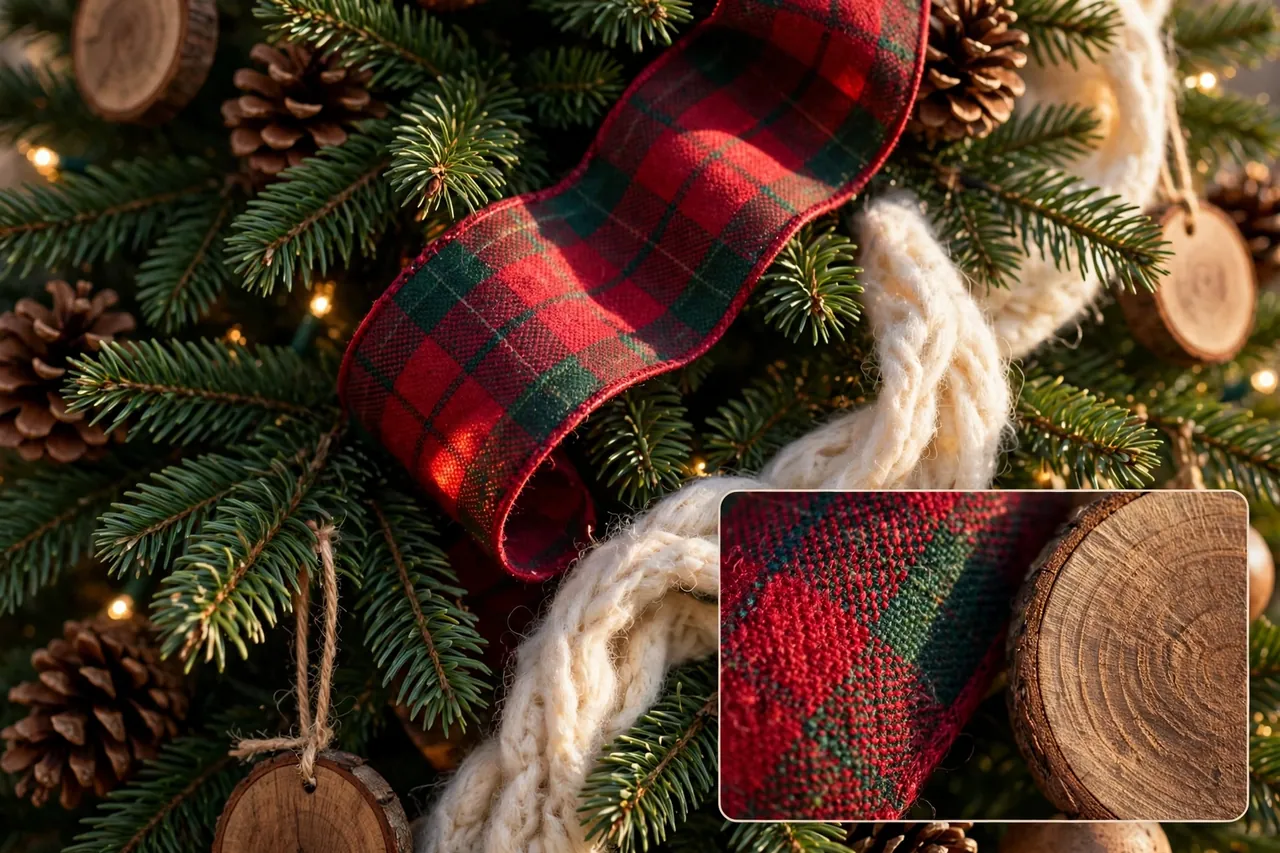
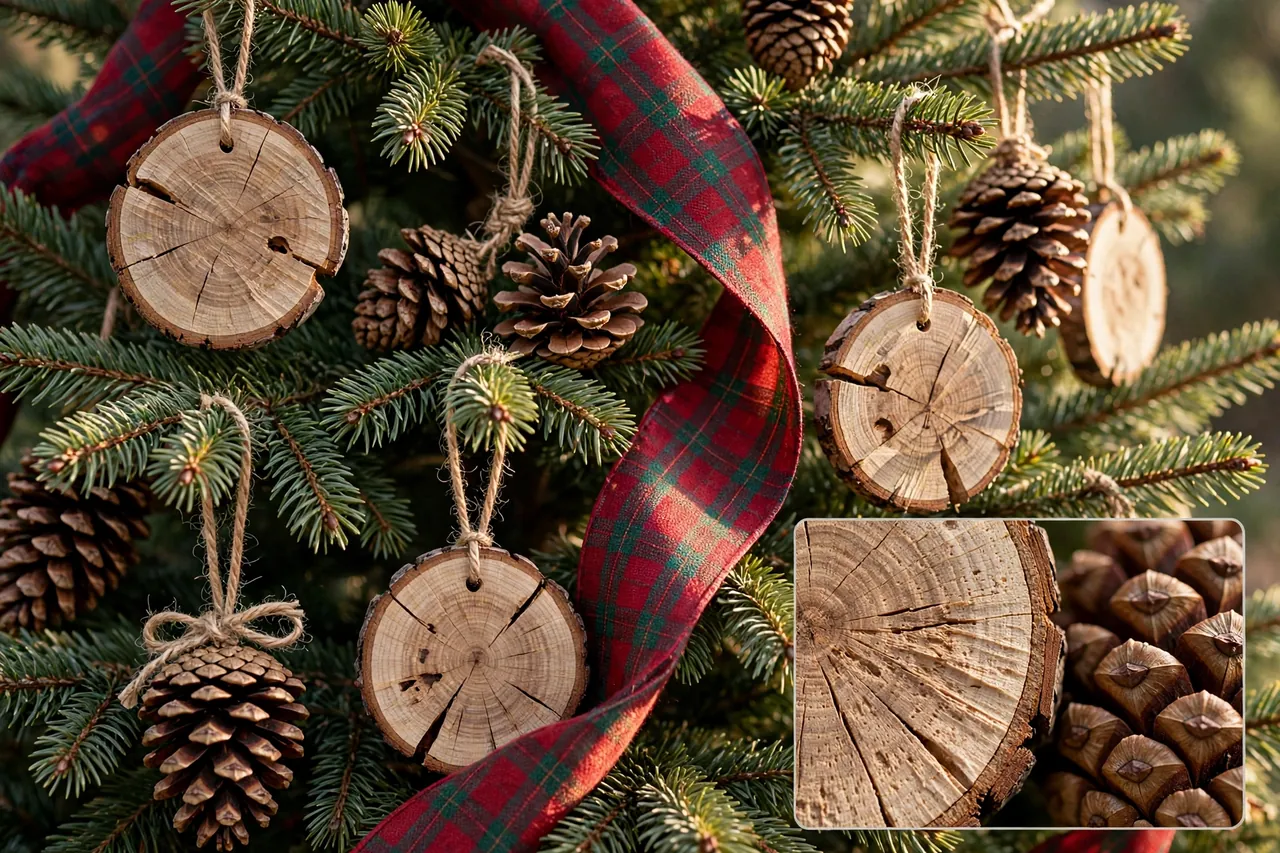
Three materials carry almost the whole rustic look, and each one does a different job. Wood gives the tree its backbone. Pinecones give it texture and a forest feel. Plaid gives it color and a cabin pattern. Get these three right, and the rest of the tree falls into place.
Wood works best in several forms, not just one. Mix flat wood slices with carved stars, small wooden houses, and a few smooth wood beads. Keep the wood natural or lightly stained, and skip thick paint that hides the grain. The grain is the beauty here. A wood slice with a simple burned edge or a hand-painted snowflake still reads as wood first.
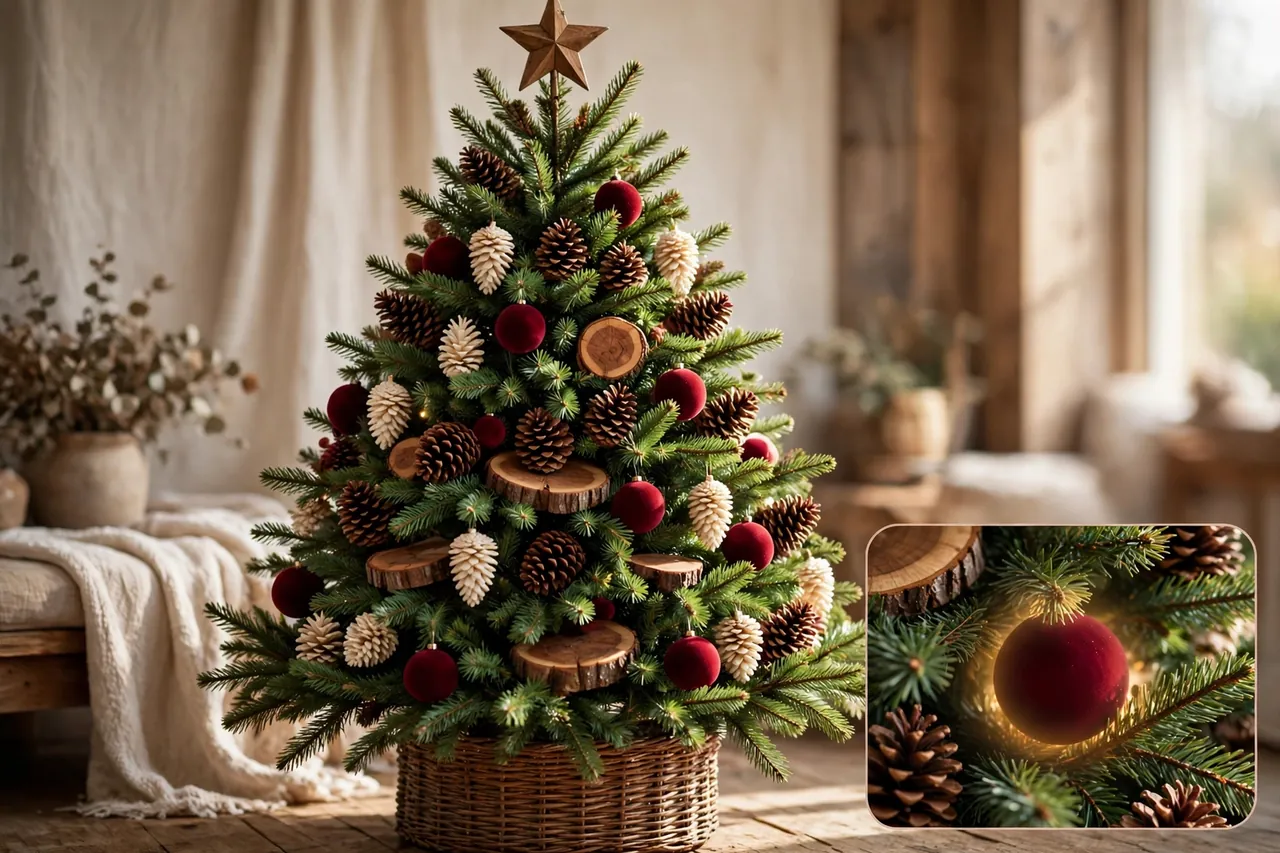
Pinecones work best in mixed sizes. Hang large pinecones low and deep, where they anchor the tree, and tuck small ones near the tips. Tie them with twine, not plastic hooks, for a more natural look. Leave most pinecones natural, and dust only a few lightly with white paint if you want a hint of snow. Too much fake snow turns a rustic tree into a flocked tree, which is a different style.
Plaid ties the tree together like a warm blanket. Choose one plaid, not three, and repeat it in the ribbon, the base blanket, and maybe one bow. Deep red and green plaid suits a classic cabin tree. Black and cream buffalo plaid suits a bolder, simpler tree. Let the plaid run in long, loose lines so the eye follows it down the tree.
Woodland Touches: Berries, Dried Fruit, and Forest Friends
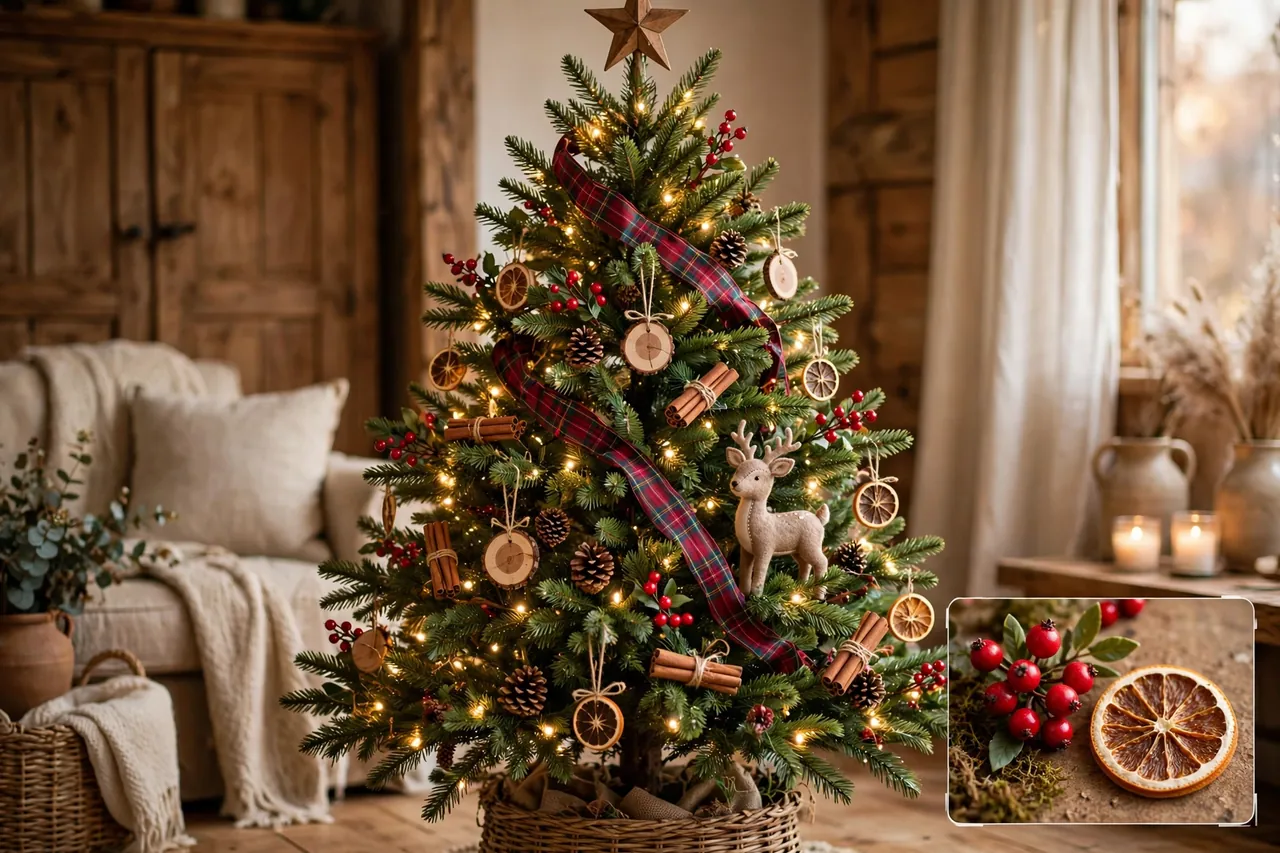
Once the trio is in place, add the small natural details that make a rustic tree feel alive. Red berry picks give the tree its brightest pop of color, and they read like holly against snow. Tuck them into gaps rather than hanging them in rows, so they look like they grew there.
Dried orange slices add warmth, color, and a faint sweet scent. Hang them with twine, or thread several on a garland for a softer effect. Cinnamon stick bundles tied with twine add spice and a cabin-kitchen feel. Keep dried pieces away from open flames and hot bulbs, and check them through the season, since real dried fruit can attract pests if it sits in a warm, damp room for weeks.
Woodland animals finish the forest story. A felt deer tucked deep in the branches, a small owl near the middle, and a bird perched near the top give the tree a sense of life. Use two or three animals, not a whole zoo. Space them in pairs or small groups, and face them outward so guests can see them. If you love this forest feeling beyond the tree, a village display under the tree can extend it right down to the floor, and the room guides below show how to tie the whole living room together.
Fresh greenery helps too. Tuck sprigs of cedar, pine, or eucalyptus into bare spots for extra texture and scent. Fresh sprigs dry out in a heated room, so check them often and swap them when they turn brittle. Faux sprigs last the whole season and still look good from the sofa, so mix the two if you like the scent but want less upkeep.
Light It Right and Keep It Safe
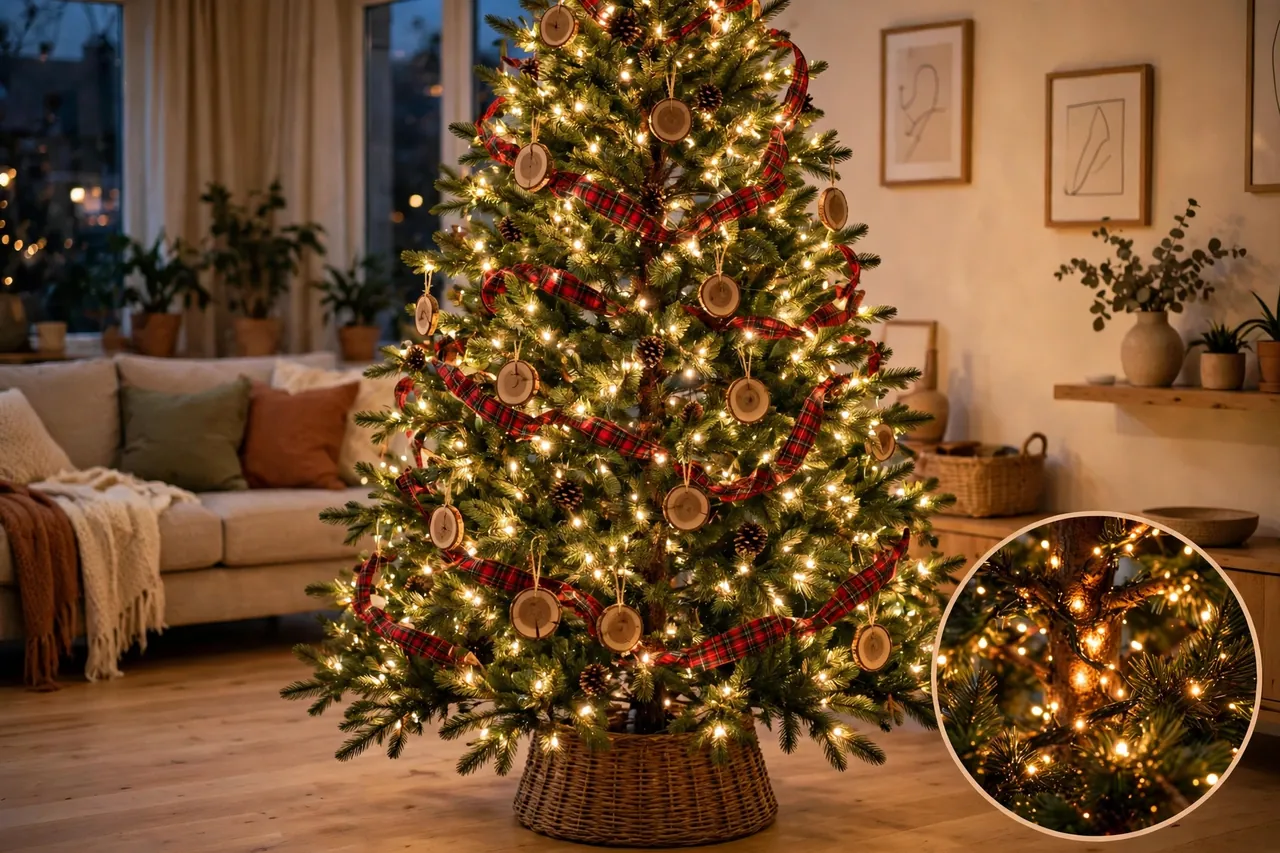
Warm white lights make a rustic tree glow like a cabin at dusk. Cool white lights can turn the same tree cold and blue, so test one strand at night before you commit. Plug it in, turn the room lights down, and look at the tree from your sofa. If the branches glow like candlelight, you have the right lights.
Plan for about 100 lights per foot of tree height as a starting point, so a 6-foot tree wants roughly 600 lights. A slim tree needs fewer, and a very full tree hides more light and wants extra strands tucked deep inside. Use LED lights where you can, because they run cooler than old incandescent bulbs and use less power. Check the label on every strand for indoor use, and follow the maker’s limit on how many strands you can connect together.
Safety comes first with a rustic tree, because so many rustic materials can burn: dried pinecones, twine, burlap, dried fruit, and fresh greenery all catch fire easily. The National Fire Protection Association (NFPA) advises keeping a tree at least three feet away from any heat source, such as a fireplace, radiator, space heater, or candle, and watering a real tree daily. The Illinois Office of the State Fire Marshal repeats the same NFPA guidance, including turning lights off before bed or before you leave the house, and never using lit candles to decorate a tree. You can read the full NFPA-based checklist on the Illinois Christmas tree safety page, and Connecticut’s summary of NFPA holiday fire safety tips gives the same core rules.
Keep the tree clear of exits, and keep cords where no one trips over them. Use a timer so the lights switch off on their own at night. If a real tree starts to drop lots of needles or feels dry and brittle, take it down promptly. A dry tree is a fire risk, and it should not sit in the garage or against the house after Christmas.
Finish the Look: Topper, Base, and the Room Around the Tree
The topper and the base frame your tree the way a frame finishes a picture. A rustic topper should echo the tree in miniature: a wooden star, a simple twig star, or a small lantern shape all work. Skip a glittery, oversized topper here. It pulls the eye away from the woodland mood you just built.
At the base, hide the stand completely. A woven basket collar gives the strongest cabin feel, and it takes seconds to set in place. A wooden crate collar suits a farmhouse-leaning room, and a plaid blanket wrapped around the base feels soft and cozy. Pull your base out past the lowest branches so no stand legs peek out, and keep it clear of heaters and open flames.
Carry the rustic mood into the room with a light touch. Repeat your plaid on a sofa throw or a pillow, and repeat your wood tones on the mantel with a pinecone garland. Our guide to Christmas ideas for decorating a fireplace mantel shows how to echo the tree without copying it, and our decorating ideas for a living room for Christmas walks through the whole room zone by zone. One shared color on the tree, the sofa, and the mantel makes the house feel planned, not decorated in pieces.
If you want a different tree mood for a second tree or next year, our guide to white Christmas tree decorations covers the snowy, bright opposite of rustic, so you can compare the two looks before you choose.
Rustic on a Budget: DIY Pieces That Look Expensive
Rustic is one of the cheapest tree styles to build well, because nature gives you most of the materials. Collect pinecones on a walk, dry orange slices in your oven on low heat, and tie cinnamon sticks with twine you already own. Those three free or cheap moves can fill half a tree.
Make wood slice ornaments from a fallen branch, if you have safe tools and a dry branch to work with, or buy plain wood slices and paint simple snowflakes, stars, or initials on them. Make salt-dough ornaments with the kids, and let them paint their own woodland animals. A tree with a few handmade pieces feels more personal than a tree bought all at once, and guests always ask about the handmade ones first.
Shop secondhand for the rest. Thrift stores often hold wooden ornaments, brass bells, and plaid ribbon for a fraction of shop prices. Buy one good roll of wired plaid ribbon rather than three cheap rolls that will not hold their shape. Sort what you own by color and finish before you shop, so you buy only what your palette still needs.
Mistakes That Break a Rustic Tree
Most broken rustic trees break in the same few ways, and every one is fixable without starting over.
- Too much shine. Glitter balls, chrome, and tinsel fight the natural mood. Pull the shiniest pieces off, and let wood and pinecones lead again.
- Too many colors. Five or six colors is not a theme, it is a rainbow. Pick the two colors you love most, and move the rest to another room or another year.
- Everything on the tips. A tree with ornaments only on the outside looks thin from the side. Push large pieces deep inside, and the tree gains depth at once.
- Too much fake snow. A heavy dusting turns a rustic tree into a flocked tree. Keep fake snow light, or skip it and let the green show.
- A topper from another style. A glitter star on a woodland tree pulls the eye the wrong way. Swap it for wood, twine, or a simple star that matches the tree.
- A bare or messy base. A visible stand breaks the cabin illusion. Cover it fully with a basket, crate, or blanket.
Step back often while you work. The best rustic decorators spend half their time standing across the room, squinting at the whole picture. If one side looks heavy, move one piece to the other side. If the middle looks empty, slide the groups a little closer. You are decorating for the people who will sit beside this tree all December, not for a photo shoot.
Quick Reference and Troubleshooting
Use this quick reference on decorating day, and keep it handy when something looks off.
Table: Rustic tree quick reference
| Job | Rule of thumb | Check |
|---|---|---|
| Lights | About 100 per foot of height | No dark patches at night |
| Ornaments | About 10 to 15 per foot of height | Large deep, small at tips |
| Ribbon | One plaid, loose waves | Eye follows it down the tree |
| Heat safety | At least 3 feet from heat | Exits clear, lights off at night |
| Real tree water | Check and refill daily | Needles stay green and flexible |
Table: Troubleshooting a rustic tree
| Problem | Likely cause | Fix |
|---|---|---|
| Tree looks thin | Ornaments only on tips | Push large pieces deep inside and add picks |
| Tree looks dark | Lights only on outside | Weave extra strands deep near the trunk |
| Colors clash | Too many colors at once | Remove all but two main colors and one accent |
| Tree looks too shiny | Glitter and chrome lead | Swap shiny pieces for wood, pinecones, and felt |
| Topper leans | Topper too heavy | Swap for a lighter wooden star |
| Base looks messy | Stand shows | Cover fully with a basket or plaid blanket |
A rustic tree also needs a short safety disclaimer, because it mixes dried natural materials with electric lights and, in many homes, a real fire nearby. This guide gives general decorating advice only. Always follow your light maker’s instructions, your tree stand instructions, and your fireplace maker’s guidance. If anything sits too close to heat, trust that feeling and move it. A tree can be restyled in minutes, but a fire cannot be undone.
Related Guides
Farmhouse Christmas Tree Decorations: A Cozy, Gathered Look That Feels Like Home · Flocked Christmas Tree Decorating Ideas That Let the Snow Shine · Wooden Christmas Tree Decorations: Warmth You Can Touch
Frequently Asked Questions
What do you put on a rustic Christmas tree?
Put natural wood ornaments, pinecones, plaid ribbon, berry picks, dried orange slices, cinnamon bundles, and a few woodland figures on a rustic Christmas tree. Add warm white lights first, then ribbon, then large pieces deep inside, and finish with small natural touches at the tips.
How many ornaments do I need for my Christmas tree?
Plan for about 10 to 15 ornaments per foot of tree height, so a 6-foot tree needs roughly 60 to 90 ornaments in total. Use fewer on a slim tree and more on a very full tree, and count picks, pinecones, and ribbon as part of that total, not extra.
How many lights should a Christmas tree have?
Aim for around 100 lights per foot of tree height, which means roughly 600 lights for a 6-foot tree. Go up to about 150 per foot if you love a bright, glowing tree, and weave lights deep inside the branches, not just around the outside.
What colors work best for a rustic Christmas tree?
Deep red, burgundy, brown, cream, and forest green work best for a rustic Christmas tree, with plaid tying those colors together. Keep gold and silver to a light accent, and stick to two main colors plus one small accent so the tree stays calm and woodland-like.
How can I decorate a rustic Christmas tree on a budget?
Decorate a rustic Christmas tree on a budget with free natural pieces: pinecones from a walk, dried orange slices, cinnamon bundles tied with twine, and handmade wood slice ornaments. Shop secondhand for wooden ornaments and brass bells, and buy one good roll of wired plaid ribbon.
A rustic tree rewards a slow evening, not a rushed shopping trip. Pick your palette, gather your natural pieces, work in order, and step back often. When the lights go on and the pinecones, plaid, and wood all read as one warm woodland scene, you will know you got it right. Start with the lights tonight, and let the rest of the tree grow from there.