Decluttering clothes means pulling your clothes out by category, testing every piece against your life today, and keeping only what fits, feels good, and gets worn. Sort the rest into donate, sell, repair, or recycle piles, then put back only the current-season clothes you actually reach for. Done this way, a closet audit takes a few focused hours and leaves you with a closet that is easy to use every morning.
This guide walks you through the whole job, piece by piece. You will learn how to sort by category, how to decide what stays and what goes, what to do with sentimental pieces and seasonal clothes, and where the outgoing pile should go so it does not end up back in your closet.
Start With a Quick Closet Audit
Before you pull anything out, take five minutes to look at what you own. Open every closet door, drawer, and storage bin that holds clothes, including the ones in the guest room and the hallway. Most people find clothes hiding in more places than they expect.
Next, set a simple goal for the session. For example, you might aim to finish tops and bottoms today and leave coats and shoes for tomorrow. A clear, small goal keeps the job from feeling too big to start.
Then gather your supplies: four bags or boxes, a laundry basket, and a pen. Label the boxes Keep, Donate or Sell, Repair, and Recycle. You will use the Keep box only for pieces that need a second look, not for everything you own. The rest of your keepers go straight back into the closet as you sort.
Finally, pick a time when you can work without rushing. A full wardrobe can take two to three hours, but one category, like all your T-shirts, often takes less than thirty minutes. Short, focused sessions beat one exhausting marathon.
Sort Your Closet by Category, One Pile at a Time
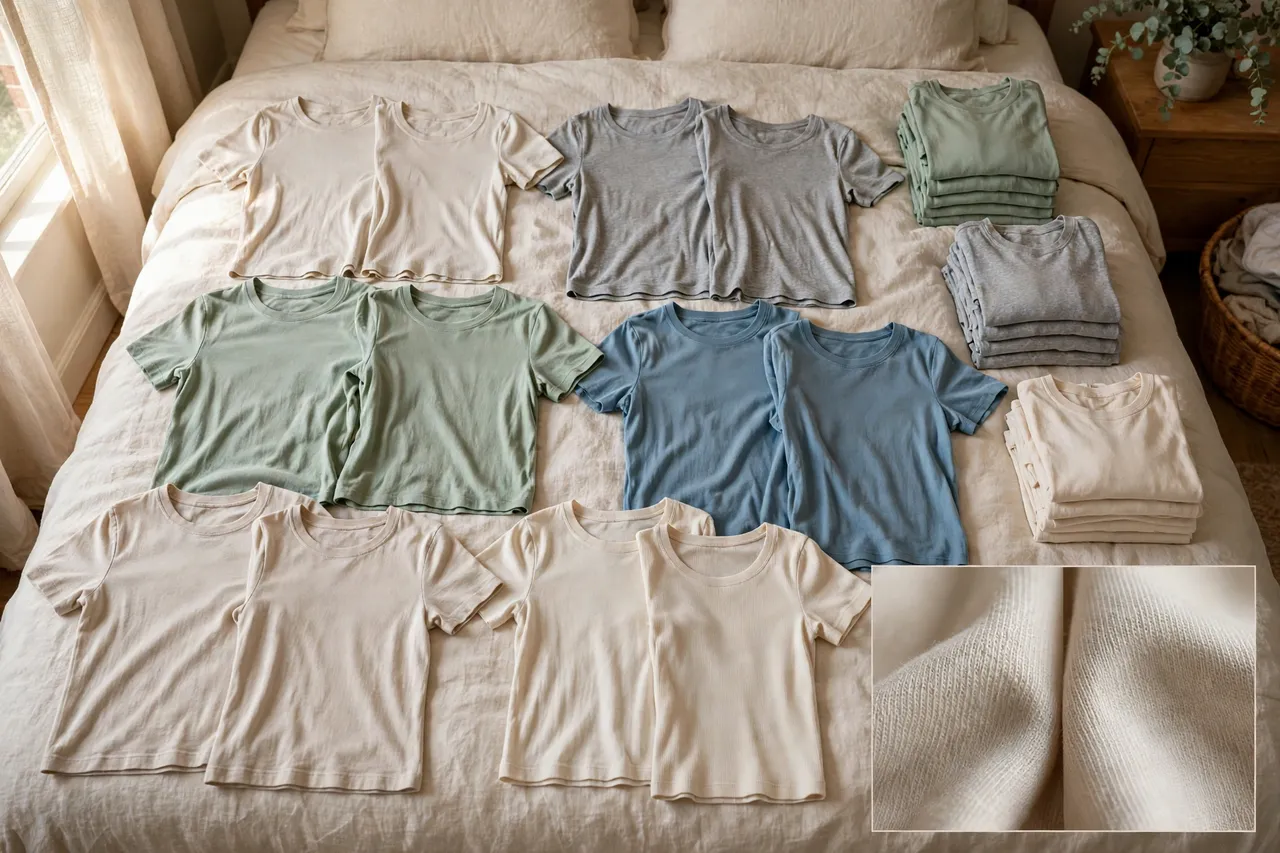
Work by category, not by drawer or shelf. When you sort all your shirts together, you see every duplicate at once. When you sort drawer by drawer, the same shirt style hides in three places and you keep all of them.
Start with the easiest category first. Socks, workout clothes, and pajamas carry the least emotion and the lowest price tags, so the decisions come fast. Early wins build the confidence you need for the harder piles, like coats and dresses.
Work through the categories in this order:
- Everyday basics: socks, underwear, sleepwear, and workout clothes.
- Tops: T-shirts, blouses, button-downs, and sweaters.
- Bottoms: jeans, pants, skirts, and shorts.
- Dresses, suits, and occasion wear.
- Outerwear: jackets, coats, and rain gear.
- Shoes, bags, belts, scarves, and other accessories.
Take one category completely out of the closet before you judge a single piece. Lay the clothes on your bed so you can see the full group. Then hold up each item and run it through the decision questions in the next section.
If you share a closet, sort only your own clothes in this pass. Mixing two wardrobes doubles the decisions and doubles the arguments. Your partner can run the same audit on their own side when they are ready.
The Keep, Donate, or Repair Decision
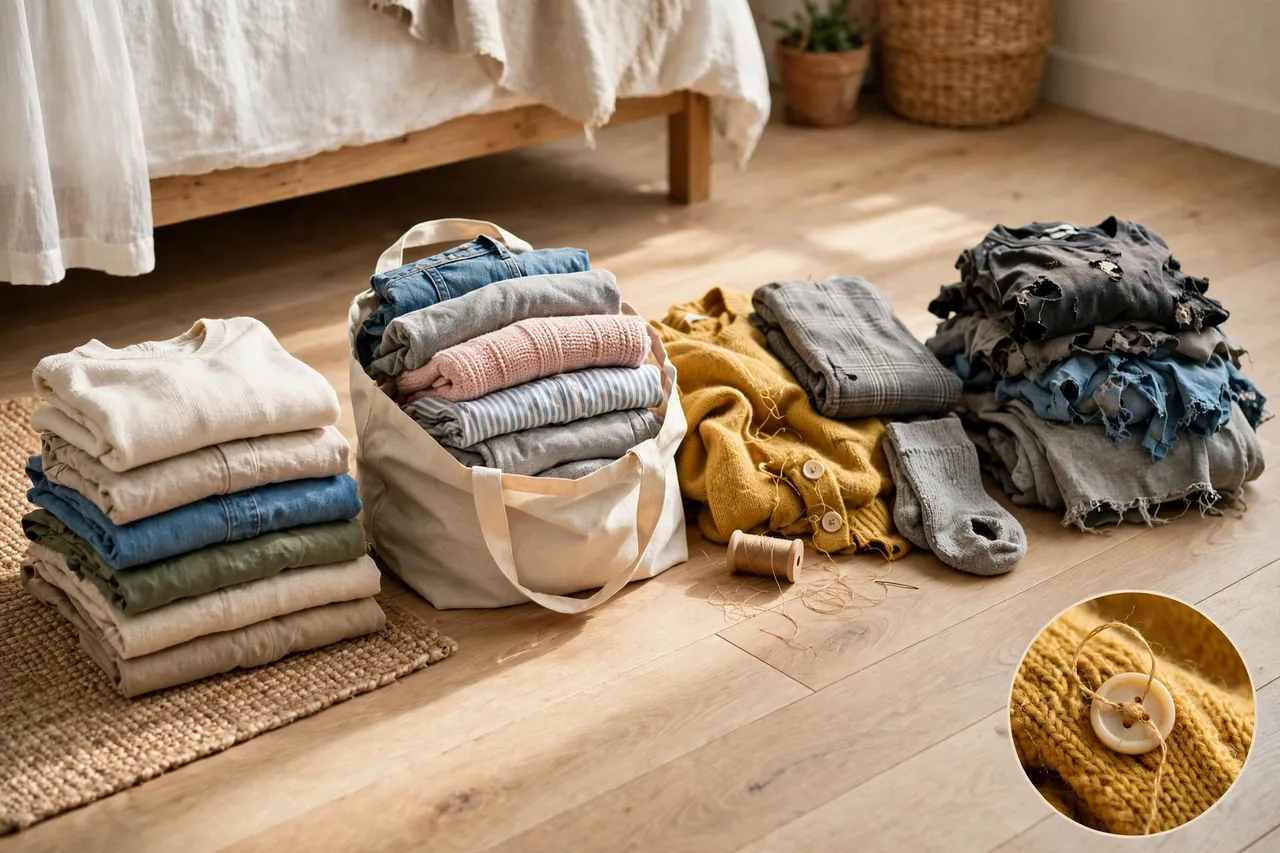
Every piece you pick up gets one of five verdicts: keep, donate, sell, repair, or recycle. Ask these questions in order, and stop at the first one that gives you a clear no.
- Does it fit your body today? Judge it on the body you have now, not the one you hope to have or once had.
- Have you worn it in the past twelve months? If a full year passed without a wear, be honest about whether you truly will wear it again.
- Does it feel good to wear? A piece that pinches, itches, or needs constant adjusting will stay unworn no matter how nice it looks on the hanger.
- Does it suit your life today? Work clothes from a job you left, or formal wear for events you no longer attend, no longer earn closet space.
- Would you buy it again today? If you would walk past it in a store now, you have your answer.
- Can you make at least three outfits with it? A piece that pairs with only one other item costs more space than it returns in use.
- Do you already own something similar that you like more? Keep the favorite and let the runner-up go.
Use this table when a piece does not pass the questions:
| Pile | Condition | Next step |
|---|---|---|
| Keep | Fits, feels good, and gets worn | Back in the closet, grouped by category |
| Donate | Clean and wearable, but unworn | Wash, fold, and bag for drop-off |
| Sell | Good condition with resale value | Photograph and list, or take to consignment |
| Repair | Fixable damage you will fix within 30 days | Set a date, or it moves to another pile |
| Recycle | Torn, stained, or worn out | Textile recycling, never the trash if you can avoid it |
The repair pile needs a hard rule. If you will not fix the missing button or the torn hem within 30 days, the piece does not belong in the repair pile. It belongs in the donate pile if someone else could wear it, or the recycle pile if it is truly worn out. A repair pile without a deadline just becomes a second closet.
For pieces you still cannot decide on, use a maybe box. Put the item in a box, store it out of sight, and set a deadline of 30 to 90 days. If you never reach for it before the deadline, let it go. Just do not let the maybe box become a permanent home for hard decisions.
What to Do With Sentimental Clothes
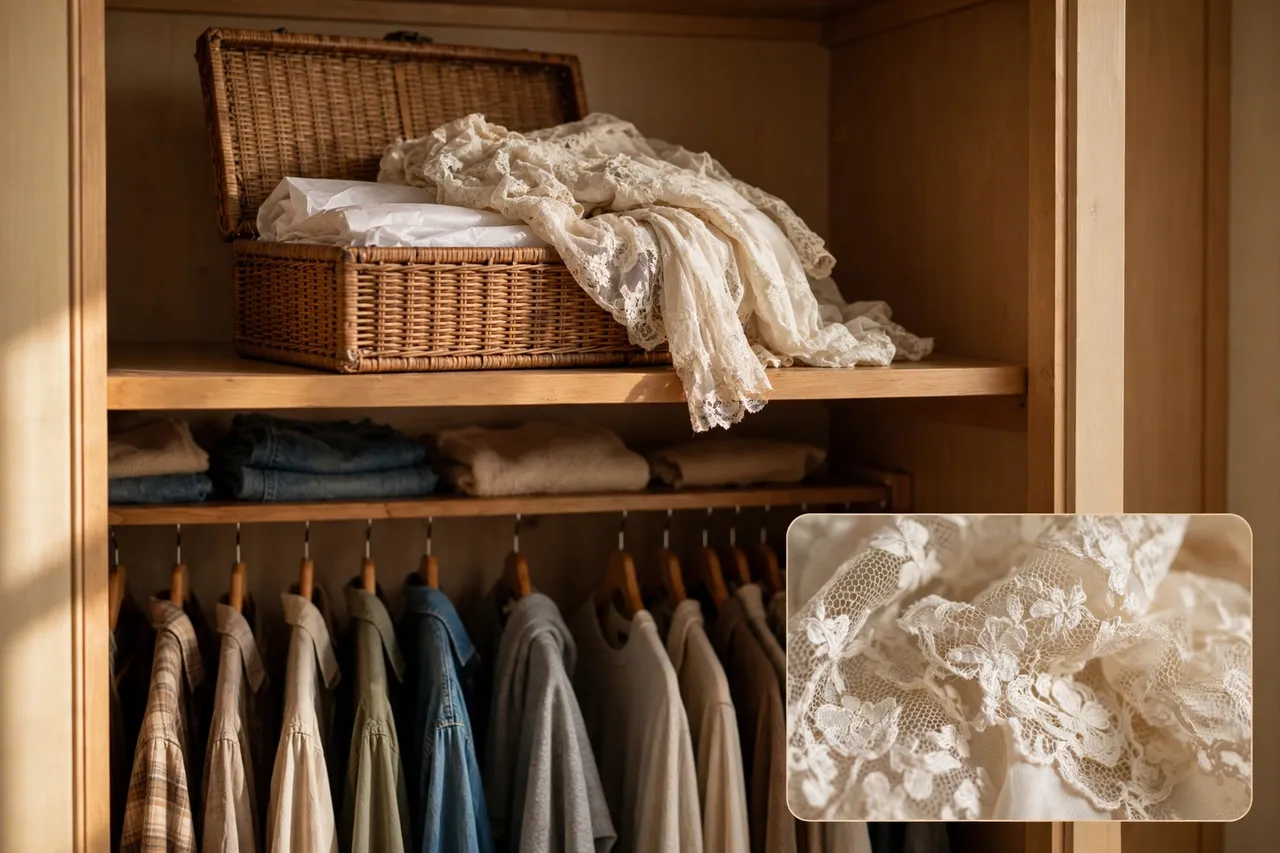
Sentimental clothes are the hardest part of decluttering clothes, and they deserve their own rules. A wedding dress, a late parent’s sweater, or a child’s first outfit is not clutter in the usual sense. It is a memory that happens to take up closet space.
Start by separating memory from everyday storage. A keepsake does not need to hang beside your work shirts. Give sentimental pieces one clear home: a single labeled box on a high shelf or in another room. When the box fills up, the box sets the limit, not your guilt.
Next, ask a different question for these pieces: do you need the whole garment, or just the memory? A photo of you wearing the piece often holds the memory just as well as the piece itself, and it takes no closet space at all. Some people keep one small part, like a patch or a button, and let the rest go.
Also watch for guilt disguised as sentiment. An expensive dress you never liked, or a gift you never wore, is not sentimental. It is a purchase you regret, and keeping it will not return the money. If guilt is the only reason a piece stays, thank it for the lesson and let it go.
Finally, set a number. Keeping three truly meaningful pieces is a choice. Keeping thirty “maybe meaningful” pieces is just a crowded closet. Pick the few that matter most, store them well, and release the rest to someone who will wear them.
Seasonal Clothes: Store, Rotate, or Let Go
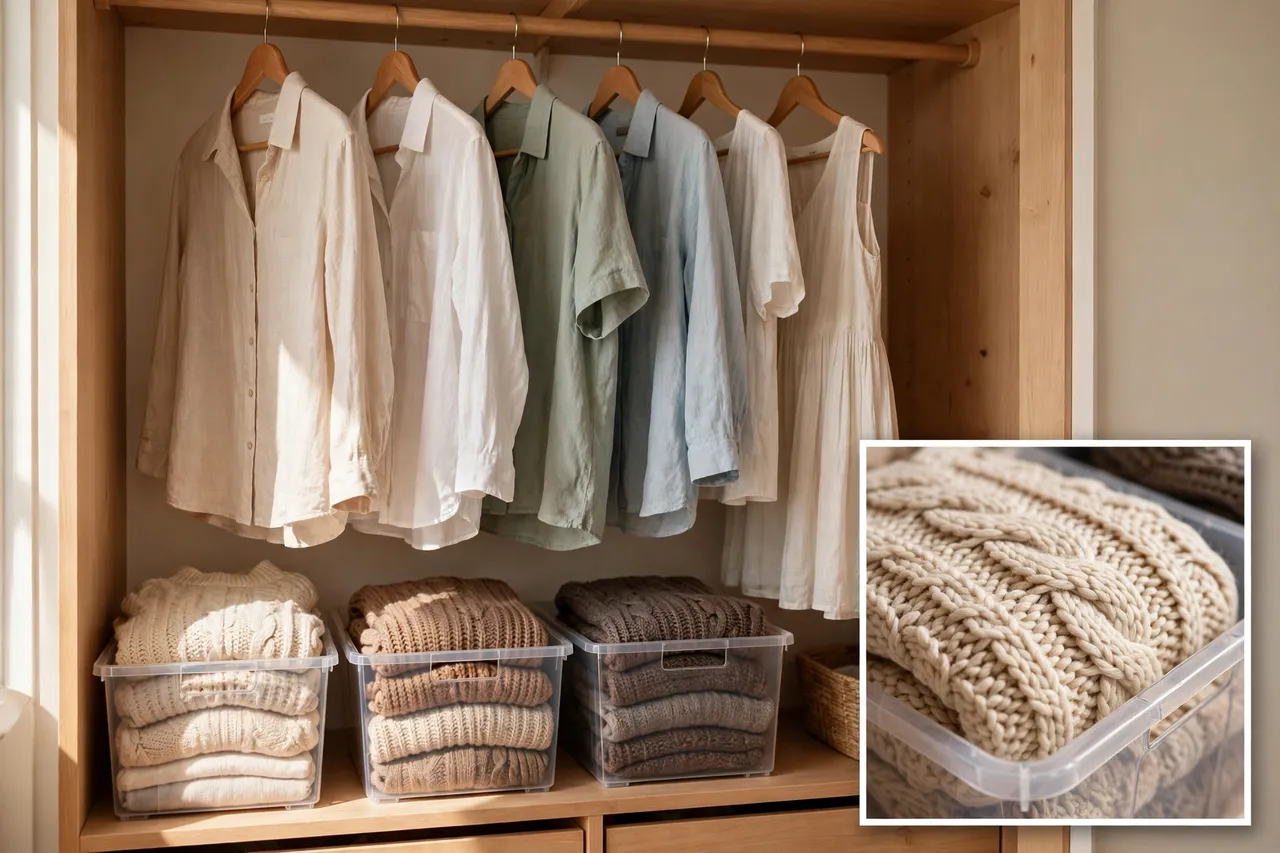
Seasonal clothes cause a special kind of closet crowding. Heavy winter coats sit beside summer dresses all year, and neither group gets full use of the space. A seasonal rotation fixes that.
Start by splitting each category into two groups: what you wear now, and what you will not wear for months. Keep the current season at eye level and within easy reach. Pack the off-season group away in labeled bins or fabric storage bags, with the season and the category written on the outside.
Before you pack anything away, wash and fully dry every piece. Stains and body oils set into fabric during months in storage, and damp clothes can grow mold in a sealed bin. Check stored clothes for a musty smell or spots when you unpack them, and treat any problem pieces before they go back in the closet. Our guide on how to get rid of mold on clothes walks through safe cleaning steps for musty or spotted garments.
Use the rotation as a second declutter pass. When you unpack a bin, ask the same keep questions again. If a sweater spent a whole winter in storage and you still did not reach for it, it has already told you its answer. Do not pack it away a second time.
One more rule keeps the rotation honest: when a new season’s clothes come out, the old season’s clothes go straight into their bins the same day. If both seasons live in the closet at once, even for a week, the closet creeps back to full.
What to Do With the Outgoing Pile
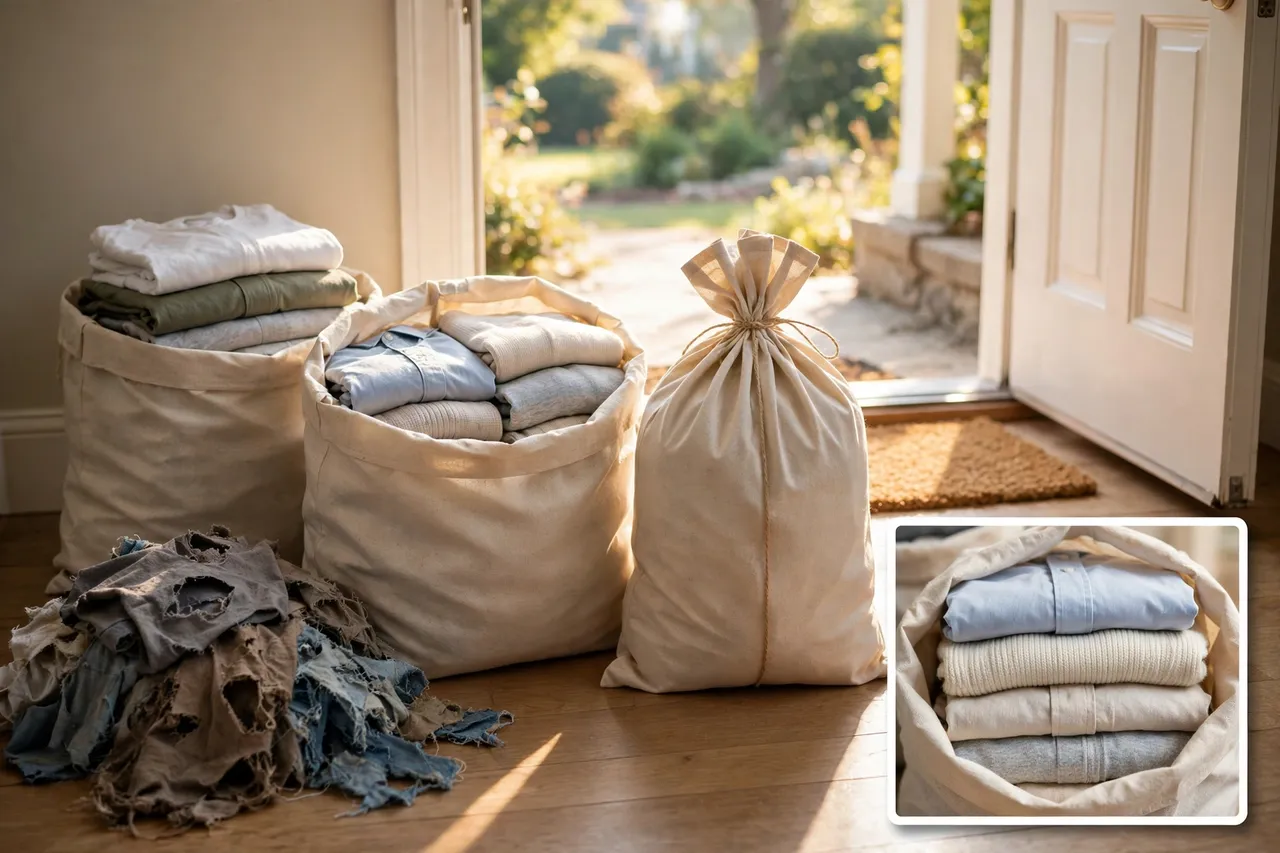
A declutter only works if the outgoing pile actually leaves your home. Bags that sit by the door for weeks quietly migrate back into the closet. Plan the exit before you start sorting, and set a drop-off or pickup date within a few days.
Donate the clean, wearable pieces first. Thrift stores and charities accept clothing in good condition, and Goodwill’s donation guidelines explain the standard clearly: donated clothing should be clean and free of stains, tears, pet hair, and odor. Wash and fold donations before bagging them, and keep the donation bags separate from your closet so nothing drifts back.
Sell or consign the pieces with real resale value: designer labels, new-with-tags items, and quality coats or dresses in excellent shape. Local consignment shops take selected pieces for you, while online marketplaces let you list from home. Photograph each item in good light before you list it, and price it to move rather than to recover what you paid.
Recycle the worn-out pieces instead of trashing them. Torn, stained, and threadbare textiles can be shredded into rags, insulation, or new fibers. The U.S. Environmental Protection Agency (EPA) reports that about 17 million tons of textiles were generated in 2018, with a recycling rate of only 14.7 percent, so finding a textile drop-off or mail-in recycling service for unwearable clothes makes a real difference. Search for a textile collection bin near you, or check whether a retailer take-back program accepts the fabrics you have. Learn more from the EPA’s textiles material-specific data page.
Finally, throw away only what nothing else accepts: pieces contaminated with chemicals, or items a recycler confirms it cannot take. That pile should be the smallest one you make all day.
Put Back Only What Earns Its Hanger
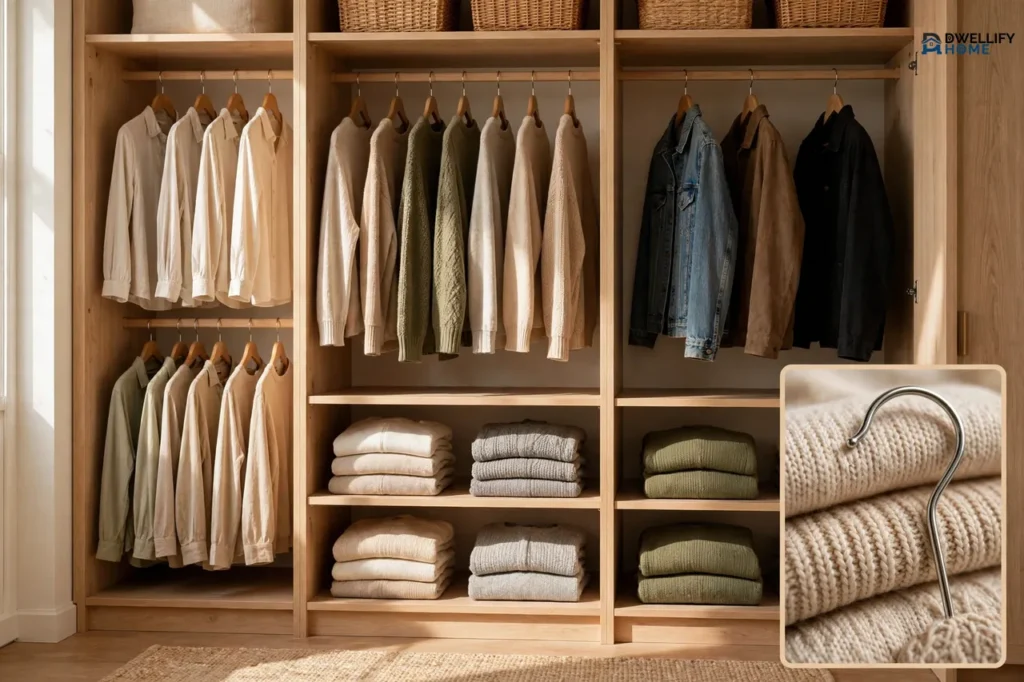
Now comes the satisfying part: putting the keepers back. Group each category together, with the pieces you reach for most often at the front and at eye level. Hang structured pieces like blazers, dresses, and coats, and fold soft, bulky pieces like sweaters so they do not stretch out of shape.
Leave a little breathing room between hangers. A packed rod hides clothes and wrinkles them, and it makes getting dressed slower, not faster. If the rod still fills up after your audit, that is useful information: the closet needs a second pass, not a bigger closet.
Use simple organizers for the small stuff. Shelf dividers keep folded stacks upright, drawer organizers sort socks and belts, and a shoe rack keeps footwear off the floor. Clear bins with labels work best for accessories and off-season pieces, because you can see what is inside without opening every box. For more room-by-room ideas, see our guide to smart storage ideas for making the most of every room in your home and our home organization ideas that make everyday spaces easier.
End the session by cleaning the empty closet before anything goes back. Vacuum the floor, wipe the shelves, and check for dust in the corners. A clean closet makes the fresh start feel real, and it gives you a clear view of the space your keepers now enjoy.
Keep Your Closet Decluttered All Year
A decluttered closet stays that way only with small habits. The good news is that none of them take more than a few minutes.
- Keep a donation bag in your closet. When you try something on and it does not feel right, drop it in the bag instead of hanging it back up.
- Follow the one-in, one-out rule. When a new piece comes in, an old one goes out the same week.
- Do a quick reset every season. Rotate the seasonal bins, review what you did not wear, and refresh labels that have faded.
- Tidy one shelf or drawer each week while you put laundry away, instead of waiting for a big cleanout.
And remember that decluttering clothes is a skill, not a one-time event. The first audit takes the longest. Each later pass gets faster because you already know your keepers, your duplicates, and your weak spots. If the rest of your home needs the same treatment, our guide on how to declutter your home without the overwhelm applies the same category-by-category method room by room.
Related Guides
How to Declutter Your Kitchen, Zone by Zone · Coat Closet Organization · How to Become a Minimalist
Frequently Asked Questions
How long does it take to declutter a closet?
It depends on the size of your closet and how much clothing you own. One category, like all your T-shirts, often takes less than thirty minutes. A full wardrobe audit usually takes two to three hours when you work by category and sort into clear piles.
What should I do with clothes I do not wear?
Sort unworn clothes by condition and next step. Donate clean, wearable pieces, sell or consign items with resale value, repair pieces you will fix within 30 days, and recycle torn or worn-out textiles. Choose the option that fits each item, and move the bags out of your home within a few days.
How often can I declutter my closet?
A seasonal review works well for most people. It lets you rotate clothes for the weather, review what you did not wear, and keep the closet matched to your routine. Add a quick weekly tidy of one shelf or drawer between the bigger seasonal passes.
What is the 90-90 rule for decluttering clothes?
The 90-90 rule asks two questions about a piece you are unsure of: have you worn it in the past 90 days, and will you wear it in the next 90 days? If both answers are no, it is time to let it go. For seasonal pieces, judge the 90 days against the season when you would actually wear them.
How many clothes should I keep?
There is no magic number. The right amount depends on your lifestyle, your closet space, your laundry routine, and how often you like to change outfits. Keep clothes that fit well, suit your daily life, and mix and match easily, rather than chasing a target count.
How do I let go of expensive clothes without feeling guilty?
Remember that keeping an unworn piece does not return the money you spent. If it is in good condition, sell or consign it to recover some of the cost. Otherwise, pass it to someone who will wear it, and use the lesson to choose more carefully next time.
Start with one easy category today, even if it is just your sock drawer. Small wins build momentum, and a closet full of clothes you love is worth the few hours it takes to get there.