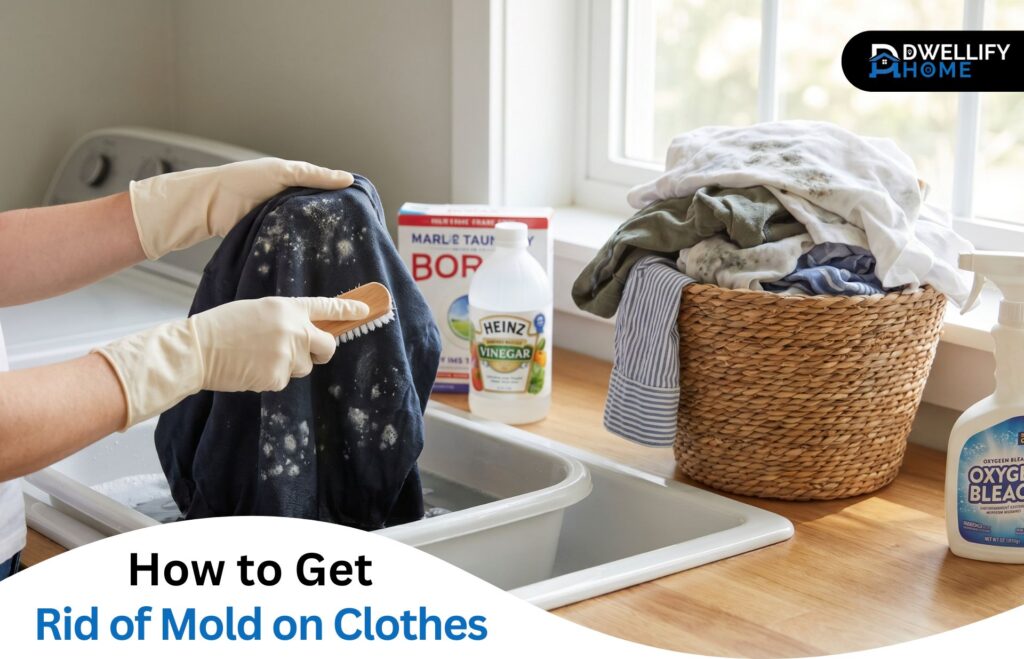
You open a storage bin after six months and the smell hits you before you even see it. Or you pull a towel from the hamper and notice that grey-green fuzz creeping along the seam. It happens faster than most people expect, and the first reaction is usually to consider throwing the item away.
Most of the time, that’s the wrong call. Most moldy clothes can be rescued at home using white vinegar, borax, or oxygen bleach — as long as you act quickly and follow the right steps for the fabric type. The process takes some patience, but it’s straightforward once you know what you’re doing.
The Short Answer
To get rid of mold on clothes, brush off loose spores outdoors, pre-treat with white vinegar or borax, wash on the hottest safe cycle, and dry fully in direct sunlight. Most moldy garments can be saved with prompt treatment.
Mission Statement
At Dwellify Home, we help homeowners make practical, well-informed decisions about their living spaces — from everyday home care to seasonal maintenance and smart storage solutions. Our goal is to make home life simpler, cleaner, and more thoughtfully managed, one useful guide at a time.
What Causes Mold to Grow on Clothes?
Mold grows on clothes when moisture gets trapped in fabric for too long. The most common causes are leaving wet clothes in the washing machine, storing damp garments, poor closet ventilation, and high indoor humidity. Mold spores are always present in the air — they only need moisture and darkness to take hold.
People often blame the closet or the storage bin, but the real culprit is almost always moisture that went in with the clothes. A swimsuit stuffed into a gym bag still damp. A load of laundry left sitting in the drum for a few hours too long. A stack of winter sweaters folded and boxed before they were fully aired out.
Mold doesn’t need much time. In warm, humid conditions, spores can begin establishing on fabric within 24 to 48 hours of sustained dampness. The washing machine itself is worth paying attention to — the rubber door gasket on front-load washers is a well-known breeding ground for mold, and it can silently transfer spores to every load you wash.
Quick Comparison Table — Mold Removal Methods at a Glance
| Method | Best For | Fabric Caution | Effectiveness |
| White Vinegar | Most fabrics | Safe for most types | High — kills and deodorizes |
| Borax | Stubborn mold | Avoid on very delicates | High — alkaline pH kills spores |
| Oxygen Bleach | Colored fabrics | Avoid silk and wool | High — color-safe stain removal |
| Hydrogen Peroxide | Light-colored fabrics | Avoid wool and silk | High — kills surface + deep mold |
| Chlorine Bleach | White fabrics only | Damages color and delicates | High — but very limited use case |
| Baking Soda | Odor removal | Safe for all fabrics | Moderate — best as a wash additive |
| Direct Sunlight | All fabrics | None | Good — kills residual spores naturally |
Key Points at a Glance
- Mold on clothes can develop within 24 to 48 hours when fabric stays damp in a warm, enclosed space
- White vinegar, borax, and oxygen bleach are the three most practical home treatment options for most fabric types
- Always brush off loose mold outdoors before washing — doing it indoors spreads spores through the air
- Never mix bleach and vinegar — combined, they produce toxic chlorine gas
- The dryer can permanently set mold stains — always inspect and smell the garment before drying
- Sunlight is an underused but genuinely effective tool — UV rays kill residual spores and neutralize odors
- Dry-clean-only garments should go straight to a professional cleaner — do not attempt home treatment
- A moldy washing machine gasket can re-contaminate clothes even after thorough treatment — clean it regularly
Is Mold on Clothes Dangerous?
Yes, mold on clothes poses real health risks. Mold produces allergens and irritants that can trigger sneezing, runny nose, skin rashes, and eye irritation. People with asthma, respiratory conditions, or weakened immune systems face more serious risks — including potential lung infections from prolonged exposure to mold spores.
Wearing a moldy garment once briefly isn’t likely to cause acute harm for most people. The concern is repeated, ongoing contact — especially for children, elderly individuals, and anyone with asthma or a compromised immune system.
The CDC recognizes mold exposure as a legitimate health concern, particularly for vulnerable groups. That’s worth keeping in mind when someone says “it’s just a bit of mildew” — because even low-level, chronic exposure adds up over time.
Mold vs. Mildew on Clothes — What’s the Difference?
Mildew is a surface-level fungal growth — typically white or grey, powdery in texture, and easier to remove. Mold penetrates deeper into fabric fibers and often appears green, black, or fuzzy. Both thrive in damp conditions and carry the same musty odor, but mold requires more thorough treatment to fully eliminate.
The practical difference matters when you’re deciding how hard to work. Mildew on a cotton shirt will usually respond to a single hot wash with vinegar. Black or green mold that has been sitting for weeks may need two or three treatment rounds to fully clear.
Same removal approach for both — just different levels of effort.
Before You Start — Safety, Supplies, and Care Label Checks
Before you touch anything, take a moment to set yourself up correctly. Handling moldy clothing carelessly is how spores end up on your other clothes, in the air, and in the rest of your laundry.
Safety first:
- Wear an N-95 mask and rubber gloves before handling moldy items
- Take the clothes outdoors before brushing — never brush off spores inside your home
- Close indoor vents and open windows in the room where you’ll be working
- Keep moldy garments separate from everything else until they’ve been treated
Check the care label: The care label overrides every other instruction. Hot water is your best tool for killing mold spores, but not every fabric can handle it. If the label says dry-clean only, seal the item in a plastic bag immediately and take it to a professional cleaner. Point out the mold and the affected areas when you drop it off — do not attempt home washing on these pieces.
What you’ll need:
- Soft-bristled brush or old toothbrush
- White distilled vinegar
- Borax or baking soda
- Hydrogen peroxide (3%) — for light-colored fabrics
- Oxygen-based bleach (e.g., OxiClean) — for colored fabrics
- Chlorine bleach — only for confirmed white, bleach-safe fabrics
- Laundry detergent
- Large bucket or basin
- Protective gloves and mask
One warning that doesn’t get said clearly enough: never mix bleach and vinegar. Combined, they produce toxic chlorine gas. Choose one or the other for each wash — never both.
How to Get Rid of Mold on Clothes — Step by Step
These steps work for most washable fabrics. Follow them in order. If the mold is severe or the smell persists after the first round, repeat the process — most cases respond well by the second treatment.
Step 1 — Take Clothes Outside and Brush Off Loose Mold
Carry the affected garments outdoors before doing anything else. Using a soft-bristled brush or old toothbrush, gently brush visible mold from the fabric surface. Work carefully and methodically — do not shake or flap the garment, as this sends spores into the air around you.
This step reduces the surface mold load before soaking, which makes the chemical treatments more effective.
Step 2 — Pre-Treat the Stains
Choose one pre-treatment based on what you have available and what your fabric can handle:
- White vinegar: Apply undiluted directly to the stained area, or mix equal parts vinegar and water and spray onto the fabric. Let it sit for 30 to 60 minutes.
- Borax: Dissolve ½ cup in 1 to 2 cups of hot water to form a liquid solution. Apply gently to mold stains with a brush. Let sit for 10 to 15 minutes.
- Hydrogen peroxide (3%): Apply directly to light-colored fabrics only. Let it dwell for 10 to 15 minutes. Do not use on wool or silk.
- Oxygen-based bleach: Mix with hot water per package directions. Safe for most colored fabrics and effective on persistent staining.
- Chlorine bleach: White or confirmed bleach-safe fabrics only. Mix 1 cup per gallon of water and soak for no more than 10 to 15 minutes.
After applying your chosen treatment, gently scrub with a soft brush using small, patient strokes. Aggressive scrubbing can damage fibers without improving the result.
Step 3 — Soak Before Washing (Recommended for Heavy Mold)
For garments with significant mold growth or deep staining, a pre-wash soak makes a real difference. Fill a large bucket or basin with warm or hot water — observing the care label’s temperature limits — and add either 1 cup of white vinegar or ½ cup of borax dissolved in warm water.
Submerge the garments fully and soak for 30 to 60 minutes. For severe cases, an overnight soak gives better results. Do not combine vinegar and bleach in the same soaking solution.
Step 4 — Wash on the Hottest Setting the Fabric Allows
Transfer clothes directly from the soak into the washing machine. Set the machine to the hottest water temperature the care label permits. Most mold spores die at temperatures above 140°F (60°C), so heat is genuinely important here — not optional.
Add your regular laundry detergent plus one of the following:
- 1 to 2 cups of white vinegar added directly to the drum, or
- ½ cup of baking soda, or
- A laundry sanitizer like Lysol Laundry Sanitizer added during the rinse cycle
Always wash moldy items separately from your other laundry. For severe cases, run two full cycles. Use the longest wash setting available.
Step 5 — Check Before You Dry
Before anything goes into the dryer or onto the line, inspect every garment carefully. Check the seams, folds, and pockets — both visually and by smell. A persistent earthy or musty odor means mold remains, even if you can’t see it.
This step is non-negotiable. Dryer heat can permanently set mold stains into fabric. If either the smell or the visible mold remains, go back and repeat the pre-treat and wash steps before drying.
Step 6 — Dry Completely in Direct Sunlight
Sunlight is one of the most effective natural mold treatments you have access to. UV rays kill residual spores and help eliminate odors that washing alone doesn’t fully clear. Hang or lay garments in full, direct sunlight until they are completely dry.
If outdoor drying isn’t an option, use the dryer on the highest heat setting the fabric can handle. Either way, clothes must be bone dry before going back into storage — any remaining moisture and the cycle starts again.
How to Remove Mold From Clothes Naturally (Without Bleach)
White vinegar, baking soda, borax, hydrogen peroxide, and direct sunlight are all effective natural methods for removing mold from clothes without bleach. Vinegar kills mold through its acetic acid content, baking soda neutralizes odors and loosens stains, and sunlight’s UV rays eliminate residual spores — making this a genuinely complete bleach-free system.
White vinegar is the most practical starting point for most people. Its acetic acid disrupts the cellular structure of mold, making it effective as both a soak agent and a wash additive. Safe for most fabric types.
Baking soda works best as a deodorizer and mild abrasive. Use it as a paste on stubborn spots, or add half a cup directly to the washing machine drum alongside your detergent.
Borax works differently — its high alkaline pH (around 9.3) creates an environment that mold simply cannot survive in. It’s particularly useful for stubborn cases where vinegar alone hasn’t been enough.
Hydrogen peroxide is worth knowing about. The EPA and OSHA now recommend it over chlorine bleach for mold remediation, specifically because it kills both surface and subsurface mold — whereas bleach only treats the surface and can actually provide moisture for deeper mold to continue growing. Use the standard 3% solution from the drugstore, not a stronger formulation.
Sunlight costs nothing and does real work. Use it between treatment steps for stubborn cases — dry the item in full sun, then re-treat and wash again.
Tea tree oil, diluted in water and spritzed onto lightly affected items, acts as a gentle antimicrobial and works well as a mold-prevention spray for items in long-term storage.
One note worth mentioning: some people managing mold illness or Chronic Inflammatory Response Syndrome (CIRS) report cross-sensitivity reactions to vinegar. If that applies to you, borax or hydrogen peroxide are the better choices — and consulting a physician before use is sensible.
Treating Mold Based on Fabric Type
Not all fabrics respond to mold the same way. Cotton and linen tolerate hot water and strong agents like borax or oxygen bleach. Wool, cashmere, and silk need cold water and gentle handling. Colored synthetics require bleach-free methods. Matching your treatment to the fabric type is the key to removing mold without ruining the garment.
Cotton and Linen
The most forgiving fabrics to work with. Hot water, borax, oxygen bleach, and white vinegar are all safe. Pre-soak freely and run on the hottest wash cycle the care label allows. These fabrics can handle repeated treatment without significant degradation.
Colored and Synthetic Fabrics
Avoid chlorine bleach entirely — it will strip or mottle color, often permanently. Oxygen-based bleach such as OxiClean or Clorox 2 for Colors is the right tool here. Before applying vinegar to any visible area, test it on an inside seam first. Wash at warm or hot temperatures based on the care label.
Wool and Cashmere
These fabrics need careful handling. Cold or lukewarm water only — hot water causes shrinkage and fiber damage. No hydrogen peroxide, no hot water, no tumble drying. Use a gentle detergent with diluted white vinegar, brush lightly, and air dry flat to prevent stretching. If the first round isn’t enough, repeat gently rather than increasing intensity.
Silk and Other Delicates
The most restricted category. Avoid borax, peroxide, hot water, and any aggressive scrubbing. Diluted white vinegar combined with a specialist gentle laundry soap is the safest approach at home. When there’s any doubt about the fabric’s tolerance, professional dry cleaning is the right call.
Dry-Clean-Only Garments
Do not attempt home washing. Bag the item in a sealed plastic bag immediately to contain the spores. Take it to a professional dry cleaner and explicitly point out the mold and the affected areas. Dry cleaners use solvent-based cleaning methods that are simply not replicable at home — and for items labeled dry-clean only, this matters.
Can You Put Moldy Clothes Directly in the Washing Machine?
Yes — but not without preparation. Moldy clothes should be brushed outdoors first and pre-treated before going into the machine. Skipping those steps reduces effectiveness. Always wash moldy items separately from other laundry, use the hottest safe cycle, and clean the washing machine itself after the wash to prevent re-contamination.
Tossing moldy clothes straight into the machine with a regular load is one of the most common mistakes people make. The problem isn’t just reduced effectiveness — unwashed mold spores can transfer to other garments in the same cycle. Treat first, wash separately, then run a maintenance cycle on the machine itself.
How to Clean Your Washing Machine After Washing Moldy Clothes
This step gets skipped far too often, and it’s one of the main reasons mold keeps coming back on clothes that have already been treated.
The rubber door gasket, drum interior, detergent drawer, and filter can all harbor mold colonies — and if any of them do, they’ll silently re-contaminate every load you wash, including the clothes you just cleaned.
To clean the drum: Run a hot self-clean cycle with 1 cup of white vinegar or hydrogen peroxide and no laundry added. This reaches temperatures that kill residual spores inside the machine.
To clean the gasket: Pull back the rubber seal and wipe it down thoroughly with a diluted vinegar or hydrogen peroxide solution. Use an old toothbrush to scrub any visible mold growth. This is the most commonly neglected spot on a front-load washer.
To clean the detergent drawer: Remove it completely and soak it in warm vinegar water for 20 to 30 minutes, then scrub and rinse.
Ongoing habit: Leave the washing machine door open between washes. A closed drum stays damp and dark — exactly what mold needs. Leaving the door ajar lets the drum air out and stay dry between uses.
Should You Throw Out Moldy Clothes?
In most cases, no. Moldy clothes can be cleaned and worn again with the right treatment. You should consider discarding a garment only if the fabric is visibly deteriorating, the mold has completely penetrated and won’t release after multiple treatments, or the item holds no real practical or sentimental value.
The honest question to ask is whether the item is worth the effort. A cheap cotton t-shirt that has been sitting in a flood-damaged box for months may not be. A cashmere sweater or a garment with genuine sentimental value almost always is.
Signs you can save it: the mold is surface-level, the fabric structure is still intact, and the stain begins to lift with pre-treatment.
Signs it may be time to let go: the fabric has started to break down, black mold has penetrated a thick or layered material and won’t release after repeated soaking, or the item can’t be safely treated at home and a professional assessment isn’t practical.
If you’re genuinely unsure, take it to a dry cleaner for assessment before writing it off. Most good cleaners will give you an honest opinion.
The Smell is Gone but It Came Back — Why Mold Keeps Returning
This is the frustration that comes up most often. You treat the clothes, they smell fine when they come out of the dryer, and then two weeks later the mustiness is back. Here’s why.
A single wash cycle — even a hot one — doesn’t always kill every spore embedded deep in fabric fibers. Some survive, go dormant, and reactivate the moment conditions favor them again.
More often, the problem isn’t the clothes at all. It’s the environment they returned to. If the closet or storage area is damp, poorly ventilated, or has its own mold issue, the clothes will pick it up again regardless of how well they were cleaned.
The washing machine is another overlooked factor. If the gasket or drum has mold, every wash is effectively re-seeding your clothes — even clothes that were perfectly clean going in.
And occasionally, persistent mold on clothing is a symptom of a broader issue: mold in the walls, flooring, or HVAC system that continuously seeds the air in the room. When that’s happening, no amount of laundry treatment will produce lasting results.
The solution is to address all three: repeat the treatment, dry in sunlight, and genuinely fix the storage environment the clothes are going back into.
How to Prevent Mold on Clothes for Good
Preventing mold on clothes comes down to one core rule: never store moisture. Always dry clothes completely before putting them away, transfer laundry promptly after washing, and keep storage areas well-ventilated. Consistent habits here are more effective than any amount of treatment after mold has already appeared.
Never Store Clothes That Are Even Slightly Damp
This is the most important habit by a significant margin. Even a garment that feels almost dry — but isn’t quite — can develop mold within 24 to 48 hours when stored in a warm, enclosed space. If you’re not certain it’s fully dry, give it more time.
Move Laundry Out of the Machine Right After the Cycle Ends
Wet clothes sitting in a closed drum for even 30 to 60 minutes in warm weather can begin developing early mold growth. Set a timer if you need to — transferring promptly is one of the simplest habit changes with the most impact.
Improve Ventilation in Your Closet
Leave closet doors slightly open periodically to allow air movement. Avoid packing clothes too tightly — air needs to circulate between garments. In humid climates or rooms without air conditioning, a small closet dehumidifier or charcoal air-purifying bag makes a noticeable difference.
Use Moisture-Absorbing Products in Storage Areas
Silica gel packets, activated charcoal sachets, cedar blocks, and compact electric dehumidifiers all help maintain a dry storage environment. These are especially worth using in basements, under-bed storage, and anywhere seasonal or vintage wardrobes are kept.
Store Seasonal Clothes the Right Way
Before long-term storage, make sure clothes are freshly laundered and completely dry. Use breathable cotton storage bags rather than sealed plastic bins — plastic traps any residual moisture and has nowhere for it to go. For higher-value garments, consider climate-controlled storage. Adding silica gel packets to boxes or containers adds a reliable buffer against humidity.
Run a Monthly Washing Machine Maintenance Wash
Once a month, run an empty hot cycle with 1 cup of white vinegar. Wipe down the gasket after every few loads. Keep the door ajar when the machine isn’t in use. This simple routine prevents the machine itself from becoming a source of recurring contamination.
When Home Treatment Isn’t Enough — Time to Call a Professional
If mold on your clothes keeps returning despite repeated home treatment, the problem is likely environmental — not the clothes themselves. Mold in walls, flooring, or HVAC systems can continuously re-seed your wardrobe. At that point, the clothing is a symptom, and the home needs professional mold assessment and remediation.
For dry-clean-only garments, professional care is always the right starting point — not a last resort. These fabrics genuinely require specialist handling.
For high-value garments — tailored suits, vintage pieces, heirloom textiles — get a professional assessment before attempting any home treatment. The risk of permanent damage is too high.
And if you’re finding mold across multiple items repeatedly, in multiple rooms, it’s worth contacting a mold remediation specialist rather than a dry cleaner. A dry cleaner treats the clothes. A remediation specialist treats the source.
Frequently Asked Questions
How quickly does mold grow on wet clothes?
Mold can begin to establish on damp fabric within 24 to 48 hours in warm, humid conditions. In cooler environments it may take a few days, but the risk is present any time clothes remain wet without proper airflow.
What temperature kills mold in the washing machine?
Most mold spores are killed at temperatures above 140°F (60°C). Setting your washing machine to its hottest cycle — combined with a mold-fighting additive like vinegar or borax — gives the best chance of eliminating spores completely.
Can I use bleach on colored clothes to remove mold?
No. Chlorine bleach will strip or permanently discolor most colored fabrics. For colored garments, use oxygen-based bleach such as OxiClean or Clorox 2 for Colors, white vinegar, or borax instead. These are effective against mold without the color damage risk.
How do I know if all the mold is gone?
After washing and drying, inspect all seams, folds, and pockets visually — then smell the garment closely. A musty or earthy odor is a strong indicator that mold remains even if you can’t see it. If either sign is present, repeat the treatment before storing the item.
Will mold on clothes spread to other items in the closet?
Yes. Mold spores are airborne and transfer easily to nearby fabrics, especially in enclosed spaces with poor airflow. Isolate moldy garments in a sealed bag as soon as you discover them, and check surrounding items carefully before returning anything to the closet.
Can moldy clothes make you sick?
Prolonged exposure to mold-contaminated clothing can trigger allergic reactions, skin irritation, and respiratory symptoms — particularly in sensitive individuals. Wearing a single moldy item briefly is unlikely to cause acute illness, but repeated or extended exposure should be avoided, especially for people with asthma or compromised immunity.
Conclusion
Knowing how to get rid of mold on clothes is genuinely useful — but the bigger win is understanding what makes mold come back, and closing those doors permanently. Treat the clothes thoroughly, dry them completely, and give some thought to the environment they’re going back into. Most people who deal with recurring mold find the clothes weren’t the root problem at all. Fix the conditions, and you fix the problem for good.
Disclaimer
The content published on Dwellify Home is intended for general informational purposes only. While we aim to provide accurate and helpful guidance, individual results may vary depending on fabric type, mold severity, product availability, and home conditions. Always follow the care instructions on your garments and consult a professional for high-value items or persistent issues.