Why Sweat Stains Are Harder to Remove Than Most People Think
Sweat stains are one of those problems most people underestimate — until they’re standing over a ruined shirt wondering what went wrong. The stain looked mild at first. Maybe a slight discoloration under the arm. Then it went through the wash, the dryer, and came out looking worse than before.
That’s the pattern that plays out again and again. The real issue isn’t the stain itself — it’s the combination of elements that create it, and the way most people treat it without understanding what they’re actually dealing with.
Getting this right doesn’t require expensive products or professional equipment. But it does require understanding what’s happening at the fabric level, and then working with that knowledge rather than against it.
The Short Answer
Removing sweat stains requires breaking down the alkaline compounds left by sweat and aluminum-based antiperspirants. A white vinegar soak followed by a baking soda and hydrogen peroxide paste, then a cold enzyme-detergent wash, effectively lifts most sweat stains from washable fabrics.
Mission Statement
At Dwellify Home, we help homeowners make practical, well-informed decisions about the spaces they live in — from laundry and fabric care to home styling and everyday solutions. Our goal is to make home living feel less complicated and more confident, with guidance that’s grounded in real use rather than theory.
What Actually Causes Sweat Stains — and Why They Turn Yellow
Sweat stains form when natural body sweat — made up of water, salt, proteins, and body oils — reacts with the aluminum compounds found in most antiperspirants. This reaction embeds itself into fabric fibers over time, producing the yellow discoloration most people recognize. The stain is alkaline in nature, which is why acidic solutions like vinegar work so effectively to break it down.
The Difference Between Fresh Sweat Stains and Set-In Stains
A fresh sweat stain is damp, lightly discolored, and sits mostly on the surface of the fabric. At this stage, even a quick rinse and a normal wash cycle can clear it completely.
A set-in stain is a different situation. Once heat — from a dryer or repeated warm washes — has processed the garment, the proteins and aluminum compounds bond more deeply with the fabric fibers. That’s when targeted pre-treatment becomes necessary to have any real chance of removal.
What Makes Yellow Armpit Stains Different from Regular Sweat Marks
Regular sweat marks are caused by moisture alone — they’re often colorless and wash out easily. Yellow armpit stains, on the other hand, are the result of that aluminum-sweat-protein reaction building up over multiple wears.
They tend to stiffen the fabric slightly and leave a waxy residue beneath the surface. That’s why they don’t respond to regular washing. They need an acidic pre-soak and a scrubbing agent to break that bond down first.
Quick Method Comparison Guide
| Method | Best For | Dwell Time | Color-Safe? |
| White Vinegar Soak | All washable fabrics | 30–60 min | Yes |
| Baking Soda Paste | Cotton, linen, polyester | 20–60 min | Yes |
| Hydrogen Peroxide Mix | White and light fabrics | 30 min | No |
| Lemon Juice + Sunlight | White fabrics only | 1–2 hours | No |
| Oxygen Bleach Soak | Most fabrics, stubborn stains | 3–6 hours | Yes |
| Enzyme Detergent Wash | Any washable garment | Wash cycle | Yes |
Key Points at a Glance
- Sweat stains are caused by a reaction between body sweat, skin oils, and aluminum compounds in antiperspirant — not dirt alone
- Cold water must be used throughout treatment; hot water permanently bonds the stain to fabric fibers
- Never put a stained garment in the dryer before confirming the stain is fully gone
- Chlorine bleach worsens yellow sweat stains — oxygen bleach is the safe alternative
- Fresh stains respond to a single treatment; set-in stains may need two or three cycles
- Fabric type determines which method is safe — wool and silk require professional care
What You Need Before You Start Treating a Sweat Stain
Before applying anything to a stained garment, gather your materials and check the care label. Treating the wrong fabric with the wrong solution can cause more damage than the stain itself. Most effective treatments use common household ingredients — no specialty products required for the majority of cases.
Household Ingredients That Actually Work
These items handle the overwhelming majority of sweat stain situations:
- Distilled white vinegar (not apple cider — too acidic for some fabrics)
- Baking soda
- Hydrogen peroxide (3% concentration — the standard drugstore version)
- Dish soap (a mild, clear formula)
- Cold water
- An old toothbrush or soft-bristled scrub brush
- Clean microfiber cloths
That’s genuinely all you need for most cases, including old set-in stains.
When a Commercial Stain Remover Makes More Sense
Enzyme-based detergents and oxygen bleach products are worth reaching for when the stain has been heat-set multiple times, or when the garment is a color or fabric type you don’t want to risk with DIY mixing.
Oxygen bleach is color-safe for most fabrics and works through a slower oxidizing process that’s less aggressive than hydrogen peroxide. It’s particularly useful for soaking whole garments rather than spot-treating a single area.
How to Remove Sweat Stains from Clothes — The Step-by-Step Process
To remove sweat stains effectively, start with an acid soak using equal parts white vinegar and cold water for 30 minutes. Then apply a paste of baking soda and hydrogen peroxide directly to the stain, scrub gently, and let it sit for 30 to 60 minutes. Wash in cold water with an enzyme-based detergent — and always check the stain before drying.
Step 1 — Pre-Soak the Stain with a White Vinegar Solution
Mix equal parts distilled white vinegar and cold water in a bowl or basin. Submerge the stained area — or the whole garment — and let it soak for at least 30 minutes.
The vinegar’s mild acidity starts breaking down the alkaline compounds in the stain. For older or particularly stubborn yellow stains, extend the soak to an hour. Don’t skip this step; it does most of the heavy lifting before the paste is even applied.
Step 2 — Apply a Baking Soda and Hydrogen Peroxide Paste
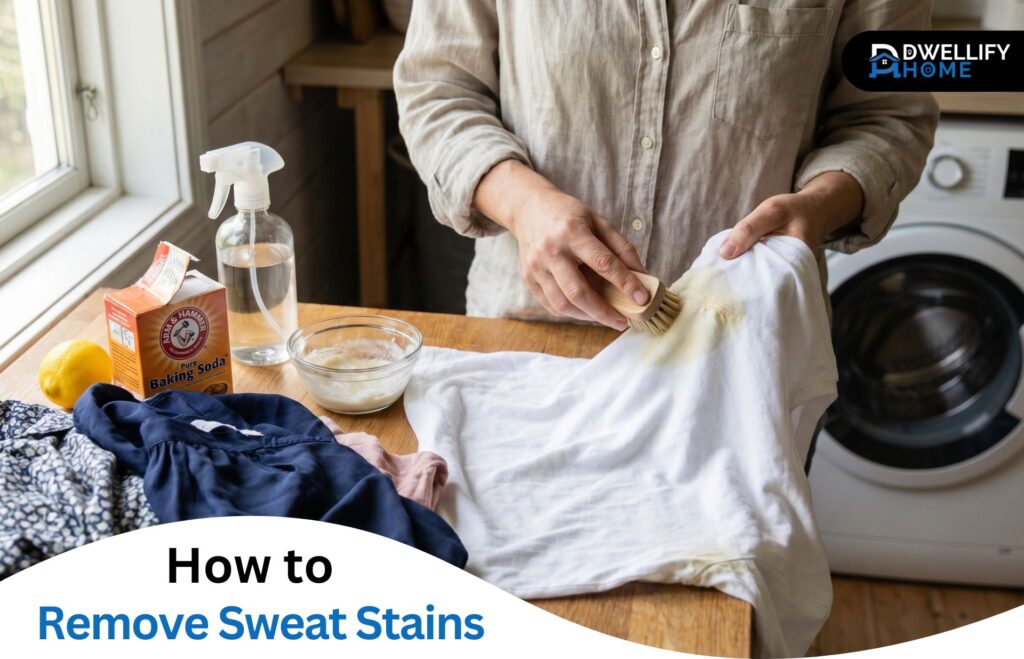
Mix equal parts baking soda, hydrogen peroxide, and a small amount of cold water to form a thick paste. Apply it directly to the stained area and work it into the fabric using an old toothbrush.
Use firm, circular strokes to push the paste into the fibers — not just across the surface. Let it sit for 30 to 60 minutes. You may see a light fizzing reaction, which is normal and a sign the ingredients are working.
Step 3 — Wash with an Enzyme-Based Detergent and Check Before Drying
Rinse the garment thoroughly with cold water, then machine wash on a normal cycle using an enzyme-based detergent. Enzyme detergents are specifically effective against protein-based stains — which is exactly what sweat stains are.
When the wash cycle finishes, pull the garment out and check the stained area before putting it anywhere near a dryer. This step matters more than most people realize. Heat from a dryer will permanently set any residual staining that’s still present.
What to Do If the Stain Is Still There After the First Wash
Repeat the paste application and let it sit longer — up to 90 minutes for stubborn cases. Some deeply set-in stains require two or three treatment cycles before they fully lift.
The key is patience. Resist the urge to increase water temperature or pile on more product thinking it will speed things up. Consistent and gentle works far better than aggressive and rushed.
How to Remove Sweat Stains from White Clothes
For white clothes, the most effective approach combines the standard vinegar soak with a hydrogen peroxide paste treatment. These two steps together handle most yellow armpit stains without damaging the fabric. Avoid hot water throughout, and always air dry until you’re certain the stain is fully gone.
The Hydrogen Peroxide Method for Yellow Armpit Stains
Mix half a cup of hydrogen peroxide with half a teaspoon of dish soap. Apply it to the stain and let it sit for 30 minutes before washing in cold water. This combination is particularly effective on white cotton and linen, where yellow discoloration tends to be most visible.
Using Lemon Juice and Sunlight for a Natural Brightening Boost
Lemon juice mixed with equal parts water can be applied to the stain and left in direct sunlight for one to two hours. The UV exposure activates the citric acid and naturally brightens the fabric. This works best as a finishing treatment after the main stain removal — not as the primary method on its own.
Why Chlorine Bleach Makes White Sweat Stains Worse, Not Better
This is one of the most common and damaging mistakes people make. Chlorine bleach reacts with the proteins in sweat and can actually deepen the yellow discoloration rather than removing it.
It also weakens cotton fibers over time, shortening the garment’s lifespan. For white clothes, always use oxygen-based bleach or hydrogen peroxide instead. Chlorine bleach has no useful role in sweat stain treatment.
How to Remove Sweat Stains from Colored and Dark Clothes
For colored shirts and dark clothing, skip hydrogen peroxide and lemon juice entirely — both can strip or alter dye. Instead, rely on the white vinegar soak combined with a mild baking soda paste, and always patch test an inconspicuous area before applying anything to the visible stain.
Safe Methods for Colored Shirts That Won’t Cause Fading
The vinegar and water soak is color-safe for most dyed fabrics. Follow it with a baking soda and water paste — leaving out the hydrogen peroxide. An enzyme-based detergent used during the wash cycle adds an extra layer of stain-fighting without affecting color integrity.
How to Remove Sweat Stains from Black Clothes Specifically
Black fabric is unforgiving. Any whitening agent — hydrogen peroxide, lemon juice, oxygen bleach — risks leaving a visible lightened patch that can’t be reversed.
For black clothing, use the vinegar soak alone, followed by washing with a color-safe enzyme detergent. It may take an extra cycle, but it won’t damage the fabric or leave ghost marks. Air dry in shade, not direct sunlight, which gradually fades dark fabrics.
Always Patch Test First — Here Is How to Do It Right
Turn the garment inside out and apply a small amount of your chosen solution to a hidden seam or hem area. Wait 10 minutes and check for any color change, fading, or texture shift. If the fabric responds normally, proceed. If anything looks off, stop and try a milder option.
Sweat Stain Removal by Fabric Type — What Works and What Doesn’t
The right removal method depends heavily on the fabric. What works on a cotton T-shirt can permanently damage a wool sweater. Understanding your fabric type before treating prevents most cases of accidental damage.
Cotton and Linen — Straightforward and Forgiving
These are the most tolerant fabrics for stain treatment. The full vinegar soak, baking soda paste, and enzyme wash works well on both. Cotton can also handle a warm (not hot) wash, which helps lift loosened stain particles after pre-treatment.
Polyester and Synthetic Activewear — Why They Need a Different Approach
Synthetic fabrics trap sweat differently than natural fibers — moisture wicks through the weave and can leave residue deeper in the fabric structure. Heat is particularly problematic here, because polyester is more temperature-sensitive than cotton.
Avoid hot water entirely. Use a cool soak with enzyme detergent, and hand wash activewear when possible to prevent fiber breakdown. The odor and the visible stain on gym clothes often need separate attention — vinegar handles the smell while the paste handles the discoloration.
Wool and Silk — Delicate Fabrics That Need Extra Care
Neither wool nor silk should go near hydrogen peroxide, baking soda paste, or hot water. Both fabrics are protein-based, which means harsh treatments damage the fibers — not just the stain.
For wool and silk, hand wash gently in cool water with a very mild detergent. If the stain is significant, a specialist dry cleaner is the right call. Forcing DIY treatment on these fabrics usually creates a larger problem than the original stain.
How to Read Your Care Label Before Treating Any Stain
The care label is not optional reading. The symbols tell you the maximum safe wash temperature, whether machine washing is permitted, and whether bleaching agents are allowed at all.
A “30°C” symbol means cold wash only. A crossed-out bleach triangle means no bleach of any kind. A circle means dry clean only — and that means exactly what it says.
Removing Sweat Stains from Specific Clothing Items and Situations
How to Remove Armpit Stains from Dress Shirts and Work Clothes
Dress shirts are often cotton blends or fine cotton, which tolerate the standard treatment well. The critical difference here is that dress shirts are usually worn repeatedly before washing, which allows staining to build up gradually.
Treat them promptly after wearing, even if the stain isn’t visible yet. A quick vinegar soak after a long workday will prevent yellow buildup from establishing itself over time.
How to Get Sweat Stains Out of Gym Clothes and Activewear
The main challenge with activewear is that synthetic fabrics trap odor-causing bacteria alongside the physical stain. Use an enzyme-based detergent and a cool — not cold — water soak for the best result.
Turn the garment inside out before washing. That’s where most of the residue accumulates. Also avoid fabric softener on activewear; it coats the fibers and reduces the detergent’s ability to penetrate and clean properly.
Collar and Cuff Stains — A Targeted Removal Approach
Collar and cuff stains come from a different source than armpit stains. They’re primarily body oils and skin cells mixed with deodorant or lotion residue. A dish soap and hydrogen peroxide mixture applied directly with a soft brush works well here.
Let it sit for 20 minutes before washing as usual. For stiff, yellowed collars that have been building up over time, the baking soda paste with a longer dwell time is the more effective choice.
How to Remove Sweat Stains from Hats and Caps
Most caps can’t go in the machine — the brim structure warps with agitation and heat. Instead, spot-treat the sweat band and front panel with a baking soda paste or vinegar solution using a soft brush, then rinse under cool running water and reshape the hat before air drying.
Check whether the cap has a cardboard or plastic brim before deciding how wet you’re willing to get it. Cardboard brims do not survive soaking.
Natural Home Remedies for Sweat Stain Removal
For most sweat stains, natural household ingredients are genuinely sufficient — and often more fabric-friendly than commercial products. The key is applying them correctly and giving them enough time to work.
White Vinegar — The Reliable All-Purpose Soak
Distilled white vinegar works on virtually any washable fabric. Mix it with equal parts cold water and soak the stained area for 30 to 60 minutes before washing. It neutralizes the alkaline stain compounds and deodorizes the fabric at the same time — addressing both the smell and the visible mark.
Baking Soda Paste — Gentle Scrubbing Without Fabric Damage
Mix baking soda with just enough water to form a thick paste. Apply it to the stain and work it in gently with a brush. The mild abrasiveness lifts surface residue while drawing out remaining moisture from the fiber. Leave it for at least 20 minutes before washing.
Lemon Juice — A Natural Option for Light Fabrics
Lemon juice is effective on light-colored fabrics, particularly when combined with sunlight exposure. Mix it with an equal amount of water to dilute the acidity slightly. Avoid using it on dark or bright-colored garments — the bleaching effect is real and irreversible on dyed fabric.
Dish Soap and Hydrogen Peroxide — For Stubborn Set-In Stains
Mix three tablespoons of hydrogen peroxide with one teaspoon of clear dish soap. Apply to the stain with a toothbrush, scrubbing gently. Let it sit for up to an hour on serious set-in stains. This combination breaks down both the protein residue and the oily components that give the stain its staying power.
The Enzyme Trick — Why Meat Tenderizer Works as a Last Resort
Unseasoned meat tenderizer contains papain — a natural enzyme that breaks down proteins. Because sweat stains are partly protein-based, dampening the stain and applying a small amount of meat tenderizer for 30 minutes can lift residue that other methods haven’t fully reached. Use it sparingly and only as a follow-up after standard methods have been tried first.
Sweat Stains Beyond Clothes — Mattresses, Bedding, and Upholstery
How to Remove Sweat Stains from Bed Sheets and Pillowcases
Pre-soak sheets in a basin of cool water with a cup of white vinegar for 30 minutes before washing. Follow with a normal machine wash using an enzyme detergent. For yellow buildup on white or light-colored linens, adding oxygen bleach to the soak is safe and noticeably effective.
How to Get Sweat Stains Out of a Mattress
Mix equal parts cold water, white vinegar, and a small amount of dish soap in a spray bottle. Spray the stained area lightly — don’t saturate — and blot with a clean cloth. Sprinkle baking soda over the damp area and let it sit for several hours to absorb moisture and neutralize odor.
Vacuum the baking soda off once fully dry. Never soak a mattress. Moisture trapped inside promotes mold growth, which creates a far worse problem than the original stain.
Sofas, Car Seats, and Upholstered Furniture — What Actually Works
Check the furniture’s cleaning code first. A “W” code means water-based cleaners are safe. An “S” code means solvent-only. An “X” means vacuum only — no liquids at all.
For W-coded upholstery, the vinegar-water-dish soap spray and blotting method works well. Work from the outer edge of the stain inward to prevent it from spreading further into the fabric.
Common Mistakes That Make Sweat Stains Harder to Remove
The most avoidable sweat stain mistakes happen before any actual treatment begins. Most people don’t ruin a garment with one bad choice — they ruin it with a sequence of small ones, each making the next treatment less effective than the last.
Using Hot Water — How It Sets the Stain Permanently
Hot water causes proteins to coagulate and bond more firmly with fabric fibers — the same reason cooking egg white makes it solid and opaque. Always start with cold water. Once the stain is fully gone, a warm wash for hygiene purposes is fine.
Putting Stained Clothes in the Dryer Too Soon
Heat from a dryer essentially bakes the stain into the fabric. After washing, always check the stained area while the garment is still damp. If any discoloration remains, retreat and wash again before the garment goes anywhere near heat.
Rubbing the Stain Instead of Dabbing It
Rubbing spreads the stain laterally into surrounding fibers and pushes it deeper into the weave. Always dab or blot with a cloth. Use a brush only for the paste scrubbing stage — where the goal is working the treatment in, not wiping residue across the fabric.
Reaching for Chlorine Bleach First
Chlorine bleach is a natural instinct when something looks yellow and dirty. But on sweat stains, it reacts with the urea and protein components and can oxidize them into a darker, more permanent mark. Keep it away from sweat-stained garments entirely — there is no scenario where it helps.
How to Prevent Sweat Stains from Coming Back
How Your Deodorant Choice Directly Affects Staining
Antiperspirants containing aluminum chloride or aluminum zirconium are the primary driver of yellow armpit stains. Switching to an aluminum-free deodorant significantly reduces the yellow buildup over time, even if it doesn’t eliminate all staining.
If you prefer to keep using an antiperspirant, applying it at night — when it’s fully dry before any contact with clothing — reduces the transfer that causes staining in the first place.
Why Wearing an Undershirt Is the Simplest Long-Term Fix
An undershirt absorbs sweat before it reaches your outer garment. This single habit, more than any stain treatment method, is what keeps dress shirts and work clothes looking new for longer. Choose a lightweight, moisture-wicking undershirt that fits close to the body without being restrictive.
Wash Clothes Promptly — Why Timing Makes All the Difference
The longer a sweat-stained garment sits unwashed, the more the stain molecules settle into the fabric structure. Washing within 24 hours of heavy wearing — or at minimum rinsing the underarm area — removes most stain-causing compounds before they have a chance to bond with the fibers.
Sweat Pads and Fabric Protectors — Are They Actually Worth It?
Disposable sweat pads that attach to the inside of a garment are useful in specific situations — a formal event, a high-pressure day, or any occasion where heavy sweating is likely. They aren’t a daily solution, but for protecting a garment you particularly care about, they do the job reliably.
How to Tell If a Sweat Stain Is Permanently Set
Signs the Stain Has Bonded to the Fabric Fibers
A permanently set stain has a few telling characteristics. The fabric feels stiff or slightly brittle in the stained area even after washing. The discoloration has shifted from yellow to a grayish or brownish tone. And repeated treatment cycles produce little or no visible improvement.
This happens most often when a garment has been through a hot dryer multiple times while still stained, or when staining has been building up for months without targeted treatment.
When to Take It to a Professional Dry Cleaner
If three thorough treatment cycles haven’t moved the stain, a professional is worth consulting — particularly for natural fibers like wool, silk, or linen, where DIY methods carry real risk of causing additional damage.
A specialist has access to enzyme-based professional solvents and equipment that can sometimes lift stains that home treatment can’t. Be straightforward with them about what you’ve already tried; it helps them choose the right approach without wasting time on methods that have already failed.
Frequently Asked Questions About Removing Sweat Stains
Does vinegar remove old sweat stains?
Yes, white vinegar can remove old sweat stains, but it works best as a pre-soak rather than a standalone treatment. For set-in stains, soak the stained area in a 50/50 vinegar and cold water solution for 60 minutes, then follow with a baking soda paste and an enzyme detergent wash for the best result.
Can you remove sweat stains that have already been washed and dried?
You can, but they require more effort. Heat from drying bonds the stain more firmly to the fabric. Start with a vinegar soak, apply the hydrogen peroxide and baking soda paste, and allow a longer dwell time — up to 90 minutes — before washing again in cold water. Some stains need two or three full treatment cycles.
How do you remove sweat stains from clothes instantly?
There’s no truly instant fix for sweat stains, but a quick pre-treatment with dish soap and cold water dabbed immediately onto a fresh stain will prevent it from setting while you prepare a more complete treatment. Avoid rubbing, and don’t let the garment go into a warm wash or dryer until it’s been properly treated.
Is hydrogen peroxide safe to use on colored clothes?
No — standard 3% hydrogen peroxide can fade or alter dye on colored garments. For colored shirts, use the white vinegar soak and a baking soda paste without hydrogen peroxide. Always patch test any treatment on a hidden area of the fabric before applying it to the visible stain.
Why do white shirts turn yellow even after washing?
Yellow staining on white shirts is caused by the reaction between aluminum-based antiperspirant and the proteins in sweat — not by general dirt or grime. A regular wash cycle isn’t designed to break down this type of chemical bond. The stain needs an acidic pre-soak and mechanical scrubbing to lift properly.
Do enzyme detergents actually work on sweat stains?
Yes, and they work noticeably better than standard detergents for this specific type of stain. Sweat stains are partly protein-based, and enzyme detergents contain protease enzymes that break protein bonds down at a molecular level. For best results, pre-treat the stain first, then wash with an enzyme detergent in cold water.
When should you take a sweat-stained garment to a dry cleaner?
Take it to a professional when the garment is made from wool, silk, or another delicate fabric that can’t tolerate water-based treatments — when the stain has been heat-set through multiple dryer cycles, or when three complete DIY treatment cycles have produced no visible improvement.
Final Thoughts — Keep Your Clothes Looking Their Best
Understanding how to remove sweat stains properly changes how you approach your entire laundry routine. The difference between a stain that comes out cleanly and one that gets locked in permanently usually comes down to a few decisions — the water temperature you use, whether you check the garment before it goes in the dryer, and how quickly you treat it after wearing.
Most stains — even old ones — are recoverable with the right approach. The method isn’t complicated, but it does need to be followed in the right order and with a little patience. Work with the fabric, not against it, and the results will follow.
Disclaimer
The content on Dwellify Home is provided for general informational purposes only. Results may vary depending on fabric type, stain age, product availability, and individual circumstances. Always check your garment’s care label before applying any treatment, and test solutions on a hidden area first. This content is not a substitute for professional garment care advice.