Faced vs unfaced insulation comes down to one thin sheet. Faced insulation carries a sheet of kraft paper or foil on one side. Unfaced insulation is the bare batt, with nothing attached. For the whole-house order — what to seal first, what to add, and what it costs — see how to improve home insulation.
Pick faced insulation when you insulate an exterior wall, an attic floor, or a cathedral ceiling for the first time in a cold climate, and point the facing toward the warm side of your home. Pick unfaced insulation for interior walls, for sound control, and for any second layer you add over insulation that is already there. The wrong pick traps moisture, wastes money, or both.
The Short Answer: Faced vs Unfaced Insulation at a Glance
If you only need the quick rule, here it is. One vapor retarder belongs in each wall or ceiling cavity. That is the whole game.
Quick reference: pick by job
| Job | Pick This | Why |
|---|---|---|
| First layer in an exterior wall | Faced | The facing slows moisture from warm indoor air |
| First layer on an attic floor | Faced | Facing down stops moisture from rising into the cold attic |
| Interior wall between two rooms | Unfaced | No moisture risk, and it cuts sound |
| Second layer over old insulation | Unfaced | A second facing would trap moisture between layers |
| Basement wall against concrete | Unfaced with rigid foam | Moisture pushes inward here, so a paper facing traps it |
| Floor over a cold crawl space | Faced | Facing up toward the warm floor above |
Every section below explains one row of it, so you can check your own house against it room by room.
What Is Faced Insulation?
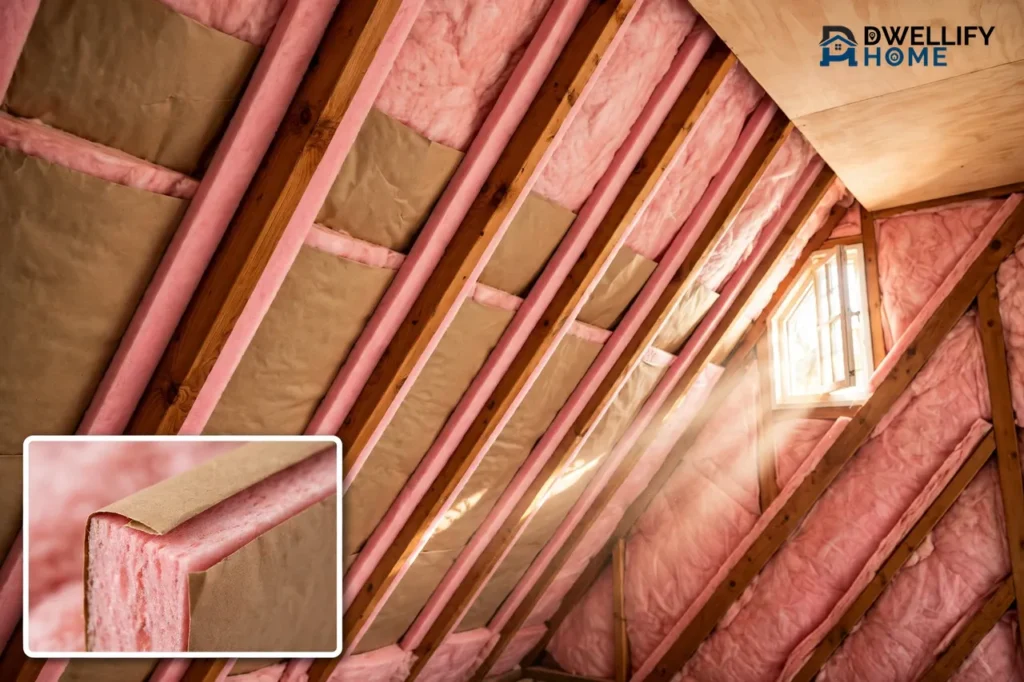
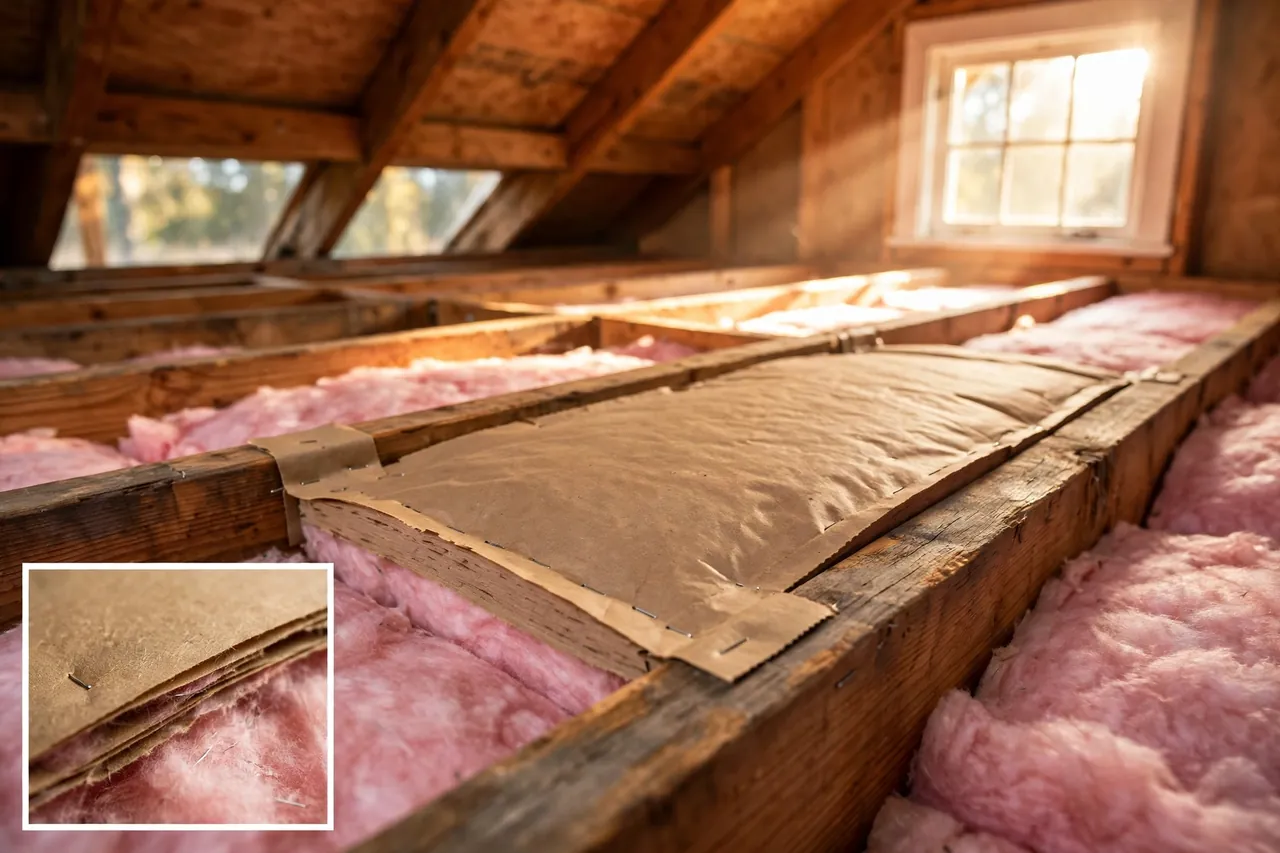
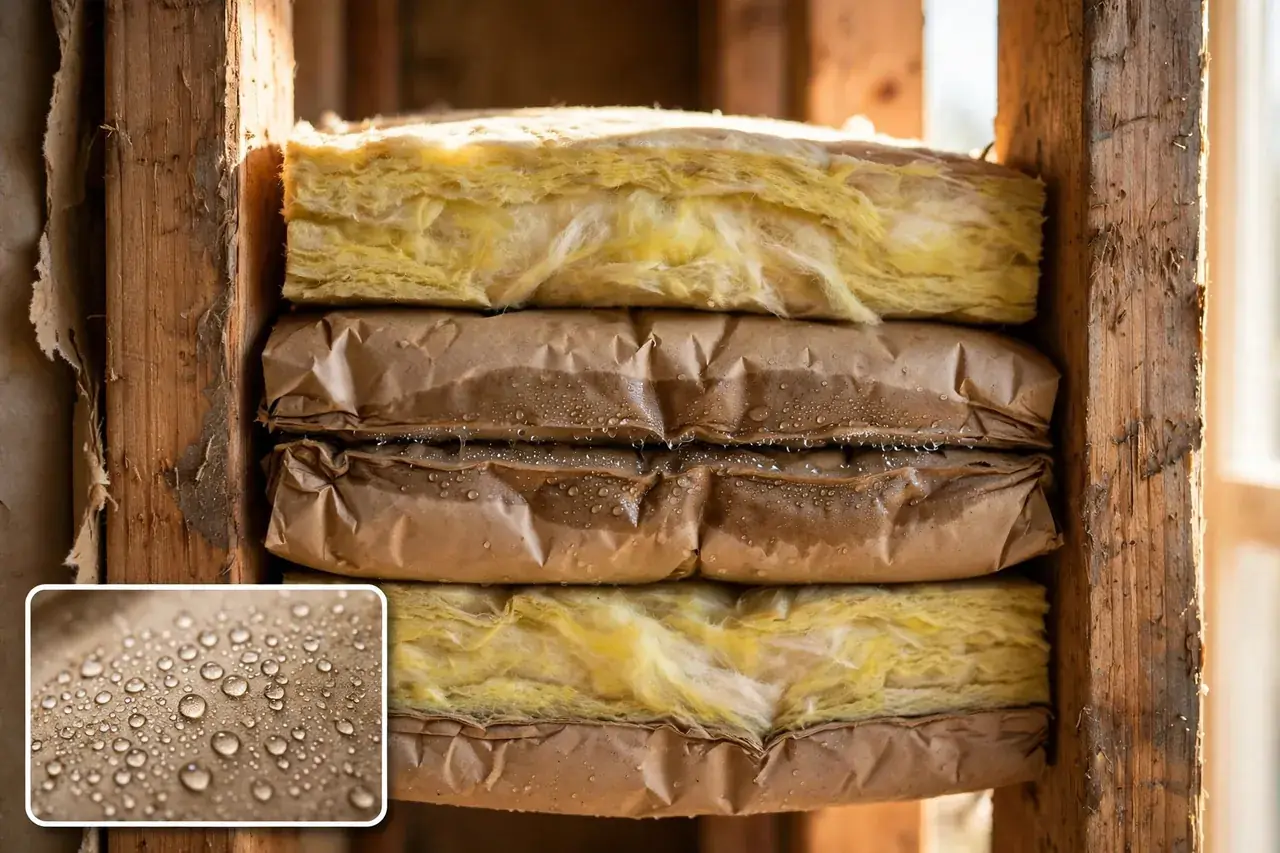
Faced insulation is a fiberglass or mineral wool batt with a sheet bonded to one side. The most common facing is kraft paper, a strong brown paper often coated with asphalt. Foil and vinyl facings exist too, and they block even more moisture.
The facing does three jobs. First, it acts as a vapor retarder, which slows water vapor as it moves through the wall or ceiling. Second, it holds the fluffy batt together, so the batt is easier to carry, cut, and staple. Third, its side flanges give you something to staple to the studs or joists.
Do not confuse a vapor retarder with a waterproof sheet. Kraft paper slows vapor down. It does not stop it fully, and it fails fast if it gets soaked. The U.S. Department of Energy explains that vapor retarders fall into classes by perm rating, and kraft-faced insulation counts as a Class II vapor retarder, with a perm rating between 0.1 and 1.0. You can read the full classification in the U.S. Department of Energy vapor barrier guide.
Faced insulation also has a weak spot: the paper burns. Keep it away from chimneys, recessed lights that are not rated for insulation contact, and any hot fixture. Cover it with drywall or another finish. Never leave kraft facing exposed in a living space.
What Is Unfaced Insulation?
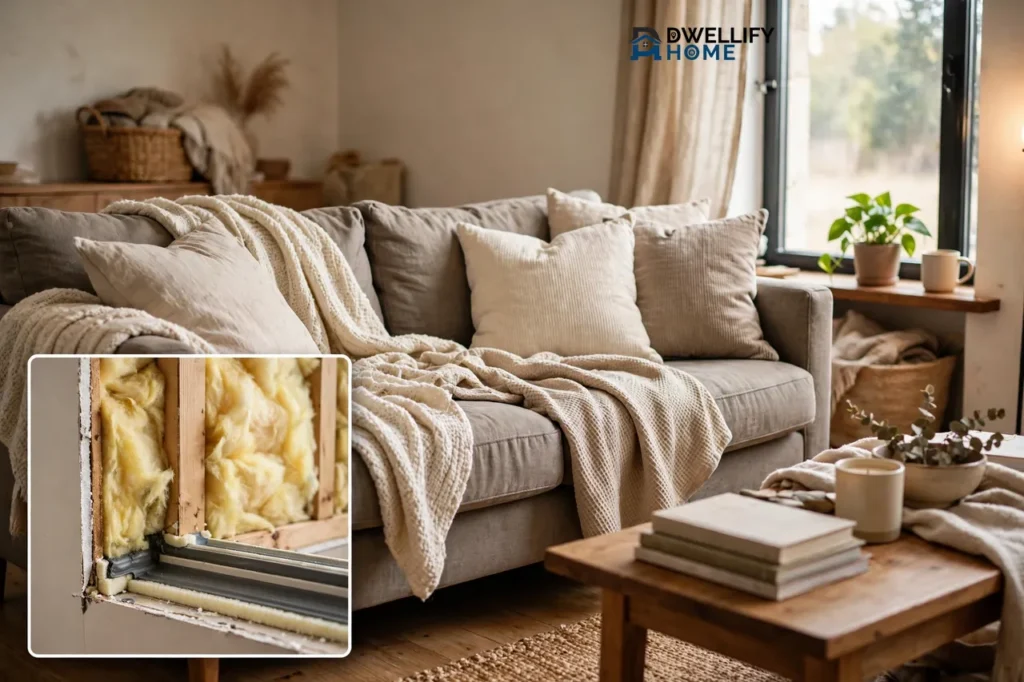
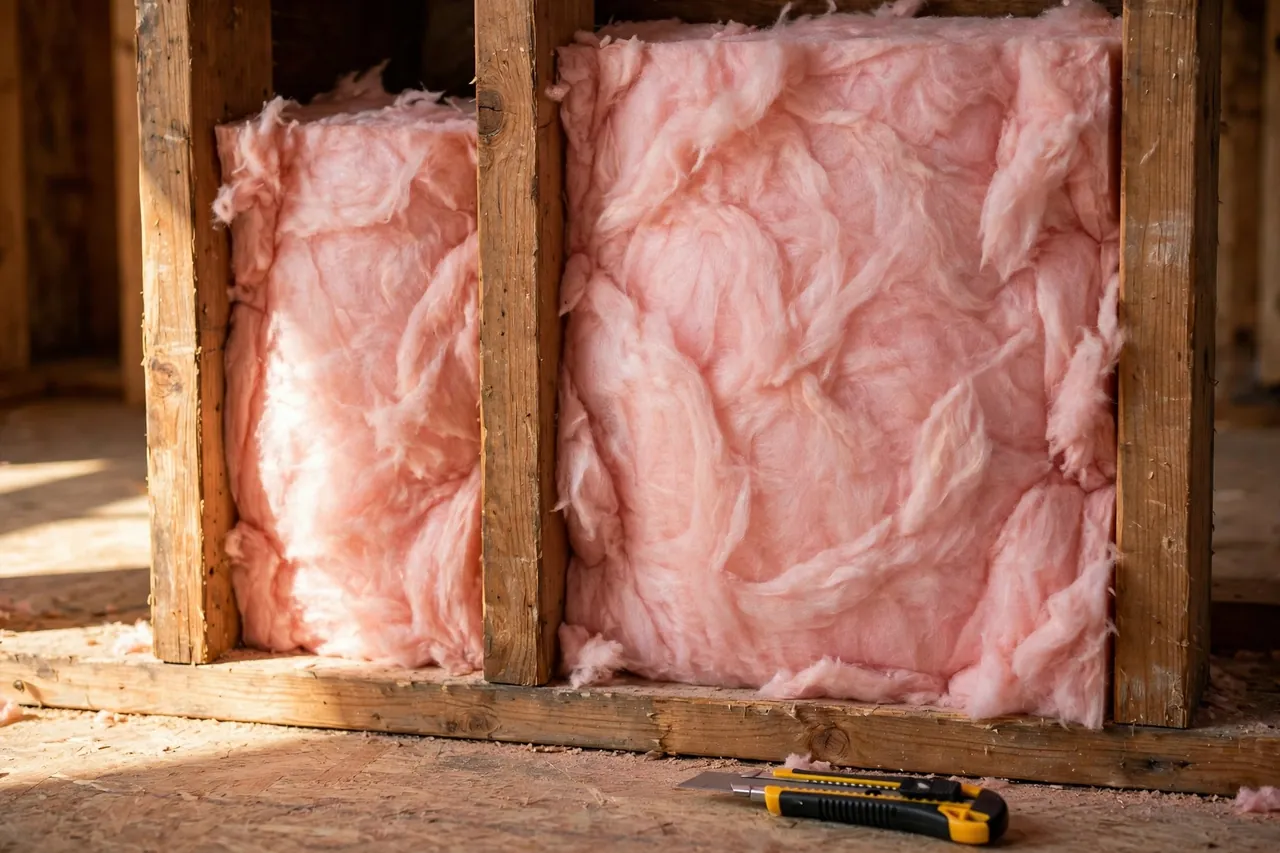
Unfaced insulation is the same fluffy batt with no sheet on either side. It is just fiberglass or mineral wool, cut to fit between studs or joists. Nothing holds it together except its own fibers, so it tears more easily than faced batts.
Because it has no paper, unfaced insulation can carry a fire rating and can stay exposed where the code allows it. It also costs a little less, since you pay for no facing material. Installers hold it in place with a friction fit: they cut each batt about an inch wider than the cavity, so it wedges in snugly.
Unfaced insulation offers no moisture control on its own. That is not a flaw. It is the whole point. You use it where moisture is not a problem, or where a vapor retarder already exists, or where you plan to add one separately. Johns Manville puts it plainly in its guide to unfaced vs kraft-faced insulation: unfaced batts suit interior walls that do not face the outside and rooms that do not need moisture control, such as living rooms, dining rooms, and studies.
One more thing matters. Unfaced batts must fit snugly, but you must never compress them or fold them over. A squeezed batt loses R-value, which is the number that measures how well insulation resists heat flow. Cut each batt to fit with a sharp utility knife instead.
Faced vs Unfaced Insulation: Side-by-Side Comparison
The two types share the same R-value at the same thickness. The facing adds moisture control, not warmth. So your choice is never about which one insulates better. It is about moisture, fire, cost, and how easy the batt is to install.
Faced vs unfaced insulation compared
| Feature | Faced Insulation | Unfaced Insulation |
|---|---|---|
| Vapor control | Yes, built-in retarder | None on its own |
| Best first use | Exterior walls, attics | Interior walls, sound control |
| Best second layer | No, never over faced | Yes, ideal top-up layer |
| Fire | Paper facing can burn | Can be noncombustible |
| Install | Easier, staples to framing | Harder, friction fit only |
| Cost | A little more | A little less |
| R-value | Same at same thickness | Same at same thickness |
Notice what the table does not say. It does not crown a winner. A homeowner who buys faced batts for every wall wastes money on interior partitions and risks a double vapor barrier in the attic. A homeowner who buys unfaced batts for every wall saves a few dollars and invites condensation in the exterior walls. The right answer changes by room.
Which Way Does the Facing Go?
This is the step most DIYers get wrong, and it matters more than the brand you buy. The facing always goes toward the warm-in-winter side of your home. In plain words, it faces the side you heat.
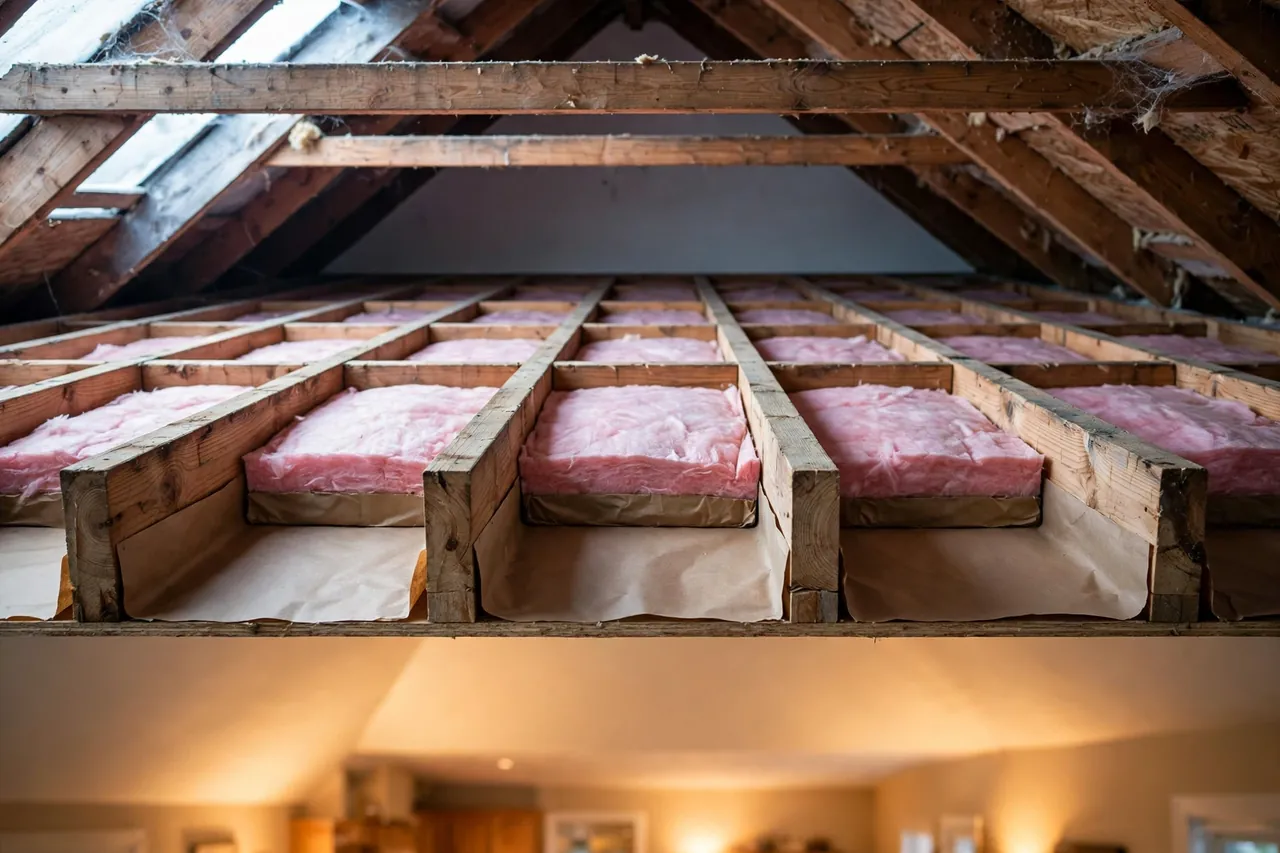
In a cold climate, that means the paper faces the inside of the house. In an exterior wall, the paper touches the drywall. In an attic, the paper faces down, toward the ceiling of the rooms below. In a floor over a crawl space, the paper faces up, toward the warm floor above.
Why does direction matter? Warm indoor air carries moisture. In winter, that moist air pushes outward through your walls and upward into your attic. When it hits a cold surface, it turns into water drops. The facing sits on the warm side so it can slow that moisture before it reaches the cold wood and insulation. Flip the facing around, and you trap moisture inside the cavity instead.
Your climate zone decides whether you need a facing at all. The U.S. Department of Energy states that no vapor retarder is required in mild or hot climates, while building code requires one in colder zones 5 through 8, where kraft-faced insulation usually satisfies the rule. In hot, humid zones 1 and 2, an interior vapor retarder can even cause harm, because moisture drives inward during the cooling season and the wall needs to dry. If you live in the Deep South or a hot coastal area, check your local code before you buy faced batts. Your town’s code may ban an interior vapor retarder there, which makes unfaced the safe pick.
Here is a simple test before you start. Ask yourself two questions. First, does this cavity touch the outside air or an unheated space? Second, is a vapor retarder already in place? If the answer to the first is yes and the second is no, faced insulation usually wins. If a retarder already exists, unfaced wins.
Where to Use Faced Insulation
Faced insulation earns its keep anywhere warm, moist indoor air meets a cold surface. Use it as the first and only faced layer in these spots.
Exterior walls in new construction
Open stud walls in a new build or a full gut remodel are the classic home for kraft-faced batts. The paper faces the room, the flanges staple to the studs, and the cavity gets one vapor retarder. This is the job faced insulation was made for.
Attic floors, first layer only
On a bare attic floor, lay faced batts between the joists with the paper facing down toward the rooms below. The facing slows the moisture that rises from showers, cooking, and breathing before it can condense in the cold attic. If you already have insulation up there, stop. The top-up layer must be unfaced, as the next sections explain.
Cathedral and vaulted ceilings
A cathedral ceiling has no attic above it to catch moisture, so the insulation in the rafter bays does that job. Faced batts fit here, with the paper toward the room below. Leave a vent channel above the batt if your roof design calls for one, and keep the batt clear of the roof deck.
Floors over cold spaces
A floor over an unheated garage or a vented crawl space loses heat downward all winter. Faced batts between the floor joists help, with the paper facing up toward the warm subfloor. Staple the flanges so the batt stays tight against the floor above. A batt that sags leaves a cold air gap, and the gap kills the R-value.
Where to Use Unfaced Insulation
Unfaced insulation shines in three jobs. Each one is a place where a facing would add cost, add risk, or simply do nothing useful.
Interior walls and sound control
Both sides of an interior wall sit in heated space, so no vapor drive pushes moisture through it. Unfaced batts fill the cavity, cut sound between rooms, and cost less. Bedrooms, offices, and living rooms all suit unfaced batts. If you want a quieter home, this is the cheapest place to start.
Second layers over existing insulation
This is the most common unfaced job in older homes. You already have a layer of insulation in the attic, and you want more R-value. Lay unfaced batts across the joists, running the new layer perpendicular to the old one. The cross pattern covers the joists and cuts heat loss through the wood. Never lay faced batts over faced batts. Two facings trap moisture between them, and trapped moisture grows mold and rots wood.
Between floors
Unfaced batts between floor joists cut footstep noise and plumbing sounds from the floor above. Again, both sides are heated space, so no vapor retarder is needed. Friction fit holds the batts in place, and no staples are required.
Unfaced insulation also works as a repair patch. If you open a small section of an exterior wall and your store only stocks faced batts, you can peel the kraft paper off a faced batt, as Johns Manville notes in its guide. Pull the facing with one hand and push the batt away with the other. The bare batt then works like unfaced insulation.
The Basement Exception: Do Not Face the Concrete
Basements break the normal rule, and this is where many guides go wrong. Above ground, moisture moves from warm to cold, so an interior vapor retarder makes sense in a cold climate. Below ground, the push runs the other way.
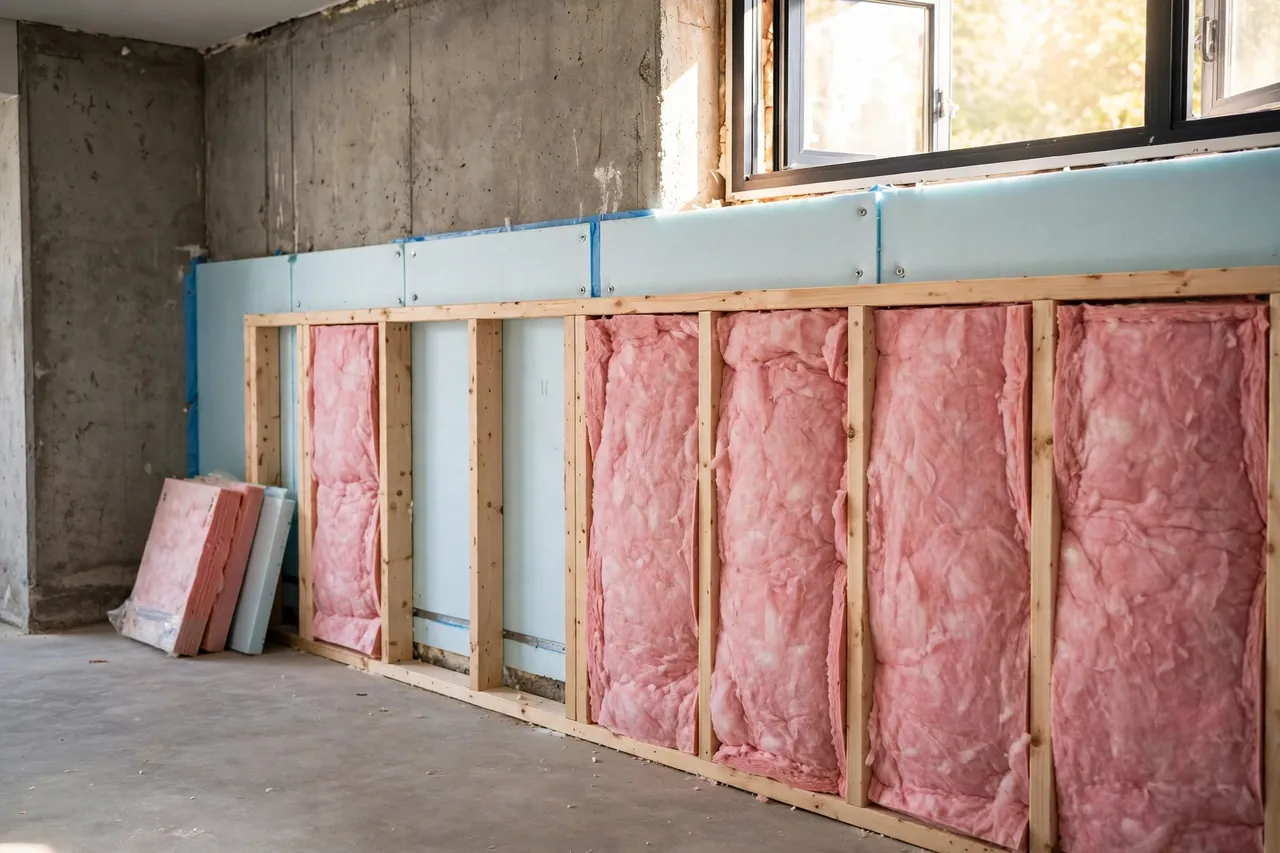
Concrete foundation walls sit against damp soil all year. Moisture constantly pushes inward through the concrete, toward your basement room. If you press a kraft-faced batt against that wall with the paper facing the room, the paper traps the inward moisture behind it. The framing stays wet, and mold follows.
The safer build puts the moisture control against the concrete itself. Rigid foam board, such as extruded polystyrene, goes directly on the wall. It acts as a thermal break and a vapor retarder at the same time. Then unfaced batts can fill the framed wall in front of the foam, and the assembly can still dry toward the room.
So for a basement wall, the short rule is this: unfaced batts, not faced, with rigid foam against the concrete. If your local code demands something different, follow the code and ask your building inspector. Basement moisture is the one place where a confident guess costs the most.
Faced vs Unfaced Insulation Cost
The price gap between the two types is small, and it should never decide the job on its own. Angi reports that faced insulation costs about $0.50 to $2 per square foot installed, while unfaced insulation costs about $0.50 to $1.75 per square foot installed, with prices checked on November 5, 2026. Angi updated those figures on July 8, 2026. The gap comes from the facing material and the extra labor to staple it, not from better warmth.
Installed cost per square foot (Angi, checked November 5, 2026)
| Type | Installed Cost per Sq Ft | What Moves the Price |
|---|---|---|
| Faced insulation | $0.50 to $2 | R-value, thickness, climate zone |
| Unfaced insulation | $0.50 to $1.75 | R-value, thickness, climate zone |
Run the numbers on a real job. A 1,000 square foot attic top-up with unfaced batts lands near $500 to $1,750 installed at those rates, before any air sealing or old insulation removal. The same area in faced batts for a first install lands near $500 to $2,000. On a small job, the difference is pocket change. On a whole house, it adds up, which is why builders use unfaced batts on interior walls without a second thought.
Buy the width that matches your framing, usually 16 or 24 inches on center, so you cut less and waste less. A batt that is too narrow leaves gaps. A batt that is too wide gets stuffed and compressed, and compression cuts its R-value.
One cost that dwarfs the faced-versus-unfaced gap is air sealing. Insulation slows heat. It does not stop air. Seal the gaps around wires, pipes, and top plates with caulk or foam before you lay a single batt. Skip that step, and warm air will blow straight past your new insulation. If your bills stay high after an insulation job, air leaks are the first suspect. Our guide on why your electric bill is so high walks through the other usual causes.
5 Mistakes That Cause Mold, Rot, and Wasted Money
Most insulation failures are not product failures. They are install failures. Avoid these five, and your batts will do their job for decades.
- Two facings in one cavity. Never stack faced insulation over faced insulation. One vapor retarder per cavity is the rule. A second facing traps moisture between the layers, and the wood in between rots quietly for years before you see it.
- Facing the wrong way. Paper toward the cold side traps moisture inside the wall. In a cold climate, the paper faces the room. In an attic, it faces down. Check every batt before you staple it, because a flipped batt is easy to miss and hard to fix later.
- Compressing the batt. Stuffing a thick batt into a shallow cavity feels productive. It is not. Compressed insulation loses R-value, so you pay for warmth you never get. Buy the thickness that fits your cavity, and let the batt expand fully.
- Leaving gaps and folds. A batt with a gap at the edge leaks heat like an open window. A batt folded over doubles up in one spot and leaves another spot bare. Johns Manville warns that batts should always be cut to fit with a utility knife and never folded over. Cut, do not fold.
- Leaving kraft facing exposed near heat. Kraft paper burns. Keep faced batts at least 3 inches from recessed lights, chimneys, and flues unless the fixture is rated for insulation contact. Cover faced batts with drywall. If a fixture runs hot and you are unsure, stop and ask a pro.
One more habit saves more money than any of these fixes. Wear gloves, goggles, and a dust mask when you handle fiberglass. The fibers itch skin and irritate lungs, and a careful installer works faster than an itchy one.
How to Decide in 60 Seconds
Stand in front of the space you plan to insulate and run this checklist. It takes a minute, and it answers the faced-versus-unfaced question for that exact spot.
- Does this cavity touch outside air or an unheated space? If no, use unfaced.
- Is a vapor retarder already in place, such as old faced batts or plastic sheeting? If yes, use unfaced.
- Is this a basement wall against concrete? If yes, use unfaced batts with rigid foam on the concrete.
- Is this a first layer in an exterior wall, attic, or cathedral ceiling in a cold climate? If yes, use faced, paper toward the warm side.
- Are you topping up old insulation? If yes, use unfaced, laid across the joists.
- Does your local code require or ban a vapor retarder here? If you do not know, check before you buy.
If two answers point in different directions, the existing vapor retarder wins. Never add a second one. When in doubt, unfaced insulation is the safer buy, because you can always add a separate vapor retarder later.
Insulation is also one of the best winter projects you can do. If you want the full seasonal list, our guide to how to winterize a house puts insulation next to the other steps, such as sealing drafts and protecting pipes. Speaking of pipes, insulation in attics and crawl spaces also shields the water lines that run through them. Learn what temperature water pipes freeze at so you know how much cold your pipes can take.
A quick note: this guide covers general home insulation choices. Homes, climates, and local codes vary, and older homes can hide knob-and-tube wiring, asbestos, or mold behind the walls. If you find any of those, or if a fixture runs hot, stop and call a qualified pro before you go further.
Related Guides
How to Winterize a House: The Complete Room-by-Room Checklist · What Is Forced Air Heating? How It Works, Pros and Cons · How to Choose a Heating and Air Conditioning System
Frequently Asked Questions
Which is better for attic insulation — faced or unfaced?
Faced is better for a first layer on a bare attic floor in a cold climate, with the paper facing down toward the rooms below. Unfaced is better when you add a second layer over insulation that is already there. The two types share the same R-value, so the choice turns on moisture, not warmth.
Can I layer two-faced batts?
No. Layering two faced batts traps moisture between the two vapor retarders, which can lead to mold, mildew, and wood rot. Use unfaced batts for any layer you add over faced insulation, and lay the new layer across the joists so it covers the gaps in the old layer.
If I used faced insulation, do I need another vapor barrier?
Usually not. The kraft paper on faced insulation already acts as a Class II vapor retarder, and your local code often accepts it as enough. Adding plastic sheeting over it creates a second vapor retarder and traps moisture. Check your local code first, since some climates ban interior vapor retarders entirely.
Which is Better – Faced or Unfaced Insulation?
Neither is better on its own. Faced insulation wins where moisture control matters, such as exterior walls and first-layer attics in cold climates. Unfaced insulation wins for interior walls, sound control, and second layers. The best choice is the one that fits the room, the climate, and what is already installed.
How much does Kraft-faced insulation cost?
Angi reports faced insulation at about $0.50 to $2 per square foot installed, with figures updated July 8, 2026 and checked November 5, 2026. The price moves with R-value, thickness, and climate zone. For a 1,000 square foot job, that range works out to roughly $500 to $2,000 installed.
Where can I use faced insulation?
Use faced insulation on exterior walls, attic floors and ceilings, cathedral ceilings, floors over cold crawl spaces, and exterior basement walls above ground, always with the paper toward the warm side. Skip it in basements against concrete, in hot humid climates where code bans it, and anywhere a vapor retarder already exists.
Start with the room that loses the most heat, usually the attic. Measure your joist spacing, buy the matching batt width, and check your climate zone before you choose faced or unfaced. If a pipe has already frozen while you work in a cold attic or crawl space, our guide on how to unfreeze frozen pipes shows the safe steps. Then seal the air gaps, lay the batts without compressing them, and enjoy a warmer, quieter house this winter.