Yes, you can keep pipes from freezing without heat, but only if you pick the right method for your situation. If the house will sit empty and cold, the only sure answer is to shut off the water and drain the pipes completely. If you are home during a power outage or a furnace failure, you can buy time by insulating exposed pipes, letting faucets drip, opening cabinet doors, and sealing drafts. No single trick works in every case, so this guide shows you which steps fit which situation, and in what order to do them.
Here is the hard truth first: insulation and dripping only slow freezing down. They do not stop it forever in a house with no heat at all. Water in a still pipe will freeze once the pipe stays below 32 degrees Fahrenheit long enough. The American Red Cross lists the pipes most at risk as outdoor hose bibs, pool and sprinkler lines, pipes in unheated spaces like basements, crawl spaces, attics and garages, and pipes that run against exterior walls with little or no insulation.
First, Know What “No Heat” Really Means for Your Pipes
“No heat” covers four different situations, and each one needs a different plan. A vacation home that sits empty for weeks needs a full drain-down. A vacant house you are selling needs the same. A furnace that broke down on a cold night needs fast temporary steps while you wait for a repair. A power outage needs the same fast steps, plus a decision about draining if the outage drags on.
The key question is simple: will anyone be there, and will the water keep flowing? If the answer is no on both counts, drain the system. If someone is home and the water supply still works, the drip, insulation, and airflow steps below can carry you through a short cold snap. If the power is out and your water comes from a well, the well pump stops too, so dripping will not work once the pressure tank runs dry. Before winter, find your main water shut-off valve, usually in the basement, a utility room, or near the water heater, and turn it once to make sure it moves.
The One Method That Always Works: Drain the Pipes
Draining is the only method that removes the risk completely, because water that is not in the pipes cannot freeze. The American Red Cross advises homeowners who leave for the winter to drain the water system, and the University of Illinois Extension gives the same advice for anyone away from home. Use this method for any house that will sit empty and unheated for more than a day or two in freezing weather.
Follow these steps in order:
- Shut off the main water supply valve where the water line enters the house.
- Turn off the water heater, or set it to pilot or vacation mode if it has one. A tank water heater left on with no water in it can burn out.
- Open every faucet in the house, starting with the highest floor and working down, so water drains out by gravity. Open the outdoor hose bibs too.
- Flush every toilet once to empty the tank, then hold the handle down to drain as much of the bowl as you can.
- Open the drain valve on the water heater only if the house will be empty for a long stretch in deep cold, and follow the maker’s instructions for your model.
- Pour a small amount of non-toxic propylene glycol RV antifreeze into every sink trap, shower drain, and toilet bowl. This protects the small amount of water that stays in the traps from freezing and cracking the fixture, and it keeps sewer gas out of the house. Never use car antifreeze, which is toxic.
- Leave the faucets open while you are away, so any water left in the lines has room to expand.
Drain the outdoor lines as well. Disconnect every garden hose, close the indoor valve that feeds each outdoor faucet, then open the outside faucet so the short pipe inside the wall drains. The Red Cross advises keeping that outside valve open so any water left in the pipe can expand without breaking it. Drain sprinkler and pool supply lines by following the maker’s or installer’s directions, and never put antifreeze in those lines unless the maker tells you to, because antifreeze is harmful to people, pets, wildlife, and landscaping.
Insulate Exposed Pipes Before the Cold Arrives
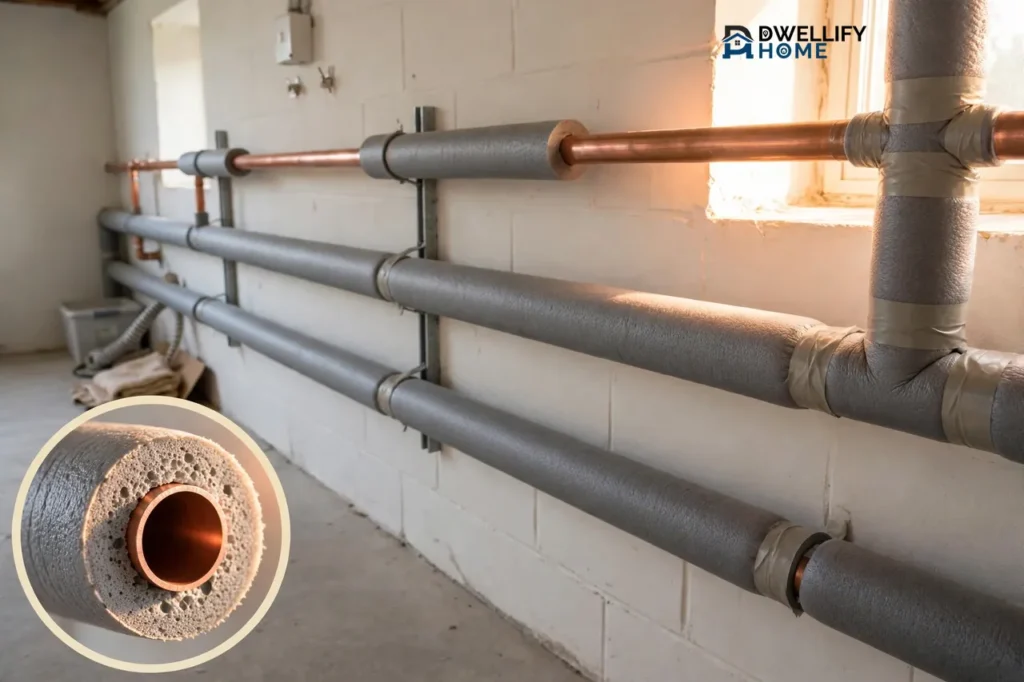
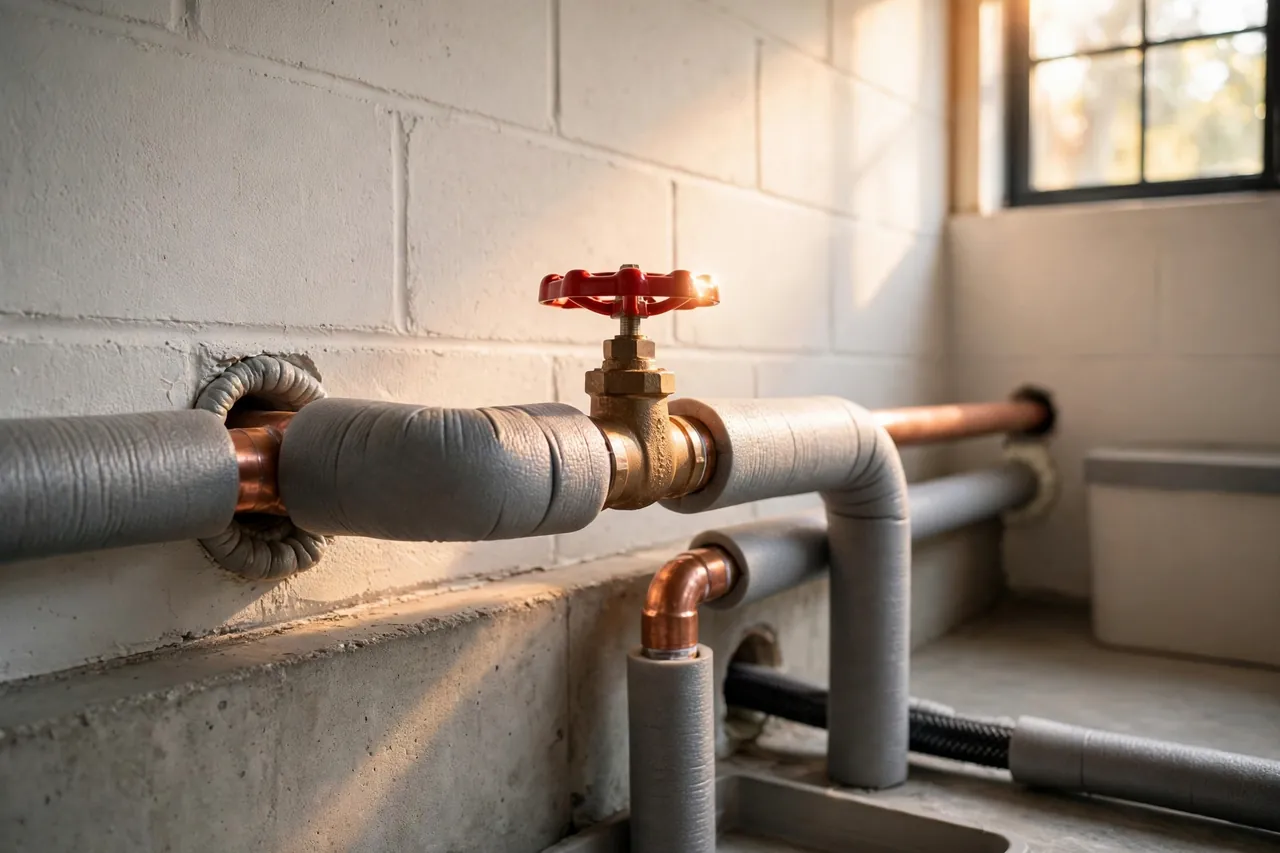
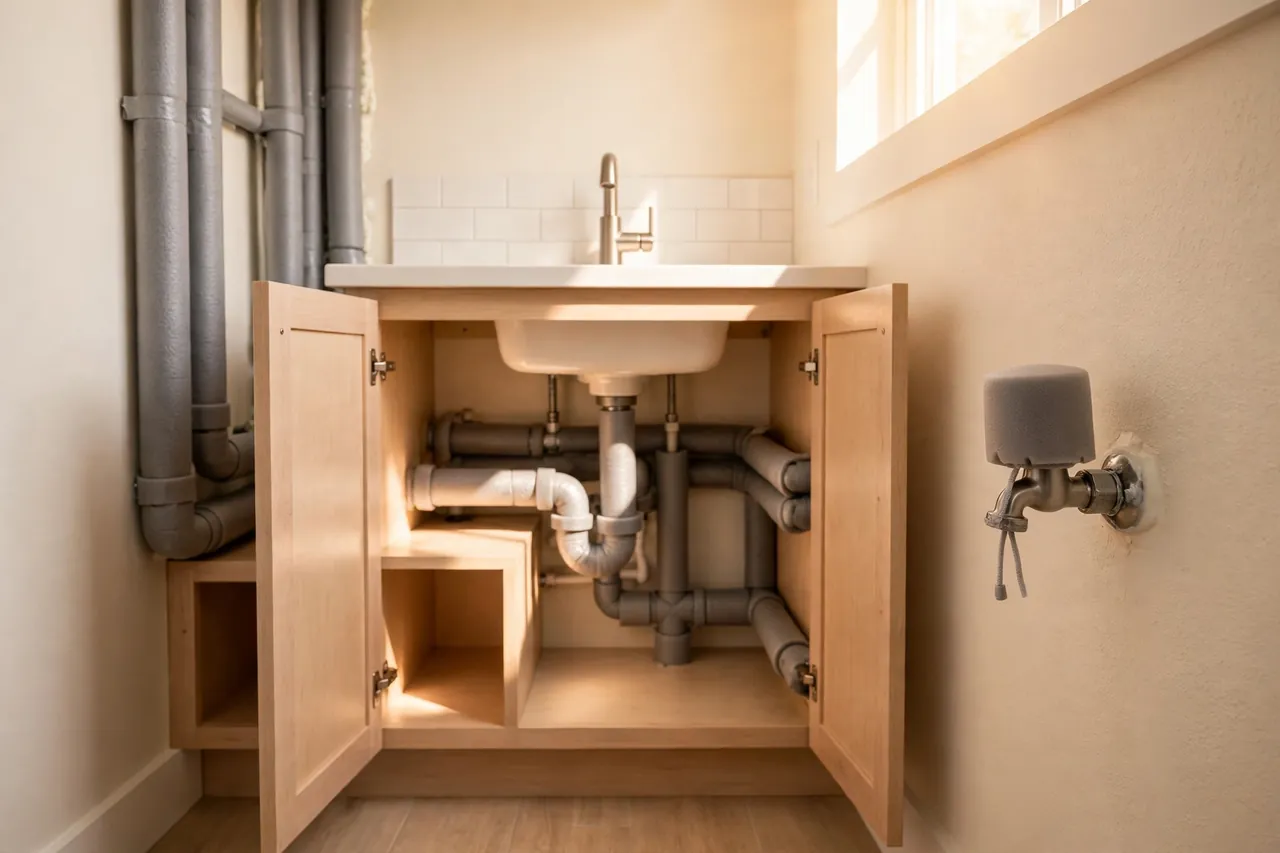
Insulation is your first line of defense for pipes you cannot drain. Foam pipe sleeves slip over exposed pipes in basements, crawl spaces, attics, and garages, and they slow heat loss so the water inside stays above freezing longer. Pipe insulation can cost as little as $0.50 per linear foot, according to First American Home Warranty, which makes it one of the cheapest protections you can buy.
Cover every exposed pipe you can reach, and pay extra attention to pipes near windows, doors, and exterior walls. The sleeve must fit snugly and cover the pipe fully, including bends and fittings, because a bare gap is where the cold gets in. Tape the joints shut so the sleeve stays closed. Do not squeeze fiberglass insulation tight around a pipe, because compressed insulation loses much of its power to slow heat loss.
For a short cold snap with no foam sleeves on hand, wrap exposed pipes in dry towels, blankets, or layers of newspaper and tie them in place. The American Red Cross notes that even a quarter inch of newspaper can give real protection in places that do not often see long freezes. Treat this as a temporary fix only, because towels get damp, slip, and lose their insulating power.
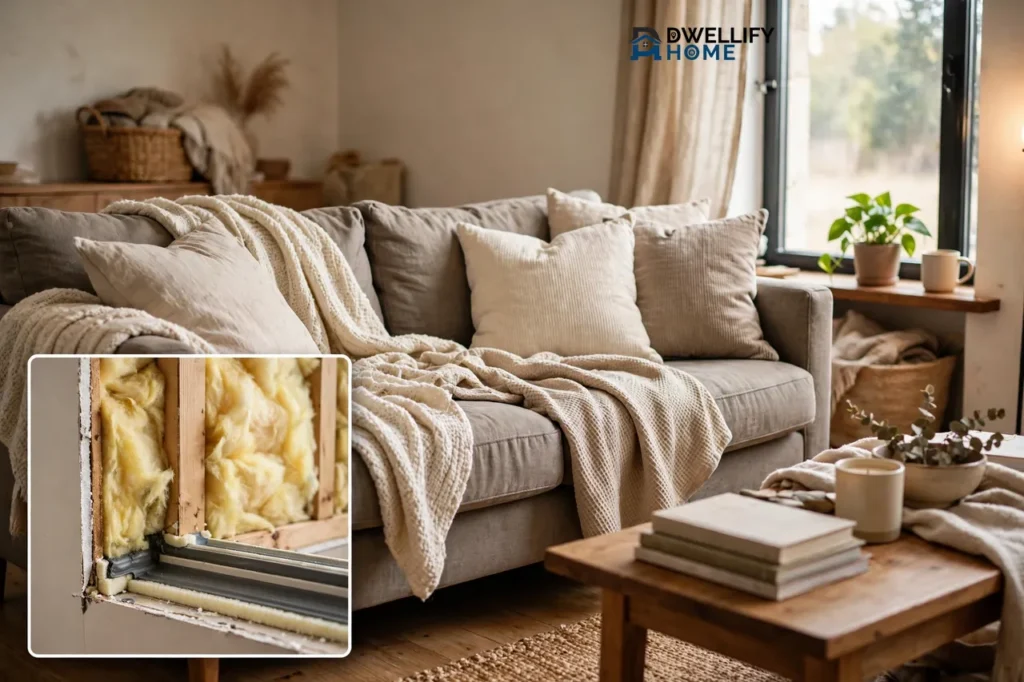
Insulation also helps the rooms around the pipes. Adding insulation to an attic, basement, or crawl space keeps those areas warmer, which protects every pipe inside them. If your attic needs work, read our guide on how to insulate an attic before you start, because a well-insulated attic protects pipes and cuts heating bills at the same time.
Seal the Drafts That Freeze Pipes Fast
A pipe does not need a cold room to freeze. A thin stream of cold air blowing straight onto one spot can freeze a pipe that sits in an otherwise warm house. That is why sealing drafts matters as much as wrapping pipes. Walk around the outside of your house and look for gaps where pipes, wires, and vents pass through the walls and foundation.
Use caulk for gaps up to a quarter inch wide, and low-expansion spray foam for larger holes. Seal around dryer vents, basement windows, sill plates, and the spots where water lines enter the house. Add weatherstripping to doors and windows that leak cold air. Close foundation and crawl space vents during a cold snap, and fill the openings with wood or foam blocks.
This step costs little and pays off fast, because it protects every pipe in the area at once. Seal the drafts in the fall, before the first hard freeze, so you are not working outside with frozen fingers.
Let Faucets Drip, and Know When Dripping Does Not Help
Letting a faucet drip is the best-known trick in this guide, and it works, but only in the right conditions. A slow, steady trickle keeps water moving through the pipe, which makes it harder for ice to form. Just as important, an open faucet gives pressure somewhere to go. When ice forms inside a closed pipe, pressure builds up between the ice plug and the closed faucet, and that pressure is what splits the pipe open. A drip relieves that pressure.
Do it this way: pick the faucets served by exposed pipes, usually those on exterior walls or far from the main water line. Open both the hot and the cold taps to a thin stream about as wide as a pencil lead. A drip that is too slow can freeze in the drain, so aim for a steady trickle you can see and hear. Let the water run into the sink and down the drain as usual.
Dripping does not help in these cases, and knowing them can save your pipes:
- When the water supply is off. If you shut off the main valve, there is no water to drip, so drain the lines instead.
- When the power is out and you have a well. The well pump needs power, so once the pressure tank empties, the taps run dry. Drain the system if the outage will last.
- On outdoor spigots. Never let an outdoor faucet drip in freezing weather. The small drip can freeze in the pipe and block it, which can split the pipe. Shut off and drain outdoor lines instead.
- In deep, long cold. Dripping buys hours, not days. If the house has no heat and the cold lasts for days, water in the pipes will still freeze. Drain the system for a long stretch.
- When the drain itself can freeze. In a very cold house, water sitting in a trap or drain line can freeze and block the drain. Watch for slow drains during a freeze.
Yes, dripping uses some water. The cost of a few gallons is far less than the cost of repairing a burst pipe and the water damage that follows. HomeGuide puts the average cost of repairing a burst pipe at $400 to $2,000, and that does not count the damage to floors, walls, and furniture.
Use Heat Tape and Heat Cables Safely
Heat tape, also called heat cable, is an electric cord that wraps around a pipe and warms it directly. Unlike insulation, which only slows heat loss, heat tape adds heat. That makes it the strongest option for pipes in very cold spots, such as a crawl space or an unheated garage, as long as you have power.
There are two types. Self-regulating heat tape adjusts its heat output based on the temperature around the pipe, so it uses less power and is safer to leave on. Constant wattage tape puts out the same heat all the time and needs closer watching so it does not overheat. HomeGuide reports that heat tape materials cost about $1 to $6 per linear foot, with self-regulating cable at the higher end. A common hardware-store kit, the Frost King 6-foot heat cable, sells for about $26, with a built-in thermostat that switches on below 38 degrees Fahrenheit (price checked on Amazon, October 25, 2026).
Follow the maker’s instructions exactly when you install it. Use only UL-listed heat tape made for water pipes, never roof de-icing cable on a water pipe. Do not overlap the tape on itself, because the overlapped spot can overheat. Cover the tape with pipe insulation after you install it, since the tape alone loses much of its heat to the cold air. Plug it into a grounded outlet, and never run it through an extension cord unless the maker says you can. Remember the limit: heat tape needs electricity. In a power outage it stops working, just like your furnace. If the power is out and the cold will last, drain the pipes instead of trusting heat tape that has no power.
Open Cabinets and Interior Doors to Share the Warmth
Kitchen and bathroom cabinets on exterior walls can trap cold air around the pipes inside them. Open the cabinet doors under sinks on outside walls so the warmer air from the room can reach the plumbing. The American Red Cross recommends this step during very cold weather, and it costs nothing.
Move any cleaners or household chemicals up and out of the reach of children before you open the doors, since open cabinets put those products within a child’s reach. Leave interior doors open as well, so warm air moves freely through the house instead of sitting in one room while another room goes cold. This step only helps when the house still has some warmth in it. In a house with no heat at all, there is no warm air to share, so open cabinets will not save the pipes on their own.
Keep the Garage Door Closed and Protect Outdoor Faucets
Garages are often the coldest part of a house, and many homes run water lines through garage walls. Keep the garage door closed during a freeze, especially if water lines run through or near the garage. An open garage door lets a blast of cold air straight onto those pipes.
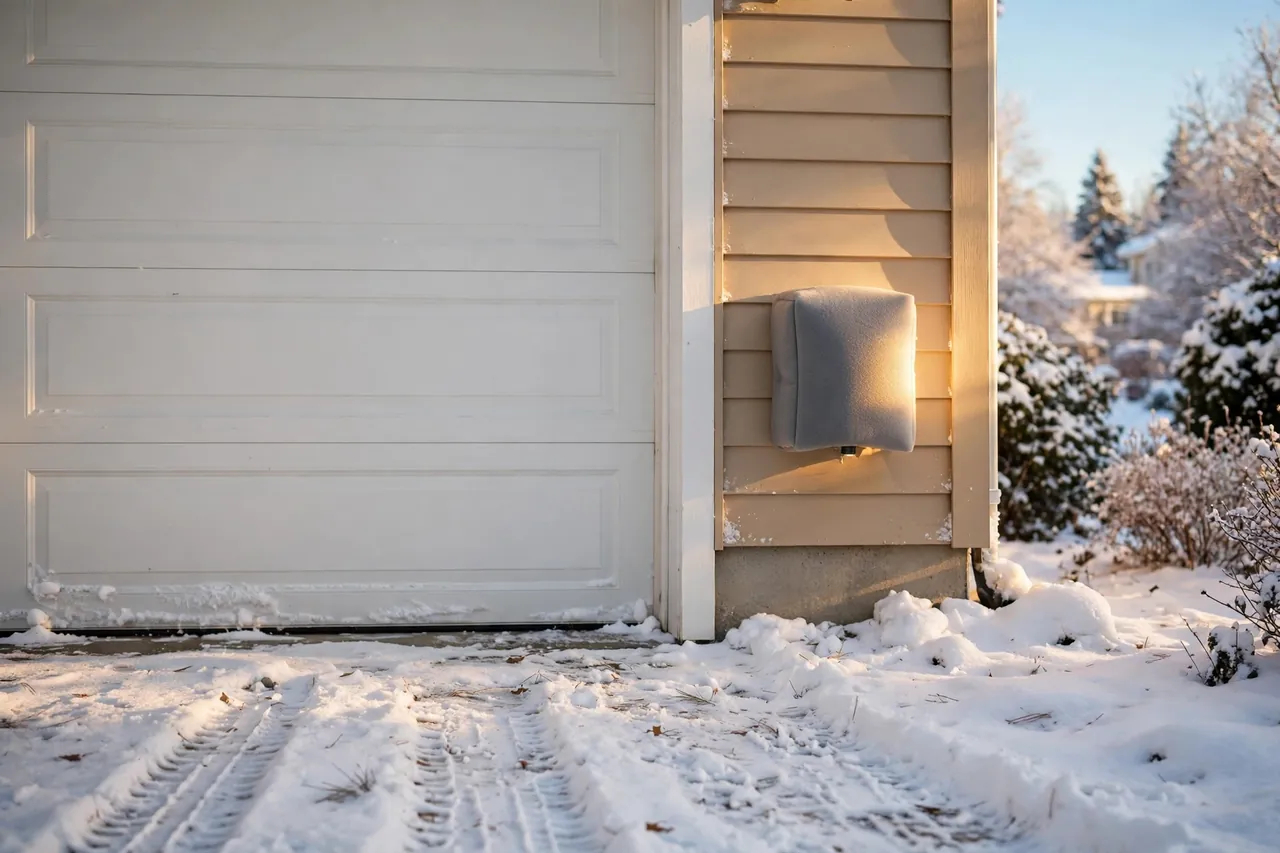
Outdoor faucets need their own steps. Disconnect every garden hose before the cold arrives, because a hose left attached traps water in the faucet and the short pipe behind it. Shut off the indoor valve that feeds each outdoor faucet, open the outside faucet to drain the line, and leave it open. Slip an insulated faucet cover over each outdoor spigot. A hard foam cover costs only a few dollars, about $7 for a common Frost King cover (price checked on Amazon, October 25, 2026), and takes seconds to put on.
Frost-free faucets help, but only when the hose is disconnected. A frost-free faucet moves the shut-off point back inside the warm wall, and the stub drains itself each time you close it. Leave a hose attached and the water stays trapped, so the design stops working.
What to Do Before You Leave a House Empty in Winter
Leaving a house empty in winter is when most frozen-pipe damage happens, because nobody is there to notice the first signs. The Insurance Information Institute reports that about 1 in 60 insured homes files a water damage or freezing claim each year, and the average claim comes to close to $14,000.
Use this checklist before you lock the door:
- Decide now: heat on or water off. If the furnace will stay on, set the thermostat to at least 55 degrees Fahrenheit and leave it there day and night, as the American Red Cross advises. Never turn the heat off completely in winter.
- If the heat will be off, shut off the main water valve and drain the whole system, including traps and toilets, as described above.
- Disconnect all hoses, drain the outdoor faucets, and cover them.
- Insulate exposed pipes in the basement, crawl space, attic, and garage before you go.
- Open cabinet doors under sinks on exterior walls so any remaining warmth reaches the pipes.
- Ask a neighbor, friend, or property manager to check the house every day or two during a cold snap, and give them the number of a local plumber.
- Write down where the main shut-off valve is and tape the note near it, so anyone checking the house can find it fast.
- Check your insurance policy before you leave. Some policies limit or deny frozen-pipe claims when a house was left unheated, so know your terms in advance.
For the full winter plan for a house, including the roof, gutters, and heating system, read our guide on how to winterize a house. It covers the whole house, while this article stays focused on the pipes.
If the Power Goes Out During a Freeze
A power outage during a freeze is the hardest no-heat situation, because the furnace, the heat tape, and often the well pump all stop at once. Act in the first hours, while the house still holds some warmth. A house usually stays warm for 8 to 12 hours after the power goes out.
First, open cabinet doors and interior doors to spread the remaining warmth. Let faucets drip if your water still runs, which it will for a while on city water or until the pressure tank empties on a well. Close the garage door and seal any obvious drafts with towels at the base of doors.
Then make the big decision. If the power will return within a day and the cold is not extreme, dripping and insulation may carry you through. If the outage will last longer, or the temperature is dropping fast, shut off the main water valve and drain the pipes now, while you still have light. Keep a flashlight, the shut-off valve location, and a plumber’s number in one place before winter, so you are not searching for them in the dark.
If a Pipe Freezes or Bursts
Even with good planning, a pipe can still freeze. The first sign is often a faucet that gives only a trickle, or no water at all. If you suspect a frozen pipe, keep that faucet open so water can flow as the ice melts. Never thaw a pipe with an open flame, a blowtorch, or a propane heater. The American Red Cross warns against all of these because of the fire risk.
If a pipe bursts, shut off the main water valve right away to stop the flooding. Turn off the water heater if it is electric, and stay away from standing water near electrical outlets. Call a licensed plumber, then call your insurance company and take photos of the damage before you clean up. A crack as small as one-eighth of an inch can release up to 250 gallons of water a day, according to the University of Illinois Extension, so every minute counts.
For the step-by-step timing of how fast pipes freeze and what to do in the first hours, read our guide on how long it takes for pipes to freeze. It pairs with this guide: this article keeps pipes from freezing, and that one tells you how much time you have.
No-Heat Pipe Protection at a Glance
Use this table when you need to pick fast. It sums up every method in this guide, what it costs, and when it works.
| Method | What it does | When it works |
|---|---|---|
| Drain the system | Removes all water from the pipes | Empty house, any length of cold |
| Foam pipe insulation | Slows heat loss from the pipe | Before the cold, any home |
| Seal drafts | Stops cold air blowing on pipes | Before the cold, any home |
| Let faucets drip | Keeps water moving, relieves pressure | Short cold snap, water running |
| Heat tape or cable | Adds heat directly to the pipe | Cold spots, only with power |
| Open cabinets and doors | Shares room warmth with pipes | House still has some warmth |
| Close garage, cover faucets | Protects the coldest spots | Before and during a freeze |
The pattern is clear: draining is the only method that works with no heat, no power, and no one home. Everything else buys time or slows the cold down. Match the method to your situation, and do the cheap steps in the fall.
Related Guides
How Long Does It Take for Pipes to Freeze? · How to Insulate an Attic: A Step-by-Step Guide That Starts With Air Sealing · Best Indoor Propane Heater: 6 Safe Picks for Warm Rooms
Frequently Asked Questions
Will pipes freeze if heat is turned off?
Yes, they will if the cold lasts long enough. With no heat, the water in the pipes cools to the temperature around it, and once it stays below freezing for hours, ice forms and the pipe can burst. Pipes in unheated spaces like crawl spaces, attics, garages, and exterior walls freeze first. Drain the system if the heat will stay off.
How long can a house go without heat before pipes freeze?
It depends on the temperature, the insulation, and where the pipes run. As a rough guide, exposed pipes can start to freeze in about six hours when the outside temperature stays at or below 20 degrees Fahrenheit. Pipes inside a well-insulated house last longer. For the full timing breakdown, read our guide on how long it takes for pipes to freeze.
Will shutting off water keep pipes from freezing?
Shutting off the water helps, but it does not finish the job on its own. Water already in the pipes can still freeze and burst them. You must also open every faucet and drain the lines so the pipes are empty. Pour RV antifreeze into the traps and toilet bowls to protect the water that stays behind.
How do I keep my pipes from freezing without power?
Use the steps that need no electricity: insulate exposed pipes, seal drafts, open cabinet doors, and keep the garage door closed. Let faucets drip while the water still runs, but remember that a well pump stops without power. If the outage will last more than a day in freezing weather, shut off the main valve and drain the pipes.
How do you keep pipes from freezing in a vacant house?
Drain the whole plumbing system, including the water heater, traps, and toilets, and add non-toxic RV antifreeze to every drain trap and toilet bowl. Insulate exposed pipes, disconnect hoses, and drain outdoor faucets. Ask someone to check the house during cold snaps, and keep the heat at 55 degrees Fahrenheit or higher if the furnace stays on.
Homes and pipes vary, and this guide cannot cover every plumbing setup. If your pipes are hard to reach, your house has unusual plumbing, or a pipe has already burst, call a licensed plumber rather than guessing. Never use an open flame to thaw a pipe, and never work with water near live electrical parts. When in doubt, get professional help before the damage gets worse.
Start with the step that fits your house today. If you are leaving for the winter, drain the system and walk through the leaving checklist. If you are home and the power just went out, insulate what you can reach, open the cabinets, and let the coldest faucets drip. Do the cheap work in the fall, know where your shut-off valve is, and your pipes will have the best chance of making it through the coldest nights untouched.