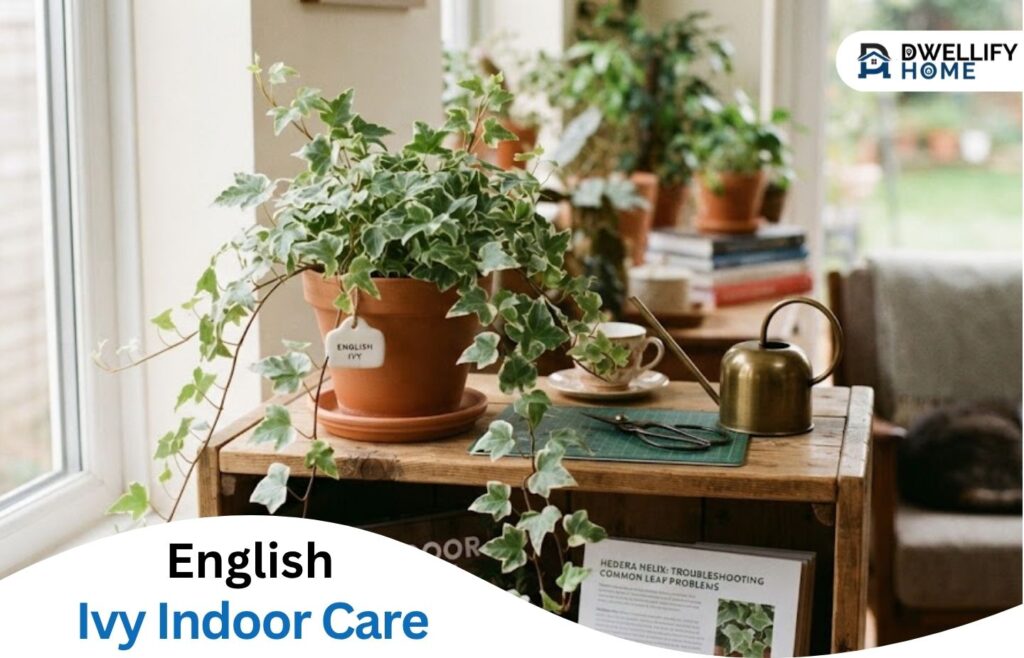
A pot of English ivy can look full and healthy at the store, then develop crisp leaf edges at home. Adding more water may seem sensible, but the right response depends on what is happening in the pot and around the leaves.
Good English ivy indoor care starts with bright, indirect light, cool conditions, and reliable drainage. Let the surface of the potting mix dry slightly between waterings, and check regularly for pests. Those habits matter more than following a fixed weekly schedule.
Short Definition
English ivy is a trailing evergreen vine grown indoors for its foliage. It needs suitable light, careful watering, good drainage, and regular pest checks, with precautions around pets and children.
Practical Home Tip
A decorative outer pot can hide water left after watering. Lift out the nursery pot and empty any collected water before putting it back. Drainage holes only help when excess water can escape.
Mission Statement
DwellifyHome helps homeowners and renters make informed, practical choices for living spaces that feel comfortable, look welcoming, and fit everyday life.
Quick Indoor Ivy Care Checklist
- Check the light where the leaves actually hang.
- Feel the upper potting mix before watering.
- Let excess water drain, then empty the saucer or outer pot.
- Inspect leaf undersides for pests and fine webbing.
- Keep trailing vines and fallen leaves away from pets and young children.
Is English Ivy a Good Fit for Your Home?
English ivy, or Hedera helix, is an evergreen vine grown for its trailing or climbing stems. Indoors, it suits shelves, hanging baskets, and small supports where its leaves receive useful light.
Its outdoor toughness can give the wrong impression. Growing ivy inside means managing limited daylight, indoor heating, and a small amount of soil. It suits someone willing to check the pot and inspect the leaves regularly.
Use this reference as a starting point:
| Care need | What to aim for |
| Light | Bright, indirect light at leaf level |
| Water | Slight surface drying between thorough waterings |
| Pot | Drainage holes and no standing water |
| Temperature | A cool room, away from direct heat |
| Maintenance | Light pruning, leaf checks, and feeding during active growth |
| Household safety | Keep away from pets and children who may chew it |
When buying English ivy, look for firm stems, healthy foliage, and several growing shoots. Check beneath leaves for webbing or pests. A full-looking plant is less appealing if it brings a pest problem home.
Keep a new plant apart from your other houseplants for a week or two while you inspect it. Also consider where its trailing stems will reach as they lengthen.
Where to Put English Ivy Indoors
The best place for indoor English ivy is near a window with useful daylight, protected from harsh sun and direct blasts of heated air. Choose a position you can reach easily for watering and inspection.
An east-facing window can be a useful starting point. Other directions may work, depending on trees, nearby buildings, curtains, and how far the plant sits from the glass. Check the light where the leaves actually hang.
White or yellow patterns on leaves are called variegation. These forms need enough light to maintain their appearance, but strong sun can damage the foliage. Move plants into brighter conditions gradually.
A dim corner may keep ivy alive for a while without supporting good growth. Long stems with wide gaps between leaves are a reason to reassess placement. For a darker room, compare the needs of other low light indoor plants before settling on ivy.
English ivy generally prefers cool indoor conditions, around 50–70°F (10–21°C). Treat this as a preferred range, rather than a sharp boundary between success and failure.
Keep leaves away from radiators, fireplaces, heating vents, and cold drafts. Recheck the location when winter heating begins or seasonal daylight changes.
Moderate humidity is helpful, but extra humidity should not create condensation on windows or walls. Check moisture levels before buying equipment. A poorly lit, overly wet plant will not recover simply because a humidifier is running.
How to Water English Ivy and Choose the Right Pot
Water indoor ivy when the upper layer of potting mix feels dry, while some moisture remains below. Avoid repeatedly drying the entire root ball or keeping it constantly soaked.
As a starting check, feel roughly the top half-inch to inch of mix. Pot size and conditions matter: a shallow pot and a large hanging basket will not dry at the same rate.
Follow this simple process:
- Feel the mix before watering. A dry-looking surface alone can be misleading.
- Notice the pot’s weight. Compare how it feels before and after a thorough watering.
- When watering is needed, wet the mix evenly until excess water drains out.
- Let the pot drain, then empty its saucer or decorative outer container.
A draining nursery pot can work well inside a decorative pot without holes. The important part is removing the collected water. Otherwise, the roots remain wet even though the inner pot has drainage.
Use a commercial potting mix suitable for houseplants. Soil dug from the garden can become compacted and drain poorly in a container. Gravel at the bottom does not replace drainage holes.
Check more often when the plant dries quickly, but water only when the checks indicate it needs it. During darker, slower-growing periods, the interval may lengthen.
A calendar reminder can help you remember the plant. Set it as a reminder to check, rather than an instruction to pour in water.
Feeding, Pruning, and Repotting Indoor Ivy
These jobs help maintain a manageable plant, but none should become an automatic response to every brown leaf. Start with light, watering, and drainage before changing several things at once.
Feeding During Active Growth
Use a fertilizer labeled for foliage houseplants, following its indoor-plant directions. Monthly feeding during active growth is a common approach, but the product and potting mix also matter.
Check whether fresh potting mix already contains fertilizer. Pause feeding when growth stops, and avoid giving extra fertilizer to a struggling plant in hopes of forcing recovery.
More fertilizer can lead to a buildup of salts that damages roots. Correct poor conditions first.
Pruning and Training Vines on a Separate Support
Trim overly long stems with clean scissors to keep the shape manageable. Cut just above a leaf joint, also called a node. Remove dead foliage and check the remaining stems as you work.
For an indoor ivy wall display, train vines on a separate trellis or frame. Keep them from attaching directly to painted walls or wallpaper, where removal may damage the finish.
Leave enough space to lift out the pot and inspect the backs of leaves. A display that is difficult to maintain can hide problems until they spread.
When to Repot
Inspect the root ball when growth slows unexpectedly, roots fill the pot, or the mix dries unusually fast. Roots at a drainage hole are a reason to check, rather than an automatic instruction to choose a much larger container.
Move a crowded plant into a pot only slightly larger than its current one. Use fresh potting mix and keep the plant at its previous planting depth.
A large pot holds more wet mix around a small root system. Giving ivy too much extra space can make watering harder to manage.
Starting New Plants From Cuttings
English ivy can root from stem cuttings, including cuttings placed in water. Choose a healthy shoot, remove the lower leaves, and keep the remaining foliage above the water.
Use a clean container in bright, indirect light. Refresh the water regularly and watch for healthy roots before moving the cutting into a small pot.
Water rooting is a way to start a new plant. It does not establish that ivy will grow indefinitely in plain water without attention to nutrients and other growing conditions.
Cuttings can also be started in a suitable rooting medium. Avoid taking them from a plant with an unresolved pest infestation.
What to Check When Ivy Leaves Turn Brown or Yellow
Leaf color alone cannot tell you what is wrong. Brown edges can appear when a plant dries too much, but they can also occur when wet roots no longer function well. Yellowing has several possible causes too.
Check the pot, roots when necessary, leaf undersides, and recent changes in location before choosing a response.
| What you notice | What to check | Useful next step |
| Crisp edges and a light, dry pot | Whether the root ball has dried excessively | Water thoroughly, drain, and reassess the checking interval |
| Wilting or browning while the mix stays wet | Standing water, blocked drainage, and root condition | Empty collected water and investigate persistent wetness |
| Yellow leaves or leaf drop | Moisture, pests, temperature changes, and light | Look for a pattern before changing care |
| Long, sparse stems | Light reaching the growing shoots | Improve placement gradually and assess new growth |
| Tiny pale marks or fine webbing | Leaf undersides and stem joints | Isolate the plant and inspect for mites |
When persistent wetness and wilting suggest root trouble, gently slide the root ball out for inspection. Healthy roots should feel firm; rotten portions may look dark and feel soft.
Remove clearly rotten roots with clean tools and repot the remaining healthy plant in fresh mix with drainage. A severely affected plant may not recover. The houseplant problem guide offers additional symptom checks.
Damaged leaf tissue will not turn green again. Judge progress by whether damage stops spreading and healthy new growth appears.
How to Spot and Manage Spider Mites
Spider mites are tiny pests that feed on leaves. Look for pale speckling and delicate webbing, especially underneath foliage. A magnifying glass can help with inspection.
Move an affected plant away from others. Rinse the foliage carefully, including leaf undersides, and check nearby plants. Keep inspecting afterward; one rinse may not resolve an infestation.
For persistent problems, choose a product labeled for the pest and for use on the plant indoors. Follow its directions and any plant-sensitivity precautions. Do not substitute a homemade dish-soap mixture: it can damage leaves.
When a plant is badly infested and declining, discarding it may be the more practical way to protect the rest of your collection.
What Benefits Can You Expect From Indoor English Ivy?
The clearest benefits are decorative. Ivy brings trailing greenery to shelves, softens the edge of a planter, and can be shaped around a small support. Its different leaf patterns give you options without needing a large floor plant.
Those benefits depend on choosing a display that supports healthy growth. A shelf may look suitable while leaving the leaves shaded or making watering awkward.
Consider the upkeep before buying. A simple pot in an accessible position may serve you better than a large wall arrangement that needs frequent training.
Does English Ivy Help With Mold?
Do not rely on English ivy to prevent or remove household mold. Claims that one or two plants will solve a damp-room problem go beyond the available evidence.
Claims about air purification often draw on experiments in small, enclosed chambers. A review of houseplant air-cleaning research explains why those results do not translate easily to ordinary buildings. That research concerns airborne chemicals, so it does not establish mold control either.
Address leaks, persistent moisture, and poor ventilation instead. The EPA’s mold and moisture guidance explains the practical response. Significant water damage or suspected hidden mold may need experienced help.
Enjoy ivy for its appearance, without treating it as an air cleaner or dehumidifier.
Keeping Ivy Around Pets and Children
English ivy is toxic to cats and dogs if eaten. Its leaves are a concern, so an indoor plant does not need berries to pose a risk. The ASPCA’s English ivy listing provides pet-specific information.
Keep the entire plant, including trailing stems and fallen leaves, out of reach. A high shelf may not be enough for a climbing cat. Choose another plant when reliable separation is impractical.
People should not eat ivy either. Its sap can also cause skin reactions. Wear gloves when pruning if contact is a concern, and wash your hands afterward.
After suspected ingestion, contact a veterinarian for a pet or Poison Control for a person. Keep the plant label or a clear photograph available for identification.
Finally, keep indoor ivy contained. It is invasive in parts of the US, so avoid moving an unwanted houseplant into the landscape or dumping cuttings outdoors. Check local disposal guidance rather than assuming garden waste is an appropriate destination.
Questions About Growing English Ivy Indoors
Can English Ivy Survive in the Bathroom?
Yes, provided the bathroom has enough usable light and suitable growing conditions. Humidity does not replace daylight. A windowless bathroom needs appropriate plant lighting.
Keep the pot out of standing water and continue checking the mix. Use ventilation to manage lingering dampness rather than keeping the room humid for the plant.
Can Ivy Cause Breathing Problems?
Ivy-related asthma has been reported after workplace exposure. That does not tell us the risk from an ordinary indoor plant or establish the cause of someone’s symptoms.
Seek medical advice for coughing or wheezing associated with handling the plant. Severe breathing difficulty needs urgent medical care.
Should I Mist My English Ivy?
Misting is not an effective way to maintain higher humidity because the moisture evaporates quickly. It also does not replace watering the potting mix.
Check the room’s humidity and plant placement first. If you use a humidifier, maintain it as directed and avoid condensation. Rinsing leaves to remove dust or pests serves a different purpose.
Build a Simple Care Routine
Choose a bright, accessible spot, check the mix before watering, and empty collected water afterward. Use those moments to inspect the leaves and keep trailing stems manageable.
When something changes, investigate before adding more water or fertilizer. A steady routine and attention to healthy new growth will tell you more than a rigid calendar.
Disclaimer
This guide provides general information. Conditions, needs, and budgets vary between homes. Contact a veterinarian or Poison Control after suspected ingestion, seek medical advice for health symptoms, and get qualified help for significant or hidden household mold.