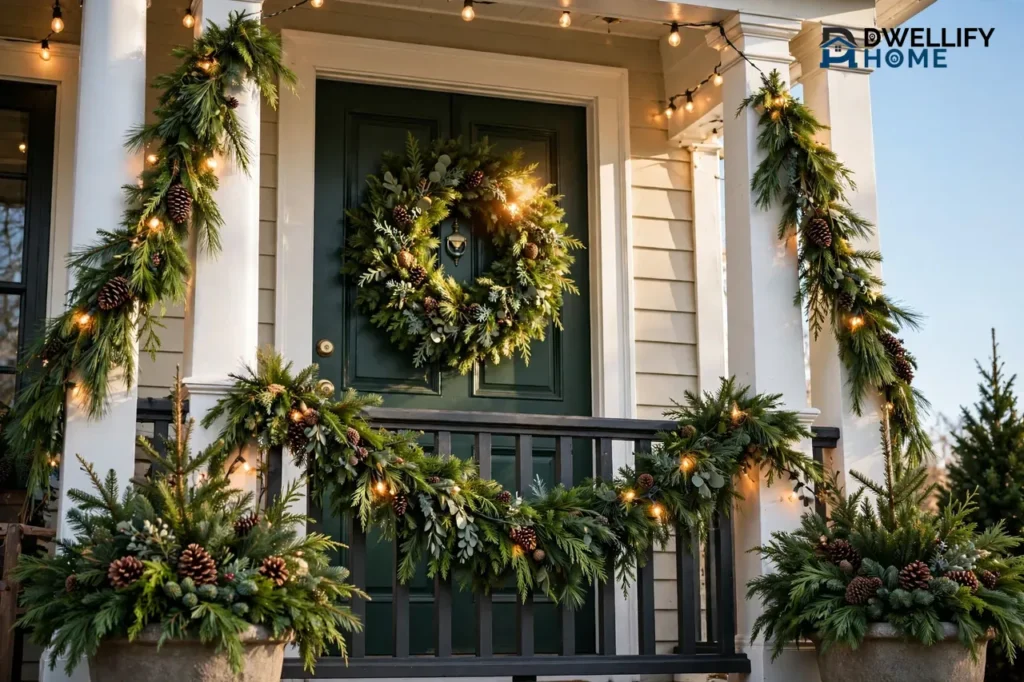
Outdoor Christmas greenery means live or faux evergreen garlands, wreaths, swags, and cut boughs that dress up your porch, door, railings, and planters for the holidays. Live greenery looks and smells wonderful, but it needs water, shade, and shelter from wind to stay green. Faux greenery skips the watering and comes back year after year, yet it needs the right outdoor rating and careful storage. Pick the type that fits your climate, your spot, and how much care you want to give it, and your greenery will still look fresh on Christmas Day.
That choice matters more outdoors than indoors. Cold air helps live greens last longer, but sun, wind, and heat from lights dry them out fast. A wreath on a shaded, sheltered porch can stay green for weeks, while the same wreath baking in full sun on a south-facing door may fade in days. This guide walks you through the types, the live-versus-faux decision, fresh-care steps, safe hanging, and storage, so you buy once and enjoy the whole season.
What Counts as Outdoor Christmas Greenery
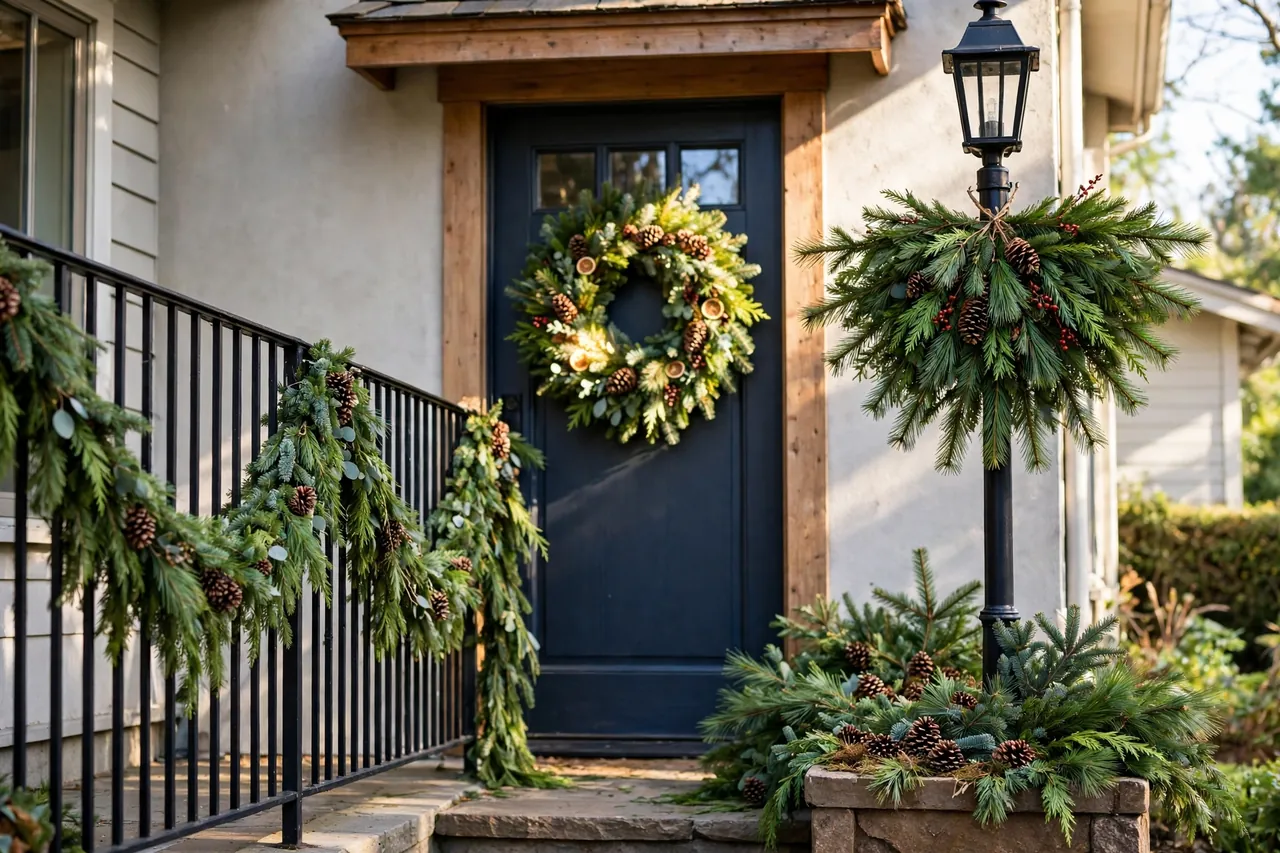
Outdoor Christmas greenery covers every evergreen piece you hang or tuck outside, not the lights, ornaments, or figures that go with it. The four main forms each suit a different spot, and mixing them gives your entry a full, layered look without buying more than you need.
Garlands
A garland is a long, flexible strand of greenery that drapes along a railing, frames a door, or wraps a porch column. Measure the run first, then add extra length for the swags, because a garland pulled tight looks thin and flat. As a rule, buy about one and a half times the straight length when you plan soft, dipping swags.
Wreaths
A wreath is a ring of greenery that hangs on a door, a gate, or a wall. It works best where it gets some shelter, since a wreath takes the full force of wind and sun on a flat surface. Check the door swing and the hook before you buy, so a thick wreath does not block the door or scrape the frame.
Swags
A swag is a fan-shaped bundle of greenery, tied at the top and spreading out below. Swags shine on mailbox posts, lamp posts, fence posts, and porch columns, where a full garland would be too much. They also make a good fix for a bare spot, because you can tuck one into a corner that a garland cannot reach.
Cut Boughs and Planter Greenery
Cut boughs are loose branches you arrange in outdoor planters, window boxes, or urns, often with pinecones and berries mixed in. Their cut ends sit in damp soil or water, so they drink while they decorate, which helps them last. If you already fill outdoor planters for Christmas, fresh boughs give those planters a natural, full finish that faux stems struggle to match.
Choosing Live Greenery That Holds Up Outdoors
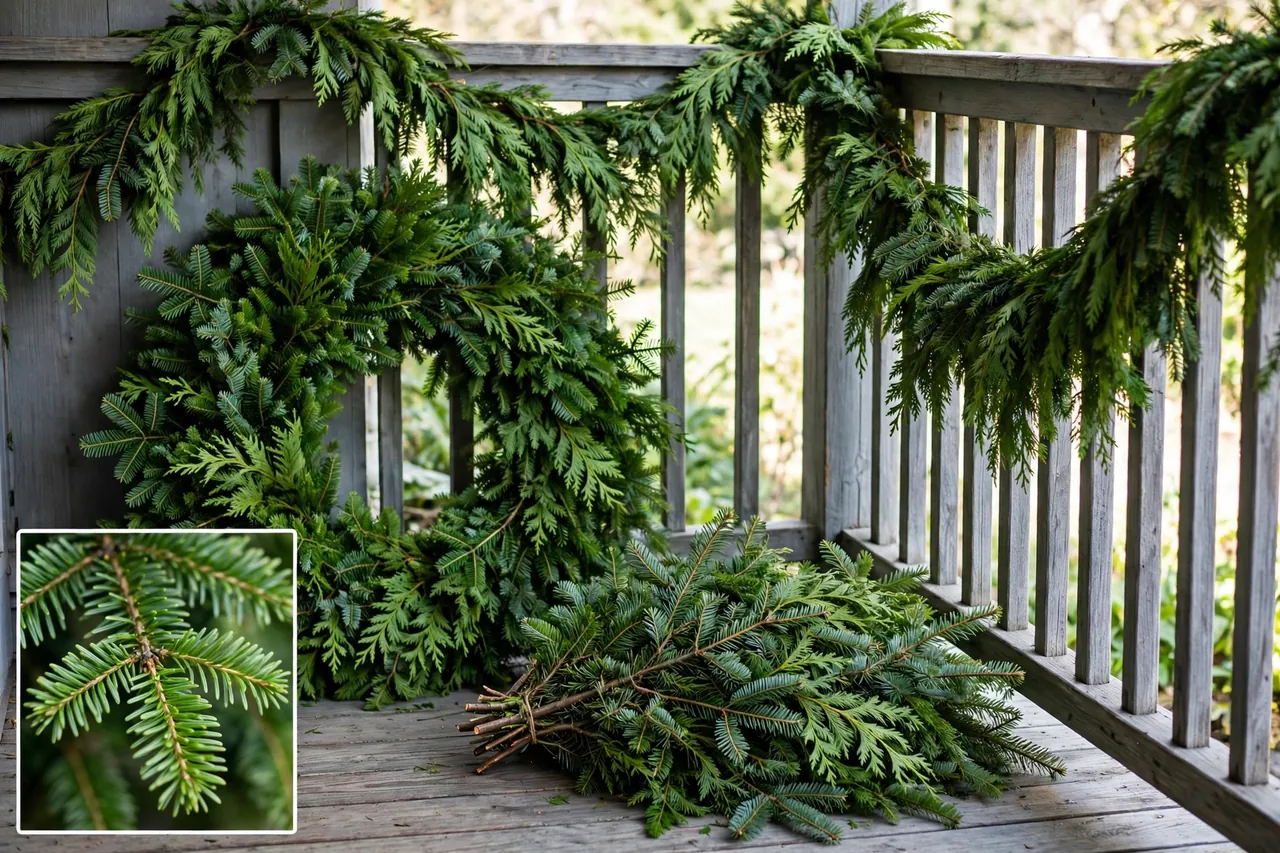
Not every evergreen handles outdoor life the same way. Some hold their needles for weeks in the cold, while others shed at the first dry wind. Start with the freshest piece you can find, then match the type to your spot.
Pick up the greenery and feel its weight. A fresh wreath or garland feels heavy for its size because it still holds water, while a dry one feels light and papery. Bend a branch gently. Fresh stems bend without snapping, and the needles stay put. Give it a light shake, too. A few loose needles are normal, but a shower of needles means the piece is already drying out, so leave it behind. Finally, smell it. Pine, fir, cedar, and spruce should smell like a walk through a forest, not like dust.
The table below sums up the most common live types, so you can compare them at a glance before you buy.
| Greenery type | Look and feel | Outdoor staying power |
|---|---|---|
| Cedar | Soft, feathery sprays that drape well | Strong; stays flexible and lush outdoors |
| Fir (noble, Douglas, balsam) | Full, soft needles and a strong scent | Strong; holds needles well in the cold |
| Pine | Long needles and sturdy branches | Good; sturdy, but check for drying tips |
| Spruce | Short, sharp needles and a dense shape | Fair; sheds sooner when dry or windy |
| Boxwood | Small, glossy leaves and fine texture | Good as an accent mixed with needled greens |
| Magnolia | Large, glossy leaves with warm undersides | Good; striking mixed into wreaths and swags |
| Holly | Waxy leaves and bright berries | Good; berries add color, but handle with care |
Buy live greenery as close to hanging day as you can, and keep it cool and shaded until you hang it. A garage, a shaded porch, or an unheated shed beats a warm living room every time. Greens stored warm start drying before they ever reach your door.
If you cut your own boughs, cut in the late afternoon or early morning, when the limbs hold the most water. That is the advice from North Carolina Cooperative Extension on keeping decorative greens fresh, which also recommends crushing or splitting woody stems so they can take up water. A sharp cut at an angle, plus a split stem end, gives a loose bough a much better drink than a blunt, sealed end.

Live or Faux Outdoor Christmas Greenery
The live-versus-faux choice comes down to scent, effort, and how many seasons you want from one purchase. Neither option wins for everyone, so judge them against your own porch, climate, and patience.
Live greenery wins on scent and realism. Nothing fake quite matches the smell of fresh cedar or fir on a cold evening, and live branches move and drape in a way plastic cannot copy. The trade-off is care. Live pieces need soaking, misting, shade, and an eye on drying, and they last one season. In a cold, shaded spot, well-cared-for live greenery can stay green for four to six weeks, but sun, wind, and warmth can cut that time sharply.
Faux greenery wins on reuse and ease. A good faux garland needs no water, drops no needles, and comes back next year. Quality matters a lot here. Molded polyethylene (PE) branches look far more real than flat, shiny PVC strips, and mixed PE and PVC pieces balance realism with fullness. For outdoor use, look for UV protection and an outdoor rating on the label. Cheap indoor-only faux greenery fades, cracks, and turns brittle after one winter outside, so the label, not the price tag alone, tells you whether it belongs outdoors.
Many homeowners mix the two, and that mix often works best. Use faux garlands for the long, hard-to-reach runs along a high railing, where watering is a chore, and add live wreaths or planter boughs near the door, where you smell them every time you come home. You get the scent where it counts and the easy care where it matters most. If anyone in your home has evergreen allergies, faux greenery near the door also keeps pollen and sap out of the entryway.
Think about your climate before you decide. In a cold northern winter, live greenery thrives outdoors, since freezing air acts like natural refrigeration. In a mild, sunny climate, live greens dry faster, so faux pieces, or live pieces hung late and in shade, make more sense. Either way, buy for the spot you actually have, not the catalog photo.
How to Keep Live Outdoor Greenery Fresh
Freshness comes from water and shelter, not from luck. Follow these steps in order, and your live greenery will hold its color and needles far longer than a piece you simply hang and forget.
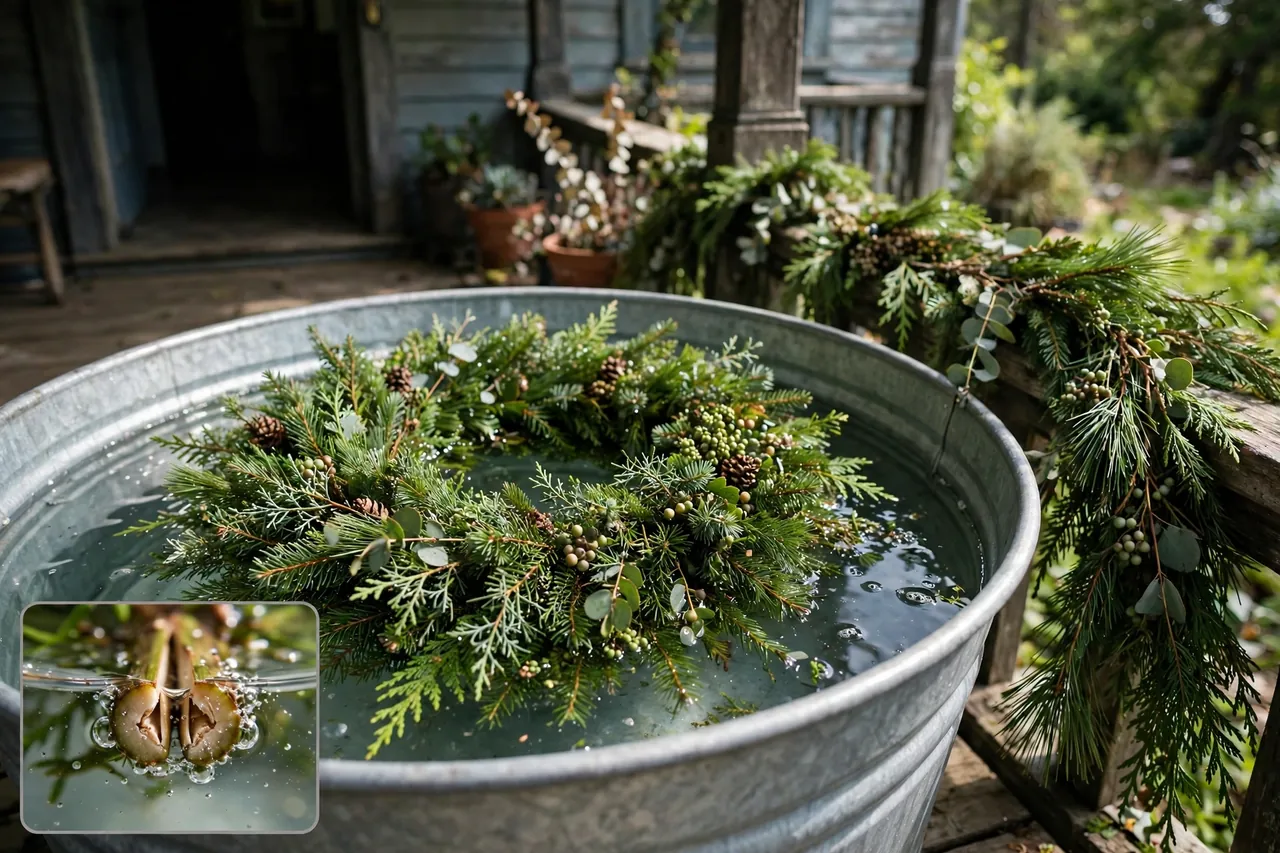
- Soak the greenery before you hang it. Submerge wreaths and garlands in cool water for several hours, or overnight, in a tub, a large bin, or a kiddie pool. Let them drip dry outside before hanging. This deep drink rehydrates branches that dried out during shipping and display.
- Prepare loose stems. Cut each stem at an angle with sharp pruners, then crush or split the woody end an inch or two so water can enter. Strip the needles off the part of the stem that will sit in water or soil, so nothing rots underwater.
- Spray an anti-desiccant if you use one. These sprays coat the needles with a thin, waxy layer that slows moisture loss. Spray all sides evenly and let the piece dry before hanging. Skip the spray on juniper berries and blue spruce, where it can dull their natural color, and go light on fine needles so they do not stick together.
- Hang in shade and out of the wind where you can. A covered porch, a north-facing door, or a spot shielded by a wall beats an open, sunny, windy railing. Shade and still air slow drying more than any spray can.
- Mist every few days. A light mist of cool water refreshes the needles, especially during dry or windy spells. Mist in the morning so the greenery dries before nightfall, and skip misting if it would soak lights, ornaments, or other decorations that water could damage.
- Water planter boughs like living plants. Keep the soil in outdoor planters damp through the season, just as you would for a potted plant. Boughs with their ends in damp soil drink steadily and stay green longer than boughs left dry in an empty pot.
Refresh the display as the season goes on. Pull out any sprigs that brown, and tuck a fresh sprig into the gap. A wreath that loses a few branches still looks full when you replace them early, while a wreath left to thin out looks tired by Christmas week. When a piece turns fully brown and crisp, take it down. Dried greenery is not just ugly, it is a fire risk, which the safety section below covers in detail.
Hanging Greenery Outdoors So It Stays Put
Wind is the enemy of a good garland. A beautiful swag on the ground after the first storm helps no one, so anchor every piece at enough points and test it before you walk away.
Plan your anchor points before you lift anything. For a swagged garland, place an anchor at each end and at least one in the middle of each dip, so the weight spreads evenly. Cup hooks, sturdy outdoor hooks, and zip ties on railings all work well, but check that each one can hold the weight, especially after rain or snow adds to it. Weights and anchors for outdoor Christmas decorations can help where wind lifts lighter pieces, but never hang greenery from a gutter, a light fixture, or anything not built to hold weight.
Before you climb a ladder, stop and read this. Set the ladder on firm, level ground, keep three points of contact at all times, and never lean out sideways to reach a spot. Ask someone to hold the ladder and hand you pieces, and stay off the top two rungs. If a spot needs you to stretch, move the ladder instead. Most ladder falls happen during exactly this kind of quick holiday job, so slow down and treat the ladder as part of the work, not a shortcut.
- Measure and lay out the garland on the ground first. Mark where each swag will dip, so you hang it once instead of rehanging it three times.
- Fix the top anchor first, then work along the run, shaping each swag as you go. Keep the dips even by stepping back and looking from the street.
- Wire the greenery to its hooks or railings, rather than just draping it over them. A few wraps of floral wire or a zip tie at each anchor point stops wind from sliding the whole run sideways.
- Fluff the branches after hanging. Pull the outer branches outward and downward, and hide any bare wire or cord behind foliage. Faux greenery ships compressed, so fluffing matters even more for faux pieces.
- Check the piece after the first windy day. Tighten any loose anchor, replace any slipped wire, and trim any branch that rubs against a wall or door frame.
When you add lights to greenery, use lights rated for outdoor use, and check each strand for frayed wires, cracked sockets, or loose bulbs before you hang it. Keep lights off dried greenery entirely, and switch lights off before bed and before leaving home. If you want the glow without the wiring work, LED Christmas decor runs cooler than old incandescent strands, which also helps live greenery dry out more slowly.
Greenery Care Through the Season: Fixing Problems Early
Most greenery problems show up gradually, and each one has a simple fix if you catch it early. Work through this list from the cheapest, easiest fix first.
- Needles dropping in handfuls. The piece is drying out. Mist it, move it to shade if you can, and soak any loose boughs again. If most needles fall at a light touch, replace the piece.
- Tips turning brown. Sun or wind is drying the exposed ends. Trim the brown tips, tuck the branch deeper into shade, and mist more often.
- One side fading while the other stays green. That side faces sun or reflected heat. Turn a wreath around if you can, or swap it to a shadier hook.
- Garland sagging or slipping. An anchor has loosened or the weight grew after rain. Add an anchor at the sag, rewire the slipped section, and check that the hook still holds firm.
- Faux greenery looking faded or washed out. Sun has bleached untreated plastic. Move it to a shadier spot next year, and buy UV-protected pieces for sunny spots.
- Faux branches shedding fibers. Shake the piece outdoors before hanging, and store it loosely coiled, not crushed. Heavy, ongoing shedding means the piece is wearing out, so plan a replacement.
- Mold or a musty smell on stored faux greenery. It went away damp. Clean it, dry it fully in the open air, and store it dry next time.
Keep an eye on the weather, too. A hard freeze does not hurt live greenery, but a freeze-thaw cycle followed by wind can dry it fast. After a storm, walk past your greenery and check for slipped anchors, broken branches, and pooled water in planters. Five minutes of checking saves a full rehang later.
Storing Faux Greenery and Clearing Away Live Greenery
How you end the season decides how your greenery looks next year. Faux pieces reward careful storage, and live pieces need prompt, safe disposal once they dry out.
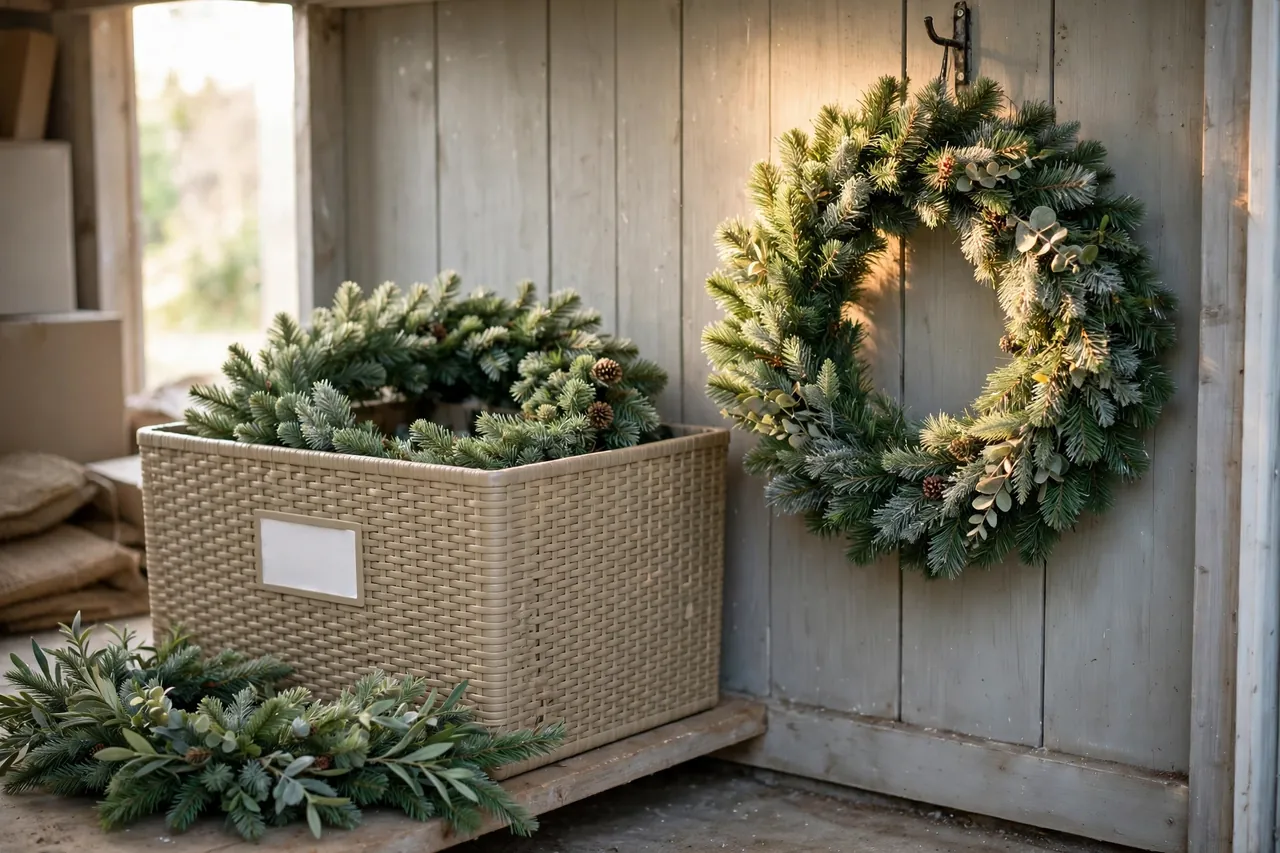
Take faux garlands, wreaths, and swags down on a dry day. Shake each piece outdoors to drop dust and loose fibers, then wipe off any dirt. Coil garlands loosely, never tight enough to crease the branches, and lay wreaths flat or hang them on a hook so they keep their round shape. Store everything in a dry, covered spot, in a labeled bin or bag, away from damp and crushing weight. Damp storage breeds mold, and a heavy box on top flattens branches for good. Label each bin by spot, such as porch railing or front door, so next December you hang the right length in the right place without measuring again.
Live greenery does not get stored. Once the season ends, or as soon as a piece turns dry and crisp, take it down and dispose of it through your local green-waste or recycling program. Never burn greenery in a fireplace or stove, and never stack dried greenery against the house or in the garage, where it becomes fuel if a spark reaches it. Check your community for a tree and greenery recycling program, since many towns run one in January.
Before you pack anything away, note what worked. Which type stayed green longest? Which spot dried out first? Which length fit the railing without a gap? A short note in the storage bin turns next year’s shopping into a five-minute job instead of a fresh round of guessing.
Greenery Safety: Heat, Lights, and Dried Branches
Live greenery is beautiful, and dried greenery is fuel. The line between the two is moisture, so keep water, heat, and flames in mind from hanging day to takedown day.
Before you hang greenery near any light or heat source, check the clearance. Keep live greenery away from heat vents, radiators, space heaters, fireplaces, and candles, and use only outdoor-rated, tested lights on outdoor pieces. The Illinois Office of the State Fire Marshal’s Christmas tree safety guidance, which follows National Fire Protection Association advice, recommends keeping greenery and trees at least three feet from heat sources, using tested lights, and turning lights off before bed or when leaving home. That three-foot rule is a good habit for wreaths and garlands near porch heaters and light fixtures, too.
Watch for the moment live greenery turns risky. When needles fall at a touch, branches snap instead of bending, and the piece feels light and crisp, it has dried out. Take it down right away, keep it away from lights and heat, and dispose of it promptly. Do not leave a dried wreath on the door into January because it still looks passable from the street. The Christmas tree safety guide covers the same drying and fire-risk signs in more detail, and the same rules apply to every live green in your display.
This article gives general home guidance, not professional fire-safety advice. If you are unsure whether a display is safe, or if you use heaters, candles, or older wiring near greenery, ask a qualified electrician or your local fire department for advice before the season starts. A quick question in November beats a problem in December.
Outdoor Christmas greenery earns its place when you match the piece to the spot, give live greens water and shade, anchor everything against wind, and clear dried pieces away on time. Start with one strong piece near your door this year, a fresh wreath or a well-made faux garland, and build from what lasts best on your own porch. Next December, you will know exactly which greenery to buy, where to hang it, and how long it will stay green.
Related Guides
Christmas Decorations for Outdoor Planters · Decorating Driveway for Christmas · Acrylic Christmas Decorations
Frequently Asked Questions
How long does outdoor Christmas greenery last?
Well-cared-for live greenery in a cool, shaded, sheltered spot can stay green for four to six weeks outdoors. Sun, wind, and warmth shorten that time sharply, sometimes to two weeks or less. Faux greenery lasts the whole season and, with dry storage, returns for many years.
How do you keep live Christmas garlands fresh outdoors?
Soak garlands in cool water for several hours or overnight before hanging, then hang them in shade and out of strong wind. Mist the needles every few days, keep planter boughs in damp soil, and pull out any sprigs that brown so the rest stays full and green.
Is real or faux greenery better for outdoors?
Real greenery wins on scent and natural drape, but it needs watering and lasts one season. Faux greenery wins on reuse and easy care, but only outdoor-rated, UV-protected pieces hold up outside. Many homes mix both: faux for long runs, live near the door where scent matters.
When should you hang outdoor Christmas greenery?
Hang live greenery as close to the holidays as your schedule allows, especially in sunny or mild climates, so it spends less time drying out. In cold climates, you can hang earlier, since cold air preserves it. Faux greenery can go up whenever you like.
How do you store faux Christmas greenery after the holidays?
Shake it outdoors, let it dry fully, then coil garlands loosely and lay wreaths flat or hang them so they hold their shape. Store pieces in a dry, labeled bin away from damp and heavy weight, and note which length fits each spot for next year.