A plum tree Also known as Plumb Tree is one of the most forgiving fruit trees you can put in the ground, and one of the most rewarding once it settles in. Get a few early decisions right and the tree mostly takes care of itself. The trick is that those early choices, the type, the zone, the rootstock, lock in everything that follows. So before you dig a hole, it pays to understand what you’re actually choosing, then plant it, care for it through the seasons, and bring in fruit you’ll look forward to every summer.
Snippet-Ready Definition
A plum tree is a deciduous Prunus fruit tree that produces stone fruit called drupes. Gardeners grow it for fresh plums, jam, and prunes, choosing European, Japanese, or American types to match their climate and pollination needs.
Mission statement:
Dwellify Home exists to help homeowners, renters, and property enthusiasts make practical, confident decisions about their living spaces. With this plum tree guide, our aim is simple: give you clear, trustworthy guidance so you can choose, plant, and care for a tree that fits your climate and rewards you for years.
What Is a Plum Tree?
A plum tree is a deciduous fruit tree in the genus Prunus that produces a smooth-skinned stone fruit called a drupe, meaning a single hard pit sits at the center of soft flesh. Most home-grown plums fall into three groups, European, Japanese, and American, and the one you pick should match your climate first and your taste second.
The plum in the Prunus family
Plums sit alongside cherries, peaches, apricots, and almonds, all cousins in the same genus. That family link matters in practice. They share pests and diseases, so if you already grow peaches or cherries nearby, expect some of the same problems to find your plum.
How to say “plum tree” in Spanish
Worth knowing if you garden in a bilingual area or read seed catalogs from abroad. The tree is el ciruelo, the fruit is la ciruela, and a dried plum, a prune, is una ciruela pasa. It follows the same pattern as manzano and manzana for apple.
SERP Enhancement Elements
Quick type guide
| Plum type | Best zones | Pollination | Best for |
| European (P. domestica) | 4–8 | Often self-fertile | Cooking, canning, prunes |
| Japanese (P. salicina) | 5–9 | Usually needs a partner | Fresh, juicy eating |
| American / native | 3–8 | Needs a partner | Cold climates, jelly |
Key things this guide helps you do
- Pick a plum type that matches your USDA zone and chill hours
- Choose the right rootstock for your space, including containers
- Plant correctly, keeping the graft union above the soil
- Prune at the right time to avoid silver leaf in humid areas
- Identify and manage black knot, brown rot, and plum curculio
Types of Plum Trees
Knowing the plum trees types up front saves you from the most common beginner mistake, which is buying a single tree that can’t pollinate itself and then wondering why it never fruits.
European plums (Prunus domestica)
These are the hardy, dependable workhorses. The fruit is usually oval and firm, excellent for cooking, canning, and drying into prunes. Many European types are self-fertile, so one tree can fruit on its own. Stanley, Italian, Damson, Green Gage, and Victoria are classics. If you garden where late frosts are common, this group is your safest bet because it blooms later.
Japanese and Chinese plums (Prunus salicina)
Despite the name, this species originated in China and was later refined in Japan before reaching the United States. These are the round, juicy, larger plums you see at the market, Santa Rosa, Methley, Shiro, Satsuma. They bloom early, which means more frost risk, and most need a second tree to pollinate.
American and native plums
Tough, cold-hardy, and often thicket-forming, native plums like Prunus americana shrug off conditions that kill fussier types. The fruit is small but makes superb jelly. These are the ones to consider if you’re at the cold edge of where plums grow.
Hybrid plums, pluots, and apriums
Breeders crossed plums with apricots to get pluots and apriums, and crossed Japanese with American plums for cold-hardy varieties like Toka and Superior. Toka is also a reliable pollinator for other Japanese types, so it earns its space twice over.
Ornamental cherry plums (Prunus cerasifera)
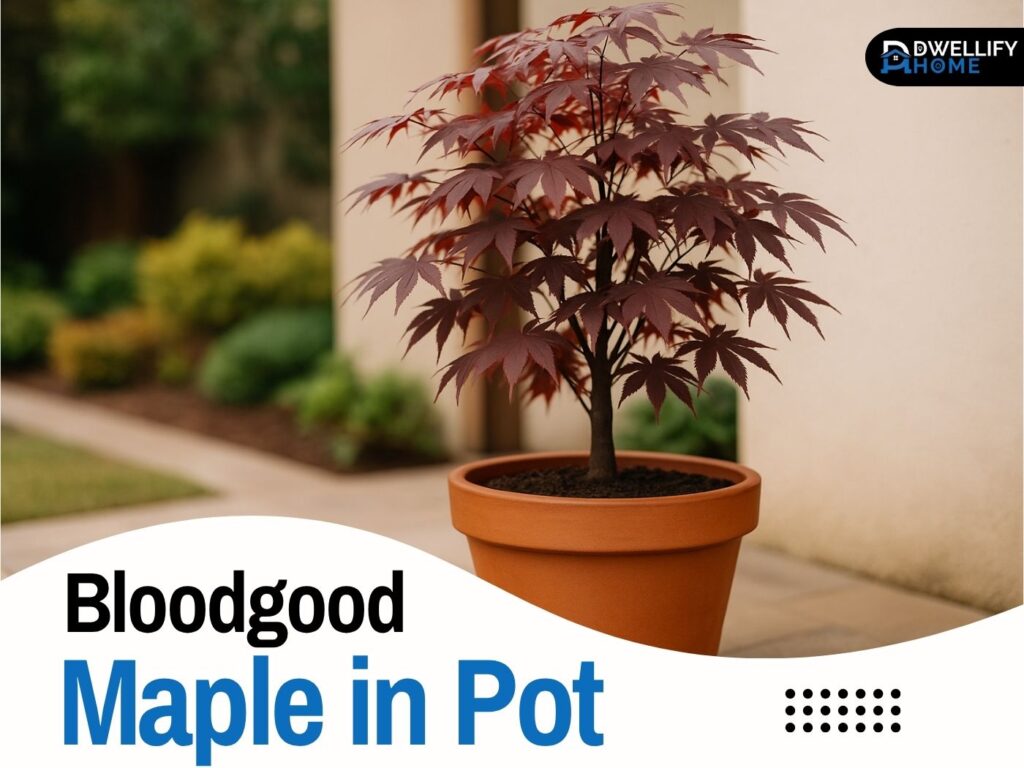
Purple-leaf varieties like Thundercloud and Newport are grown for foliage and spring bloom, not eating. They do drop small fruit that can litter a patio, so place them with that in mind.
What Plum Tree Growing Zones Do You Need?
Plum tree growing zone is the first filter that should narrow your choices. European plums generally thrive in USDA zones 4 to 8, Japanese types in zones 5 to 9, and American and hybrid plums down into zone 3. Match the type to your zone before you even look at flavor.
Best plum type for your USDA zone
In colder regions, lean European or American. In warm regions, Japanese and low-chill varieties make sense. The middle zones give you the most freedom to choose by taste.
Understanding chill hours
Plums need a stretch of winter cold to fruit properly, measured in chill hours, the cumulative hours between roughly 32 and 45°F. European types want the most, often 700 to 1,000 hours. Japanese types need less, and special low-chill varieties get by on a few hundred. Plant a high-chill tree in a mild winter and it’ll bloom poorly and fruit worse.
How to Identify a Plum Tree
Plum tree leaves
Plum tree leaves are alternate, oval to elliptical, with finely serrated edges, usually 2 to 4 inches long. Japanese types run slightly longer and narrower. Ornamental varieties carry deep purple foliage all season, which is the quickest way to tell them apart.
Plum tree flowers
Plum tree flowers are small, white, five-petaled, and faintly fragrant, opening in early spring before or alongside the leaves. They form on short spurs and one-year-old wood, which is exactly why how and when you prune affects next year’s bloom.
Plum tree fruit
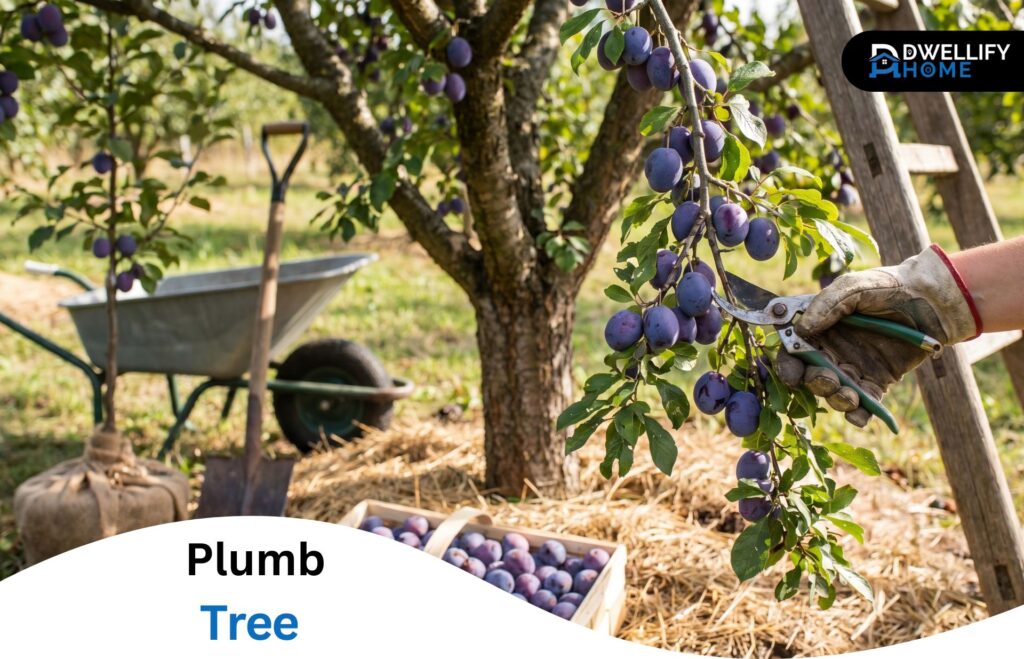
The plum tree fruit is a drupe with a single pit. Skin colors range from deep purple to red, gold, and green depending on variety. A light powdery coating, called bloom, on the skin is natural and a good sign of freshness.
Plum tree size (standard, semi-dwarf, dwarf)
Plum tree size depends mostly on rootstock, not variety. A standard tree reaches 18 to 25 feet, semi-dwarf around 12 to 15 feet, and dwarf roughly 8 to 10 feet. Spread tends to match height, so space accordingly.
Choosing the Right Plum Tree for Your Space
Picking a rootstock (and why it matters more than the variety)
The rootstock controls the tree’s size, how fast it bears, and how it handles your soil, yet most beginners never ask about it. A dwarfing rootstock like Pixy keeps a tree small and fruiting early but needs staking for its first few years. More vigorous rootstocks give bigger, longer-lived trees that tolerate heavier ground. When you buy, ask what the tree is grafted onto. That single question saves more regret than any other.
Bare-root vs. container trees
Bare-root trees, sold dormant in late winter, are cheaper and often establish faster. Soak the roots a few hours before planting. Container trees cost more but can go in across a longer season.
Self-fertile vs. cross-pollinating varieties
This is the rule that trips people up most. European plums pollinate other European plums, Japanese pollinate Japanese, but the two groups generally will not pollinate each other. If you only have room for one tree, choose a self-fertile European like Stanley or Damson.
Growing plum trees in apartments and small spaces
For a plum tree on a balcony or tiny yard, choose a dwarfing rootstock and grow it in a large container, at least 20 inches across, with good potting soil. Compact European varieties like Victoria do well this way, and a cordon-trained tree takes up almost no horizontal room.
When and How to Plant a Plum Tree
The best time to plant
Late winter to early spring, while the tree is still dormant, is ideal for bare-root stock. In mild climates you can plant container trees through fall as well.
Choosing the right site
Give your plum 6 to 8 hours of full sun and well-drained soil. Avoid frost pockets at the bottom of slopes, and keep the tree out of lawn, since grass competes hard for water and nitrogen.
Preparing the soil
Aim for a soil pH around 6.0 to 7.0. Check drainage by filling the planting hole with water, if it hasn’t drained in a few hours, the spot stays too wet and you should plant on a slight mound instead.
Step-by-step planting
Dig a hole two to three times the width of the roots but no deeper than the roots sit naturally. Keep the graft union, the swollen knuckle low on the trunk, a couple of inches above the soil line. Spread the roots, backfill, water deeply, and mulch, keeping the mulch off the trunk. Stake bare-root trees for their first year.
How to Care for a Plum Tree Year-Round
Watering
A young tree needs regular water, roughly twice a week through its first season. Established trees prefer deep, less frequent soaking that reaches a foot or two down. Water at the root zone, not over the canopy, to keep foliage dry.
Fertilizing
Go easy. A modest amount of nitrogen in early spring is plenty. Let the tree tell you, healthy young plums put on a foot or more of new growth a year. If it’s racing past that, ease off. Stop feeding by midsummer so soft new growth has time to harden before winter.
Mulching and protecting against late frost
A few inches of mulch conserves moisture and steadies soil temperature. When a late frost threatens open blossoms, draping a small tree with fleece overnight can be the difference between a crop and a bare year.
How to Prune a Plum Tree
When to prune (and why summer matters in humid climates)
In humid regions, prune plums in summer rather than winter. Plums are vulnerable to silver leaf disease, which spreads through fresh cuts in cool, damp weather, and dry summer conditions let wounds heal cleanly. In dry Western climates, late winter pruning is fine. Either way, never prune in wet weather.
Choosing a pruning system by plum type
European plums do well trained to a modified central leader, with one main trunk and tiered branches. Japanese plums, which grow more sprawling, suit an open-center vase shape that lets light into the middle.
Trained forms for small gardens (bush, pyramid, fan, cordon)
Short on space, you can train a plum flat against a wall as a fan, upright as a pyramid that’s easy to net against birds, or as a single-stem cordon. These forms take more attention but turn a fence line into a fruiting wall.
Hands-on pruning technique
Start by removing anything dead, damaged, or crossing. Thin out crowded growth so light and air reach the center, which alone prevents a lot of disease. Pull off the suckers that shoot up from the rootstock below the graft. Wipe your blades between cuts on a diseased tree so you’re not carrying trouble from branch to branch.
How Plum Tree Pollination Works
What pollination needs to succeed
Plums are pollinated by bees, so flowers from compatible trees must open at the same time and sit close enough, ideally within 50 feet, for bees to travel between them. Bees barely move below 50°F, which is one more reason early-blooming types struggle in cold springs.
Which plums can pollinate each other
European pairs with European, Japanese with Japanese or with a Japanese-American hybrid. The two main groups do not reliably cross-pollinate. When in doubt, plant two compatible varieties of the same type, or one self-fertile tree.
Common Plum Tree Pests and Diseases
Black knot
Hard black swellings that wrap around branches like burnt knuckles. Cut them out 6 to 8 inches below the knot in winter, disinfect your tools, and remove any wild plum or cherry nearby that’s harboring it.
Brown rot
Blossoms wilt and fruit turns to brown, fuzzy mush on the branch. Clear away every mummified fruit, since the fungus overwinters in them, and improve air circulation through pruning.
Silver leaf
A silvery sheen on leaves followed by branch dieback. It’s the reason summer pruning matters in damp climates. Remove infected wood well into healthy growth.
Plum pockets
A fungal oddity that turns young fruit into hollow, bladder-like pouches. A single dormant copper or lime-sulfur spray before buds break keeps it in check.
Bacterial spot and bacterial canker
These show as shothole spots on leaves and oozing cankers on bark. Choose resistant varieties, avoid overhead watering, and apply dormant copper.
Plum pox virus (and its current US status)
Plum pox, or sharka, is the most serious plum virus worldwide, spread by aphids. The good news for US growers is that the USDA declared the country free of plum pox in 2019. It remains a concern in parts of Europe.
Plum curculio and other insect pests
This small weevil scars young fruit with crescent-shaped cuts. The key window is just after petals fall. Picking up dropped fruit promptly removes the next generation. Watch also for aphids, Japanese beetles, and scale.
Physiological problems
Yellowing leaves with green veins point to iron chlorosis on alkaline soil. A heavy crop one year and almost none the next is biennial bearing, eased by thinning. A natural drop of small fruit in early summer, June drop, is normal and nothing to fear.
A note on plum pit toxicity
Plum pits contain compounds that release cyanide, so don’t crush and eat them, and don’t let livestock gorge on piles of fallen fruit.
Thinning and Harvesting Your Plums
Thinning the young fruit
After June drop, thin the remaining plums to about 4 to 6 inches apart. It feels wasteful, but it gives you larger fruit, protects branches from breaking under weight, and steadies year-to-year cropping. Native plums generally don’t need it.
How to tell when plums are ripe
A ripe plum shows full color, gives slightly to gentle pressure, and parts easily from the branch. Taste one. European plums sweeten only on the tree, so don’t rush them, while Japanese types can be picked a touch firm.
How many years until a plum tree fruits
Expect 3 to 6 years from a standard tree, sooner from dwarf stock, often 2 to 4 years. A tree grown from a pit takes several years and rarely matches its parent.
What yield to expect
A mature standard tree can produce several bushels in a good year. Dwarfs give less but in a far more manageable package, which is often the smarter trade for a backyard.
Storing and using your harvest
Plums keep two to four weeks in the fridge. Beyond fresh eating, they make excellent jam, and firm European types dry into prunes or bake beautifully.
Growing Plum Trees in Florida and Warm Climates (Including Vero Beach)
Low-chill varieties for the Deep South and subtropics
Standard plums fail in the Deep South because they never get enough winter chill. The answer is low-chill varieties bred for the region, such as the Gulf series developed in Florida, which fruit on only a few hundred chill hours. Methley is another lower-chill option that’s widely available.
What to expect in Zone 10 (Vero Beach)
A plum tree in Vero Beach sits at the warm edge of what’s possible. Only the lowest-chill Gulf varieties have a real chance, they’ll need a pollinator partner, and disease pressure runs high in the humidity, so expect a shorter productive life than the same tree would have up north. It can be done, but go in with realistic expectations.
Plum Tree FAQ
Do I need two plum trees to get fruit?
Not always. Many European plums are self-fertile and fruit alone. Most Japanese plums need a compatible second tree of the same group. If space allows, two trees almost always improve the crop.
How big do plum trees get?
It depends on rootstock. Standard trees reach 18 to 25 feet, semi-dwarfs 12 to 15 feet, and dwarfs 8 to 10 feet, with spread roughly matching height.
How long do plum trees live?
A healthy plum tree stays productive for around 15 to 25 years, sometimes longer with good care and disease control.
Can I grow a plum tree from a pit?
You can, and native types come fairly true. European and Japanese plums grown from a pit are unpredictable and may never fruit well, since most named varieties are grafted for a reason.
Why won’t my mature, blooming plum tree set fruit?
The usual suspects are no compatible pollinator nearby, a late frost that killed the blossoms, or a cold spring that kept bees grounded. Biennial bearing can also leave you with an off year.
What’s the difference between Chinese, Japanese, and European plums?
The plum tree Chinese growers first cultivated became the species we call Japanese plum, round, juicy, early-blooming, and usually needing cross-pollination. European plums are firmer, often self-fertile, later-blooming, and better for drying.
Can plums grow in Vero Beach or other parts of Florida?
Yes, but only low-chill varieties like the Gulf series, and with the understanding that warm, humid conditions bring more disease and shorter tree life.
Where do plum trees grow best?
Plum trees grow best in full sun, six to eight hours daily, with well-drained, slightly acidic soil around pH 6.0 to 7.0. Avoid frost pockets and lawn competition. Match the type to your zone: European for cooler regions, Japanese and low-chill varieties for warmer ones.
How long does a plum tree take to fruit?
A standard plum tree usually fruits in three to six years, while dwarf trees on dwarfing rootstock often bear sooner, in about two to four years. Trees grown from a pit take several years and rarely match the parent variety’s fruit quality.
Is a plum tree easy to grow?
Plum trees are among the more forgiving fruit trees once established. Success comes down to a few early choices: matching the type to your climate, choosing a self-fertile variety or planting a pollinator partner, and staying ahead of common diseases with simple sanitation and well-timed pruning.
Do plum trees like sun or shade?
Plum trees need full sun, ideally six to eight hours of direct light a day. Sunlight drives flowering, fruit set, and sugar development, and it keeps the canopy dry, which lowers disease pressure. Shade leads to weak growth, poor cropping, and more fungal problems.
Do I need two plum trees to get fruit?
Not always. Many European plums are self-fertile and fruit on their own. Most Japanese plums need a compatible second tree of the same group, since European and Japanese plums don’t reliably cross-pollinate. Even self-fertile trees usually crop better with a partner nearby.
Conclusion: Growing a Plum Tree That Lasts
A productive plum tree comes down to four decisions made well. Match the variety to your climate and chill hours. Choose a rootstock that fits your space. Prune in summer if you garden somewhere humid. And stay ahead of disease with simple sanitation rather than chasing problems after they take hold. Get those right, and your plum tree will reward you with fruit for years, with far less fuss than most people expect.
Disclaimer:
This content is for general informational purposes only. Growing conditions, climate, and individual circumstances vary, so your results may differ. Check your local USDA zone and consult a regional nursery or extension service for advice specific to your area.