Home renovation projects in the Pacific Northwest follow a familiar sequence of priorities. New floors first, because they set the visual foundation of every room. Fresh paint — almost always a variation of the greige palette that photographs well and appeals broadly — because walls are the largest visible surface area. Updated lighting, because the fixtures that came with a 1990s build make a newly refinished space feel like it’s halfway done. Kitchen hardware. Bathroom fixtures. The list is ordered by visibility and impact per dollar, which is exactly the right way to approach it. What rarely makes the list, even in very thorough renovation plans, is the upholstered furniture that’s been sitting in the house throughout all of it.
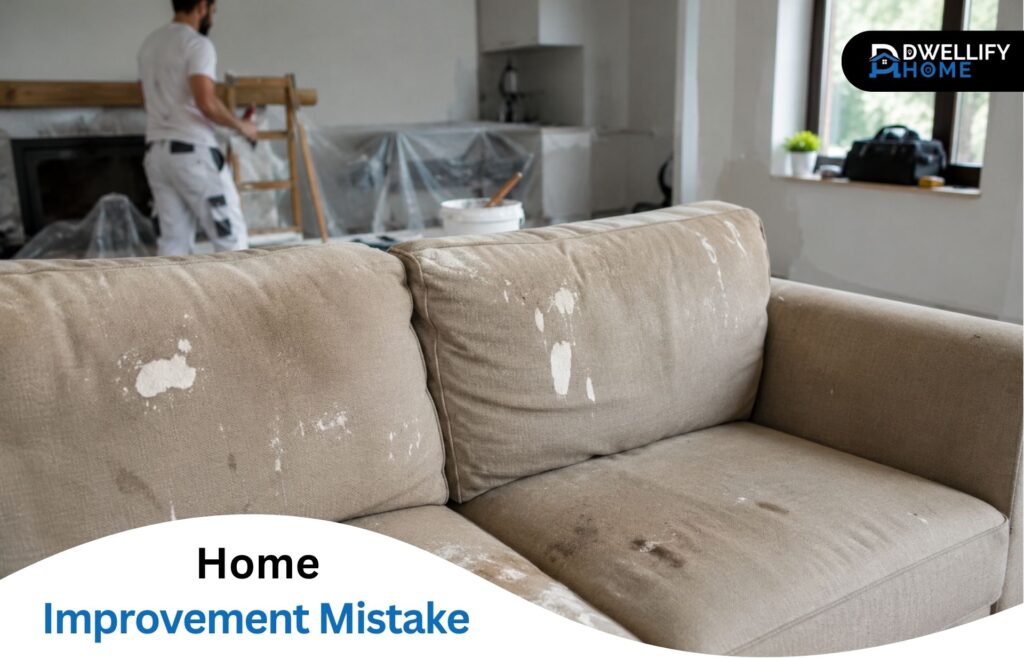
This is the problem that shows up six months after the project finishes. The floors look right. The paint is exactly what was chosen. The light fixtures work. And then there’s the couch — the same sectional that was there before the renovation, that sat in the living room while contractors moved through the house for weeks, that accumulated construction dust in every fiber and foam cell, that never had a moment in the renovation budget because it wasn’t being replaced. In a room that now looks intentionally designed, the sofa becomes the loudest thing in it. Not because it’s visibly dirty, necessarily, but because it carries everything the renovation stirred up, and it doesn’t belong to the updated room the way the floors and walls do.

What Renovation Does to Upholstered Furniture
The contamination that accumulates in upholstery during an active renovation is different in character from normal household accumulation. Fine particulate dust from sanding — whether drywall compound, old paint, or wood surfaces — suspends in the air for hours before settling. It settles on every horizontal and vertical surface at a rate proportional to the surface area exposed to the room. A sofa with a typical footprint of 7 to 9 square feet of upholstered surface area in a room where sanding is happening collects a significant portion of that particulate load, and unlike hard surfaces that can be wiped clean, fabric holds the fine particles deep in the fiber structure where they’re not visible but are genuinely present.
Construction adhesives and sealants off-gas volatile organic compounds for weeks after application. Flooring underlayment, new grout, caulk, and paint all contribute to a chemically complex indoor air environment that the upholstered furniture in adjacent rooms is exposed to continuously. VOC absorption into fabric — particularly polyester blends, which have relatively high sorption capacity — is well documented in indoor environment research. The result is that furniture in an actively renovated home doesn’t just collect visible dust. It absorbs the chemical environment of the renovation in ways that aren’t visible and don’t dissipate through ventilation the way airborne compounds do.
Add to that the physical traffic of a renovation — contractors who’ve walked job sites moving through the house, tools and equipment brought in and out, the general disruption of air circulation patterns as rooms are opened and closed — and the sofa at the end of a completed project carries a contamination profile that has nothing to do with the household’s normal living patterns. It’s the renovation’s residue, held in the upholstery while everything around it got updated.
Why This Problem Gets Missed in Renovation Planning
Renovation budgets are built around line items that are easy to scope: this many square feet of flooring at this price per square foot. This fixture, this hardware, this labor. Upholstered furniture doesn’t fit that model because the furniture already exists and isn’t being replaced. It therefore doesn’t appear in the budget, and because it doesn’t appear in the budget, it doesn’t appear in the planning. The decision about whether to clean it happens — if it happens at all — after the renovation is complete and the household is reassessing the finished space, by which point the budget is usually spent.
The more strategic approach is to include professional upholstery cleaning in the renovation plan from the beginning, scheduled for the week after the project completes. The timing matters. Scheduling it too early — before the major work is done — means the furniture gets contaminated again by the remaining work. Scheduling it at the end, as part of the final walkthrough and cleanup, means the sofa enters the finished room in the same condition as the floors and walls: reset, clean, appropriate to the space it’s in. The cost of a couch cleaning service in the Seattle area for a standard sectional or sofa runs $150 to $350 depending on size and fabric type — a small addition to a project budget that’s likely already in the five figures, and the one that makes everything else look like it belongs together.
What the Cleaning Addresses That Vacuuming Doesn’t
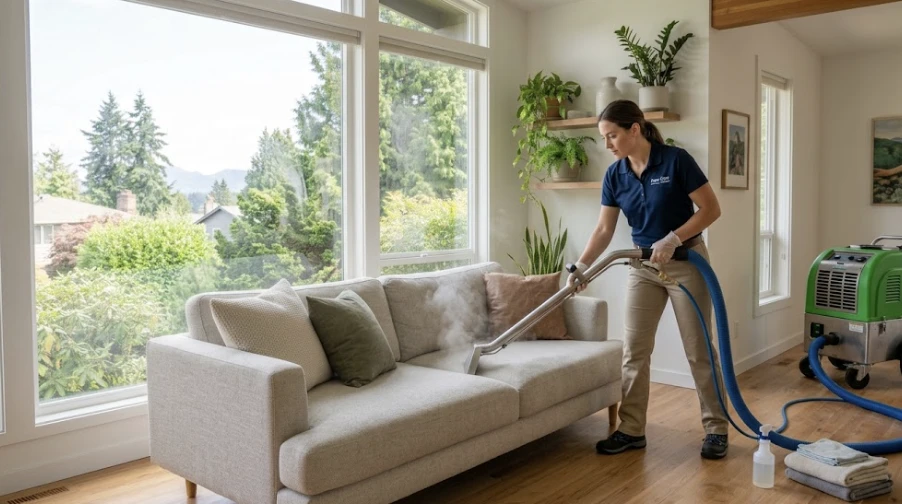
The household response to renovation dust on furniture is usually vacuuming, which addresses the surface layer but doesn’t reach the particulate that has settled into the fiber structure and foam substrate. Construction dust particles in the 1–10 micron range — the size range produced by sanding operations — penetrate into the interior of upholstered cushions through gaps in the fabric weave and are too small to be captured by a standard vacuum attachment working from the surface. They require hot water extraction, which flushes the fiber structure from the outside in and physically carries the embedded particulate into the extraction tank.
The same is true for the chemical residues. VOC compounds absorbed into synthetic fabric fibers don’t release through vacuuming. Hot water at extraction temperatures of 200°F to 210°F breaks the bond between the fabric fiber and many volatile compounds and carries them out with the extraction water. The result, for furniture that’s been in an actively renovated house, is extraction water that ranges from pale gray to distinctly dark depending on the scope of the renovation and the fiber type of the upholstery. It’s not a reflection of the household’s cleanliness habits — it’s what the renovation left behind. Professional upholstery cleaning after a renovation removes it. Vacuuming doesn’t.
For Seattle homeowners completing renovation projects, the practical recommendation is straightforward: plan for upholstery cleaning as the final step of the project rather than an afterthought. Cover the furniture during active dusty work, then schedule extraction cleaning for the completion week. The floors get refinished, the walls get painted, and the sofa gets cleaned — so the entire room starts from the same baseline. That sequencing makes the renovation complete in a way that skipping the final step doesn’t. It’s the difference between a room that looks updated and a room that feels updated.
This article may contain affiliate or sponsored links. Dwellifyhome.com may earn a small commission from qualifying purchases made through these links. This comes at no extra cost to you and helps us maintain and grow our website. All opinions expressed are our own.