Healthy watering has less to do with the day of the week than with what’s happening inside the pot. Learning how to water houseplants means checking whether the root zone is ready, moistening it evenly, and letting excess water escape.
That simple routine prevents the two most common problems: watering too frequently and allowing the potting mix to become so dry that it resists water.
Short Definition
Watering houseplants means checking the potting mix, moistening the full root zone when needed, and draining excess water. This helps prevent both chronic overwatering and damaging dryness.
Mission Statement
DwellifyHome helps homeowners, renters, and home lovers create practical, stylish, and comfortable spaces through clear, trustworthy guidance.
Quick Watering Checklist
- Confirm the pot has open drainage holes.
- Check moisture below the soil surface.
- Water slowly across the entire potting mix.
- Let excess water drain completely.
- Empty the saucer or decorative outer pot.
- Recheck the soil before watering again.
How to Water Houseplants: The Short Answer
Check the potting mix below the surface. Once it has dried to the level appropriate for that plant, water slowly and evenly until the entire root ball is moist and excess water leaves the drainage holes. Let the pot finish draining, then empty its saucer or decorative outer pot.
Check plants regularly, but don’t water automatically. A chosen “watering day” should be a day to inspect each plant, not an instruction to water every pot. Factors such as light, temperature, humidity, container size, and plant species make fixed schedules unreliable, as Iowa State University Extension explains.
How to Water a Houseplant Step by Step
Check the Pot and Potting Mix
Confirm that the container has open drainage holes. Take a nursery pot out of its decorative cachepot so hidden water can’t collect around the roots.
Feel the potting mix below the surface. A dry-looking top doesn’t necessarily mean the root zone is dry, especially in a large pot. Check more than one spot when the plant has a wide container or dense root system.
Water Slowly and Evenly
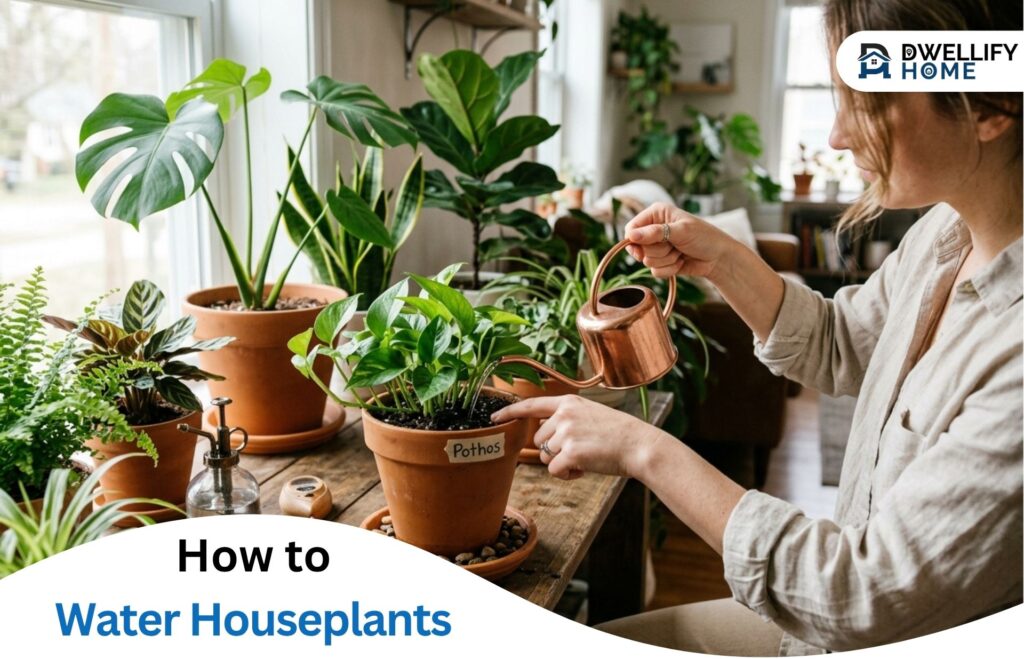
Pour room-temperature water across the potting mix rather than directing it into one spot. Move the spout around the container so the whole root ball receives moisture.
Pause briefly after the first pass. If the mix is very dry, a second or third slow pass may be needed. Water racing down the side of the pot can make it appear well watered even though the middle remains dry.
Let the Pot Drain Completely
Water over a sink, tub, or waterproof tray whenever practical. Allow active dripping to stop before returning the plant to its usual position.
Empty any water left in a saucer or cachepot. For plants displayed on shelves or furniture, check the bottom of the container and wipe away spills before putting it back. Keep drainage water away from electrical cords and outlets.
How Do You Know When a Houseplant Needs Water?
Water when the root zone has reached the appropriate level of dryness for the plant—not simply because the surface looks pale or a certain number of days has passed. Soil moisture should be the main test, supported by pot weight and changes in the plant.
Check Moisture Below the Soil Surface
Push a clean finger or wooden skewer into the potting mix without damaging major roots. Check deeper than the loose surface layer.
The correct result depends on the plant. Some moisture-loving houseplants prefer watering as the upper layer begins to dry. Cacti, succulents, and other drought-tolerant plants generally need more of the mix to dry before receiving water again. Check the plant’s care requirements rather than applying one rule to the whole collection.
Lift the Pot and Look for Plant Cues
A freshly watered pot feels noticeably heavier than the same pot after much of its moisture has been used. Lifting smaller plants regularly helps you learn that difference.
Leaves can provide supporting clues. Slight drooping, curling, or a dull appearance may accompany dry soil, but wilting alone isn’t proof that a plant needs water. Damaged roots in persistently wet soil can also cause wilting.
Use a Moisture Meter as a Supporting Tool
A moisture meter can help with deep containers where a finger test doesn’t reach far enough. Take readings in several areas because moisture may not be distributed evenly.
Treat the meter as one clue rather than the final decision. Compare its reading with the pot’s weight, the condition of the potting mix, and the plant’s known preferences.
How Much Water Should You Give a Houseplant?
There is no dependable cup measurement for every plant. The goal is to moisten the entire root ball, so the necessary amount changes with the pot’s size, shape, potting mix, and current dryness.
Thorough Watering vs. Small Sips
Apply enough water for some excess to emerge through the drainage holes. This indicates that water has moved through the pot rather than wetting only the surface.
Frequent small sips can leave dry areas around the roots and encourage mineral residue to accumulate. One even, thorough watering followed by an appropriate drying period is usually more reliable.
Why Watering Frequency Matters More Than a Fixed Amount
In a draining container with suitable potting mix, overwatering usually results from watering again before the root zone has dried sufficiently. Poor drainage, compacted mix, and an oversized pot can extend that wet period.
A thorough watering isn’t permission to keep pouring indefinitely. Stop once the root ball is evenly moist and excess water is draining. Virginia Cooperative Extension similarly distinguishes thorough watering from watering too frequently.
Top Watering vs. Bottom Watering
Top watering is the practical default for most houseplants because it wets the root ball from above and helps move accumulated salts downward. Bottom watering is useful for rehydrating some dry pots or avoiding splashes on sensitive foliage, but it shouldn’t leave the plant standing in water.
When Top Watering Works Best
Pour water slowly over the potting mix until it drains from the bottom. Top watering makes it easier to see whether water has passed through the container and periodically helps flush mineral and fertilizer residue from the mix.
Avoid repeatedly pouring water into the plant’s crown or leaving foliage wet when the species is susceptible to leaf damage.
When Bottom Watering Can Help
Place a pot with drainage holes in a shallow container of water. Let the potting mix draw moisture upward, then remove the plant and allow it to drain.
This method can help rehydrate a dry root ball, but it doesn’t prevent overwatering. Repeated bottom watering may also allow soluble salts to collect near the surface, so plants watered this way should occasionally be watered thoroughly from above, as advised by Colorado State University Extension.
What Changes a Houseplant’s Watering Needs?
Plant Type and Moisture Preference
Succulents store water and usually tolerate a longer drying period than thin-leaved, moisture-loving plants. Even among tropical houseplants, preferences vary widely.
Use the plant’s species or care label as the starting point. Then adjust according to how quickly its pot actually dries in your home.
Light, Temperature, Humidity, and Season
Plants in bright light often use water faster than those in lower light. Warm rooms and dry air can also shorten the time between waterings, while cooler conditions and higher humidity may slow drying.
Many indoor plants use water more slowly during darker seasons, but this isn’t universal. Grow lights, indoor heating, and active new growth can change the pattern. Let the potting mix confirm whether a seasonal adjustment is needed.
Pot Size, Pot Material, Potting Mix, and Root Condition
Unglazed terracotta loses moisture through its porous walls, while plastic and glazed containers retain it longer. Small pots generally dry faster than larger ones, although an oversized container can keep too much mix wet around a small root system.
Coarse, airy potting mix drains and dries differently from old, compacted material. A root-bound plant may also begin drying unusually quickly because little potting mix remains to hold water.
Overwatered or Underwatered? How to Tell the Difference
Check the soil before judging the leaves. Both excessive and insufficient moisture can produce wilting, yellowing, leaf drop, or stalled growth. The pot’s moisture, weight, drainage, and root condition provide a more dependable diagnosis than one leaf symptom.
Signs That Point to Overwatering
Possible signs include:
- Potting mix that remains wet for an unusually long time
- A pot that still feels heavy several days after watering
- Yellowing or soft leaves and stems
- Leaves dropping while the soil remains moist
- Fungus gnats around persistently damp mix
- Brown, soft roots or an unpleasant smell from the root zone
Roots need both moisture and air. Potting mix that remains saturated can reduce oxygen around the roots, damaging their ability to supply the leaves with water. This is why an overwatered plant may still wilt, according to University of Maryland Extension.
Signs That Point to Underwatering
Look for:
- Dry potting mix that has pulled away from the container
- A noticeably lightweight pot
- Limp foliage combined with dry soil
- Crisp brown edges or brittle leaves
- Leaves curling as the plant loses moisture
- Water passing around the root ball without soaking in
Brown tips alone aren’t enough to diagnose underwatering because mineral buildup, low humidity, and root damage can produce similar symptoms.
What to Do After Identifying the Problem
For a dry plant, rehydrate the root ball slowly. Apply water in several passes or use bottom watering, then allow the container to drain.
For a wet plant, stop watering and empty all standing water. Check for blocked drainage holes and let the mix dry to the level appropriate for the species. A plant with persistently wet mix, decayed roots, or a sour smell may need damaged roots removed and fresh, well-draining potting mix.
Common Houseplant Watering Mistakes
Rigid Schedules and Frequent Small Sips
Watering every plant each weekend ignores differences in light, container size, species, and drying rate. Keep a regular inspection routine, but water only the plants that are ready.
Small daily splashes are another common mistake. They may dampen the surface without reaching deeper roots. Water the root ball thoroughly, then wait for the correct amount of drying.
Standing Water, Poor Drainage, and Misleading Watering Hacks
A layer of gravel inside a container doesn’t replace drainage holes. Keep plants in draining nursery pots inside decorative containers, or repot them into suitable pots.
Misting can briefly wet foliage, but it doesn’t water the roots. Likewise, a moisture meter, self-watering container, or decorative watering device doesn’t remove the need to monitor the potting mix.
Practical Solutions for Difficult Watering Situations
Water Runs Straight Through Dry Soil
Very dry peat- or bark-based mix can become hydrophobic, meaning it resists absorbing water. The water then follows gaps around the pot’s edge and escapes while the centre remains dry.
Apply water slowly in several passes, checking the pot’s weight afterward. For stubbornly dry mix, soak the draining pot from below until moisture reaches the root zone, then let it drain thoroughly. Virginia Cooperative Extension recommends repeated slow applications for potting mix that hasn’t hydrated evenly.
The Decorative Pot Has No Drainage Hole
Use the decorative container as a cachepot rather than planting directly into it. Keep the plant in a slightly smaller nursery pot with drainage holes, remove it for watering, let it drain, and return it afterward.
A plant already growing directly in a non-draining container is safer when repotted. Trying to compensate with carefully measured sips is unreliable because water can accumulate below the surface without being visible.
The Plant Is Too Large or Awkward to Move
Place a deep, waterproof saucer beneath a large pot and water in controlled passes. Wait for drainage, then remove runoff with a sponge, siphon, or dedicated baster.
For hanging plants, use a detachable drip tray or lower the pot for watering when possible. Protect wood flooring and furniture, and avoid positioning a draining pot above electrical equipment.
What Kind of Water Is Best for Houseplants?
Room-temperature tap water is suitable for many houseplants. An alternative may be useful when a sensitive plant repeatedly develops mineral residue or leaf-tip damage and other causes have been ruled out.
Tap, Filtered, Rain, and Distilled Water
Filtered water only helps when the filter removes the substance causing the problem; basic filters don’t necessarily remove dissolved minerals. Cleanly collected rainwater can be a practical alternative where collection is safe and permitted.
Distilled water contains very little dissolved mineral content and is useful for plants with unusually low mineral tolerance, including many carnivorous plants. It’s rarely necessary for an ordinary mixed houseplant collection. Tap-water treatment varies, so letting water stand overnight isn’t a universal solution, particularly where chloramine is used.
Hard Water, Softened Water, and Mineral Buildup
Hard water can leave a pale crust on the potting mix or container, but it remains usable for many plants. Periodic top watering and thorough drainage help move accumulated salts out of the root zone.
Water from a salt-based household softener is less suitable for repeated use because it can add soluble salts. Use an unsoftened tap, rainwater, or another appropriate source instead. University of Maryland Extension also advises avoiding softened water for houseplants.
Houseplant Watering FAQs
Should You Water Houseplants Every Day?
Most established houseplants shouldn’t be watered every day. Daily watering can keep the roots continuously wet, especially in large or nonporous pots. Exceptions may include very small containers or plants drying rapidly under unusually warm, bright conditions. Check the potting mix first, even when frequent watering seems likely.
Do Houseplants Need Less Water in Winter?
Houseplants often need less frequent watering when lower light and slower growth reduce water use. Indoor heating, grow lights, warm rooms, and active growth can change that pattern. Don’t switch automatically to a winter schedule; monitor how long the root zone takes to dry and adjust from there.
Can You Overwater a Plant by Bottom Watering?
Yes. Bottom watering can overwater a plant when the pot remains submerged after the root ball is moist or when the process is repeated before sufficient drying. Remove the container once the mix has absorbed what it needs, let excess water drain, and check the soil before watering again.
What Is the Best Time of Day to Water Houseplants?
Morning is convenient because any splashed foliage has time to dry, but indoor plants can be watered at other times when water is directed onto the potting mix and excess drains properly. The plant’s need matters more than the clock. University of New Hampshire Extension gives similar guidance.
Let the Plant Set the Watering Schedule
A reliable watering routine is really an inspection routine. Check moisture below the surface, learn how the pot feels when wet and dry, and notice how changing light and temperature affect drying time.
Once the plant is ready, water the whole root ball and let the excess escape. That pattern—check, water thoroughly, drain, and wait—provides a much sounder foundation than any fixed calendar.
Disclaimer
DwellifyHome provides general informational content. Homes, needs, preferences, budgets, and circumstances vary. Seek qualified advice for safety-sensitive work, installations, repairs, or legal, structural, electrical, plumbing, HVAC, and major property decisions.