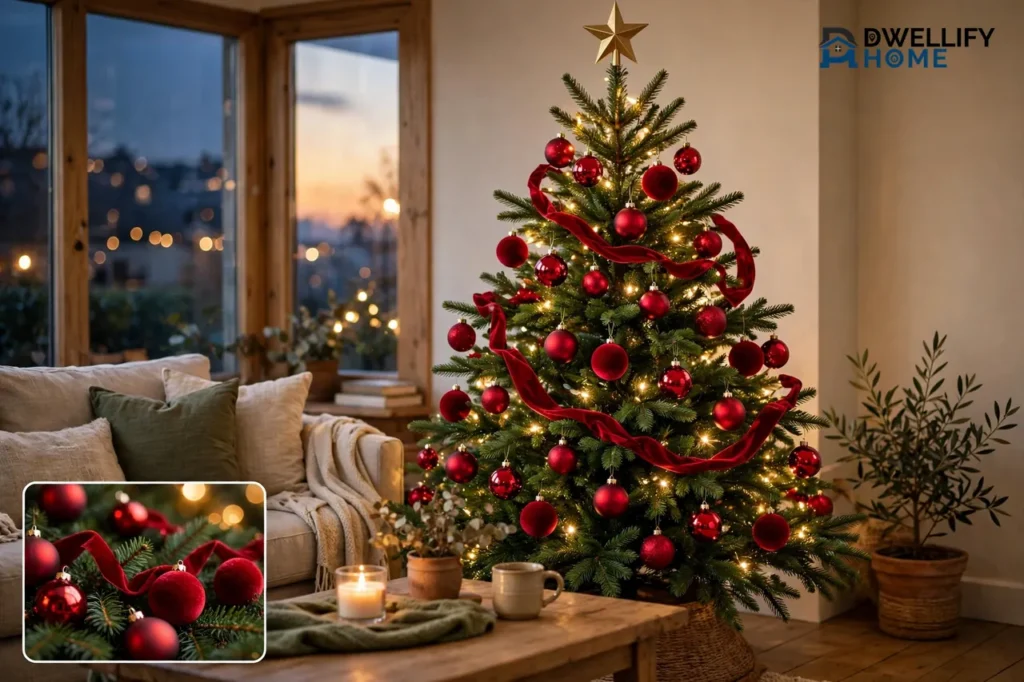
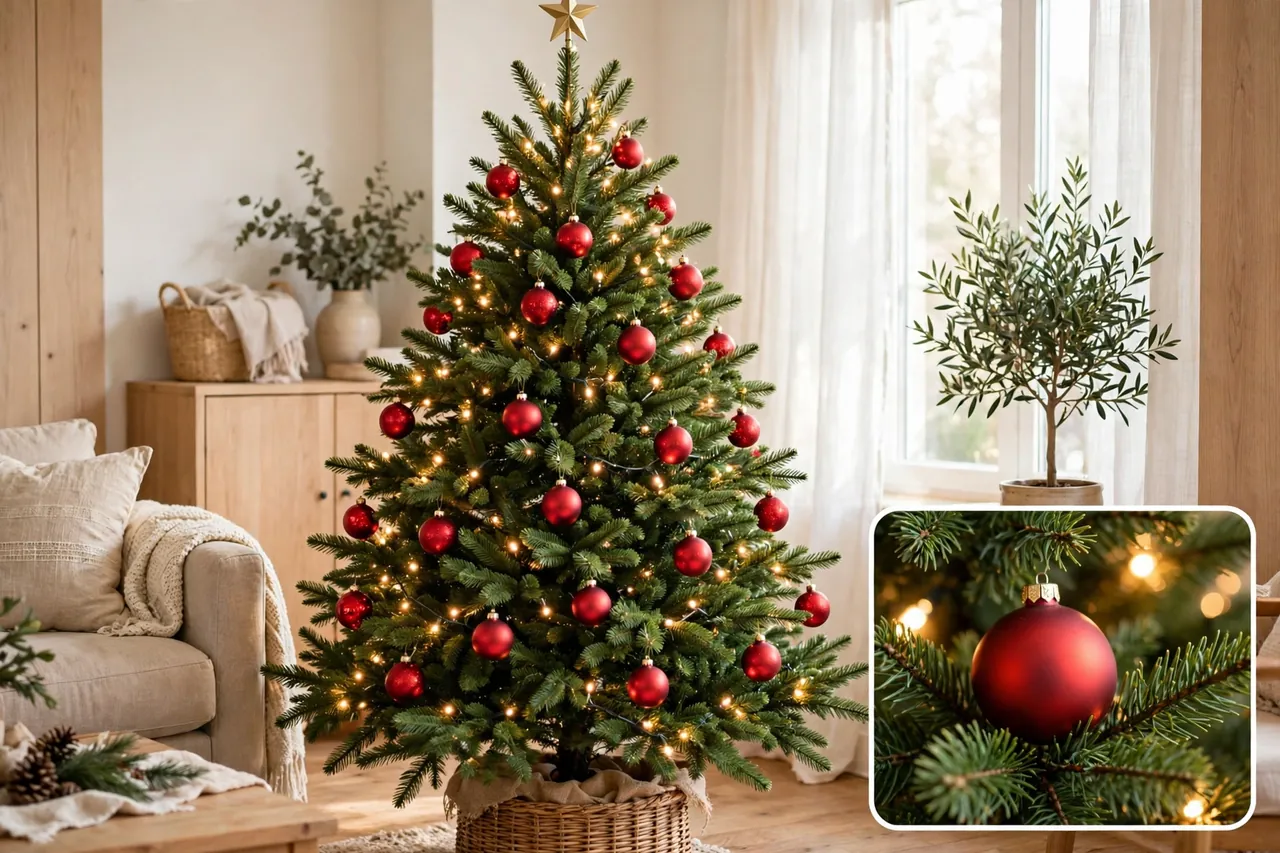
A Christmas tree with green and red decorations is the classic holiday look: a green tree dressed with red ornaments, red ribbon, and warm white lights. The green branches do most of the work, and the red pieces pop against them, so the tree looks festive without a lot of fuss.
You do not need a big budget or a designer’s eye to pull it off. Pick one deep red, let plenty of green show, add lights first, and hang your ornaments from big to small. This guide walks you through each step, plus the green and gold and green and pink twists that grow out of the same classic tree.
Why Green and Red Still Works
Green and red feel like Christmas because they are the colors of the season itself. Think of pine branches, holly berries, and poinsettias. When you bring those colors inside, the tree looks familiar in the best way, like a memory you can walk past every day in December.
The pairing also works because the two colors play different roles. Green is calm and steady, and it fills the whole tree. Red is loud and warm, and it draws the eye. That contrast is why a few red ornaments can change a plain green tree, while a tree covered in red alone can start to look flat.
Best of all, this look forgives mistakes. If your ornaments do not match perfectly, the shared red and green palette still ties them together. A handmade ornament from your kids sits happily next to a shiny store-bought bauble, and the tree still reads as one planned display.
Pick Your Shades of Green and Red
Not all greens and reds act the same on a tree. A bright cherry red feels playful and bold. A deep cranberry red feels rich and calm. The same goes for green: a fresh pine green feels light, while a dark forest green feels full and cozy.
For the most classic result, pair a deep green tree with a true, warm red. This is the combination most people picture when they think of green Christmas tree red decorations. If your tree is a lighter green, a slightly brighter red keeps it from looking washed out.
Stick to One Main Red
Choose one red and repeat it. You can mix finishes, like shiny, matte, and velvet, but keep the shade close. When every red ornament is a different shade, the tree starts to look busy instead of classic. One main red, used in several sizes and textures, looks planned and calm.
Let the Green Show
Green is not just the background here. It is half the decoration. Leave gaps of bare branches between your ornaments so the green can breathe. A green decorated Christmas tree looks best when you can still see the tree itself, not just a wall of ornaments.
Get the Balance Right: Let Green Lead
Think of green as the lead and red as the accent. The tree already gives you plenty of green, so you need far fewer red pieces than you might think. Start with red ornaments, then step back and look. Add more only where you see bare patches.
Spread red around the tree in a loose zigzag, not in straight rows. Rows make the eye travel in lines, while a scattered pattern looks natural, like berries growing on a bush. Tuck a few larger red ornaments deeper into the branches, too. Those deep pieces add depth and make the tree look full from across the room.
Finally, add one more color only if it earns its place. Warm white lights, a gold star, or a cream ribbon can soften the red and green without starting a new theme. If you add silver, blue, and purple on top, the classic look gets lost, and the tree starts to look like three different trees at once.
Quick reference: use this table as a checklist when you shop or pull boxes from storage.
| Part of the tree | Classic green and red choice |
|---|---|
| Tree | Deep green branches, real or artificial, with green showing between ornaments |
| Main red | One warm red, mixed in shiny, matte, and velvet finishes |
| Lights | Warm white, about 100 small lights per foot of tree height |
| Ornaments | About 10 to 15 per foot of tree height, large ones deep, small ones near tips |
| Ribbon | Red velvet or gold, in loose, wide swoops |
| Topper | Gold star or red bow that matches the ornaments |
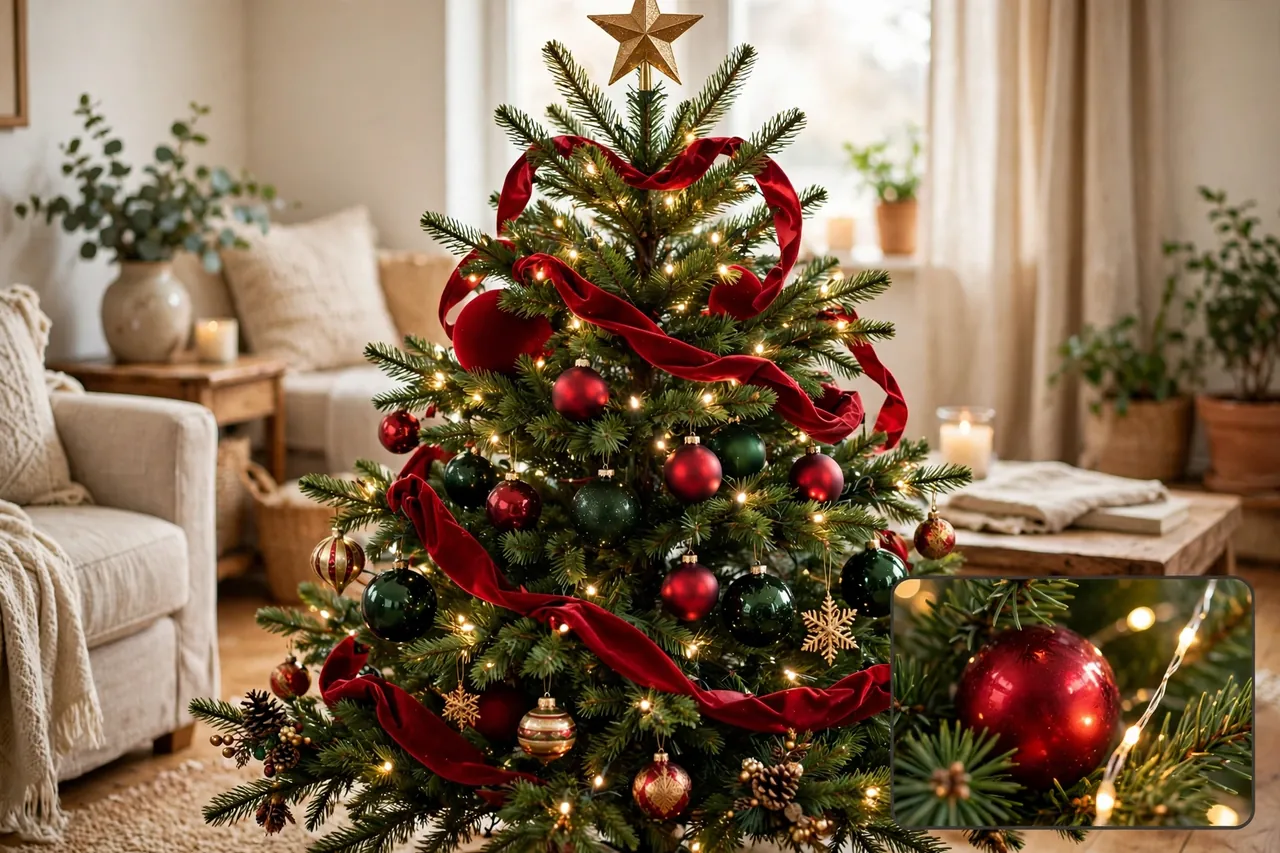
How to Decorate a Christmas Tree With Green and Red Decorations
Decorate in layers, and always start with the lights. Lights set the glow for everything else, and it is much harder to weave them in after the ornaments are up. Work slowly, step back often, and check your tree from across the room as you go.
- Set up and fluff the tree first. Spread every branch out, and fill any thin spots by pulling nearby branches toward them.
- Add warm white lights next. Start at the bottom near the trunk, weave out to the branch tips, and work your way up. Plug the lights in now and check for dark strands before you go further.
- Place your tree topper while you can still reach the top easily. A gold star or a red bow both suit this tree.
- Add ribbon or garland in loose swoops. Red velvet ribbon, a red beaded garland, or a simple gold ribbon all work. Keep the swoops wide and relaxed.
- Hang the large red ornaments deep in the branches. Space them evenly around the tree, and step back to check the spread.
- Add medium ornaments next, mixing red baubles with a few green ornaments in a deeper or lighter green than the tree. This keeps the green from looking flat.
- Hang your favorite pieces last, near the branch tips where guests can see them. Keep breakable ornaments higher if you have small kids or pets.
- Tuck in picks, berries, or pinecones to fill any gaps you still see. Then add the tree skirt and step back for a final look.
As a starting point, plan on about 10 to 15 ornaments per foot of tree height. A 6-foot tree needs about 60 to 90 ornaments, and a 7.5-foot tree needs about 75 to 110. Use fewer if you also add ribbon, garland, or lots of picks, since those fill space too. For lights, aim for about 100 small lights per foot of tree height, or roughly 600 lights for a 6-foot tree.
Green and Gold: The Dressier Cousin
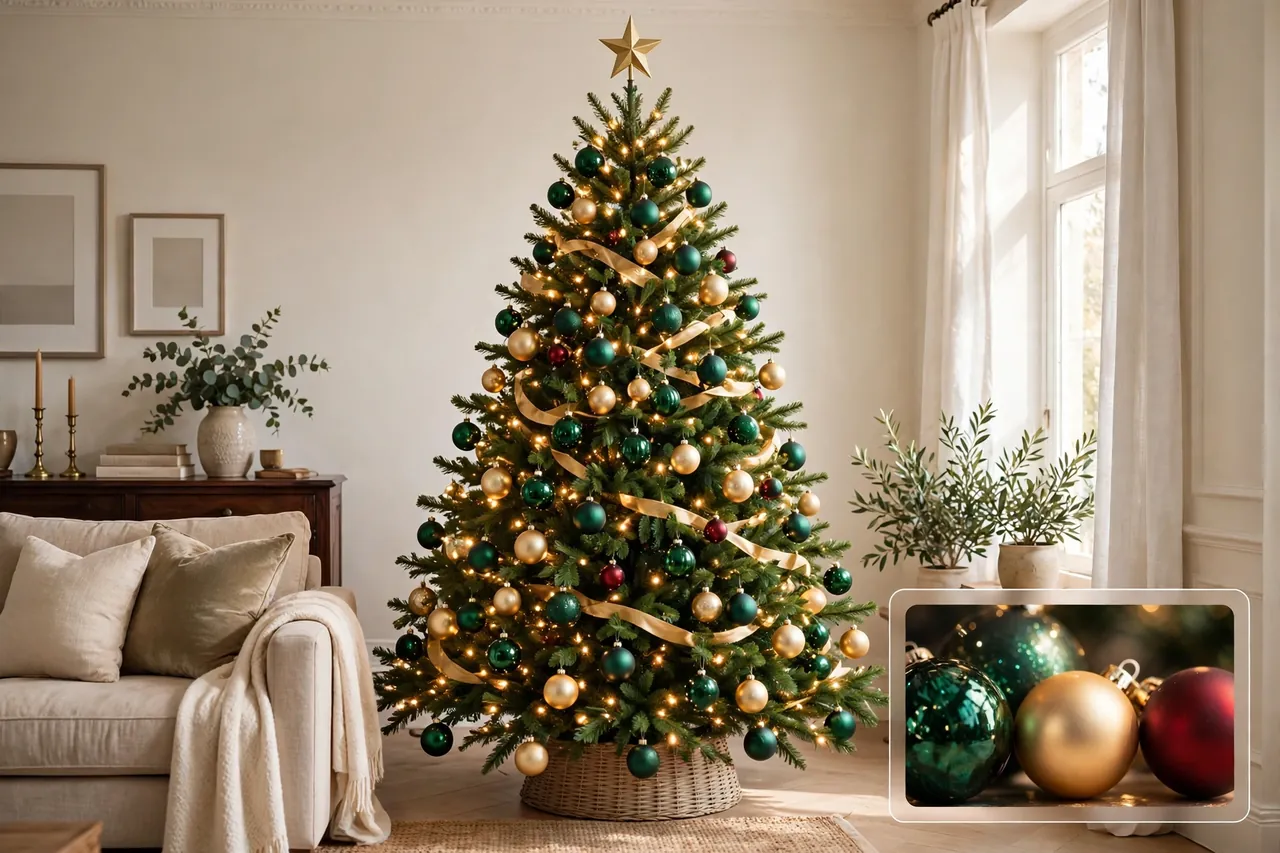
If you love the classic tree but want a dressier feel, green and gold Christmas tree decorations are the easiest next step. Keep the green tree and the warm white lights, then swap some of the red for gold, or add gold beside the red for a richer look.
Emerald green Christmas tree decorations pair beautifully with gold. Deep emerald green ornaments, gold baubles, and a gold ribbon turn a simple tree into something that looks fit for a formal living room. Emerald green and gold Christmas tree decorations work best when the gold stays warm, not brassy, so pick soft golds over bright yellow-golds.
To keep the classic feel, do not drop the red completely. A few deep red ornaments among the gold keep the tree warm and familiar. Think of it as red, green, and gold together: green leads, gold adds shine, and red adds warmth. A gold star topper ties the whole look together.
Green and Pink: The Softer Twist
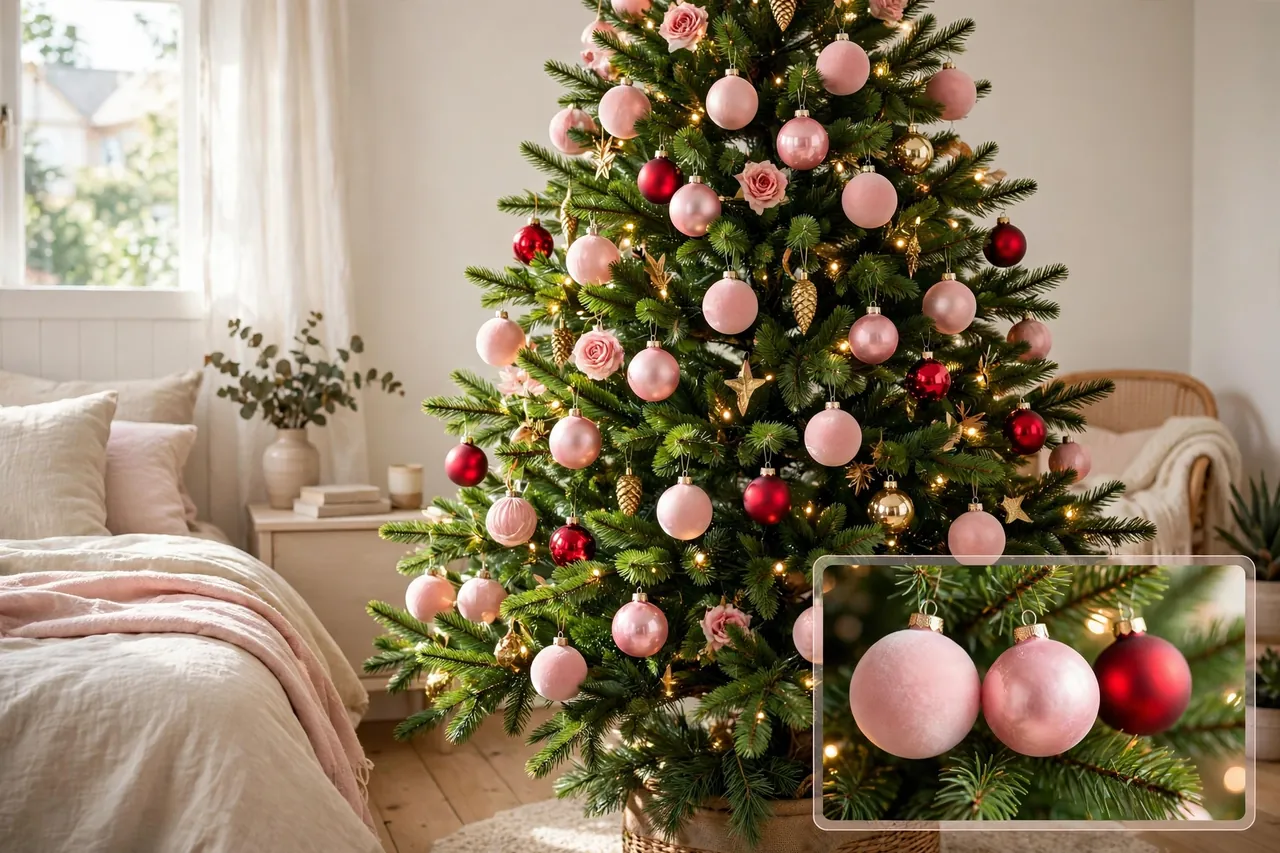
Pink and green Christmas tree decorations sound playful, and they are, but they can still look grown-up. The trick is to pick one pink and use it the same way you use red: as the accent color against the green branches.
For a soft look, pair blush pink ornaments with warm white lights and a few gold pieces. For a bolder look, pair hot pink ornaments with deep green branches and silver or gold accents. A green Christmas tree with pink decorations suits a bedroom, a kids’ room, or any home that wants Christmas to feel a little lighter and more fun.
You can also blend pink into the classic tree instead of replacing red. A few pink ornaments among the red ones soften the whole display, and pink green Christmas tree decorations like this work well when the pinks stay in the same family, such as blush and rose. Keep the green strong, and let the pink and red share the accent role.
Carry the Colors Beyond the Tree
A tree looks even better when the room echoes it. You do not need to redecorate the whole house. Just repeat the same red and green in two or three nearby spots, and the whole room will feel planned.
Start with the mantel. A green garland with a few red bows or red berries above the fireplace pulls the eye from the tree to the fire, and it makes the room feel warm on cold nights. For mantel ideas, see this guide to Christmas ideas for decorating a fireplace mantel. If your fireplace is the room’s second focal point, these tips for decorating a fireplace at Christmas help you match the mantel to the tree without overdoing it.
Next, look at the living room as a whole. A red throw blanket, a couple of green cushions, or red candles on the coffee table repeat the tree’s colors at a smaller scale. These decorating ideas for the living room at Christmas show how to spread the palette through the room. For the wider house, this guide to indoor Christmas decorations helps you carry the same colors from room to room.
Do not forget the path guests take to the tree. A green garland with red ribbon along the stairs, or a wreath with red berries on the front door, greets people before they even see the tree. For the entry, see these Christmas decorations for the front door. A small village scene under the tree skirt can also extend the story, and this guide to a Christmas village display shows how to set one up without crowding the presents.
Make a Small Tree or a Rental-Friendly Tree Look Full
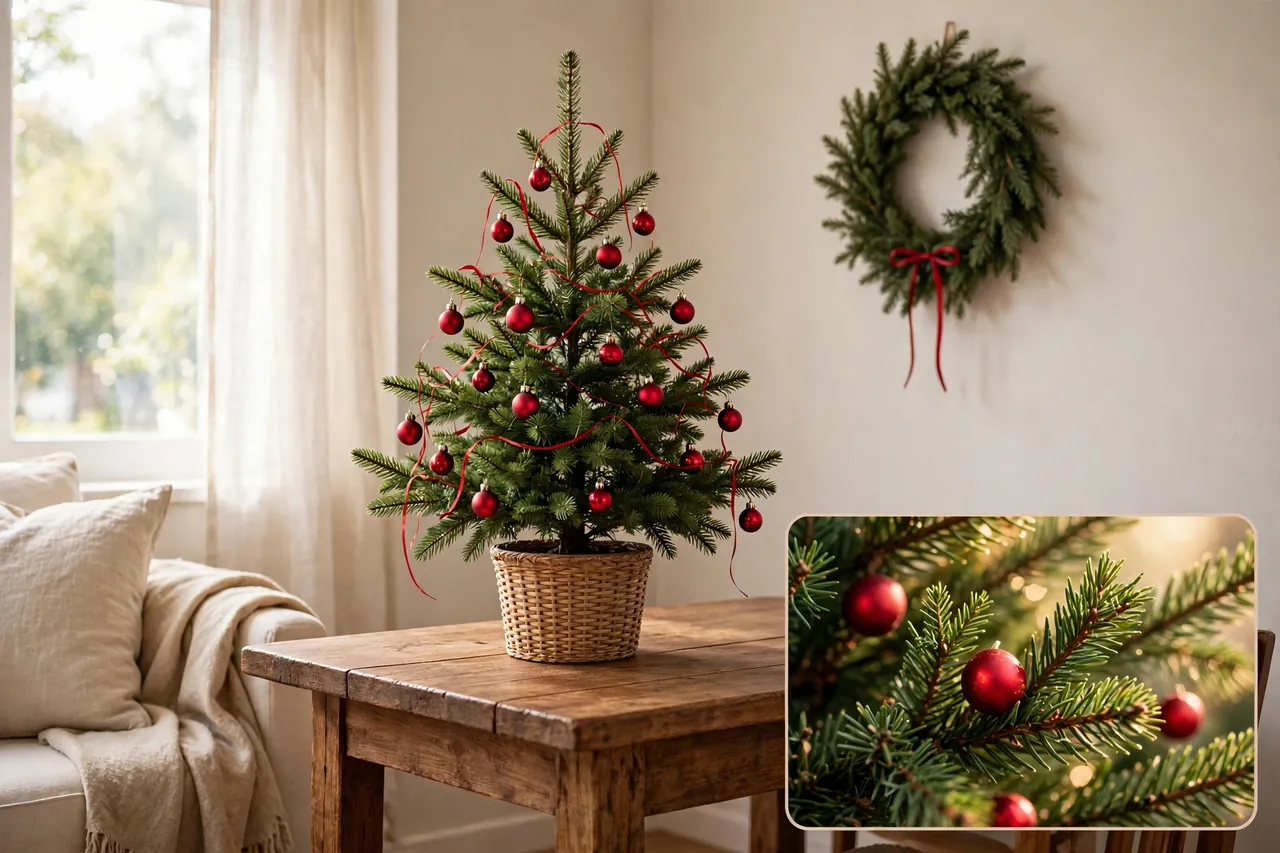
A small tree can look just as classic as a big one. The secret is scale: use smaller ornaments, thinner ribbon, and fewer statement pieces. On a tabletop tree, even a dozen well-placed red ornaments can look complete, because the green branches stay visible and the red still pops.
If you rent, you can still build a full green and red display without damaging walls or buying a huge tree. Hang a wreath with command hooks, drape garland over a shelf instead of nailing it up, and let the tree itself carry the theme. A small tree on a sturdy table, dressed in red and green, often looks more intentional than a big tree squeezed into a tight corner.
For a fuller look on any small tree, add green picks or extra branches into thin spots before you hang ornaments. This green Christmas tree decorating idea costs little, and it works on both real and artificial trees. Just keep picks away from hot bulbs, and check that nothing blocks the lights.
Keep Your Tree Safe and Fresh
A beautiful tree should also be a safe tree. The U.S. Consumer Product Safety Commission advises buyers to look for the “Fire Resistant” label on an artificial tree, and to check a live tree for freshness: fresh needles feel hard to pull from the branch and do not break when you bend them between your fingers. Keep a live tree well watered, and place it away from fireplaces, vents, and radiators, since heated rooms dry live trees out fast. See the CPSC holiday decorating safety tips for the full list.
Fire safety guidance from the National Fire Protection Association, shared by local fire departments, adds the same core rules: keep the tree at least 3 feet from any heat source, cut 2 inches from the trunk base before you set a live tree in its stand, add water to the stand daily, and never decorate a tree with lit candles. Always turn the tree lights off before bed or when you leave home. Read the NFPA-based Christmas tree fire safety tips for the details.
Check your lights before you hang them. Use only lights tested by a recognized testing laboratory, and throw out any set with broken or cracked sockets, frayed wires, or loose connections. Never use electric lights on a metallic tree. For a classic look, warm white lights suit red and green best, and a decorating guide from Christmas Lights Etc. describes the classic Christmas palette as red, white, and green, with a metallic like gold or silver for shimmer. See their Christmas tree decorating guide.
Fix the Common Green and Red Mistakes
Most green and red trees go wrong in the same few ways, and every one of them has a quick fix. Run through this list before you call the tree done.
- Too much red, not enough green. If you cannot see branches anymore, remove a few red ornaments. Let the green back in, and the red you keep will stand out more.
- Ornaments only on the branch tips. A tree looks thin when everything hangs on the outside. Tuck larger ornaments deeper into the branches to build depth.
- Reds that clash. If your reds fight each other, pull the odd shades out and keep one main red. Move the rest to a wreath or a garland elsewhere.
- Dark patches with no lights. Lights go in before ornaments for a reason. If you spot a dark patch, add a short strand now rather than living with it all season.
- A topper that fights the tree. If the topper is huge, bright, or a different theme, it pulls the eye away from the whole tree. Pick a simple gold star or a red bow that matches the ornaments.
- A bare back. If the tree stands against a wall, you can decorate the front more heavily. If guests walk all the way around it, spread ornaments evenly on every side.
Pack It Away So Next Year Looks Just as Good
When the season ends, pack your red and green pieces so they survive storage. Wrap breakable glass ornaments one by one, and keep your main red ornaments together in one box so next year’s decorating starts fast. Coil lights loosely around cardboard instead of stuffing them into a bag, and label each box by color.
Store the tree itself in a cool, dry place, and keep it off a damp garage floor if you can. A proper storage bag protects the branches and keeps dust out, and this guide to Christmas tree storage bags explains what to look for. Before you pack the tree away, note what ran out this year, such as red ribbon or hooks, so you can replace just those pieces next fall.
For fresh ideas next year without starting over, browse Christmas tree themes and pick one small twist, like adding gold or pink, instead of buying a whole new set. Your classic red and green base will still do most of the work.
Related Guides
Blue Christmas Tree Decorations: A Cool, Elegant Look That Works in Any Home · Red Christmas Tree Decorations: Classic Ideas That Feel Warm, Not Loud · Black Christmas Tree Decorations: Bold Ideas That Actually Work · Ideas for a Christmas Tree Topper That Finishes Your Tree Beautifully
Frequently Asked Questions
How many ornaments do I need for my Christmas tree?
Plan on about 10 to 15 ornaments per foot of tree height. A 6-foot tree needs about 60 to 90 ornaments, and a 7.5-foot tree needs about 75 to 110. Use fewer if you also add ribbon, garland, or lots of picks.
How many lights should a Christmas tree have?
Aim for about 100 small lights per foot of tree height. That means roughly 600 lights for a 6-foot tree and 750 for a 7.5-foot tree. Go up to 150 per foot if you love a very bright tree all season long.
How do I decorate a Christmas tree?
Start with the lights, then add the topper, ribbon or garland, large ornaments, medium ornaments, and favorite pieces last. Tuck picks into gaps, add the tree skirt, and step back to check the balance from across the room before you call it done.
When should I start decorating my Christmas tree?
Most people in the U.S. start after Thanksgiving, in late November. Some families wait until Advent, the fourth Sunday before Christmas. Pick the timing that fits your family best, and set the tree up when you can enjoy it most.
What is the best way to store Christmas decorations?
Use padded ornament containers, wrap breakable pieces one by one, and coil lights around cardboard. Store everything in a cool, dry place at home, label boxes by color, and keep the tree in a proper storage bag for next year.
Before you light the tree each night, do a quick safety check. Look for damaged wires, keep the tree watered if it is live, and turn the lights off when you leave home or go to bed. Homes, budgets, and conditions vary, so for electrical or fire-safety worries, ask a qualified professional rather than guessing.
Your classic green and red tree is ready. Stand back, enjoy the glow, and let the green branches and red ornaments do what they have done for generations: make home feel like Christmas.