Balcony decor ideas work best when you treat a small balcony like a tiny room with one wall missing, not like a shrunken patio. Measure first, give the balcony one job, then add a floor layer, one seat you love, plants that grow up instead of out, and warm light. Most residential balconies are designed for a live load of 40 pounds per square foot under the International Residential Code, so check your building’s rules before you add heavy planters or furniture.
This guide walks you through the whole job in order: measure and check the rules, pick the balcony’s one purpose, choose furniture that actually fits, fix the floor, add plants and light, and screen off the neighbors without drilling a single hole. Every idea here is renter-friendly and works on a balcony as small as 4 by 6 feet.
Balcony Decor Ideas at a Glance
A balcony is often narrower than a hallway, sometimes only 3 or 4 feet deep. That one fact rules out most outdoor furniture and decides nearly every decor choice you make. The table below matches each balcony size to the setup that fits it, so you can skip straight to the plan that suits your space.
Balcony size and the setup that fits
| Balcony size | Best setup | Skip this |
|---|---|---|
| Under 3 feet deep | Standing room only: rail-mounted bar table, railing planters, string lights | Any chair or floor furniture |
| 3 to 4 feet deep | One folding chair, a slim wall table, a rug, vertical planters | A dining set or lounge chair |
| 4 to 5 feet deep | Bistro set for two, rail planters, a tiered plant stand | Bulky sofas or a full dining table |
| 5 feet or deeper | Bistro set plus a bench with storage, a lounge chair, layered plants | Filling every corner at once |
| Covered balcony | Cushions and textiles stay out longer, softer lighting, more plant choices | Furniture that blocks airflow or drainage |
One job beats five half-finished jobs. A balcony built for morning coffee needs a table and two seats, while a garden balcony needs planters first and seating second.
Start With the Balcony You Actually Have
Before you buy anything, measure the width, the depth, and the door swing. Stand in the doorway, swing the door fully open, and check that a chair and a person can still pass. Anything wider than the door, or deeper than the space between the wall and the railing, is too big for your balcony.
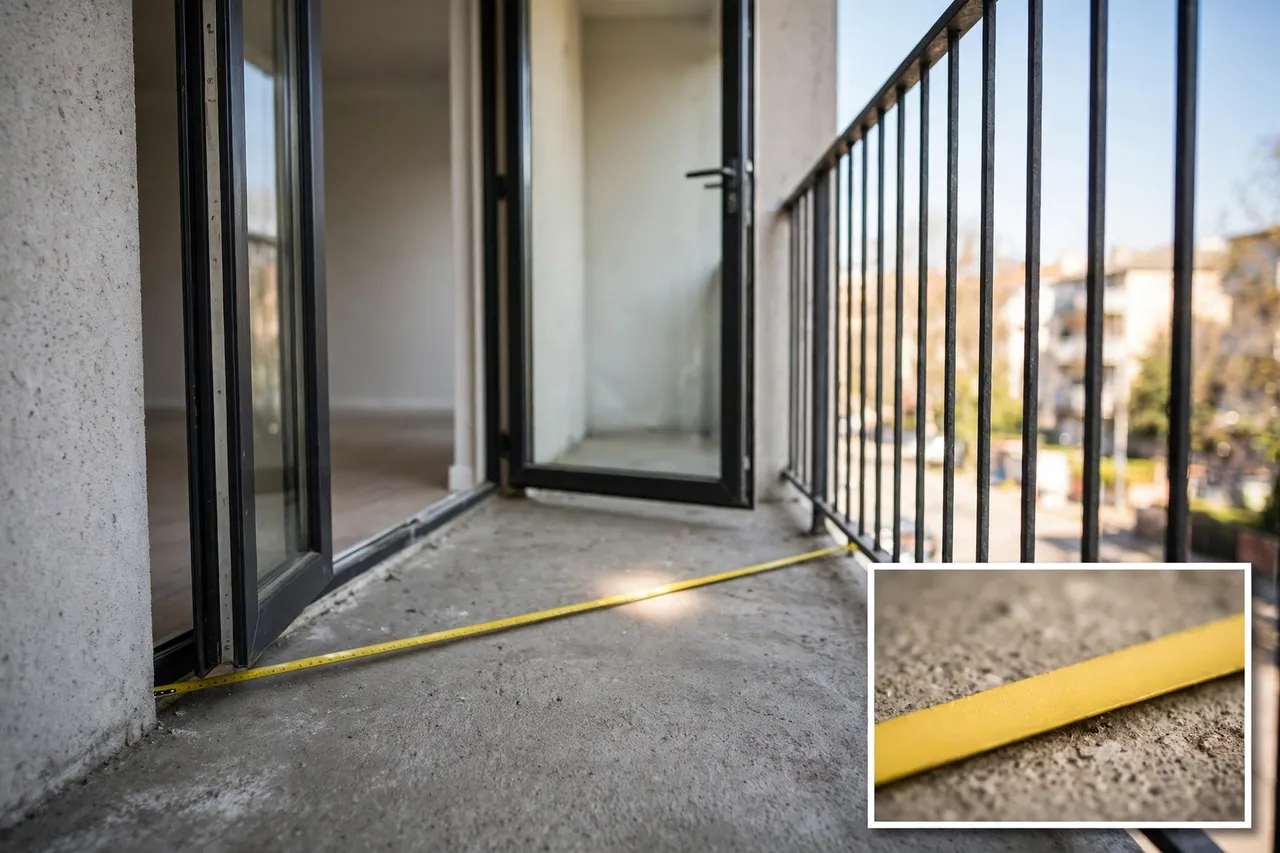
Next, read your lease or building rules. Most buildings limit what you can hang from railings, how much weight a balcony can hold, and whether open flames are allowed. The International Residential Code commonly sets the minimum live load for residential balconies at 40 pounds per square foot, and the International Building Code often requires 60 pounds per square foot for balconies in larger buildings. EngineerFix explains that these figures are minimums for new construction and do not account for age or wear, so an older balcony deserves extra care. Read their full breakdown at EngineerFix on how much weight a balcony can hold.
Wet soil is the hidden weight problem. A large planter can weigh 60 pounds or more after watering, so spread heavy pots out instead of lining them along one edge. Keep the walkway clear too: leave about 24 inches open from the door to the railing, so you never have to step around furniture to reach your chair.
Finally, watch the sun for a day. A south or west-facing balcony gets strong afternoon sun, which fades cheap fabrics fast and decides which plants survive. A north-facing balcony stays cool and shady, which suits ferns and leafy plants but means you need warm light and pale colors to keep it from feeling dark.
Measure first, shop second. A tape measure costs nothing and saves you from the most common balcony mistake: furniture that does not fit through the door.
Pick One Job for Your Balcony
Every good balcony has one main job. Pick yours before you shop, because it decides what you buy first and what you skip. A coffee spot needs a table and two seats. A reading corner needs one comfortable chair and good light. A garden balcony needs planters first and seating second. A dining balcony needs a table that seats two without blocking the door.
Write the job down in one sentence, like “morning coffee for two” or “herbs and a reading chair.” Then test every purchase against it. If a piece does not serve the job, it does not come home. This single rule stops the clutter that makes small balconies feel cramped.
Think about when you will actually use the space. If you only sit outside in the evening, spend on lighting first and skip the sun shade. If you work from home, a rail-mounted bar table turns the balcony into a fresh-air desk. If you love to cook, a herb garden by the door beats a lounge chair you never sit in.
For the bigger picture, browse patio ideas to see how a balcony fits into the whole outdoor space, and small patio designs for layouts that make tiny outdoor spaces feel bigger.
Furniture That Fits a Small Balcony
Small balcony furniture has one rule: it must fold, stack, or do double duty. A full patio set will never fit a 4 by 6 foot balcony, and a deep lounge chair eats the whole floor. Choose slim, light pieces you can move in seconds when the weather turns or the balcony needs a clean.
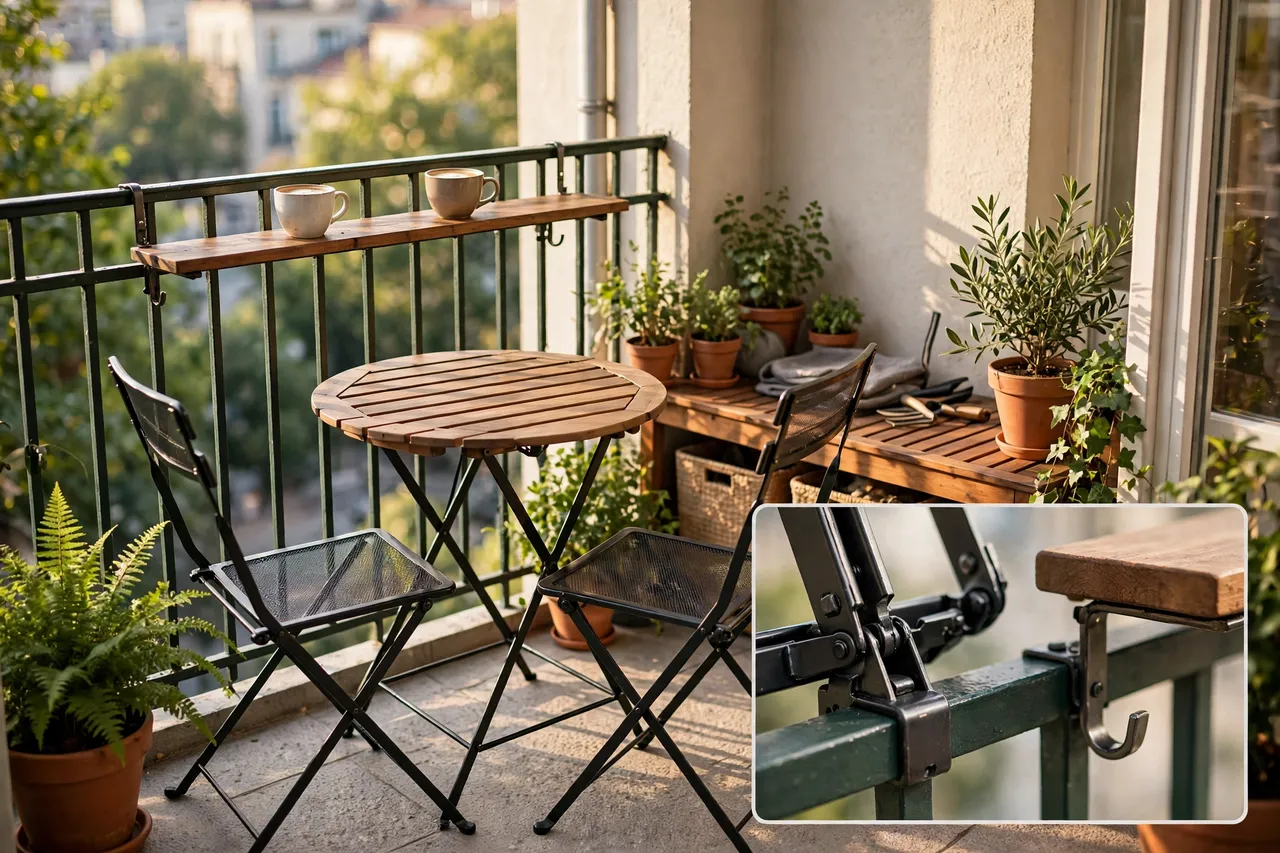
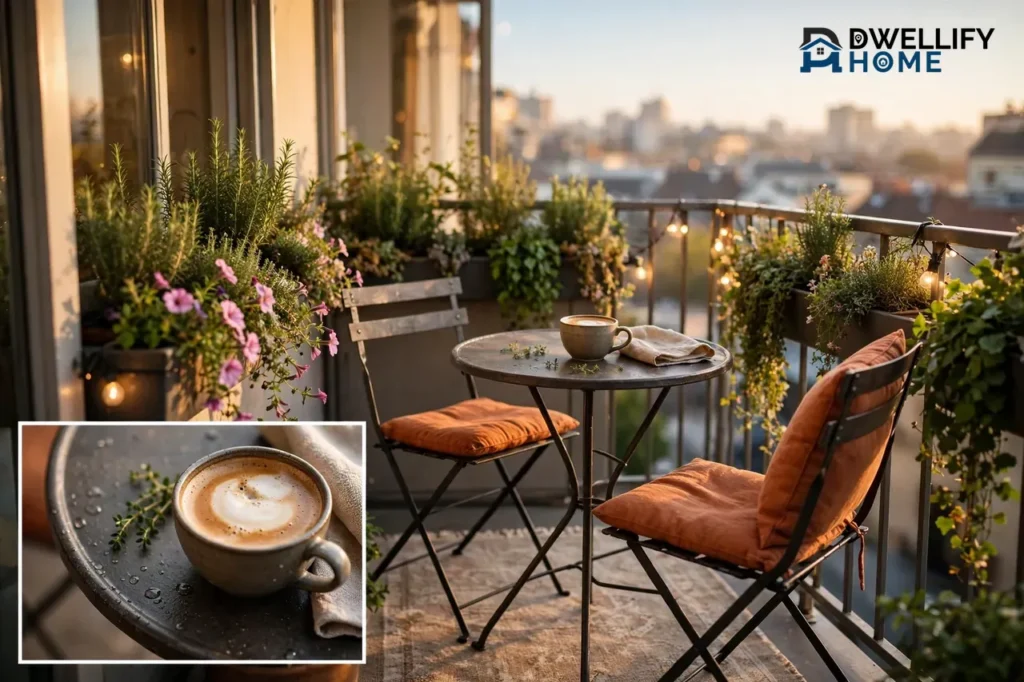
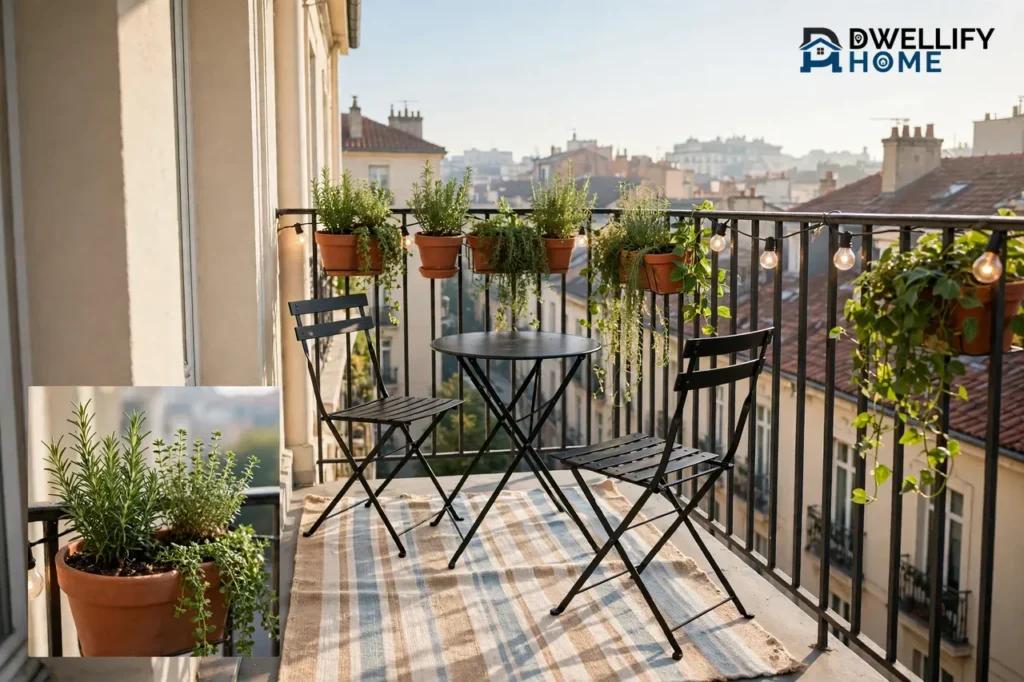
A folding bistro set is the classic answer for a reason. A round table about 24 inches wide holds two coffee cups, a small plate, and a plant, and the chairs fold flat against the wall when you need the floor back. Look for powder-coated metal or acacia wood, both of which handle rain far better than untreated pine.
When the floor is too narrow for any table, use the railing. A rail-mounted bar table hooks over the railing and gives you a shelf 8 to 12 inches deep, using zero floor space. It is the single best purchase for a tiny balcony, and it doubles as a laptop perch or a breakfast bar.
A slim bench with storage does two jobs at once: a seat and a home for cushions, watering cans, and throws. A storage bench along the wall leaves the middle of the balcony open, which makes the whole space feel larger. Angi’s small balcony guide recommends foldable and space-saving pieces like bistro sets, poufs, and slim benches for exactly this reason. See Angi’s small balcony ideas for more furniture and flooring options.
Keep the furniture low so the view stays open. Low-backed chairs, a table no higher than your knee when you sit, and plants that stay below the railing line all keep the sky in sight. The moment furniture rises above the railing, a balcony starts to feel like a cage.
Buy the smallest piece that does the job. On a balcony, a slim chair you sit in every day beats a beautiful lounge chair you have to climb around.
The Floor: Rugs and Deck Tiles That Make It a Room
Bare concrete is what makes a balcony feel like a ledge. The fastest fix is the floor, because the moment your feet land on something intentional, the whole space reads as a room. You do not need to replace the concrete. You need to cover it with something removable.
An outdoor rug is the quickest win. A 4 by 6 foot washable outdoor rug defines the seating zone, softens the floor under bare feet, and makes everything placed on it look deliberate. Choose one with a rubber backing so it stays put, and lift it now and then to let the concrete dry underneath. Never use an indoor rug outside: the backing breaks down when wet and leaves a residue that is hard to clean.
Interlocking deck tiles are the next step up. They click together over concrete with no glue and no tools, they come up when you move out, and wood-look and stone-look versions both exist. Most deck tiles come in 12 by 12 inch squares, so a small balcony needs only a few boxes. Check that you are not blocking the drain: most balconies slope slightly toward a drain, and covering it fully can cause pooling after rain.
Our guide to indoor outdoor rugs covers sizes, materials, and care in detail, including which rug materials survive rain and which ones fade in full sun.
The floor is the cheapest transformation on the balcony. A rug and a few deck tiles change the feel more than a cart full of small decor ever will.
Plants and Greenery Without Losing the Floor
Plants are the one balcony decoration that gets better over time, and they cost money once and then keep growing. The trick is to grow up, not out. Every pot on the floor is a square foot you cannot sit on, so the railing and the walls carry the garden.
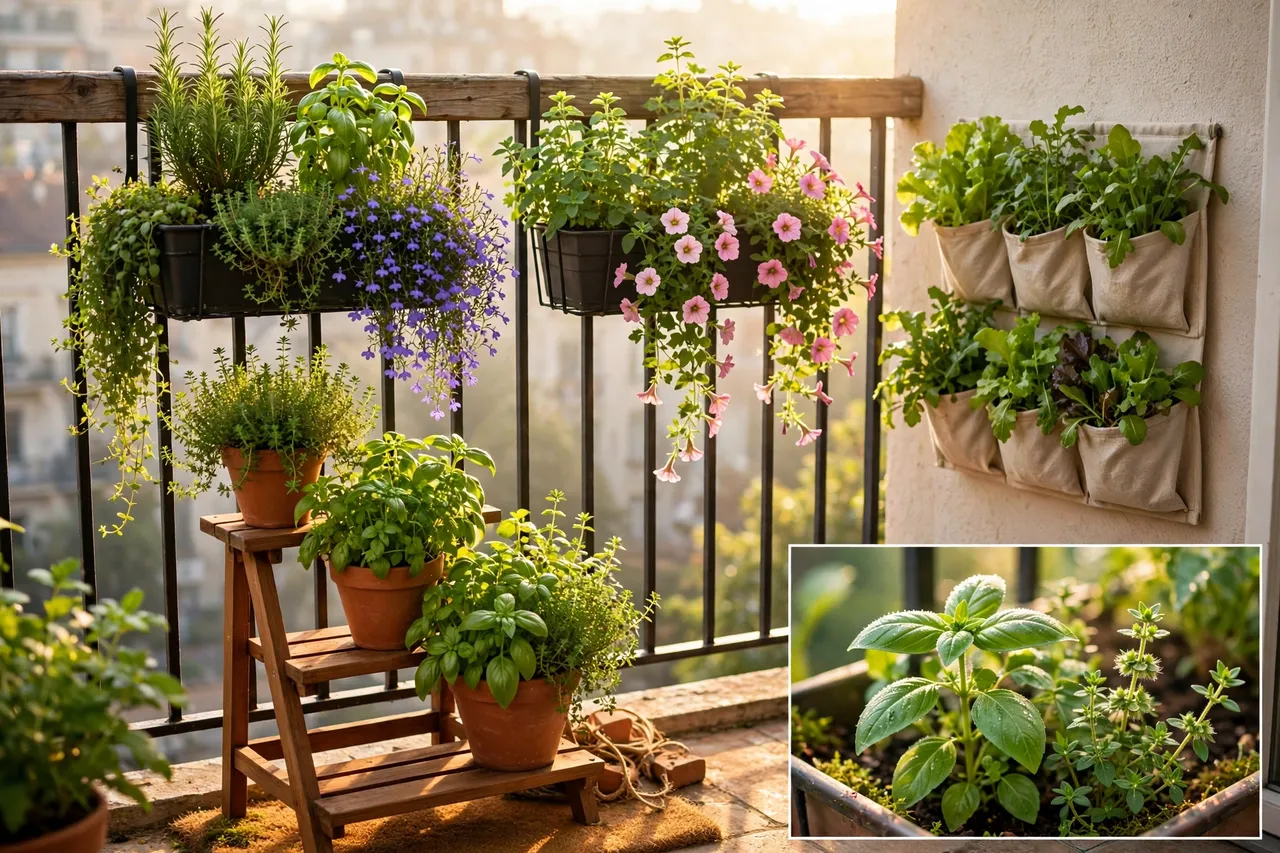
Railing planters are the best first move. Hook-over boxes sit on the inside or outside of the rail and hold herbs, trailing flowers, or small vegetables at eye level, using no floor at all. Check your building’s rules before you hang anything on the outside of a railing above a walkway, and never hang a heavy planter where it could fall on someone below.
Go vertical with a wall grid, a pocket planter, or a tiered plant stand. A three-tier stand holds a dozen pots in the footprint of one, and a wall pocket planter turns a blank wall into a herb garden. Group pots in three heights, tall in the corner, medium on a stand, low on the floor, so the greenery looks layered instead of lined up like a fence.
Match the plant to the sun. Sunny balconies suit herbs like basil, mint, rosemary, and thyme, plus trailing petunias and geraniums. Shady balconies suit ferns, pothos, and hostas. Balconies are windier and drier than gardens, and everything lives in a pot, so water more often than you would in the ground and use self-watering planters if you travel. For plant picks that suit tight spaces, see best plants for small gardens.
Repeat, do not collect. One plant type repeated in three matching pots looks lush and intentional, while ten different plants in ten different pots looks like a garden center sale. Pick two or three varieties and repeat them at different heights.
Grow up, not out. Rail planters, wall pockets, and tiered stands give you a full garden while the floor stays free for sitting.
Lighting That Makes You Use It After Dark
Lighting is the thing that decides whether you use the balcony after dark, and it matters more here than anywhere else in the home. A balcony with warm light feels like a room. A balcony with no light feels like a ledge you avoid.
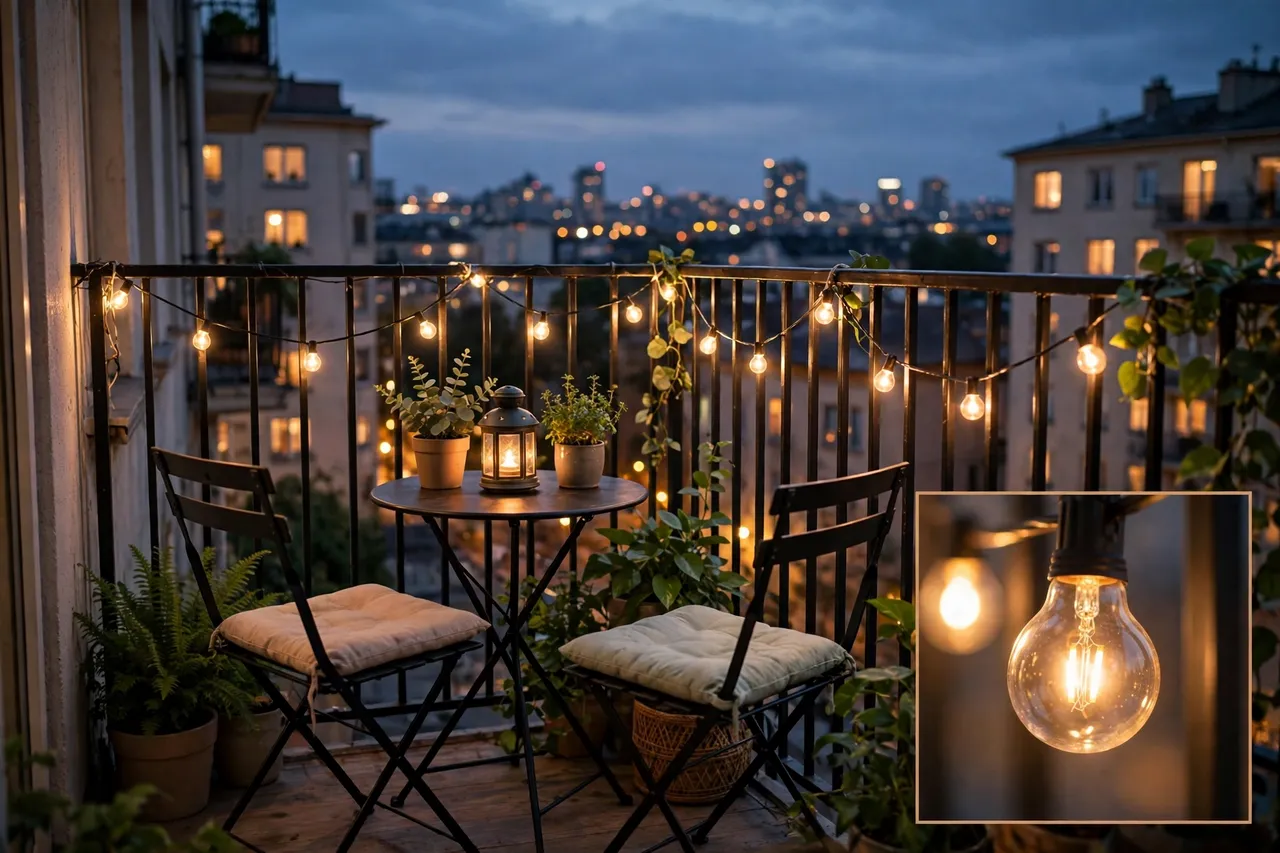
Warm string lights along the railing are the classic balcony look, and they cost very little. Solar-powered or battery-operated strings need no outlet, which matters because most balconies have none. Hang them with adhesive clips, removable hooks, or zip ties around the railing so you drill nothing. Choose bulbs labeled warm white, around 2700K, because cooler tones feel clinical outdoors.
Layer a second light source at sitting height. A flameless LED lantern on the table, a battery-operated candle, or a small solar floor lamp gives you light where you actually sit, instead of only overhead. Two small lights at different heights feel warmer and more natural than one bright string alone.
Wind-proof everything. Light items blow off a balcony fast, so clip strings firmly, weigh lanterns down, and bring fabric shades inside before a storm. Never use open flames or a charcoal grill where building or fire rules forbid them, and keep any real candle inside a heavy glass holder away from cushions and curtains.
Light the seat, not just the ceiling. One lantern at table height turns string lights from decoration into a place you can actually read and eat by.
Privacy Without Drilling a Single Hole
Most balconies feel exposed, and that exposure is why people stop using them. You do not need to build a wall. You need to block one sightline, usually the neighbor directly across or beside you, and the balcony starts to feel like yours.
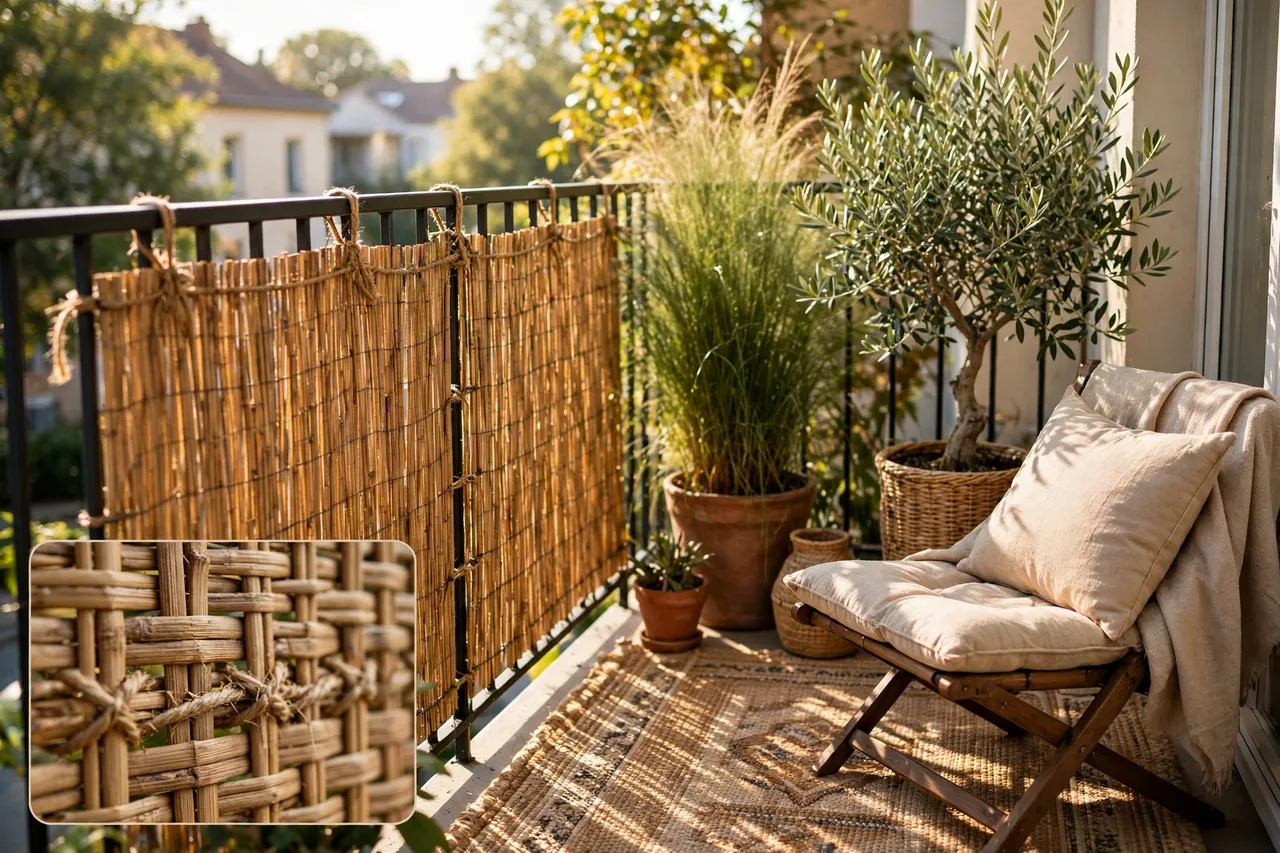
A freestanding bamboo or reed screen is the fastest fix. It ties to the railing with cable ties, rolls up when you move, and lets the breeze through while blocking the view. A tall potted plant does the same job more softly: bamboo, a dwarf olive tree, or tall ornamental grass in a large pot screens one side and adds greenery at the same time.
Outdoor curtains on a tension rod or a weighted freestanding frame give you adjustable privacy and shade in one move. Choose outdoor fabric that dries fast, and weight the bottom hem so the curtain does not billow into the railing. A no-drill privacy screen in fabric or woven reed costs little and comes down in minutes.
Plants make the best privacy of all, because they screen without looking like a screen. IKEA’s own balcony guide shows hook holders filled with foliage along the rail to make a natural screen, with trailing leaves on the walls behind them. See IKEA’s guide to creating a private retreat on your balcony for the full look. For more screening options, see our guide to privacy screens for a balcony.
Screen one side, not all four. Blocking the single worst sightline gives you privacy and keeps the breeze, the light, and the view you actually like.
Covered Balconies and Weather-Proofing
A covered balcony is the easiest balcony to decorate, because the roof does half the work. Rain stays off the furniture, cushions can live outside longer, and you get more plant choices. The job changes from protection to comfort: soft textiles, better lighting, and pieces you would never leave out in the open.
Even a covered balcony gets wet. Wind drives rain sideways under most roofs, so keep cushions in a storage bench or bring them in before a storm. Choose outdoor fabrics for anything that stays outside, and pick cushion covers that unzip and wash. A throw you bring in at night lasts far longer than indoor pillows left out in the rain.
On an open balcony, weather-proofing is the whole game. Fold chairs flat against the wall before a storm, clip down anything light, and store the rug rolled up indoors in winter. Drainage matters most of all: keep the drain clear of leaves, and never let a rug or a deck tile trap a puddle against the wall.
A retractable shade or a simple outdoor awning extends a covered balcony’s season, cutting the harsh afternoon sun while letting you open the sky again on a mild evening. For roofed outdoor spaces and how they pair with furniture and floors, see covered patio ideas.
A covered balcony still gets wet sideways. Plan for wind-blown rain, and your cushions and plants will last years instead of one season.
9 Mistakes That Ruin a Balcony
Most balcony failures come from a short list of avoidable mistakes. Check your plan against this list before you order anything.
- Buying furniture before measuring. If it does not fit through the door, it does not belong on the balcony.
- Decorating it like a mini patio. A small balcony is a small room, not a shrunken backyard, and it needs fewer, better pieces.
- Putting every plant on the floor. Floor pots eat the space you sit in; grow up the railing and the walls instead.
- Using indoor rugs, pillows, or furniture outside. Rain and sun destroy them in one season.
- Blocking the drain. A rug or deck tile over the drain turns the next storm into a puddle against your wall.
- Ignoring the weight limit. Wet soil is heavy, so spread large planters out and check the building’s rules first.
- Hanging heavy planters outside the railing. Anything that can fall on a walkway below is a safety risk, not decor.
- Choosing cool white lights. They make a balcony feel like a parking lot; warm white around 2700K feels like home.
- Filling every corner at once. One hero piece and some breathing room beats a balcony you cannot move around in.
The cheapest balcony is the one you decorate once. Measure, pick one job, and buy fewer pieces that fit, instead of a cart full of decor that fights for space.
Related Guides
If you are planning the whole outdoor space, these guides pick up where this one leaves off:
- Patio Ideas — layouts, styles, and features for every size of patio.
- Small Patio Designs — seven layouts that make a tiny patio feel bigger.
- Indoor Outdoor Rugs — sizes, materials, and care for rugs over tile and concrete.
- Best Plants for Small Gardens — plant picks that suit tight spaces and pots.
- Privacy Screen for a Balcony — screening options for exposed balconies.
- Covered Patio Ideas — roofed patios and balconies where furniture stays dry.
- Balcony Christmas Decorations — seasonal decor for the same small space.
- Ideas for Balcony Design — design ideas for the same small space.
- Apartment Patio Ideas — renter patios that share the same rules.
- Small Patio Decorating Ideas — the same decorate-a-tiny-space job, patio version.
Frequently Asked Questions
How do I decorate a small balcony?
Start by measuring the width, depth, and door swing, then give the balcony one job, like morning coffee or a herb garden. Add a floor layer with a rug or deck tiles, one folding chair, plants that grow up the railing and walls, and warm string lights. Fewer, better pieces beat a cart full of small decor.
How can I decorate my balcony on a budget?
Spend where comfort changes most: a washable outdoor rug, warm string lights, and one seat you like. Add railing planters with herbs, which cost little and keep growing. Buy folding furniture secondhand, use what you already own for throws and lanterns, and add one piece at a time instead of buying everything at once.
How do you make a small balcony pretty?
Start with one purpose and one hero piece, then add a floor layer, lighting, and textiles. A rug, one lantern, and two cushions shift the whole mood fast. Keep the furniture low so the view stays open, repeat one or two plants in matching pots, and leave breathing room instead of filling every corner.
What furniture fits a small balcony?
Slim, light, and foldable wins. A folding bistro set suits most balconies, a rail-mounted bar table suits narrow ones, and a slim storage bench suits balconies with a long wall. Skip deep lounge chairs and full dining sets, which eat the whole floor, and choose pieces you can fold flat or move in seconds.
How do I add privacy to my balcony without drilling?
Use a freestanding bamboo or reed screen tied to the railing with cable ties, outdoor curtains on a tension rod, or tall potted plants like bamboo or ornamental grass. All three block the worst sightline without a single hole, and all of them come down in minutes when you move out.
What plants grow best on a balcony?
Sunny balconies suit herbs like basil, mint, rosemary, and thyme, plus trailing petunias and geraniums. Shady balconies suit ferns, pothos, and hostas. Balconies are windier and drier than gardens, so water pots more often, use self-watering planters if you travel, and match every plant to the sun your balcony actually gets.
Your balcony does not need to be big to be loved. Measure it, give it one job, lay down a floor, add one seat and some green, and hang warm light. Do that, and the smallest slab outside your door becomes the room you reach for first every morning and every evening.