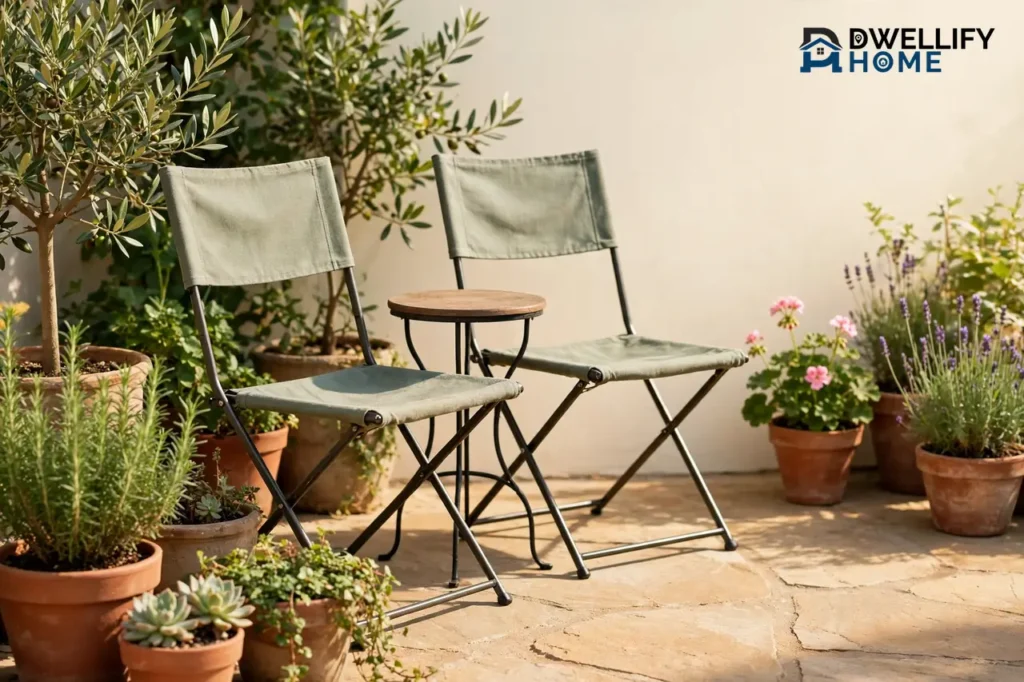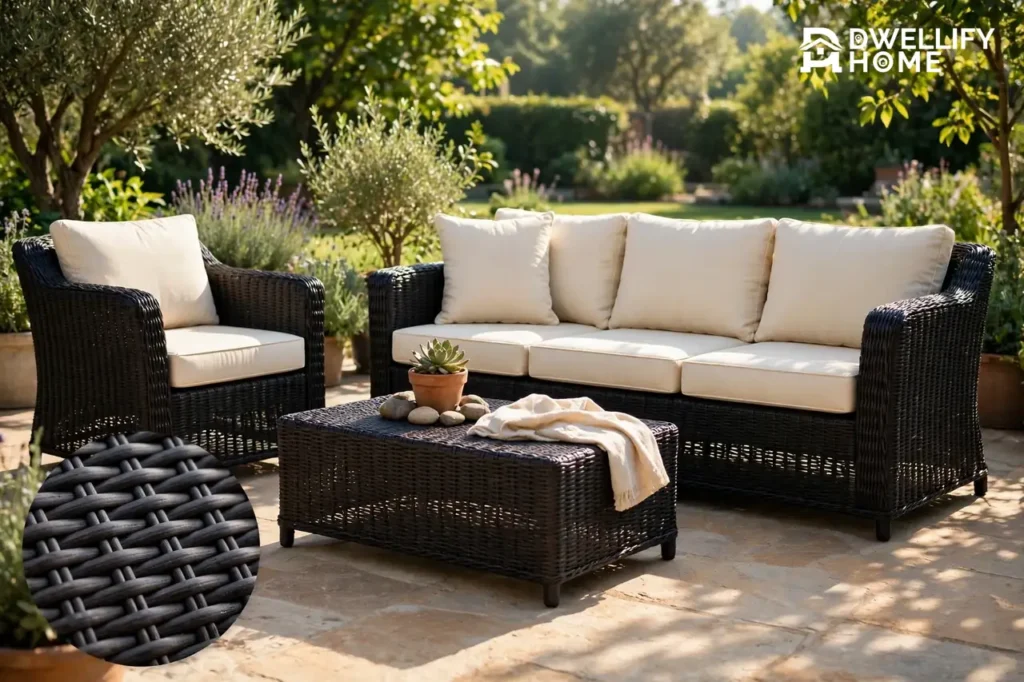
Wicker outdoor furniture is a woven shell stretched over a metal frame, and only the resin version survives real weather: HDPE resin wicker on a powder-coated aluminum frame lasts 5 to 15 years outside, while natural rattan rots, sags, and molds within one to three years. The difference is not the weave you see, it is the strand you cannot see, and this guide shows how to tell them apart before you pay. A solid four-piece resin set costs $400 to $900 and holds up five to eight years with a cover and a little attention.
One label trick costs buyers hundreds of dollars, and it sits on the tag of almost every wicker set sold online. It is in the mistakes section below, and most buyers miss it because the listing uses the right words in the wrong way. Before that, you need the material decision right, because no cover or cleaner can save natural wicker left in the rain.
What Is Wicker Outdoor Furniture?
Wicker outdoor furniture is outdoor seating and tables made by weaving strands into a shell over a frame, sold as sofas, chairs, loveseats, dining sets, and daybeds for patios, balconies, gardens, and poolsides. Wicker is a weaving technique, not a material: the same weave can be made from rattan, cane, bamboo, willow, or extruded plastic resin.
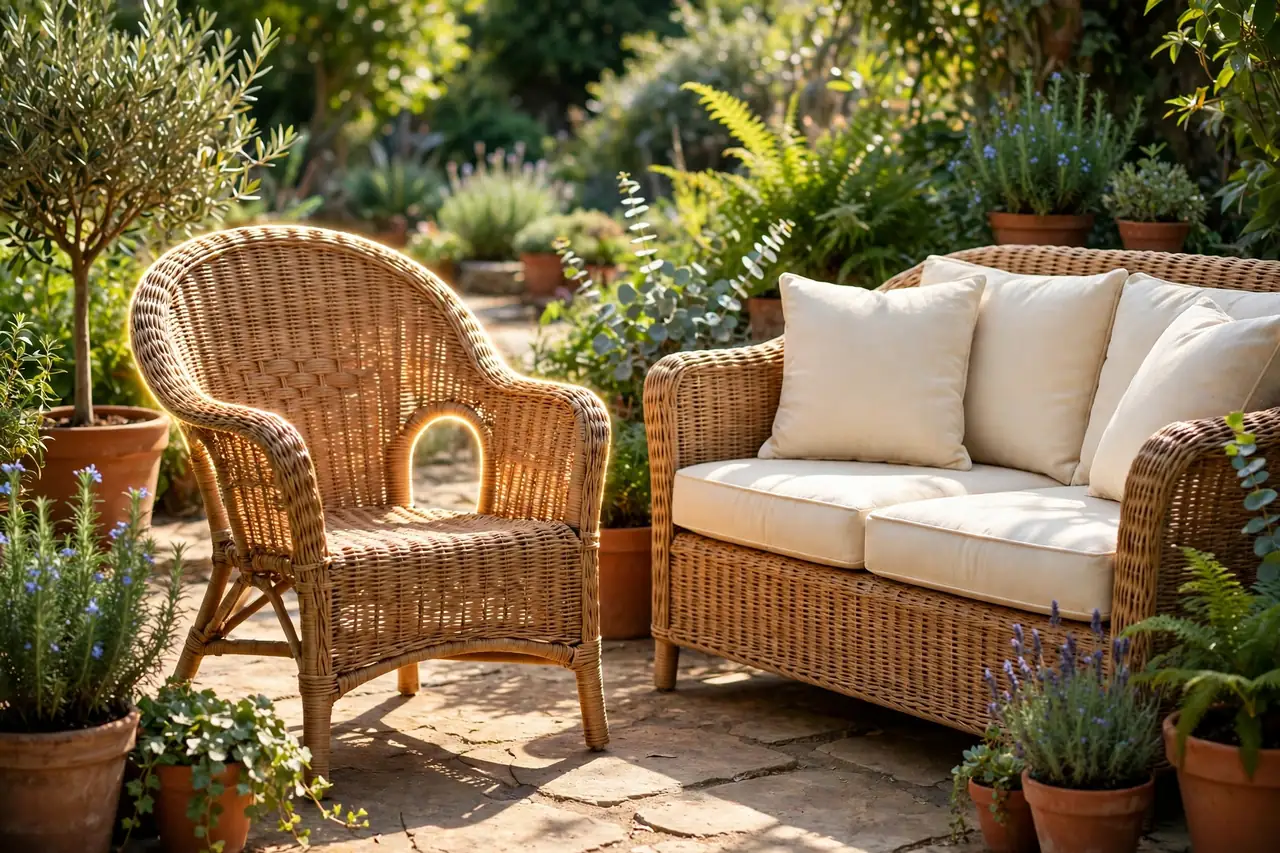
The confusion starts with the words. Rattan is a material: a fast-growing tropical vine native to Southeast Asia and parts of Africa. Wicker is the weaving technique: you can weave wicker from rattan, bamboo, seagrass, willow, paper fiber, or petroleum-based synthetic resin. So a chair labeled “rattan wicker” may be natural vine woven by hand, or it may be plastic strands made to look like rattan, and the two behave nothing alike outside. “PE rattan” means synthetic strands made to look like rattan, which is what US retailers call resin wicker.
A wicker set is really three parts, and all three must be right. The weave is the visible shell, and it must be UV-stabilized HDPE or PE resin for outdoor use. The frame underneath is usually aluminum or powder-coated steel, and aluminum lasts longer because it never rusts, while a wooden frame under wicker rots fast outside. The cushions are the part most buyers forget: they need quick-dry foam and solution-dyed acrylic fabric, or they hold water and grow mildew from the inside.
Wicker suits almost every patio style because the weave reads warm and handmade, from bohemian to coastal to traditional. It pairs with glass, wood, and metal tables, and it is the most comfortable outdoor material for long sits, because the woven shell flexes slightly instead of feeling hard. If your patio is small, our outdoor furniture for small spaces guide shows seven layouts where a wicker loveseat earns its footprint.
Wicker is a weave, not a material. The strand decides whether it lives outside or dies there.
Natural vs Resin Wicker: Which Survives Outside?
Only resin wicker survives outside: HDPE resin wicker on a powder-coated aluminum frame handles rain, sun, and freeze-thaw for 5 to 15 years, while natural rattan, cane, bamboo, and willow absorb water, swell, sag, mold, and crack within one to three years of open exposure. Natural wicker belongs indoors or on a fully covered, dry porch.
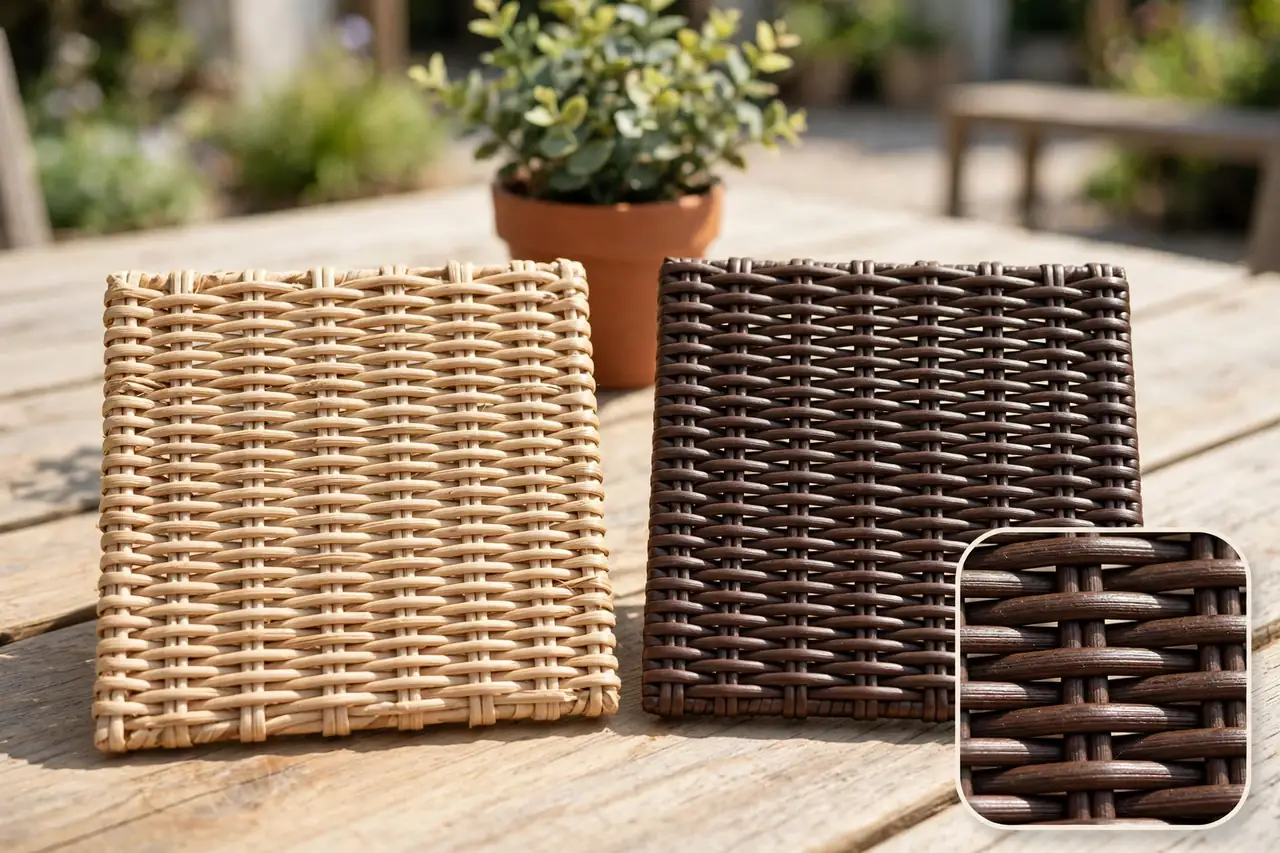
The performance gap is not small, so here is the honest comparison in one place. Guess which one costs less per year: the $900 resin set that lasts eight years, or the $400 natural set that lasts two? The answer is in the table, and it is not close.
Natural vs resin wicker at a glance
| Feature | Natural rattan wicker | Resin (HDPE) wicker |
|---|---|---|
| Material | Tropical rattan palm vine | Polyethylene or PVC resin strands |
| Life outdoors | 1–3 years, then mold and cracks | 5–15 years |
| Rain | Absorbs water, swells, sags | Repels water, dries fast |
| Sun | Dries out, turns brittle | UV-stabilized, holds color |
| Best for | Indoors, covered dry porch | Exposed patio, poolside, year-round |
Comparison facts in this table come from the wicker guides at Kingmake Outdoor and The Backyard Gnome, checked November 16, 2026. Natural rattan will deteriorate in a single wet season if left unprotected: the fibers absorb moisture, swell, and dry unevenly, causing splits and breaks at the joints. Synthetic wicker does not have this problem — it dries completely, does not absorb water, and returns to its original appearance season after season. Read the full breakdown at The Backyard Gnome’s rattan vs wicker guide.
Natural wicker: beautiful, and indoors only
Natural wicker is woven from plant fibers such as rattan, willow, reed, or cane. It looks warm and handmade, but it absorbs moisture: rain and humidity cause swelling, mold, and splitting, and strong sun dries it until it turns brittle. Even on a covered porch, humidity swings and blown rain work their way into the weave, and once water sits inside a rattan core you get dark patches and a smell you cannot wash out. Never saturate natural rattan with water: excess moisture is the number one enemy of organic fiber furniture.
Resin wicker: the outdoor version, graded by quality
Resin wicker is woven from extruded plastic strands, usually polyethylene (PE, often HDPE) or PVC, made to look like natural fiber. It does not soak up water, and good grades include UV stabilizers so the color holds. But not all resin is equal: HDPE is the grade you want, because it resists fading and turning brittle in sun and heat, while budget PVC resin fades faster and turns brittle sooner. Look for “HDPE” or “high-density polyethylene” plus a line about UV stabilizers in the listing — without UV protection, colored resin goes chalky and pale after one summer of direct sun, and in Florida or Arizona, in months.
HDPE is the grade you want. If the listing does not name it, the resin is probably the cheap kind.
Can Wicker Furniture Get Wet?
Resin wicker can get wet: HDPE strands do not absorb water, so rain beads off and the weave dries quickly, and a resin set on a powder-coated aluminum frame can stay out in the rain year-round. Natural wicker cannot get wet: the fibers swell when wet and shrink as they dry, which loosens the weave, makes the seat sag, and invites mold and a musty smell.
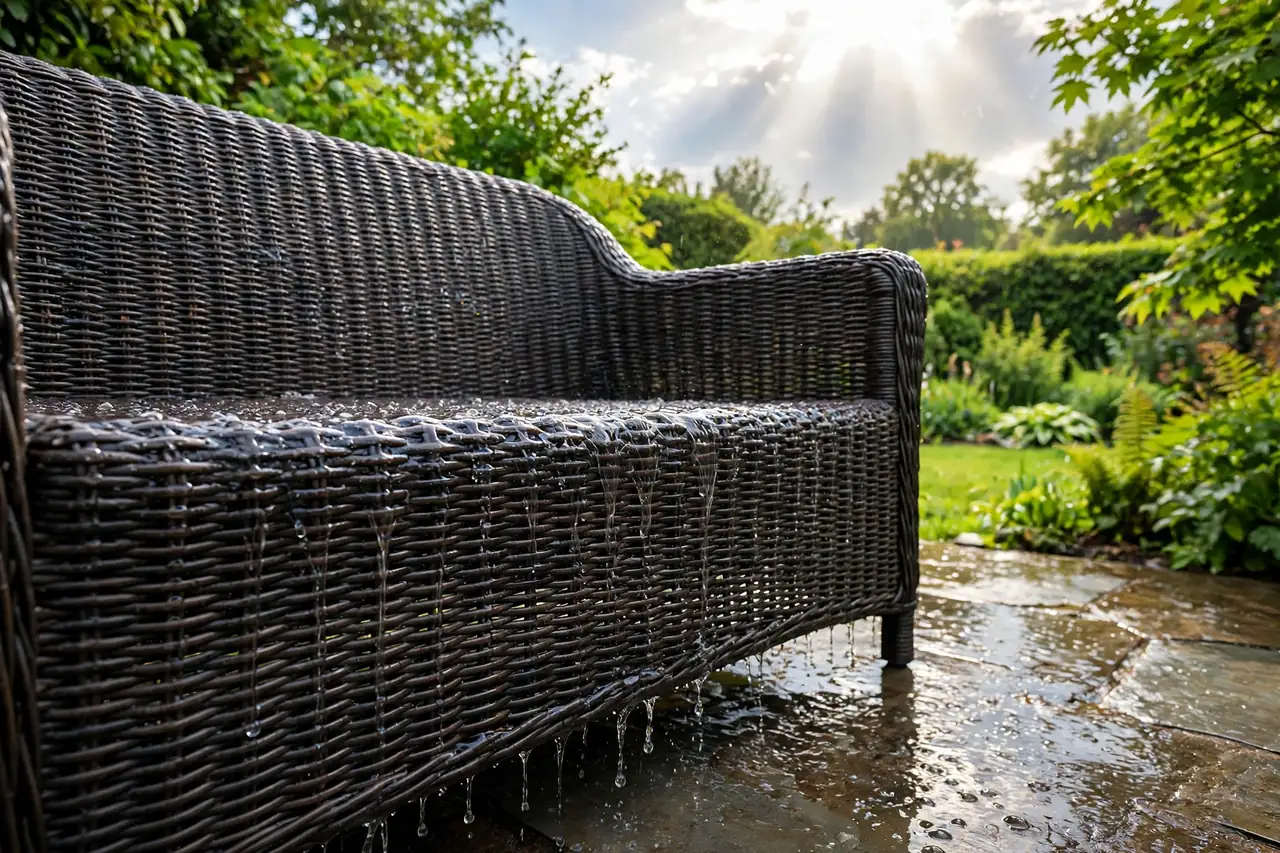
The short answer hides a longer truth, and it is the part sellers skip. Wicker furniture is not waterproof, and that is true even for good synthetic wicker: the strands resist water, but water gets through the gaps at the arms and seat edges and sits on the frame, and the cushions are almost never waterproof. A woven piece with a foam cushion and metal joints will never be fully waterproof, no matter what the tag says. The test is not whether the weave gets wet, it is whether the whole piece dries.
Rain is the easy case for resin wicker. The strands shed water, the frame drains, and the piece dries in an hour of sun. Standing water is the hard case: do not leave resin wicker standing in water or under heavy snow, because water that pools in the seat deck or under the frame stays there, and the cushions soak it up. Look for sloped seat frames, drain holes in cushions, and quick-dry foam, which has visible holes through the core at 1.8 pounds per cubic foot or higher. Solid foam traps water and grows a smell you cannot wash out.
Salt air and freeze-thaw add their own rules. Resin wicker handles freeze-thaw fine as long as water can drain, and the aluminum frame handles it too, but the cushions do not: cushions left out through a wet season grow mildew on the underside, and no spray brings them back. In coastal air, rinse the set with fresh water every few weeks to wash off salt, and check the frame joints for corrosion. See the full water test at Kingmake Outdoor’s wicker waterproof guide, which breaks down every wicker type by what happens when it gets wet.
The weave can get wet; the cushions cannot stay wet. Bring cushions in, and the set survives the storm.
How Much Does Wicker Outdoor Furniture Cost?
Wicker outdoor furniture costs $400 to $900 for a solid four-piece resin set, $900 to $1,500 for a larger six-piece set, and $150 to $400 for a single resin wicker chair, all checked November 16, 2026. A $1,000 set with a powder-coated aluminum frame and decent resin typically runs six to eight years in a sunny climate, and longer under a roof or covered in winter.
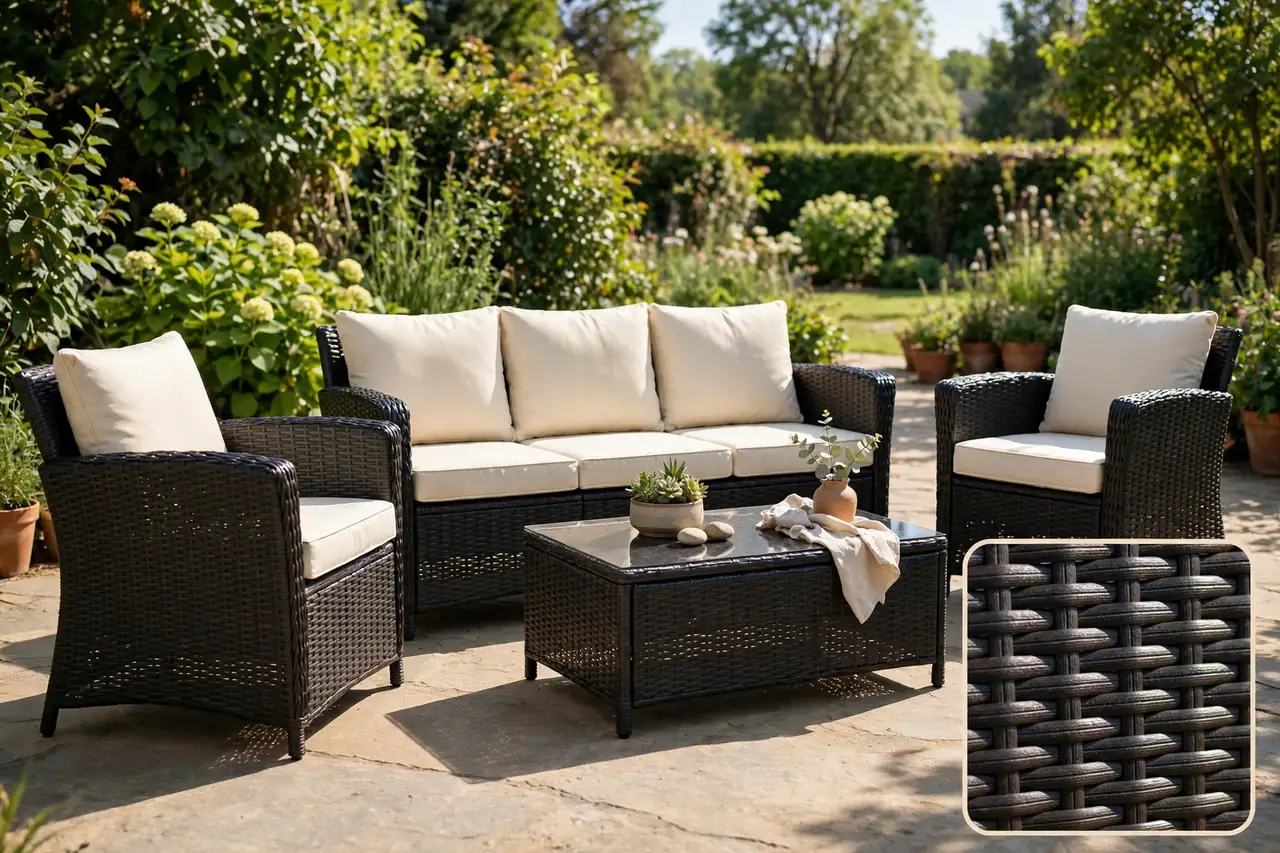
The price tracks three things: the resin grade, the frame, and the cushions. HDPE resin on a powder-coated aluminum frame with quick-dry foam costs more than PVC resin on a steel frame with solid foam, and the difference shows up in year three, when the cheap set fades, the steel rusts, and the cushions smell. A four-piece resin set at $400 to $900 holds up five to eight years with a cover and a little attention, which is about $60 to $150 a year — cheaper per year than replacing a $400 natural set every two years.
Three things push the price up beyond the set size. The frame adds cost: aluminum costs more than steel and never rusts, while a steel frame needs a good powder coat to survive. The weave adds cost too: a tight weave with narrow gaps sheds most of a shower before it touches the frame, while big gaps between strands are a liability anywhere rain reaches, because water runs straight through onto the frame and the cushion beneath. And the cushions add cost: solution-dyed acrylic fabric and quick-dry foam cost more than polyester and solid foam, and they are the difference between cushions that dry in an hour and cushions that mildew.
Watch the set math before you buy. A “four-piece set” can mean a sofa, two chairs, and a table, or it can mean a loveseat, a chair, and two small tables, so count the seats, not the pieces. And check whether the price includes cushions: some listings photograph the set with cushions and sell it without them, which adds $100 to $300 to the real price. If the cushions on your old set are the part that failed, our replacement cushions for patio furniture guide shows how to get the fit and fabric right before you buy a whole new set.
Count seats, not pieces. The cushion and frame decide the real price, not the photo.
What Most People Get Wrong About Wicker
Most people get wicker wrong in three ways: they read “rattan” on the tag and assume it is outdoor-safe, they read “all-weather” and assume it means waterproof, and they leave the cushions out in the rain. All three mistakes cost money, and the first one is the most common.
The label trick is the big one. Many sellers write “rattan” on a resin set because it sounds natural and premium, and many buyers read it as a material guarantee. It is not. “Rattan” on a tag can mean natural vine, or it can mean PE rattan, which is plastic made to look like rattan. The only words that guarantee outdoor safety are “HDPE,” “PE resin,” or “resin wicker” plus “UV-stabilized” in the specs. If the listing says only “rattan” or “wicker” with no resin grade, assume it is natural fiber and keep it indoors.
The “all-weather” myth runs the other way: buyers hear it as a promise that the whole set is waterproof, and it is not. “All-weather” means the weave will not dissolve in rain. It does not mean the set enjoys a Michigan February, and it rarely covers cushions left wet or a set buried under snow. Resin wicker handles rain, sun, cold, and salt air well, but it still needs dry cushions, drainage, and protection from standing water and snow.
The cushion mistake is the quiet killer. Cushions left out through a wet season grow mildew on the underside, and no amount of spray brings them back. The fix is simple: bring cushions indoors when the set will not be used for a while, or store them in a dry outdoor storage bin with ventilation. The weave survives the rain; the cushions do not.
Read the resin grade, not the style word. “Rattan” is a look, and “HDPE” is a promise.
How to Buy a Wicker Set That Lasts
Buy a wicker set that lasts by checking five things before you pay: HDPE or PE resin with UV stabilizers named in the listing, a powder-coated aluminum frame, a tight weave with narrow gaps, quick-dry foam at 1.8 pounds per cubic foot or higher, and solution-dyed acrylic cushion fabric. If any one of the five is missing, keep shopping.
Start with the resin grade, because it is the one spec that cannot be fixed later. The listing should say “HDPE” or “high-density polyethylene” and mention UV stabilizers. If it says only “resin wicker” or “PE rattan” with no grade, ask the seller. Next, check the frame: aluminum is the best choice because it never rusts, and powder-coated steel is fine if the coating is thick and unchipped. A wooden frame under wicker belongs indoors, and a steel frame with thin paint will rust at the joints within two seasons.
Then check the weave with your eyes. A tight weave with narrow gaps sheds most of a shower before it ever touches the frame, while big gaps let water run straight through onto the frame and the cushion beneath. Pull gently on a strand: it should feel firm and spring back, not loose or brittle. Check the underside too, because the weave under the seat is where water pools and where cheap sets skip the tight weave to save money.
Finally, check the cushions, because they are the part that fails first. Quick-dry foam has visible holes through the core and a density of 1.8 pounds per cubic foot or higher, and solution-dyed acrylic fabric resists water and fading far better than polyester. Sit in the set for a full minute, not ten seconds, and check that the seat deck is sloped or vented so water drains instead of pooling. If the set will anchor a lounge corner, pair it with an outdoor sectional couch in the same material family so the two pieces age together, and read our patio dining set guide if the same patio also needs a dining table.
Five checks, no exceptions. Resin grade, frame, weave, foam, fabric — in that order.
How to Clean and Care for Wicker Furniture
Clean resin wicker furniture by rinsing it with a garden hose, scrubbing gently with a soft brush and mild soapy water, rinsing again, and letting it dry in the sun. Clean natural wicker only with a barely damp cloth and never saturate it, because excess moisture is the fastest path to irreversible damage.
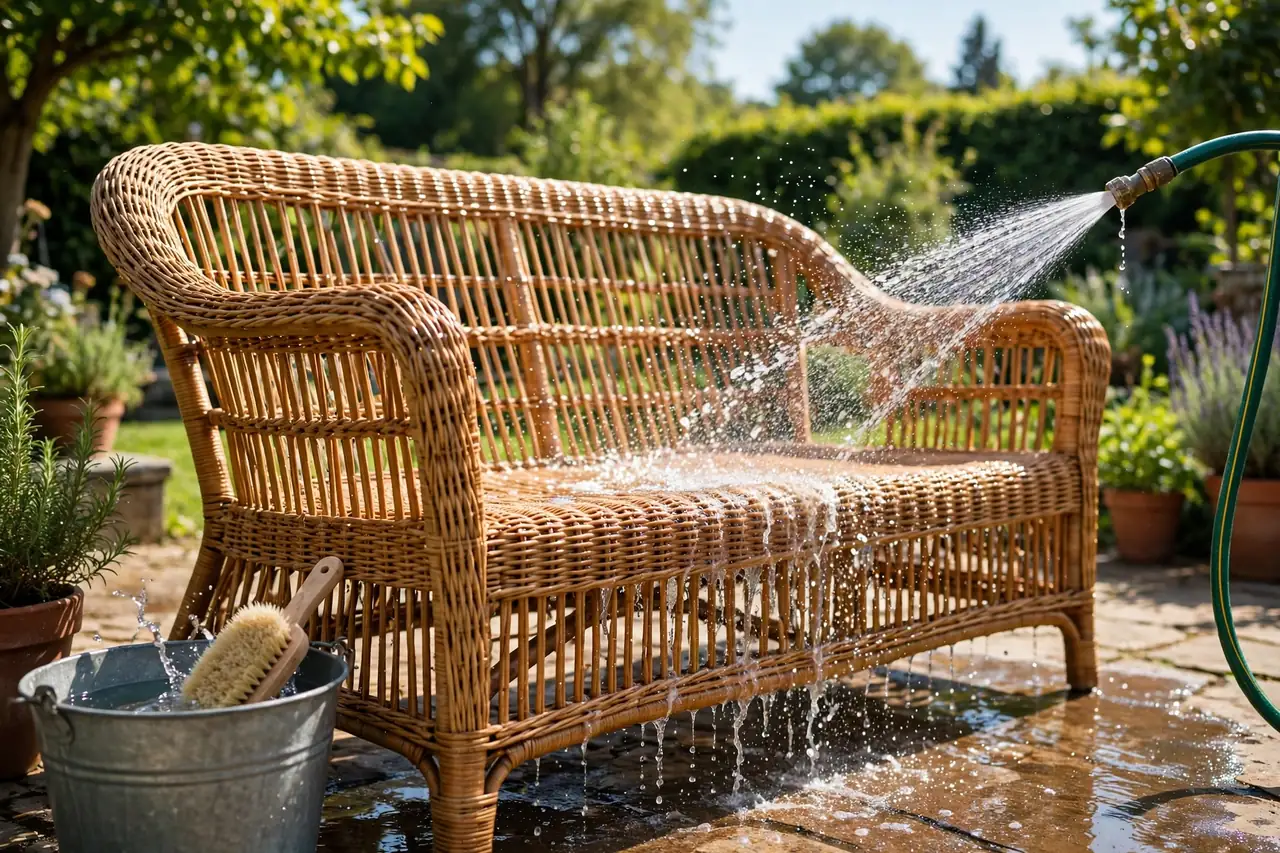
Resin wicker is far more forgiving than natural fiber. A rinse with a garden hose removes most surface dirt, and a soft brush reaches into the weave where dust collects. Work along the weave, not against it, and rinse until the soap is gone, because soap left in the weave attracts dirt. Let the set dry completely in the sun before you put the cushions back, and check the frame joints while you clean: tighten any loose bolt and touch up any paint chip before it rusts.
Cushions need their own routine. Brush off loose dirt, wash the covers by hand or by machine if the label allows, and dry them fully before storing. Never put a damp cushion back on the set, and never store cushions in a sealed plastic bag, because trapped moisture grows mildew. If a cushion smells musty, it is already mildewing inside the foam, and no surface spray will fix it: replace the foam, not the cover.
Winter care decides the lifespan. Resin wicker on an aluminum frame can usually stay out in mild climates, but in snowy or freezing regions, cover it or store it for winter, and always bring the cushions indoors. Natural wicker should not stay outside at all. A breathable cover keeps rain off without trapping condensation, while a plastic tarp traps damp and grows mold exactly where you cannot see it. Follow the full seasonal routine in our how to store outdoor furniture guide, and if the set sits under a balcony cover or a pergola, it will last years longer than the same set left in open weather.
Hose the resin, barely dampen the rattan. Water is a cleaner for one and a killer for the other.
Related Guides
If you are planning the whole outdoor space, these guides pick up where this one leaves off:
- Replacement Cushions for Patio Furniture — get the fit, fabric, and price right the first time.
- How to Store Outdoor Furniture — keep it clean, dry, and ready for spring.
- Outdoor Sectional Couch — deep seating for the lounge corner beside your wicker set.
- Outdoor Furniture for Small Spaces — seven layouts that make a tiny patio feel big.
- Patio Dining Set — size a dining table so it does not fight your lounge set.
- Outdoor Storage Bin — stash cushions and covers where they stay dry.
- Balcony Cover Ideas — stay dry and cool on a small balcony.
- Patio Shade Ideas — keep the wicker cool at noon.
Frequently Asked Questions
Can wicker furniture get wet?
Synthetic wicker can. Natural wicker shouldn’t, because the fibers swell, mold and weaken when wet. HDPE resin wicker repels water and dries quickly, but the cushions and frame joints still need to dry, so bring cushions indoors during heavy rain.
Is rattan furniture waterproof?
Natural rattan isn’t. Synthetic “PE rattan” is the same material as resin wicker and is made for outdoor use, so it handles rain well. If the listing says only “rattan” with no resin grade, assume it is natural fiber and keep it indoors or under full cover.
Is resin wicker waterproof?
It resists water well, particularly HDPE, but no woven piece is fully waterproof. Rain rolls off the strands, but water gets through the gaps at the arms and seat edges and sits on the frame, so check the cushions and frame as well as the strands.
Is outdoor wicker furniture waterproof?
Resin wicker itself is water-resistant, not waterproof. Rain rolls off the strands, but water gets through the gaps and sits on the frame, so look for sloped seat frames, drain holes in cushions, and quick-dry foam. The weave survives rain; the cushions need to stay dry.
What’s the difference between wicker and rattan?
Wicker is the weaving method, and rattan is one material that gets woven. Modern patio sets labeled wicker are almost always PE resin strands woven over a metal frame, while rattan refers to the natural vine or a synthetic imitation of it.
Disclaimer: This guide gives general advice for choosing and caring for outdoor furniture, not professional safety or structural instructions. Check weight limits before use, keep natural wicker out of rain, and follow the manufacturer’s care instructions for your set.
Read the strand, not the tag. HDPE resin, an aluminum frame, a tight weave, quick-dry foam, and acrylic fabric — five checks, and the set you buy this year is still holding its color and its shape eight summers from now.