An outdoor wicker sectional worth buying is resin wicker woven over a powder-coated aluminum frame, and the proof is simple: high-density polyethylene (HDPE) resin wicker holds its color and shape for five to eight years outdoors, while natural rattan cracks, fades, or grows mold within a season or two outside, according to the wicker buying guide at FurnFull. A solid four-piece resin set costs $400 to $900 and, with a cover and a little attention, outlasts a cheap steel-frame set three times over. This guide shows you how to tell the two apart before you pay, what size fits your patio, and what a fair price looks like in 2026.
One number in the care section below decides whether your sectional lasts five years or two, and it has nothing to do with the brand on the tag. Most buyers never check it, and most listings never print it. Before that, you need the material decision right, because no cover can save the wrong wicker in the wrong climate.
What Is an Outdoor Wicker Sectional?
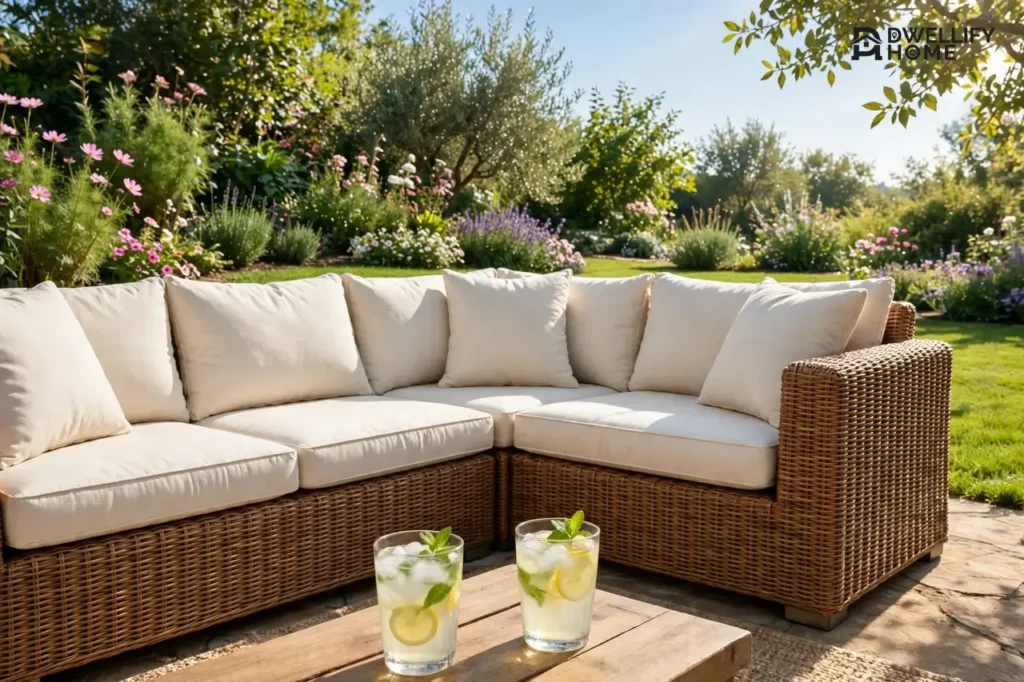
An outdoor wicker sectional is a modular lounge set with woven wicker-look seating that joins together in an L or U shape, usually a corner piece, one or two loveseats or armless chairs, and a coffee table, so it seats four to eight people like an outdoor living room. The word wicker names the weave, not the material, and that single fact explains most of the confusion in this market.
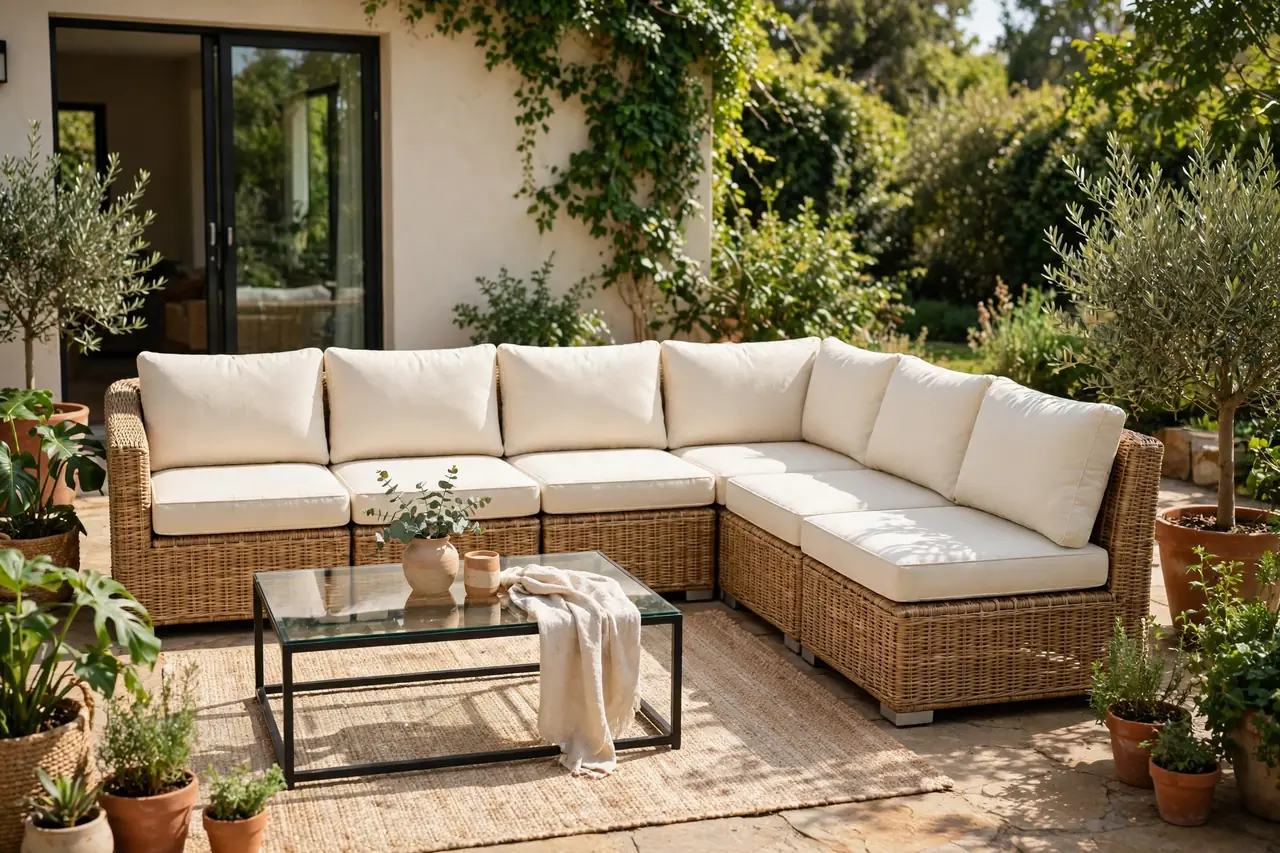
Most sets sold today use synthetic resin wicker, a plastic strand woven over a metal frame. A large example, the Roslyn outdoor wicker sectional, ships as four pieces — a right-facing loveseat, a left-facing loveseat, one armless chair, and a large corner unit — with one side running 119 inches and the other 95 inches, and it sells for $3,495 at Wicker Paradise. Smaller four-piece sets run closer to 90 inches on the long side and seat four. The modular design is the point: you can split the pieces apart, flip the corner to the other side, or pull one chair out for a fireside seat.
A sectional suits a patio where people gather to talk, not just to eat. It turns a bare slab into a room, and it seats more people per square foot than separate chairs. The trade-off is honest: a sectional is heavy to move, hard to store, and unforgiving if you buy the wrong size. Measure first, fall in love second, and the next section shows you the one material choice that decides everything else.
Wicker is a weave, not a material. Ask what the strand is made of before you ask the price.
Resin Wicker vs Natural Wicker: The One Decision That Matters
Resin wicker wins outdoors by a wide margin, because HDPE resin strands with UV stabilizers resist sun, rain, and mold for five to eight years, while natural rattan, willow, and water hyacinth swell in damp air, turn brittle in hard sun, and rarely survive more than a season or two outside. FurnFull puts it plainly: the version that survives real weather is resin wicker on powder-coated aluminum, and natural fibers go moldy or crack within a season or two.
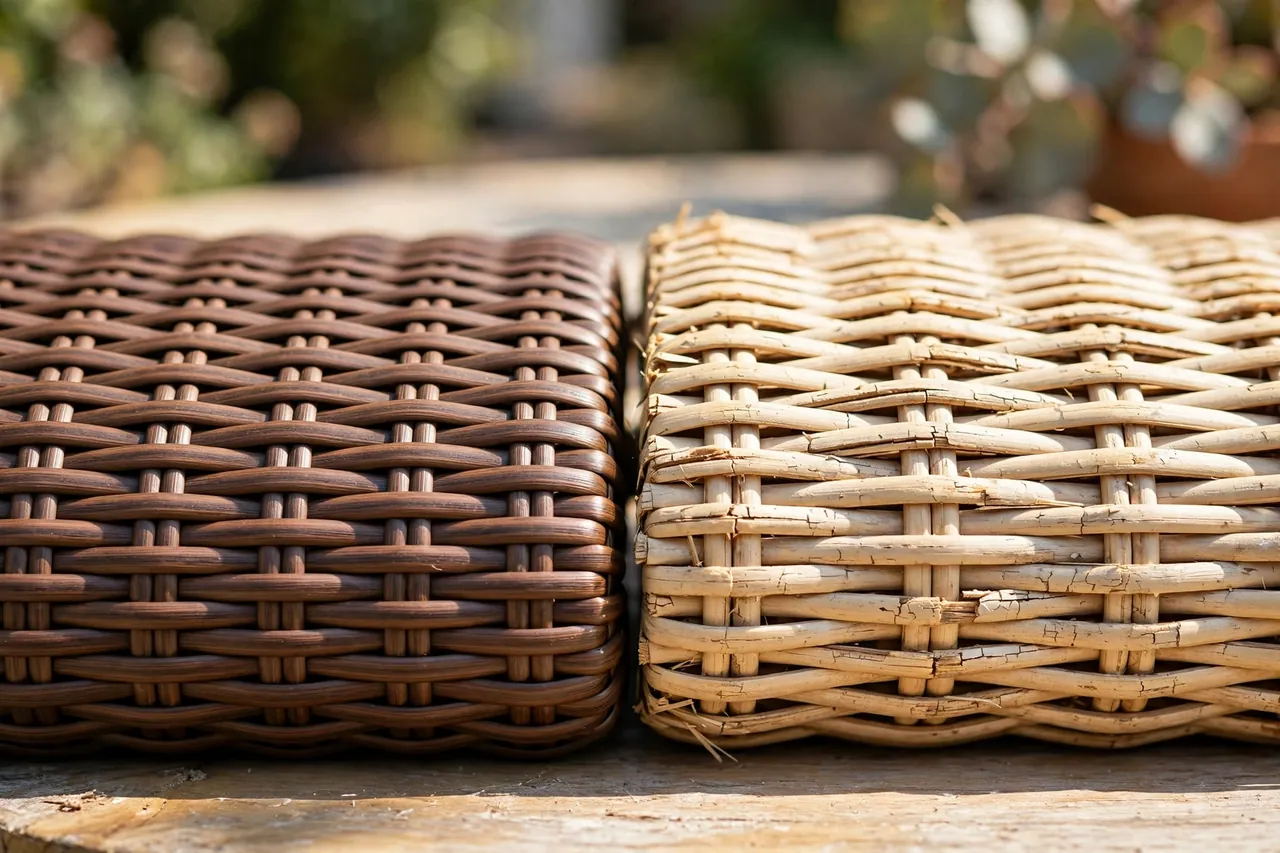
Three strands dominate the market, and they are not equal. HDPE, or high-density polyethylene, is the default for a reason: it stays flexible, holds color when UV-stabilized, and hoses clean. PVC wicker is stiffer, heavier, and cheaper to make, but it turns brittle in cold weather, which matters if your patio sees nights near 20°F. Natural rattan is a climbing palm, beautiful indoors and fragile outdoors, because it swells when the air is damp and cracks in hard sun. If a listing says “all-weather wicker” without naming the strand, treat it as a warning, not a promise.
Here is the quick comparison to carry into the store.
Resin, PVC, and natural wicker at a glance
| Strand | Outdoor life | Sun and rain | Best for |
|---|---|---|---|
| HDPE resin | 5–8 years | UV-stable, drains well | Most patios, coastal air |
| PVC wicker | 3–5 years | Stiffens and cracks in cold | Covered porches, mild climates |
| Natural rattan | 1–2 seasons | Swells, molds, turns brittle | Indoors or sunrooms only |
The frame matters as much as the strand. Aluminum will not rust, which makes it the right choice for coastal air and humid summers. Steel frames cost less, but they rust from the inside out once the coating chips, and you cannot see it happening until a leg gives way. Wall thickness is the number nobody prints in the bullet points: under about 1.2 mm the tubing dents when someone drops a chair leg, so look for 1.5 mm on a set you plan to keep, as FurnFull advises. A four-piece resin seating group under 80 pounds total means thin tubing and light foam, and you will feel it the first time you drag a chair.
Guess which fails first on a cheap set: the wicker or the frame? The answer surprises most buyers, because the weave usually looks fine long after the frame has started to wobble. That is why the quality check in the fifth section starts with the frame, not the weave. But first, the money question.
How Much Does an Outdoor Wicker Sectional Cost?
A good outdoor wicker sectional costs $400 to $900 for a four-piece resin set, $1,100 to $2,800 for a mid-tier four- or five-piece set with better cushions, and $3,000 to $5,600 for a premium six-piece or wood-frame set, based on price tiers published by FurnFull and the Ashley sectional buying guide in 2026. The sweet spot for most patios is $400 to $900: thicker aluminum, a denser PE weave, and five-inch cushions with removable covers.
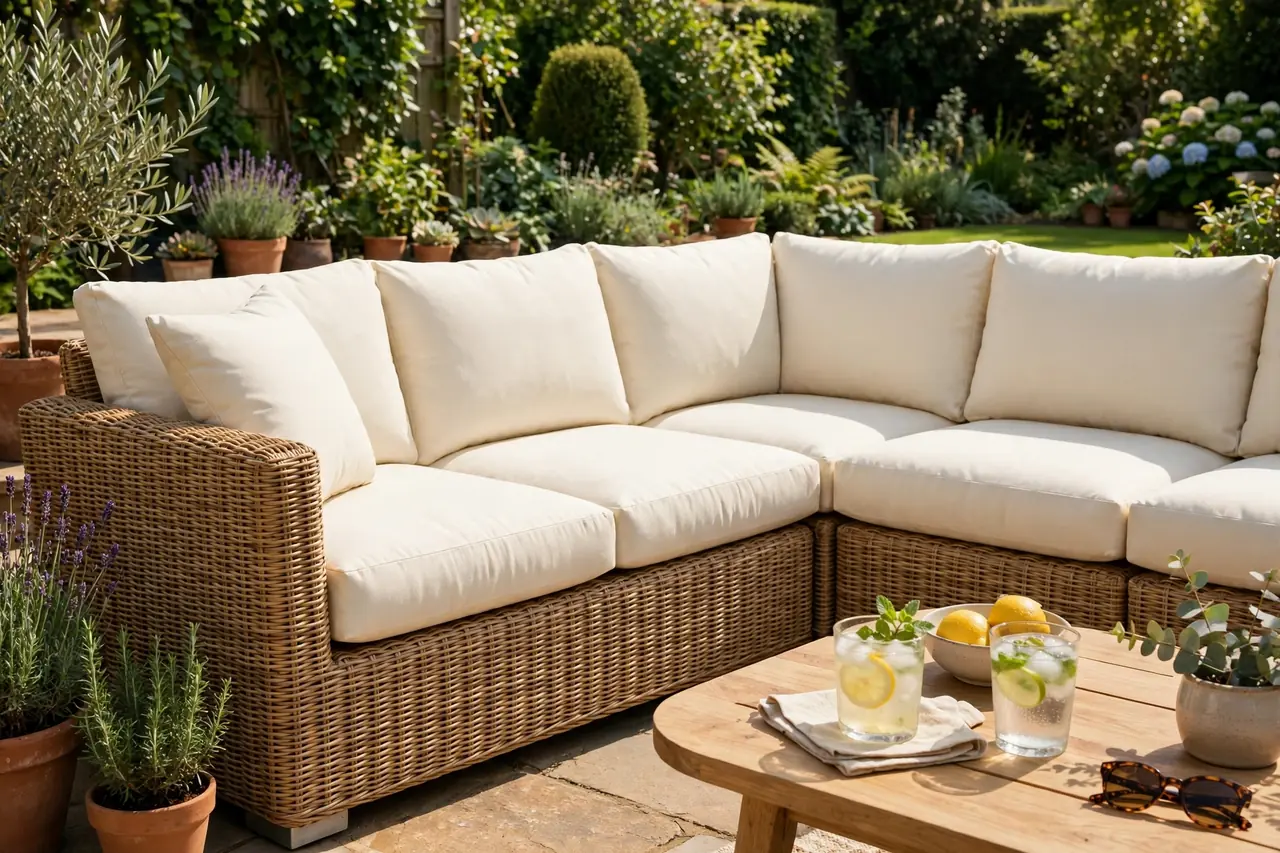
Real checked prices show the spread. A six-piece Rattaner all-weather wicker sectional lists at $349.99 on Amazon, with prices accurate as of November 6, 2026, per Inside Decors. At the other end, the Roslyn large sectional at Wicker Paradise sells for $3,495 with Sunbrella fabric cushions and a handwoven HDPE weave over an aluminum frame. Ashley’s range runs $1,100 to $1,600 for entry three-piece sets, $1,800 to $2,800 for mid-tier four- to five-piece sets, and $3,000 to $5,600 for premium sets. Most owners report satisfaction with sets priced between $1,500 and $2,500, and spending more rarely improves durability in proportion.
Here is what each tier actually buys you.
What your money buys at each price tier
| Price tier | What you get | Realistic life |
|---|---|---|
| $180–$350 | Thin steel or aluminum, flat-strand weave, 3-inch polyester cushions | 2–3 seasons |
| $400–$900 | Thicker aluminum, dense PE weave, 5-inch cushions, removable covers | 5–8 years |
| $1,500–$2,500 | HDPE weave, Sunbrella or Nuvella cushions, welded frames | 8–10 years |
| $3,000+ | Premium weave, hardwood or heavy aluminum, designer cushions | 10+ years |
Watch the cushion math too. Thin three-inch polyester cushions flatten within a season, while five-inch high-density foam with removable, washable covers keeps its shape and lets you clean a spill instead of living with it. Premium cushions can last 8 to 10 years with proper care, according to Wicker Paradise, while cheap ones need replacing in two. A $200 cushion replacement on a $400 set is half the set’s price, so the cushion is not a detail. It is half the purchase.
Buy the $400 to $900 tier unless your patio is covered and your use is light. Below that, you are renting furniture for two summers.
What Size Wicker Sectional Fits Your Patio?
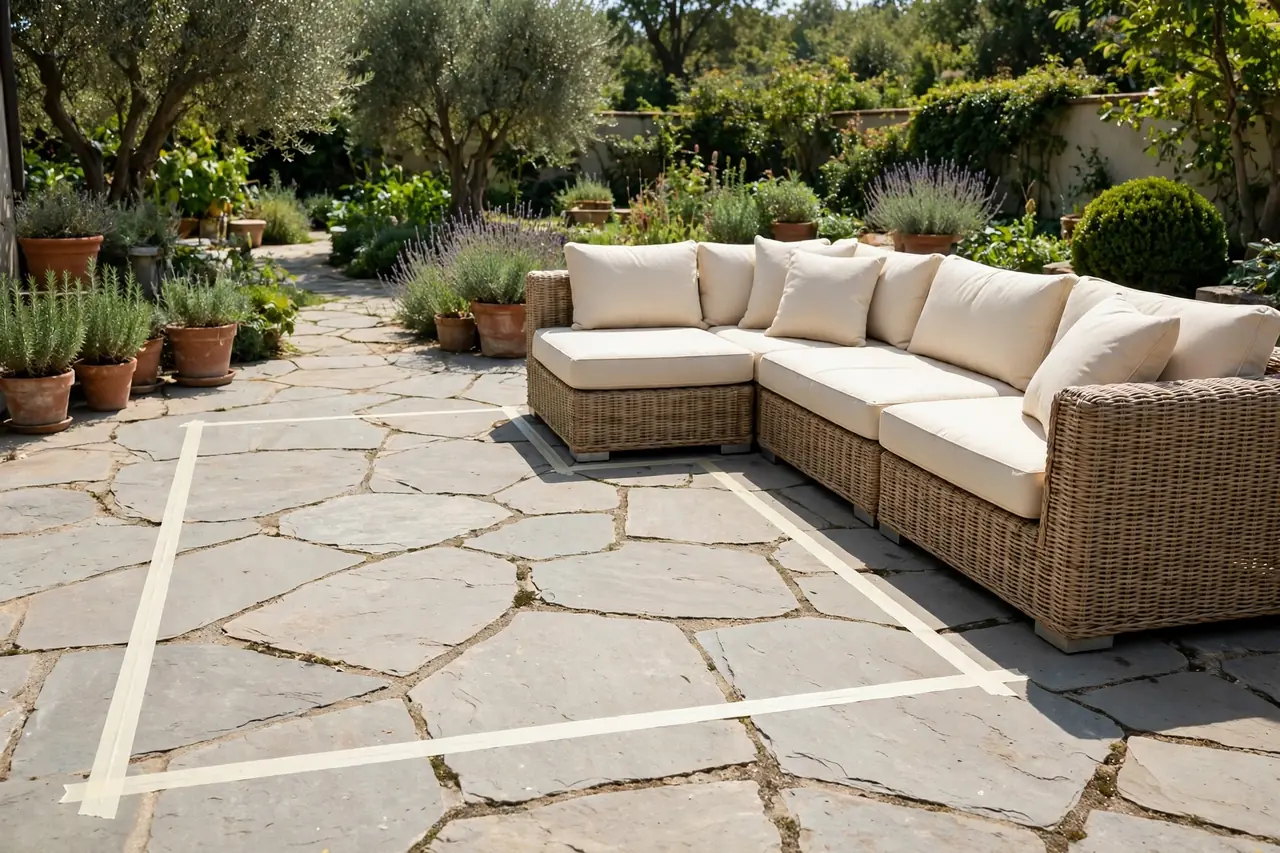
A wicker sectional fits your patio when you leave 30 to 36 inches of walkway around it, 14 to 18 inches between the sofa edge and the coffee table, and about 18 inches of pull-out space behind any chair, because a sectional that eats the whole patio turns a lounge into an obstacle course. Measure the patio, tape the footprint on the ground, and walk it before you order.
Wicker sectionals are generous, and that is the appeal and the problem. A curved sectional that looks reasonable in a showroom can eat a 10-by-10 patio and leave you squeezing past the fire pit. Working numbers from FurnFull: dining chairs need about 18 inches of pull-out space behind them, walkways between furniture want 30 to 36 inches, and a coffee table sits 14 to 18 inches from the sofa edge — closer feels cramped, farther feels like a waiting room. A sectional is out, and so is any sofa longer than 60 inches, once you allow walking space on a small patio.
Follow this sizing routine before you buy.
- Measure the patio. Write down the length and width, then subtract 30 inches on every side where people walk.
- Tape the footprint. Use painter’s tape on the patio to mark the sectional’s length and depth, then place your current chairs inside the tape.
- Walk the tape. Carry a tray of drinks through the gaps. If you turn sideways, the set is too big.
- Check the door. Measure the gate and the patio door, because a 119-inch side does not bend around a 36-inch gate.
- Leave the table gap. Keep 14 to 18 inches between the sectional and the coffee table so feet and drinks both reach.
Small patios are not a reason to skip a sectional, but they are a reason to pick the right one. A compact four-piece set with an armless corner seats four in about 90 inches, while a U-shaped six-piece set needs a patio at least 12 feet wide to breathe. Our outdoor furniture for small spaces guide shows compact layouts that work when every inch counts. The next section is the one that saves you from the most common regret of all: a beautiful set that wobbles by August.
Frame, Cushions, and Weave: The 5-Point Quality Check
A quality wicker sectional passes five checks: a powder-coated aluminum frame with tubing around 1.5 mm thick, HDPE resin strands at least 1.2 mm in diameter that feel solid and slightly flexible, five-inch high-density foam cushions in a fade-resistant fabric such as Sunbrella or Nuvella, a total weight that feels substantial rather than hollow, and a weave tight enough that you cannot see daylight through the gaps.

Run the checks in this order, because the order is the trick. Start with the frame, not the weave, since the weave is the part sellers polish and the frame is the part that fails. Lift one corner and push it sideways: a good frame stays square, a thin one racks and twists. Press a wicker strand between your fingers: quality wicker feels solid and slightly flexible, not brittle, and thin strands under 1.2 mm in diameter that feel hollow when pressed signal lower quality that will not last, according to Inside Decors.
Then check the cushions. Unzip a cover and look at the foam: high-density foam springs back when you press it, while cheap sponge stays dented. Look for Sunbrella, Nuvella, or a similar solution-dyed acrylic on the tag, because these fabrics resist mold, fading, and stains far better than plain polyester. Sit for a full minute, then stand up and watch the cushion: if it holds a dent, it will hold a dent all summer.
The last two checks take ten seconds each. Check the weave density by holding your hand behind a panel and looking for gaps — a loose weave sags under weight and lets rain pool behind the cushions. Check the feet: plastic glides that sit flat protect both the frame and your patio, and adjustable glides fix a wobble on uneven pavers without shimming. Five checks, two minutes, and you will know more than the listing tells you. The care routine below is what turns those five checks into five good years.
Check the frame first, the weave second, and the cushions third. The listing shows them in the opposite order for a reason.
How to Care for a Wicker Sectional So It Lasts
A resin wicker sectional lasts five to eight years with a simple routine: hose it down monthly, scrub it with mild soap and a soft brush twice a season, keep the cushions dry or covered, and store it under a cover or in a sheltered spot through winter, because the sun and standing water do the damage, not the rain itself. Wicker Paradise recommends protective covers or sheltered placement to extend longevity, even for outdoor-rated wicker.
Cleaning is easier than most owners expect. Hose the weave to push out dust and pollen, then wash with warm water, a drop of dish soap, and a soft brush, working the brush along the weave rather than across it so you do not snag strands. Rinse well and let the sun dry it: resin drains fast, which is one of its real advantages over fabric. Never use a pressure washer on a close setting, because it can split strands and force water into the frame joints. Our how to store outdoor furniture guide covers winter storage in detail, and our how to care for outdoor furniture guide covers the seasonal routine for every material.
Cushions need their own habit. Brush off crumbs and pollen weekly, because ground-in dirt is what stains, not the rain. Wash removable covers by hand or on a gentle cycle with mild detergent, and never put foam inserts in a dryer. If a cushion gets soaked, stand it on edge in the sun so the water drains instead of pooling inside. A cushion box or deck box keeps cushions dry between uses, and our outdoor covers for furniture guide shows which cover materials actually breathe instead of trapping damp.
Winter is the one season that punishes laziness. In a cold climate, bring the cushions inside and cover the frames, because freeze-thaw cycles work water into tiny strand cracks and widen them each winter. In a mild climate, a breathable cover and a monthly hose-down are enough. That number from the introduction — the one that decides five years versus two — is the frame tubing thickness, and now you know why: thin tubing dents, dents trap water, and trapped water rusts steel or cracks resin at the joint. The misconception below is the last trap.
What Most People Get Wrong About “All-Weather” Wicker
Most people get “all-weather” wrong by treating it as a promise, when it is really a description of the strand: “all-weather” means the resin can sit in rain and sun without rotting, not that the set needs no care, never fades, and survives every winter uncovered. Even the best HDPE wicker fades slowly in desert sun, and even the best cushions grow mildew if they stay damp under a non-breathable cover.
The second wrong belief is that natural wicker is the premium choice because it costs more in a boutique. Natural rattan is the premium choice indoors, where its warmth and hand feel shine. Outdoors, it is the fragile choice, and the price tag is paying for the look, not the lifespan. The third wrong belief is that a heavier set is a better set: weight helps stability, but a heavy steel frame that rusts is worse than a light aluminum frame that does not. Judge the metal, not the scale.
The fix is simple and cheap: a breathable cover, a monthly hose-down, and cushions that come inside when the season ends. That is the whole secret, and it costs less than one replacement cushion. The guides below take you deeper into the pieces around your sectional — the cushions, the layout, and the matching sets.
Related Guides
Your sectional is one piece of a patio that works as a room. These guides cover the pieces around it.
- Sectional sofa outdoor — the broader sectional buying guide, including modular and U-shaped layouts beyond wicker.
- L-shaped patio furniture — how L-shaped layouts fit corners and small patios.
- Modular outdoor furniture — rearranging pieces as your patio and your guest list change.
- Wicker outdoor furniture — the full wicker guide, from chairs to dining sets.
- Rattan outdoor furniture — real rattan versus resin rattan, and where each belongs.
- Outdoor sectional cushions — cushion sizes, foam, and replacement covers for sectionals.
- Resin patio furniture — the resin family beyond wicker, including HDPE lumber.
- Weather-resistant outdoor furniture — which materials survive sun, rain, and salt air.
- Outdoor sectional couch — the patio-side guide to sectional couches and their layouts.
- Replacement cushions for patio furniture — when to replace cushions instead of the whole set.
- Patio conversation furniture sets — the four-piece alternative when a full sectional is too big.
Frequently Asked Questions
What is the difference between natural wicker and synthetic wicker?
Natural wicker is a weave made from plant fibers such as rattan, willow, or water hyacinth, and it looks warm and handmade but swells, molds, and cracks outdoors within a season or two. Synthetic wicker is a weave made from HDPE or PVC resin over a metal frame, and it resists sun, rain, and mold for five to eight years. Outdoors, synthetic wicker is the only sensible choice.
Is your wicker furniture weatherproof?
Outdoor wicker made from HDPE resin over an aluminum frame is weatherproof in the practical sense: it will not rot, rust, or grow mold from rain alone, and premium synthetic wicker resists cracking and fading for years. It still needs a cover in winter and a monthly wash, and the cushions should come inside during long wet spells.
Will the wicker crack, peel, or fade?
Premium synthetic wicker resists cracking and fading for years, but cheap PVC wicker turns brittle in cold weather and unstabilized resin goes chalky and pale after one summer of direct sun. Check the listing for “HDPE” and a line about UV stabilizers, and press a strand: it should feel solid and slightly flexible, never hollow or brittle.
Can wicker furniture stay outside year-round?
Outdoor wicker can stay outside year-round, but protective covers or sheltered placement extend its life well beyond an uncovered set. In cold climates, bring the cushions inside for winter and cover the frames so freeze-thaw cycles cannot widen tiny cracks. In mild climates, a breathable cover and a monthly hose-down are enough.
How long do outdoor cushions last?
With proper care, premium cushions can last 8 to 10 years depending on exposure, while cheap polyester cushions flatten and fade within two seasons. Keep them dry, brush off dirt weekly, wash removable covers gently, and store them inside over winter. Replacing cushions costs far less than replacing the whole sectional.
Measure your patio, tape the footprint, and run the five-point check before you pay. A resin wicker sectional in the $400 to $900 tier, on an aluminum frame with five-inch Sunbrella or Nuvella cushions, gives most patios five to eight good years — and the next thing to decide is the layout around it, which starts with the conversation set or the L-shaped plan in the guides above.