To organize your home, declutter one small zone first, give everything you keep a home close to where you use it, and finish that zone completely before you start the next one. Work in 15-minute sessions, one room at a time, and the whole house falls into order in about four weeks. The system that works is not the prettiest one — it is the one you can keep up on a busy Tuesday night.
This guide walks you room by room — kitchen, bedroom, bathroom, office, playroom, and entryway — with the exact decisions that make each space stay organized. One common habit quietly undoes every system people build, and it is in the section on what most people get wrong, so keep reading.
What Does It Mean to Organize Your Home?
Organizing your home means every item has one clear place, and that place sits near where you actually use the item. Cooking tools live by the stove. Daily toiletries live by the sink. Keys live by the door. Store each item where you use it, not where it looks tidy. A system built on real habits survives. A system built on how a room should look falls apart in a week.
Organizing is not decluttering, and the order matters. Decluttering removes what does not belong. Organizing arranges what stays. If you organize first, you store clutter more neatly — and the clutter comes back, because nothing actually left the house. Our pillar guide on decluttering with a checklist clears the excess first; this guide builds the system on what remains. If you have not decluttered yet, read that guide first, then come back here.
Organizing is also not buying bins. Bins are the last step, not the first. Measure the shelf, count what is staying, and only then buy the container that fits the space and the items. Buying storage before sorting is how homes end up with a closet full of empty bins and the same mess on the counters.
Start Here: The 15-Minute Room-by-Room Method
Pick the room that bothers you most each day — the one that catches your eye every time you walk past it. That room gives you the biggest payoff for the smallest effort, and the payoff pulls you into the next room. Do not start with the hardest room in the house. Start with the one whose fix you will notice tonight.
Follow these six steps in every zone:
- Define the zone. Pick one drawer, shelf, surface, or cabinet — never a whole room at once.
- Remove obvious trash and recycling first. Clear the easy wins before you make hard decisions.
- Group what remains into keep here, move elsewhere, donate, and decide later.
- Reduce before you store. Let go of duplicates and broken items now, while the pile is in front of you.
- Assign each kept item a home near its point of use.
- Finish the zone. Carry “move elsewhere” items to their rooms and take donation bags out the same day.
Set a timer for 15 minutes and stop when it rings, even mid-drawer. A zone you can finish in one session teaches you the method. A room you empty completely and cannot finish teaches you only that organizing is miserable. Finish one small zone completely before you open the next.
Keep one “decide later” box for the few items you truly cannot judge today. Label it with the date, put it in a closet, and set a calendar reminder for two weeks out. When the date comes, decide on every item in the box without reopening the debate — most of them will leave without a second thought, because two weeks of not missing them is the answer. The box works only with a date on it. Without the date, it is just hidden clutter with a nicer name.
If you can only organize one room this week, make it the room you use most. Our guide on how to organize a room walks through a single-room reset in one evening, and it is the best first test of this method.
Organize the Kitchen: Zones That Cook for You
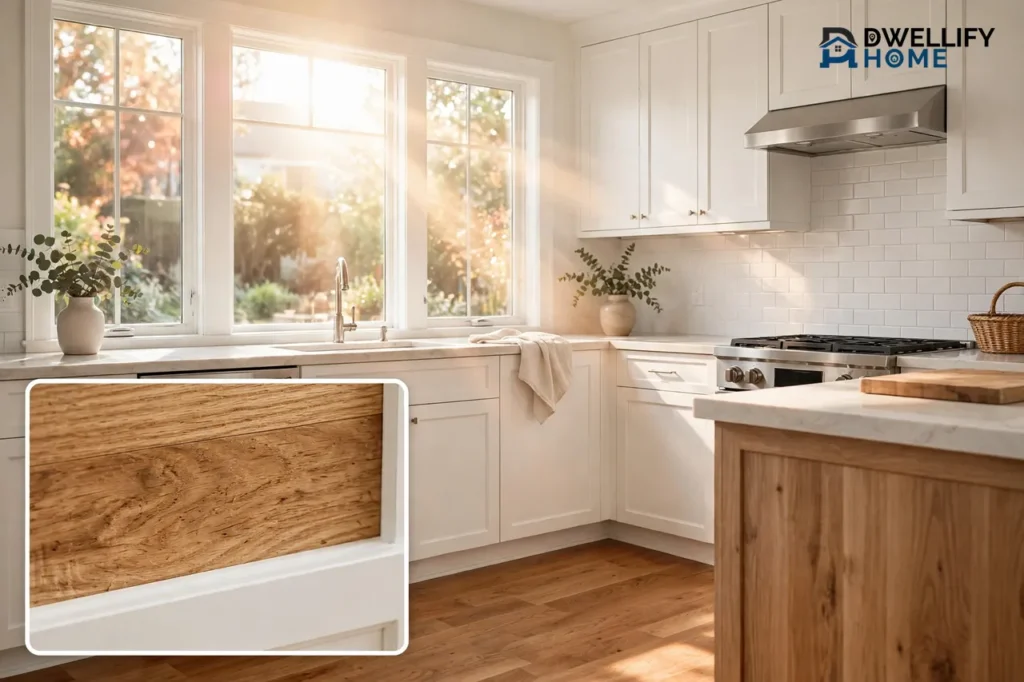
A kitchen works when it is split into zones: cooking, prep, cleaning, and food storage. Put pots and pans beside the stove, knives and cutting boards at the prep counter, dish soap and towels at the sink, and dry food in the pantry. When every zone holds only its own tools, cooking gets faster and cleanup gets shorter.
Start with one work surface. Clear enough counter for food prep, then group cookware, utensils, pantry food, and cleaning products separately. Toss expired food before you buy a single container — do not move stale, leaking, or pest-damaged food into pretty jars just to make the pantry look organized. Deal with the item first, then organize what is left.
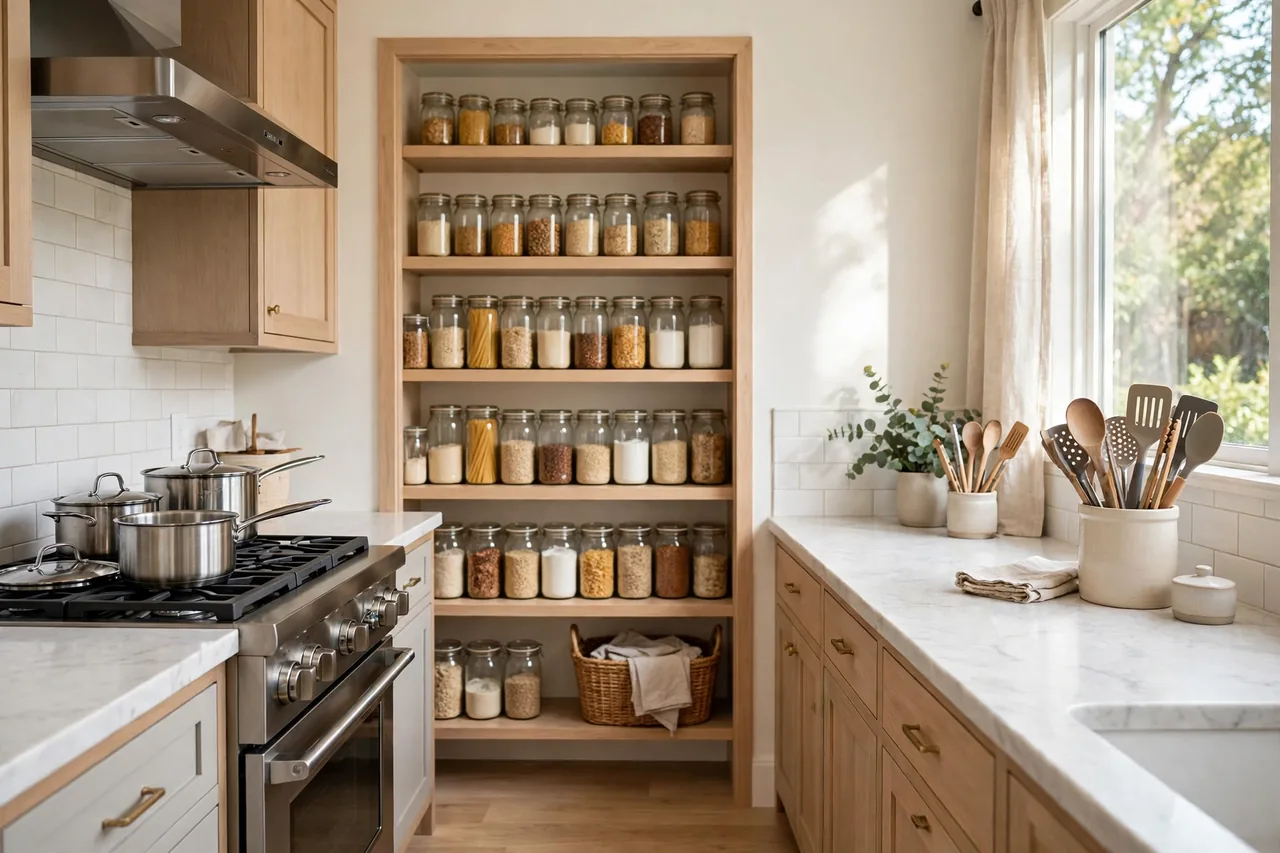
Keep daily items at eye level and between waist and shoulder height. Heavy pots go low, where you can lift them safely. Rarely used appliances go high or into a deep cabinet. Clear containers help for dry goods like rice, flour, and pasta, and a label on each one stops the whole family from opening five jars to find the sugar.
The pantry deserves its own zone rules. Group food by meal, not by package size: breakfast foods together, baking supplies together, snacks together, canned goods together. Put the items you use daily at eye level, heavy items low, and backstock on the top shelf where you can see it but do not need it daily. When you can see everything at a glance, you stop buying duplicates of food you already own — and the weekly shop gets shorter and cheaper.
Small kitchens feel bigger with the right color on the walls. If your kitchen is tight and dark, these paint colors that make a small kitchen look bigger show how warm whites and soft blues open the space without moving a single wall. Paint is the cheapest square footage you will ever buy.
Organize a Small Apartment Without More Space
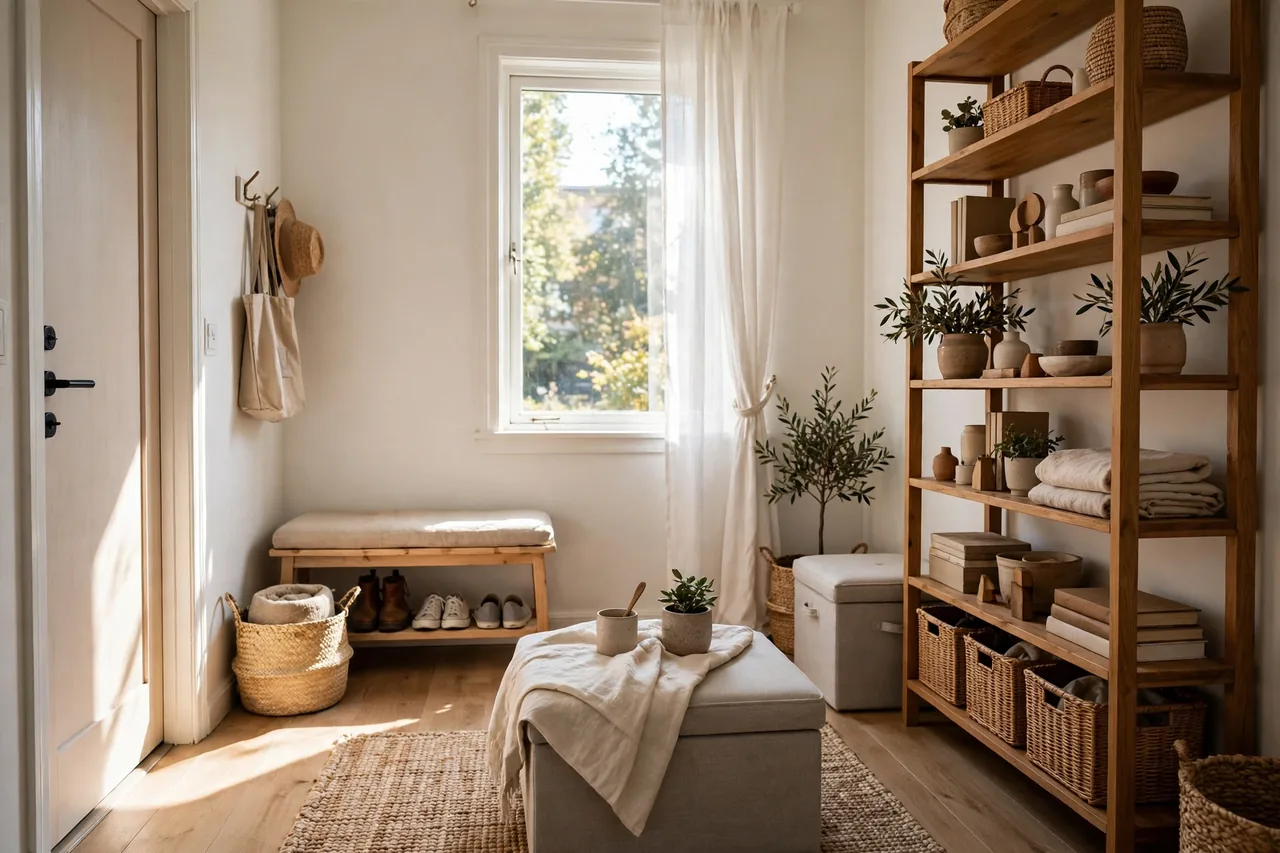
A small apartment does not need more space. It needs every inch to do one clear job. The rule is vertical: when the floor is full, the walls take over. Tall shelves, hooks behind doors, and the space above the toilet turn dead air into storage without adding a single piece of furniture.
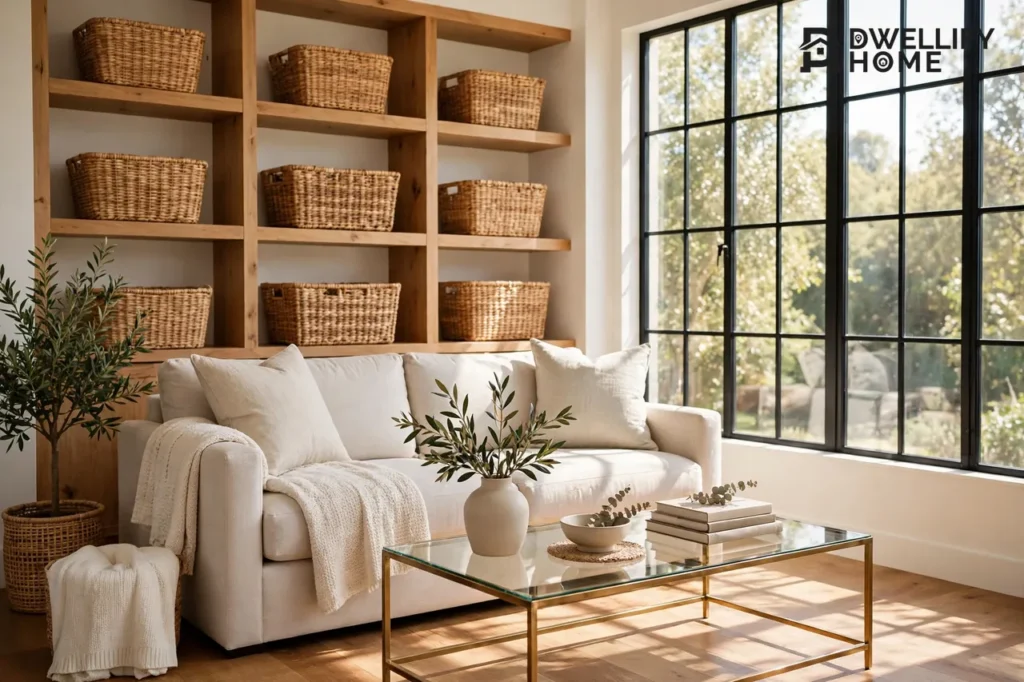
Give every zone one basket. One basket for the living room throws, one for bedroom laundry, one for entryway shoes. When a basket has one job, clutter stops wandering from room to room. When a basket holds everything, it holds nothing — it is just another pile with handles.
Use furniture that does two jobs. An ottoman that stores blankets, a bench by the door that holds shoes, a bed with drawers underneath — each piece earns its floor space twice. In a studio, a dresser can serve as a room divider, a TV stand, and clothes storage all at once. Our full guide on how to organize a small apartment maps each of these ideas room by room for rentals, where you cannot drill or build.
Small homes also benefit from lighter walls and fewer visual breaks. The Spruce’s tips to make a small house look bigger explain how light paint colors and unbroken sightlines make a tight home feel roomy — a useful companion to the storage work in this section.
The Bedroom and Closet: A System You Can Keep
The bedroom should help you rest, not remind you of unfinished jobs. Clear every flat surface first — nightstand, dresser top, and the chair that collects clothes. A clear surface takes two minutes a night to keep clear, and it changes how the whole room feels when you walk in.
In the closet, group clothes by type and then by color: shirts together, pants together, dresses together. Hang what you wear weekly at eye level. Fold what you wear rarely onto high shelves. Keep one empty hanger section open — an overstuffed closet is a closet that cannot stay organized, because nothing has room to move.
Use the space under the bed for out-of-season clothes and spare bedding in labeled flat boxes. Label the short end of each box, so you can read it without pulling every box out. And keep the floor clear: shoes belong in one place, either a rack by the door or a single shelf, never scattered across the bedroom floor.
Try a capsule approach for the closet if decisions overwhelm you. Pick 30 to 40 pieces for the season — tops, bottoms, dresses, shoes, and outerwear — and store everything else out of sight. Getting dressed gets faster, laundry gets simpler, and the closet finally has breathing room. When the season changes, swap the capsule, and let go of anything you did not reach for all season. A closet that holds only what you wear is a closet that organizes itself.
Nightstands deserve the same rule as the closet: one drawer, one purpose. The top holds a lamp, a book, and water. The drawer holds charging cables, lip balm, and whatever you reach for in the dark. If the drawer holds more than that, empty it, sort it with the four-category method, and put back only what belongs beside a bed.
The Bathroom: Small Room, Big Rules
Bathrooms fail when everything lives on the counter. Move daily items into the cabinet or a small tray, and keep the counter for soap and one or two items you truly use every morning. A clear counter makes a small bathroom feel twice as big, and it takes thirty seconds to wipe down.
Organize cupboards by person and by use. One shelf per person in a shared bathroom stops the daily hunt for your own toothpaste. Group like items — hair care together, skin care together, first aid together — and put the least-used items on the highest shelf. Our guide to organizing bathroom cupboards shows shelf-by-shelf layouts for deep and narrow cabinets.
Towels need their own system, especially in a small bathroom. Roll instead of fold to save shelf space, keep one towel per person in use plus one spare, and store extras where they dry fully between uses. Our guide to towel storage for a small bathroom covers hooks, shelves, and over-door racks that work in rentals without drilling.
Use the space above the toilet. A small shelf or cabinet there holds spare toilet paper, towels, and cleaning supplies that otherwise crowd the vanity. Just keep cleaning chemicals away from medicines and out of reach of small children, and never store medicines in a damp bathroom cabinet if the label says to keep them dry.
The Home Office and Kids’ Spaces
A home office works when the desk holds only the work of today. Clear the desktop to the essentials — laptop, lamp, notebook, pen — and give everything else a drawer or shelf. Cables go in one labeled box or a cable tray under the desk, not in a tangle behind the monitor.
Arrange office furniture by how you work, not by how the room looks empty. The desk faces the door or the window, the chair has room to roll back, and the printer sits within arm’s reach if you print daily — or in another room if you print once a month. Our guide on how to organize office furniture walks through desk, chair, and storage placement for small rooms and shared spaces.
Do not forget the digital side of the office. A messy desktop on your computer costs as much time as a messy desk: files you cannot find, downloads scattered everywhere, and a dozen open tabs you will never read. Create five folders — Work, Money, Home, Kids, and Archive — and file everything into one of them at the end of each day. Empty the downloads folder weekly, back up the important folders monthly, and your computer stays as organized as the room around it.
Kids stay organized when the system is theirs to run. Give each child one labeled bin per toy type, kept low enough to reach, and one simple rule: one toy out, one toy back. Our guide on how to help kids stay organized shows age-by-age routines that actually stick, from a five-year-old’s toy bins to a teenager’s homework station.
The playroom follows the same rule at a bigger scale. Low open bins, one per toy type, let small kids clean up alone — and a room a child can tidy alone stays tidy far longer than a room only adults can fix. See our playroom organization guide for bin systems, toy rotation, and a cleanup routine kids will follow without a fight.
Organizing Paper, Bills, and the Command Center
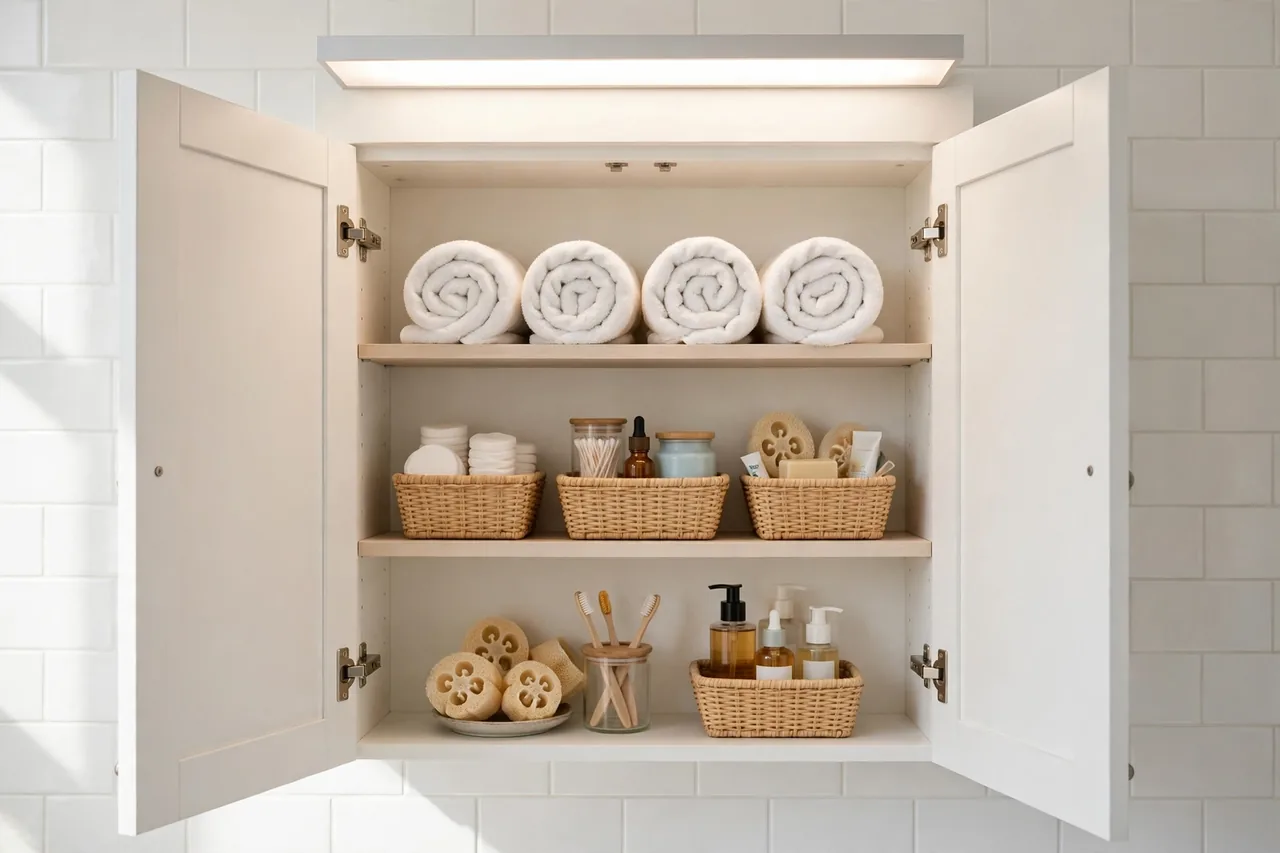
Paper is the clutter that multiplies while you sleep. Mail, school forms, bills, and receipts arrive daily, and without a system they become piles on every flat surface. The fix is a command center: one wall or shelf near the entryway that holds everything paper-related in exactly four spots.
Set up four trays or folders and label them clearly: Action (needs a reply this week), Pay (bills to pay), File (keep for records), and Recycle (everything else). Sort the mail standing at the door — junk goes straight to recycling, and the rest lands in one of the four trays. Never set unsorted mail down on the kitchen counter. A counter is a workspace, not a filing cabinet.
Keep a family calendar at the command center, paper or digital, where every appointment, school event, and bill due date lives in one place. When everyone checks the same calendar, nobody misses the dentist appointment or the permission slip deadline. Add a small whiteboard for the week’s meals and one running shopping list, and the nightly “what’s for dinner” debate mostly disappears.
For bills, go paperless wherever you can, and set up automatic payments for anything fixed — rent, insurance, utilities. What cannot be automatic gets a due-date reminder on the calendar the day it arrives, not the day it is due. Sort paper at the door, or it owns every surface in the house. The EPA’s recycling guidance tells you what paper and packaging belongs in the bin, so the junk mail leaves the house the same day instead of joining the pile.
The Coat Closet and Entryway: The Landing Zone
The entryway is the smallest room with the biggest job: it catches everything that enters and leaves the house. Give it a landing zone — a bench or a row of hooks, a shoe tray, and one small tray for keys and mail. Everything that arrives gets caught here instead of wandering to the kitchen counter.
The coat closet holds only what the season needs. Out-of-season coats move to a back closet or under-bed storage. Each person gets two or three hooks, not an endless rod, and the closet floor holds shoes only — no bags of mystery items. Our guide to coat closet organization shows how to fit a whole family’s outerwear into one small closet with hooks, bins, and a shelf.
Paper is the entryway’s worst enemy. Sort mail the moment it arrives: recycle junk at the door, file bills in one tray, and act on anything needing a reply within two days. The EPA’s recycling guidance explains what belongs in the recycling bin, so the junk mail leaves the house the same day it arrives instead of joining a pile on the counter.
What Most People Get Wrong About Organizing
Most people believe organizing starts with shopping. It does not. The first mistake is buying containers before decluttering — you end up storing things you do not need in bins that do not fit the shelf. Declutter and measure before you shop for storage.
The second mistake is starting everywhere at once. Emptying three rooms in one weekend creates a bigger mess than the one you started with, and decisions get harder with every pile. One finished zone beats five half-open rooms every time.
The third mistake is making too many categories. A system with twelve tiny categories is a system nobody in the house can remember. Use categories simple enough that a child or a guest can put things away correctly: keep here, move elsewhere, donate, trash. That is enough.
The fourth mistake is hiding unsorted clutter. A full closet is not organized just because the door closes. Hidden clutter comes back the moment you open the door looking for something — and it comes back with interest, because you forgot what was inside. The habit that quietly undoes every system is this one: shoving things out of sight instead of deciding where they belong. Decide now, in fifteen minutes, or decide later, in an hour, when the pile has grown. Those are the only two options.
How to Keep Your Home Organized After the Big Push
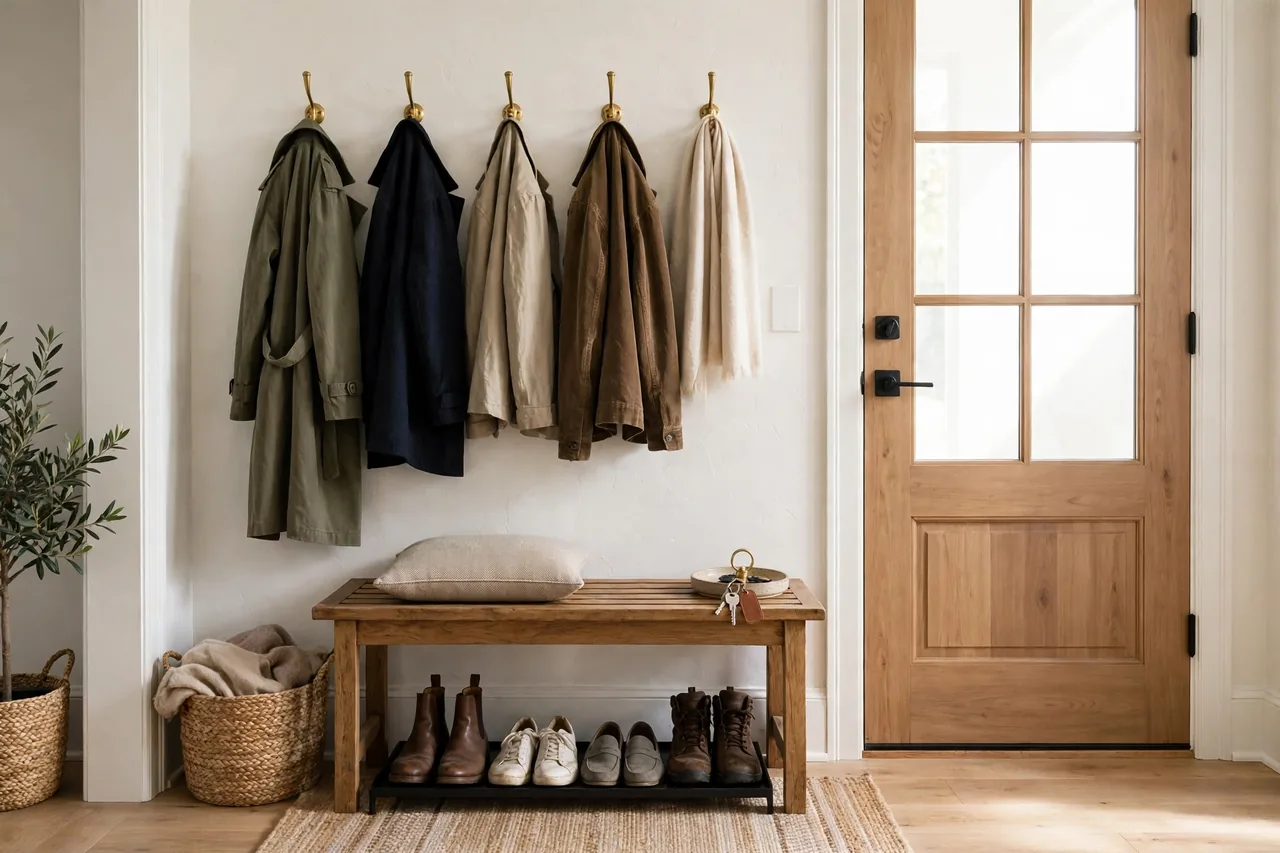
An organized home stays organized through small routines, not big weekends. Three habits do almost all of it. First, a daily ten-minute reset: after dinner, walk the house with a basket, return stray items to their rooms, and clear the kitchen counter. Ten minutes a night beats a full Saturday every month.
Second, a weekly reset. Pick one evening a week for a thirty-minute pass: laundry folded and put away, fridge checked for expired food, one surface deep-cleaned, and the donation bag taken out if it has anything in it. Put it on the calendar like any other appointment, because a habit without a time slot is a wish.
Third, one in, one out. Every new item that crosses the threshold sends one old item out. A new shirt means an old shirt leaves. A new toy means an old toy leaves. This single rule stops clutter from rebuilding, and it works because it is decided at the front door, not in a moment of guilt months later. One in, one out is the rule that keeps the system alive.
Watch for drift. If clutter keeps collecting on the same surface, the storage is wrong — too far away, too full, or too hard to use. Redesign that one spot instead of blaming your willpower. Systems fail at the point of friction, and friction is fixable: move the bin closer, empty it more often, or make the label bigger.
Rotate one room per season for a deeper pass. Spring is for the closet and the garage, summer for the playroom and the pantry, fall for the office and the entryway, winter for the linen closet and the kitchen cabinets. A seasonal rotation means no room ever goes a full year without attention, and no single weekend ever has to carry the whole house. Put the four dates on the calendar now — spring, summer, fall, winter — and the year organizes itself.
Finally, tie organizing to the rest of your home care. An organized home cleans faster, and a clean home stays organized longer. Our home organization hub ties every room system together, and when you are ready for the daily and weekly rhythm, our daily cleaning schedule shows how the reset fits into a real week.
Related Guides
Go deeper with the guides in this family: how to organize a small apartment, how to organize office furniture, how to help kids stay organized, playroom organization, coat closet organization, organizing bathroom cupboards, towel storage for a small bathroom, and how to organize a room. Start the whole job with our home organization hub.
Frequently Asked Questions
What is the first thing to do when organizing a very messy house?
Clear immediate safety hazards and obvious trash, then choose one small high-use zone that you can finish completely. A kitchen counter, an entryway, or one drawer is enough — a finished zone builds the momentum for the next one.
Should I organize by room or by category?
For an overwhelming home, a small physical zone is often easier to finish. Category-based organizing can be useful later, when you are ready to gather similar items from several locations into one place.
Should I buy storage bins before decluttering?
Usually no. Decide what you are keeping and measure the available space first, then buy only the storage that solves a defined problem. Bins bought early are often the wrong size for what is left.
How do I keep the house organized afterward?
Give frequently used items easy homes, avoid overfilling storage, and use brief recurring resets. If clutter repeatedly collects in one place, redesign that storage point instead of relying on willpower.
Should I declutter before I organize?
Yes. Organizing things you do not need just means you store clutter more neatly. Go through one space at a time, sort everything into keep, donate, and toss, and only then build the system for what remains.
Your home does not need a perfect system. It needs a simple one, built zone by zone, that your whole household can keep up without thinking about it. Start with one drawer tonight — by next month, the whole house can work the way you always wanted it to, and the next room will be easier than the last, one zone at a time.