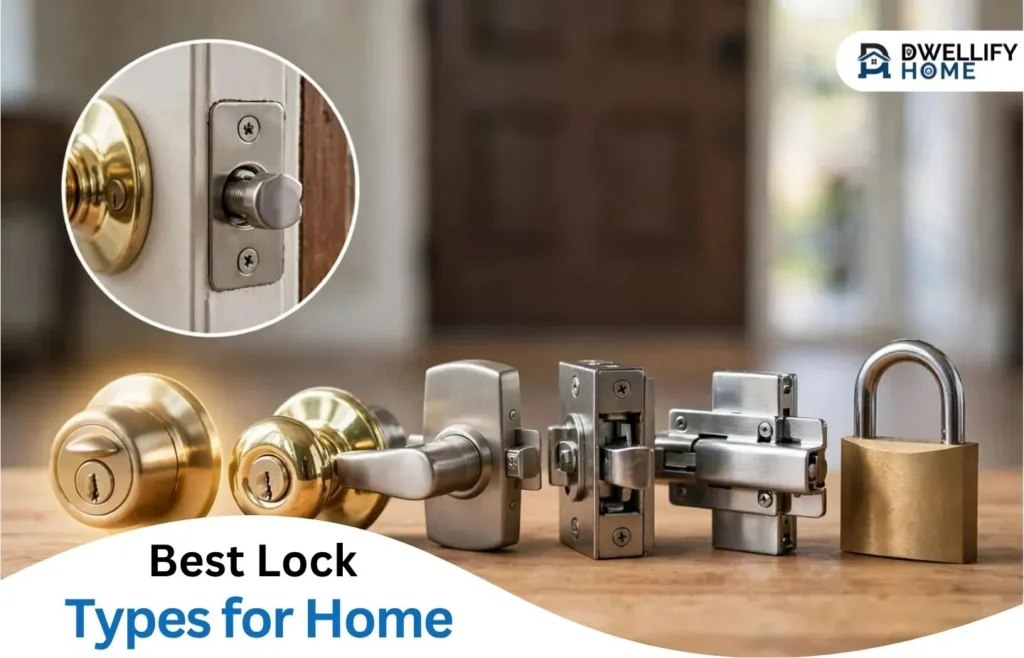
There is no single best lock type for a home, because every door has a different job. The best lock types for home entry doors start with a deadbolt: a Grade 1 or Grade 2 single-cylinder deadbolt is the right main lock for almost every front, back, and side door. Inside the home, simple privacy knobs and levers are enough, sliding doors need their own kind of lock plus a backup, and padlocks belong outdoors, not on the house.
At DwellifyHome, this guide skips product rankings on purpose. Instead, it explains the 8 main lock types in plain words, shows exactly which door each one belongs on and which door it should never be used on, and ends with a simple check you can walk through in your own home tonight.
The Short Answer: Which Lock Type Goes on Which Door
If you only read one section, read this one. Match the door first, and the lock choice usually becomes obvious.
- Front, back, and side entry doors: a single-cylinder deadbolt, Grade 1 or Grade 2. The knob or lever below it only handles the latch.
- Entry doors with glass in or beside them: still a deadbolt first. A double-cylinder model is an option only where your local code allows it.
- Bedrooms and bathrooms: a privacy knob or lever that locks from inside and can be opened in an emergency.
- Other interior doors: a plain passage set, or a keyed knob or lever for a home office or storage room.
- Sliding patio doors: a dedicated sliding-door lock, plus a security bar or pin lock as backup.
- Older, thick doors with a deep pocket in the edge: a mortise lock.
- Gates, sheds, and storage units: a padlock. Never a house door.
The 8 Main Lock Types, Explained Simply
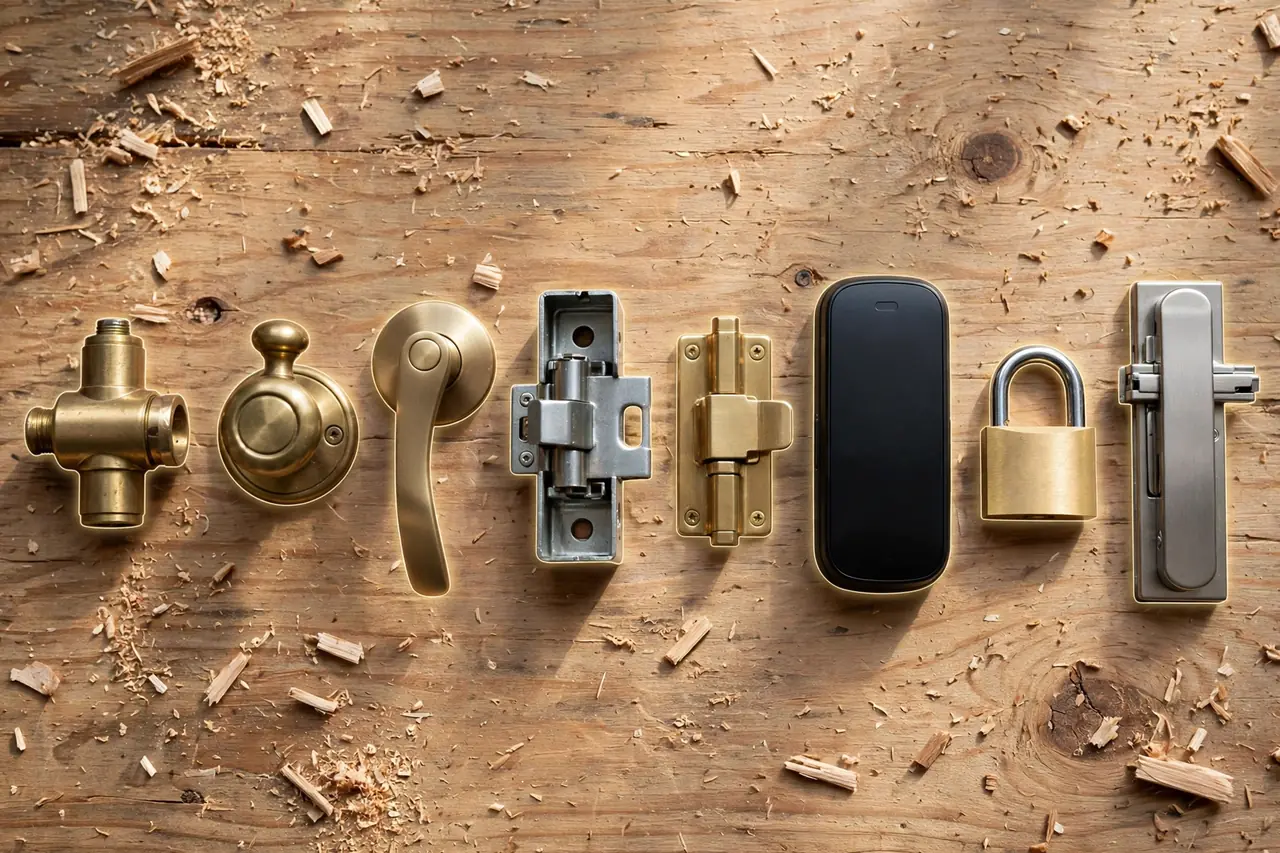
Every lock below is described the same way: how it works, how secure it honestly is, where it belongs, and where it does not. Read the types that match your doors, then check the matrix further down.
Deadbolt Locks (Single and Double Cylinder)
A deadbolt slides a solid metal bolt straight into the door frame. The bolt has no spring, so it cannot be pushed back or slipped open with a card the way a latch can. You move it only with a key from outside or a thumb turn inside, and when it is locked the bolt should reach at least 1 inch into the frame.
A single-cylinder deadbolt, key outside and thumb turn inside, is the standard choice for entry doors. A double-cylinder deadbolt needs a key on both sides. That can help when glass sits in or right beside the door, because there is no thumb turn to reach through broken glass. The trade-off is serious: a key is needed to get out, which can slow an escape in a fire, and many local codes ban double-cylinder deadbolts on a home’s main exit door.
Security level: high, when the deadbolt is Grade 1 or Grade 2 and its strike plate is fixed with long screws. For a deeper look at how this lock works and how to pick one, read our guide to the deadbolt door lock.
Best on: front, back, side, and garage-entry doors. Keep it off: a double-cylinder version on your family’s main escape route, unless your local code clearly allows it.
Knob Locks
A knob lock carries its cylinder inside the round knob itself. That design is cheap and simple, but it is also the weak point: the whole locking mechanism sits in the knob, where it can be forced, twisted off, or shimmed open. Consumers’ Checkbook, a nonprofit that tests and rates products and services, warns that key-in-knob locks have always been inadequate for security on an entry door.
Inside the home, that weakness rarely matters. A keyed knob suits a home office or a storage room you want to keep children out of. A privacy knob, the kind with a small push button and an emergency release hole, is the normal choice for bedrooms and bathrooms.
Security level: low. Best on: interior doors. Keep it off: any exterior door, unless a deadbolt above it does the real work.
Lever Handle Locks
A lever handle lock works like a knob lock, but you push a horizontal lever down instead of gripping and turning a round knob. That small change makes a real difference for children, older adults, anyone with a weak grip, and anyone walking in with both arms full of groceries.
Security is about the same as a knob lock, so the same rule applies: fine inside the home, and fine on an entry door only when a deadbolt above it provides the strength. Keyed levers are also a common pick for the door between a house and its garage.
Security level: low to medium. Best on: interior doors, and entry doors where easy opening matters and a deadbolt is fitted too. Keep it off: as the only lock on any door that faces outside.
Mortise Locks
A mortise lock is a whole lock case that sits inside a deep pocket — the mortise — cut into the edge of the door. Most mortise units combine a latch and a deadbolt in one strong case. They have been used for well over a century and are still common in older homes, apartment buildings, and commercial doors.
Because the case is buried inside the door, a good mortise lock is strong and long-lasting. The trade-off is fit. The pocket must match the case, so replacing a mortise lock is not a quick drop-in job the way a standard deadbolt is, and a door that was never cut for one needs major carpentry first.
Security level: high. Best on: thick exterior doors, and older homes that already have a mortise pocket. Keep it off: thin doors, and any project where you cannot match the existing pocket size.
Rim Locks and Night Latches
A rim lock mounts in a case on the inside face of the door instead of inside the door itself. The most common home version is the night latch: you open it with a key from outside and a knob or lever from inside, and it clicks shut by itself every time the door closes.
That self-locking habit is handy on apartment and back doors, and a rim lock is easy to fit because nothing has to be cut into the door edge. But the clicking bolt is still a spring latch, and the surface-mounted case is only as strong as its screws. Treat it as a useful second lock, not the main event. It can also lock you out if you step outside without your key.
Security level: low to medium on its own. Best on: as a second lock on entry doors, and on apartment doors. Keep it off: as the only lock on a door that faces outside.
Smart Locks
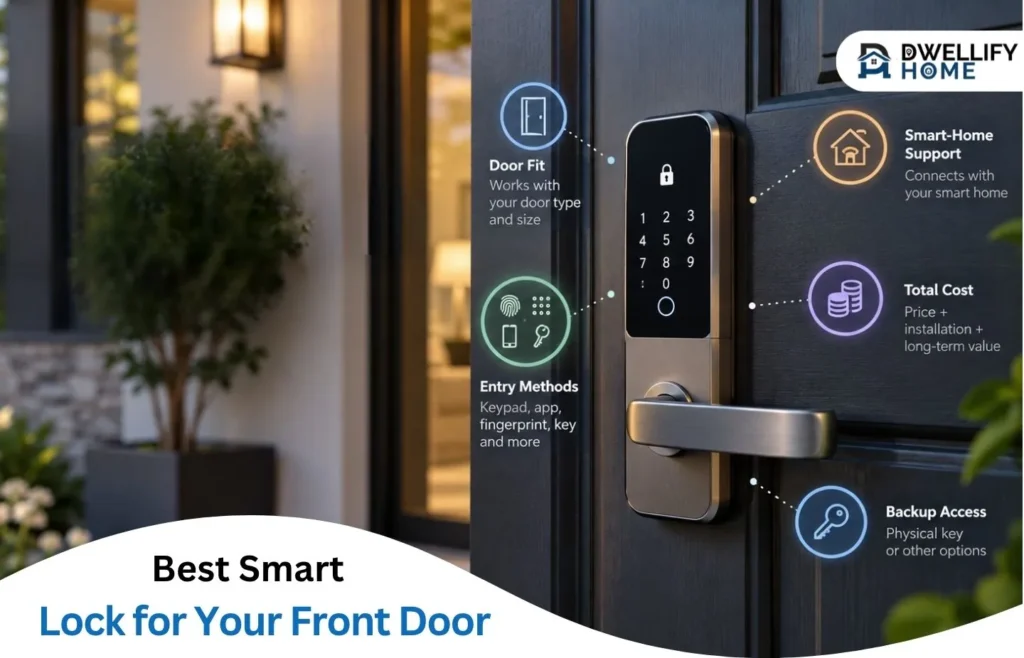
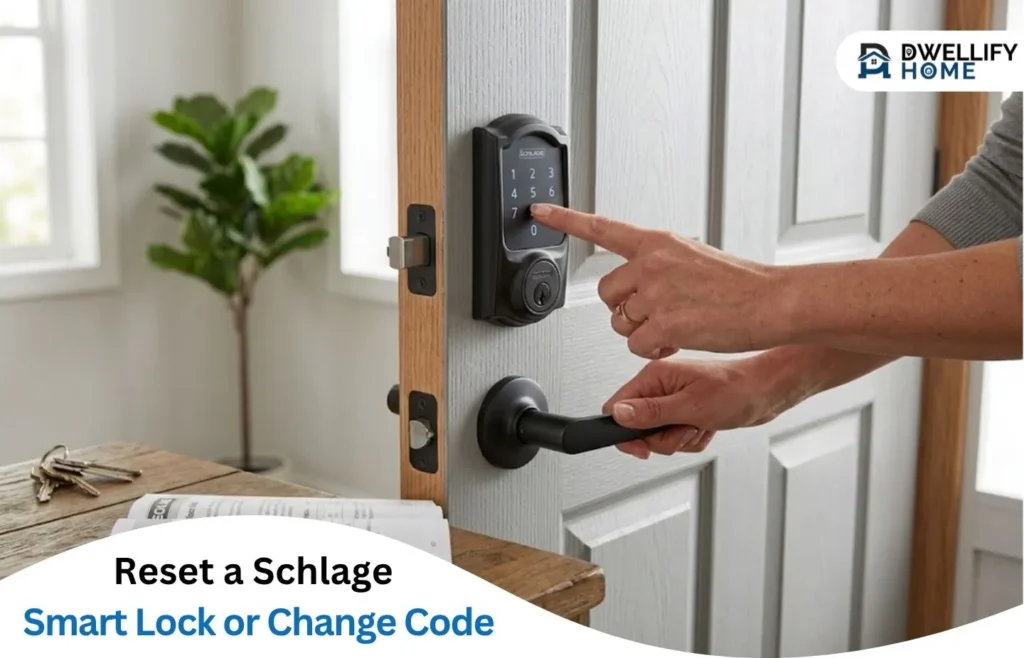
A smart lock is not a new kind of bolt. It is a motor and a control system — a keypad, a fingerprint reader, a phone app, or all three — fitted to a deadbolt so the bolt can turn without a key. That means its physical strength is exactly the strength of the deadbolt underneath it, no more and no less.
What a smart lock really adds is control: codes for family and guests instead of copied keys, automatic locking, and a record of when the door was opened. The trade-offs are batteries that need changing, electronics that dislike harsh weather, and the need for a backup way in. Most smart locks keep a normal key cylinder for exactly that reason.
Security level: as strong as the bolt and grade it is built on, usually high on a good deadbolt. Best on: a main entry door where keyless entry and guest codes solve a real problem. Keep it off: doors exposed to weather beyond the lock’s rating, and any door where a dead battery would leave you with no backup way in.
Padlocks
A padlock is the one lock on this list that is not built into a door. The body hangs from a U-shaped shackle, and you fit it through a hasp on a gate, shed, locker, or storage unit. Shackles come in different thicknesses and materials, and a thick, hardened shackle resists cutting far better than a thin basic one.
A padlock is the right tool outdoors, but the wrong tool for a house door. The hasp it hangs on is held by exposed screws and can be pried off, and a padlock on an exit door can trap people inside during an emergency.
Security level: varies with the shackle, usually low to medium. Best on: gates, sheds, storage units, and lockers. Keep it off: every door of the house itself.
Sliding-Door Locks
Sliding doors cannot use a normal deadbolt, because the panel moves sideways instead of swinging. Most sliding patio doors come with a small hook latch built into the handle, and on many doors that latch is the weakest part of the whole setup. It can wear, slip out of alignment, and offer little resistance to the panel being pried or lifted.
The fix is hardware made for the job: a dedicated sliding-door lock that bolts the panel to the frame, a pin lock that stops the panel sliding or being lifted off its track, or a security bar that drops into the track so the door physically cannot open. Used together, they turn the weakest door in the house into a reasonably secure one.
Security level: low to medium for the latch alone; much better with a bar or pin added. Best on: sliding patio doors and large sliding windows, always with a secondary lock. Keep it off: trusting the factory latch alone on a ground-floor sliding door.
The Type-by-Door Matrix: Which Lock Goes Where
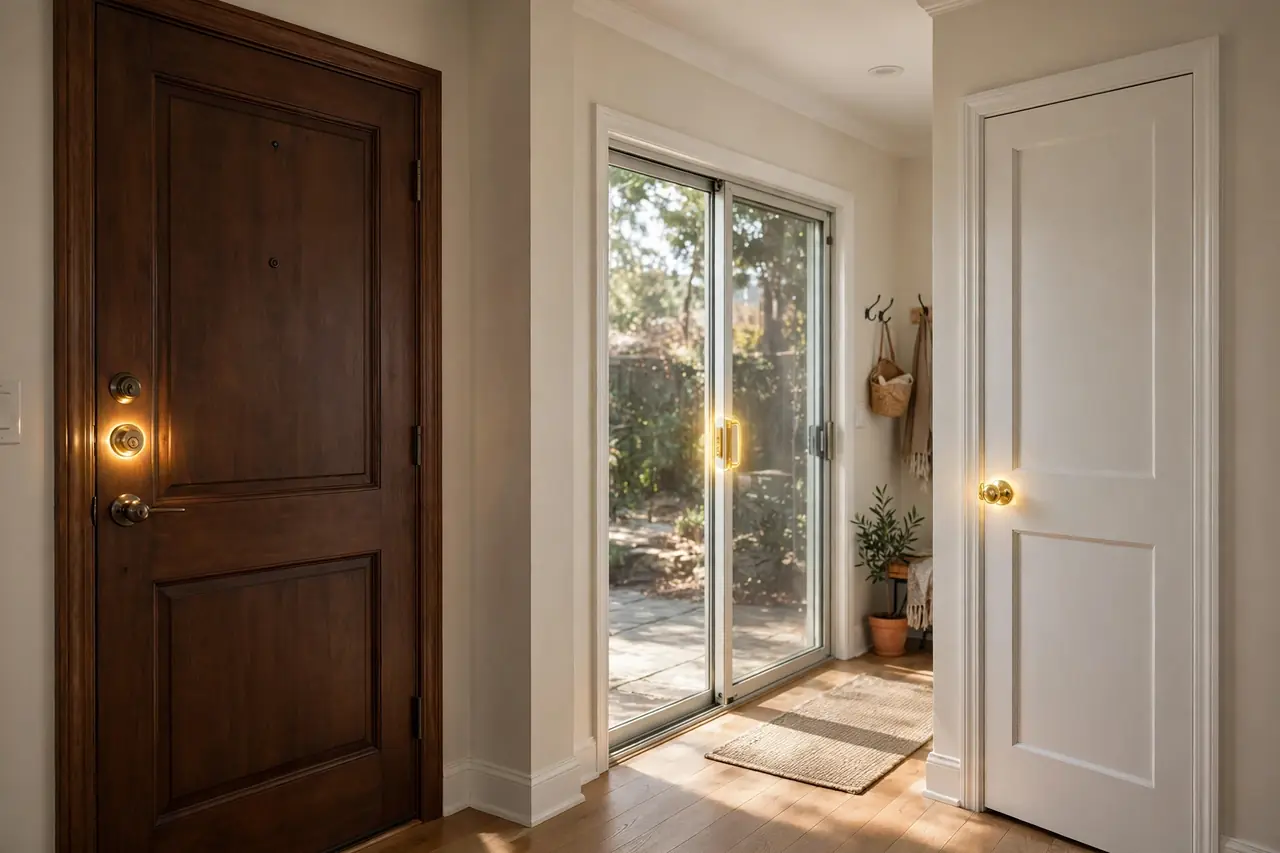
The matrix below pulls the whole guide into one place: every lock type, how it works, its honest security level, and the doors it should and should not be used on.
Type-by-door matrix: home lock types matched to the right doors
| Lock Type | How It Works | Security Level | Put It On | Keep It Off |
|---|---|---|---|---|
| Single-cylinder deadbolt | A solid bolt slides into the frame; key outside, thumb turn inside | High | Front, back, and side entry doors | Almost nothing — it is the default entry-door choice |
| Double-cylinder deadbolt | The bolt needs a key on both sides | High | Doors with glass in or beside them, where local code allows | Your home’s main escape route — many codes ban it there |
| Knob lock | The cylinder sits inside the round knob; a spring latch holds the door | Low | Interior doors, bedrooms, bathrooms, closets | Any exterior door on its own |
| Lever handle lock | Like a knob lock, but opened by pushing a lever down | Low to medium | Interior doors; entry doors only with a deadbolt above it | As the only lock on an entry door |
| Mortise lock | A full lock case sits in a pocket cut into the door edge; usually latch plus deadbolt in one unit | High | Thick exterior doors; older homes with an existing mortise pocket | Thin doors, or doors with no pocket and no budget for carpentry |
| Rim lock / night latch | A case mounts on the inside face of the door; the latch clicks shut as the door closes | Low to medium alone | As a second lock on entry and apartment doors | As the only lock on an entry door |
| Smart lock | A motor turns a deadbolt; opened by phone, code, fingerprint, or key | As strong as the bolt it drives — usually high | A main entry door where keyless entry and guest codes help | Doors in harsh weather beyond its rating; doors with no backup key plan |
| Padlock | A portable body with a shackle that clicks through a hasp | Low to medium | Gates, sheds, storage units, lockers | Any house entry door |
| Sliding-door lock | A hook or bolt locks the sliding panel to the frame; often paired with a bar or pin | Low to medium alone; better with a bar | Sliding patio doors and sliding windows | Relying on the small factory latch alone |
Lock Grades Explained: ANSI/BHMA Grade 1, 2, and 3
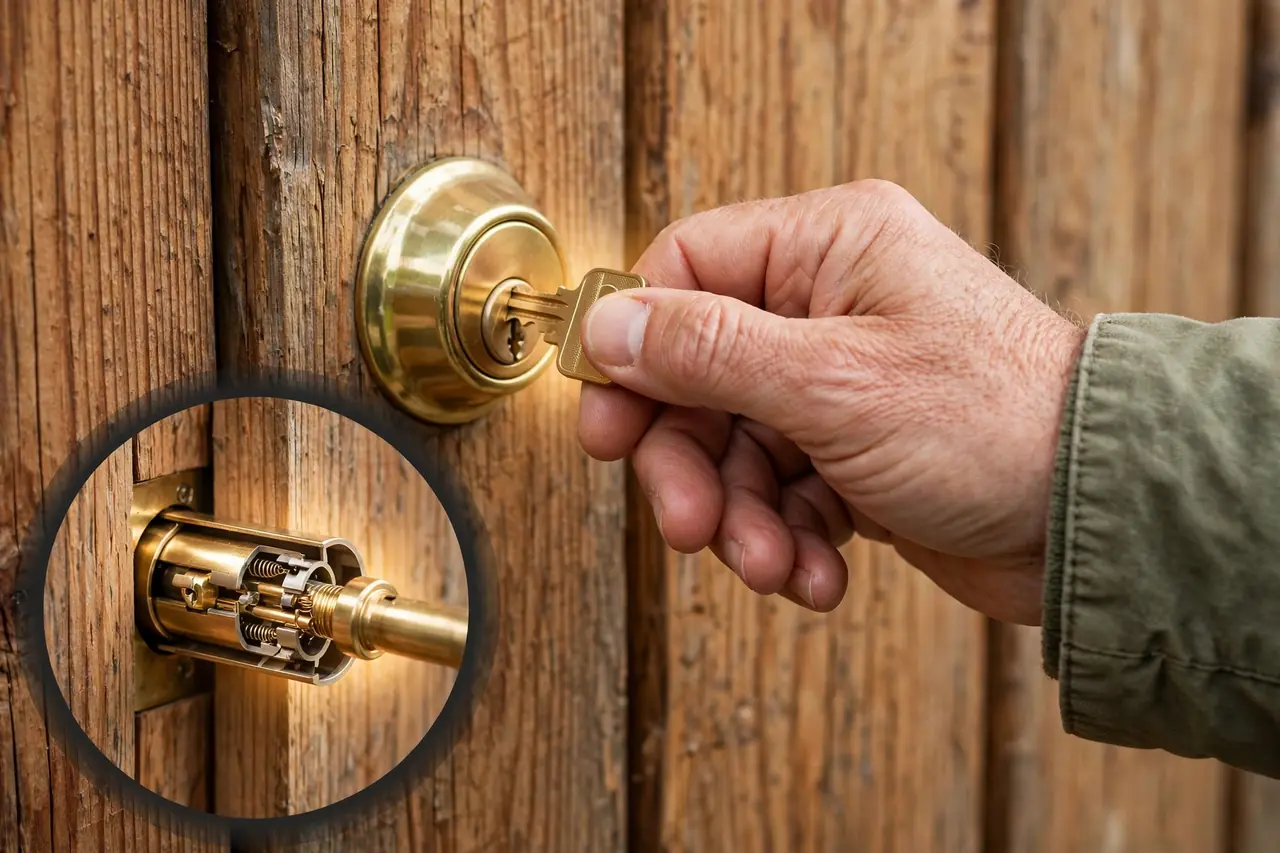
Type is only half the decision. The other half is grade: a tested rating of how much use and abuse a lock can take. In the United States, locks are tested under standards written by the Builders Hardware Manufacturers Association (BHMA) and adopted by ANSI. Deadbolts fall under standard A156.36, and knob and lever locks under A156.2, but both use the same three grades.
- Grade 1 is the highest grade. It is built for heavy commercial use, and deadbolts at this grade are tested to at least 250,000 open-and-close cycles. It is a strong choice for a busy front door.
- Grade 2 is the sweet spot for homes. Schlage, one of the largest lock makers, calls Grade 2 the best residential quality in its guide to ANSI grades. Deadbolts at this grade are tested to at least 150,000 cycles. Treat Grade 2 as the minimum for an entry door.
- Grade 3 is the basic residential minimum. Deadbolts are tested to at least 100,000 cycles. It is fine inside the home, but it is a weak choice for a door that faces outside.
Some locks show letters instead of a number. BHMA’s residential system rates a lock’s security, durability, and finish with the letters A, B, or C, so AAA is the top score in all three, as Schlage’s guide to BHMA grading explains. If a lock shows no number grade, look for AAA or AAB before you buy it for an entry door.
One warning matters more than the grade itself: a lock only protects you if it is installed well. A Grade 1 deadbolt in a weak strike plate, held by short screws that only reach the door trim, can fail fast. A proper strike plate fixed with 3-inch screws that bite into the wall stud behind the frame is what turns a good lock into a strong door.
5 Lock Mistakes That Make a Home Less Safe
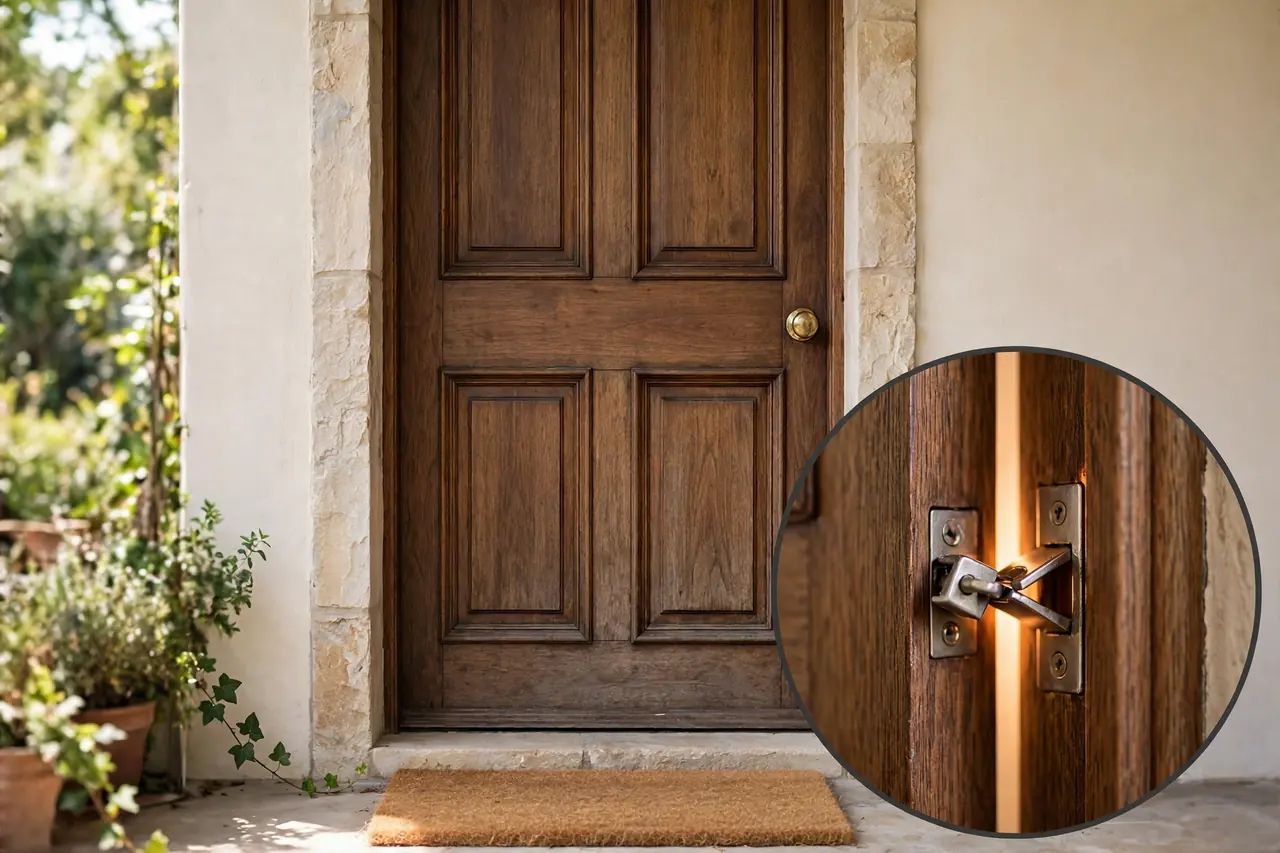
Most weak home security is not caused by cheap locks. It is caused by the right lock in the wrong place, or the wrong lock trusted with the wrong job. These are the five mistakes worth checking tonight.
- Using a knob lock as the only lock on a front door. The cylinder sits in the knob itself, so the lock can be forced or slipped in ways a deadbolt cannot. If your front door has no deadbolt, adding one is the single biggest upgrade you can make.
- Fitting a double-cylinder deadbolt on the main way out. The International Residential Code states that egress doors must be “readily openable from inside the dwelling without the use of a key or special knowledge or effort,” and door-hardware code specialist Lori Greene explains in her breakdown of deadbolts in a means of egress that a double-cylinder deadbolt does not meet that requirement on an egress door. Rules vary by area, so check your local code before fitting one.
- Hanging a padlock and hasp on a house door. The hasp is held by exposed screws and can be pried off, and a padlocked exit can trap your family in a fire. Padlocks are for gates and sheds, full stop.
- Trusting the small factory latch on a sliding door. That little hook is a latch, not a lock. Add a sliding-door lock, a track bar, or a pin lock so the panel cannot be forced or lifted.
- Buying the cheapest Grade 3 lock for an entry door, then skipping the strike plate. Grade and installation work together. A mid-grade deadbolt with a reinforced strike and 3-inch screws will outlast a top-grade lock fitted badly.
How to Choose: A 5-Step Door-by-Door Check
You do not need a locksmith’s knowledge to choose well. You need a short walk through your home and five honest checks.
- List every door that needs a lock. Walk the home and write them down: front, back, side, garage entry, sliding doors, interior doors, gate, and shed.
- Sort each door by job. Entry doors keep strangers out. Interior doors give privacy. Sliding doors and outdoor doors each have their own hardware, as the matrix above shows.
- Match each door to a type. Use the matrix: deadbolt for entry, privacy knob or lever inside, sliding lock plus bar for the patio, padlock outdoors.
- Check the grade before the style. For entry doors, choose Grade 2 or better, or AAA in BHMA letters. Finishes and shapes come after strength, not before.
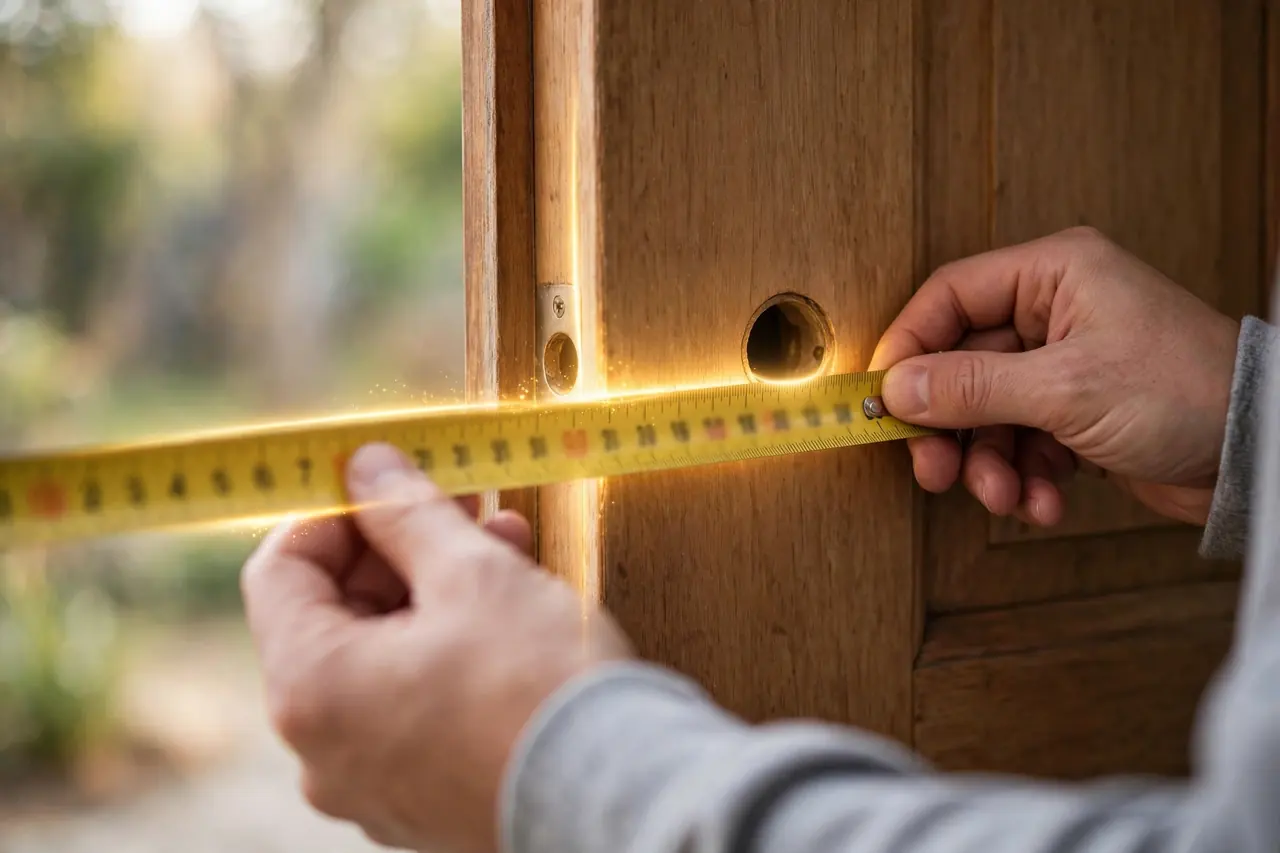
- Check the fit before you buy. Measure the door thickness and the backset — the distance from the door edge to the center of the hole, which is 2-3/8 inches or 2-3/4 inches on most home doors. If the door has glass near the lock, or it is your main way out, check your local code before choosing a double-cylinder model.
Frequently Asked Questions
What is the most secure type of lock for a front door?
A Grade 1 deadbolt is the strongest simple answer for most homes, and a Grade 1 mortise lock is at least as strong where the door can take one. In practice, the type matters less than the full setup: a quality deadbolt, a solid door, and a strike plate fixed with 3-inch screws into the stud.
Is a deadbolt enough to secure a front door?
Usually, yes — if it is the right deadbolt, fitted the right way. Choose Grade 1 or Grade 2, make sure the bolt extends at least 1 inch into the frame, and reinforce the strike plate. A deadbolt on a hollow door or a weak frame is only as strong as the parts around it.
Are smart locks as secure as deadbolts?
A smart lock is a deadbolt with a motor, so its physical security is the same as the deadbolt it is built on — check its grade, not its app. What it adds is control: codes instead of spare keys, automatic locking, and an activity record. It does not add brute-force strength by itself.
What is the difference between a deadbolt and a spring bolt lock?
A spring bolt, usually just called a latch, is held out by a spring and snaps shut when the door closes. It can be pushed back or slipped, which is why knob and lever locks are weak on entry doors. A deadbolt has no spring doing the holding. It moves only when you turn a key or thumb turn, so it stays put under force.
How do I choose the right lock for an exterior door?
Start with the type: a single-cylinder deadbolt for most doors. Then the grade: Grade 2 at minimum, Grade 1 if the door is busy or you want the strongest rating. Then the fit: door thickness and backset must match. Finally, if the door has glass in or beside it, check your local code before considering a double-cylinder model.
How often should I replace my locks?
There is no fixed schedule in the standards. Replace or rekey when you move in, when a key is lost, when a lock starts sticking or feels loose, and after any break-in or attempt. Grades are based on cycle tests, so a busy front door wears its lock out years before a closet door does.
Safety note: lock rules vary by area, and some lock types — especially double-cylinder deadbolts — are restricted on exit doors by local fire and building codes. If you are changing the lock on a door your family would use to escape a fire, check your local code or ask a licensed locksmith before you start.
Here is your next step: walk your home tonight with the matrix open and note one line per door — type, grade, and anything from the mistakes list. Most homes need only one or two changes, and the deadbolt usually comes first. When you are ready to compare actual hardware, our guide to the best door locks picks up where this one ends.