A Christmas tree theme is simply a small set of choices you repeat across the whole tree: two or three colors, one style mood, and ornaments that match both. Pick those three things before you buy a single bauble, and the tree almost decorates itself. Skip them, and even expensive ornaments can end up looking like a jumble.
This guide gives you the full map. First, you will see the color themes that do most of the visual work. Then you will meet the style themes, from classic to whimsical. Finally, you will get a five-step way to choose your own theme, ideas for real homes, and the mistakes that break a good look. By the end, you will know exactly what your tree should look like this year, and why.
What a Christmas Tree Theme Actually Is
Think of a theme as a promise you make to yourself: every ornament on this tree belongs to the same family. That family has four members. The first is color, usually two or three shades that sit well together. The second is mood, one word like classic, rustic, or modern. The third is texture, the mix of shiny, matte, soft, and natural finishes. The fourth is the topper, which should echo the theme instead of fighting it.
Here is the part most people miss. A theme is not a shopping list, and it is not a rule book. It is a filter. When you stand in a store holding a glittery purple reindeer, the theme answers the question for you: does this belong on my tree, or does it belong on someone else’s? That one question saves money, saves time, and saves you from the January feeling of wondering why the tree never quite looked right.
Picture the moment the lights go on for the first time. The room goes a little quiet. Everyone looks at the tree. That quiet little moment is what a theme protects. It turns a pile of pretty things into one picture your family will remember, the kind of picture kids describe years later when they talk about Christmas at home.
Start With Color: Christmas Tree Color Themes
Color does most of the visual work on any tree, so start here. If you get the colors right, almost any ornament style will sit happily beside them. If you get them wrong, even beautiful ornaments will argue with each other. The simplest guardrail is this: pick two main colors and one accent. Three colors feel rich. Five or six start to feel noisy.
Christmas tree color themes fall into a few families that show up year after year, because they work in real living rooms with real furniture and real light. Guides like A Blissful Nest list classic red and green, snowy white, rustic wood, and elegant silver or gold among the most popular themes, and that matches what you see in homes every December. The table below turns those families into a quick chooser.
| Theme | Colors | Feels like | Best for |
|---|---|---|---|
| Classic red and green | Red, green, gold | Warm and traditional | Family rooms, first trees |
| Winter white and silver | White, silver, icy blue | Calm and snowy | Modern rooms, flocked trees |
| Blue and silver | Navy or icy blue, silver | Cool and elegant | Evening light, formal rooms |
| All gold | Gold, champagne, cream | Rich and glowing | Warm white lights, glam rooms |
| Blush and pink | Pink, rose gold, white | Soft and playful | Kids’ rooms, second trees |
| Bright multicolor | Many colors, one bright mood | Joyful and fun | Kids’ trees, playful homes |
Classic red and green never goes out of style, because it matches almost every home and every childhood memory of Christmas. Winter white and silver suits a flocked or white tree best, and it glows beautifully under white lights. A white tree is the boldest version of this look, and our guide to white Christmas tree decorations covers that look on its own, so this article keeps it short here.
Blue themes ask for one decision: deep navy or icy blue? Navy feels rich and evening-like, while icy blue feels frosty and light. Gold themes love warm white lights, which make gold ornaments glow instead of glare. Pink themes work best when you keep them soft, with plenty of white to balance the sweetness. And a bright multicolor tree is not the absence of a theme. It is a theme of its own, and it works when every ornament shares the same joyful, playful energy.
Then Pick a Style: 6 Christmas Tree Theme Ideas for Every Home
Once your colors are set, pick one style word. Color says what the tree looks like. Style says what it feels like. Other guides group popular themes in similar ways, with traditional, rustic, modern, vintage, whimsical, and nature-inspired looks coming up again and again, as in the Christmas Loft ornament guide. Here are the six families that cover almost every tree you will ever decorate, with what each one needs to feel right.
1. Classic Christmas
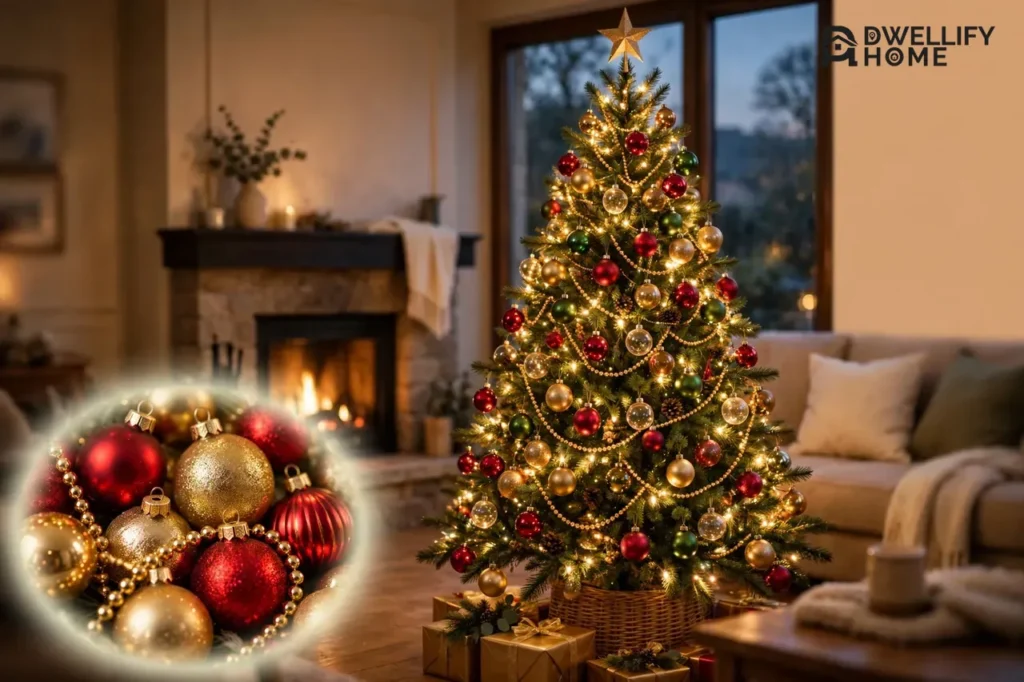
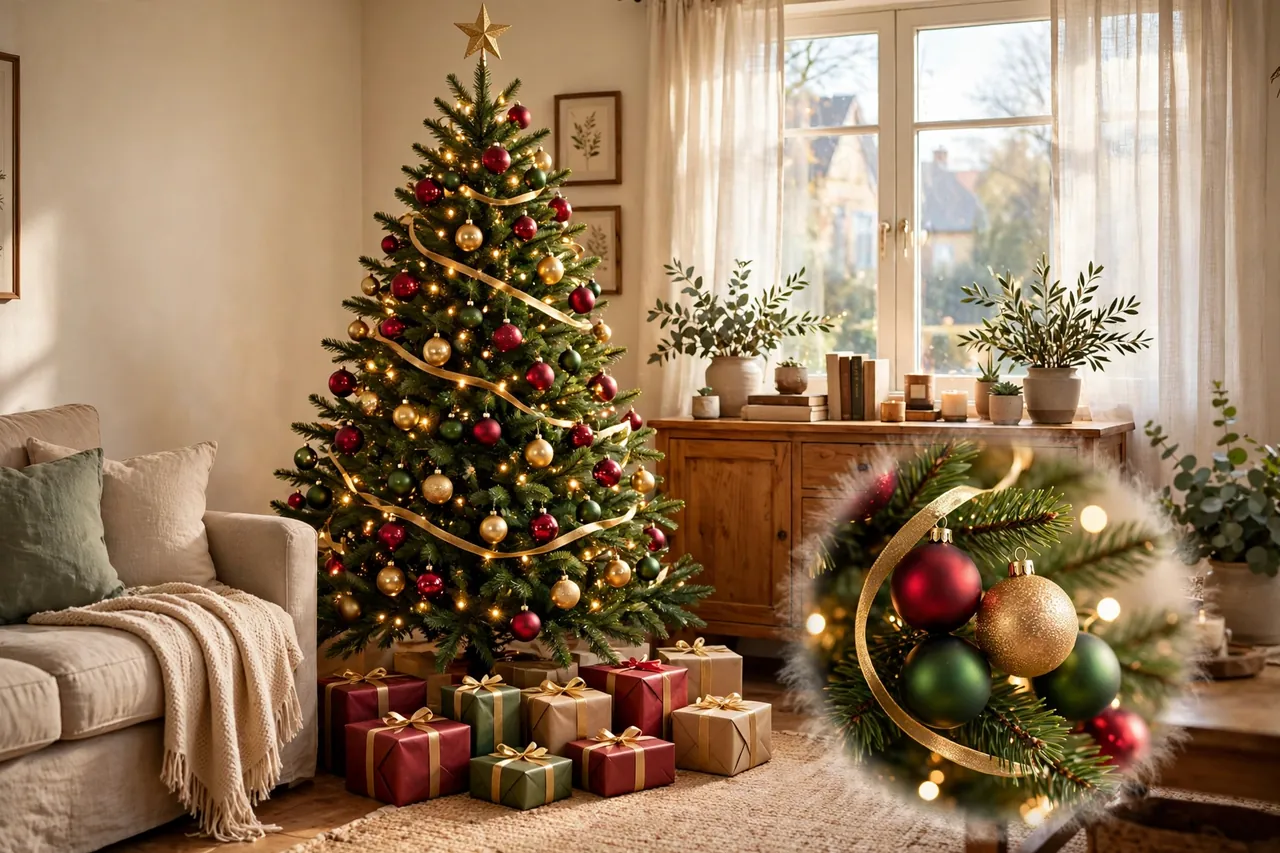
Classic means red, green, and gold, with ornaments that could have hung on your grandparents’ tree: glass baubles, candy canes, beaded garlands, and a gold star on top. It suits a first tree, a family room, and anyone who wants Christmas to feel the way it did when they were small. Keep the lights warm white, and let one or two heirloom ornaments take the best spots.
2. Rustic and Farmhouse
Rustic trades shine for warmth. Think pinecones, wooden ornaments, burlap ribbon, dried orange slices, and plaid. The colors stay earthy: deep green, warm brown, cream, and a little red. This theme forgives imperfection beautifully, which makes it a kind choice for a tree decorated with kids, because a slightly crooked handmade ornament looks right at home here.
3. Modern and Minimalist
Modern means fewer ornaments, more space, and one strong idea. A single metallic color, matte baubles in one or two sizes, and a simple topper do the work. This theme suits small rooms and calm interiors, and it photographs beautifully. The secret is restraint: if you keep adding “just one more,” the minimal look quietly disappears.
4. Vintage and Nostalgic
Vintage reaches for the past on purpose: mercury-glass baubles, retro figurines, tinsel used lightly, and ornaments that look found rather than bought. It works best with warm lights and a tree skirt that looks soft and old, not shiny and new. If your family keeps ornaments in a box marked with years and names, this theme gives those keepsakes the starring role they deserve.
5. Whimsical and Kid-Friendly
Whimsical is the fun theme, and it is the right home for funny Christmas tree themes and children’s themed Christmas trees. Bright colors, playful characters, felt ornaments, and a topper that makes everyone smile all belong here. For a kids’ tree, hang unbreakable ornaments low, where small hands can reach them, and keep the precious glass ones high. A whimsical tree does not need to match the rest of the house. It needs to make the kids’ eyes light up, and that is a better test.
6. Woodland and Nature
Woodland brings the outdoors in: pinecones, berries, wooden animals, mushrooms, and plenty of green texture. It pairs beautifully with a village display tucked under the tree, where tiny houses and trees extend the forest feeling right down to the floor. If you love the smell of a real tree and the sight of snow on branches, this theme feels like an extension of the walk you took to find it.
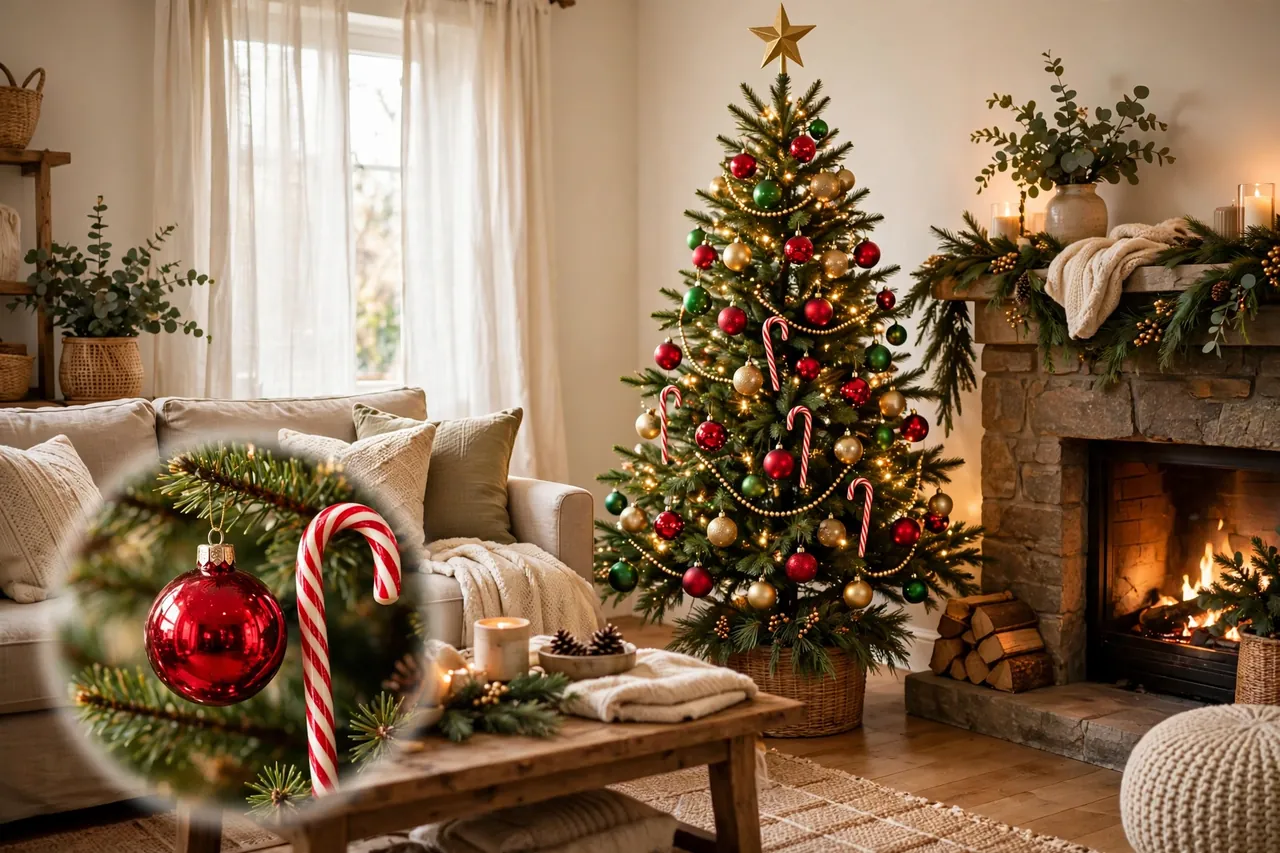
How to Choose a Christmas Tree Theme in 5 Steps
Choosing sounds hard until you turn it into steps. Work through these five in order, and do not buy anything until step five. The whole process takes less time than one wandering trip through a decoration aisle.
- Look at the room first. Stand where the tree will stand and look around. What colors already live in your living room at Christmas? Your theme should sit happily beside your sofa, your rug, and your curtains, not argue with them. A cool blue theme in a warm red-brown room will always feel slightly off.
- Check what you already own. Open the ornament boxes before you shop. Most families already own half a theme without knowing it: a set of red baubles, a collection of wooden pieces, a box of silver bells. Build on what you love and already have. It saves money, and it keeps the ornaments with memories on the tree.
- Pick two or three colors. Use the color table above and choose one row. Write the colors down, even just on your phone. That little note is your filter in every store from now on. If an ornament does not carry at least one of your colors, it stays on the shelf.
- Pick one style word. Classic, rustic, modern, vintage, whimsical, or woodland. Say it out loud. “Our theme is rustic.” Now every later choice has a test: does this feel rustic? If the answer is no, you have your answer.
- Test with five ornaments before you commit. Hang five ornaments in your colors and style, turn the lights on, and step back about six feet. Squint a little. Do the colors read as one family? Does the mood feel right? If yes, you have a theme. If no, swap one color now, while swapping is still cheap and easy.
One practical number helps at this stage. Webbs Garden Centres suggests 4 to 7 baubles per foot of tree, which works out to roughly 25 to 40 baubles for a 6-foot tree, and about 1.5 to 2 metres of garland per foot. Those are starting points, not rules, but they stop the two classic mistakes: buying far too few ornaments and leaving the tree looking thin, or buying far too many and burying it.
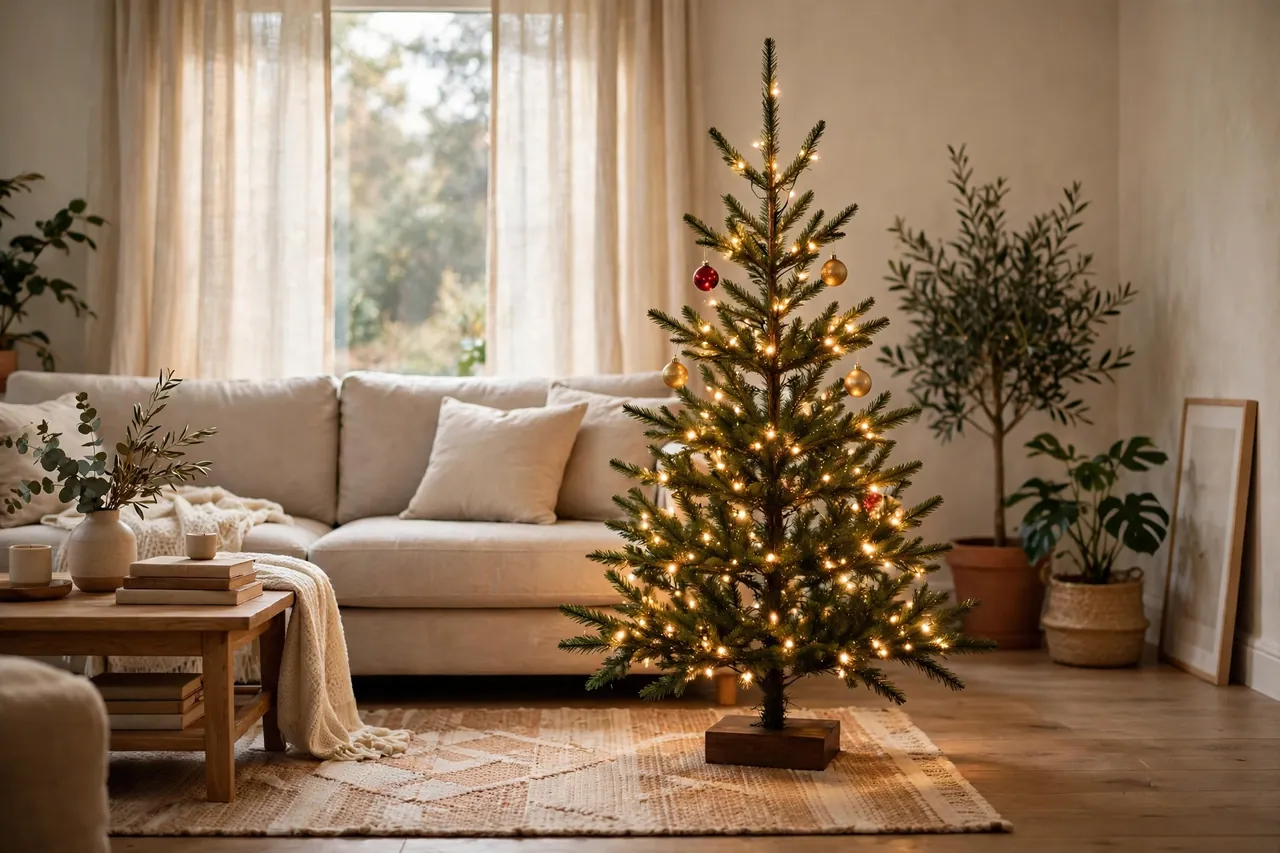
Theme Ideas for Real Homes
Themed Christmas tree ideas only matter if they survive contact with a real house. Here is how the same choosing method bends for the homes people actually live in.
For a small room, go tall and narrow with your tree, and let one color plus one metallic do the work. A slim tree in white and gold, or green and silver, looks generous without eating the room. Keep ornaments small and medium, and skip the giant statement pieces that need space to breathe.
For a kids’ tree, let the kids choose the style word. Whimsical wins most years, and that is fine. Put their handmade ornaments at eye level, keep breakables high, and let one branch hold the funny ornaments that make the whole family laugh. A tree children helped decorate is a tree they will remember, long after they forget what matched what.
For a rental, choose a theme that travels light. Lightweight ornaments, no wall anchors, no heavy garlands pulling branches down. A modern theme in one metallic color packs into a single box and moves with you, which matters more than most decorating guides admit.
For a second tree, be brave. This is where unique Christmas tree themes earn their keep: the pink tree, the coastal tree with shells and blues, the all-vintage tree you would never risk on the main tree. A second tree is a playground, and the main tree carries the tradition, so both jobs get done.
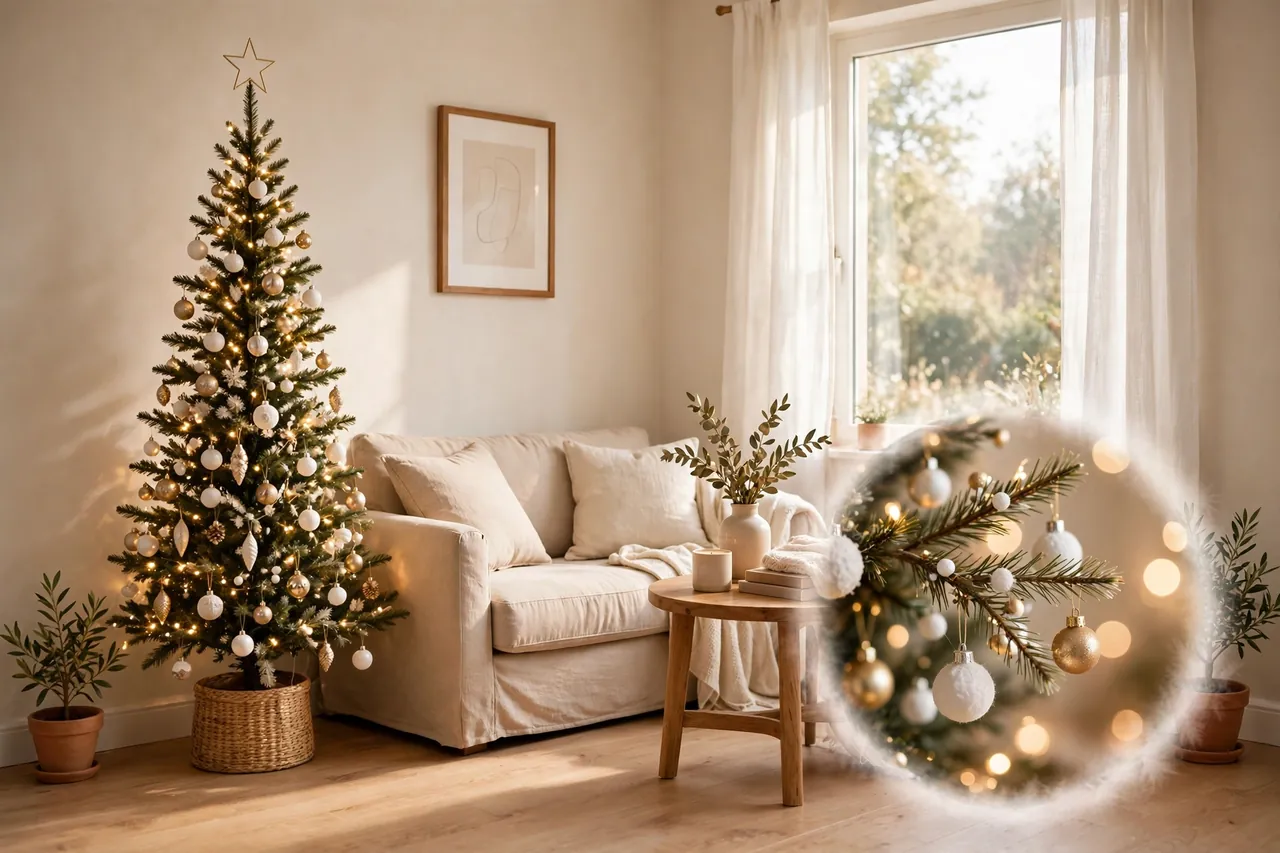
5 Mistakes That Break a Christmas Tree Theme
Most broken themes break in the same five ways, and every one is fixable without starting over.
- Too many colors. Six colors is not a theme, it is a rainbow. Fix it by picking the two colors you love most and moving the rest to another room or another year.
- Two styles at once. Rustic burlap and sleek chrome ornaments fight each other on the same branch. Pick one style word and let the other style wait for its own tree.
- Lights that clash with the theme. Cool white lights can make a warm rustic tree feel cold, and warm lights can dull an icy blue theme. Match the light temperature to the mood: warm for classic, rustic, and vintage; cool or white for winter, blue, and modern themes.
- A topper that belongs to another theme. A glittery star on a woodland tree, or a rustic wooden star on a glam gold tree, pulls the eye in the wrong direction. The topper should be the theme in miniature.
- Buying before choosing. The most expensive mistake is also the most common. Ornaments bought without a theme become a box of beautiful strangers. Choose first, then buy, and the box stays a family instead.
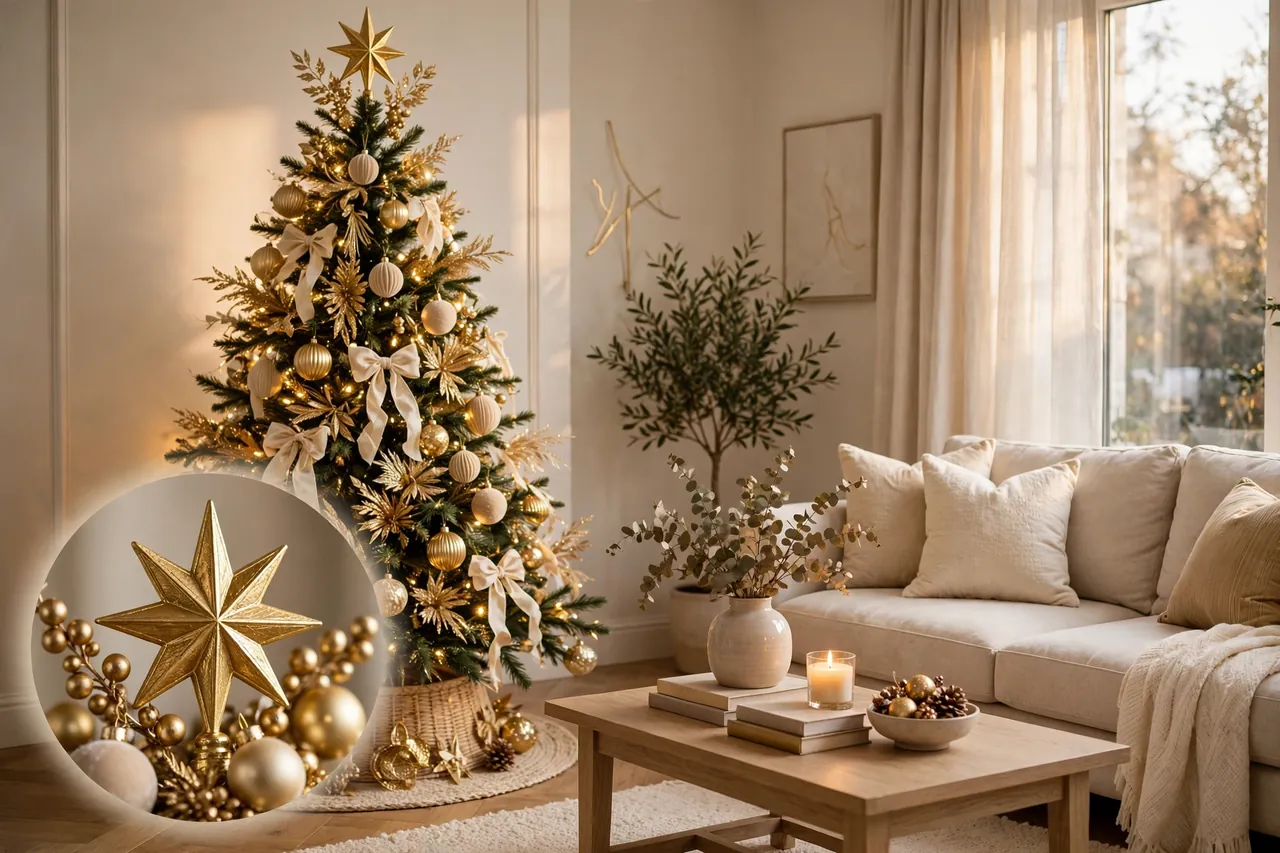
Keep the Whole Room in the Same Theme
A tree theme gets stronger when the room quietly agrees with it. You do not need to redecorate the house. You need to carry one or two of your theme colors to three or four nearby spots, and the whole room will feel like it was planned together.
Start with the mantel, if you have one. A garland in your theme colors, plus a few ornaments that match the tree, ties the fireplace to the tree in one glance. Our guide to Christmas ideas for decorating a fireplace mantel walks through that spot in detail, and decorating the fireplace at Christmas covers the wider fireplace area. Then carry the same colors to the stairs, where a garland does the same job on the banister, as shown in our decorate stairs for Christmas guide.
Step back and look at the whole room the way a guest sees it. Our indoor Christmas decorations guide helps you spread one theme across a room without cluttering it. Outside, keep it simpler: one matching color on the porch and the front door, and the same restraint across your outdoor Christmas decoration ideas, so the house feels like one celebration from the street to the tree. And if you build a village under the tree, our Christmas village display guide shows how to keep that little world in the same theme family.
Related Guides
- Christmas Ideas for Decorating a Fireplace Mantel
- Decorating the Fireplace at Christmas
- Decorate Stairs for Christmas
- Decorating Ideas for Your Living Room at Christmas
- Indoor Christmas Decorations
- White Christmas Tree Decorations
- Christmas Village Display
- Christmas Decor on the Porch
- Christmas Decorations on the Front Door
- Christmas Decor Exterior Ideas
- Christmas Tree Storage Bags
Frequently Asked Questions
What are the most popular Christmas tree themes?
White Christmas Tree Decorations: Ideas That Make Your Tree Glow · Decorating Ideas for a Living Room at Christmas · Indoor Christmas Decorations: A Room-by-Room Guide to a Warm, Festive Home · Christmas Tree Storage Bags: How to Pack, Choose, and Protect Your Tree
How do I choose a color scheme for my tree?
Pick two or three colors that sit well together, like red and green or silver and blue, and let those colors rule every ornament choice. Check the colors against your room first, so the tree matches the rest of your holiday decorations and the whole living room feels connected and warm.
What decorations work best for a classical Christmas theme?
Classic themes use red and green ornaments, beaded garlands, candy canes, and a gold star tree topper. Wooden ornaments and a simple tree skirt add warmth, and warm white lights keep the whole look feeling traditional rather than flashy.
How do I make my tree look finished and balanced?
Spread ornaments evenly, placing larger ones deeper inside the branches and smaller ones near the edges, so the tree feels full rather than empty. Finish with a tree topper and a tree skirt, then step back and move just one or two ornaments to fill any bare patch you can see.
What are some unique ideas for Christmas tree decorating?
Use handmade decorations, family photos, or favorite keepsakes to make the tree personal instead of store-bought looking. Mix beaded garlands, an unusual topper, or one unexpected color, and keep the rest of the theme steady so the personal touches shine without turning the tree into clutter.
Your theme does not need to impress anyone else. It needs to make your room feel like Christmas to the people who live in it. Pick your colors, pick your one style word, test five ornaments, and trust what you see when the lights go on. And when the season ends, pack each theme’s ornaments together in their own labeled Christmas tree storage bags, so next December your theme is ready before you even open the box.