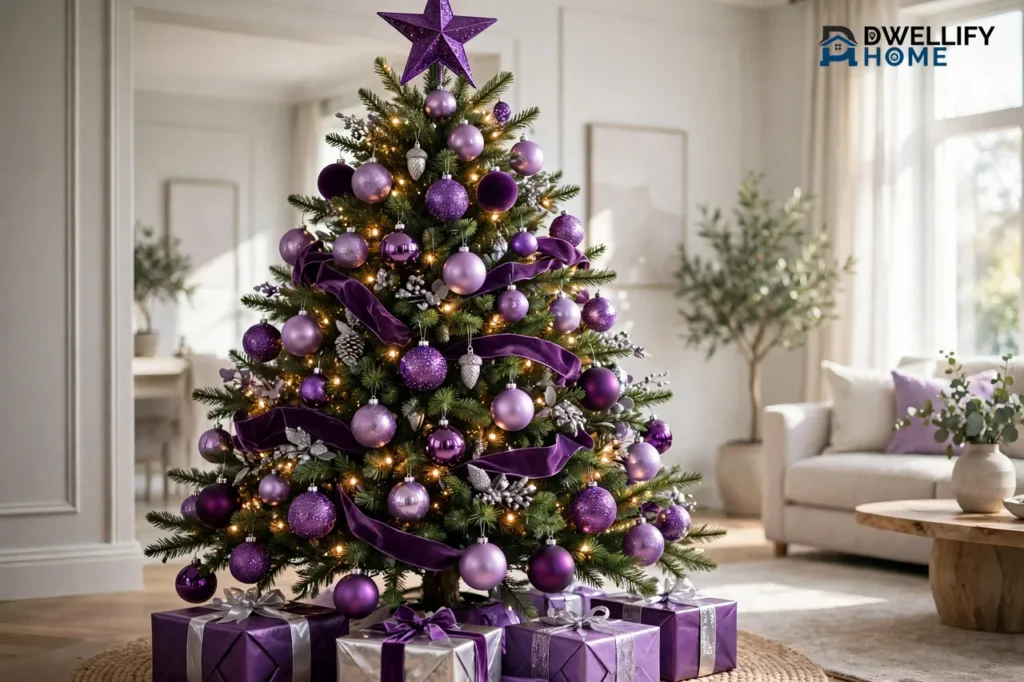
Purple Christmas tree decorations work best when you layer three or four shades of purple, from soft lilac to deep plum, and then add just one metallic accent, like gold, silver, or white. Start with warm white lights, hang your largest purple ornaments deep inside the branches, add ribbon next, and finish with smaller ornaments, picks, and a purple-led topper. That simple order gives you a rich, royal tree that still looks calm and put together, not busy or loud.
When you decorate a purple Christmas tree, purple must stay the star. Gold, silver, or white should play a supporting role, never take over the tree. This guide walks you through every choice in order: your shade palette, your tree base, your ornament mix, your ribbons and toppers, and the rooms where purple shines brightest. You will finish with a tree that photographs beautifully at night and still looks elegant in daylight.
Choose Your Purple Palette First

Pick your purples before you buy a single ornament. A tree decorated in one flat shade of purple can look dull, while a tree with five clashing purples can look messy. The sweet spot is three or four shades that sit close together on the color scale, so the eye reads them as one rich family.
Here is a simple way to build that family. Choose one light shade, one mid shade, and one dark shade, then add one wild card only if you love it. For example, pair lilac with violet and plum. Or pair lavender with amethyst and eggplant. Keep your lightest shade for sparkle near the branch tips, and let your darkest shade anchor the inside of the tree.
Before you shop, hold your ornaments together under warm light, not just under store lights. Purple shifts a lot between cool and warm light, and two purples that matched in the shop can clash at home. If one ornament turns gray or muddy under your living room lights, leave it out. Your tree will look better with fewer shades that truly match than with a big box of almost-matching purples.
| Shade | Feel | Best job on the tree |
|---|---|---|
| Lilac | Soft and airy | Light sparkle near branch tips and around the top |
| Lavender | Calm and dreamy | Soft fill between stronger purples |
| Violet | Bold and bright | Main color that carries the theme |
| Amethyst | Jewel-like and rich | Showpiece ornaments that catch the eye |
| Plum | Deep and royal | Depth deep inside the branches |
If you love a softer look, lean on lilac and lavender with white accents. If you have not settled on a theme yet, our guide to Christmas tree themes can help you pick a look you will love all season. If you want drama, lean on violet, amethyst, and plum with gold. Both routes stay purple-led, and both look intentional, because every shade answers to the same family.
Pick the Right Tree Base for Purple Decorations
Your tree base changes how purple reads, so choose it with the same care as your ornaments. A classic green tree gives purple a traditional backdrop, and deep plum ornaments look especially rich against dark green branches. A flocked or frosted tree makes purple pop in a different way: the white tips act like snow, and lilac and violet ornaments glow against them.
A purple artificial tree is the boldest choice, and it works best when you keep the rest of the palette simple. On a purple tree, use silver, white, or clear ornaments as your accent, and let the tree itself supply most of the color. If you pile deep plum ornaments onto a deep purple tree, the ornaments can vanish into the branches. Lighter shades, like lilac and lavender, show up far better there.
Size matters too. On a slim tree, narrow ribbon and smaller ornaments keep the shape elegant. On a full, wide tree, you need larger ornaments and wider ribbon, or the decorations can look lost in all that foliage. As a rule, step back every few minutes while you decorate and look at the whole tree, not just one branch. That quick check catches bare patches and crowded spots before they become a problem.
Layer Purple Ornaments Like a Designer
Designers do not hang ornaments at random. They layer them in three passes, and that order is the secret behind trees that look styled rather than simply dressed. First, hang filler ornaments deep inside the tree. These are plain purple balls in your mid and dark shades. They hide the trunk, fill holes, and give the tree depth.
Next, hang your mid-size ornaments on the middle of the branches. Mix your finishes here: matte, shiny, and glitter. Matte ornaments calm the tree down, shiny ones bounce the light around, and glitter ones add festive sparkle. A tree with only shiny ornaments can look harsh under lights, while a tree with only matte ornaments can look flat. The mix keeps the eye moving.
Finally, hang your showpiece ornaments near the branch tips, where guests can see them up close. These are the special ones: faceted glass, velvet-covered balls, floral picks, or ornaments with meaning for your family. Put your most beautiful pieces at eye level and slightly forward, not hidden at the back. And spread your largest ornaments through the whole tree, top to bottom, instead of parking them all at the bottom. That even spread keeps the tree balanced.
- Use three sizes: large for depth, medium for the main layer, small for sparkle at the tips.
- Mix three finishes: matte, shiny, and glitter, so the tree never looks flat or harsh.
- Repeat each shade at least three times around the tree, so no color appears only once.
- Hang fragile glass ornaments higher, away from pets, small kids, and busy walkways.
Purple decorations on a Christmas tree also welcome a few special shapes. Teardrops, finials, and onion-shaped ornaments break up a sea of round balls and give the tree a more collected, jewel-box feel. Just keep the shapes in your purple family or your one metallic accent, so variety in shape never turns into chaos in color.
Ribbons, Garlands, and Picks That Finish the Look
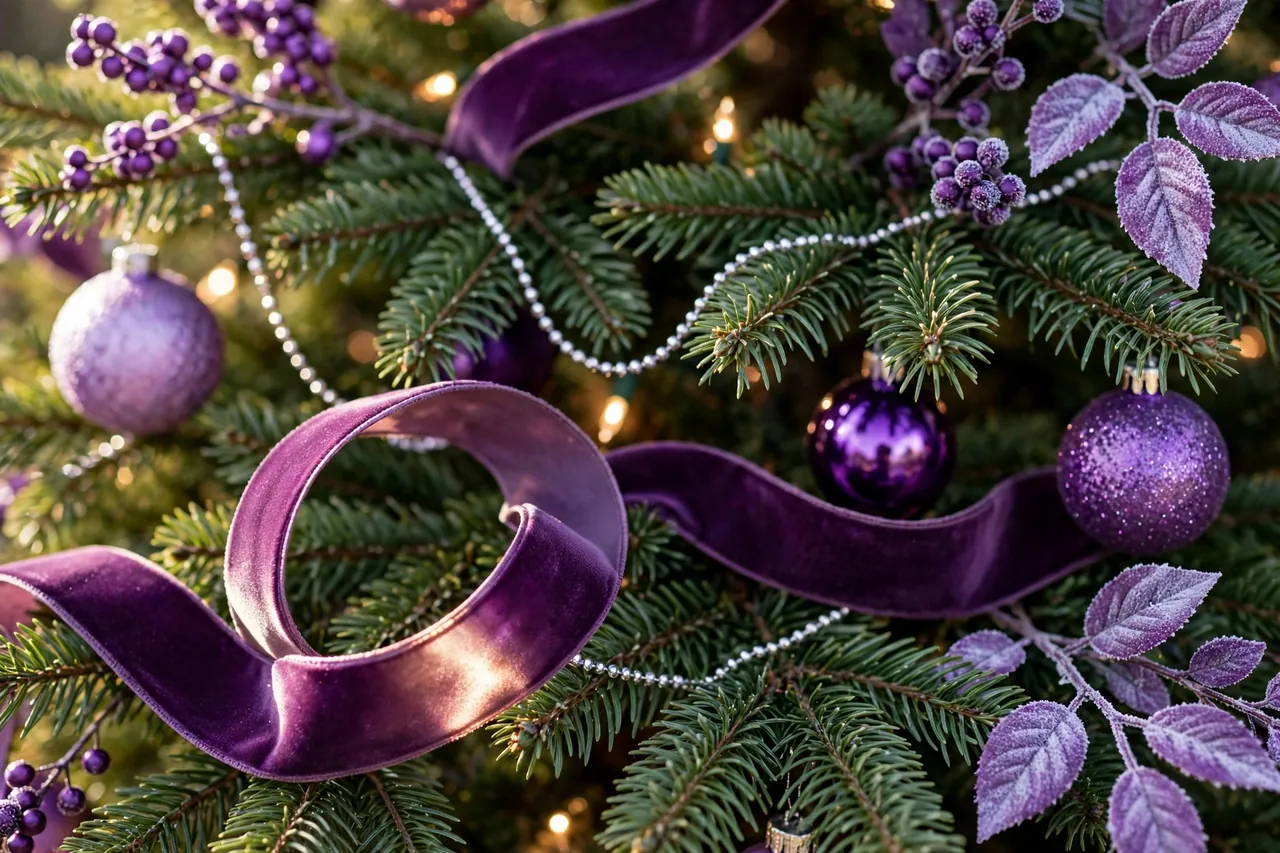
Ribbon is what turns a decorated tree into a styled tree. Wide velvet ribbon in plum or violet reads luxurious, while sheer lavender ribbon reads light and dreamy. Instead of spiraling ribbon around the tree like a barber pole, try tucking it into the branches in soft loops. This ribbon-weaving style creates pockets of color that look professional, and it uses less ribbon than a tight spiral.
Garland plays a quieter role on a purple tree. A beaded garland in silver or clear crystal adds sparkle without adding a new color. A purple tinsel garland adds shine, but use it lightly, because too much tinsel can fight with glitter ornaments for attention. If your tree already sparkles, choose a plain garland or skip garland entirely and let the ribbon do the work.
Picks are the finishing touch most beginners skip, and they make a real difference. A pick is a short decorative stem you poke into a branch, and purple picks come as berries, frosted leaves, feathers, or flowers. Tuck a few silver or white picks near the top and outer edges to lift the tree and give it an airy, finished edge. A handful of picks, placed where the tree looks thin, beats a big bunch crowded into one spot.
Purple Pairings That Always Work
Purple pairs beautifully with several accents, but each pairing sets a different mood. Choose one accent and commit to it. Two accents can work if one clearly dominates, but three or more competing accents will pull attention away from your purple theme.
Purple and Gold: Warm and Royal
Purple and gold is the classic royal pairing, praised by decorating guides for purple Christmas decor as a refined, vintage touch, and it suits formal living rooms and traditional homes best. Use gold ribbon with purple ornaments, or gold ornaments sparingly among the purple, and keep your lights warm white. Warm light keeps purple looking royal, while cool light can push it toward gray. Gold works best as roughly one part in four: enough to glow, never enough to rival the purple.
Purple and Silver: Cool and Wintery
Purple and silver feels like a winter night, and it suits modern rooms and minimalist spaces best. Silver ornaments, silver ribbon, and clear crystal picks cool the purple down and make it sparkle. One warning from experienced decorators: do not let silver pass the halfway mark. If silver reaches about 70 percent of the tree, the purple starts to look like an accident, as if you simply ran out of silver ornaments. Keep purple clearly in charge, with silver as its bright partner.
Purple and White: Crisp and Dreamy
Purple and white is the freshest pairing, and it suits small rooms, bedrooms, and flocked trees best. White ornaments and white lights give lilac and lavender room to breathe, and the contrast makes every purple ornament stand out. For a full take on the pale side of this pairing, see our white Christmas tree decorations guide. This pairing also suits a softer, romantic style: mix lavender and lilac with white and a touch of blush pink, and the tree feels gentle rather than dramatic. Keep the pink soft and small in number, so the tree still reads as purple-led.
When people ask what colors go with purple Christmas decorations, these three pairings are the safest answers, and they agree across decorating guides, including a guide to purple ornament pairings that lists gold, silver, and white as the top matches: gold for warmth, silver for sparkle, and white for crisp contrast. A purple tree decorated in any of these three ways looks intentional, because each pairing gives purple a clear partner instead of a crowd of rivals.
Tree Toppers for a Purple Tree

Your topper should finish the purple story, not start a new one. A purple star, a silver star on a purple tree, or a large purple velvet bow with long streamers all work well. A gold star also works, but only if gold is already your accent color. A topper in a color you used nowhere else on the tree will stick out for the wrong reason.
Scale matters as much as color. A tiny topper vanishes on a tall tree, while a huge topper can bend the top branch and look top-heavy. Hold the topper against the tree before you buy it, or check its height against your tree height. For a slim tree, a bow or a narrow star suits the shape better than a wide angel with spread wings.
If you love a traditional angel, choose one with purple or silver details in its dress or wings, so it belongs to the tree. And if your tree already carries a lot of sparkle, a simple velvet bow can calm the top down beautifully. The topper is the last thing guests see when they look up, so give it the same care you gave the ornaments at eye level.
Rooms That Suit a Purple Tree
Purple trees suit rooms that already lean elegant, calm, or modern. A formal living room with deep colors, velvet cushions, or dark wood loves a plum and gold tree, and our decorating ideas for a living room at Christmas show how to carry that look past the tree. A bright modern room with white walls, silver frames, and clean lines loves a violet and silver tree. A bedroom or a quiet reading corner loves a lilac and white tree, because softer purples feel restful rather than loud.
Carry just one purple note beyond the tree, and the whole room will feel planned. A plum velvet cushion, a lavender throw, or a small bunch of purple ornaments in a bowl on the coffee table is enough. Resist the urge to turn every cushion, candle, and curtain purple. When purple appears in one or two places besides the tree, it feels like jewelry. When it appears everywhere, it feels like a costume.
Light the room for the tree, too. In the evening, dim the overhead lights and let the tree lights carry the room. Metallic purple ornaments photograph beautifully at night, and a dim room lets that glow do its work. During the day, daylight shows the true shades, so check your tree in both lights before you call it done.
Step by Step: Decorating a Purple Christmas Tree
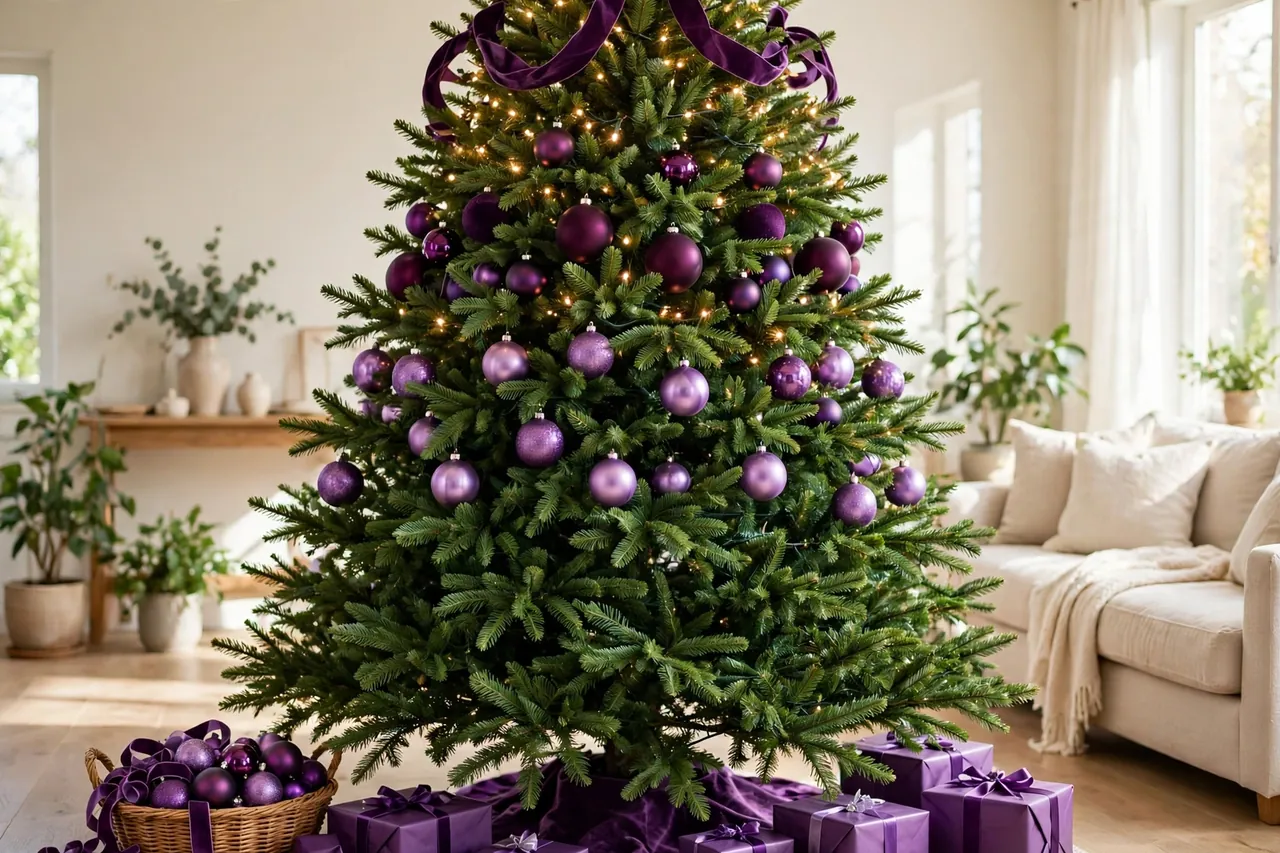
Follow this order, and you will avoid the most common decorating frustration: finishing the tree, stepping back, and finding bare patches you can no longer reach. Work from the inside out, and from the largest pieces to the smallest.
- Fluff every branch, then switch the lights on so you can see holes in the foliage.
- String warm white lights first, or purple fairy lights if you want a stronger purple glow, weaving them deep into the branches.
- Hang large filler ornaments in plum and violet deep inside the tree to hide the trunk.
- Tuck wide ribbon into the branches in soft loops, starting at the top and working down.
- Hang mid-size ornaments in your full shade range, mixing matte, shiny, and glitter finishes.
- Add garland lightly, only if the tree still looks thin, and keep it to one style.
- Tuck picks, berries, and frosted leaves into thin spots near the outer edges.
- Hang small showpiece ornaments at the branch tips, with your favorites at eye level.
- Place the topper, step back, and fill any bare patch with one ornament or pick at a time.
- Finish the base with a tree skirt in purple, silver, or white, and wrap gifts in matching paper.
Give yourself time for the last step. Most trees look good after step eight and great after step nine, because that final walk-around, with fresh eyes and a few spare ornaments in hand, catches the gaps you missed while you worked up close.
Mistakes That Make a Purple Tree Look Messy
Most purple trees go wrong in the same few ways, and every one is easy to fix. First, too many shades: if your purples clash, remove the odd one out instead of adding more ornaments to hide it. Second, too much metallic: if gold or silver starts to outnumber purple, pull the extra metallic ornaments back and let purple lead again.
Third, ornaments hung only on the outer edge. A tree decorated only at the tips looks thin from the side and shows its trunk from every angle. Push some ornaments deep inside, and the tree will look full from any seat in the room. Fourth, lights added last. Lights buried under ornaments cannot glow through them, so always light the tree before you hang anything else.
Finally, decorating in a rush under one light. Purple changes under different lights, so check your tree in daylight and in evening light before you finish. A tree that looks perfect under bright ceiling lights can look dull or gray once the room lamps take over.
Keep Your Purple Tree Looking Good All Season
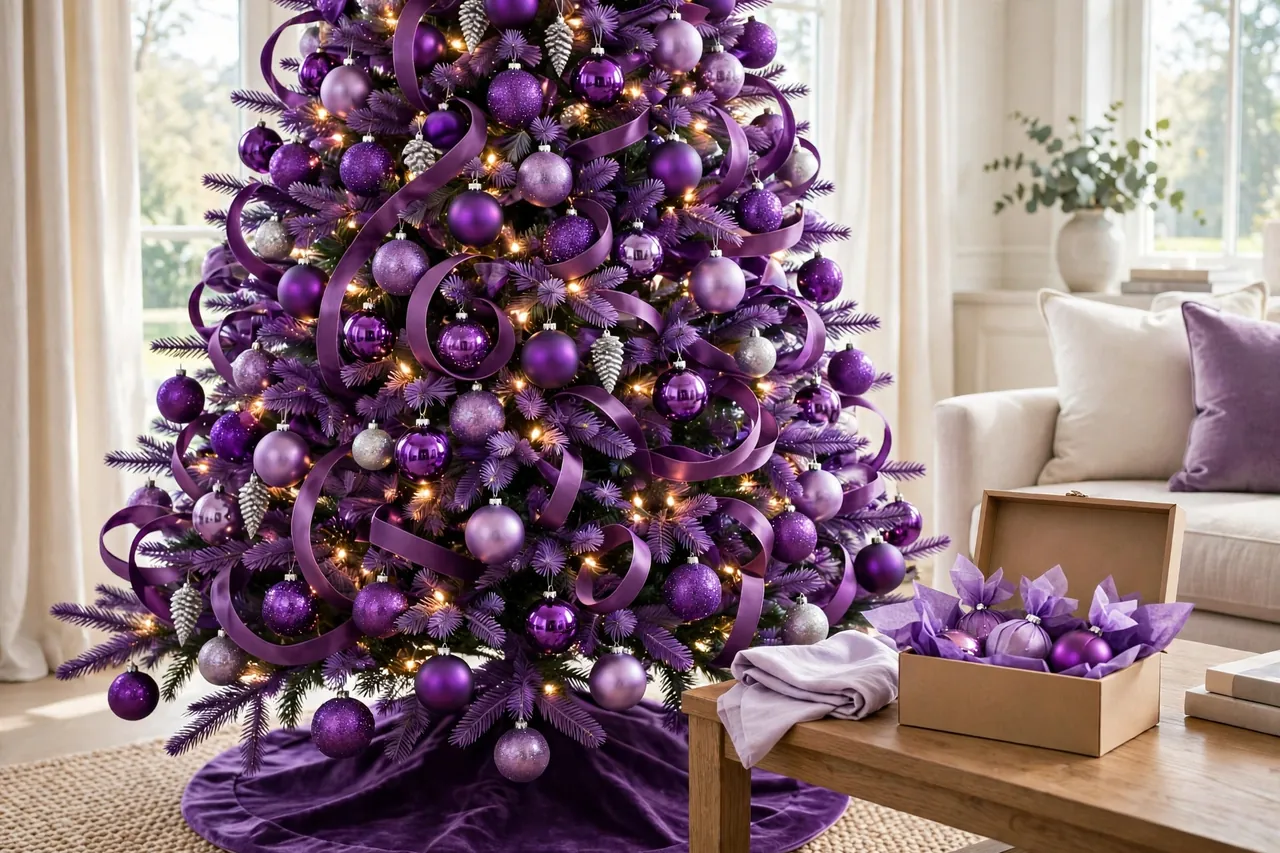
Purple ornaments keep their color best when you treat them gently. Dust them with a soft, dry cloth instead of a damp one, because moisture can dull glitter finishes. Keep the tree out of strong, direct sunlight, since long sun exposure can fade lower-quality purple ornaments over time. And check your light strings before you hang them each year, replacing any burnt-out bulbs with the spares your light set maker specifies.
When the season ends, store purple ornaments in their own box, and our guide to Christmas tree storage bags covers how to pack and protect the tree itself. wrapped in tissue, away from heavy ornaments that could crush glitter or velvet finishes. A tree stored in a dark, dry place holds its color far better than one left in a bright attic corner. Store it well, and next year your purple palette will look just as rich as it did the first time.
One safety note deserves a permanent place in your routine. Never leave tree lights on when you leave the house or go to bed, and keep the tree away from candles, heaters, and fireplaces. A beautiful tree is only a good tree when it is also a safe one.
Related Guides
Colorful Christmas Decor: Palettes That Feel Joyful, Not Messy · Homes Decorated for Christmas: How a Whole Home Comes Together · Christmas Paper DIY Decorations: Snowflakes, Garlands, Stars, and More
Frequently Asked Questions
What colors go with purple Christmas tree decorations?
Gold, silver, and white are the three pairings that work most reliably. Gold adds warmth and a royal feel, silver adds cool winter sparkle, and white gives a crisp contrast that makes lilac and violet stand out. Choose one accent and let purple stay the main color.
Can I mix ornament colors on a purple Christmas tree?
Yes, as long as purple stays in charge. Mix shades of purple freely, from lilac to plum, and add one metallic accent like gold or silver. Avoid adding several unrelated colors at once, because the tree quickly stops reading as purple.
Do purple ornaments look good on a green tree?
Yes, they look wonderful on a green tree. Deep plum and violet ornaments look rich against dark green branches, while lilac ornaments add a lighter, dreamy contrast. A green tree also gives you the most traditional backdrop for a purple theme.
What color lights look best on a purple Christmas tree?
Warm white lights are the safest choice, because they keep purple looking royal and rich. Cool white lights can push purple toward gray, while purple fairy lights strengthen the theme for a bolder, more modern glow. Test your lights at night before you finish decorating.
Can I use a purple tree topper on a green tree?
Yes, a purple star, bow, or angel topper ties a green tree together when the ornaments below it are purple too. Match the topper to your accent color as well: a gold topper suits a purple and gold tree, while a silver topper suits a purple and silver tree.
How do I keep a purple tree from looking too dark?
Mix in lighter shades like lilac and lavender, add white or silver accents, and use warm white lights. Place your lightest ornaments near the branch tips and at eye level, where light reaches them best, and keep your darkest plum ornaments deeper inside the tree.
A purple Christmas tree rewards one simple discipline: let purple lead, and let everything else support it. Choose your shades, layer your ornaments from the inside out, add one metallic partner, and finish with a topper that belongs to the tree. Then dim the room lights, step back, and enjoy the glow. Your next step is easy: gather your purples together under warm light tonight, and you will see your palette come together before you hang a single ornament.