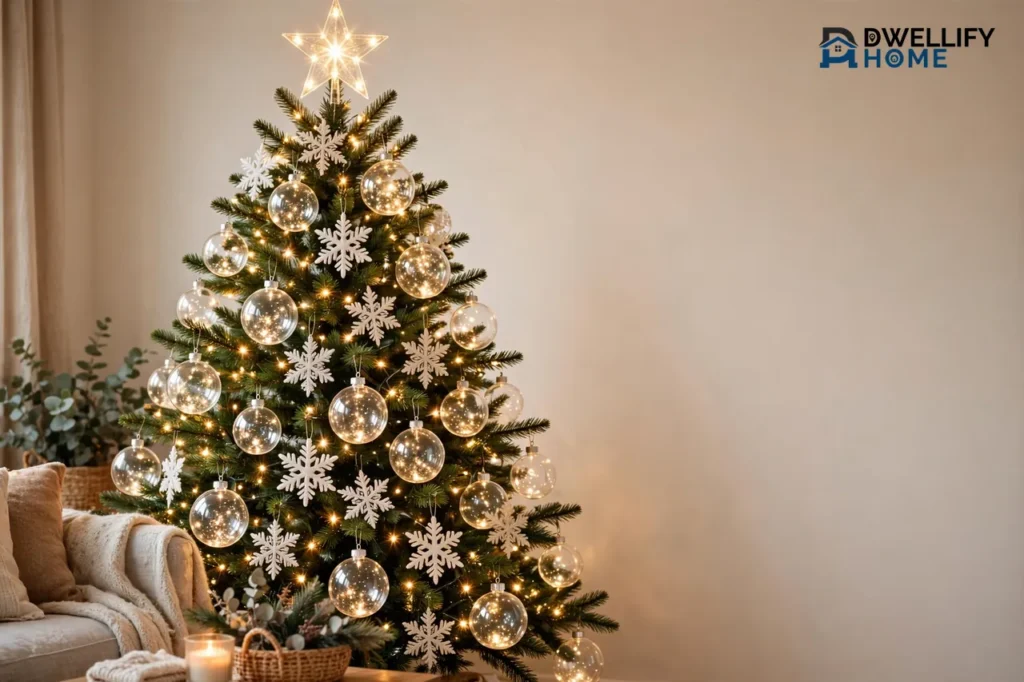
Acrylic Christmas decorations are holiday pieces made from clear, hard plastic called acrylic, also known as polymethyl methacrylate (PMMA). They look much like glass, yet they weigh less and resist shattering, so they suit busy homes, lower tree branches, and many outdoor spots. You can find them as ornaments, figurines, light-up shapes, and flat cutouts, and with gentle care they can last for many seasons.
If you want the sparkle of glass without the sharp shards when a piece falls, acrylic is often the smarter pick. The trade-off is real, though: acrylic scratches more easily than glass, so you must clean it softly and store it with care. This guide walks you through the types, the acrylic-versus-glass choice, indoor and outdoor use, and the cleaning routine that keeps clear pieces clear.
What Are Acrylic Christmas Decorations?
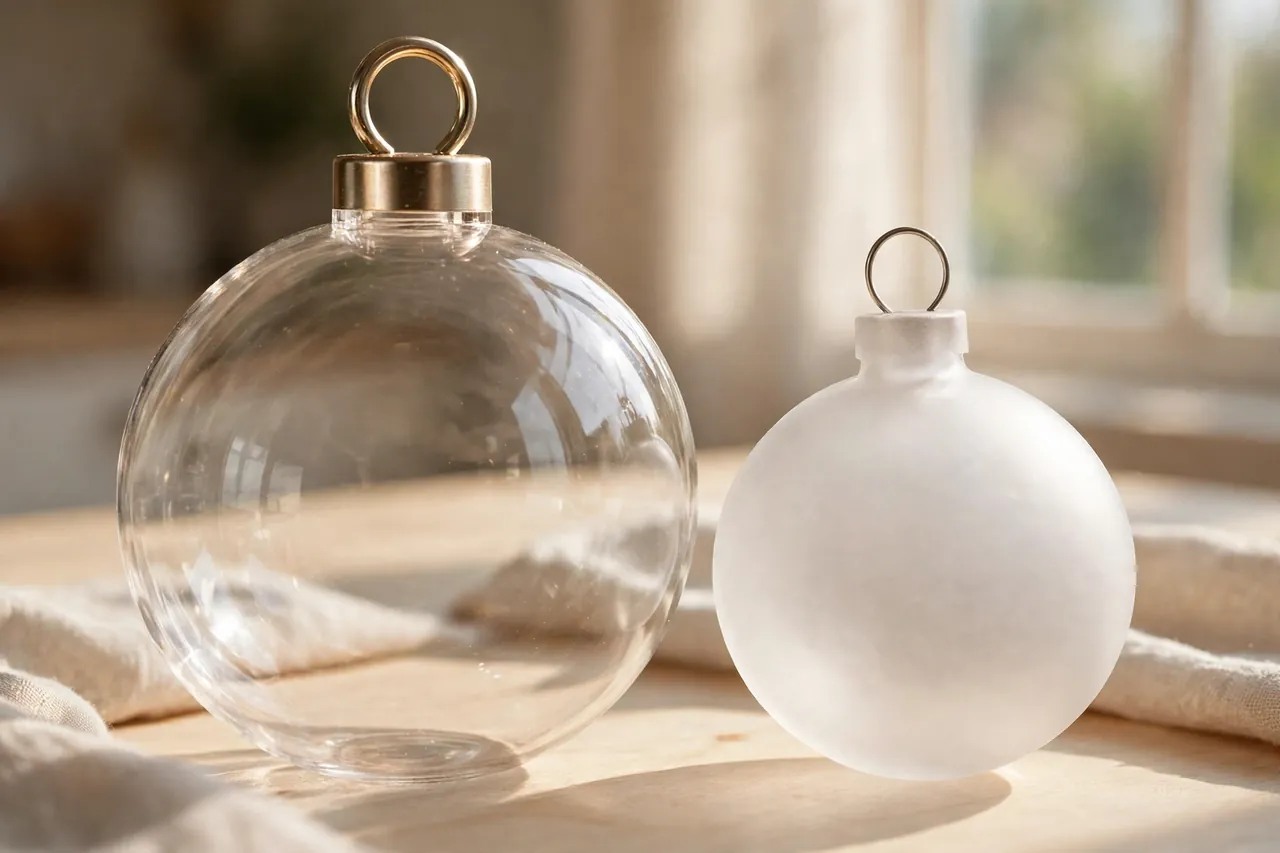
Acrylic is a transparent thermoplastic, which means makers can mold it, cut it into shapes, and color it in many ways. In holiday decor, you will see it as crystal-clear baubles, frosted shapes, glitter-filled ornaments, mirrored pieces, and glowing yard figures. Some pieces are solid, some are hollow, and some are thin flat shapes cut with a laser into snowflakes, stars, and names.
That range is the big appeal. A clear acrylic bauble catches tree lights much like glass does. A colored or frosted piece adds soft color without adding much weight. And because makers can cut acrylic so precisely, you can buy detailed shapes, from delicate snowflakes to personalized ornaments with a family name, that would be fragile or costly in glass.
Acrylic is not the same as every plastic ornament on the shelf, though. Cheap thin plastic baubles may be polystyrene rather than acrylic, and they can turn brittle with age. When you shop, read the label. If it says acrylic or PMMA, you are buying the material this guide covers. If it only says plastic, ask the seller or check the listing details before you judge its quality.

Types of Acrylic Christmas Decorations
Most acrylic pieces fall into a few clear groups. Knowing which group you want makes shopping much easier, because each group suits a different spot in your home.
Acrylic Ornaments
Acrylic ornaments are the most common type, and they hang on trees, garlands, and wreaths. You will find round baubles, drops, icicles, stars, snowflakes, and flat shapes in clear, frosted, mirrored, and glitter styles. Flat laser-cut ornaments are light and easy to personalize, while round baubles give you the classic glass look without the same break risk.
Because they weigh so little, acrylic ornaments work well on thin branches and on the lower part of the tree, where kids and pets can reach them. Hang your heaviest or most loved glass pieces up high, and let acrylic carry the lower branches. That simple split protects both your keepsakes and your floors.
Acrylic Figurines
Acrylic figurines include Santas, snowmen, reindeer, angels, and nativity scenes, often in clear, frosted, or colored acrylic. Some stand on a base, some sit on a mantel, and some work as table centerpieces. Clear figurines catch nearby light and look lovely near a window or beside a lamp, while frosted ones give a softer, snowy glow.
Figurines show off acrylic at its best because the material holds fine detail while staying light. A large glass figurine can be heavy and risky on a high shelf, but a similar acrylic figure is easier to move, dust, and store. Just keep figurines away from radiators and open flames, since heat can warp plastic over time.
Light-Up Acrylic Pieces
Light-up acrylic pieces are one of the fastest-growing types, and for good reason. Clear acrylic carries light beautifully, so a lit snowflake, star, reindeer, or tree shape glows from within rather than just reflecting light from outside. You will see them as window decorations, porch figures, yard silhouettes, and tabletop pieces, often lit with LEDs.
Before you buy a light-up piece, check whether it is rated for indoor use only or for outdoor use as well, and read the cord and plug details. For more ideas on pairing lit pieces with the rest of your display, see our guide to outdoor lit Christmas gifts, which covers glowing pieces made for outside. A lit acrylic figure can anchor a whole porch display, but only if its wiring suits the spot you put it in.
Flat Cutouts, Signs, and Window Pieces
Flat acrylic cutouts include snowflakes, stars, words like Joy and Merry Christmas, and window hangings that catch daylight. They are thin, light, and easy to hang with ribbon, suction cups, or small hooks. Many sellers offer them personalized with names or dates, which makes them popular as gifts and keepsakes.
Flat pieces also work well beyond the tree. Try a row of acrylic snowflakes across a window, a welcome sign by the door, or a set of flat ornaments on a garland. Because they are so light, they rarely pull a branch down, but they can blow around outdoors, so anchor them well if you hang them outside.
Acrylic vs Glass: Which Should You Choose?
Acrylic and glass both look beautiful, but they behave very differently when life happens around them. Glass wins on scratch resistance and that deep, heavy feel many collectors love. Acrylic wins on safety, weight, and everyday durability. Your home, not the catalog photo, should decide which one you buy.
The safety difference matters most. Glass shatters into sharp shards when it falls on a hard floor. Acrylic resists shattering and tends to crack or chip instead, which means less risk of cuts and a much easier cleanup. That is why many families choose acrylic for lower branches and glass only for the top of the tree, out of reach.
On the material side, Plaskolite, a major acrylic sheet maker, describes its OPTIX acrylic sheet as impact and weather resistant, with special UV stabilization that protects the sheet from yellowing, and its product data sheet lists 92 percent light transmission for a 3mm transparent sheet. Those figures describe sheet material, not every finished ornament, so treat them as a guide to what good acrylic can do, not a promise for any single piece. Piedmont Plastics, a Plaskolite distributor, also notes that OPTIX carries a 10-year limited non-yellowing warranty and is described as up to three times stronger than double-strength window glass. Again, that is a sheet claim, and finished decorations vary by thickness and maker.
The table below sums up the practical differences so you can decide at a glance.
Acrylic vs glass at a glance
| Feature | Acrylic | Glass |
|---|---|---|
| Break behavior | Resists shattering; may crack or chip | Shatters into sharp shards |
| Weight | Light; kind to thin branches | Heavier; can pull branches down |
| Scratch resistance | Lower; needs soft cloths only | Higher; stands up to firmer wiping |
| Clarity | Very clear; 92 percent light transmission for 3mm OPTIX sheet | Excellent; the classic deep sparkle |
| Outdoor use | Often suitable if rated for outdoors | Risky; breaks easily in wind and cold handling |
| Best for | Kids, pets, lower branches, outdoors | Collectors, high branches, heirloom display |
Neither material wins every round. If you love heirloom glass and have a calm, adult-only room, glass still makes sense up high. If your tree sits in the middle of family life, acrylic gives you the look with far less worry. Many homes mix the two, and that mix is often the best answer of all.

How to Choose Quality Acrylic Christmas Decorations
Good acrylic pieces feel solid, look clear, and hang or stand without wobbling. Poor ones feel thin, look cloudy from the start, or have rough edges that catch on ribbon and fingers. Use the checks below before you buy, and you will avoid most disappointments.
- Check the material label: look for acrylic or PMMA, not just plastic, so you know what you are buying.
- Look at the thickness: thicker walls and solid shapes resist cracking far better than paper-thin shells.
- Inspect the edges: smooth, polished edges mean better making; rough or sharp edges mean a rushed piece.
- Test the hanging loop: tug it gently. A loop set into the piece beats a glued-on cap that pops off.
- Check the finish: clear pieces should look clear, not hazy, and glitter should sit inside the piece or under a smooth coat, not flake onto your hands.
- Read the use rating: indoor-only pieces should stay inside, even on a covered porch, unless the maker says otherwise.
- Ask about lights: for lit pieces, confirm the power source, cord length, and whether the plug and cord suit outdoor use.
Size matters too. A big flat snowflake looks stunning in a window but can act like a sail outdoors, so match the size to the spot. Small and medium ornaments suit trees best, while large figurines need a stable base and a sheltered spot. When in doubt, buy one piece first, live with it for a few days, and then buy the rest of the set.
Think about your color plan before you buy a mixed set. Clear acrylic blends with any theme, from classic red and gold to icy blue and white. Colored acrylic makes a stronger statement, so pick one or two accent colors and repeat them rather than mixing every shade in the box. Your tree will look planned, not crowded.
Using Acrylic Christmas Decorations Indoors
Indoors is where acrylic shines most, because you get the glow without the worry. Hang acrylic ornaments on the lower two-thirds of the tree, where hands and paws reach, and save glass for the top. Mix clear baubles with frosted and mirrored pieces so the tree catches light from every angle.
Beyond the tree, acrylic works on mantels, windowsills, and tables. A group of three figurines at different heights looks better than a long row of same-size pieces, so vary the heights and leave a little breathing room between them. Near a window, clear pieces catch daylight by day and lamplight by night, which gives you two displays for the price of one.
For a simple, elegant look, pair acrylic with natural greenery. Clear and frosted pieces sit beautifully against fresh or faux pine, and they do not compete with the greenery the way bold colored ornaments sometimes do. If you want a fuller outdoor-to-indoor flow, our guide to outdoor Christmas greenery can help you plan the greenery side, while acrylic carries the sparkle.
Keep acrylic away from direct heat indoors as well. Do not hang it right over a radiator, beside a fireplace opening, or against a hot light bulb. Heat can warp thin pieces and dull the finish over time, and no ornament looks good melted onto a mantel.
Using Acrylic Christmas Decorations Outdoors
Acrylic can work outdoors, but only the right pieces in the right spots. Sheet acrylic itself is made for weather: Plaskolite describes OPTIX as impact and weather resistant and suitable for indoor and outdoor use, and its data sheet lists a minimum temperature of minus 40 degrees Celsius for the sheet. Finished decorations, however, vary widely, so always trust the decoration’s own rating over the general material claim.
Covered spots are the safest outdoor home for acrylic. A porch, a covered entry, or a sheltered patio protects pieces from driving rain and strong wind while still showing them off. Open yard spots suit larger, sturdier lit figures with proper anchoring, not thin flat ornaments that can blow away or snap in a gust.
Anchor everything outdoors. Light pieces catch wind easily, so use sturdy hooks, ties, or stakes, and check them after the first storm. Heavy yard pieces need a different kind of care: if you are setting up large outdoor figures, read our guide to weights for outdoor Christmas decorations before you place them, and compare solid yard options in our look at wooden Christmas yard art and Santa and sleigh yard decorations to judge what suits your yard best.
Watch for two outdoor enemies: sun and grit. Long, harsh sun can yellow or dull cheaper acrylic over seasons, so bring prized pieces in during the off-season rather than leaving them out all year. Grit and wind-blown dust can scratch the surface, so wipe outdoor pieces with a soft cloth after storms instead of scrubbing them dry and dirty.
For lit outdoor pieces, caution comes first. Before you plug anything in, check that the lights, cord, and plug are rated for outdoor use, that cords run where no one trips on them, and that outdoor outlets have ground-fault protection. Never use an indoor-only cord or power supply outside, even on a dry night, because dew and frost can reach it by morning. If a cord looks cracked or a plug feels loose, retire that piece for the season and replace the cord or the decoration.

How to Clean and Care for Acrylic Christmas Decorations
Cleaning acrylic is simple, but it rewards a gentle hand. The golden rule is soft and wet, never dry and rough. Dust and grit scratch acrylic when you drag them across a dry surface, so always lift dust off first and wash with plenty of soapy water.
Acrylic makers agree on the basics. TAP Plastics, a plastics supplier, advises cleaning acrylic with a soft, clean, non-abrasive cloth and a mild, non-abrasive cleaner such as dish soap, and warns against cleaners containing alcohol, ammonia, aromatics, and abrasives. PLEXIGLAS sheet guidance likewise recommends washing with mild soap or detergent in lukewarm water, using a clean soft cloth or sponge, and avoiding window cleaning fluids, scouring compounds, and solvents such as alcohol and acetone. Follow that maker guidance and you will avoid the most common cause of cloudy acrylic: the wrong cleaner.
Here is a safe routine that works for most plain acrylic pieces:
- Dust first with a soft brush or a puff of air so loose grit does not scratch the surface.
- Mix a drop of mild dish soap in lukewarm water, and dampen a clean microfiber cloth in it.
- Wipe gently in straight lines, not circles, and keep the cloth damp as you go.
- Rinse with clean lukewarm water or a fresh damp cloth so no soap film dries on the piece.
- Blot dry with a clean, dry microfiber cloth, or let the piece air-dry on a soft towel.
For light-up pieces, unplug them first and let them cool before you clean anywhere near the lights or cord. Never soak a lit piece, and never let water run into a battery box, plug, or cord joint. Wipe around the lit parts with a barely damp cloth, and dry the piece fully before you plug it back in.
What should you avoid? Skip glass cleaner, paper towels, scouring pads, and rough cloths, because they can scratch or haze acrylic. Skip acetone, nail polish remover, and strong solvents, which can cloud or crack the surface. If a piece has a printed design, a mirrored coating, or glitter on the outside, test your cleaning method on a small hidden spot first, since coatings can be more delicate than plain acrylic.
Storage matters as much as cleaning. Wrap each piece in tissue paper or a soft cloth so pieces do not rub together, and store them in a cool, dry box rather than a hot attic. Keep acrylic away from sharp ornaments and heavy boxes stacked on top, since pressure and rubbing cause the fine scratches that dull a piece over time. Label the box clearly so next December you find your acrylic set in one place, ready to hang.

Common Mistakes to Avoid
Most acrylic disappointments come from a few avoidable habits. First, hanging indoor-only pieces outside, where wind and rain age them fast. Second, cleaning with glass cleaner or a paper towel, which leaves fine scratches that build into haze. Third, stacking pieces loose in a box, where they rub each other dull all year.
Fourth, overloading thin branches with heavy pieces, even light ones in large numbers. A branch can hold only so much, so spread the weight and step back to check the shape as you go. Fifth, buying on looks alone without checking thickness, edges, and hanging loops. A pretty piece with a weak loop will not survive its first season on a busy family tree.
Finally, do not leave acrylic out all year in strong sun. Bring pieces inside after the holidays, clean them gently, and store them wrapped. That one habit does more for long life than any polish or special product, and it costs nothing.
Troubleshooting Quick Guide
If a piece already looks dull or has a small problem, work through this list from gentlest to firmest, and stop as soon as the piece looks good again:
- Light dust or fingerprints: dust first, then wipe with a damp microfiber cloth and mild soapy water.
- Soap film or water spots: rinse again with clean lukewarm water and blot dry at once.
- Light haze: wash gently, dry fully, and check in daylight; if haze stays, it may be scratches, not dirt.
- Fine scratches: do not scrub harder. Use only a polish made for acrylic, test it on a hidden spot, and follow its label exactly.
- Cracked or chipped piece: retire it from low branches and kids’ reach, since cracks can grow and edges can sharpen.
- Loose hanging loop: rehang with a stronger hook or ribbon, or move the piece to a shelf where it cannot fall.
- Lit piece not glowing evenly: unplug it, check the cord and plug for damage, and replace the piece if wiring looks worn.
A short safety note: acrylic decorations are light, but a falling figurine or a faulty light can still hurt someone or start a problem. Hang heavier pieces securely, keep lit pieces away from curtains and dried greenery, unplug outdoor and lit displays when you leave the house or go to sleep if the maker advises it, and never try to repair damaged wiring yourself. If a cord or plug looks damaged, stop using that piece until it is properly replaced.
Related Guides
Outdoor Christmas Greenery: Garlands, Wreaths, and Swags That Last the Season · LED Christmas Decor: A Complete Guide to Bright, Efficient Holiday Lighting · Why Do We Decorate a Tree at Christmas?
Frequently Asked Questions
Are acrylic Christmas decorations shatterproof?
Acrylic decorations resist shattering far better than glass, but no maker can honestly call them unbreakable. They may crack or chip under hard force, yet they rarely burst into sharp shards. That makes them a safer choice for homes with kids and pets, especially on lower branches.
Can you use acrylic Christmas decorations outdoors?
Yes, but only pieces rated for outdoor use, and covered spots are safest. Sheet acrylic itself is weather resistant, yet finished pieces vary, so check the maker’s rating. Anchor light pieces against wind, keep plugs and cords outdoor-rated, and bring prized pieces inside after the season.
How do you clean acrylic Christmas decorations without scratching them?
Dust first, then wash with mild dish soap and lukewarm water using a clean microfiber cloth, wiping in straight lines. Rinse, blot dry, and never use glass cleaner, paper towels, scouring pads, or solvents such as acetone. Those are the most common causes of fine scratches and haze.
Are acrylic Christmas decorations safe around kids and pets?
They are safer than glass because they do not shatter into sharp shards, and their light weight means a falling piece hits with less force. Still, supervise young children, check pieces for cracks or peeling coatings, and keep small or broken pieces out of reach, since small parts can be a choking hazard.
Do acrylic Christmas decorations yellow over time?
Good-quality acrylic resists yellowing, and Plaskolite’s OPTIX sheet even carries a 10-year limited non-yellowing warranty, but cheaper pieces can dull with long sun exposure and harsh cleaners. Gentle cleaning, shade from harsh sun, and indoor storage after the holidays help clear pieces stay clear for years.
Acrylic Christmas decorations give you the sparkle of glass with far less worry, and that trade is worth it for most homes. Start with a few quality pieces, hang them where they catch the light, clean them gently, and store them wrapped. Do that, and the same set can brighten your holidays for many Decembers to come. For tree safety basics to pair with your new ornaments, see our guide to Christmas tree safety.