To stay warm without power in winter, pick one small room, seal its drafts, and warm your body first with layers, blankets, and a sleeping bag. Use only heat sources rated for indoor use, and never run a generator, charcoal grill, camp stove, or gas oven indoors, because carbon monoxide has no color and no smell and can kill. If anyone feels dizzy, confused, or sick, get everyone into fresh air at once and call 911.
Your house will keep cooling hour by hour, so the order of your actions matters more than any single trick. Work through this guide from top to bottom. The first sections buy you time. The later sections protect your pipes, your food, and your family, and tell you when staying home stops being the safe choice.
What to Do in the First 15 Minutes
Act fast while the house still holds its heat. Every minute you wait is warmth you cannot get back without power. Run through these steps in order, and skip nothing.
- Report the outage to your power company, then charge nothing you do not need and save your phone battery for calls and updates.
- Put on warm layers right away, including a hat and warm socks, before you start to feel cold.
- Close the doors to every room you do not need, and pick the one room your household will live in until the power returns.
- Push rolled towels along the bottom of exterior doors, and close curtains and blinds on windows that face away from the sun.
- Check that your battery-powered smoke alarm and carbon monoxide detector work, and move a detector into the room where you will sleep.
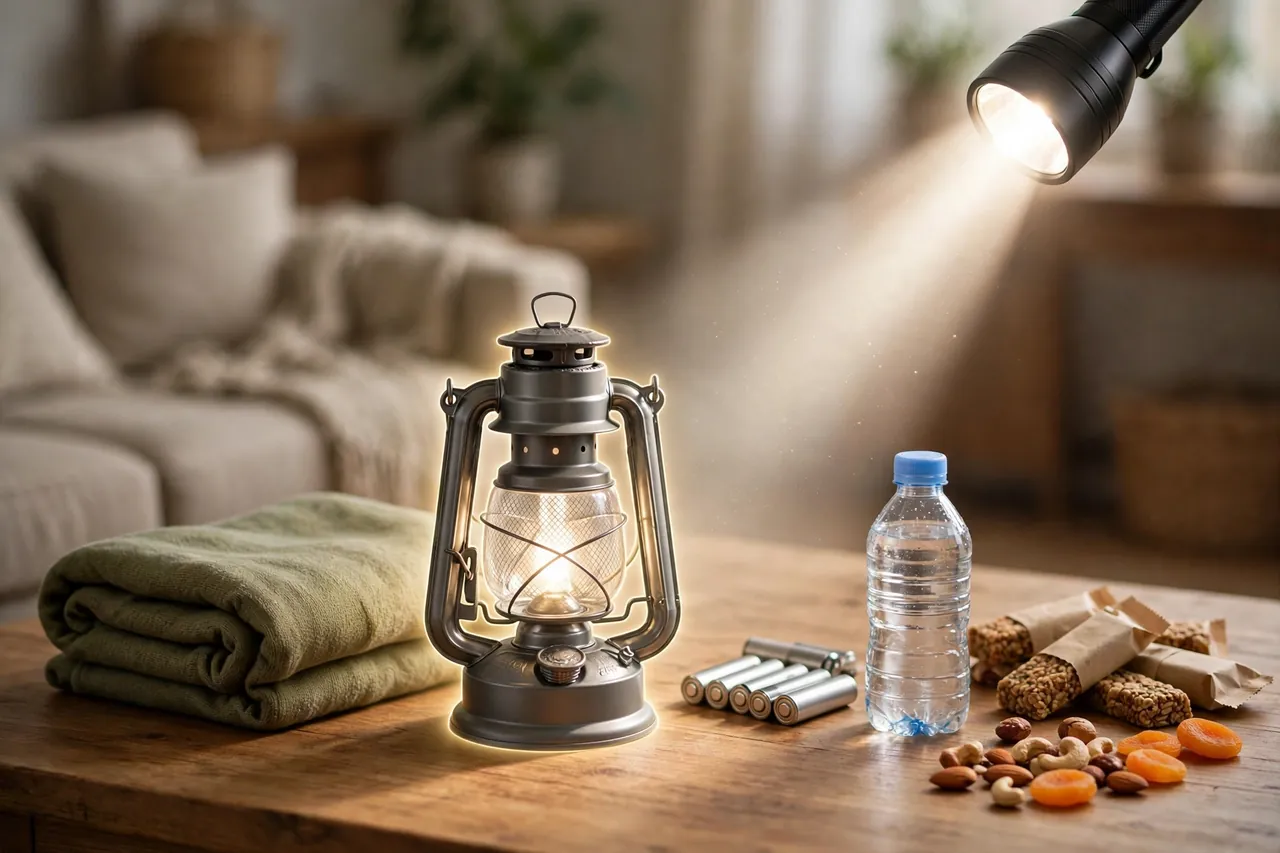
- Keep the refrigerator and freezer doors shut, and gather blankets, sleeping bags, flashlights, water, and snacks into your chosen room.
- Let a faucet on an exterior wall drip in a slow trickle if the temperature is below freezing, and open the cabinet doors under sinks.
If you have a gas range, you can cook a hot meal on it, but turn it off when you finish cooking. A gas stove heats food safely. It does not heat a home safely, and leaving it on for warmth fills the room with carbon monoxide.
Make One Warm Room
Trying to heat a whole house without power is a losing battle. Your furnace is off, and every empty room steals heat from the rooms you use. Pick one room, seal it, and put all your effort there. A family of four and a dog in a small closed bedroom can raise the temperature of that room by several degrees with body heat alone.
Pick the Right Room
Choose a small room with few windows and few outside walls. A bedroom on an upper floor often works well, because warm air rises and the rooms below it add a layer of insulation. Pick a room near a bathroom if you can, so nobody has to cross a cold house at night. Bring everyone in, including pets, and keep the door closed.
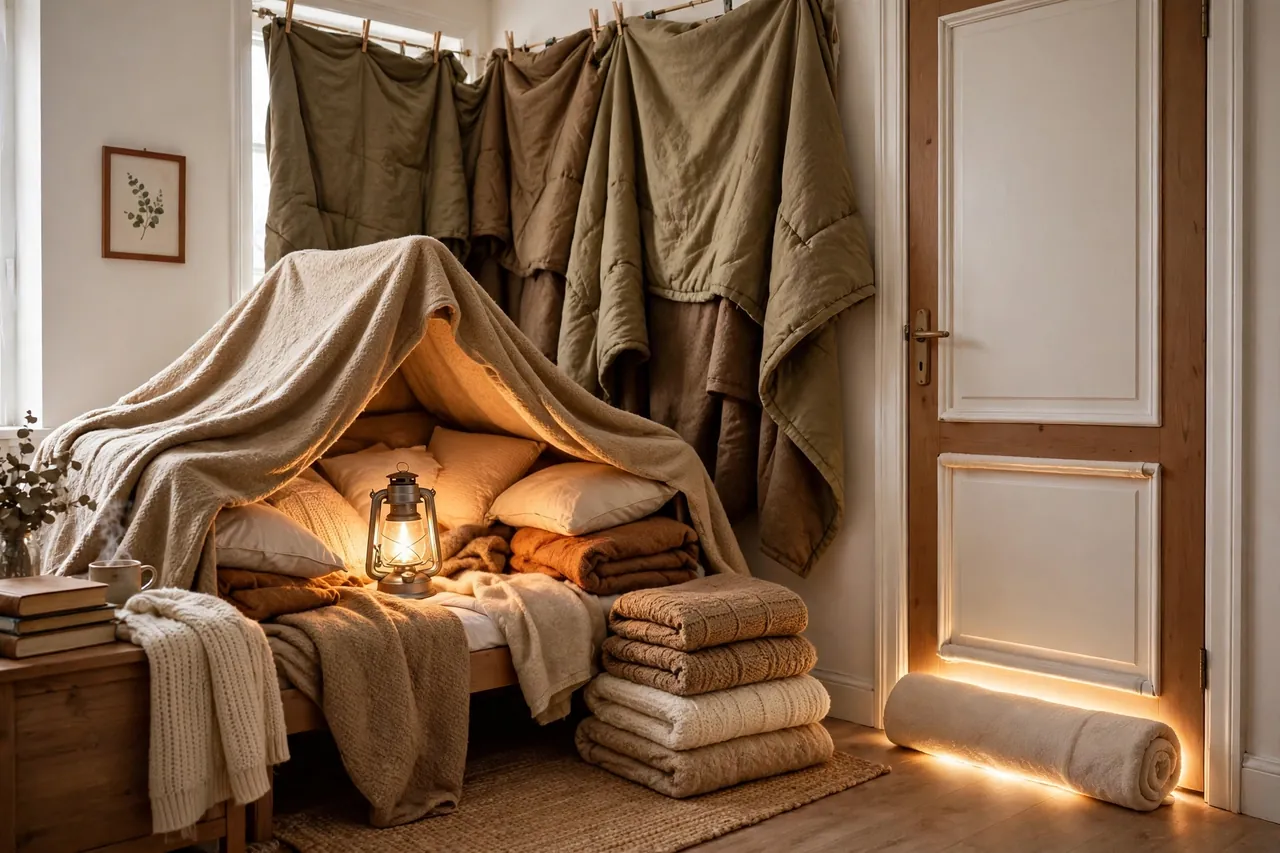
If you have a camping tent, set it up inside the room. A small tent traps body heat in a tiny space, and it works far better than most people expect. No tent? Drape blankets over a table to make a blanket fort. Children treat it as an adventure, and the smaller air space warms up fast.
Seal the Drafts and Cover the Windows
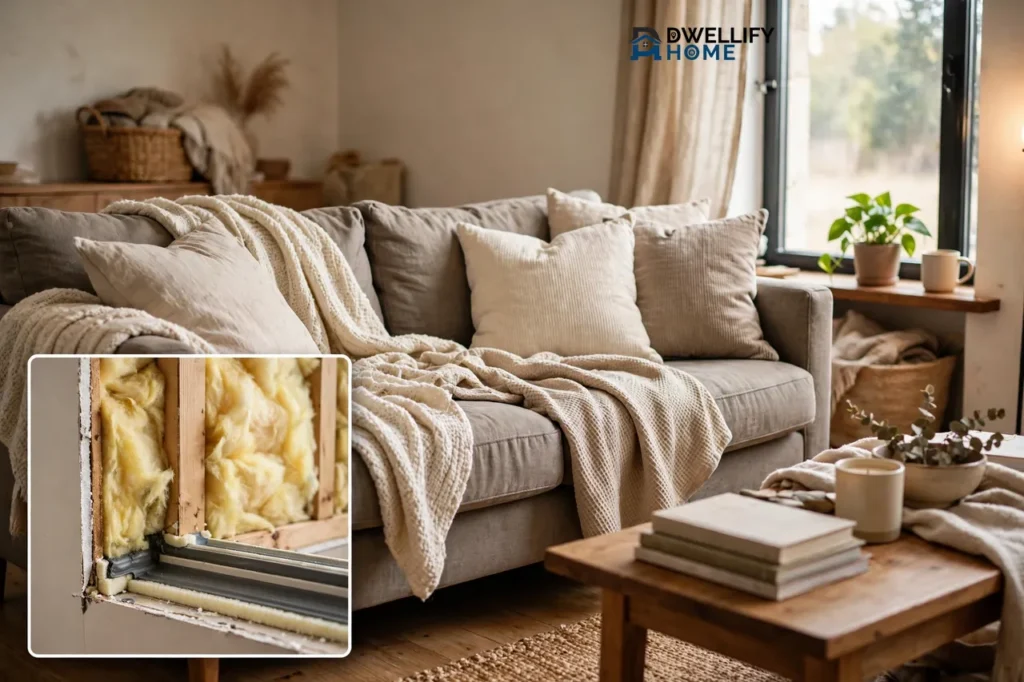
Heat escapes through windows, doors, and small gaps, so block them all before night falls. Roll towels into draft stoppers and press them tight along the bottom of exterior doors. Tape plastic sheeting or hang heavy blankets over drafty windows, and close the curtains as soon as the sun goes down.
During the day, do the opposite on sunny windows. Open the curtains on windows that face the sun and let the daylight warm the room, then close them again at sunset to trap the heat inside. Cover bare floors with rugs, blankets, or even towels, because tile, vinyl, and hardwood pull heat away from your feet. Watch your step so loose coverings do not become a trip hazard in the dark.
Leave one caution in mind while you seal the room. Do not block a fireplace flue, a furnace vent, or any vent a fuel-burning heater needs. Sealing drafts keeps heat in. Sealing off the air a fire or heater needs to breathe creates a new danger.
Keep Your Body Warm: Layers, Blankets, and Sleeping Bags
When you cannot heat the house, heat the person. Your body is the furnace you still control, and layers, blankets, and movement keep it working. Start with the clothing closest to your skin and build outward.
Wear several thin layers instead of one bulky sweater. Thin layers trap warm air between them, and you can add or remove one as the room warms or cools. Start with a moisture-wicking base layer, such as merino wool or a synthetic thermal, and avoid cotton next to your skin, because cotton holds sweat and makes you colder. Add a fleece or wool sweater, then a warm outer layer. Wear a hat indoors day and night, because a large share of body heat escapes through the head, and wear warm socks and shoes instead of walking barefoot on cold floors.
Keep blankets where you can reach them without leaving the warm room. Wrap a fleece blanket around your shoulders like a shawl so you can move around while you stay covered. At night, sleep in your warmest sleeping bag, and put a blanket or sleeping pad underneath you as well as on top, because the floor steals heat from below. Pile into one bed when you can, and let pets join you. Shared body heat is free, and it works.
Move around a little every hour. A short walk around the room, a few stretches, or a round of light chores warms you up from the inside. Stop before you sweat, and change out of damp clothes right away, including damp socks, because wet fabric pulls heat away from your body fast. Eat regular snacks and sip warm drinks. Your body burns calories to stay warm, so soup, oatmeal, nuts, and hot cocoa all help. Skip alcohol, which makes you feel warm while it actually lowers your body temperature.
Safe Heat Sources You Can Use
Only two kinds of heat belong inside a home during an outage: a properly vented fireplace or wood stove, and a heater rated for indoor use. Everything else that burns fuel belongs outside. Check your carbon monoxide detector before you light anything, and keep it in the same room as the heat source.
Fireplace or Wood Stove
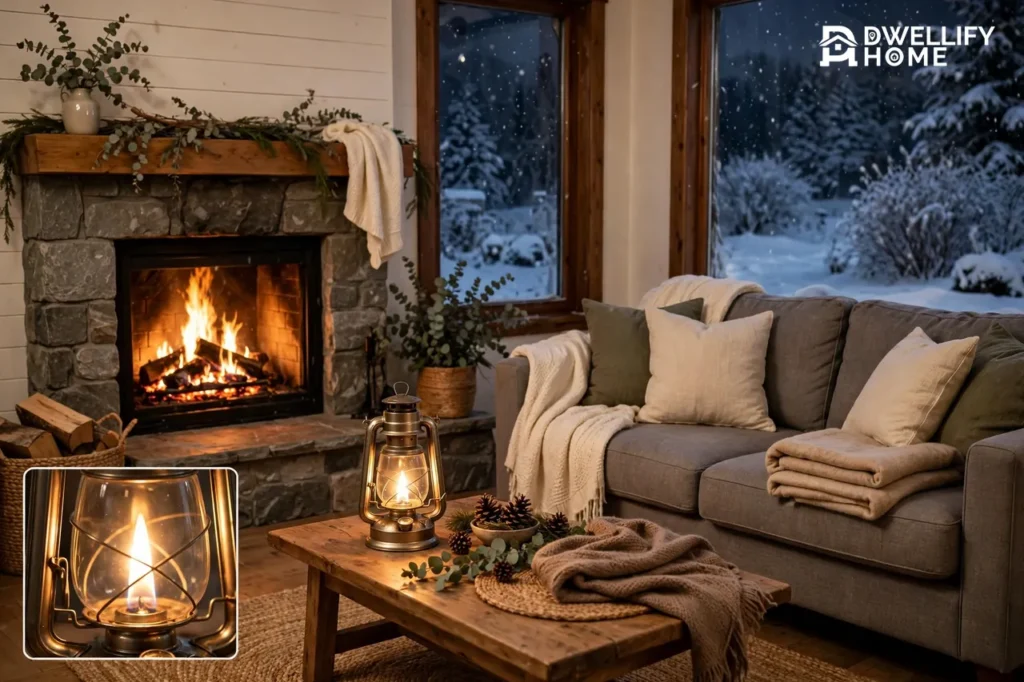
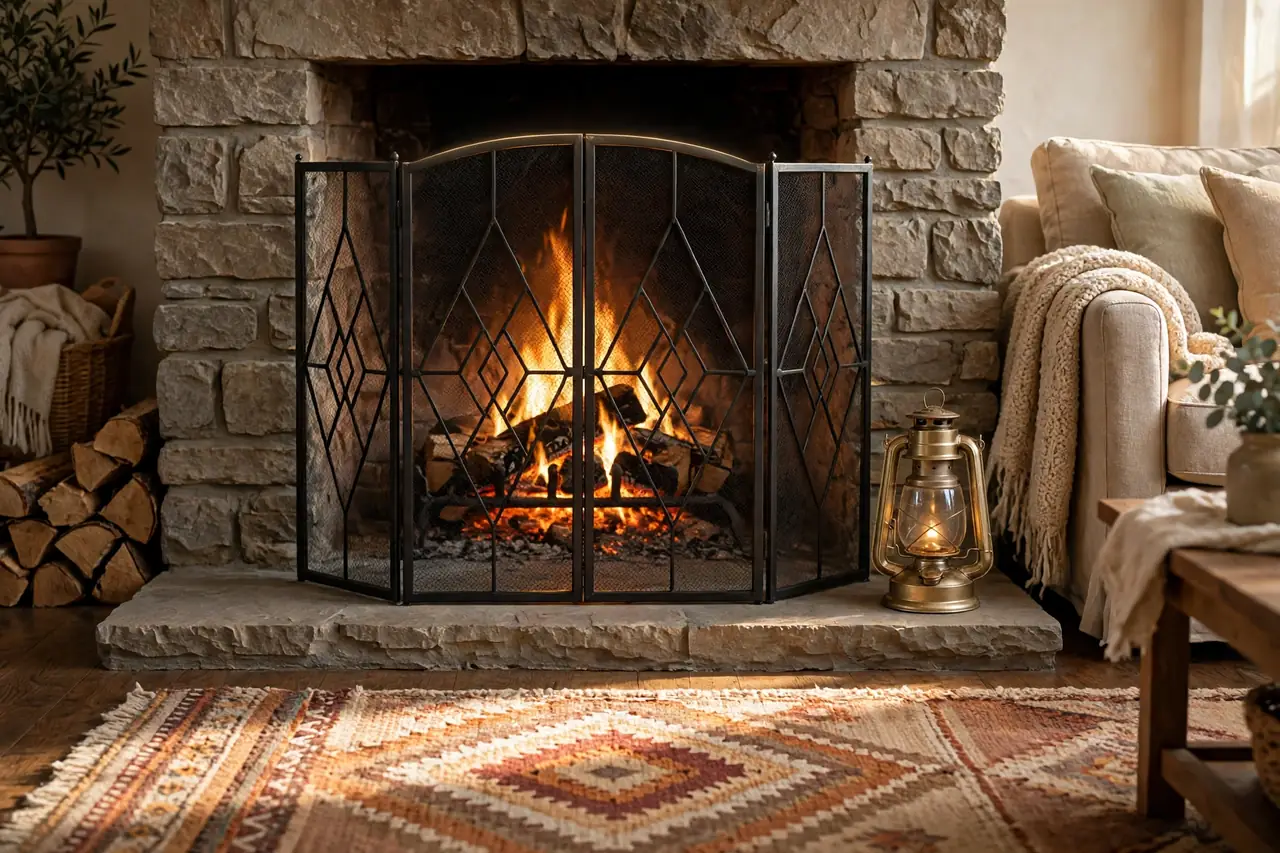
If your home has a fireplace or wood stove that was inspected and cleaned within the last year, use it. Keep the fire steady, use a screen, and never leave a fire burning while everyone sleeps or while the house is empty. Keep bedding, curtains, and paper at least three feet away from the fire, and keep a fire extinguisher within reach. If you cannot use your fireplace, close the damper tightly so warm air does not escape up the chimney.
Warm bricks in the fireplace, then lift them out with tongs, wrap them in towels, and tuck them into beds. Use bricks only, never rocks from the yard or a creek, because rocks can crack or burst when heated. A hot water bottle filled from a gas water heater or a kettle on a gas range works the same way, and it radiates heat for hours inside a sleeping bag.
Indoor-Rated Propane Heater
An indoor-rated propane heater can warm one small room, but only if you follow the label exactly. Look for a heater with an oxygen depletion sensor and an automatic shut-off if it tips over, and run it only in a room with a working carbon monoxide detector. Keep it on a flat surface, at least three feet from bedding, curtains, and furniture, and never leave it running while you sleep unless the manual says it is safe to do so. If you need help choosing one before the next storm, read our guide to the best indoor propane heater for your home.
Read the manual before the storm, not during it. Every model has its own clearance, ventilation, and fuel rules, and guessing at them is how accidents happen. If the label says outdoor use only, believe it.
Never Use These Indoors: The Carbon Monoxide Danger
Carbon monoxide is the danger that kills people during winter outages, and it kills quietly. The Centers for Disease Control and Prevention (CDC) describes carbon monoxide as a colorless, odorless gas that can kill without warning, and it says more than 400 Americans die from unintentional carbon monoxide poisoning each year. You cannot see it, smell it, or taste it. The only warning you get is a detector alarm or the symptoms in your own body.
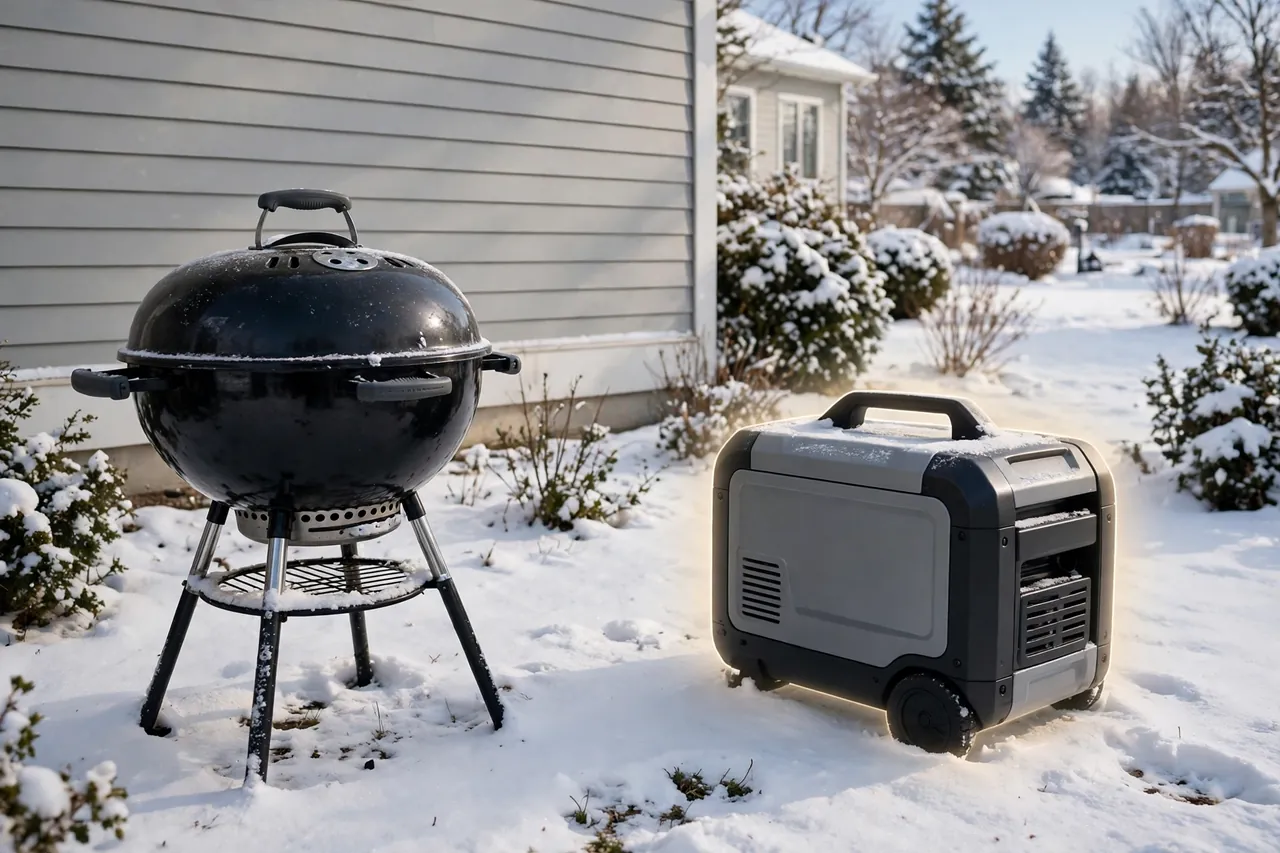
Never use a generator, charcoal grill, camp stove, or gas-powered engine inside your home, basement, garage, or carport, even with the doors and windows open. Never heat your home with a gas stove or oven. Never run a car in an attached garage, even with the garage door open. Never burn charcoal indoors, and never use a portable gas camp stove indoors. The CDC is plain about all of these, and the rule has no exception for a short time or a cracked window.
Generators Belong Outside, 20 Feet Away
Run a portable generator outdoors only, more than 20 feet from windows, doors, and vents, with the exhaust pointed away from the house. The CDC gives that 20-foot distance as its rule, and it applies even when doors and windows are open. Keep the generator dry and off wet ground, use outdoor-rated extension cords to bring power inside, and never plug a generator directly into a household outlet. A direct plug can send power back into the grid and injure the workers fixing the lines.
Check on your neighbors after you set up a generator, especially older neighbors and anyone who lives alone. Fumes drift, and a generator placed too close to one house can poison the people next door. If your generator sits near a shared wall or a neighbor’s window, move it farther out.
Know the Warning Signs
Carbon monoxide poisoning feels like the flu at first, which is why people miss it. The CDC lists the most common symptoms as headache, dizziness, weakness, upset stomach, vomiting, chest pain, and confusion. People who are asleep or under the influence of alcohol may not notice the symptoms at all. If anyone in the house has a headache, feels dizzy or nauseous, or seems confused, get everyone outside into fresh air at once and call 911. Do not go back inside until responders say the air is clear.
A working detector is your best defense, because your nose cannot do this job. The CDC recommends a battery-powered or battery-backup carbon monoxide detector in your home, and you should test it before winter and keep spare batteries in your outage kit. If you need to check or replace yours, see our guide to the best smoke alarm and carbon monoxide detector for your home.
Food and Water During the Outage
Food safety runs on a clock during an outage, and the clock starts the moment the power stops. Keep refrigerator and freezer doors closed as much as possible, because every opening lets cold air out. A refrigerator keeps food safe for about four hours without power if the door stays closed, according to the U.S. Department of Agriculture. A full freezer holds a safe temperature for about 48 hours, and a half-full freezer for about 24 hours, with the door closed.
Throw out refrigerated perishable food that has been above 40 degrees for more than two hours. When in doubt, throw it out, and never taste food to decide whether it is safe. If you can, move perishable food into a cooler with ice packs, and use a thermometer in the fridge and freezer so you know the real temperature instead of guessing. Cold weather outside can help: a cooler set in the shade outdoors stays cold, but keep it where animals cannot reach it.
Store at least one gallon of water per person per day for at least three days, for drinking and sanitation, and store more if you can. Fill clean containers and the bathtub before a storm if you expect to lose water service. Eat foods that need no cooking, such as peanut butter, crackers, granola bars, and dried fruit, and keep a manual can opener in the kit, because an electric one is useless without power. If your water comes from a well with an electric pump, the taps will stop when the power stops, so your stored water matters even more.
Protect Your Pipes From Freezing
A burst pipe turns a cold night into a flooded house, and it is one of the most common and expensive results of a winter outage. Pipes freeze fastest along exterior walls and in unheated spaces such as attics, crawl spaces, basements, and garages. Act on them early, while the house still has some warmth.
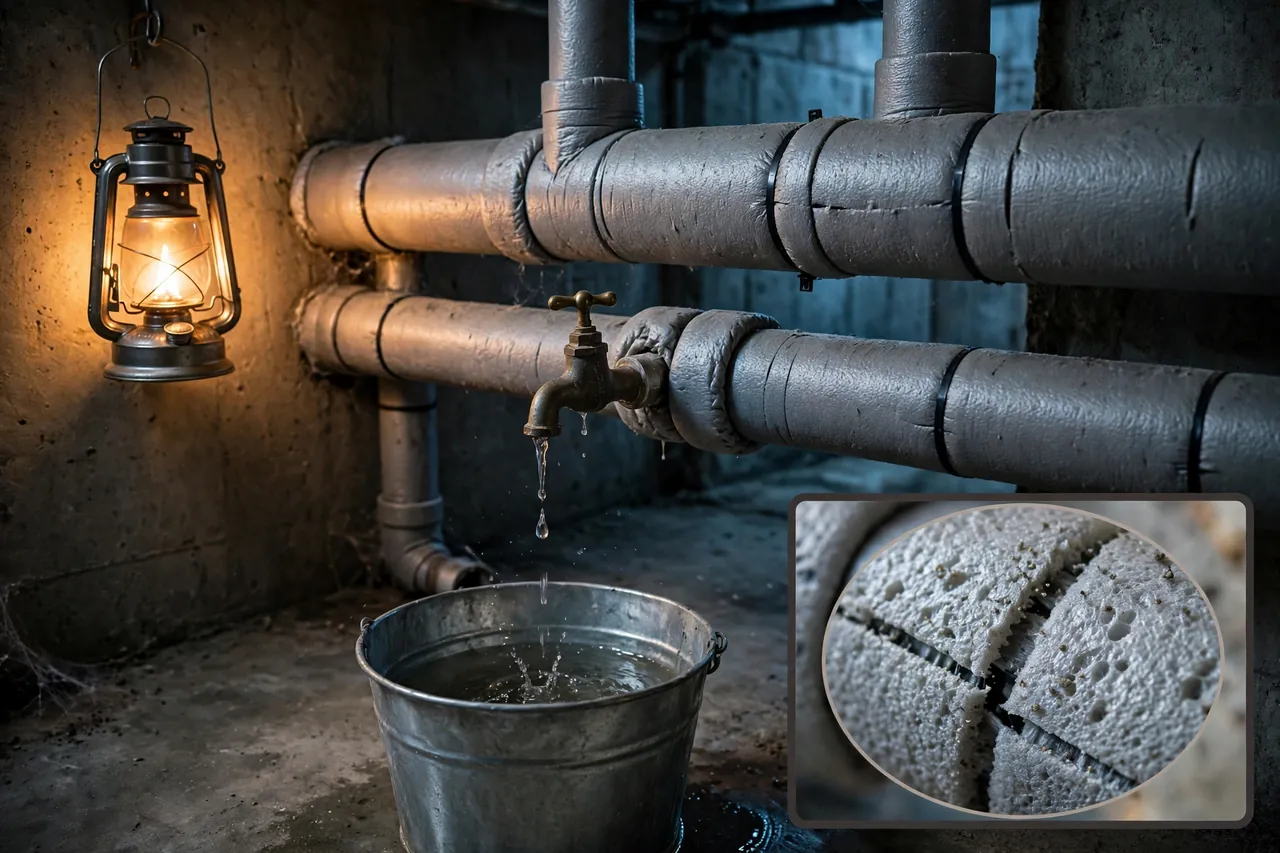
Let vulnerable faucets drip in a slow trickle, about the width of a pencil lead, and run both hot and cold taps, or set a single-handle faucet in the middle. Moving water freezes more slowly, and the drip relieves pressure in the line. Open the cabinet doors under kitchen and bathroom sinks so warmer room air reaches the pipes. Wrap exposed pipes with foam sleeves, towels, or rags, and disconnect garden hoses from outdoor faucets before the cold arrives.
Know where your main water shut-off valve is before you need it, and check that you can turn it. If a pipe does freeze, never thaw it with a torch or an open flame. The CDC advises thawing frozen pipes slowly with warm air from an electric hair dryer, and if you cannot thaw a pipe or it has burst, shut off the water and use bottled water or a neighbor’s supply. If a pipe bursts, shut off the main valve right away, then dry wet walls and floors quickly to limit water damage and mold.
How Long Will Your House Stay Warm?
There is no single number, because every house cools at its own speed. As a rough guide, the average home stays warm for about 8 to 12 hours after the power goes out, then cools gradually over the next couple of days. A tight, well-insulated house can hold its heat for a day or more. An older, drafty home can feel cold within a few hours.
Three things set the pace: how well your home is insulated, how cold it is outside, and how many windows and drafts you have. Wind speeds up heat loss, and a house full of people cools more slowly than an empty one. Do not plan around the average alone, because some outages last a week or more. Start sealing one room the moment the power goes out, not after the house is already cold, and check the indoor temperature with a thermometer so you can judge the trend instead of guessing by feel.
Watch for Hypothermia and Frostbite
Cold stops being a comfort problem and becomes a medical emergency when body temperature falls too low. Hypothermia means the body loses heat faster than it can make it, and it can set in indoors during a long outage, especially in babies, young children, older adults, and anyone with a medical condition.
The CDC lists the warning signs of hypothermia in adults as shivering, exhaustion, confusion, fumbling hands, memory loss, slurred speech, and drowsiness. Babies may have bright red, cold skin and very low energy. Take the person’s temperature if you can. If it is below 95 degrees Fahrenheit, the CDC calls that an emergency, and you should get medical help at once. Until help arrives, move the person to a warm room, remove any wet clothing, warm the center of the body first, and wrap them in dry blankets, including the head and neck. Never give alcohol to a cold person, and never rub frostbitten skin, which can damage it further.
Frostbite usually strikes fingers, toes, ears, and the nose first. Watch for numbness, tingling, or pale, waxy skin on exposed areas. Get inside, warm the area gently with warm, not hot, water or body heat, and get medical care if feeling does not return or blisters form. Check on babies, older relatives, and neighbors who live alone at least twice a day during a long outage, because they lose heat faster and may not ask for help.
When to Leave for a Warming Center
Staying home is the right call for most short outages. Leaving is the right call when the house can no longer keep people safe. Go before the situation turns urgent, while roads are still passable and you can travel in daylight.
Leave for a warming center, a friend’s home with power, a library, or a community center if the indoor temperature keeps falling and you have babies, older relatives, or anyone medically fragile at home. Public Health Insider, the King County public health blog, gives the same advice: keep a backup plan of places to go to stay warm during a long outage. Leave if anyone shows signs of hypothermia, if your carbon monoxide alarm sounds, or if you have no safe heat source and the outage is expected to last another night. Check your city or county website, local news, or a battery-powered radio for warming center locations and hours, and call ahead if you can, because some shelters cannot take pets.
Before you go, turn off the main water supply if pipes may freeze while you are away, unplug sensitive electronics, and take medications, chargers, water, snacks, and warm clothing with you. Tell someone where you are going and when you expect to arrive. Never drive through floodwater or past barricades, and stay off the roads if officials say travel is unsafe. Your house can be repaired. A night spent too cold cannot be undone.
Outage Quick Reference: Do and Don’t
Use this table when you need a fast check. It sums up the verified safety rules in this guide, with the source beside each one.
| Action | Do it | Source |
|---|---|---|
| Warm room | Pick one small room, close it off, and seal drafts with towels and blankets. | Public Health Insider, King County, Nov 2024 |
| Clothing | Wear several thin layers, a hat, and warm socks; change out of damp clothes at once. | CDC winter storm guidance, checked Nov 5, 2026 |
| Generator | Run outdoors only, more than 20 feet from windows, doors, and vents. | CDC carbon monoxide guidance, checked Nov 5, 2026 |
| Gas oven or grill | Never use a gas stove, oven, charcoal grill, or camp stove indoors for heat. | CDC carbon monoxide guidance, checked Nov 5, 2026 |
| Carbon monoxide detector | Keep a battery-powered or battery-backup detector on every level and test it before winter. | CDC carbon monoxide guidance, checked Nov 5, 2026 |
| Refrigerator food | Keep the door closed; food stays safe about 4 hours; discard perishables above 40 degrees for over 2 hours. | U.S. Department of Agriculture, via 828 News Now, Oct 2026 |
| Freezer food | Full freezer about 48 hours, half-full about 24 hours, with the door closed. | U.S. Department of Agriculture, via 828 News Now, Oct 2026 |
| Pipes | Let faucets on exterior walls drip; open cabinet doors under sinks. | CDC winter storm guidance, checked Nov 5, 2026 |
| Hypothermia | Body temperature below 95 degrees Fahrenheit is an emergency; get medical help at once. | CDC winter storm guidance, checked Nov 5, 2026 |
| Water storage | Store at least 1 gallon per person per day for at least 3 days. | Ready.gov guidance, via 828 News Now, Oct 2026 |
A Short Note on Safety
This guide covers the common steps for a winter power outage, but every home, health condition, and storm is different. Follow your local emergency officials first when their advice differs from anything here, and call 911 for any emergency. If you use a heater, generator, or fireplace, follow the manufacturer’s instructions for that exact model. When you are unsure whether a step is safe, skip it and ask a qualified professional. Staying warm matters, but staying safe matters more.
Related Guides
Best Indoor Propane Heater: 6 Safe Picks for Warm Rooms · Best Smoke Alarm and Carbon Monoxide Detector: 6 Combination Alarms That Protect Your Home · How to Keep Pipes From Freezing Without Heat
Frequently Asked Questions
What are the signs of hypothermia, and how can I prevent it during a power outage?
In adults, the CDC lists shivering, exhaustion, confusion, fumbling hands, memory loss, slurred speech, and drowsiness. Babies may have bright red, cold skin and very low energy. Prevent it by staying in one warm room, wearing dry layers and a hat, eating and drinking warm food, and checking on babies and older relatives often. A body temperature below 95 degrees Fahrenheit is an emergency.
How long will a house stay warm without power?
It depends on insulation, outside temperature, and drafts. The average home stays warm for about 8 to 12 hours after the power goes out, then cools gradually over the next couple of days. A tight, well-insulated house may hold heat for a day or more, while a drafty home can feel cold within hours. Seal one room at once to stretch that time.
Is it safe to heat my house with a gas stove or oven?
No. A gas stove or oven can fill your home with carbon monoxide, a colorless, odorless gas that can kill. The CDC says never to use a gas stove or oven to heat your home. Use the range to cook or boil water, then turn it off. Use only heaters rated for indoor use, with a working carbon monoxide detector in the room.
Can I use candles for heat?
Not really. Candles give off very little heat and cause a lot of house fires during outages. Use battery-powered lanterns and flashlights for light instead. If you do light a candle, set it on a stable surface away from anything flammable, never leave it unattended, and keep a working smoke alarm nearby.
How do I stay warm in an apartment without electricity?
Most of the tips in this guide work in an apartment, especially picking one room, covering windows, blocking drafts, and dressing in layers. Skip anything that burns fuel unless it is rated for indoor use and you have a working carbon monoxide detector. Ask your building manager where the warming center or shelter options are before the next storm.
Power outages in winter are stressful, but you do not need fancy gear to get through one safely. Pick your warm room, seal the drafts, layer up, and keep the dangerous shortcuts out of your home. Check your carbon monoxide detector today, gather your blankets and water in one place, and write down your nearest warming center before the next storm arrives. That one afternoon of preparation is what turns a freezing night into a story you tell later, not an emergency you wish you had planned for.