Home heating will cost the average American household $640 to $2,115 this winter, depending on the fuel, according to the U.S. Energy Information Administration’s October 2026 forecast — and the system you already own decides most of that bill.
This guide explains how home heating works, what each system costs to buy and run, and the settings that actually cut the bill. The cheapest system to buy is rarely the cheapest to run: the cost table below shows the most expensive way to make heat costs about $54 per million BTU while the cheapest costs about $13, a $41 gap that flips the usual advice. You will also learn why electric bills spike in winter, when a furnace is worth replacing, and how to stay warm when the power goes out.
How Home Heating Actually Works
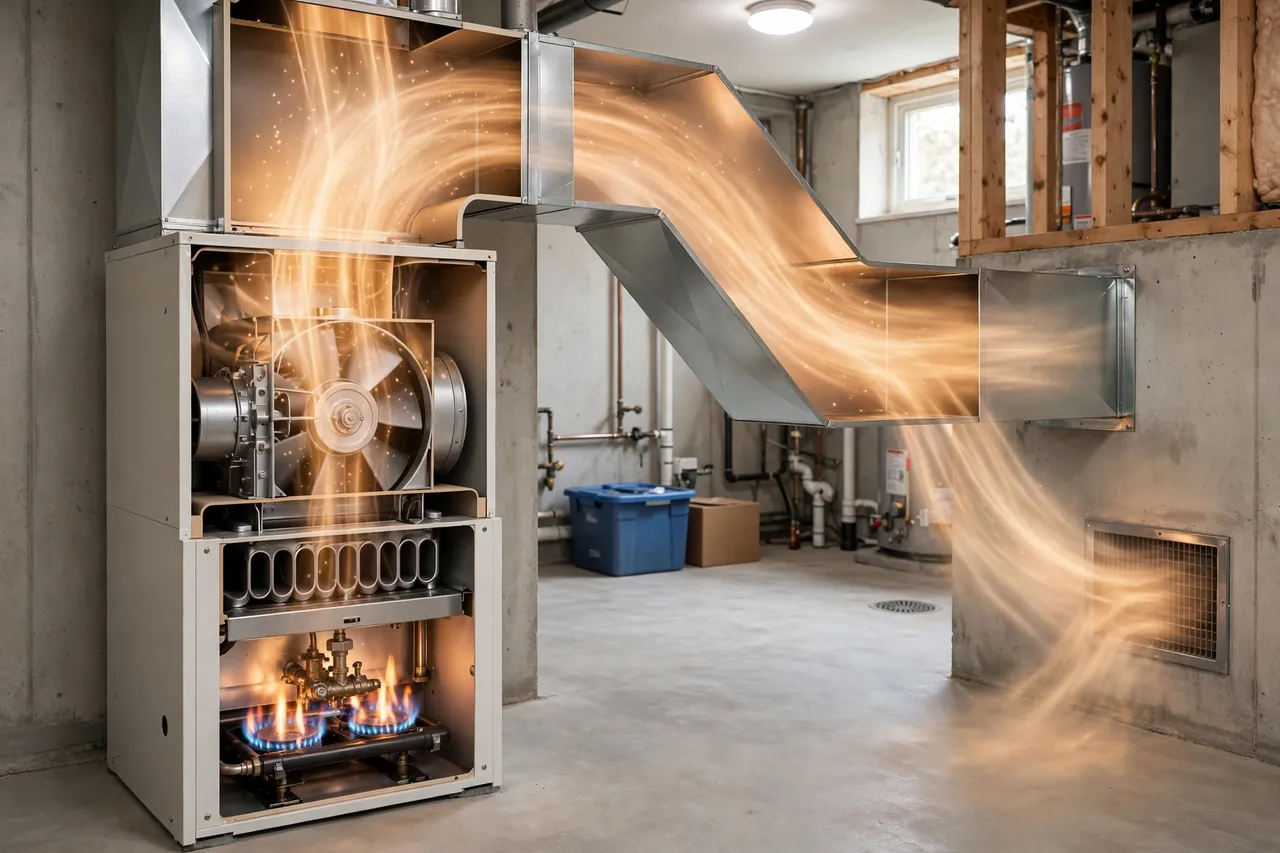
Home heating works in one of three ways: a furnace warms air and blows it through ducts, a boiler warms water and sends it through pipes to radiators, and a heat pump moves heat from outside air or the ground into your home instead of making it. A thermostat tells each system when to start and stop.
A furnace is the most common setup in American homes. When the thermostat calls for heat, the burners light and warm a metal box called a heat exchanger. A blower fan pulls cool air from your rooms through return ducts, pushes it across the hot heat exchanger, and sends the warmed air back out through supply ducts and vents. The heat exchanger keeps combustion gases out of the air you breathe, which is why a cracked one is a serious safety problem, not a small repair.
A boiler works the same way, except it heats water instead of air. A pump moves the hot water through pipes to radiators, baseboard units, or tubing under the floor. The radiators release heat into the room, the water cools, and it flows back to the boiler to heat up again. Because boilers warm objects and people directly instead of blowing air around, many owners say the heat feels steadier and less drying.
A heat pump breaks the pattern completely: it moves heat instead of making it. In winter it pulls heat out of the outside air, even cold air, and carries it indoors through refrigerant lines. In summer it reverses and works like an air conditioner. That is why one box can heat and cool the same house, and why it uses far less energy than a heater that has to create every BTU from scratch.
If your home has floor or ceiling vents that blow warm air, you almost certainly have a furnace. If you have radiators or baseboards and no vents, you have a boiler. If you have one outdoor unit that heats in winter and cools in summer, you have a heat pump. Knowing which of the three you own changes every decision after this one — including the one that costs people the most money, which is choosing a replacement. Forced air heating is the furnace version of the story, and it is worth understanding before you shop for anything.
The 6 Types of Home Heating Systems
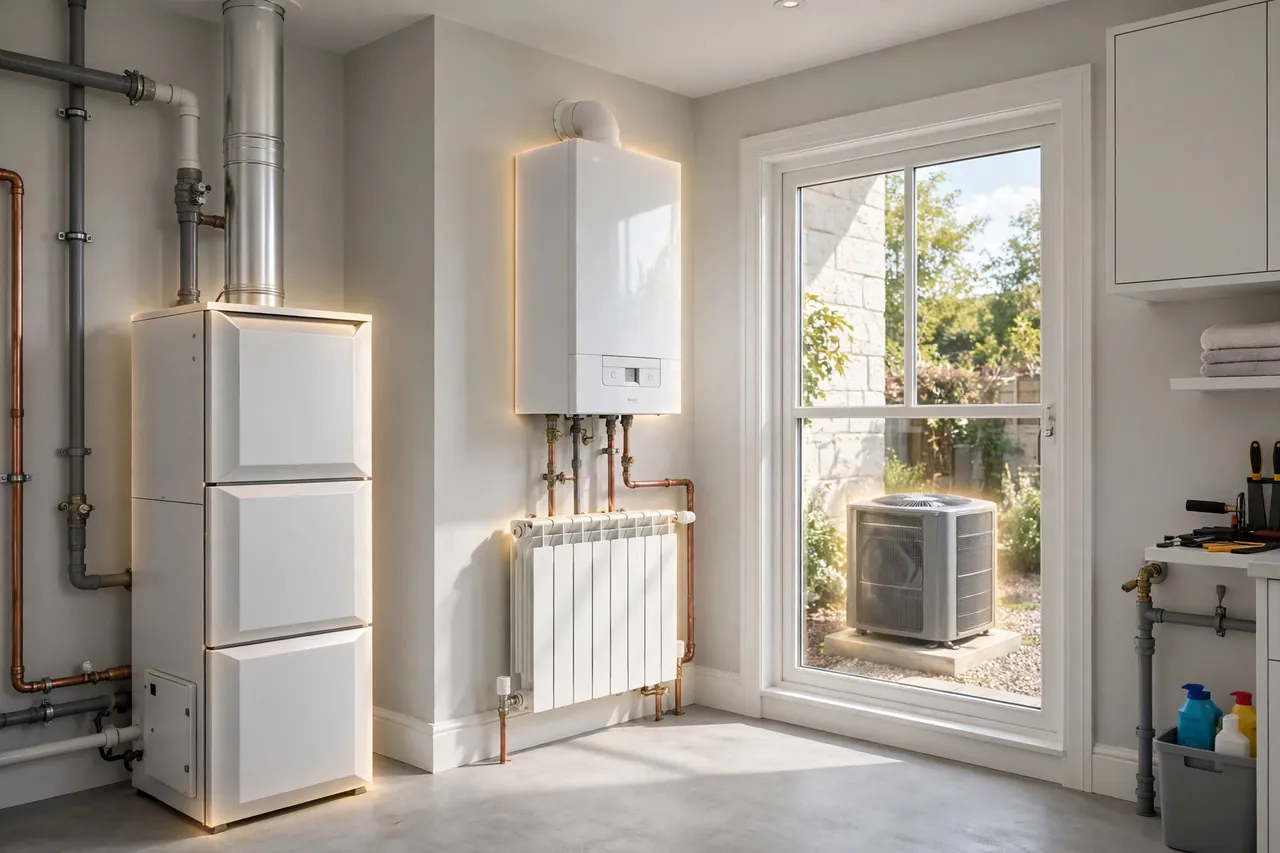
The six main home heating systems are furnaces, boilers, air-source heat pumps, geothermal heat pumps, hybrid dual-fuel systems, and electric space heaters. Furnaces heat air, boilers heat water, heat pumps move heat, hybrids switch between two sources, and space heaters warm one room at a time.
Here is the part most guides skip: no system wins on every measure. A furnace is cheap to install and strong in cold weather. A boiler gives the most even heat and lasts for decades. A heat pump costs the least to run in mild weather and also cools your home. The right pick depends on your house, your climate, and your fuel — not on which system a salesperson likes best.
System comparison:
| System | How it heats | Best for |
|---|---|---|
| Furnace (forced air) | Burns gas, oil, or propane, or uses electric coils, to heat air pushed through ducts | Most homes with ducts; cold climates |
| Boiler (hydronic) | Heats water sent through pipes to radiators or radiant floors | Even, quiet heat; homes without ducts |
| Air-source heat pump | Moves heat from outside air indoors; reverses to cool in summer | Mild to moderate climates; one system for heat and cool |
| Geothermal heat pump | Moves heat from the ground through buried loops | Lowest running cost; owners staying long-term |
| Hybrid (dual fuel) | Heat pump most days, gas furnace when it turns bitterly cold | Cold climates where a heat pump alone struggles |
| Space heater | Electric coils warm one room directly | One cold room; short-term backup heat |
A heat pump is 200 to 400 percent efficient in the U.S. Department of Energy’s terms, because it delivers two to four units of heat for every unit of electricity it uses. A geothermal system runs 300 to 600 percent efficient for the same reason: it draws on the steady temperature of the ground. A gas furnace, by contrast, tops out near 98 percent, because it can only turn fuel into heat, never more than it burns. Those percentages matter, but they are not the whole bill — the next section shows why the fuel price can matter even more.
What Home Heating Costs This Winter
Home heating this winter will cost the average household $640 on natural gas, $1,196 on electricity, $1,246 on propane, and $2,115 on heating oil, according to the U.S. Energy Information Administration’s Winter Fuels Outlook released October 6, 2026. Those are national averages for November through March, and your own bill depends on your house, your climate, and your system.
Guess which fuel costs three times more than the cheapest this winter? Most people guess electricity. The answer is heating oil: $2,115 against $640 for natural gas, a gap driven by heating oil prices forecast at $5.26 a gallon, up 34 percent from last winter.
Winter heating forecast, November through March:
| Main heating fuel | Average winter spending | Change from last winter |
|---|---|---|
| Natural gas | $640 | Down 9% |
| Electricity | $1,196 | Up 4% |
| Propane | $1,246 | Down 3% |
| Heating oil | $2,115 | Up 21% |
Source: U.S. Energy Information Administration, Winter Fuels Outlook 2026–27, October 6, 2026. The EIA notes these are broad averages, not a forecast of your bill, and not directly comparable across fuels because homes and equipment differ.
The fairest way to compare fuels is the cost of one million BTU of heat delivered into your home. On 2026 EIA average prices, geothermal heat costs about $13 per million BTU, a 95 percent AFUE gas furnace about $14, an 80 percent furnace about $17, an air-source heat pump $18 to $27 depending on the weather, and an electric space heater about $54. That is the $41 gap between the cheapest and the priciest heat in your home, and it is why a space heater that feels cheap at the store can quietly become the most expensive heater you own. Fuel prices set the ceiling, but your equipment decides how much of that fuel turns into heat — and that is where most homes quietly lose money.

What Most People Get Wrong About Heating Efficiency
The most common heating mistake is judging a system by its efficiency percentage alone. A 100 percent efficient electric heater often costs more to run than an 80 percent efficient gas furnace, because electricity costs far more per unit of energy than gas.
Efficiency ratings measure different things, and mixing them up is how people buy the wrong system. AFUE, the Annual Fuel Utilization Efficiency on a furnace, tells you what share of the fuel becomes heat: an 80 percent AFUE furnace turns 80 cents of every gas dollar into warmth and sends 20 cents up the flue, while a 96 percent model keeps 96 cents. A heat pump’s efficiency works differently: it moves heat rather than making it, so it can deliver two to four times more heat than the electricity it consumes, which is why the Department of Energy rates heat pumps at 200 to 400 percent.
The number that actually decides your bill is the cost per million BTU, not the percentage on the box. Electricity averaged about 18 cents per kilowatt-hour for American homes in 2026, while natural gas ran about $13.44 per thousand cubic feet this winter, according to the EIA. At those prices, even a perfect electric heater costs roughly three times more per unit of heat than a good gas furnace. A heat pump closes that gap by moving heat instead of making it — which is exactly why the same 100 percent efficient space heater costs about $54 per million BTU while a heat pump delivers the same heat for $18 to $27. Judge the fuel first, the machine second, and the percentage last.
How to Choose the Right Heating System for Your Home
The right heating system for your home depends on four things: your climate, the fuels available at your street, whether you have ducts, and your budget for the next 15 years. Get those four right and the choice mostly makes itself.
Work through them in this order:
- Check what fuel can reach your house. A gas furnace is only an option if a gas line serves your street. Without gas, the choice is usually a heat pump, a propane system with a delivered tank, or an oil boiler in older Northeast homes.
- Match the system to your winters. In mild and moderate climates, an air-source heat pump handles the whole winter and cools the house in summer. In very cold climates, a gas furnace or a hybrid system — heat pump most days, furnace when it turns bitterly cold — is usually the safer pick.
- Look at your ducts. A home with good ductwork suits a furnace or a ducted heat pump. A home without ducts suits a boiler, radiant floors, or a ductless mini-split that heats room by room.
- Size it with a Manual J load calculation. A proper sizing calculation measures your home’s heat loss through walls, windows, and insulation. A furnace sized by square footage alone is often oversized, and an oversized furnace short-cycles — switching on and off in short bursts — which wears it out faster and heats unevenly.
- Budget the whole 15 years, not the install day. Add the install price to 15 winters of fuel at today’s prices. A cheap furnace with expensive fuel usually loses to a pricier heat pump within a few years, and the cost table above shows you how to run that math.
Two details people skip: get three written quotes from licensed installers, because the same furnace can cost thousands more or less depending on who installs it, and check your state and utility rebates before you sign — the federal credits for furnaces and heat pumps expired on December 31, 2025, so local rebates are now where the savings live. If you want the full walkthrough, read how to choose a heating and air conditioning system and how to buy a new HVAC system. The system you pick lives in your home for 15 to 20 years, so the hour you spend choosing it is the cheapest hour in the whole project — and the next section explains the bill that arrives when the wrong system meets the coldest week of the year.
Why Your Electric Bill Spikes in Winter
Your electric bill spikes in winter mostly because electric resistance heat — the backup strips in a heat pump, baseboard heaters, and space heaters — uses far more electricity than a heat pump’s compressor, and it switches on exactly when the weather turns coldest.
A heat pump has two kinds of backup heat, and confusing them is expensive. Auxiliary heat is the set of electric strips that switch on automatically when the heat pump alone cannot keep up, usually on the coldest nights or while the outdoor unit defrosts. It does its job quietly, and most owners never notice it running — they only notice the bill. Emergency heat is the manual setting on your thermostat: it turns the heat pump off entirely and runs the strips alone, which is the most expensive way to heat a house and should only be used when the heat pump itself has failed.
Space heaters add the same problem in miniature. A standard 1,500-watt space heater at the 2026 national average of about 18 cents per kilowatt-hour costs about 27 cents an hour to run. Eight hours a night comes to about $2.18 a night, or roughly $65 a month for one heater in one room (my arithmetic on the EIA’s August 2026 rate). Two heaters in two rooms doubles that, and neither one warms the rest of the house. That is why a high winter bill so often traces back to a heat pump running its strips, a space heater running all night, or both — and why your electric bill is so high walks through the full list of culprits. If you want the exact math for your own heater, read do space heaters use a lot of electricity. The fix is rarely a new heater: it is usually a setting, a filter, or a leak, and the settings section below shows which ones pay back first.
Furnace Replacement: Cost, Timing, and Repair vs. Replace
A gas furnace replacement costs $3,800 to $10,000 installed in 2026, with the national average near $7,000 for a 1,600- to 2,000-square-foot home, according to Angi’s October 2026 cost data. High-efficiency 96 percent AFUE models run $7,500 to $12,000, according to HomeGuide’s 2026 data, and new ductwork adds $1,500 to $7,000 on top.
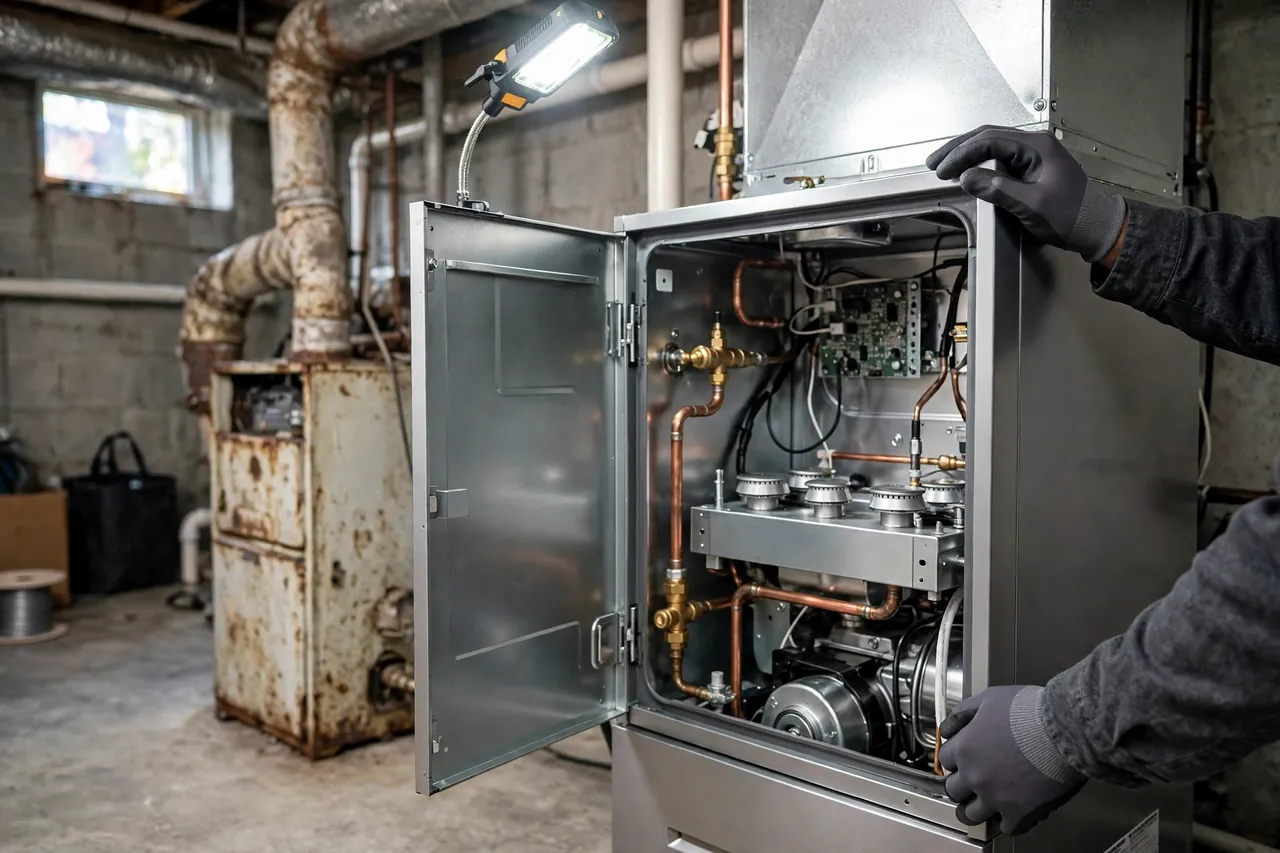
Age is the first signal. A gas furnace lasts 15 to 20 years with regular maintenance, an electric furnace 20 to 30 years, a heat pump about 15 years, and a boiler 15 to 30 years, according to Lennox’s lifespan guide. Past 15, start budgeting for a replacement even if the unit still runs, because efficiency fades and parts get scarce. The other warning signs are frequent repairs, bills that climb while your habits stay the same, rooms that never reach the set temperature, strange noises like squealing or grinding, and short cycling — the furnace switching on and off in short bursts without ever finishing the job.
Use the $5,000 rule when a repair quote lands: multiply the furnace’s age by the repair cost, and if the result passes $5,000, replace it instead of repairing it. A 14-year-old furnace with a $400 repair scores $5,600 — replace. A 6-year-old furnace with the same repair scores $2,400 — repair. Also check the efficiency floor: the federal minimum for a new non-weatherized gas furnace has been 80 percent AFUE since 2015, and a Department of Energy rule raises that to 95 percent for units manufactured on or after December 18, 2028, so a cheap 80 percent unit bought today may be the last of its kind. For the full cost breakdown by size and efficiency, read gas furnace replacement cost. A furnace is a 15-year decision you make once — and the settings in the next section decide how much of that investment comes back to you every winter.
Settings That Actually Save Money
The settings that save the most money cost nothing: the U.S. Department of Energy says turning the thermostat back 7 to 10 degrees Fahrenheit for 8 hours a day can save as much as up to 10 percent a year on heating and cooling, and sealing air leaks can save another 10 to 20 percent.
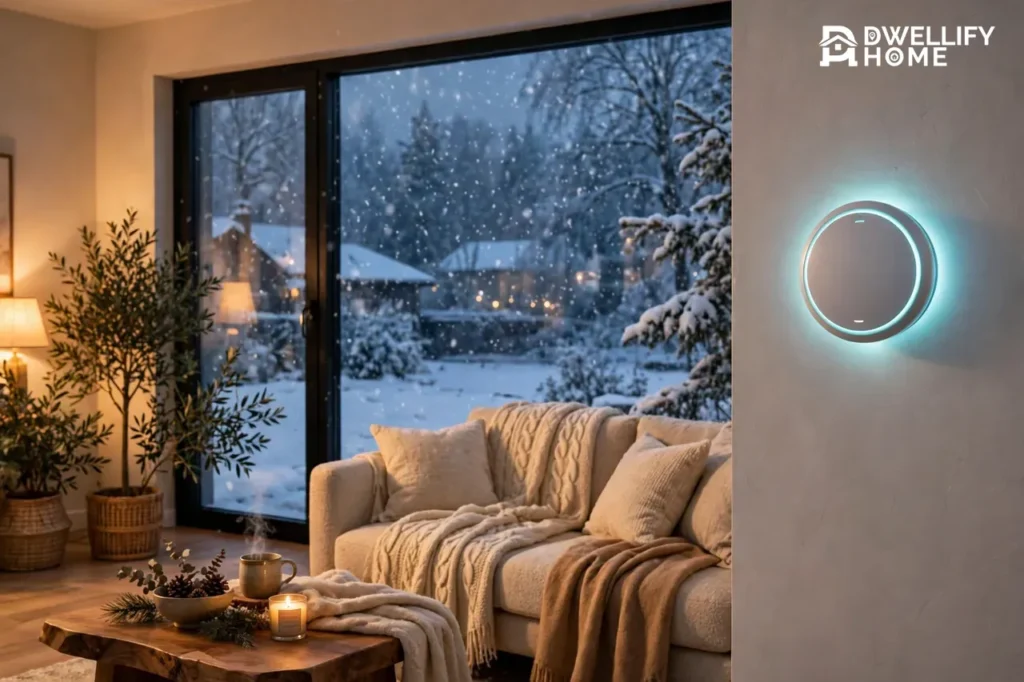
Start at 68 degrees while you are home and awake, then set the thermostat back 7 to 10 degrees overnight or while everyone is out. On a $640 gas winter, that 10 percent is worth up to about $64 (my arithmetic on the EIA’s forecast) — and the same setback on an oil-heated home is worth far more. Heat pumps are the one exception: do not set a heat pump back by hand, because the recovery can fire the backup strips and erase the saving. With a heat pump, use only a smart or programmable thermostat designed for heat pumps, and keep any setback shallow, two or three degrees at most.
Three free habits belong beside the thermostat. Change the furnace filter every one to three months, because a clogged filter chokes airflow and forces the system to run longer for the same heat. Seal the leaks you can feel: leaky ducts alone can lose as much as 20 percent of your heated air before it reaches a room, and weatherstripping around doors and windows is a Saturday job, not a renovation. And book a heating tune-up every fall before the first cold snap, so a technician catches a worn part while it is still cheap. A smart thermostat can run the whole schedule for you — read what a smart thermostat is to see whether one fits your home. The settings save money every month, but they cannot save a house that loses its power — and that is the last problem this guide solves.
Staying Warm When the Power Goes Out
When the power goes out in winter, the safest heat comes from layers, one warm room, and a heater that cannot fill the house with carbon monoxide. Electric space heaters are the safest backup when you have power; fuel-burning heaters are the risky ones, and the rules around them are strict for a reason.
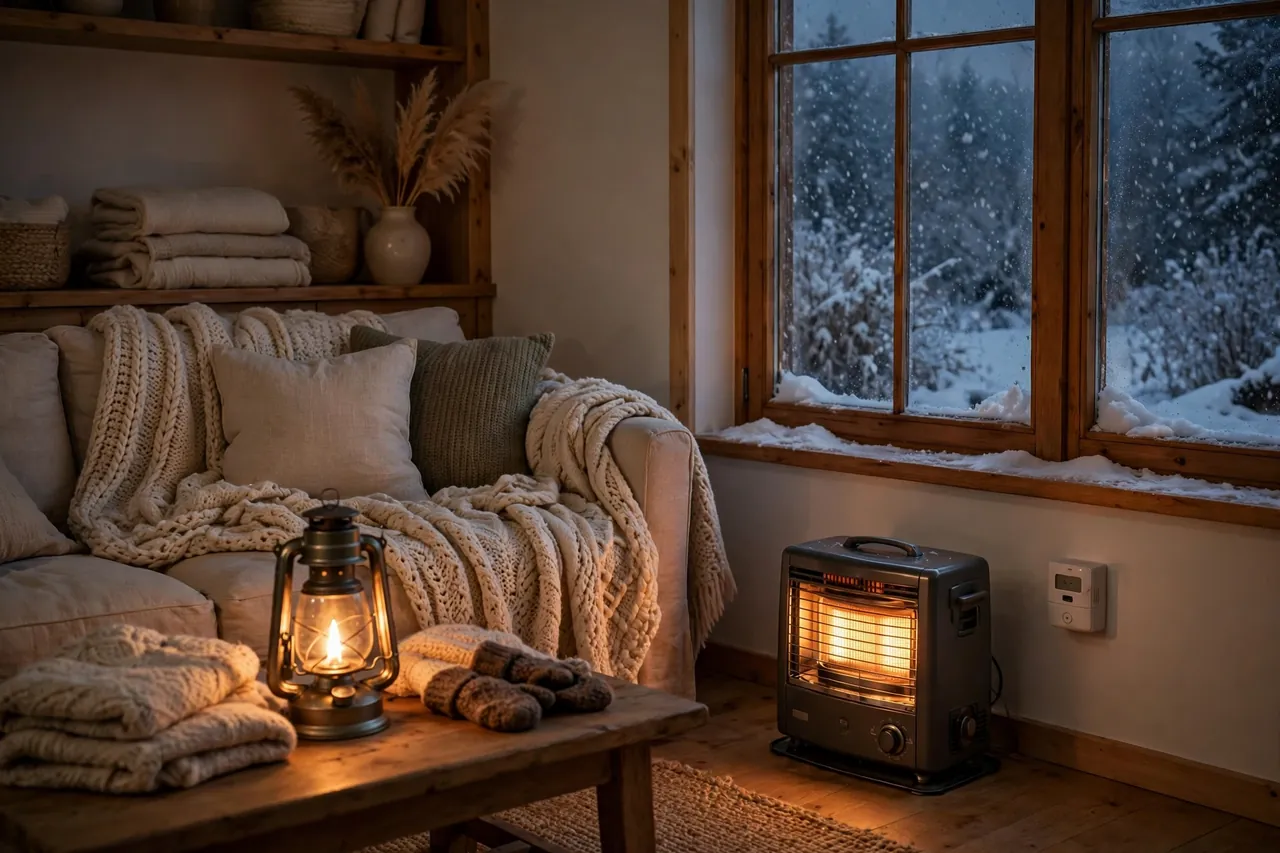
Close off one small room, hang blankets over the doorways, and layer clothing instead of trying to heat the whole house. If you run a propane heater, use only one rated for indoor use, with an oxygen depletion sensor, fresh air coming in, and a working carbon monoxide alarm in the room. The U.S. Consumer Product Safety Commission advises against using unvented propane heaters indoors, and an outdoor-rated patio or construction heater never belongs inside a house, a garage, or an enclosed porch, even with a door open. Never heat with an oven, a stove, a grill, or charcoal indoors: all of them can fill a sealed house with carbon monoxide, a gas you cannot see or smell, and the Centers for Disease Control and Prevention reports more than 400 Americans die from unintentional carbon monoxide poisoning each year. If you run a generator, keep it at least 20 feet from the house with the exhaust pointing away from every door and window, per the CPSC’s guidance. For heater picks that meet the indoor rules, read best indoor propane heater, and for the full outage plan, read how to stay warm without power. Warmth during an outage is a safety problem first and a comfort problem second — get the safety part right and the comfort follows.
Related Guides
Why Is My Electric Bill So High? · What Is Auxiliary Heat? · What Is Forced Air Heating? How It Works, Pros and Cons · How to Choose a Heating and Air Conditioning System · EM Heat vs Heat: What Each Thermostat Setting Does and When to Use It · Gas Furnace Replacement Cost: What You’ll Pay in 2026 · How to Buy a New HVAC System: A Step-by-Step Guide to Getting It Right · Do Space Heaters Use a Lot of Electricity? · Best Indoor Propane Heater: 6 Safe Picks for Warm Rooms · How to Stay Warm Without Power: A Winter Outage Guide That Puts Safety First
Frequently Asked Questions
Which heating system is best for energy savings?
Heat pumps save the most energy: geothermal systems run 300 to 600 percent efficient and air-source heat pumps 200 to 400 percent, because they move heat instead of making it. But the cheapest system to run also depends on your fuel prices and climate — in very cold regions, a high-efficiency gas furnace can cost less per winter than a heat pump.
How long does a furnace last?
A gas furnace lasts 15 to 20 years with regular maintenance, according to Lennox. Electric furnaces last 20 to 30 years, heat pumps about 15 years, and boilers 15 to 30 years. Annual maintenance, clean filters, and prompt repairs are what push a furnace toward the long end of its range.
What is the most affordable system to install?
Furnaces generally cost the least to install: a gas furnace replacement runs $3,800 to $10,000 installed, averaging near $7,000, per Angi’s 2026 data. Electric resistance heat is cheaper still to install but costs the most to run, while a heat pump costs $7,500 to $12,000 installed and pays back through lower bills.
What is the most efficient way to heat a home?
There is no single most efficient way — it depends on your fuel costs and your habits. Geothermal heat is the most efficient at 300 to 600 percent, and heating only the room you use beats heating the whole house. Compare systems by cost per million BTU, not by the efficiency percentage on the box.
What temperature should I set my thermostat in winter?
The U.S. Department of Energy suggests starting around 68 degrees Fahrenheit while you are home and awake, then setting it back 7 to 10 degrees for 8 hours while you sleep or are away — a habit worth up to 10 percent a year on heating and cooling. With a heat pump, set back only with a thermostat designed for heat pumps.
Gas lines, electrical wiring, and combustion venting are licensed-professional work in most places. Never open a gas line, bypass a safety control, or run a fuel-burning heater in a sealed room. If anything about your system smells, sounds, or looks wrong, turn it off and call a licensed HVAC technician — and keep a working carbon monoxide alarm on every floor of your home.
The cheapest warmth this winter is not a new system. It is the setback you program tonight and the leaks you seal this weekend. Do those two things first, and when you do shop for a system, you will know exactly which one earns its place in your home.