Every Sydney homeowner knows the feeling. You’re sitting inside during a torrential coastal downpour, and suddenly, you hear it: drip… drop… drip. Or maybe you’re out in the garden after a windy afternoon and spot a cracked tile sitting on your lawn.
Your first instinct might be to pull out the ladder, head over to the local hardware store, and tackle the job yourself to save a few dollars. But when it comes to your roof, the line between a quick weekend fix and a costly disaster is dangerously thin.
So, when can you safely roll up your sleeves, and when is it time to leave it to a professional? Let’s break down what’s safe to DIY, what’s downright risky, and how to know when to call in an expert.
The Temptation of DIY: Why We Try to Fix It Ourselves
It’s easy to see why homeowners consider handling their own repairs. Quality roofers are hard to find, and hiring a trade feels like a significant expense for what looks like a minor issue.
With thousands of online tutorials promising quick fixes for everything from clearing gutters to asphalt roof repair, taking matters into your own hands feels empowering. However, roofs in Sydney face unique challenges—from scorching UV exposure to severe storm fronts—and what works in a quick YouTube video doesn’t always hold up against real weather.
What’s Safe: Minor DIY Maintenance Tasks
Not every roof issue requires an emergency callout. There are a few low-risk maintenance jobs you can safely handle yourself, provided you follow basic safety precautions:
1. Clearing Gutters and Downpipes
Leaves, twigs, and debris can easily block your gutters, causing water to pool and back up under your eaves. Cleaning your gutters twice a year using a sturdy ladder and a pair of heavy-duty gloves is a simple way to prevent water damage before it starts.
2. Minor Ground-Level Inspections
You don’t need to climb onto your roof to check its health. Grab a pair of binoculars and inspect your roofline from the safety of the ground. Look for visibly slipped tiles, rusted flashing, or sagging sections.
3. Replacing a Single, Easily Accessible Tile
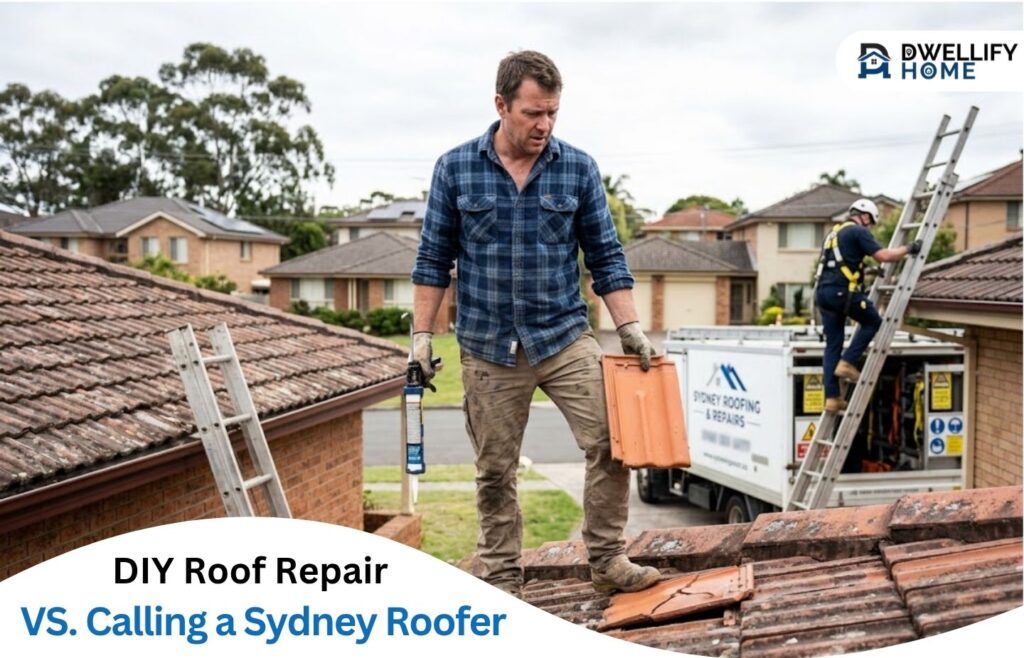
If you have a low-pitch single-storey home and need a simple tile roof repair—such as swapping out one cracked terra cotta or concrete tile near the edge—it’s doable on your own. Make sure you use proper footing, wear non-slip shoes, and never work alone.
What’s Risky: Job Types That Require a Professional Roofer
While cleaning gutters is relatively straightforward, most structural or leak-related issues carry significant risks—both to your personal safety and your property value. Here are the repairs best left to experts:
1. Locating and Fixing Active Leaks
Water is stubborn and tricky. A wet spot on your living room ceiling rarely aligns directly with the hole on your roof; water often travels along rafters and joists before dropping down. Performing an effective roof leak repair in Sydney requires a trained eye to trace the water path back to its source. Patching the wrong spot won’t solve the problem and allows hidden rot to spread inside your roof cavity.
2. Roof Repairs Around Chimneys and Skylights
Penetrations in your roof—like skylights, vents, and flues—are prime culprits for leaks. Completing a roof repair around chimney structures involves intricate lead flashing work, custom sealing, and precise waterproofing techniques. A simple dab of silicone sealant from the hardware store usually breaks down under Sydney’s intense heat within a few months, leading to worse leaks later.
3. Steep Pitches, High Roofs, and Multi-Storey Homes
Falls from ladders and roofs remain one of the leading causes of serious DIY injuries in Australia. If your roof has a steep pitch, is two storeys high, or feels slippery, stepping onto it without professional scaffolding, harnesses, and safety gear is a huge gamble.
4. Major Storm Damage and Structural Restorations
Severe storms can dislodge large sections of roofing, crack bedding and pointing along ridge caps, or damage structural trusses. Attempting complex structural work without trade experience risks compromise to your home’s integrity—and could void your home insurance policy if the DIY work causes further damage.
The Hidden Costs of DIY Roof Repair
It’s tempting to calculate the cost of a DIY repair purely based on the price of materials. But before you take the plunge, consider the hidden costs:
- Insurance Risks: Many home insurance providers will not cover water damage caused by uncertified or substandard DIY repairs. If a DIY patch fails during a storm, you could be left paying for internal repairs out of pocket.
- Safety & Medical Expenses: The physical risk of working at heights without proper safety harness systems simply isn’t worth the savings.
- Doing the Job Twice: More often than not, professional roofers are called in to fix a “DIY fix” that didn’t hold up. Paying for materials twice—plus the professional repair—ends up costing far more than calling a specialist in the first place.
Choosing the Right Local Roofer
When it comes to your home’s main line of defense against the elements, experience matters. Local climate conditions vary significantly across regions; for example, homes in coastal areas face salt spray corrosion, while suburbs in outer regions deal with extreme heat shifts and intense summer storms.
If you are looking for a reliable roof repair company in Sydney, or need tailored roof repair in Campbelltown suited to Western Sydney’s distinct climate, always work with licensed, insured professionals. Local roofers understand the specific building codes, council regulations, and material requirements needed to keep your roof watertight for decades to come.
The Bottom Line
Taking care of basic maintenance like cleaning gutters and spotting broken tiles from the ground are great DIY roof repair options. But when it comes to climbing onto high pitches, tracing tricky leaks, re-pointing tile ridges, or sealing around chimneys, calling a qualified professional is always the smartest, safest, and most cost-effective choice.
If you suspect your roof has a leak or structural issue, skip the ladder and contact a licensed local roofing contractor for a thorough safety inspection and lasting repair.
A quick note for our readers: certain links in this article may generate a commission for Dwellifyhome.com. These may include affiliate or sponsored links, and any qualifying commissions help support our ongoing work.