A yellow leaf can make you question everything: the watering, the window, even the pot. Before changing all three, take a closer look. Your money tree’s growing conditions often tell you more than one leaf does.
Good money tree care starts with bright, indirect light, a pot that drains, and watering based on soil moisture. Give the roots time to use the water already present before adding more.
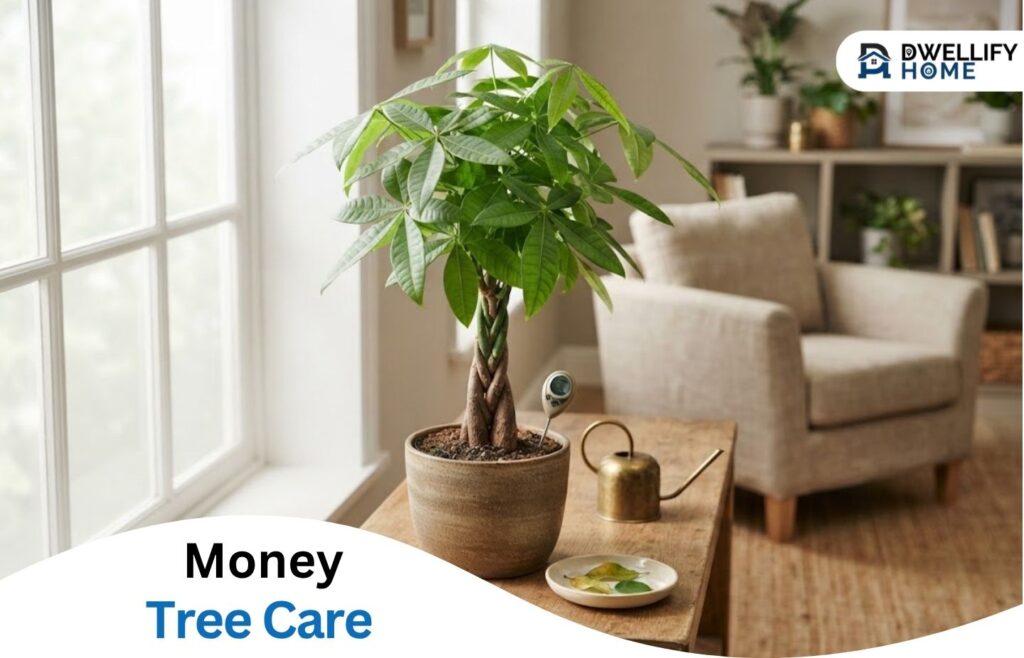
This guide covers Pachira aquatica, the tree-shaped houseplant often sold with braided trunks and leaves that spread like fingers. The Chinese money plant, Pilea peperomioides, has round, coin-shaped leaves and is a different plant. Check the label when the common name is unclear.
Short Definition / Direct Answer
Money tree care involves bright, indirect light, a pot with drainage, and watering based on soil moisture. Regular checks help you spot changes in the leaves, roots, and growing conditions before adjusting care.
Practical Home Tip
Water can collect inside a decorative pot even when the outside looks dry. Lift out the inner pot after watering and empty any trapped water. This helps with drainage, but you still need to check soil moisture before watering again.
DwellifyHome Mission Statement
DwellifyHome helps homeowners and renters make informed, practical choices for comfortable, stylish living spaces through clear advice they can use at home.
SERP enhancement elements — action checklist
- Check soil moisture before watering.
- Let excess water drain and empty the outer pot or saucer.
- Choose a bright spot away from harsh sun and drafts.
- Check growing conditions before treating yellow leaves or drooping.
- Repot when needed, using a suitable mix and a draining container.
Money Tree Care at a Glance
Use this table as a starting point. The sections below explain how to adjust care to your home.
| Care need | What to aim for |
| Light | A bright spot with protection from harsh direct sun |
| Water | Check the upper soil and deeper moisture before watering |
| Soil | A loose houseplant potting mix that drains well |
| Pot | Drainage holes and no trapped water around the base |
| Temperature | Roughly 65–80°F, away from hot or cold drafts |
| Humidity | Typical household conditions; assess very dry air if problems appear |
| Feeding | Houseplant fertilizer during active growth, following its label |
| Maintenance | Light pruning, clean leaves, and occasional pest checks |
You do not need to buy several care products at once. Start by understanding the light and container your plant already has.
Where to Put Your Money Tree
Place your money tree near a bright window where strong sunlight does not fall on its leaves for long periods. Bright, indirect light means plenty of daylight with protection from intense sun. Too little light can also cause weak growth and yellowing.
An east-facing window can be a useful starting point. Near a south- or west-facing window, a sheer curtain may help soften strong afternoon sun.
Check the spot at different times of day. A window that looks gentle at breakfast may receive strong sun later. Nearby trees, buildings, and curtains also change how much light reaches the plant.
Avoid choosing a position only because it fills an empty corner. A room can look bright to you while a plant several feet from the window receives little useful light.
Watch how new growth develops. Leaning toward the window or increasingly stretched stems can suggest that the position needs attention. A grow light is an option when natural light is limited; follow its placement instructions.
Keep leaves away from cold glass, frequently opened exterior doors, and direct heating or cooling vents. Once you find a suitable location, give the plant a chance to settle instead of moving it repeatedly.
How to Water a Money Tree
Water when the upper part of the potting mix has dried and the root area is no longer staying wet. The top 1–2 inches provide a useful first check, but a dry surface alone cannot tell you everything happening inside a deep pot.
Check the Soil Before You Water
Push a finger into the mix rather than judging its color. In a larger container, a clean wooden stick can help you check slightly deeper without pulling out the plant.
A stick that comes out wet, with damp mix clinging to it, suggests you should wait and reassess. Insert it gently; do not force it through roots.
Notice the pot’s weight too. Comparing how it feels after watering and before the next watering can help you learn its drying pattern. Treat weight as a supporting clue, not your only test.
Avoid turning “once a week” into a rule. Light, temperature, pot size, and root growth all affect drying. For example, two similar plants in different rooms may need water on different days.
A calendar reminder is still useful. Let it remind you to check the plant, rather than automatically pour water.
Water Thoroughly and Let the Pot Drain
For a standard pot with drainage holes:
- Remove it from any decorative outer container.
- Pour water slowly across the potting mix.
- Continue until excess water flows from the bottom.
- Allow the pot to drain.
- Empty the saucer or outer container before returning it.
Small daily splashes make it harder to judge whether the whole root area received water. Thorough watering followed by appropriate drying gives you a clearer routine.
Check inside decorative covers even when the outside looks dry. Water can remain hidden beneath the nursery pot.
Self-watering planters work differently. Follow the instructions for that system, including its refill level. Do not combine reservoir watering with extra top watering unless the instructions call for it.
Choosing Soil and Repotting Your Money Tree
The pot and soil work together. Even a suitable mix cannot help much when excess water has nowhere to go.
Choose a Suitable Mix and a Pot With Drainage
Choose a loose houseplant potting mix that holds some moisture while allowing excess water to escape. Avoid heavy garden soil in an indoor container.
Check the drainage holes before planting. A decorative pot without holes can hold an inner nursery pot, but remove that inner pot for watering and drainage.
There is no need to search for a complicated soil recipe before checking these basics. A suitable ready-made mix and a draining container are a practical starting point.
Know When It Is Time to Repot
Look for several signs together: crowded roots, a plant becoming unstable, or mix that no longer absorbs and drains water properly. A healthy new purchase does not automatically need immediate repotting.
For a plant that has outgrown its container, choose a pot about 1–2 inches wider. An oversized pot adds soil that may stay wet longer than the roots can use it.
Slide the plant out carefully and inspect the roots. Keep healthy roots intact as much as possible. Place the plant at its previous depth, add fresh mix around it, and water thoroughly.
Do not bury the braided trunks deeper to make the plant stand upright.
Routine repotting and root-rot treatment are different situations. A plant that has lost many roots may need the same size pot or a smaller one, rather than an automatic upgrade.
Feeding, Pruning, and Everyday Care
A manageable routine is easier to maintain than a long list of weekly treatments. Check whether a task is needed before doing it.
Feeding During Active Growth
Use a houseplant fertilizer while the plant is actively growing, often in spring and summer. Follow the product’s mixing and application directions.
Check whether fresh potting mix already contains fertilizer before adding more. Different products have different strengths, so a universal spoonful or monthly dose is not reliable.
Pause feeding when growth slows significantly. Extra fertilizer will not solve poor light, soggy soil, or damaged roots. Too much can cause salt buildup and root injury.
Pruning and Cleaning the Leaves
Use clean, sharp scissors or pruning shears to remove dead growth and shorten overly long stems. Make shaping cuts just above a leaf node—the point where a leaf or branch joins the stem.
Step back between cuts. Removing a little at a time makes it easier to judge the shape. Save major shaping for a healthy plant that is growing actively.
Wipe dusty leaves gently with a soft, damp cloth, supporting each leaf with your hand. Clean the undersides too, where pests may hide. Leaf-shine products are unnecessary.
Take a quick photo before a care change. Comparing later growth with that photo can be more useful than trying to remember whether the plant looked fuller last week.
Winter Care and Moving Your Money Tree Outdoors
Winter often brings less window light and slower growth. Check moisture before watering, even if your summer routine worked well. Do not assume every home needs the same winter interval.
Keep the plant away from heating vents and cold drafts. If indoor air becomes very dry, a humidifier can help more consistently than brief misting. Brown edges still need a broader check; humidity is only one possibility.
For summer outdoor placement, choose a sheltered spot with filtered light. Move the plant gradually into its new conditions instead of placing it straight into strong sun.
Outdoor pots also receive rain, so check moisture before adding water.
Money trees are suited to year-round outdoor growing mainly in warm climates; NC State lists USDA zones 10–12. Bring a container plant indoors before cold weather, and do not wait for frost. Check leaves and stems for pests before bringing it back inside.
Common Money Tree Problems: What to Check First
A symptom points you toward questions, not always one certain cause. Start with recent changes, soil moisture, drainage, and the pattern of damage.
| What you notice | First checks |
| Yellow leaves | Moisture, light, older versus newer leaves |
| Sudden leaf drop | Recent move, drafts, watering changes |
| Drooping | Dry mix versus wet mix; root condition if persistent |
| Brown tips | Watering history, dry air, fertilizer use |
| Soft trunk | Trunk base, drainage, and roots |
| Webbing or cotton-like patches | Leaf undersides, joints, and nearby plants |
Yellow Leaves and Leaf Drop
One older lower leaf turning yellow can be part of normal aging, especially when new growth looks healthy. Several leaves changing together deserve closer attention.
Feel the soil before deciding what to do. Yellowing with persistently wet mix suggests a different problem from yellowing after prolonged dryness. Poor light and pests can also contribute.
Leaf drop after bringing a plant home may reflect changed growing conditions. Check the new location rather than assuming every fallen leaf means thirst. Avoid shifting the plant between rooms while trying to find a quick fix.
Remove fully dead foliage, but judge progress by whether damage slows and healthy growth continues.
Drooping Leaves and Brown Tips
Drooping can occur when the plant is too dry, but wet, damaged roots can also leave foliage wilted.
When the mix is dry, water thoroughly and let it drain. When it is already wet, check drainage and consider root problems if the decline continues. Adding water simply because leaves hang down may worsen the situation.
For brown tips, review recent watering and fertilizer use before assuming dry air is responsible. Note whether the problem affects older leaves only or keeps appearing on new ones.
Brown, dead tissue will not turn green again. Look for healthier growth and fewer new damaged areas rather than expecting every old leaf to recover.
A Soft Trunk or One Failing Braided Stem
A soft, darkening trunk base is more concerning than one discolored leaf. When it occurs with wet soil, inspect for root or stem decay.
Braided money trees contain several individual plants. One trunk can decline while others remain healthy. Soft, deteriorating roots and a rotten smell strengthen concern about decay.
Where necessary, remove clearly dead roots with clean tools and repot surviving healthy growth in fresh, draining mix. A badly damaged trunk may not recover.
Check visible ties for pressure against the bark. Loosen a constricting tie carefully, but do not dig apart a healthy root ball just to search for one. Ask a nursery or extension service for help when the damage is hard to assess.
Signs of Pests
Inspect leaf undersides and stem joints for fine webbing, small bumps, or white cotton-like clusters. Spider mites, scale, and mealybugs are possible houseplant pests.
Separate a suspect plant from nearby plants while you identify the problem. Gentle wiping or rinsing can help remove some pests, but repeated checks are needed.
If treatment is necessary, choose a product labeled for the pest and indoor ornamental plants. Follow its directions; avoid improvised mixtures that may damage leaves.
Money Tree Care Questions
Is a Money Tree Safe for Cats and Dogs?
The ASPCA lists Pachira aquatica as non-toxic to cats and dogs. However, chewing plant material can still cause digestive upset. Keep it out of reach of pets that eat leaves, and contact a veterinarian if symptoms develop after ingestion.
Confirm the plant’s identity, since common names can overlap. The non-toxic classification applies to Pachira aquatica.
Do You Need to Keep Braiding a Money Tree?
No. The braid is a decorative form created from young, flexible trunks. You do not need to tighten it or keep weaving mature stems.
Focus on healthy growth and check that existing ties are not pressing into the bark. Forcing woody trunks into a new position can damage them.
Does a Small or Bonsai-Style Money Tree Need Different Care?
The main needs remain similar: suitable light, careful watering, and drainage. The container changes how you manage them.
A shallow pot holds less mix and may dry differently from a larger nursery pot. Check that particular container rather than copying the schedule used for another plant. Compact size alone does not mean the plant needs daily watering.
A Simple Routine for a Healthy Money Tree
Choose a bright, sheltered spot, check moisture before watering, and let excess water drain. Add feeding, pruning, and repotting when the plant needs them.
When something changes, pause long enough to inspect the conditions. A clear observation followed by one sensible action is more useful than changing the entire routine at once.
Disclaimer
This guide provides general plant-care information. Homes, growing conditions, and individual plant needs vary. For persistent or unclear plant problems, ask a local nursery or extension service for guidance.