A sofa that won’t fit through the stairwell. A budget that quietly doubles by the third store. A bedroom missing a nightstand nobody thought to add. These are exactly the moments a furniture shopping list is supposed to prevent — but most lists people scribble down before shopping don’t actually protect against any of it. They’re missing dimensions, budget limits, and a clear sense of what to buy first. Here’s how to build one that actually holds up once you’re standing in a showroom or scrolling through checkout.
Short Definition
A furniture shopping list is a room-by-room plan that tracks measurements, budget, and priority items before you buy furniture, helping you avoid poor fits, overspending, and forgotten essentials.Mission Statement
DwellifyHome helps homeowners and renters make practical, comfortable, and informed choices for their living spaces—one clear, honest guide at a time.
Quick Checklist
- Measure each room, plus doorways, stairwells, and hallways furniture must pass through
- Set a maximum budget for each room
- List items by room, priority, size limit, and budget
- Buy anchor pieces (sofa, bed, dining table) before smaller décor
- Check delivery lead times before finalizing purchases
- Don’t forget rugs, curtains, and lighting
What to Do Before You Start Shopping
Before you shop for furniture, measure your rooms and the paths furniture needs to travel through, set a maximum budget for each room, and build a list organized by priority — noting size limits, budget, and where you plan to buy each piece. This groundwork takes less than an hour and prevents most of the expensive mistakes people make.
It’s tempting to skip straight to browsing. But a list built without measurements or budget caps isn’t really a list — it’s a wish log. The steps below turn it into something you can actually shop from.
Measure Your Space — Including the Path Furniture Has to Travel
Room and Wall Measurements
Start with the basics: the width and length of each room, and the length of any wall you’re planning to place furniture against. Note ceiling height too, especially if you’re considering tall bookshelves or armoires.
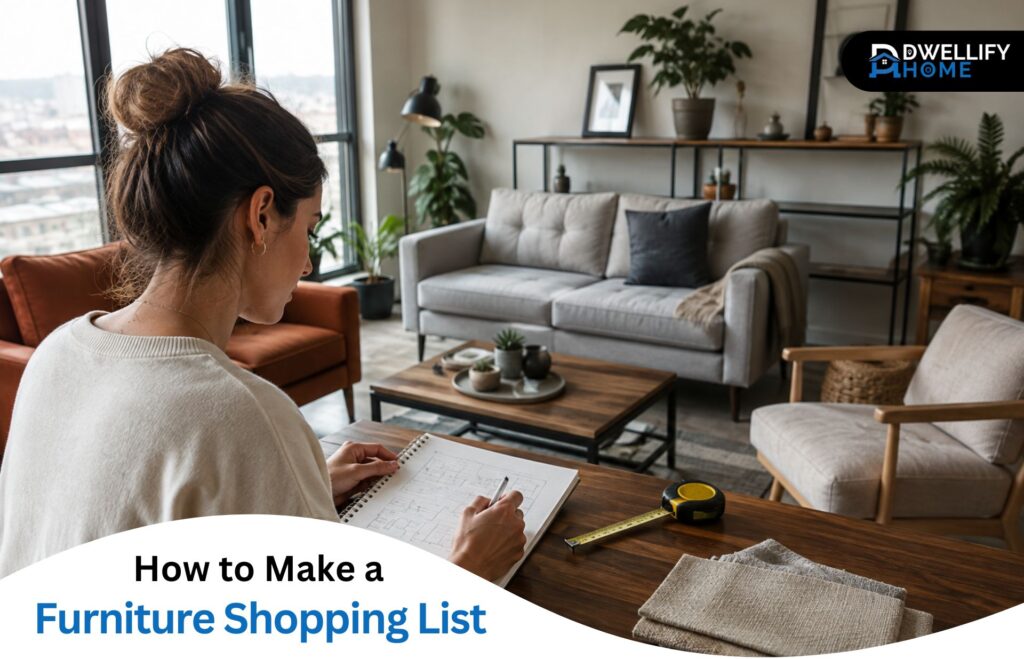
Sketching a rough floor plan — even a simple one on paper — makes it much easier to picture how a sofa or dining table will actually sit in the space, instead of guessing once it’s already delivered.
Doorways, Stairwells, and Tight Corners
This is the step most people skip, and it’s the one that causes the most regret. A couch can fit a living room perfectly and still not make it through the front door, a narrow stairwell, or a tight hallway turn.
Measure the width of every doorway, hallway, and stairwell the furniture has to pass through — not just the room it’s going into. If you live in an apartment building, check for weight or size limits on the elevator too. It’s a five-minute check that avoids a very frustrating delivery day.
Set a Realistic Budget for Each Room
A single lump-sum furniture budget sounds simple, but it tends to disappear fast — usually on the first room you shop for, leaving little for the rest. Setting a maximum budget per room keeps spending in check as you go.
If a room’s priorities add up to more than its budget, don’t stretch the whole budget thin. Instead, buy the anchor piece now and hold off on the smaller items, or look for a lower-cost version of a secondary piece so the essentials stay funded. This keeps you from overspending on the first room and running short by the last one.
What to Include in Your Furniture Shopping List
A useful furniture shopping list needs more than item names. Track it in a spreadsheet, notes app, or even a printed sheet, using these columns:
| Room | Item | Priority | Max Size | Budget | Source/Link | Notes |
| Living Room | Sofa | High | 84″ W max | Set your cap | Store name/link | Pet-friendly fabric |
| Bedroom | Nightstand | Medium | 20″ W max | Set your cap | Store name/link | Matches bed frame finish |
The Max Size column keeps you from falling for a piece that looks great online but won’t clear your doorway or overwhelm the room. The Source/Link column matters more than it seems — prices and stock change quickly, and having the link saved means you’re not hunting for it again later. Priority keeps you focused on what actually needs to happen first.
Essential Furniture Checklist by Room
Not every home needs the same pieces, but these are the ones most people end up needing regardless of style or budget.
Living Room Essentials
- Sofa or sectional
- Coffee table
- TV stand or media console
- Main seating lamp or overhead lighting
Bedroom Essentials
- Bed frame and mattress
- At least one nightstand
- Dresser or storage for clothing
Dining Room Essentials
- Table
- Chairs (enough for your regular household, plus a couple extra if you host)
Beyond furniture itself, it’s worth adding rugs, curtains, and lighting to your list. They’re easy to forget because they don’t feel like “furniture,” but they’re usually needed to make a room fully functional — and adding them late often means an extra shopping trip.
What to Buy First: A Smart Priority Order
Buy your anchor pieces first — the sofa, the bed, the dining table. These are the items that take up the most space, define how a room is used, and are the hardest to swap out later. Smaller pieces like side tables, lamps, and décor are much easier to add or adjust once the anchors are in place.
This order also protects your budget. If money runs low toward the end, it’s far easier to live without a second accent chair than without a bed.
One more thing worth checking before you commit: delivery and lead times. Custom or made-to-order pieces can take weeks or months to arrive, which matters if you’re furnishing a room with a deadline — like moving in by a certain date.
Getting Furniture Size and Proportion Right
Furniture that’s technically the right size for a room can still feel wrong if it’s out of proportion with everything around it. A general guideline some people use is keeping a piece like a rug or sofa at roughly two-thirds the length of the wall or item it’s paired with — though this varies depending on the room and isn’t a fixed rule, just a helpful starting point for eyeballing scale.
The more reliable approach is checking your measurements against the room itself: leave enough clearance for walking paths, and avoid pushing every piece against the walls, which can make a room feel more like a waiting area than a living space.
Common Furniture Shopping Mistakes to Avoid
- Measuring the room but not the path to it. A sofa that fits the living room can still get stuck at the stairwell.
- Buying decorative pieces before anchor furniture. It’s easy to fall for a nice accent chair first and run short on budget for the sofa.
- Ignoring delivery lead times. Custom pieces can take much longer than expected, especially if you’re working toward a move-in date.
- Forgetting rugs, curtains, and lighting. These often get left off a “furniture” list even though they’re part of finishing a room.
- Shopping without a style thread. If you’re furnishing gradually, pieces bought months apart can end up clashing. Keeping a shared color or material note in your list helps tie purchases together over time.
FAQs
What is the 2/3 rule for furniture?
It’s a general sizing guideline some people use — for example, sizing a rug or sofa to about two-thirds the length of a nearby wall or piece — to help furniture feel proportionate rather than cramped or oversized. It’s not a strict standard, just a useful starting point when judging scale.
What are the essential items for a basic furniture checklist?
At minimum: a sofa, coffee table, and lighting for the living room; a bed frame, mattress, and nightstand for the bedroom; and a table with chairs for the dining area. Rugs, curtains, and lighting round out most rooms.
What is the biggest mistake in furniture placement?
Blocking natural walkways is one of the most common issues — pushing every piece to the walls can leave the center of a room unused and awkward to move through. Leaving clear paths between furniture usually makes a room feel more comfortable and functional.
Conclusion
A furniture shopping list works best when it’s more than a list of items — it’s a plan built around real measurements, a real budget, and a clear sense of what matters most. Get those pieces in place first, and the rest of the shopping process gets a lot less stressful.
Disclaimer
This article is for general informational purposes only. Every home, budget, and situation is different, so use these suggestions as a starting point rather than a fixed plan. For safety-related, structural, electrical, plumbing, HVAC, or other major property decisions, consult a qualified professional before proceeding.