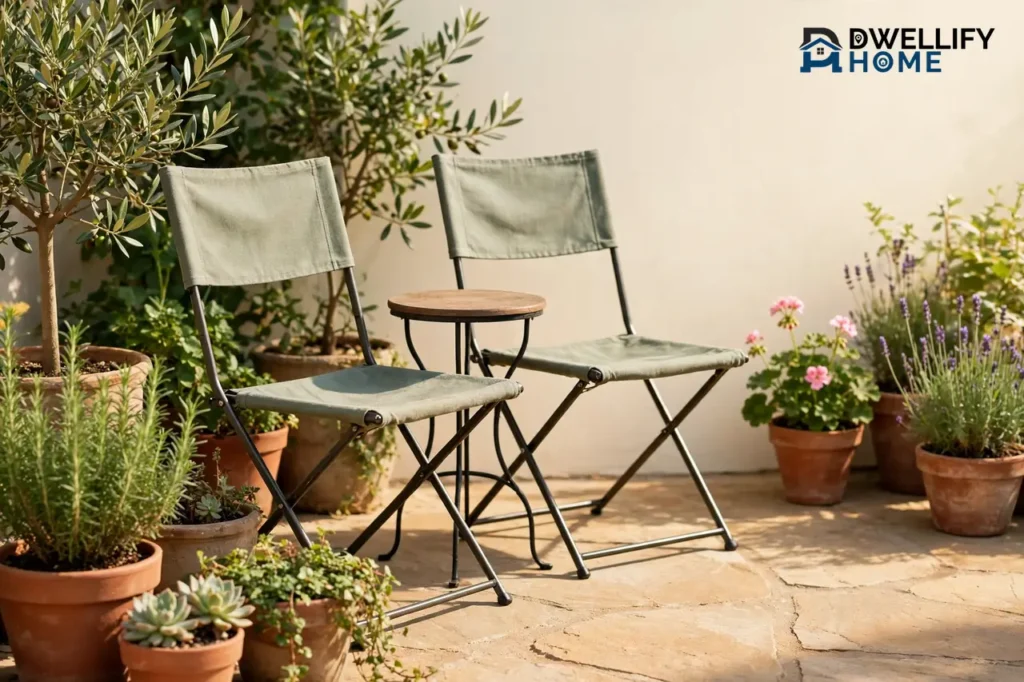
Choose patio chairs by deciding how you will sit first — dining upright, lounging deep, or lying flat — then measuring the patio and leaving 36 inches of clearance behind every dining chair and 24 to 30 inches between chairs. A dining chair seat should be 17 to 19 inches high and 18 to 20 inches wide, a lounge chair 24 to 28 inches wide and 22 to 26 inches deep, and a dining table for four needs an 8-by-8-foot footprint once the chairs and pull-out room are counted. Get the use and the numbers right, and the chairs fit the first time.
One sizing mistake ruins more patio chair purchases than bad weather ever does, and it has nothing to do with the chairs themselves. It sits in the spacing table below, and most buyers make it before they ever sit down. First, the three kinds of patio chair deserve a clear look, because they are built for three different ways of sitting.
What Kind of Patio Chair Do You Actually Need?
There are three kinds of patio chair, and they do three different jobs: dining chairs hold you upright at a table, lounge chairs hold you deep and low for conversation, and loungers hold you flat for sun and naps. Buy the kind that matches how you will actually sit, not the kind that looks best in the photo.
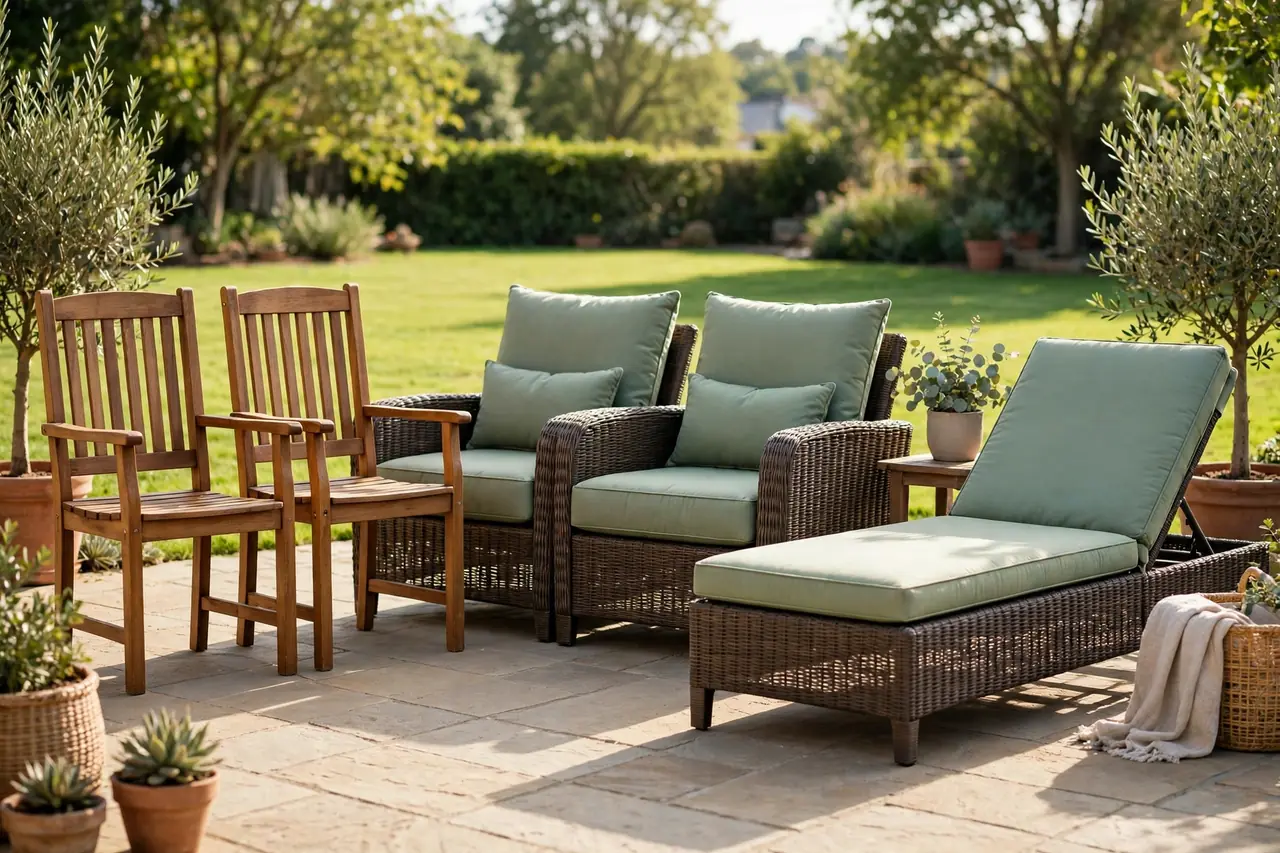
Dining chairs are upright by design. A dining chair seat should be 17 to 19 inches high, 18 to 20 inches wide, and 16 to 18 inches deep, with the table 29 to 30 inches high so there is 10 to 12 inches between the seat and the tabletop. That gap is what lets you eat without hunching and stand up without pushing the chair into the railing. If the seat is too low, your knees rise above the table; if it is too high, your shoulders hunch over the plate.
Lounge chairs are deep by design. A deep-seating chair should be 18 to 20 inches high at the seat, 24 to 28 inches wide, and 22 to 26 inches deep, with a seat back that leans back 100 to 110 degrees so you can actually relax. A lounge chair needs about 3 by 6 feet of floor space plus room to walk around it, and a chaise lounge needs about 2 by 6 feet. These numbers come from a patio furniture buying guide that measured real layouts, and they are the reason a lounge chair that feels generous in the store feels cramped on a small patio. Read the full guide at HomeMathLab’s patio furniture buying guide.
Loungers are flat by design, and they are the third kind. A zero-gravity chair, a recliner, or a chaise holds you nearly horizontal, which is wonderful for sun and reading and useless for dinner. Our lounger guide covers the flat-out options, our reclining patio chairs guide covers adjustable solo seats, and our outdoor chaise guide covers the poolside classic. Most patios need two kinds — dining chairs for meals and lounge chairs for evenings — and the patio that tries to do both jobs with one chair does neither well.
Dining upright, lounging deep, lying flat. Pick the job first, and the chair picks itself.
Measure First: The Patio Chair Sizing and Spacing Table
Measure the patio before you shop, because patio chairs are sold in standard sizes that assume a patio bigger than most people actually have. The table below is the whole sizing rule in one place: chair dimensions, the clearance each chair needs, and the patio footprint each set demands.

Patio chair sizing and spacing at a glance
| Chair or set | Seat size | Clearance needed | Patio footprint |
|---|---|---|---|
| Dining chair | 17–19 in high, 18–20 in wide | 36 in behind the chair | Part of an 8×8 ft set for 4 |
| Lounge chair | 18–20 in high, 24–28 in wide, 22–26 in deep | 24–30 in between chairs | 3×6 ft per chair |
| Chaise lounge | Flat, reclining | Room to walk around it | 2×6 ft per chaise |
| Dining table for 4 | Table 36–42 in wide, 60–72 in long | 36 in behind every chair | 8×8 ft |
| Dining table for 6 | Table 42×72 in | 36 in behind every chair | 10×12 ft |
| Deep-seating set | Sofa + 2 chairs + coffee table | 18 in to the coffee table | At least 10×10 ft |
| Sectional with chaise | L-shaped deep seating | 3 ft walkway to the door | 12×12 ft |
| Bistro set for 2 | 24–30 in round table | 18–24 in walkway | Fits patios under 100 sq ft |
Every number in this table comes from two measured guides: HomeMathLab’s patio furniture buying guide and Tangkula’s outdoor furniture size guide, which agrees on the key figures — 36 inches of clearance around a dining table, 24 to 30 inches between chairs, and 18 inches between seating and walls or other obstacles. Read the second guide at Tangkula’s expert tips for finding the right size of outdoor furniture.
The most common sizing mistake is buying a sectional that fills the patio wall to wall and leaves no walking path. Always leave a 3-foot walkway from the door to the far edge of the patio, and leave 24 inches between the furniture and any railing so you can walk behind the chairs. A dining table for four needs a footprint of 8 by 8 feet once you add the chairs and the space to pull them out, a table for six needs 10 by 12 feet, and a table for eight needs 12 by 14 feet. A deep-seating conversation set — a sofa, two chairs, and a coffee table — needs at least 10 by 10 feet, and a sectional with a chaise needs 12 by 12 feet.
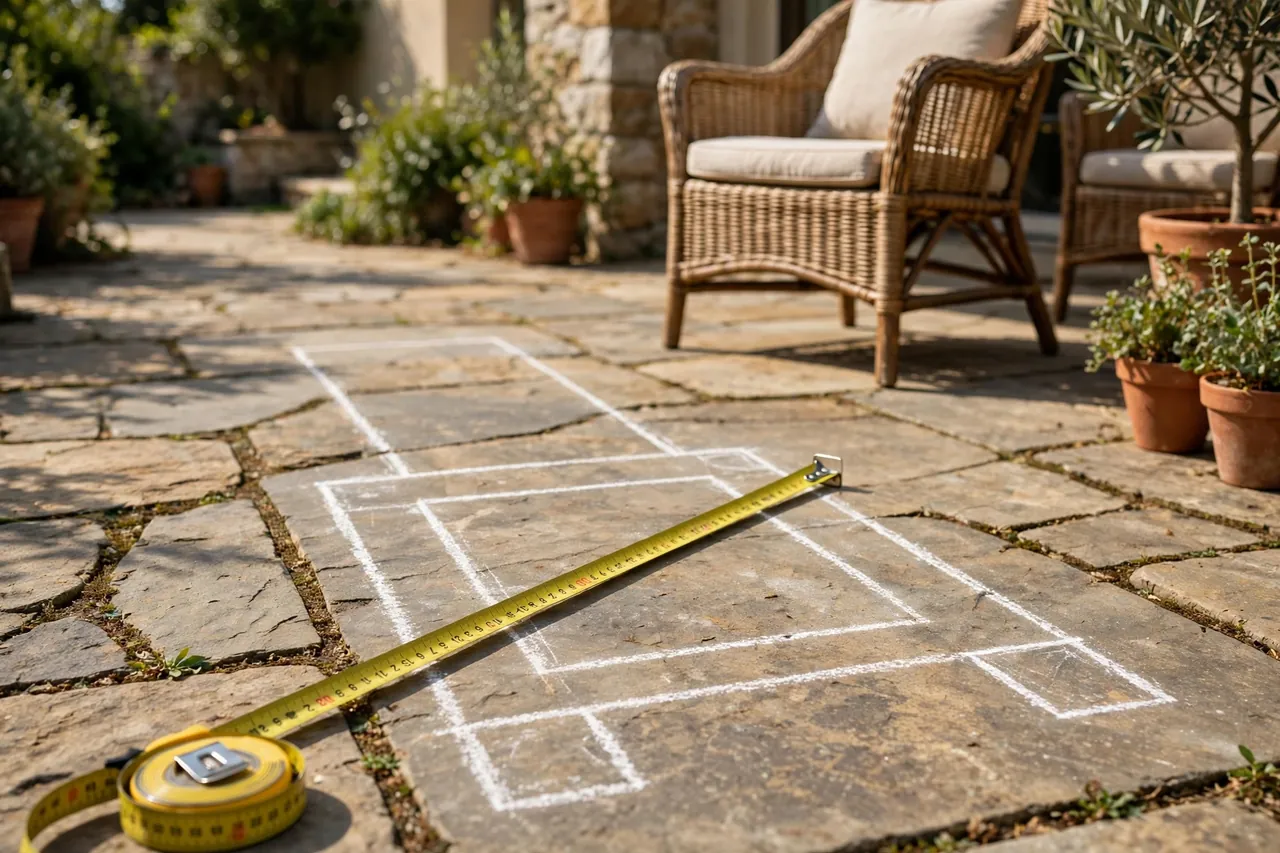
Measure twice, and mark it out. Use chalk or cardboard to mark the space of the furniture on your patio to ensure it fits well and does not overcrowd the area — that is the advice of Lazy Susan, a garden furniture maker whose sizing guide walks through the same numbers in metric. A well-planned patio should feel open and accessible rather than cramped and restrictive, and the tape on the floor shows the truth in five minutes. Our how to arrange outdoor furniture guide covers the full layout routine — traffic flow, rug sizing, and the clearance numbers for every piece.
36 inches behind every dining chair, 24 to 30 inches between chairs. Those two numbers decide whether the patio works.
How Many Chairs Does Your Patio Hold?
A small patio under 100 square feet holds a bistro set for two or two lounge chairs and a side table, a medium patio holds a six-seat dining set, and a large patio holds an eight- or ten-seat set as a central gathering point. Count the people you seat every day, not the people you seat once a year, and add stackable extras for the rare big night.
Start by measuring your patio, considering the table and chairs and the space needed for safe movement and comfort. Leave around 75 centimeters — about 30 inches — of space around a table for seating, and an additional 75 centimeters for easy movement. That is the rule from Lazy Susan’s garden chair guide, and it matches the 36-inch clearance rule above: the numbers differ slightly because one is metric and one is imperial, but both say the same thing — a chair needs room to pull out, and a person needs room to walk past it. Read their guide at Lazy Susan’s guide to choosing the right number of garden chairs.
For smaller patios or balconies, a compact two-seat bistro set or a table with four garden chairs works best. For medium-sized patios, a six-seat dining set balances function and space. For larger gardens, an eight- or ten-seat set can become a central gathering point. A small patio under 100 square feet suits a bistro set — a 24-to-30-inch round table and two chairs, costing $150 to $400 — or two lounge chairs and a side table, because a full dining set will swallow the floor.
Think carefully about how you use the space daily versus occasionally, such as a family barbecue. Choose chairs that suit your everyday needs, and for occasional gatherings, pick a set that works for daily use and add extra seating when you need it — stackable or foldable chairs, or a garden bench for unexpected guests. Our stackable chairs guide covers the extras that store away, our patio bistro set guide covers the two-person sets, and our garden chairs small guide covers compact chairs for tight floors.
Seat the everyday crowd, stack the extras. A patio sized for the rare party is cramped every other day of the year.
Dining Chairs vs Lounge Chairs vs Loungers
Dining chairs win for meals, lounge chairs win for evenings, and loungers win for sun — and the honest answer for most patios is two kinds, not one. The table below compares them on the four things that matter: comfort, space, storage, and what they are actually for.
Dining chairs, lounge chairs, and loungers at a glance
| Chair | Best for | Seat feel | Weak spot |
|---|---|---|---|
| Dining chair | Meals, games, working outside | Upright, 17–19 in high | Uncomfortable for long lounging |
| Lounge chair | Evening talk, reading, coffee | Deep, 22–26 in deep, reclined back | Too low and deep for eating |
| Chaise / lounger | Sunbathing, naps, reading flat | Flat, full-body support | Biggest footprint per seat |
| Rocking chair | Porches, gentle motion, relaxing | Upright with motion | Needs a stable, flat surface |
| Stackable chair | Extra guests, small storage | Varies by model | Comfort depends on the model |
Dining furniture generally needs more clearance because chairs move backward when people sit down, while lounge furniture is deeper but its circulation can sometimes be tighter because users are not repeatedly pulling chairs in and out. That is why the dining zone needs the full 36 inches behind every chair, while a lounge zone can work with 18 to 24 inches around the conversation seating. Plan the zones separately, and the patio stops fighting you.
The mix matters more than any single chair. A patio with a four-seat dining set and two lounge chairs by the fire pit serves every kind of evening, while a patio with six lounge chairs and no table serves none of them well. Our outdoor dining chair guide covers the upright options, our outdoor dining table and chairs guide covers matched sets, and our patio dining set guide covers the full table-and-chairs packages. For older family members, our best chairs for elderly people guide covers seat heights and armrests that make standing up easy.
Guess which chair gets used most: the beautiful lounge chair, or the plain dining chair with arms? The dining chair wins, because arms help you stand up and the upright seat works for meals, laptops, and cards. Comfort is not the shape — it is the match between the chair and the job.
Two kinds, not one. Dining chairs for meals, lounge chairs for evenings, and the patio works all day.
What Most People Get Wrong About Patio Chairs
Most people get patio chairs wrong in three ways: they measure the table and forget the pull-out space, they buy the deep lounge chair for dining, and they choose the chair by looks instead of sitting in it. All three mistakes cost money, and the first one is the most common.
The pull-out mistake is the big one. One of the common mistakes when buying garden furniture is focusing only on the size of the table and chairs without considering the working space needed for comfort and function. It is not just about whether your set physically fits on the patio — it is about ensuring that it allows for easy movement and a comfortable dining experience. A set that fits the tape but leaves no room to pull a chair out is a set nobody enjoys sitting in.
The dining-versus-lounge mistake runs the other way. A lounge chair with a 22-to-26-inch-deep seat and a back that leans 100 to 110 degrees is wonderful for an evening with a book and terrible for dinner, because you sit too low and too far back to reach the plate. A dining chair with a 16-to-18-inch-deep seat is wonderful for dinner and terrible for a two-hour evening, because it holds you too upright to relax. Buy the chair for the job, not for the photo.
The looks mistake is the quiet one. A chair that looks sleek in a photo can feel like a bench after twenty minutes, so sit in the chair before you buy it — or, if you are buying online, read the seat depth and seat height in the listing instead of trusting the photo. Our outdoor rocker chair guide covers the porch classic, and our zero-gravity armchair guide covers the recliner that splits the difference between lounging and sitting up. Here’s the problem with that advice: it sounds like a comfort lecture, but it is really a money rule — the chair you never sit in is the most expensive chair you own.
Measure the pull-out space, not just the table. The chair needs room to move, and so do you.
How to Test a Patio Chair Before You Buy
Test a patio chair in five minutes: sit in it for two full minutes, check the seat height against your knees, push the chair back as if you were standing up, and lift it. A good chair feels steady when you sit, lets your feet rest flat, and lifts without a struggle — and a chair that fails any of those four tests will fail you all summer.

First, the sit test. Sit in the chair for two full minutes, not two seconds, and notice where your back lands: a dining chair should support your lower back while your feet rest flat on the floor, and a lounge chair should let your shoulders rest against the back without your neck craning forward. If your knees rise above the table, the seat is too low; if your feet dangle, it is too high.
Second, the stand-up test. Push the chair back as if you were standing up from dinner, and check what is behind you: a wall, a railing, or a planter means the chair has no pull-out room, and the 36-inch clearance rule exists for exactly this moment. Third, the lift test: pick the chair up with one hand. If it is too heavy to move, you will never rearrange the patio; if it is too light, the wind will rearrange it for you. Our outdoor sectional cushions guide covers the cushions that make a hard chair comfortable, and our outdoor swing chair guide covers the hanging option when a chair on legs does not suit the space.
Fourth, the wobble test. Rock the chair gently side to side on a flat floor: a steady chair stays planted, and a wobbly one will only get worse outside, where the ground is never perfectly flat. Fifth, the cushion test: sit on the cushion, not beside it, and check whether it is thick enough to matter and removable enough to wash. A thin cushion on a good frame beats a thick cushion on a wobbly frame every time.
Sit two minutes, stand up once, lift it once. Four tests, five minutes, and the chair proves itself.
Which Chair Material Lasts Longest Outside?
Powder-coated aluminum and cast aluminum last longest outside with the least care, because aluminum will not rust and it is light enough to move. Teak lasts decades with almost no care but costs the most, resin wicker is light and weatherproof but fades, and untreated wood is the shortest-lived choice unless you seal it every year.
Choose materials that withstand the elements. Cast aluminum is rustproof and low-maintenance, while wooden furniture requires regular treatment to stay weather-resistant, and low-maintenance materials such as aluminum and synthetic rattan are easier to clean and care for compared to wooden or fabric-based options. That is the material rule from Lazy Susan’s guide, and it matches the wider market: aluminum frames with solution-dyed acrylic cushions are the set-and-forget pick, and wood wins on looks only if you will oil it.
Weight matters too, and it cuts both ways. A light chair is easy to move and easy for the wind to move, while a heavy chair stays put and stays where you left it. On a windy patio, cast aluminum beats tubular aluminum because it is substantially heavier; on a small balcony, a light stackable chair beats a heavy one because you will actually move it. Our weather-resistant outdoor furniture guide sorts every material by what it survives, and our how to care for outdoor furniture guide covers the routine that keeps each one alive.
Aluminum for easy care, teak for forever, wood only if you will seal it. The material decides the maintenance, not the other way round.
Your 6-Step Patio Chair Buying Checklist
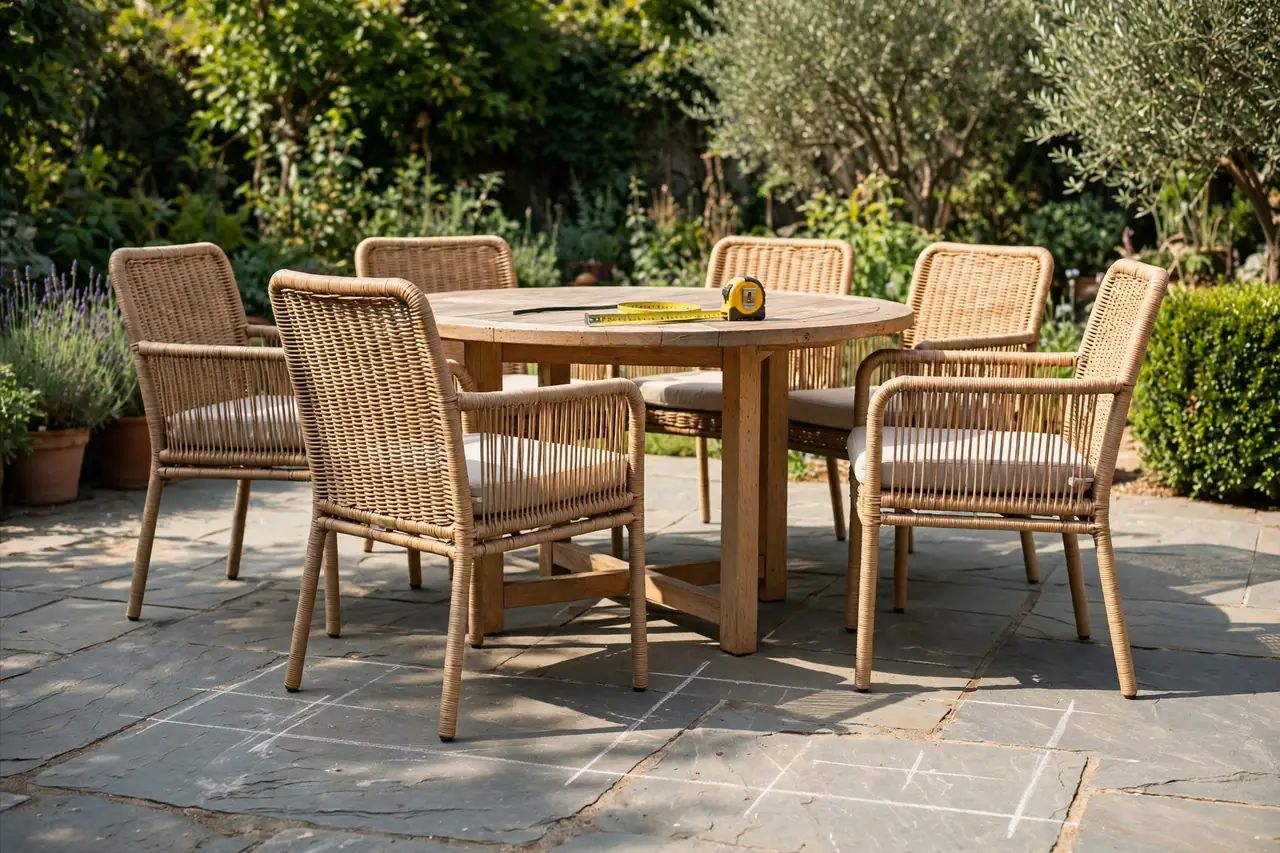
Buy patio chairs in six steps: decide the job, measure the patio, mark the footprint, test the chair, check the material, and count the extras. The whole job takes one afternoon of measuring and one trip to the store, and the tape step is the one that saves you from returning a set that never fit.
- Decide the job. Dining, lounging, or lying flat — pick the way you will sit most, and buy that chair first.
- Measure the patio. Length and width, plus the door swing, the railing, and every planter that eats floor space.
- Mark the footprint. Use chalk or cardboard to mark the size of the furniture on your patio, then walk around it and pull an imaginary chair out.
- Test the chair. Sit two minutes, stand up once, lift it once, and rock it gently for wobble.
- Check the material. Aluminum for easy care, teak for forever, synthetic rattan for the woven look — and ask for the weight rating.
- Count the extras. Stackable chairs or a bench for the rare big night, so the everyday set stays right-sized.
Sketch it if it helps: draw your patio to scale, including the dimensions of your existing furniture, because a sketch shows how the set fits and whether there is space for movement around seating. A garden design app does the same job digitally if you prefer. Either way, the plan on paper is cheaper than the return trip to the store.
Job, measure, mark, test, material, extras. Six steps, one afternoon, and the chairs fit the first time.
Related Guides
If you are furnishing the whole patio, these guides pick up where this one leaves off:
- Outdoor Dining Chair — the upright options, sized and tested for real meals.
- Outdoor Dining Table and Chairs — matched sets, and how to size them.
- Patio Dining Set — the full table-and-chairs packages.
- Garden Chairs Small — compact chairs for tight floors.
- Stackable Chairs — the extras that store away when the party ends.
- Reclining Patio Chairs — adjustable solo seats for reading and relaxing.
- Lounger — the flat-out options for sun and naps.
- Outdoor Chaise — the poolside classic, sized and placed.
- Outdoor Rocker Chair — the porch classic, and the surface it needs.
- Zero-Gravity Armchair — the recliner that splits lounging and sitting up.
- Best Chairs for Elderly People — seat heights and armrests that make standing up easy.
- Outdoor Swing Chair — the hanging option when legs do not suit the space.
- How to Arrange Outdoor Furniture — traffic flow, rug sizing, and clearance numbers for the whole patio.
- Outdoor Sectional Cushions — the cushions that make a hard chair comfortable.
- Patio Bistro Set — the two-person sets for small patios.
- Weather-Resistant Outdoor Furniture — every material sorted by what it survives.
- How to Care for Outdoor Furniture — the season-by-season routine for every material.
Frequently Asked Questions
What are the key considerations when choosing new garden chairs?
Space, function, comfort, material, storage, style, and maintenance. Measure the patio and leave room to move, pick chairs that match how you use the space daily, choose weatherproof materials like cast aluminum, and pick stackable chairs if storage is tight — a chair that ticks all seven boxes is the right one.
How do you measure your outside space correctly for new garden furniture?
Measure the length and width of the patio, then leave 50 to 75 centimeters around the table and chairs for easy movement — the working space. Include pathways, planters, and other features in the measurement, and mark the furniture footprint with chalk or cardboard so you can walk around it before you buy.
What do you look for in a garden dining chair?
Durability, comfort, low maintenance, weather resistance, ease of movement, style, and versatility. Look for rustproof materials, cushions or ergonomic designs, and stackable or foldable options for flexibility — and always check the seat height and width against the table before you buy.
How many outdoor chairs do you need?
Seat the people you feed every day: four or six chairs for family meals, and stackable or foldable extras for larger gatherings. A small patio suits a two-seat bistro set, a medium patio suits a six-seat dining set, and a large garden suits an eight- or ten-seat set as a gathering point.
What are the recommended space guidelines per garden chair?
Leave a minimum of 50 centimeters — 75 if you can — between the table and the back of each chair, plus another 50 to 75 centimeters of working space for comfortable movement. A six-seat table needs about 150 centimeters of extra space in total, and larger tables need more.
Decide the job, measure the patio, and mark the footprint before you spend a dollar. A dining chair needs 36 inches behind it, a lounge chair needs 24 to 30 inches beside it, and a patio sized for the everyday crowd beats a patio sized for the rare party. Start with the tape measure, sit in the chair for two full minutes, and buy the chairs that fit the patio you have — not the patio in the photo.