Industrial outdoor furniture takes the honest materials of factories and warehouses — dark steel, brushed metal, raw concrete, and reclaimed wood — and builds patio furniture that looks tough because it is tough. The style works outside when the specs do, so the winning formula is 316 stainless near water, dark powder-coated aluminum rated AAMA 2604 or 2605, and reclaimed teak or concrete tops. This guide explains the materials, the weight and wind rules, the pieces, the costs, and the care routine that keeps black metal looking new.
Industrial style is not about making your patio look like a factory floor. It is about honest materials with nothing to hide: exposed frames, visible bolts, raw textures, and clean lines. Done well, it feels urban, calm, and solid. Done badly, it feels cold and heavy. The difference is the mix: metal for the structure, warm wood for the touch points, and one soft element, like a cushion or a plant, to keep it human.
What Is Industrial Outdoor Furniture?
Industrial outdoor furniture is outdoor seating and tables inspired by warehouse and factory design, built from rugged materials like concrete, powder-coated steel, and reclaimed wood, with streamlined silhouettes that anchor a gathering space. The pieces typically feature substantial bases in cast concrete, powder-coated aluminum, or steel, paired with tops in weather-resistant surfaces like ceramic, terrazzo, or FSC-certified teak. Unlike traditional outdoor furniture, industrial tables prioritize architectural presence and commercial-grade construction that withstands full sun, coastal humidity, and high-traffic use. That description comes from Lumens’ industrial outdoor dining collection, and it captures why the style has moved from city rooftops and corner cafes into home patios.
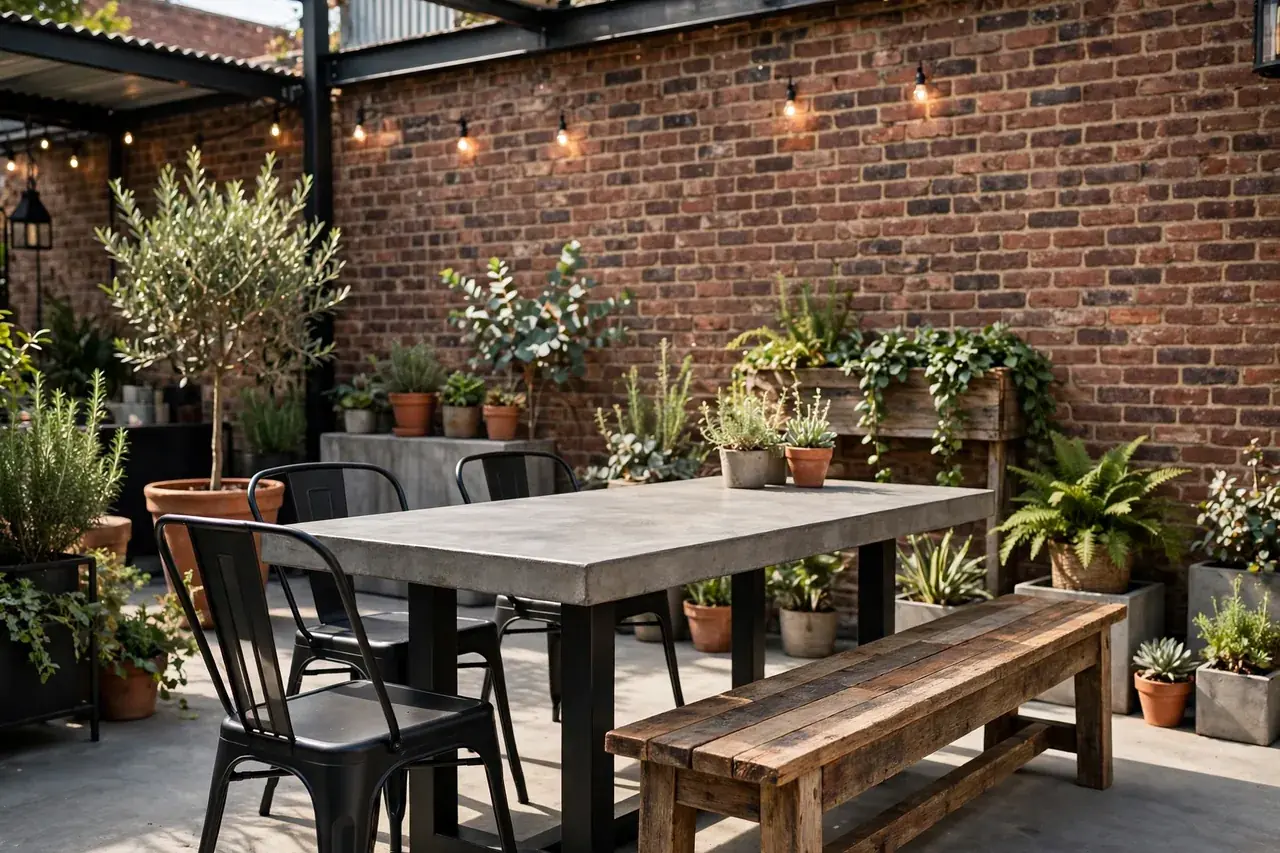
The visual language is simple: dark and restrained tones, honest materials, and exposed structure. The color wheel is neutral, charcoal, graphite, matte black, and warm wood, so the structures and the furniture create all the visual impact instead of bright colors doing it. Architectural writing on the style consistently ties exposed metal and raw textures to the industrial mood. Wood and plants are combined with the concrete and brick to break the hardness: a reclaimed teak top softens a black steel base, and a planter softens a concrete bench.
Industrial is not the same as modern or minimalist, though they share clean lines. Modern furniture hides its structure; industrial shows it. Minimalist furniture removes visual weight; industrial furniture adds it, on purpose. And industrial is not the same as farmhouse either, though both love wood and metal: farmhouse softens everything with whitewash and warmth, while industrial keeps the metal dark, the edges sharp, and the finish raw.
The Three Materials: Steel, Aluminum, and Wood
Industrial outdoor furniture speaks a three-material language, and each material has a job. Get the grade right and the furniture lasts a decade. Get it wrong and the same-looking piece fails in two seasons.
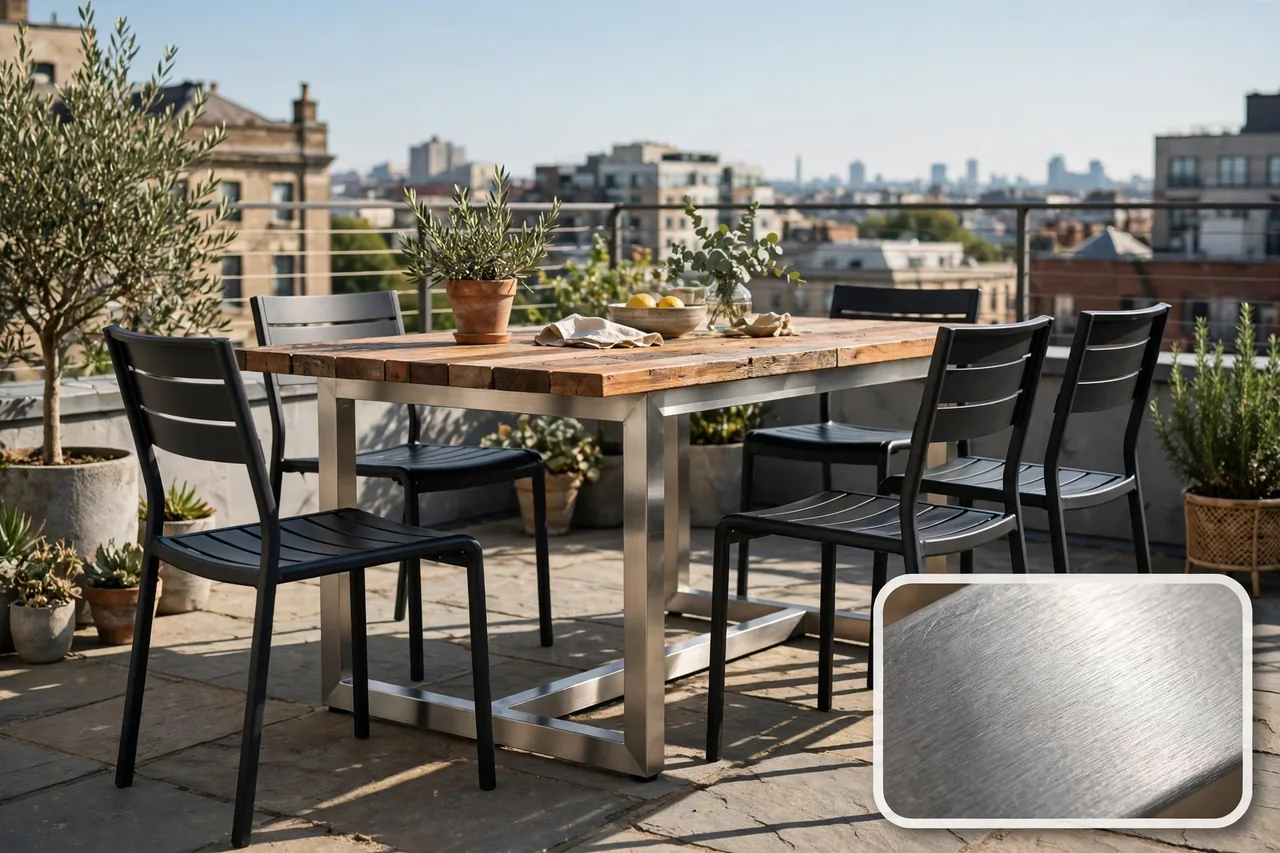
| Material | Best use | Weakness to watch | Spec to ask for |
|---|---|---|---|
| Brushed stainless steel | Table bases, frames | Chloride pitting near coast | 316 coastal, 304 inland |
| Powder-coated aluminum | Chairs, light frames | Thin coating chalks fast | AAMA 2604 inland, 2605 coastal |
| Reclaimed teak | Tabletops, benches | Needs sealing for color | FSC Chain-of-Custody |
| Concrete | Table tops, benches | Heavy, chips on edges | Sealed, reinforced |
Brushed stainless steel delivers the crisp, machine-tooled look without glare, but the grade governs how it ages. The 304 grade is cost-effective for inland, low-chloride exposure. The 316 grade contains 2 to 3 percent molybdenum, giving significantly better resistance to chloride-induced pitting, a common failure near the coast or where de-icing salts are used. Industry guidance sets rough chloride thresholds near 200 ppm for 304 versus 1000 ppm for 316. The spec line used by commercial buyers reads: exterior stainless components within 10 km of coastline or exposed to de-icing salts shall be AISI 316 brushed; otherwise AISI 304 brushed is acceptable, with welds cleaned and passivated. That guidance comes from the Happy Rattan industrial outdoor furniture guide, which cites the Nickel Institute and the Australian Stainless Steel Development Association.
Dark powder-coated aluminum is the workhorse of windy rooftops and small patios: high stiffness-to-weight, easy to stack and store. The coating tier separates seasonal furniture from durable furniture. AAMA 2604 is the high-performance powder commonly targeted for about 5-year color and gloss retention under South Florida exposure protocols. AAMA 2605 is the superior-performing tier, typically specified for about 10-year exposure performance with tighter color, gloss, and corrosion criteria. When you buy, ask the seller which AAMA tier the coating meets, and ask for written conformance and a finish warranty. Our aluminum outdoor furniture and cast aluminum outdoor furniture guides explain the coating checks in detail. Reclaimed teak brings the warmth: dense grain, natural oils, and a weathered look that guests love, and it keeps tabletops dimensionally stable. If sustainability matters to you, add FSC Chain-of-Custody to your order to trace the timber credibly. Metal outdoor furniture covers the broader metal choices, and our concrete outdoor dining table guide explains how sealed, reinforced concrete tops survive outside.
Weight, Wind, and Why Heavy Is a Feature
Industrial furniture is heavy on purpose, and that weight is a feature, not a flaw. A concrete-top table or a steel-frame bench stays put in wind that would send a light resin set skidding across the deck. On a rooftop terrace or an open, windy patio, that stability is the difference between furniture you use and furniture you chase.

The trade-off is real: heavy furniture is hard to move, hard to store, and can crack a deck if it is dragged. Plan the layout before the delivery truck arrives, because a concrete table does not get rearranged on a whim. Use felt or rubber glides under every leg to protect decking and stone, and lift, never drag, concrete and steel pieces. For pieces you do want to move, dark powder-coated aluminum gives the industrial look at a fraction of the weight, and it stacks for winter storage. Our outdoor furniture weights guide explains how to anchor lighter pieces without ruining the look.
Weight capacity is the other number to check. Industrial furniture is often rated for commercial use, which means higher weight limits and sturdier joints than residential sets. A steel-frame chair rated for 300 to 400 pounds will feel solid under any guest, and a concrete bench will hold a whole family without flexing. But do not assume: ask for the rating, and check that the rating covers the seat and the frame together, not just the frame. A heavy top on a light base is the most common industrial failure, and it shows up as a wobble in the first month.
The Pieces: Tables, Chairs, Benches, and Bar Sets
Industrial style works across every piece of outdoor furniture, but a few pieces carry the look better than others. Start with the table, because the industrial table is the anchor of the whole style.
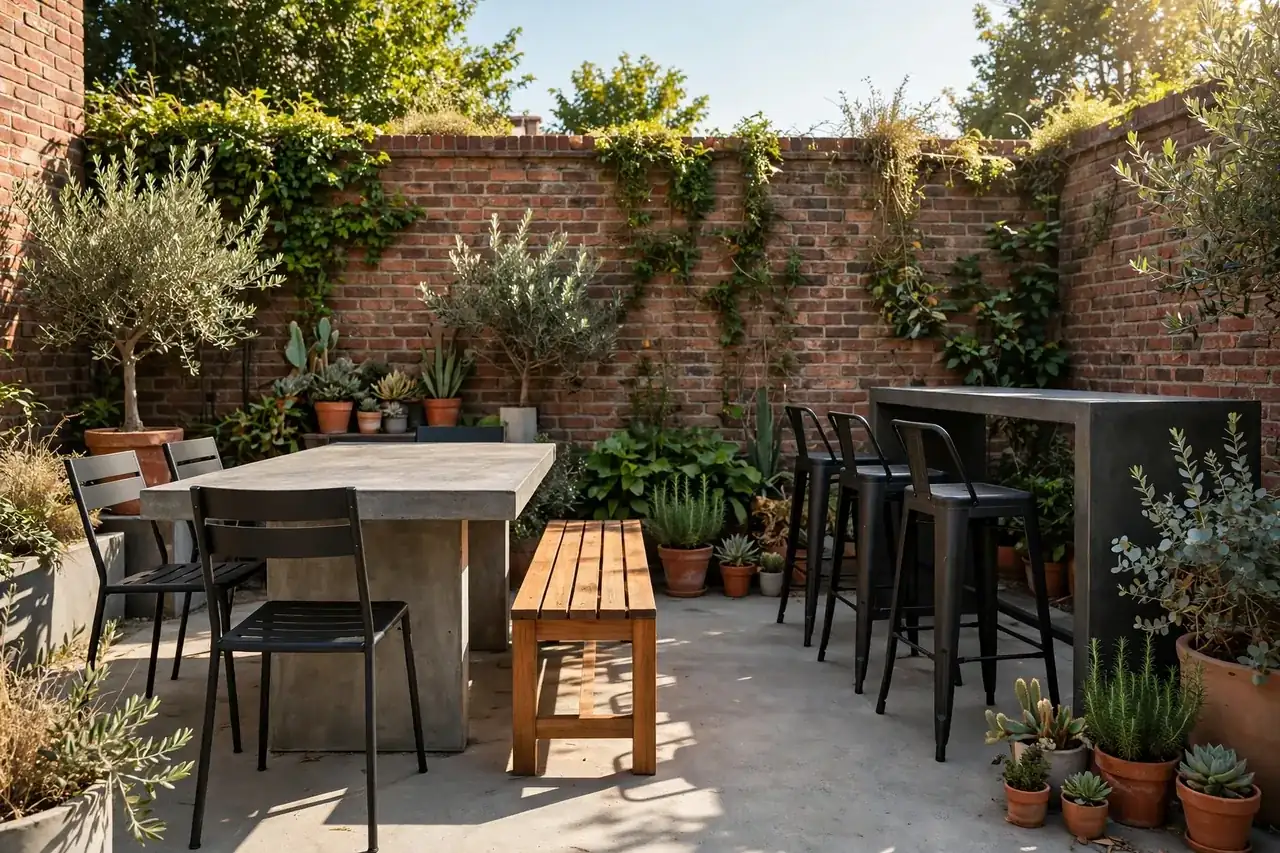
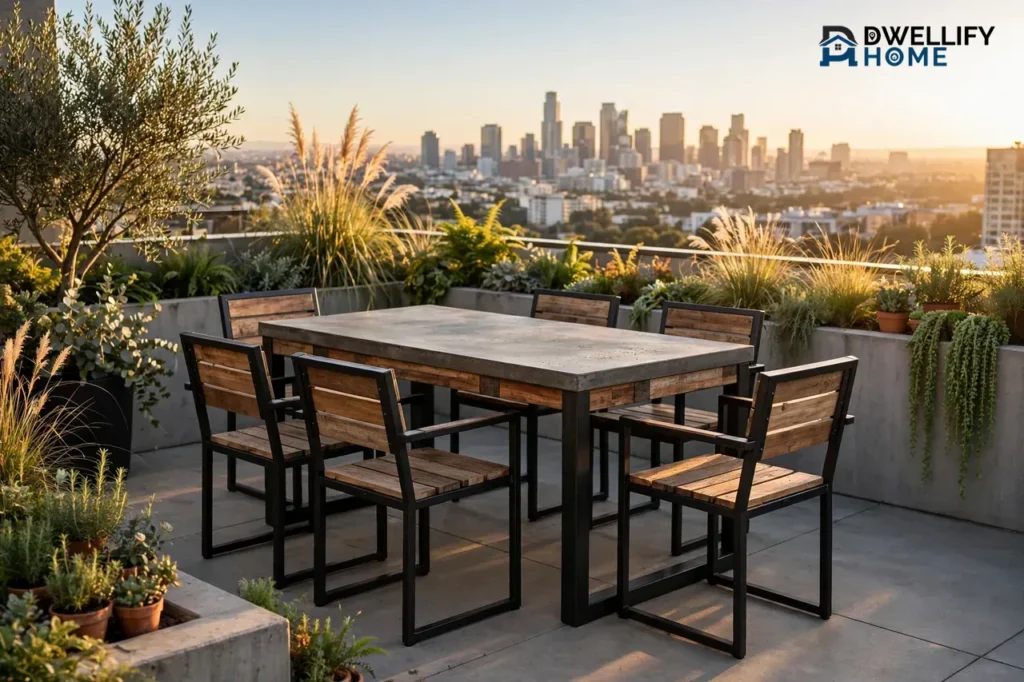
The outdoor dining table and chairs set is where industrial style shows its strength: a substantial base in cast concrete or powder-coated steel, paired with a reclaimed teak or ceramic top. Lumens’ industrial collection shows the range clearly, from the Basil outdoor dining table with its aged grey concrete top to sculptural designs with geometric bases. A contemporary outdoor bench in steel and wood seats a crowd and doubles as a side table. For drinks and small gatherings, an outdoor bar table with an outdoor bar stool set in matte black steel turns a corner of the patio into a cafe, and the high stools suit the tall, architectural feel of the style.
Seating should stay simple and structural. Stackable aluminum chairs in matte black are the practical choice for a patio that hosts often: they stack for storage, wipe clean in seconds, and match every industrial table. Modern outdoor chairs with clean lines mix well with industrial tables when the finish is dark and the frame is honest. For lounging, a mid-century modern outdoor furniture piece can sit beside an industrial table if the wood tones match, but keep the palette restrained so the two styles do not fight. And wrought iron outdoor furniture is the traditional cousin of industrial steel: heavier, more ornate, and best used as an accent rather than the main event.
Industrial vs Farmhouse vs Modern: How to Tell Them Apart
Buyers confuse these three styles because they share wood, metal, and neutral colors. The differences are in the finish, the structure, and the mood, and knowing them saves you from buying a mixed set that looks accidental.
| Trait | Industrial | Farmhouse | Modern |
|---|---|---|---|
| Metal finish | Matte black, raw steel | Matte black, aged bronze | Brushed, hidden |
| Wood finish | Reclaimed, dark, raw | Whitewash, warm, distressed | Clean, pale, smooth |
| Structure | Exposed, visible bolts | X-bracing, chunky | Hidden, minimal |
| Mood | Urban, solid, architectural | Warm, lived-in, cozy | Calm, airy, spare |
The quickest test is the metal. If the metal is matte black and the bolts are visible, it reads industrial. If the wood is whitewashed and the metal is aged bronze, it reads farmhouse. If you cannot see the structure at all, it reads modern. Resin patio furniture in dark grey can play an industrial role when the frame is aluminum, but bright or glossy resin breaks the mood. When in doubt, buy the table first and match everything else to it: the table sets the style, and the chairs follow.
How Much Does Industrial Outdoor Furniture Cost?
Industrial outdoor furniture costs more than a basic patio set, because the materials are commercial grade and the pieces are heavy. The range is wide, from affordable steel-and-aluminum sets to designer concrete tables, so budget by piece and by material. Prices below are as listed by retailers in November 2026.
Lumens’ industrial outdoor dining collection shows the spread clearly: entry-level options like the Basil table start around $1,549, while premium designs including B and B Italia’s Allure O reach $12,000 or more, reflecting Italian craftsmanship and luxury materials. A mid-range industrial dining set, a steel-base table with a reclaimed teak top and four stackable aluminum chairs, runs $1,200 to $3,000. A concrete-top table alone runs $800 to $2,500 depending on size and finish. A pair of matte black steel bar stools runs $200 to $500. And a steel-and-wood bench runs $300 to $900.
Think in total cost of ownership, not just purchase price. A powder-coated aluminum set rated AAMA 2605 costs more upfront but holds its color and finish for about ten years in high-UV exposure, while a cheaper set with an unnamed coating chalks and fades in two. Ask for the finish warranty in writing before you pay, and ask for the ASTM B117 salt-spray test summary with exposure hours that match your environment. Those two documents are worth more than any sales claim, because they are the difference between a set that looks industrial for a decade and a set that looks rusty by next summer.
Care: Rust Checks, Touch-Ups, and Winter Storage
Industrial furniture is tough, but it is not maintenance-free. The care routine is short and mostly about catching small damage before it becomes structural.
Daily care is simple: wipe tops with a pH-neutral cleaner and avoid chlorine bleach, which damages powder coating and fades fabric. Weekly, rinse frames and inspect the foot glides, because a missing glide lets a steel leg scratch the deck and rust from the bottom. Quarterly, check the powder coat for chalking and scratches, and touch up nicks promptly with a color-matched touch-up kit, using the RAL color reference if you have it. Annually, deep-clean stainless steel and consider passivation for coastal zones, which restores the protective layer that keeps 316 stainless from pitting.
Winter storage depends on the material. Aluminum and HDPE can genuinely stay out year-round. Teak survives but lasts longer sheltered, and cushions should always come in. Concrete tops should be sealed before the first freeze, because water in a hairline crack expands when it freezes and widens the crack. Our full how to care for outdoor furniture guide covers the seasonal checklist, and our weather-resistant outdoor furniture guide explains which materials can stay out in your climate. If you place industrial furniture on a deck, check the deck’s load rating too: a concrete table and six steel chairs can weigh more than a deck built for light furniture expects.
How to Style It Without Making Your Patio Look Like a Warehouse
The most common industrial styling mistake is going all metal and all grey. The style needs one warm element and one soft element, or the patio feels like a loading dock.
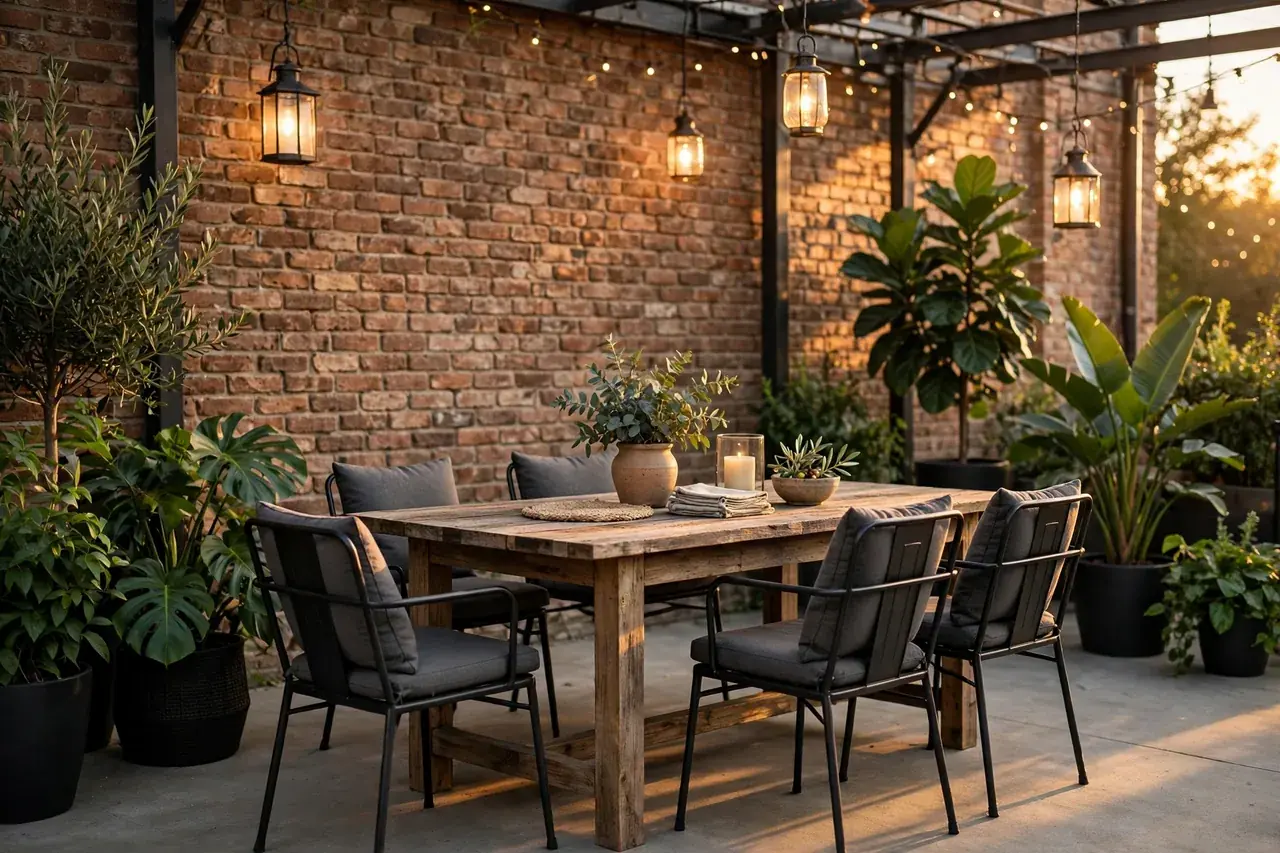
The warm element is usually the wood: a reclaimed teak tabletop, a wooden bench, or a timber screen behind the seating. The soft element is a cushion, a plant, or a textile: charcoal outdoor cushions on the chairs, a large planter with greenery beside the table, or a warm-toned outdoor rug under the dining set. Ezpeleta’s industrial outdoor spaces guide makes the same point: plants are essential for breaking away from the simple style of the furniture, bringing a natural feel and a touch of color to any space, and warm lantern light in the evening turns the hard materials golden.
Keep the palette to three colors: matte black, one wood tone, and one accent, usually charcoal or warm grey. Use lighting to soften the edges: small lanterns or vintage lamps that give out a warm light are a real hit for this style. And give the patio one hero piece, a community table or a sculptural chair, that the eye lands on first. Everything else stays quiet. On a small patio, one industrial table and four chairs is enough; on a large patio, repeat the same table-and-chair combination in two zones rather than adding a third style. Outdoor furniture on deck placements and our outdoor furniture paint guide both help when you need to refresh a black frame or match a new piece to an old one.
Frequently Asked Questions
For a coastal café, should I choose 304 or 316 stainless steel for table bases?
Choose 316. Its molybdenum content improves resistance to chloride-induced pitting, which is common near seawater and de-icing salts. The 304 grade is fine inland, but near the coast the extra cost of 316 pays for itself in a table base that does not pit.
Do I really need AAMA 2605 powder coat, or is 2604 enough?
Inland or moderate UV, 2604 is typically sufficient, with about 5-year South Florida exposure expectations. For coastal or high-UV rooftops, 2605 offers tighter color and gloss retention and corrosion criteria, targeting about 10-year performance. Match the tier to your exposure, not to your budget alone.
What corrosion test should appear in my RFP?
Specify ASTM B117 neutral salt-spray exposure hours appropriate for your risk profile, and require test reports from accredited labs. The test shows how the coating and hardware hold up under accelerated corrosion, so it is the fairest way to compare two suppliers.
Will reclaimed wood warp outside?
Quality reclaimed teak is dimensionally stable thanks to dense grain and natural oils. Combine sensible sealing and seasonal cleaning, and it will perform well in commercial settings. Consider WPC, wood-plastic composite, if you need ultra-low maintenance instead.
How do I keep “industrial black” frames looking new?
Use pH-neutral cleaners and touch up chips promptly, and schedule quarterly inspections. Share a short stainless and aluminum care video with staff or family for consistent results, and keep a color-matched touch-up kit on hand so a small chip never becomes a rust spot.
Your Industrial Patio, Built to Last
Industrial outdoor furniture rewards buyers who read the spec sheet instead of the sales tag. Brushed stainless in the right grade, powder-coated aluminum in the right AAMA tier, and a warm reclaimed wood top will give you a patio that looks sharp for a decade and handles wind, sun, and crowds without complaint. Your next step is simple: pick your table, ask for the coating tier and the salt-spray report, and let the rest of the patio follow the table’s lead.
General advice for choosing and caring for outdoor furniture, not professional safety or structural instructions. Check weight limits and deck load ratings, follow manufacturer care instructions, and ask for finish warranties in writing.