A small balcony works when you design it like a tiny room, not a shrunken patio: measure first, pick one job for the space, and move plants and storage onto the railing and walls so the floor stays free. Most small balconies run about 4 by 6 feet to 6 by 10 feet, which leaves room for one good seat, one small table, and greenery at eye level, as long as every piece earns its footprint.
These small balcony design ideas give you a full plan for a cozy small balcony, from measuring and renter-friendly furniture to plants, lighting, privacy, and a budget that stays small too. You will not need a big spend or any drilling, and you can take almost everything with you when you move.
Small Balcony Design Ideas at a Glance
A balcony is a small outdoor room with one wall missing, so the design rules change. A full patio set never fits, and a chair that is a little too deep eats the whole walkway. The fix is simple: fewer, better pieces, and every surface doing double duty.
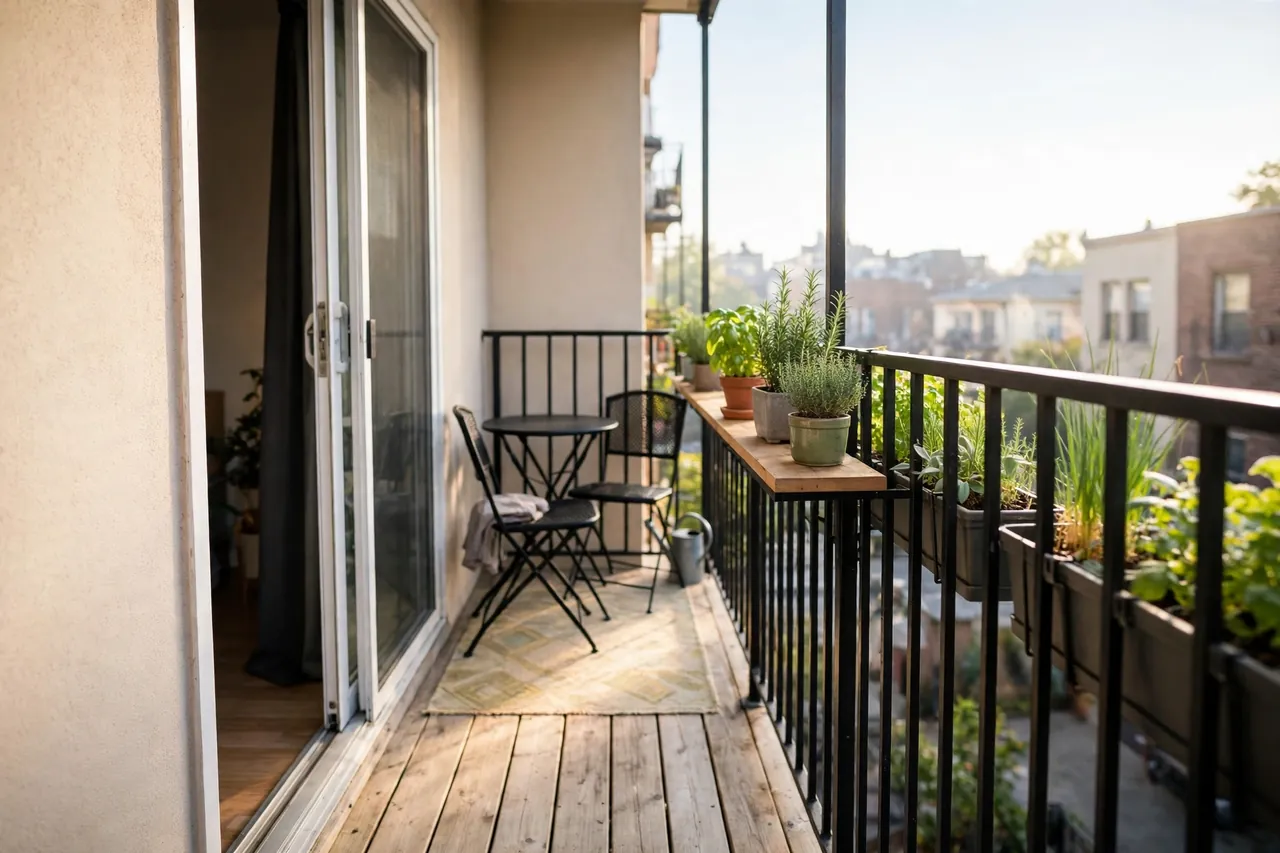
The table below matches a layout to the space you actually have. Find your balcony size first, then shop only for the layout in that row.
Small balcony layouts by size
| Balcony size | Best layout | What fits |
|---|---|---|
| Under 3 feet deep | Standing perch | Rail table, railing planters, lights |
| 3 to 4 feet deep | One-seat nook | One folding chair, rail table, one tall plant |
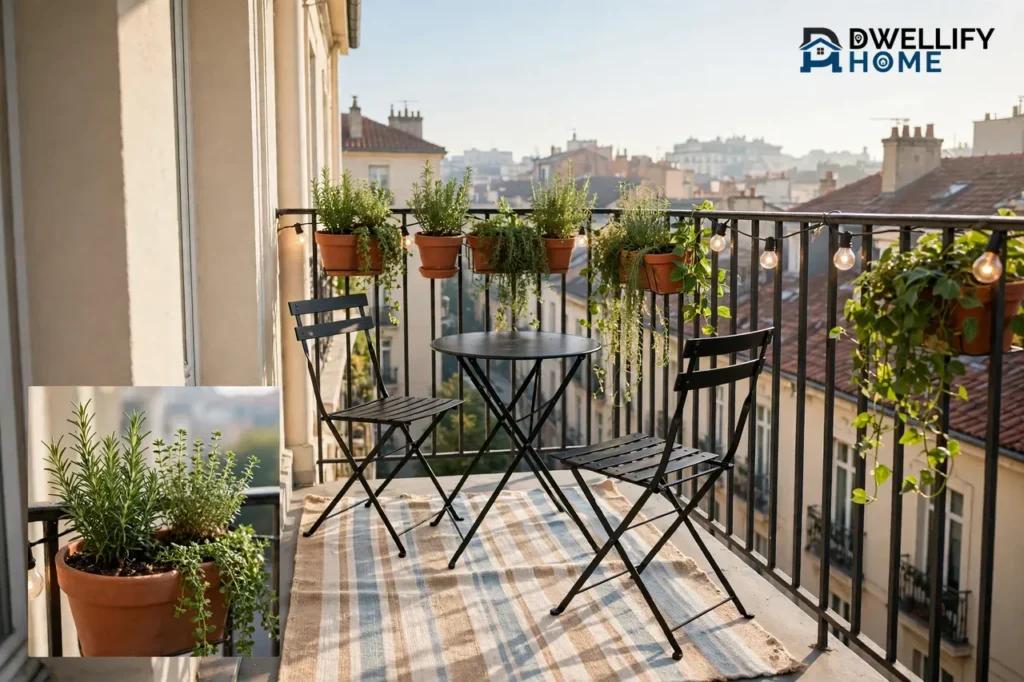
| 4 by 6 feet | Bistro corner | Bistro set for two, rug, railing planters |
| 6 by 10 feet | Mini room | Bistro set, bench with storage, vertical garden |
| Long and narrow | Lounge strip | Slim bench along the wall, floor cushions |
Give the balcony one clear job and it feels finished; give it five half-finished jobs and it feels crowded.
Measure First: The 10-Minute Plan That Saves Every Mistake
Measure before you shop, because a table that is a little too wide blocks the door swing, and a chair that is a little too deep leaves no room to stand up. Take a tape measure outside and write down three numbers: the width along the wall, the depth from the wall to the railing, and the door swing.
Next, check how the door opens and where you walk. Keep a clear path of about 24 inches from the door to the railing, and never put furniture where the door hits it. Tape the outline of a table and a chair on the floor with painter’s tape, then sit in the taped box for a minute. If your knees hit the tape, the furniture is too big.
Then watch the sun for one day. Note which hours bring direct sun and which hours bring shade, because sun decides your plants, your fabric colors, and whether you need shade at all. A south or west-facing balcony gets strong afternoon sun, so pale fabrics fade fast and sun-loving herbs thrive. A north-facing balcony stays cool and suits leafy greens and shade-tolerant plants.
Finally, read your lease and building rules before you buy anything. Many buildings limit what you can attach to a railing, ban open flames, and set rules for screens and planters. Ask your building manager about weight limits too, because wet soil is heavy and a row of big pots adds up fast.
Pick One Job for Your Balcony
Every good small balcony has one main job, and every piece serves it. Pick yours before you buy a single thing, and the rest of the design falls into place.
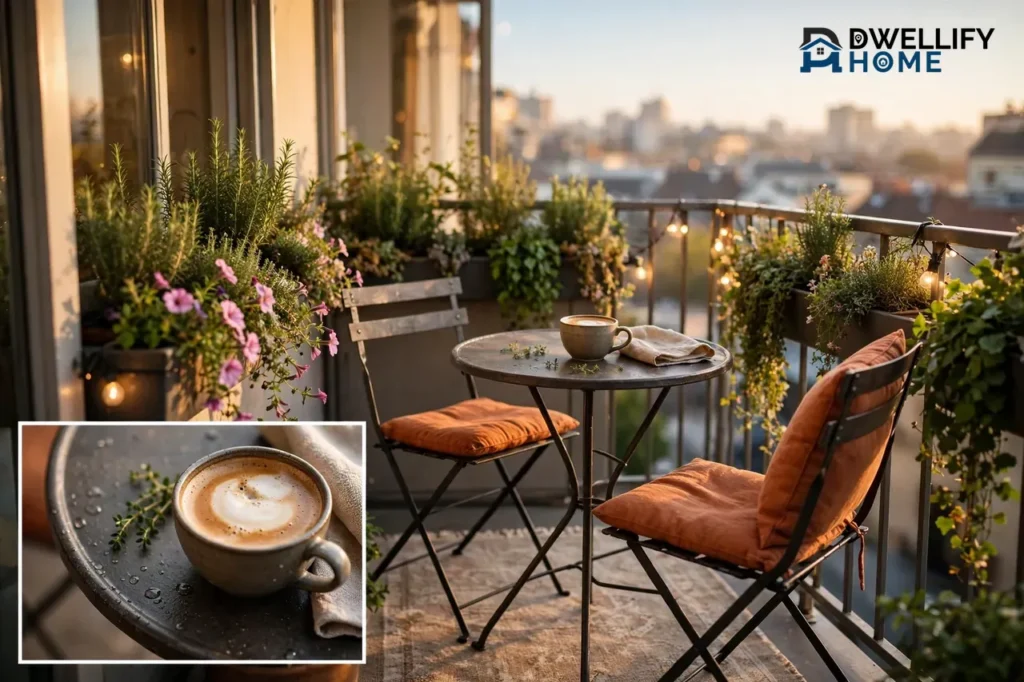
Coffee corner
A coffee corner is the easiest win on a tiny balcony. You need one comfortable chair, a small round table for a cup, and a little morning sun. A round table about 20 inches across leaves no sharp corners to catch your hip as you squeeze past, and it fits two cups without crowding the space.
Reading lounge
A reading lounge trades the table for comfort. Pick a low, deep seat with a soft cushion, a throw for cool evenings, and a small side table or rail shelf for a book and a drink. Keep everything low so the view stays open and the balcony feels wider than it is.
Mini garden
A garden-first balcony puts plants in charge and seating second. Railing planters hold herbs and trailing flowers, a tiered stand holds three levels of pots in one square foot, and one folding chair gives you a place to sit among the green. If you love plants, this is the layout that makes a small balcony feel alive.
Buy for your real routine, not your ideal one. If you only sit outside for coffee, buy furniture for coffee, not for hosting four people who rarely visit.
Furniture That Fits a Small Balcony
The golden rule of small balcony furniture is simple: it should fold, stack, or do double duty. Oversized furniture is the number one mistake on a small balcony, because it shrinks the space and makes everything feel cluttered.
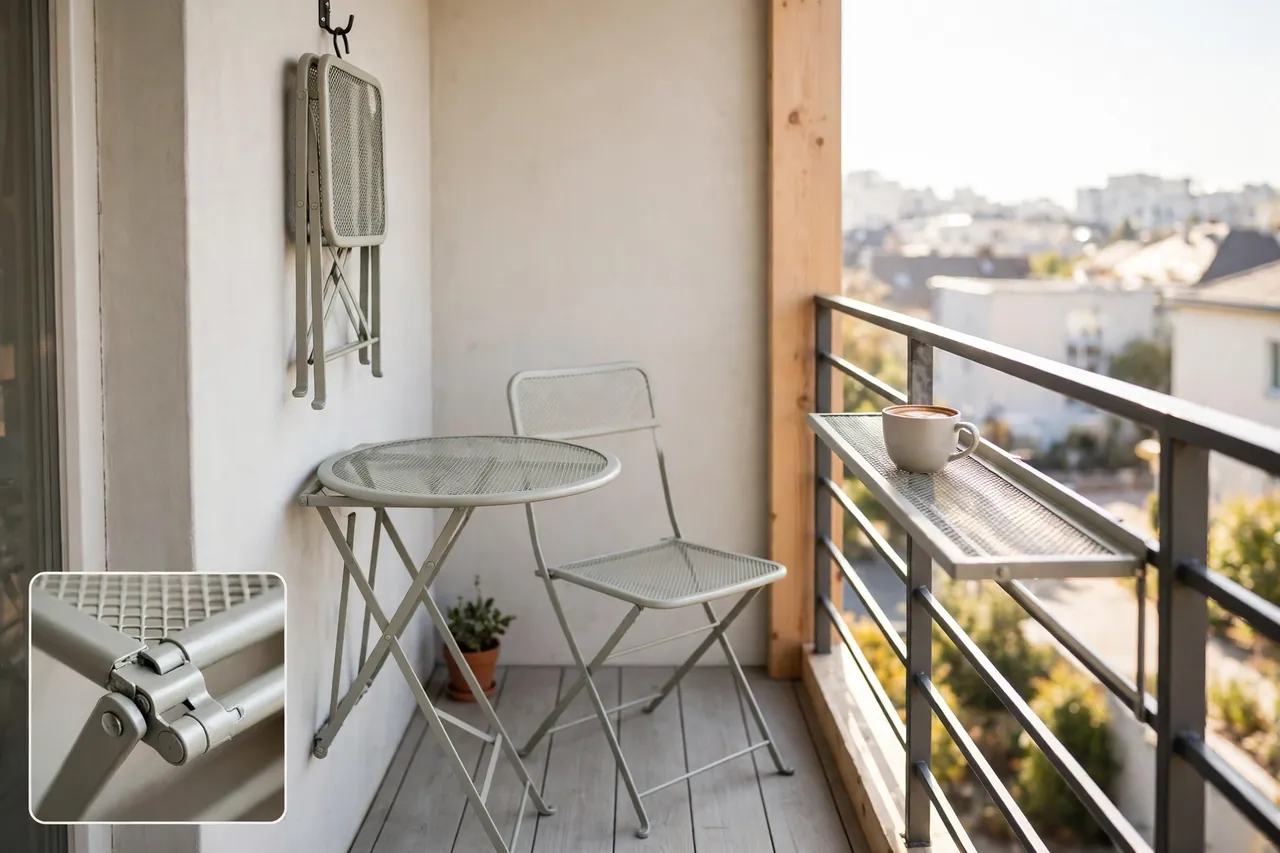
A folding bistro set is still the best buy for most small balconies. A round table with two folding chairs seats two people for coffee or a light meal, and the chairs hang flat on a wall hook when you want the floor back. Look for a set that folds truly flat, with a table that one person can carry with one hand.
A rail-mounted bar table is the single best buy for a very narrow balcony. It hooks over the railing, runs about 8 to 12 inches deep, and gives you a spot for a coffee or a laptop while using zero floor space. Check that the clamp fits your railing width before you order, because standard railings run 2 to 6 inches wide and solid concrete or glass railings need a different fix.
A slim bench with storage does two jobs in one footprint. It seats one or two people, hides cushions, watering cans, and outdoor games underneath, and it fits flat against the wall on a long, narrow balcony. A bench also beats chairs when the balcony is too shallow for a chair to pull out. For more layout ideas that make a tiny outdoor space feel bigger, see our guide to small patio designs.
Choose light, slim materials that you can see through or around. Metal frames, slatted wood, and open-weave chairs keep the view open, while a bulky solid chair blocks light and makes the balcony feel like a box. Pick outdoor fabric that dries fast, and store cushions inside the bench or indoors when rain is coming.
Go Vertical: Plants and Storage That Use Zero Floor Space
On a small balcony the floor is the one surface you cannot spare, so the garden goes up. Railing planters, wall pockets, and tiered stands add green without taking a single square foot of walking space.
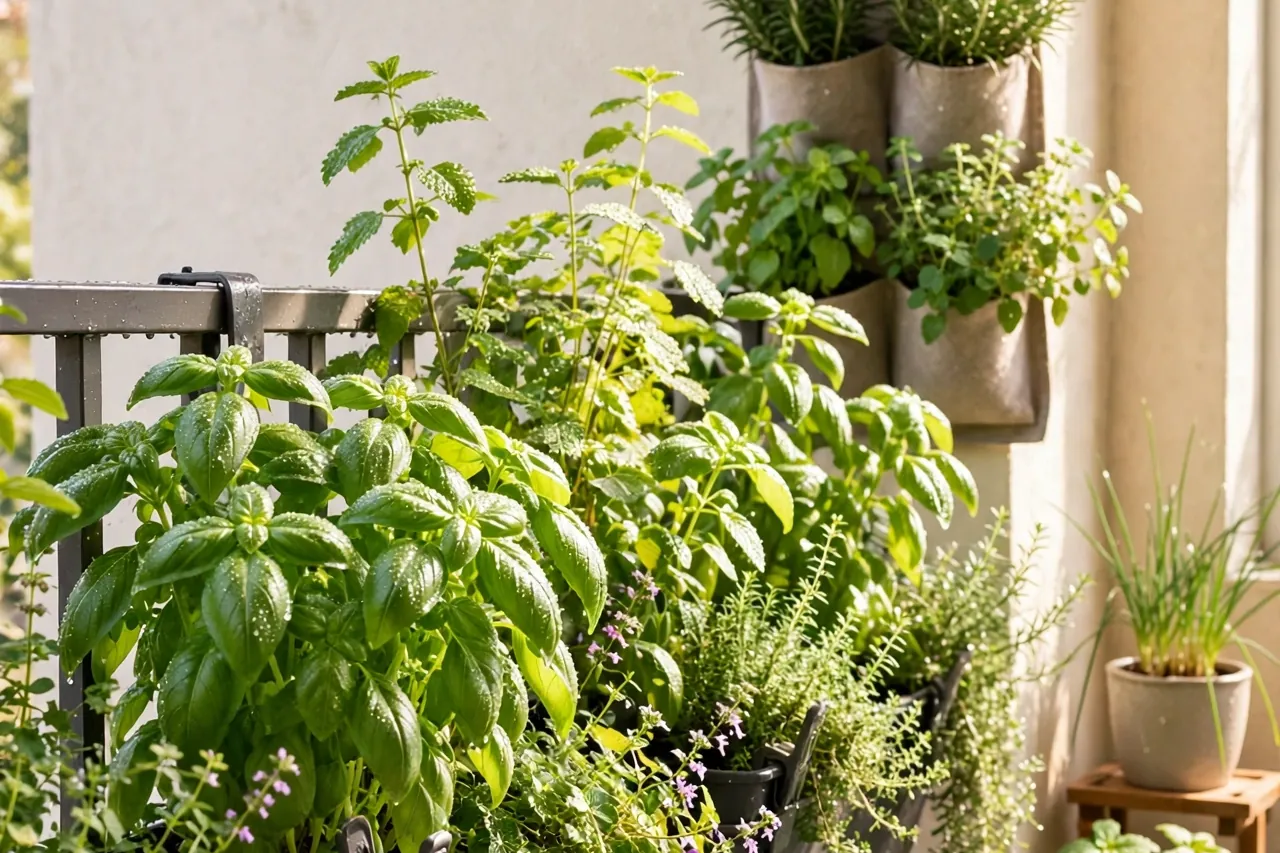
Railing planters are the best first plant buy. Clip-on boxes fit most standard railings and hold herbs, trailing flowers, or small vegetables at eye level, right where you can water and pick them. Hang them on the inside of the railing, never the outside above a walkway, and check your building rules before you attach anything heavy.
A wall garden takes the idea further. A pocket planter or a small trellis on the wall holds a whole herb garden in the space of a picture frame, and most renter-friendly versions hang from adhesive hooks or over-the-rail brackets with no drilling. Mix one tall plant, one trailing plant, and one flowering plant for a look that feels full without feeling messy.
Match plants to your sun, not to a photo. Oklahoma State University Extension’s container gardening guidance notes that containers in full sun on concrete can get eight hours of direct light and dry out fast, so sun-loving plants suit those spots and drought-tolerant plants cope best with the heat. See the full guidance in Oklahoma State University Extension’s container gardening fact sheet. As a simple rule, warm-season crops like tomatoes, peppers, and basil want about 6 to 8 hours of direct sun, while leafy greens like lettuce and spinach manage with 3 to 5 hours.
Use light pots and light potting mix, because wet soil is heavy and balconies have limits. A large 20-inch pot full of wet potting mix can weigh close to 100 pounds, so keep the heaviest pots close to the building wall, never near the railing, and use self-watering pots if you travel or forget to water. For more plant ideas that suit tight spaces, browse best plants for small gardens.
Use three matching pots of the same plant for a styled look; ten different plants in ten different pots look like a sale rack.
Light It Up After Dark
Lighting is what turns a balcony from a daytime spot into a room you use every evening. One warm strand of lights does more for a small balcony than any piece of furniture, and it costs very little.
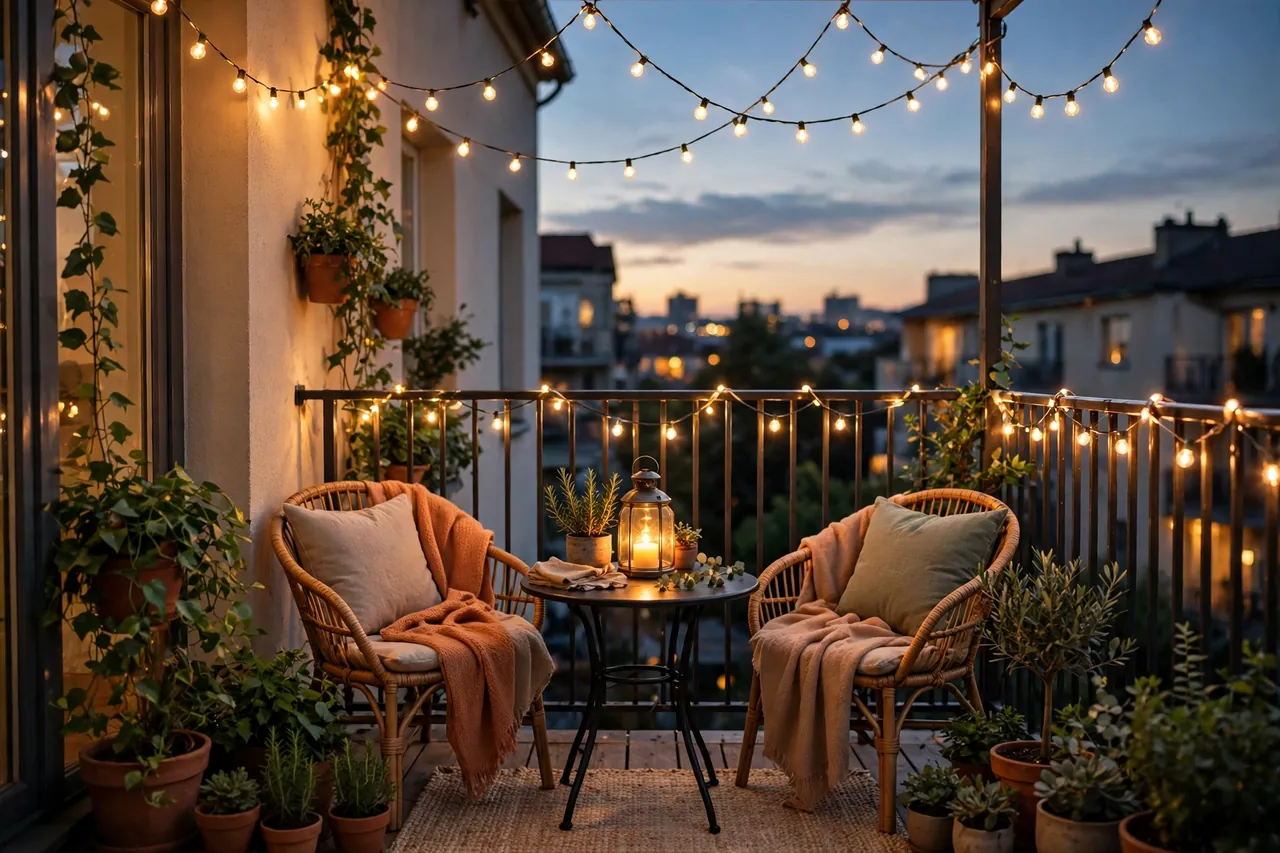
Warm white string lights are the classic balcony light for a reason. Wrap them along the railing or zigzag them overhead, and pick warm white, not cool white, because warm light flatters skin and makes a small space feel cozy. Solar string lights need no outlet and no drilling, which makes them the easiest renter-friendly pick, but they need a few hours of sun to charge.
Layer the light the way you layer a room. String lights give the glow, a lantern or a small solar lamp on the table gives a pool of light for reading, and a few candles in glass hurricanes give a soft flicker on calm nights. Three small light sources beat one bright bulb, and they make the balcony feel bigger because the eye travels from light to light.
Hang lights without drilling. Outdoor-rated adhesive hooks hold light strings on smooth walls, over-the-railing hooks carry them along the rail, and a tension rod across the opening holds a curtain or a light strand with no holes at all. Always check each hook’s weight limit, keep cords off the walking path, and bring plug-in lights inside during a storm.
That trio, warm, low, and layered light, makes 20 square feet feel intentional instead of cramped.
Privacy Without Building a Wall
A small balcony feels exposed when neighbors can see straight in, and privacy is usually the fix that makes people use the space at all. You do not need a wall. You need one screen on the side that faces the neighbors.
Tall plants make the softest screen. Two or three tall potted plants, like bamboo, ornamental grasses, or a small arborvitae, block the sightline while letting the breeze through, and they look better than any plastic panel. Put the tallest pots at the open corner and let shorter plants step down toward the door.
A reed or bamboo screen is the fastest fix. It ties to the railing with zip ties or hooks, rolls up when you move, and filters the view without blocking all the light. A fabric outdoor curtain on a tension rod does the same job with a softer look, and you can pull it open on days when you want the view. For a full guide to screens that need no drilling, see our privacy screen for a balcony guide.
An outdoor rug helps privacy too, in a quiet way. It marks your floor as your room, and a rug in a warm color pulls the eye down and in, away from the neighbors. Keep the rug washable, and pick one that leaves the balcony drain clear so rainwater never pools underneath it.
Floors, Rugs, and Textiles That Make It Feel Like a Room
Bare concrete is what makes a balcony feel like a ledge. A floor, a rug, and soft textiles are what make it feel like a room, and all three are renter-friendly.
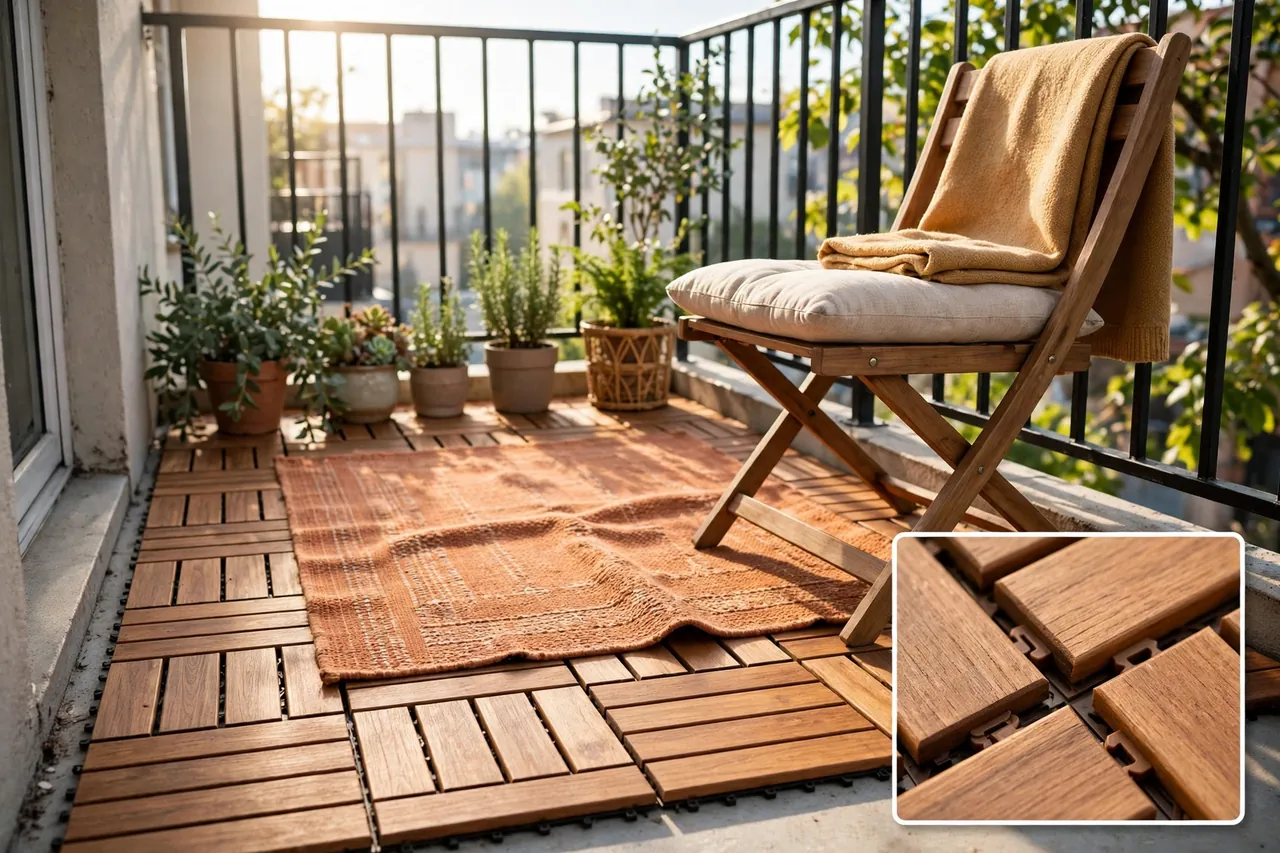
Interlocking deck tiles are the fastest floor upgrade. They click together over the concrete, lift up when you move, and come in wood, composite, and stone looks. Leave a small gap at the edges so water can drain, and never cover the balcony drain completely, because a blocked drain causes pooling and stains.
An outdoor rug does the rest of the room-making. It defines the seating area, softens bare feet, and adds the color that plain concrete lacks. Pick a washable rug in one accent color, and repeat that color in one cushion and one pot so the whole balcony looks planned. Our guide to indoor outdoor rugs covers sizes, materials, and care.
Textiles are the cozy layer. One outdoor cushion on the chair, a throw for cool evenings, and a pillow in your accent color turn hard furniture into a seat you stay in for an hour. Keep textiles light and quick to dry, and bring them inside when heavy rain is coming so they never stay damp and musty.
Finish with one personal touch. A small piece of outdoor wall art, a mirror on the back wall, or a lantern you love gives the balcony a character no catalog set can copy. One hero piece beats a shelf of tiny clutter every time.
Renter Rules, Weight, and Safety
Small balcony design is mostly about style, but weight and building rules are the part you must get right. A balcony is built to carry a set load, and that load varies with the building’s age and design.
Most residential balconies are designed for a live load of about 40 to 60 pounds per square foot, which covers people, furniture, and pots spread across the floor. That sounds like a lot until you add it up: people, a bench, and a row of large wet planters can approach it on a very small balcony. The Isla Vista Community Services District warns residents not to overload balconies and to stay aware of the weight placed on them, because overloading can damage the structure. Read their warning at Isla Vista Community Services District’s balcony overloading guide.
Ask your landlord or building manager for your building’s actual limit before you add heavy planters, a water feature, or a big storage bench. If you cannot get a number, stay light: small pots, folding furniture, and no single very heavy piece. Never hang heavy items on the outside of a railing above a walkway, and never use an open flame or a charcoal grill where building or fire rules ban them.
California adds a legal layer worth knowing. California’s SB 721, now Health and Safety Code Section 17973, requires apartment buildings with three or more units to have their wood-supported balconies and other exterior elevated elements inspected by a licensed professional every six years, with the first inspection due by January 1, 2026. You can read the law itself in California Legislative Information’s SB 721 bill text. If your building’s railing feels loose, the floor feels soft, or you see rot or rust, report it to your building manager right away and do not load that balcony until it is checked.
A quick question to your building manager costs nothing, and a balcony problem found early is a small repair instead of a big one.
A Cozy Balcony on a Small Budget
A small balcony is one of the cheapest rooms in the house to design, because you need so little of everything. Start with the pieces that change the feel the most, and add the rest over time.
The fastest transformation for the least money is plants along the railing, followed by warm string lights. A rail table comes next, because it gives you a place to sit with a coffee, and a rug comes after that, because it turns concrete into a floor. Buy the bistro set last, once you know the layout works.
A cozy small balcony on a budget
| Buy first | Typical cost | Why it matters |
|---|---|---|
| Railing planters with herbs | $20 to $40 | Most color for the least money |
| Warm solar string lights | $15 to $30 | Evening use, instant finish |
| Rail-mounted bar table | $30 to $70 | A seat with zero floor space |
| Washable outdoor rug | $25 to $50 | Turns concrete into a room |
| Folding bistro set | $60 to $150 | Real seating for two |
Costs above are typical US retail ranges for basic pieces, not quoted prices for a specific product, so check current prices before you buy. Shop secondhand first for the bistro set and the bench, because folding outdoor furniture is easy to find used and easy to clean. A can of outdoor spray paint refreshes a tired metal chair for a few dollars, and matching pots in one color make even cheap planters look planned.
If your budget stretches to one splurge, spend it on the seat. You sit in it every day, and a comfortable chair is what turns a decorated balcony into a used balcony. For the season when lights matter most, our balcony Christmas decorations guide shows how the same string lights carry the balcony through winter.
7 Mistakes to Avoid on a Small Balcony
Most small balconies fail for the same short list of reasons. Check your plan against this list before you spend anything.
- Buying furniture before measuring. Measure the depth and width first, then measure the furniture, including how far chairs pull out.
- Designing it like a mini patio. A small balcony is a tiny room, not a small yard, so fewer, better pieces win.
- Putting everything on the floor. Plants, storage, and light belong on the railing and walls, not in the walkway.
- Skipping the lease check. Drilling, heavy planters, and screens can break building rules and cost you a deposit.
- Ignoring the sun. Sun-loving plants die in shade, and pale fabric fades fast in strong afternoon sun.
- Blocking the door or the drain. Keep about 24 inches clear to the door, and never cover the drain.
- Overloading the balcony. Heavy wet pots add up fast, so stay light and keep heavy pots near the wall.
The test is simple: a piece earns its place only if it gets you outside more often. If it does not, it does not belong out there.
Related Guides
If you are planning the whole outdoor space, these guides pick up where this one leaves off:
- Small Patio Designs — layouts that make a tiny patio feel bigger.
- Patio Ideas — layouts, styles, and features for every size of patio.
- Privacy Screen for a Balcony — no-drill screens that give a balcony real privacy.
- Indoor Outdoor Rugs — sizes, materials, and care for rugs over concrete or tile.
- Best Plants for Small Gardens — plant picks that suit tight spaces and pots.
- Covered Patio Ideas — roofed patios where furniture and textiles stay dry.
- Balcony Christmas Decorations — seasonal lights and decor for the same small space.
- Mission Style Wrought Iron Balcony — a classic railing style that suits small balconies.
- Ideas for Balcony Design — more balcony design ideas beyond small-space layouts.
- Small Patio Decorating Ideas — the same small-space decorating method, at patio scale.
- Apartment Patio Ideas — apartment outdoor spaces under the same renter rules.
- Poles for String Lights — string-light supports where no railing run fits.
- Balcony Cover Ideas — cover and shade options for a sunny balcony.
- Balcony Plants — deeper plant picks for balconies.
Frequently Asked Questions
How do I decorate a small balcony?
Measure first, then pick one job for the balcony, such as a coffee corner or a mini garden. Choose folding or rail-mounted furniture that fits the depth, add plants on the railing and walls, lay a washable rug, and finish with warm string lights. Keep about 24 inches clear to the door.
What is the best furniture for a small balcony?
A folding bistro set is the best all-round pick, because it seats two and folds flat when you want the floor back. On a very narrow balcony, a rail-mounted bar table with one folding chair works better, since it uses no floor space at all. Pick slim, light pieces you can see through or around.
What can I put on a very small balcony?
On a balcony under 3 feet deep, use the railing: a hook-over bar table, railing planters, and solar string lights. Add one folding chair that hangs on a wall hook when not in use. Keep 24 inches clear to walk to the door, and skip anything that blocks the drain.
How do I decorate a balcony without plants?
Use texture and light instead: an outdoor rug, outdoor pillows and a throw, solar string lights or lanterns, outdoor wall art or a mirror, and a wood slat or bamboo screen. A few faux outdoor plants or dried grasses in planters also add the look of greenery with no care at all.
How do I hang things on an apartment balcony without drilling?
Use outdoor-rated adhesive hooks for light items like string lights and small art, over-the-railing hooks and railing planters for heavier items, and tension rods that span the balcony opening for curtains. Always check each product’s weight limit and your lease before installing anything.
How much weight can my apartment balcony hold?
Most residential balconies are designed for a live load of about 40 to 60 pounds per square foot, but the real limit varies by building age and design. Ask your landlord or building manager for the exact number, and if you cannot get one, stay light and keep heavy pots near the wall.
A small balcony does not need a big budget or a big footprint to feel good. Measure it, give it one job, keep the floor clear, and let the railing, the walls, and warm light do the work. Start with planters and lights this weekend, and your smallest outdoor space can become the spot you reach for every morning.