Stackable outdoor chairs are patio chairs built to nest vertically, so six chairs take up the floor space of one chair, and the best ones carry a 250 to 400 pound weight rating while they do it. A good set stacks four chairs under 40 inches tall, stores in a garage corner all winter, and comes back out in spring without rust, cracks, or a wobble. This guide shows which materials survive outside, what a set really costs, how many chairs you can safely stack, and the storage mistakes that quietly kill them.
One stacking mistake ruins more chairs than rain ever does, and it happens in the first week of winter storage. It sits in the storage section below, and most owners do it without knowing. Before that, you need the material decision right, because a chair that cannot handle your weather will fail no matter how neatly it stacks.
What Are Stackable Outdoor Chairs?
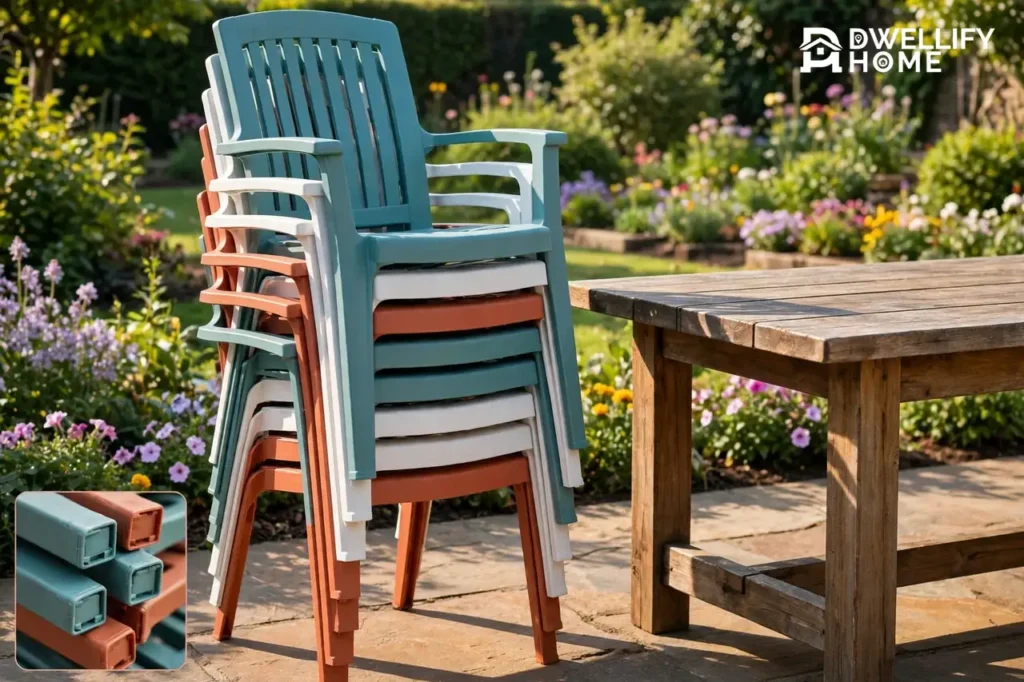
Stackable outdoor chairs are outdoor chairs with tapered legs and frames shaped so each chair slides down over the one below it, locking into a stable vertical column without tools. Four chairs stack into a column roughly the footprint of one chair, and six chairs fit in the space two chairs would take side by side.
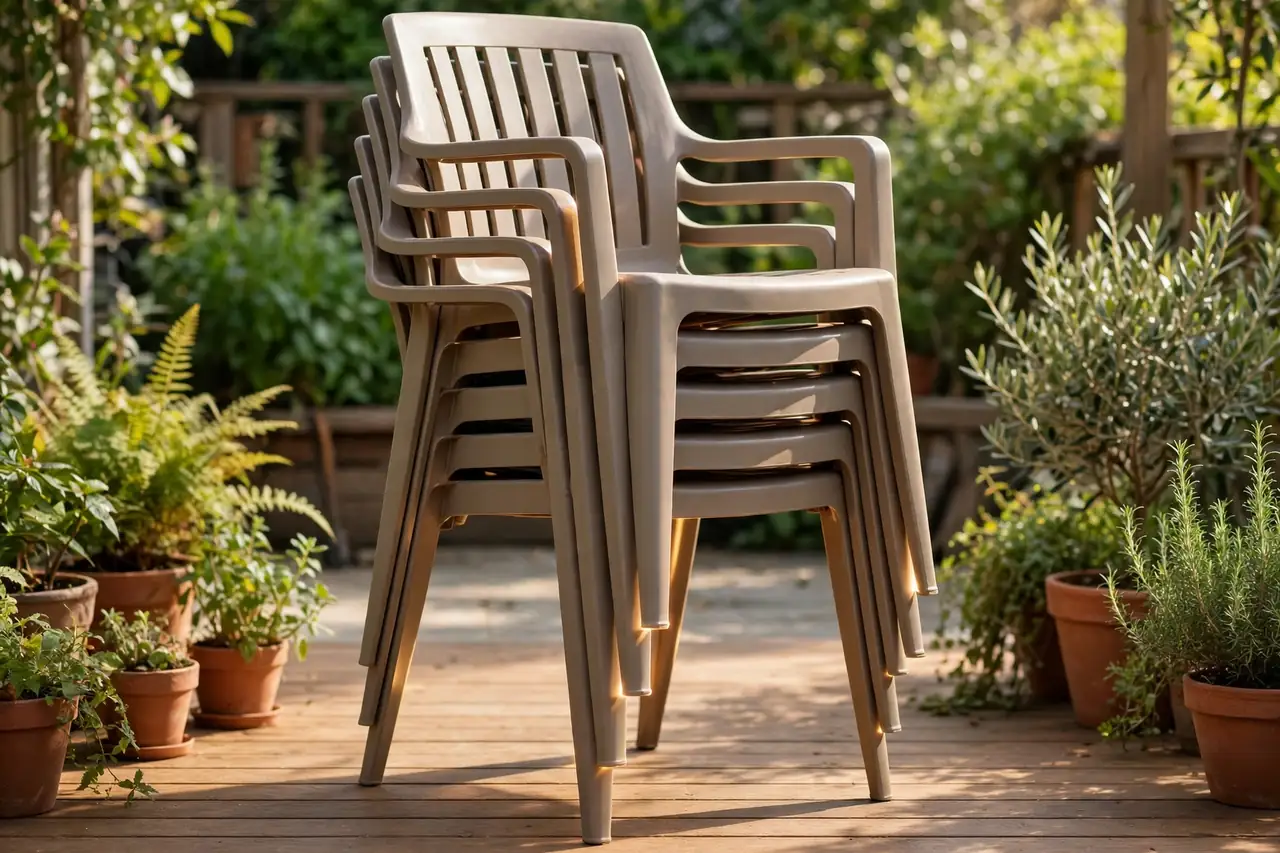
The key difference is stacking versus folding, and buyers mix them up constantly. A folding chair collapses its legs flat so it stores against a wall or in a car trunk, but it does not stack securely, and its hinges are one more part that can loosen. A stacking chair has no folding mechanism at all: fewer moving parts means a stiffer frame, and the chairs nest with molded guides or interlocking feet that keep the column straight. If you need seats that disappear between parties, stacking wins. If you need seats that travel in a car, folding wins.
Stackable chairs earn their keep in three places. On a small patio or balcony, they turn six guest seats into one slim column against the wall. Around a dining table, they let you pull out extra seats for a barbecue and stack them away on Monday. And in winter, a stack of four to six chairs slides into a garage corner or under a breathable cover instead of eating a whole wall of shed space. Our outdoor furniture for small spaces guide shows seven layouts where stackable seating earns its footprint on a tiny patio.
Do not buy stackable chairs for a dining table without checking the seat height first. A dining-height chair needs a seat 16 to 18 inches high, and a seat at least 20 inches wide keeps taller guests comfortable. Chairs built for lounging sit lower and wider, and they will feel wrong at a 29-inch dining table no matter how well they stack.
Stacking is a frame shape, not a feature sticker. If the legs do not taper and nest, it is not a stacking chair.
Which Material Holds Up Outside?
HDPE plastic holds up best outside for most buyers, because high-density polyethylene resists moisture, UV rays, and temperature swings without cracking, fading, or going brittle, and it needs no coating at all. Powder-coated steel and aluminum come next, and resin wicker works only when the weave is UV-stabilized polyethylene over a rust-proof frame.
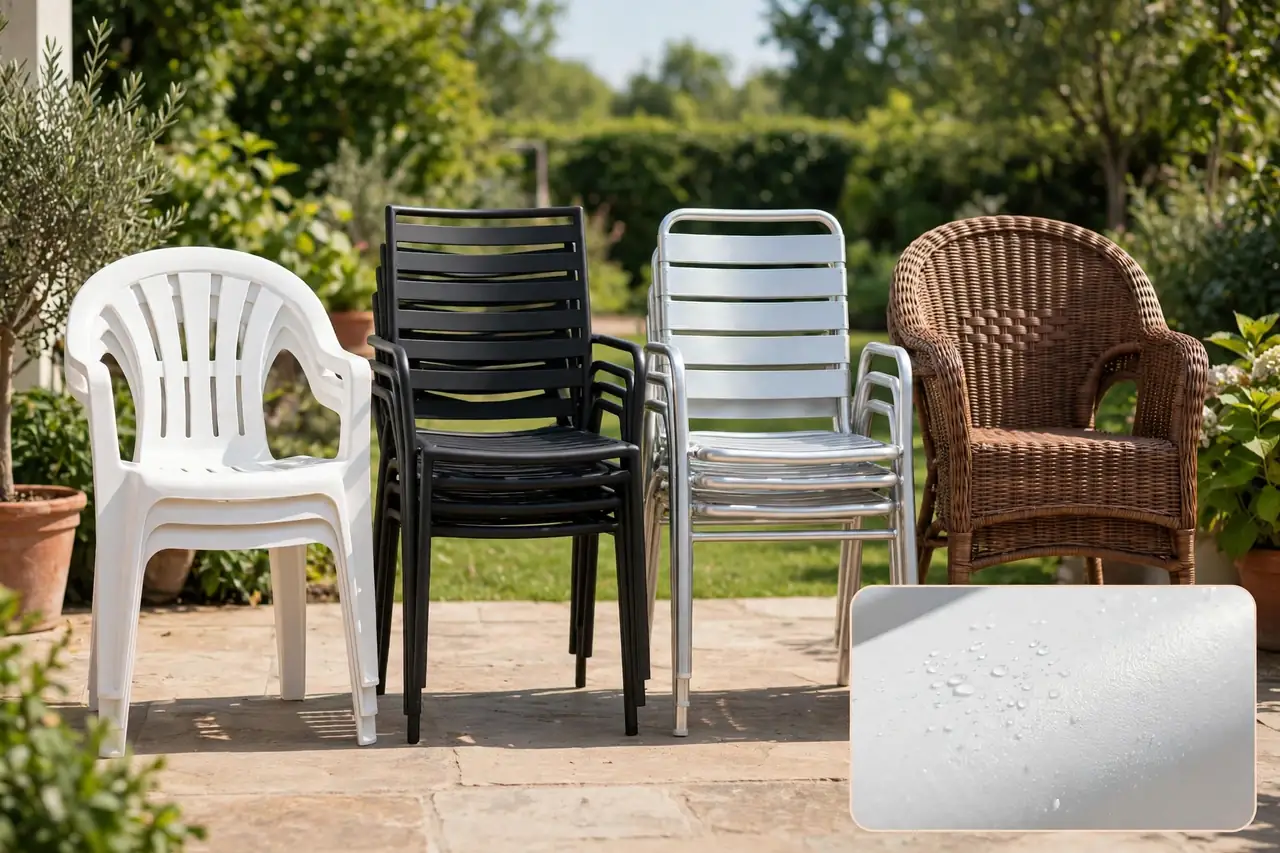
Material decides whether your chairs last three summers or ten, so here is the honest comparison in one place. Guess which material costs the least per year over eight years: the $150 plastic chair or the $500 American-made polymer chair? The answer is in the table, and it surprises most buyers.
Best stackable outdoor chair materials at a glance
| Material | Weather handling | Typical life | Price per chair |
|---|---|---|---|
| HDPE plastic | Best — no rust, no rot, no fading | 8–10+ years | $150–$350 |
| Powder-coated steel | Very good if the coating is e-coat or zinc-primed | 5–8 years | $150–$400 |
| Powder-coated aluminum | Excellent — never rusts, light to carry | 8–10+ years | $250–$600 |
| Resin wicker (PE) | Good — UV-stabilized weave only | 5–8 years | $200–$500 |
| Wrought iron | Heavy and stable, but rusts if chipped | 10+ years with care | $350–$800 |
Price ranges in this table come from the stackable patio chair guide at Loomlan, checked November 16, 2026, and the model-by-model guide at Home to Sight. HDPE wins the long math: a $250 HDPE chair that lasts ten years costs $25 a year, while a $150 budget chair that cracks in three costs $50 a year and leaves you shopping again. Read the full material breakdown at Home to Sight’s best stackable outdoor chairs.
HDPE: the set-and-forget pick
HDPE is the safest default. The plastic shrugs off rain, sun, and freeze-thaw, it never needs paint or oil, and a hose brings it back to clean in minutes. Look for thick shells with stainless hardware, because thin HDPE flexes under a heavy sitter and feels cheap. The nevilywood compact Adirondack, for example, pairs an HDPE shell with 304 stainless steel hardware and a 380-pound capacity, which is the kind of spec that separates a real outdoor chair from a garden-center toy.
Steel and aluminum: strong, but the coating is everything
Steel frames give you the most strength per dollar, with typical ratings of 250 to 400 pounds, but bare or thinly painted steel rusts from the first scratch. Buy only powder-coated steel with an e-coat or zinc-rich primer underneath, and check the welds: a chair that lists “metal” without naming its rust protection is hiding something. Aluminum costs more and holds less weight per dollar, but it never rusts, it weighs half as much to carry, and it suits balconies and poolside spots where a steel chair would stain the deck.
Resin wicker and wrought iron
Resin wicker looks the most like real furniture, and the good versions use tight, UV-stabilized polyethylene weave over a powder-coated steel or aluminum frame. Check that the weave is resin, not natural fiber: natural rattan rots outside in a season. Wrought iron is the heavyweight: it never blows over in wind and lasts decades, but it needs touch-up paint the moment the coating chips, and one chair can weigh 20 pounds or more, so stacking six of them is a workout.
Buy the coating, not the metal. The rust protection decides the lifespan, not the frame material.
How Much Do Stackable Outdoor Chairs Cost?
Stackable outdoor chairs cost $150 to $800 or more per chair, with budget sets at $150 to $350 per chair, premium American-made chairs at $350 to $600, and luxury cast aluminum or wrought iron at $600 to $800 and up, all checked November 16, 2026. A set of four good chairs usually runs $600 to $1,400, and a set of six runs $900 to $2,000.
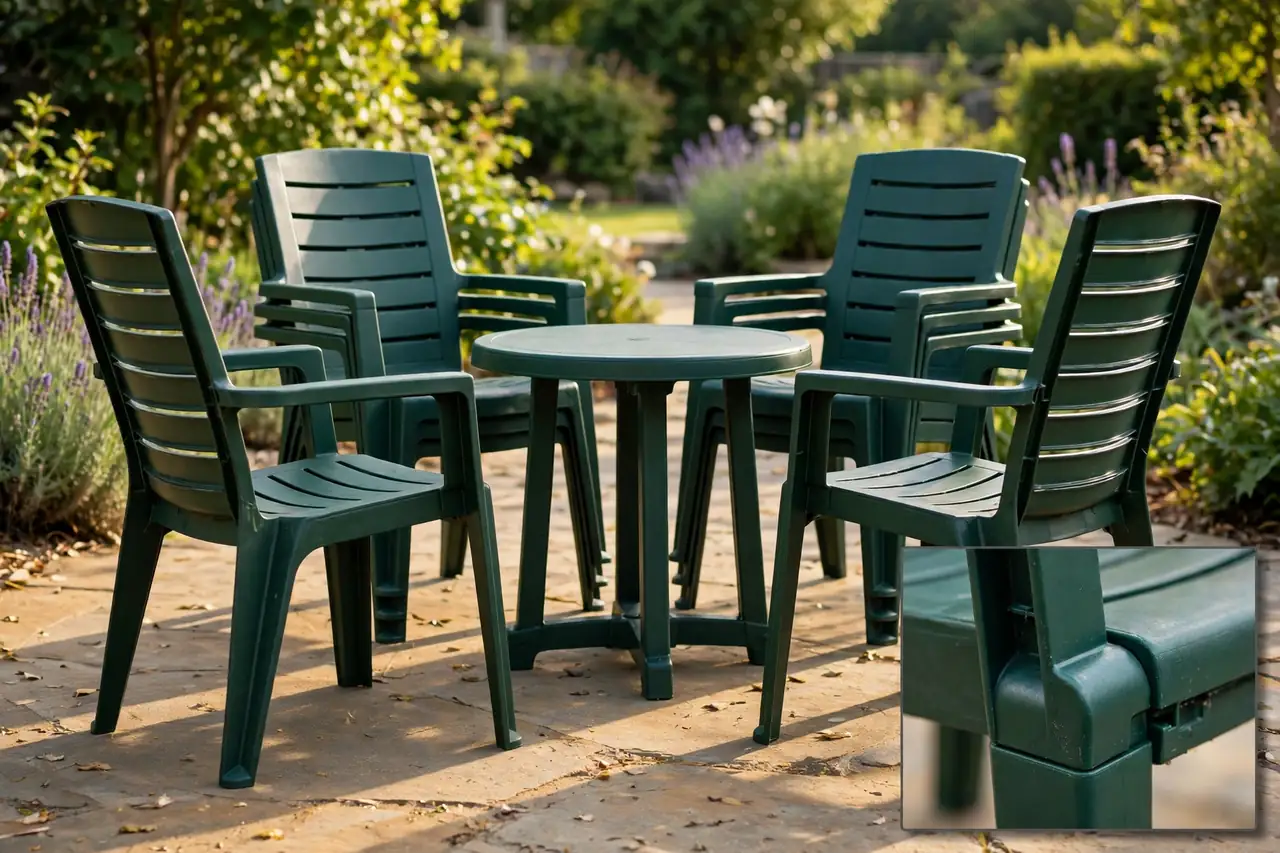
The spread makes sense once you see what the money buys. Budget chairs use imported frames, basic stacking geometry, and standard weather resistance, and they suit occasional use or a covered patio. Premium chairs from makers like Telescope Casual and Castelle use precision stacking systems with protective contact points, so chairs nest without scratching each other, plus commercial-grade materials and customization. Loomlan’s guide puts the cost per year at $19 to $44 annually per chair for budget models over an 8-year life, against premium models that cost more up front and less per year because they last. See the full investment breakdown at Loomlan’s stackable patio chair guide.
Three things push the price up beyond the material. Stacking engineering adds cost: molded guides, interlocking feet, and rubber bumpers that keep chairs separated cost more to build than a plain tapered leg. Weight capacity adds cost too: a chair rated for 350 pounds needs thicker walls and better welds than one rated for 250. And comfort adds cost: a contoured seat, armrests, and a sling or cushion that actually breathes are worth paying for if anyone sits longer than an hour.
Watch the set math before you buy. A “set of 4” at $299 sounds cheap until you realize it is $75 a chair for thin steel that rusts in two years, while a $199-per-chair HDPE set costs $796 for four and lasts a decade. The expensive chair is the one you buy twice, so compare the cost per year, not the price on the tag.
Compare cost per year, not cost per chair. A $250 chair that lasts ten years beats a $150 chair that lasts three.
How Many Chairs Can You Stack — and How Much Space Do You Save?
Most manufacturers recommend stacking four to six stackable outdoor chairs, and a stack of four typically stays under 40 inches tall, which fits a standard garage shelf or closet. Six chairs occupy the floor space of one chair, so a set of six saves roughly five chair-footprints of floor space.
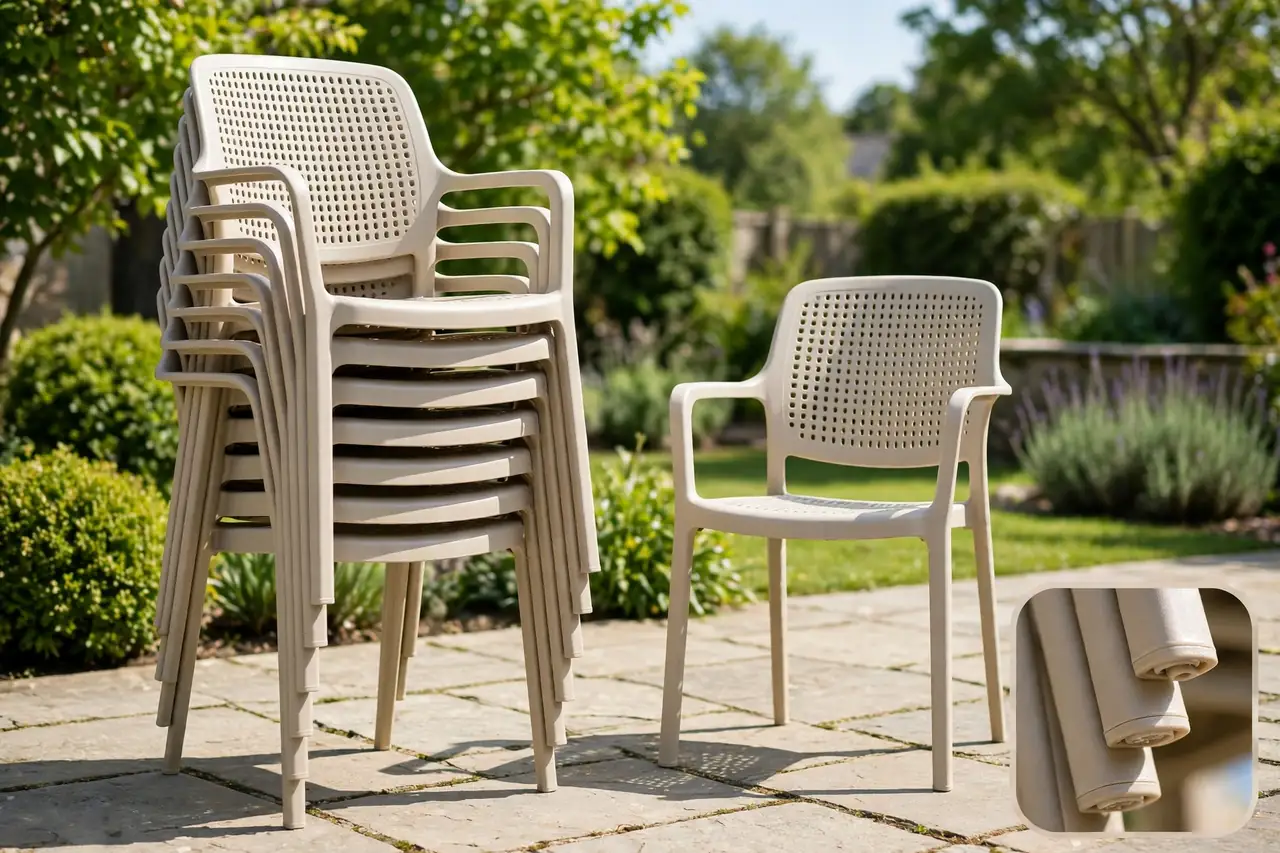
The number on the box is a limit, not a target. Home to Sight’s guide warns that most makers recommend no more than four to six chairs per stack, because exceeding it stresses the lower chairs’ frames and makes the column unstable. Commercial chairs are the exception: the Flash Furniture Lila rattan chair stacks up to 23 chairs high, and contract-grade polypropylene chairs stack 10 to 12, but those are built for restaurants, not backyards. For home use, four to six is the safe zone, and you should always follow the maker’s own number over any general rule.
Measure your storage before you buy, not after. A stack of four chairs under 40 inches tall fits under most garage shelves, but a stack of six can reach 50 inches or more, and that extra height is what blocks a shelf or a low closet. Also measure the doorway: a stack is wider than a single chair at the feet, and a column that fits the shed may not fit through the gate. Stack height is the spec most listings hide, so ask the seller for it before ordering.
Stability matters as much as height. A good stack locks together with molded guides or interlocking feet, so the top chair sits centered and the column does not lean. If a stack leans or the legs splay, you lose the space-saving benefit and gain a tipping hazard. Test the stack in the store if you can: lift the column by the top chair and see whether it holds together or separates.
Four to six chairs is the home safe zone. The box number is a limit, and the maker knows the frame better than you do.
What Most People Get Wrong About Stackable Chairs
Most people get stackable chairs wrong in three ways: they stack dirty or wet chairs, they stack more chairs than the maker allows, and they buy folding chairs thinking they bought stacking chairs. All three mistakes cost money, and the first one is the most common.
Stacking dirty chairs is the quiet killer. Dirt, grit, and leaves trapped between nested seats grind into the finish every time the stack shifts, and moisture locked between two chairs grows mold and mildew where you cannot see it. The fix is simple: wash each chair with mild soap and water, let it dry completely, and only then stack it. Purple Leaf’s storage guide says it plainly — never stack and store your chairs while they are dirty.
The height mistake runs the other way: a stack of eight home chairs looks fine in October and leans by December, because the bottom chair’s frame slowly bends under the load. The stack that leans is also the stack that falls when someone bumps it in the dark garage. Keep home stacks to four to six, and use a dolly or a wall strap for anything taller.
The folding confusion costs buyers twice. A folding chair collapses flat and stores against a wall, but it does not nest, so six folding chairs take six times the wall space of one stack. If your storage is a narrow garage corner, you need stacking. If your storage is a car trunk, you need folding. Buy the wrong one and you own the wrong solution.
Clean, dry, then stack. Everything else is a shortcut that costs you a chair.
How to Store Stackable Chairs for Winter
Store stackable outdoor chairs for winter in four steps: wash each chair with mild soap and water, let it dry fully for a day, stack four to six chairs with the top chair facing up, and cover the stack with a breathable cover or move it into a garage or shed. The whole job takes about 30 minutes for a set of six.
Start by washing, because a dirty stack is a damaged stack. Hose off loose dirt, scrub the frames and seats with mild soap and a soft brush, and rinse. Pay attention to the spots where chairs touch when nested: grit there scratches the finish all winter. Let the chairs dry completely before stacking — a day in the sun is ideal, because moisture trapped between nested seats is what grows mold.
Stack with care, not speed. Set the first chair on level ground, nest each chair straight down onto the one below, and stop at the maker’s limit, usually four to six. In snowy climates, some makers suggest stacking chairs upside down so snow and rain cannot pool in the seats. If you have the space, a garage shelf from November to March doubles the life of fabric-sling chairs in cold climates, and our how to store outdoor furniture guide covers the full winter routine for every material.
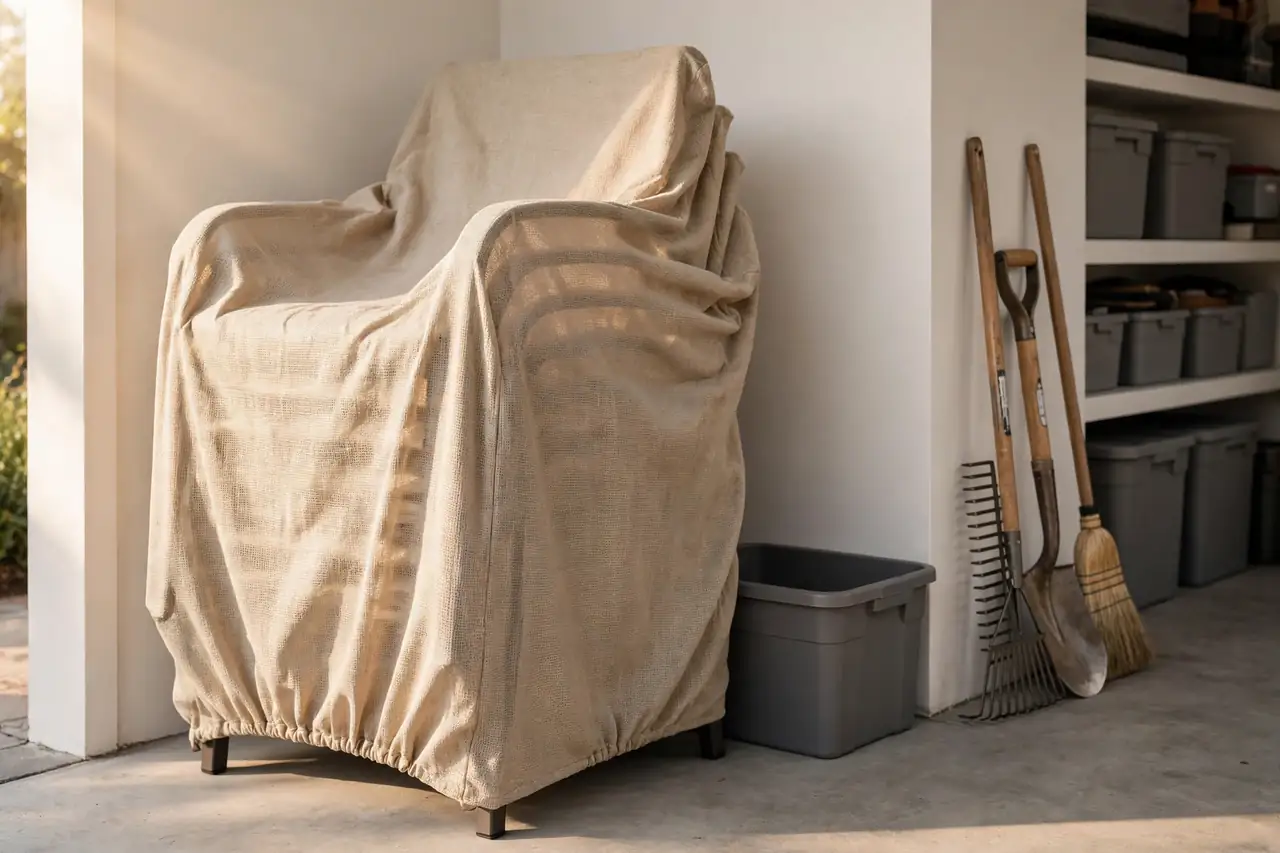
Cover the stack properly. A breathable furniture cover keeps rain off without trapping condensation underneath, while a plastic tarp traps damp and grows mold exactly where you cannot see it. Keep the stack off bare ground on a pallet or a shelf, and keep cushions separate: store cushions in a dry outdoor storage bin or indoors, because no cushion survives a wet winter stacked under a chair. And here is the mistake from the intro: never stack chairs that are still damp inside the weave or the sling, because trapped moisture rots the frame from the inside while the outside looks fine.
Check the stack once mid-winter. Tighten nothing — there is nothing to tighten on a stack — but look for a lean, a puddle underneath, or a cover that has blown loose. A two-minute check in January saves a replacement in April.
Thirty minutes in autumn saves a new set in spring. Wash, dry, stack, cover.
How to Pick the Right Set for Your Patio
Pick stackable outdoor chairs by matching four numbers to your patio: seat height 16 to 18 inches for dining, seat width at least 20 inches, weight capacity at least 300 pounds, and a four-chair stack height under 40 inches. Then sit in the chair for a full minute before you buy, because a chair that feels fine for ten seconds can feel like a ledge after ten minutes.
Start with the use, not the look. Dining chairs need a 16 to 18 inch seat height and a firm seat, so they pair with a 28 to 30 inch table. Lounge chairs around a fire pit can sit lower and deeper, and armrests matter more there because nobody eats at a fire pit. If the chairs will live around a patio dining set, check the set’s own chairs first: a matched set guarantees the heights line up, while mixing brands can leave a 2-inch gap that ruins dinner.
Test the stack in the store. Nest three or four chairs and lift the column, push it sideways, and look for a lean. Check the contact points: rubber bumpers or protective pads between chairs stop scratches, and their absence shows up as scuff marks after one season. Sit in the bottom chair of a display stack if you can — it is the one that has carried the most weight, and its wobble tells you the truth about the frame.
Match the chairs to the rest of the patio. A stackable set beside an outdoor sectional couch gives you overflow seating for guests without a second sofa, and a set of stackable chairs with replacement cushions for patio furniture stays comfortable for years because the cushion, not the frame, is the part that wears out. If your evenings run late, pair the chairs with a electric patio heater so the seating area stays usable after sunset.
Match four numbers, then sit in it. Specs pick the shortlist, but your back picks the chair.
Related Guides
If you are planning the whole outdoor space, these guides pick up where this one leaves off:
- Outdoor Furniture for Small Spaces — seven layouts that make a tiny patio feel big.
- Patio Dining Set — size a table and chairs so everyone fits.
- How to Store Outdoor Furniture — keep it clean, dry, and ready for spring.
- Outdoor Storage Bin — stash cushions and covers where they stay dry.
- Outdoor Sectional Couch — deep seating for the lounge corner beside your chairs.
- Replacement Cushions for Patio Furniture — get the fit, fabric, and price right the first time.
- Small Patio Decorating Ideas — make a small space feel finished, not crowded.
- Electric Patio Heater — stretch the season after the sun goes down.
Frequently Asked Questions
Can stackable outdoor chairs be left outside all winter?
HDPE chairs and powder-coated steel or wrought iron chairs can typically stay outside through winter, but check the maker’s recommendations first. Chairs with fabric slings should be stored indoors or covered, because trapped moisture causes mildew. In snowy climates, stack chairs upside down or use a breathable cover.
How many stackable chairs can I safely stack vertically?
Most manufacturers recommend stacking no more than four to six chairs. Exceeding the recommended stack height stresses the lower chairs’ frames and makes the column unstable. Look for models with molded stacking guides or rubber bumpers that keep chairs separated and prevent scratches.
What is the difference between folding and stacking chairs for outdoor use?
Folding chairs collapse their legs to store flat, often against a wall or in a trunk. Stacking chairs nest vertically on top of each other without any folding mechanism. Stacking designs generally offer better frame rigidity because they have fewer moving parts, while folding chairs are more portable.
How many stackable chairs can I safely stack together?
Quality stackable chairs typically accommodate 8 to 12 chairs per stack safely in commercial grades, with home chairs rated for 4 to 6, so always follow the manufacturer’s specifications. A set of six home chairs stacked together saves roughly five chair-footprints of floor space.
What’s the best way to store stacked chairs outdoors?
Cover stacked chairs with breathable furniture covers and elevate them off ground contact to prevent moisture accumulation while ensuring adequate ventilation. Never stack chairs while they are dirty or wet, and store cushions separately in a dry bin or indoors.
Disclaimer: This guide gives general advice for choosing and storing outdoor furniture, not professional safety or structural instructions. Always follow the manufacturer’s weight limits and stacking limits, check hardware and frames each season, and replace any chair with a cracked frame or bent leg before use.
Buy the material first and the stack second. HDPE if you want to forget about maintenance, powder-coated aluminum if you want light chairs that never rust, and a four-to-six stack if you want your garage back. Measure the storage, sit in the chair, and stack it clean and dry. Do that, and the six chairs you buy this year are still stacking straight ten summers from now.