An outdoor bean bag chair is worth buying only when its fabric and filling are built for weather, because a real outdoor bean bag uses UV-stable, water-resistant fabric with EPS or EPP bead filling and lasts 3 to 5 years outside, while an indoor bean bag left on a patio fades, soaks up rain, and goes flat in one season. The label is the trap: most bags sold as “outdoor” are only water-resistant, not waterproof. This guide shows you how to tell the difference, what the best outdoor bean bags cost on Target and Wayfair checked November 16, 2026, and how to keep yours dry, clean, and plump for years.
One detail on the price list below decides whether your bean bag survives its first summer or ends up in the trash by August, and it has nothing to do with the brand name. It sits in the fabric section, and most buyers walk straight past it in the store. Before that, you need the waterproof question answered, because no amount of fluffing can save a bag whose filling has soaked up a rainstorm.
What Is an Outdoor Bean Bag Chair?
An outdoor bean bag chair is a soft, frameless lounge seat filled with beads or foam and covered in weather-resistant fabric, made to live on a patio, deck, poolside, or boat. It has no wood frame, no metal legs, and no hard edges. You sink into it, it molds around you, and when you stand up it springs back into shape.
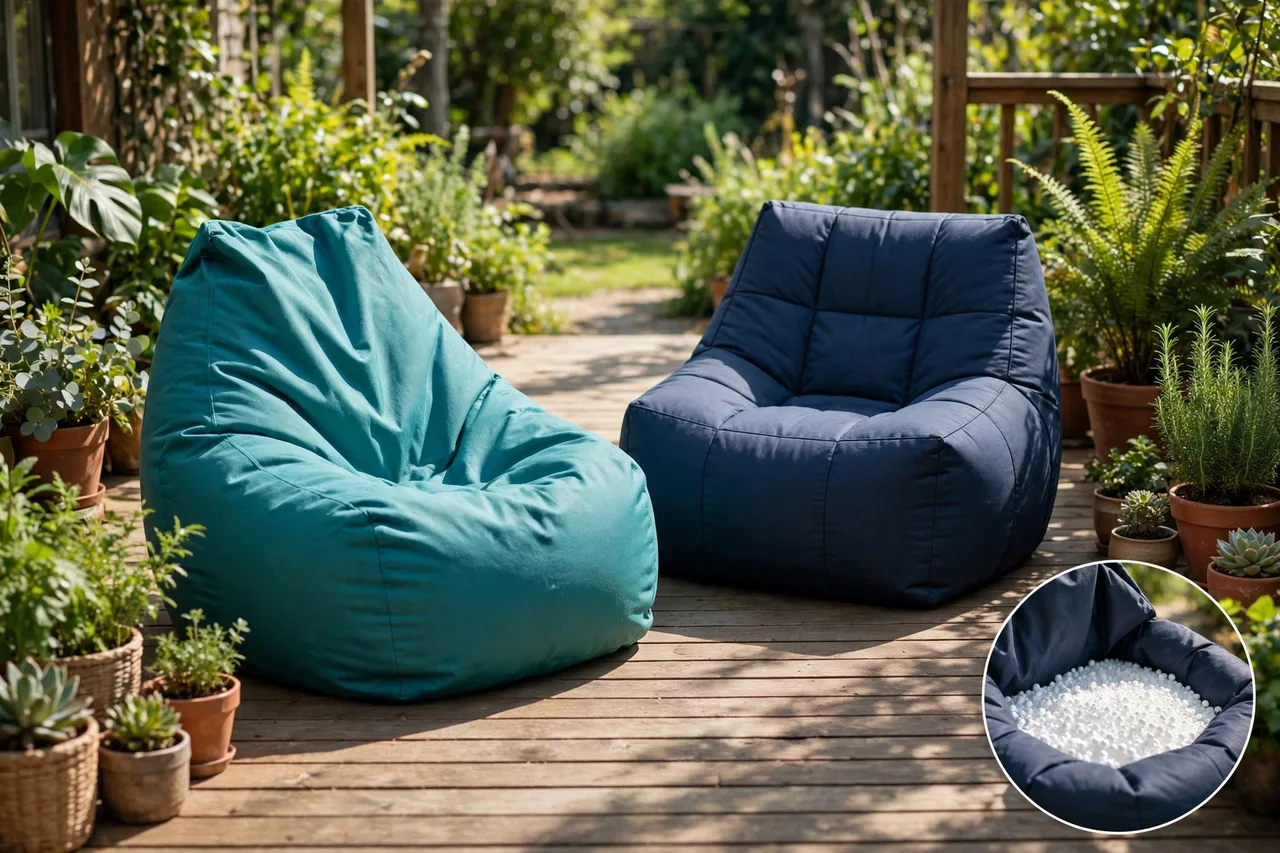
Outdoor bean bags come in four main shapes. A classic round bag is the cheapest and lightest, and it works for kids and casual lounging. A structured chair shape, like the Big Joe Milano, holds its seat shape and feels more like a real chair. A teardrop or lounger shape stretches out for reading and sunbathing. A giant lounger or sofa shape seats two people or one very relaxed adult.
The filling decides the comfort. Most outdoor bean bags use expanded polystyrene (EPS) beads, which are light, springy, and do not absorb water. Some use EPP beads, which are tougher and bounce back better after heavy use. A few use shredded foam, which feels softer at first but holds moisture and goes flat faster outside. The outdoor bean bag guide from Bean Bags R Us puts it plainly: EPS or EPP beads are generally better for outdoor use because they do not retain moisture the way shredded foam can.
Bean bags suit places where hard furniture feels wrong. They work beside a pool, on a boat deck, on a balcony, at a fire pit, and in a kids’ play corner of the yard. They weigh almost nothing, so you can carry one with one hand, stack them in a corner, and bring them inside when a storm rolls in. That is also their weakness: a light bag blows across the patio in a strong gust, so pick a heavier fill or store it when the wind picks up.
Waterproof or Water-Resistant? The Label That Tricks Most Buyers
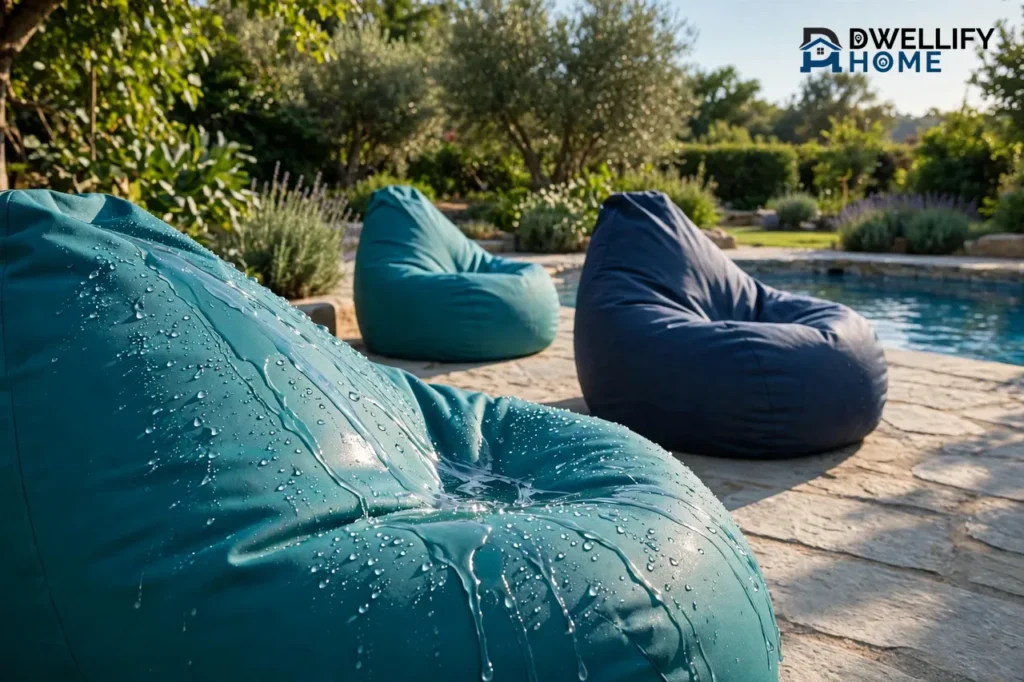
Most outdoor bean bag chairs are water-resistant, not waterproof, and that one word decides whether your bag survives a rainstorm. A water-resistant bag repels splashes and light rain, then dries out. A truly waterproof bag keeps water out even when rain pools on top of it. Almost no consumer bean bag is fully waterproof, because seams and zippers always let some water through.
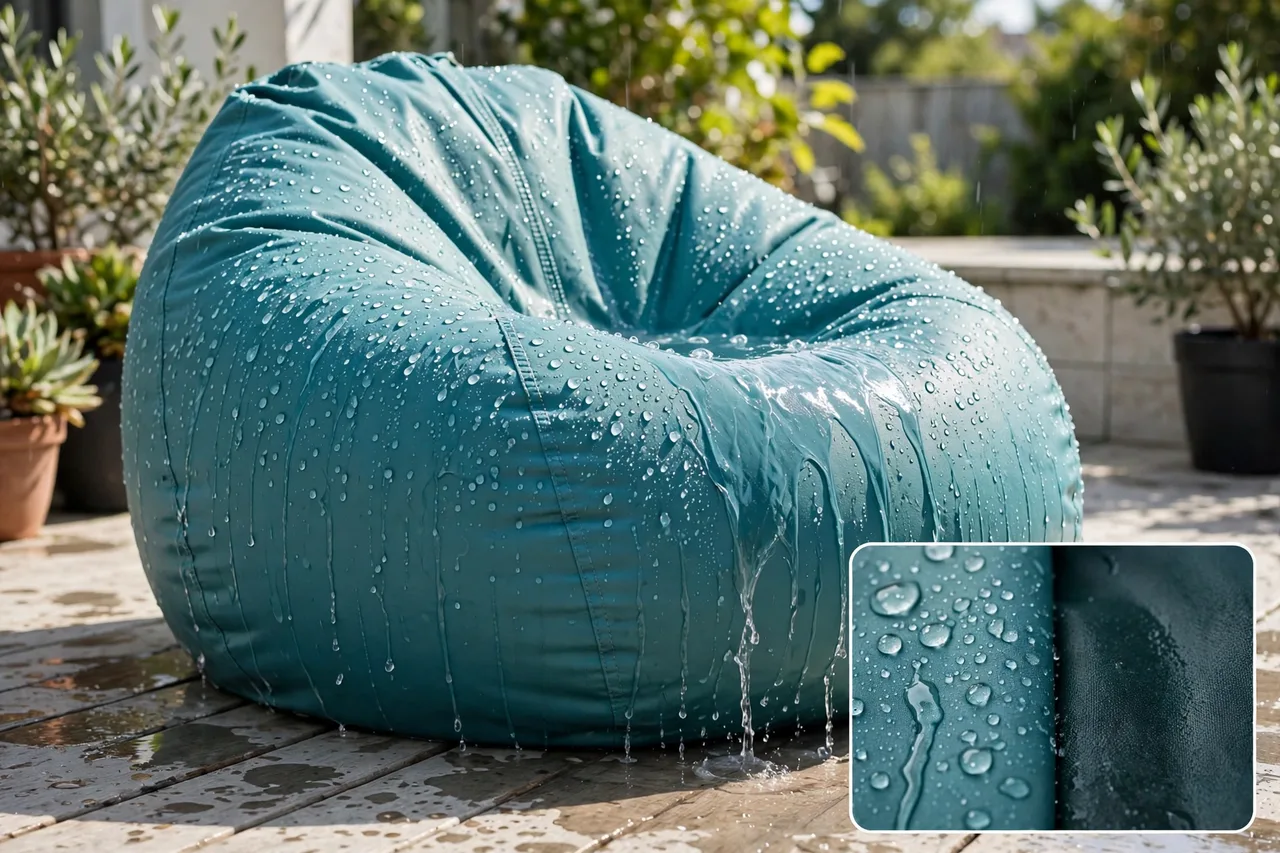
Look for four things on the label before you trust the word “waterproof.” First, a coated fabric such as PU-coated polyester or marine vinyl, which sheds water instead of soaking it in. Second, sealed or covered seams, because an open stitch line is a water highway into the filling. Third, a sealed inner liner, so even if the outer cover gets wet, the beads stay dry. Fourth, a mesh bottom or drainage eyelets, which let trapped water escape instead of pooling inside the bag.
The resort bean bag guide from Resorts Supplies gives buyers a clear spec to demand: a coated 500D or higher fabric with sealed seams, and a water-repellency rating you can compare between models. If the seller cannot name the fabric weight or the coating, the “waterproof” claim is marketing, not a spec.
Here is the practical rule. A water-resistant bag is fine for a covered patio, a poolside lounger that gets splashed, and a yard where you bring it in before heavy rain. A poolside or boat bag needs the full package: coated fabric, sealed liner, and drainage. No bag should sit in a puddle or stay out through a storm, and no bag should be submerged. That is the mistake that kills most outdoor bean bags, and the next section shows you which fabric actually holds up.
The 4 Fabrics That Actually Survive Outside
Four fabrics do the real work in outdoor bean bag chairs, and each one trades water protection, sun protection, softness, and price against the others. The fabric is the whole bag outdoors, because there is no frame to hide behind.
Solution-dyed acrylic, sold under brand names like Sunbrella, is the best outdoor fabric you can buy. The color is dyed into the fiber before weaving, so it resists fading for years in full sun, and it sheds water and resists mildew. It costs the most, and it shows up on premium bags like the Jaxx Juniper, which lists at $179 to $198 on Target, checked November 16, 2026. If you want a bag that still looks new in year three, this is the fabric.
PU-coated polyester is the workhorse of mid-priced outdoor bean bags. A polyurethane coating on the back of the polyester makes it highly water-resistant and easy to wipe clean, and UV stabilizers slow fading. It feels a little stiffer than acrylic and can crack after years of hard sun, but it gives you the best protection per dollar. Most bags in the $80 to $150 range use it.
Marine vinyl is the poolside and boat specialist. It is smooth, fully wipeable, and shrugs off sunscreen, chlorine, and salt spray, which is why the Big Joe Milano in marine vinyl is a boat favorite. It gets hot in direct sun and sticky on bare skin, so it suits short sits by the pool better than all-afternoon lounging. The Milano in marine vinyl lists at $84.99 on Target, checked November 16, 2026.
Canvas and plain outdoor polyester sit at the budget end. They breathe well and feel soft, but they absorb water faster and fade sooner unless they carry a UV treatment. They work fine under a covered patio or pergola, where the roof does the weather work. Check our pergola shade ideas if your seating spot needs that kind of cover. The table below puts the four fabrics side by side so you can match one to your spot.
| Fabric | Water protection | Sun protection | Feel | Typical bag price |
|---|---|---|---|---|
| Solution-dyed acrylic | Very high | Excellent | Soft, fabric-like | $180–$340 |
| PU-coated polyester | High | Good | Smooth, firm | $80–$150 |
| Marine vinyl | Very high | Good | Smooth, wipeable | $85–$130 |
| Canvas / plain polyester | Moderate | Fair | Soft, breathable | $35–$100 |
One warning from the fabric table: an uncoated fabric fades in one to two seasons in full sun, while a UV-stabilized fabric holds its color for years. That is the detail most buyers miss, and it is the difference between a bag that looks new next summer and one that looks tired by August. Ask for the UV treatment by name before you buy.
Fillings: EPS Beads, EPP Beads, or Foam?
The filling decides how an outdoor bean bag chair feels after a month of use, and the wrong filling is the reason most bags go flat. Three fillings dominate the market, and they behave very differently outside.
EPS beads are the standard. Expanded polystyrene beads are light, springy, and cheap, and they do not absorb water, so a rained-on bag dries out instead of turning into a soggy brick. Their weakness is compression: every sit crushes a few beads smaller, so the bag slowly loses volume and needs a refill after a season or two of heavy use. Big Joe sells refill beans separately and says so openly, which is honest and useful.
EPP beads are the upgrade. Expanded polypropylene beads are tougher, spring back better, and resist crushing far longer than EPS, so the bag keeps its shape through more summers. They cost more, and they show up in premium and commercial bags, including resort and hotel seating that gets used every day. A resort-grade bag with EPP fill lasts 3 to 5 years in full-time rotation, according to the Resorts Supplies guide.
Shredded foam feels the softest on day one, and that is its trap. It molds around your body beautifully, but it holds moisture, dries slowly, and compresses into lumps outside. It suits an indoor bag or a covered porch bag that never gets rained on. For a bag that lives in the open, pick beads. If your bag does go flat, buy the refill the maker sells, pour it in through the child-safe zipper, and fluff the bag for a minute. A $20 refill beats a $100 replacement every time.
How Much Does an Outdoor Bean Bag Chair Cost?
An outdoor bean bag chair costs $35 to $340 on Target and Wayfair, checked November 16, 2026, and the price follows the fabric, the size, and the filling. A budget bag in plain polyester runs $35 to $100. A mid-range bag in coated polyester or marine vinyl runs $80 to $200. A premium bag in Sunbrella fabric runs $180 to $340.
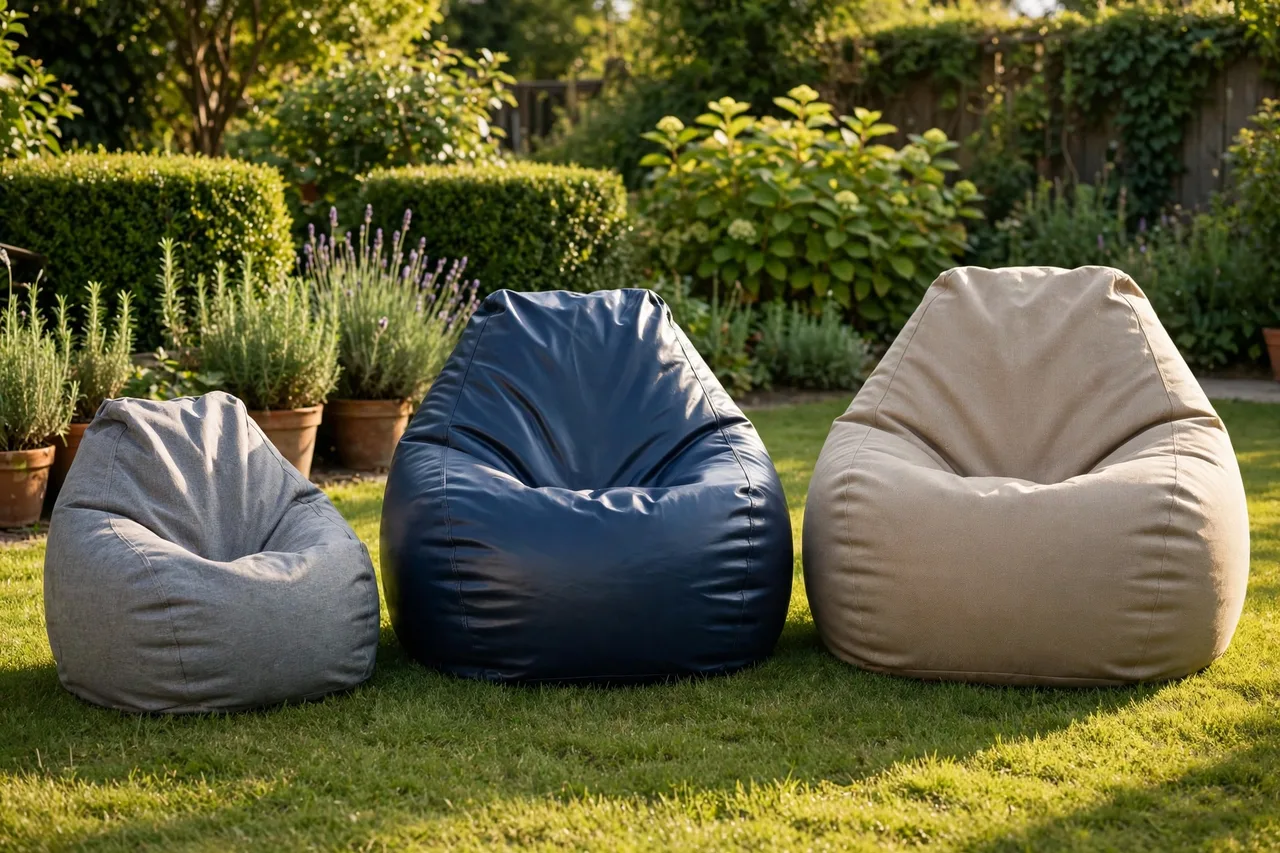
Real listings from Target on November 16, 2026 show the range clearly. The Big Joe Milano outdoor bean bag chair lists at $66.99 on Wayfair and $74.99 to $99.99 on Target depending on fabric, and the marine vinyl version lists at $84.99. The Big Joe Teardrop weatherproof chair lists at $79.68 to $84.37. The Jaxx Juniper outdoor bean bag patio chair lists at $179 to $198. The Jaxx Ponce outdoor bean bag chair lists at $199. The Jaxx Arlo outdoor sun lounger lists at $299 to $299.99. The Big Joe Luft in premium Sunbrella fabric lists at $199.99 to $337.49.
Three things push the price up. First, the fabric: Sunbrella costs more than coated polyester, and marine vinyl sits in the middle. Second, the size: a giant lounger costs two to three times a single chair. Third, the filling: EPP beads and high-density foam cost more than standard EPS beads. A $35 bag and a $300 bag can look the same in a photo, but the $300 bag has the fabric and filling that survive three summers, while the $35 bag has the ones that survive one.
Here is the problem with shopping by price alone. A $35 bag replaced every summer costs $175 over five years and gives you a faded, flat seat each August. A $199 Jaxx Ponce in solution-dyed acrylic lasts 3 to 5 years and still looks good. Work out the cost per summer before you buy, and the “expensive” bag often wins. That is the same math that makes a good weather-resistant outdoor furniture set worth its price, and it applies to soft seating too.
How to Pick the Right Size and Shape
Pick the size by who sits in it and where it lives, not by the photo. A bag that is too small leaves an adult perched on the edge, and a bag that is too big swallows a child and blocks the walkway.
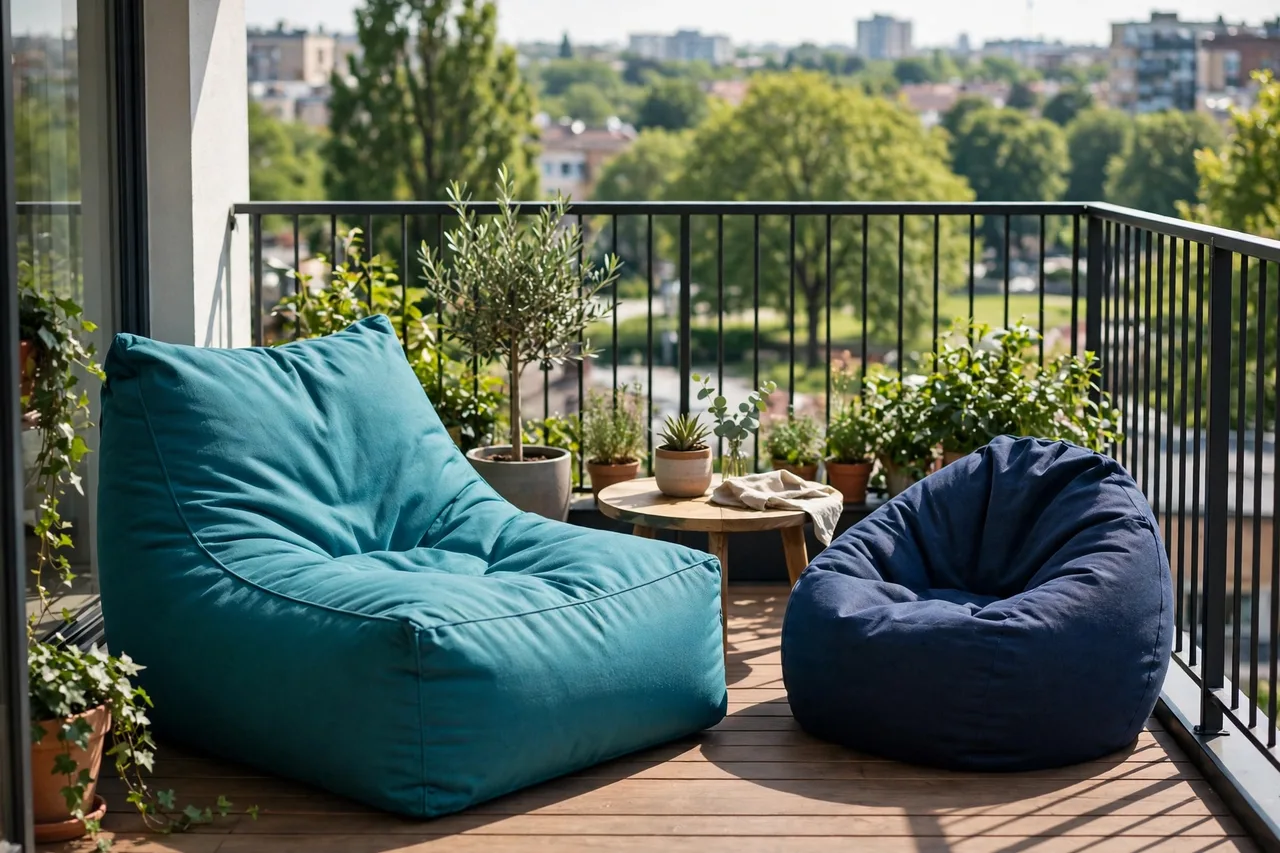
For kids, a 2.5-foot chair like the Big Joe Milano is the right size, and it weighs under 6 pounds, so a child can drag it around the yard alone. For one adult, a 3- to 4-foot chair or teardrop gives a real seat with back support. For lounging and reading, a 5- to 6-foot lounger or a giant 6-foot cocoon lets you stretch out fully. For two people, a giant sofa shape or two matching chairs beat one oversized bag, because two people in one bag fight for the middle.
Measure your spot before you order. A 3-foot chair needs about a 4-foot square of floor once you count the way it spreads when someone sits in it. A lounger needs 6 feet of length. Leave at least 2 feet of walkway around the bag, and never block a door or a step with it. On a small balcony, one structured chair beats a floppy round bag, because the structured chair holds its shape against the rail. Our guide to outdoor furniture for small spaces shows layouts that fit soft seating on a balcony barely wider than the chair.
Match the shape to the use. A structured chair suits reading and chatting, because it holds your back up. A teardrop suits poolside, because you can sit upright and then slide down to sunbathe. A lounger suits napping and stargazing. A round bag suits kids, games, and a fire pit circle, where everyone wants to face each other. If you already own a fire pit, our fire pit tables guide shows how soft seating fits around one without crowding the flames.
One last check before you pay: sit in the bag if you can, or check the weight rating. The Jaxx Ponce carries a 400 to 500 pound rating, which tells you the seams and zipper are built for real adults. A bag with no weight rating listed is a bag the maker did not test, and that is a warning sign. A bag that holds its shape in the store will hold it on your patio too.
What Most People Get Wrong About Outdoor Bean Bags
Most people get one thing wrong about outdoor bean bag chairs: they believe “outdoor” on the label means the bag can live outside all year. It does not. Even the best outdoor bag is a fair-weather seat that needs shelter from storms, and the brands say so in their own care guides.
The second wrong belief is that a bean bag needs no care because it has no frame to rust or wood to rot. It does need care: the fabric needs washing, the beads need refilling, and the zipper needs checking. A bag left out through a wet winter grows mildew inside the cover and smells like a damp basement by spring. Bring it in or cover it, and it lasts years longer.
The third wrong belief is that all bean bags feel the same. They do not. A bag filled with fresh EPS beads feels firm and supportive. The same bag after a summer of daily use feels flat and lumpy, because the beads crushed down. That is normal, and it is fixable with a refill, not a reason to throw the bag away. The next section shows you the cleaning routine that keeps the fabric and the filling healthy.
How to Clean and Store an Outdoor Bean Bag Chair
An outdoor bean bag chair needs a short cleaning routine, and the routine is simple: brush it off, wipe it down, wash the cover when it allows, and store it dry. Ten minutes a month covers most bags.
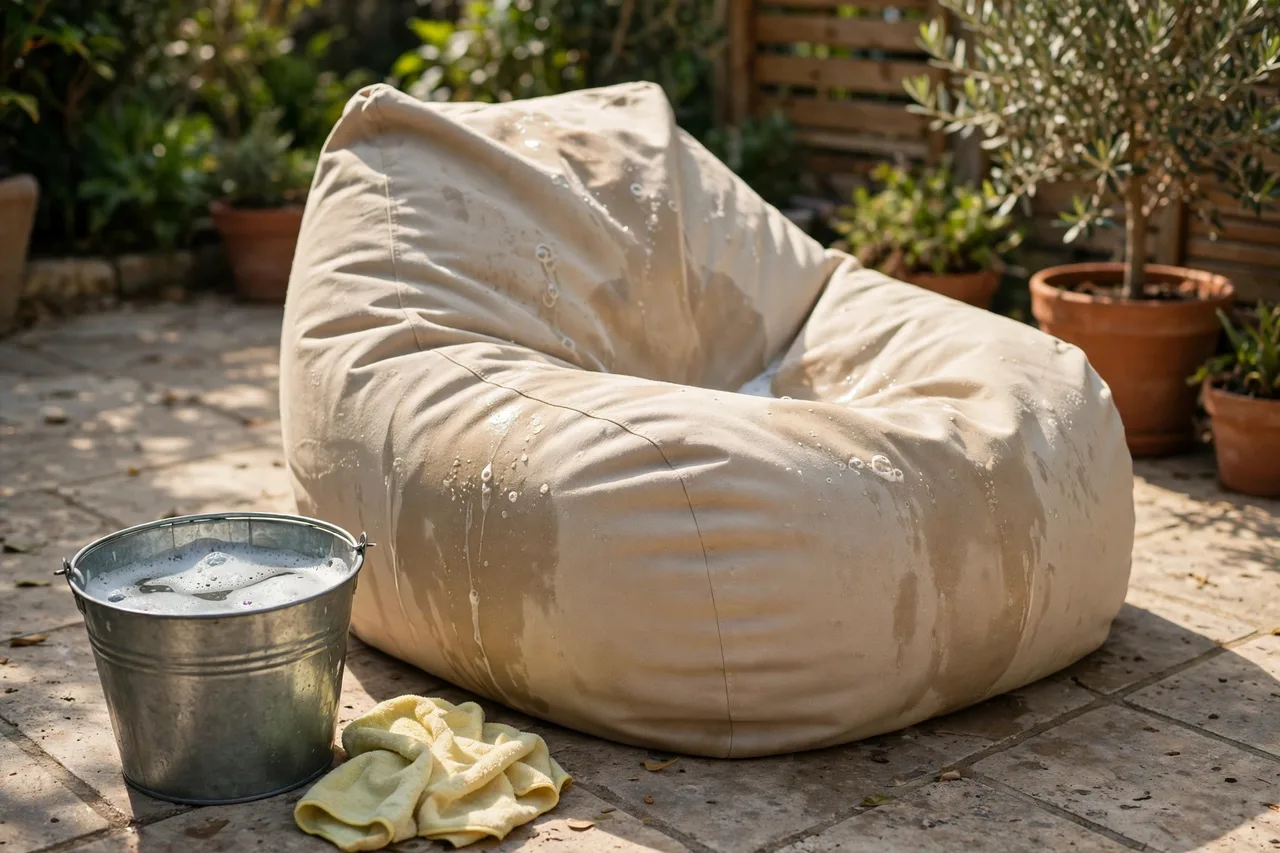
Start with a weekly wipe. Brush off leaves and dirt, then wipe the cover with a damp cloth and a drop of mild soap. Rinse with clean water and let it air dry fully in the shade before anyone sits in it again. Never use bleach or a harsh cleaner on the cover, because it strips the water-resistant coating and fades the color.
For a deeper clean, check the label first. Many outdoor bean bags have a removable cover that is machine washable on a gentle cycle with cold water and mild detergent, then air dried or tumble dried on low. If the cover does not come off, wash it in place with soap and water and let it dry completely. If the inner filling gets damp, squeeze out the water gently, spread the beads out so they dry evenly in a shaded spot, and never use heat to dry them, because high heat can warp or melt some bead fillings. The waterproof bean bag FAQ from Top5Best gives the same order: wipe, air dry fully, and keep the bag under cover during heavy rain.
For storage, the rule is dry, covered, and off the ground. Bring the bag inside for winter or heavy storm seasons, or store it under a breathable, weatherproof cover. Never store a damp bag in a sealed plastic bin, because trapped moisture grows mildew. Our guide on how to store outdoor furniture covers the full winter routine, and our outdoor covers for furniture guide shows which covers actually breathe. A outdoor storage bin works too, as long as the bag is fully dry before it goes in.
Related Guides
If soft outdoor seating is your style, these guides answer the next questions most owners ask. Start with our metal outdoor furniture guide to compare a bean bag with a hard frame set, then read our wicker outdoor furniture guide if you want a softer look on a metal frame. Our outdoor pouf ottoman guide covers the footrest that pairs with any bean bag, and our outdoor hammock and lounger guides cover the other ways to lounge outside. For a firmer seat with the same relaxed feel, see our outdoor rocker chair and reclining patio chairs guides, and for the space around them, our patio garden ideas.
Frequently Asked Questions
Are Outdoor Bean Bags Waterproof?
Most high-quality outdoor bean bags are water-resistant, not fully waterproof. They repel rain and splashes, but they should not be submerged for long periods. Look for PU-coated or PVC-backed polyester fabric, water-resistant stitching, drainage eyelets for poolside use, and mould-resistant treatments. A sealed inner liner adds a second layer of protection for the filling.
Are modern outdoor bean bag chairs waterproof?
Most modern bean bag chairs use coated outdoor fabric that repels water, but waterproofing varies by material. Look for a coated 500D or higher fabric with sealed seams. No consumer bean bag is truly 100 percent waterproof, because seams and zippers always let some water through, so bring the bag inside or under cover during heavy rain.
What fabric is best for outdoor bean bag chairs?
Coated polyester or outdoor canvas with UV stabilization is the best fabric for most outdoor bean bag chairs. Both resist water, mildew, and fading, and wipe clean with a damp cloth. Solution-dyed acrylic like Sunbrella is the premium pick: it holds color longest in full sun. Marine vinyl is best for poolside and boat use because it shrugs off chlorine and salt spray.
How long do outdoor bean bag chairs last at a resort?
With UV-stable fabric and full-fill foam, a modern bean bag chair lasts three to five years in full-time resort rotation. A home bag used on weekends lasts longer, often five years or more, because it gets less daily wear and more time under cover. The fabric and the filling decide the lifespan: UV-stable fabric with EPS or EPP beads outlasts a budget bag by two to three years.
Is this outdoor bean bag chair truly waterproof or is it only water-resistant?
Many models use a water-repellent fabric and a sealed inner liner to keep moisture out and help with quick drying. However, no consumer product is truly 100 percent waterproof. If rain pools on top for an extended period, or if seams start to wear, moisture can reach the filling. Keep it under a covered area during heavy rain or use a weatherproof cover.
How should I clean it after it gets dirty or wet?
For removable covers, follow the label instructions; many are machine washable on a gentle cycle with cold water and mild detergent, then air dry or tumble dry on low as allowed. For non-removable covers, mix a mild soap with warm water and wipe with a soft cloth, then rinse with clean water and allow to air dry completely. If the inner filling becomes damp, let it dry fully before reassembling.
An outdoor bean bag chair earns its place when you buy the fabric first and the shape second. Coated polyester or Sunbrella on the outside, EPS or EPP beads on the inside, sealed seams, and a cover for storms: that is the whole checklist. Buy the bag that matches your spot, bring it in before the storm, and it will still be the favorite seat on your patio three summers from now.
Note: This guide gives general advice for choosing and caring for outdoor furniture. Check weight limits before you buy, keep small children away from loose bead filling, and follow the maker’s washing instructions for your bag.