Outdoor sectional cushions are worth replacing only when you measure the frame, not the old cushion, because a cushion measured from a compressed old pad comes out too small, slides around, and leaves gaps — while a cushion measured from the bare frame fits like it was made for the seat, and it was. The frame is the truth, the old cushion is a lie. This guide shows you how to measure every seat, back, corner, and chaise on a sectional, which foam and fabric survive outside, and what new cushions cost checked November 16, 2026.
One mistake in the measuring section below ruins more cushion orders than any other, and it takes ten seconds to avoid. It sits in the step-by-step, and most buyers make it because it feels like the careful thing to do. Before that, you need the cushion types straight, because a sectional needs four different cushions, not one.
What Are Outdoor Sectional Cushions?
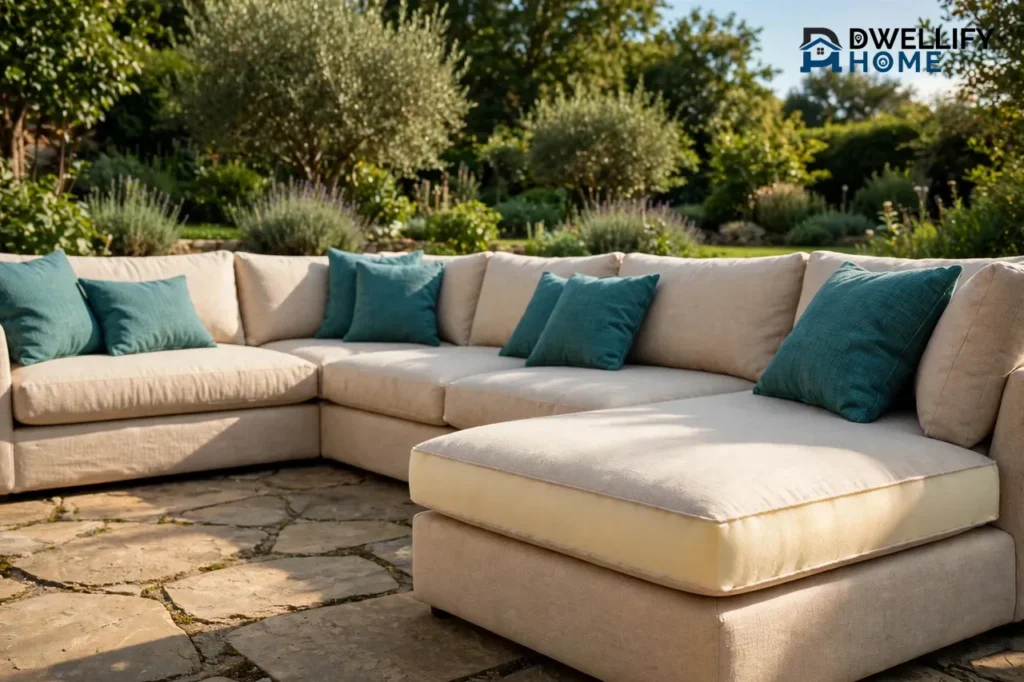
Outdoor sectional cushions are the seat, back, corner, and chaise pads that sit on a sectional sofa outside: the big L-shaped or U-shaped couch on a patio, deck, or porch. A sectional is not one sofa. It is several pieces locked together, and each piece carries its own cushion, which is why replacing them feels harder than replacing a single chair cushion.
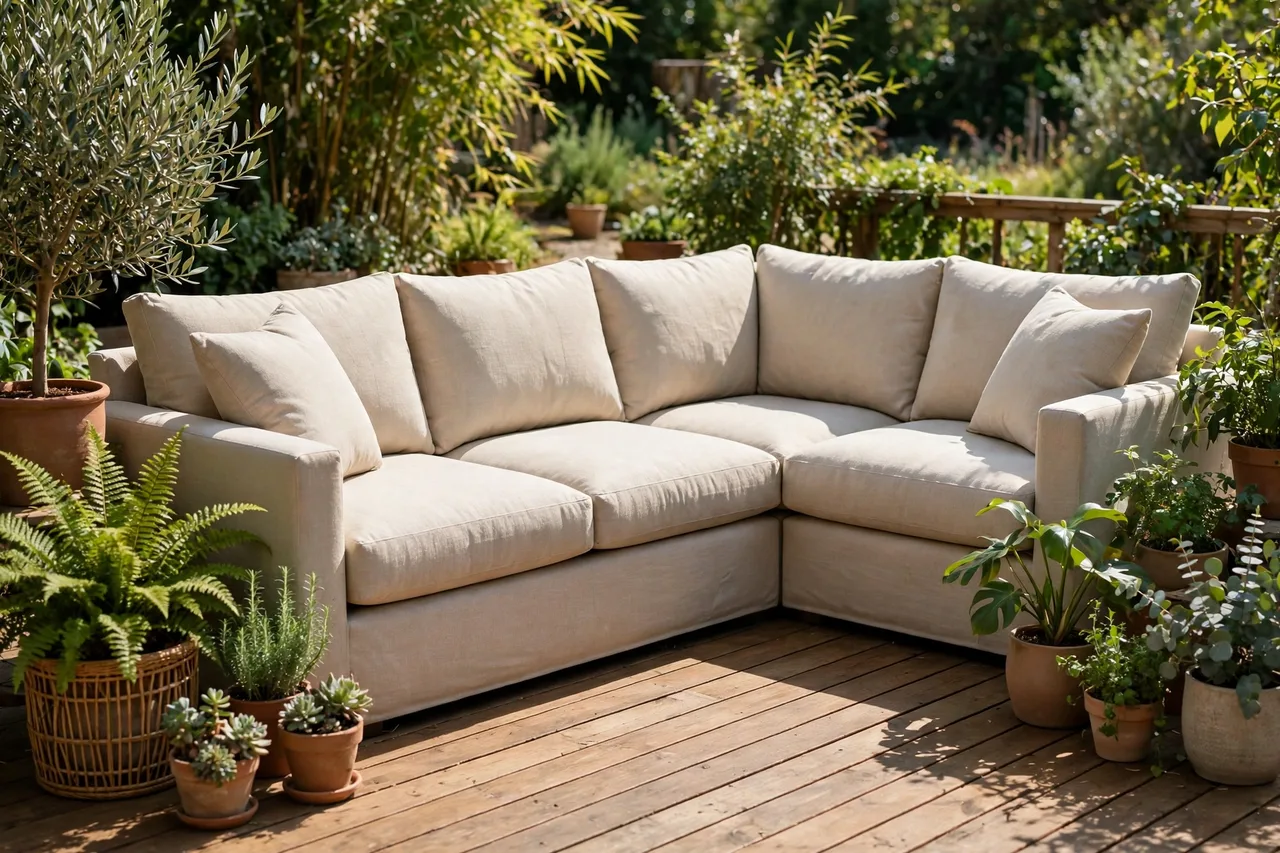
A standard sectional carries four cushion types. Seat cushions are the thick pads you sit on, usually 4 to 6 inches thick. Back cushions are the tall pads behind you, usually 5 to 10 inches thick where they meet the seat. Corner cushions are square or pentagonal pads that fill the L-shaped corner, and they are the hardest to replace because their shape is not a rectangle. Chaise cushions are long single pads that run the full depth of the chaise end, from the backrest to the footrest.
The filling decides the comfort and the lifespan. Quick-dry foam is the best outdoor filling: open-cell foam that lets water drain through instead of soaking it up, so the cushion dries in hours instead of days. Standard polyurethane foam is cheaper and softer, but it holds water and grows mildew if it gets rained on. Polyester fiberfill is the softest and the cheapest, but it flattens fastest and holds the most water. The outdoor cushion replacement guide from Alibaba Wellness puts the rule plainly: for most users, the best move is Sunbrella or solution-dyed acrylic fabric, quick-dry foam filling, and removable, machine-washable covers.
The fabric decides the weather life. Solution-dyed acrylic, sold as Sunbrella, is the best outdoor cushion fabric: the color is dyed into the fiber, so it resists fading for years, and it sheds water and resists mildew. Olefin is the budget workhorse: it resists water and fading well and costs less, but it feels stiffer. Plain polyester is the cheapest: it fades fast and holds water unless it carries a water-resistant coating. Check the fabric label the same way you check the foam, because the fabric is what faces the rain.
How to Measure for Sectional Cushions
Measure the furniture frame, not the old cushion, and measure each section separately. That is the whole rule, and it is the rule most buyers break, because measuring the old cushion feels careful and it is not.
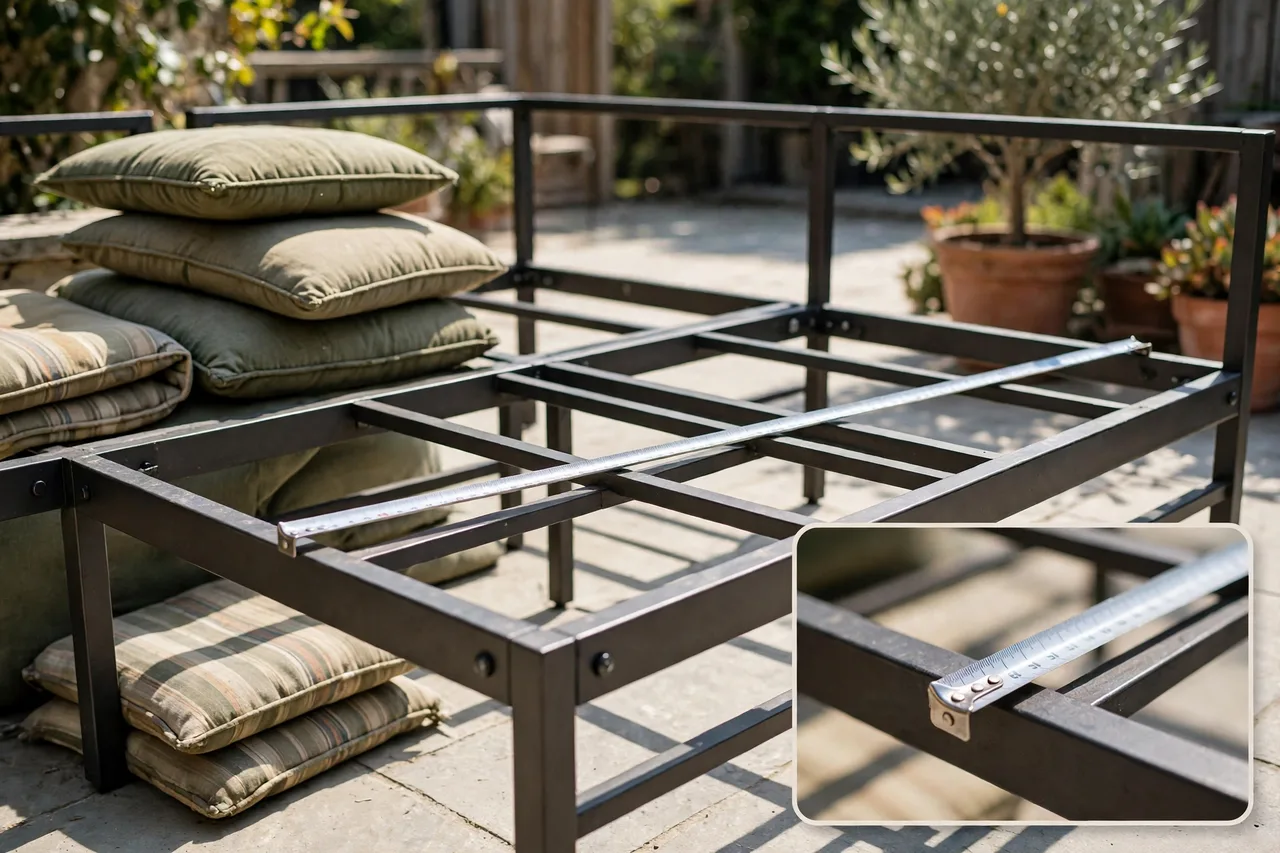
Start by taking the old cushions off the frame completely. A compressed old cushion is smaller than the seat it came from, sometimes by an inch or more on each side, so a replacement cut to the old cushion’s size leaves gaps on every edge. The replacement cushion guide from EngineerFix says it clearly: if the old cushions are significantly compressed or misshapen, measuring the interior dimensions of the furniture frame itself provides the most reliable baseline for the replacement size.
Use a rigid metal tape measure, not a cloth one, because a cloth tape sags across a wide seat and lies to you by half an inch. Measure each seat section separately, because a modular sectional has one cushion per frame piece, and each piece is its own size. For a standard three-seater, measure the total inner width between the armrests and divide by three, then leave about 1 centimeter of clearance overall so the cushions sit side by side without bunching. For each seat, record three numbers: the width across the front edge from side to side, the depth from the front edge to the backrest, and the thickness from the bottom to the top of the cushion.
For back cushions, measure the width across the backrest and the height from the seat surface to the top of the back frame. Remember that a thick back cushion eats into the seat depth, so subtract the back cushion’s thickness, usually 5 to 10 centimeters, from the total seat depth before you order the seat cushion. For corner pieces, look closely at the angles: corner seats often need a square or pentagonal cushion, and a paper template of the seat surface is the most reliable way to order one. For a chaise end, measure the depth from the backrest all the way to the front footrest, and note whether the width stays the same along the whole length.
Write every number down with a label, and measure twice before you order. The deep seat cushion guide from FourLuck Patio gives the same order: measure the width between the inside edges of the arms, the depth from front to back, and the thickness you want, then remember that a thick back cushion can reduce the usable depth of your seat. A cushion that is too small leaves uncomfortable gaps, while one that is too large will not sit properly in the frame. That is the mistake the intro promised: measuring the old cushion instead of the frame, and it ruins more orders than any other error.
| Cushion type | Common size | Thickness | Best for |
|---|---|---|---|
| Seat cushion | 24 x 24 in | 4–6 in | Standard sectional seats |
| Deep seat cushion | 24 x 28 in | 5–6 in | Deep seating sectionals |
| Back cushion | 24 x 20 in | 5–8 in | Seat backs |
| Corner cushion | Custom / template | 4–6 in | L-shaped corners |
| Chaise cushion | 24 x 48 in | 4–6 in | Chaise ends |
One line in that table saves most buyers money: standard sizes fit most sectionals. Most patio sets use common dimensions, with seat depths between 18 and 22 inches and widths in 24, 26, or 30 inch steps. If your frame measures within 1 inch of a standard size, a ready-made cushion fits. Order custom only when your frame is irregular, curved, or a corner shape no standard pad matches.
How Much Do Outdoor Sectional Cushions Cost?
Outdoor sectional cushions cost $40 to $200 per cushion, checked November 16, 2026, and a full sectional set runs $240 to $1,200. A single ready-made seat cushion runs $40 to $80. A deep seat cushion runs $60 to $120. A back cushion runs $50 to $100. A custom cushion runs $100 to $200 each, and a full custom set for a 5-piece sectional runs $800 to $1,200.
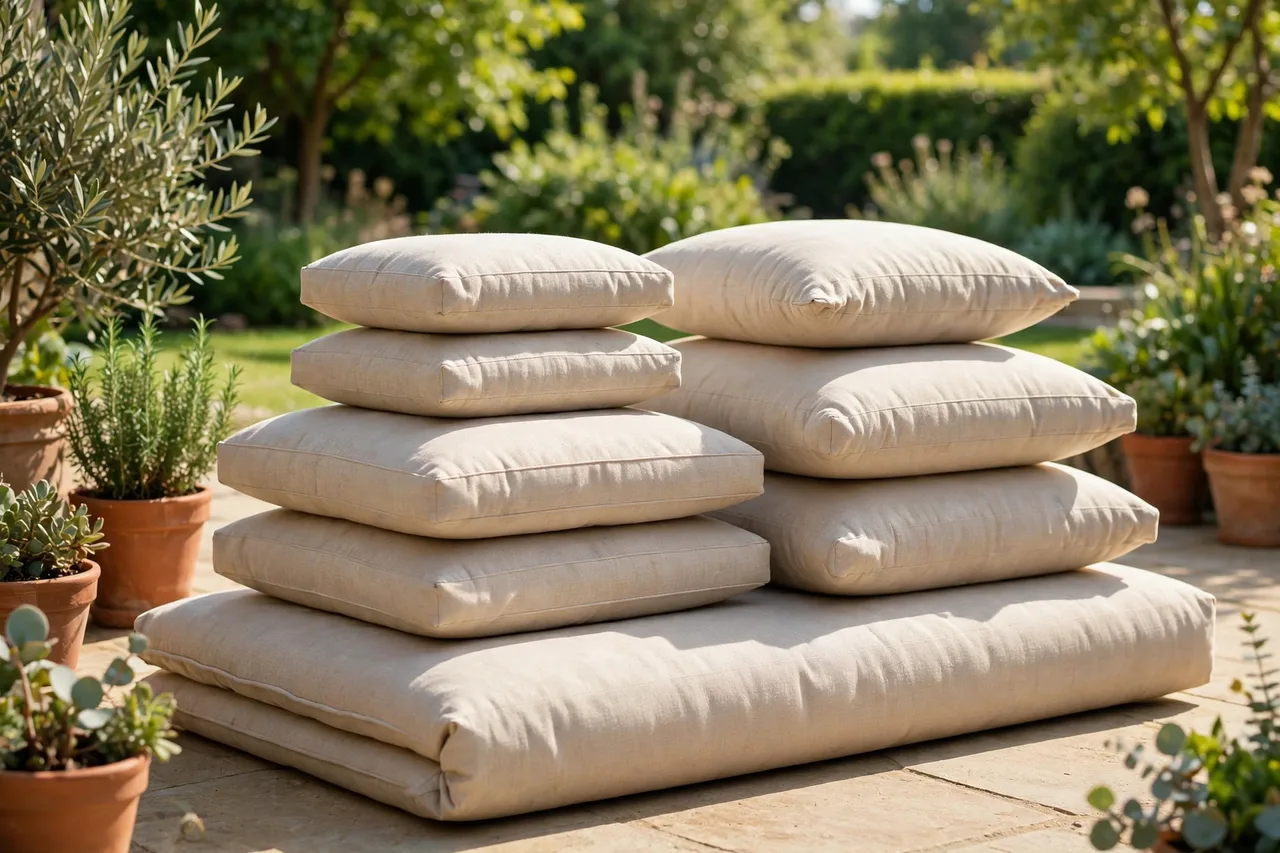
Three things push the price up. First, the fabric: Sunbrella costs more than olefin, and olefin costs more than plain polyester, but Sunbrella holds its color for years while plain polyester fades in one season. Second, the foam: quick-dry foam costs more than standard foam, and it is the only foam that survives a rainstorm without growing mildew. Third, the fit: custom cushions cost two to three times ready-made ones, and they are worth it only when your frame is irregular.
Here is the problem with shopping by price alone. A $40 cushion in plain polyester with standard foam looks like a deal until it fades in one summer, holds rainwater, and grows mildew by fall. A $90 cushion in Sunbrella with quick-dry foam lasts 5 years or more and still looks new. Work out the cost per summer before you buy, and the “expensive” cushion often wins. That is the same math in our weather-resistant outdoor furniture guide, and it applies to soft parts even more than to frames.
One more cost to count: replacing only the covers. If your foam is still firm and the fabric is the only problem, a new cover costs half a new cushion and takes ten minutes to swap. If the foam is compressed, stained, or smells of mildew, replace the whole cushion, because a new cover on dead foam is a new dress on a tired body. Our guide to replacement cushions for patio furniture covers the full decision, including when a cover-only swap makes sense and when it does not.
Foam and Fabric: What Survives Outside
Quick-dry foam and solution-dyed acrylic survive outside, and everything else is a compromise you pay for later. The two choices are linked: the best foam in the worst fabric still fades, and the best fabric over the worst foam still holds water.
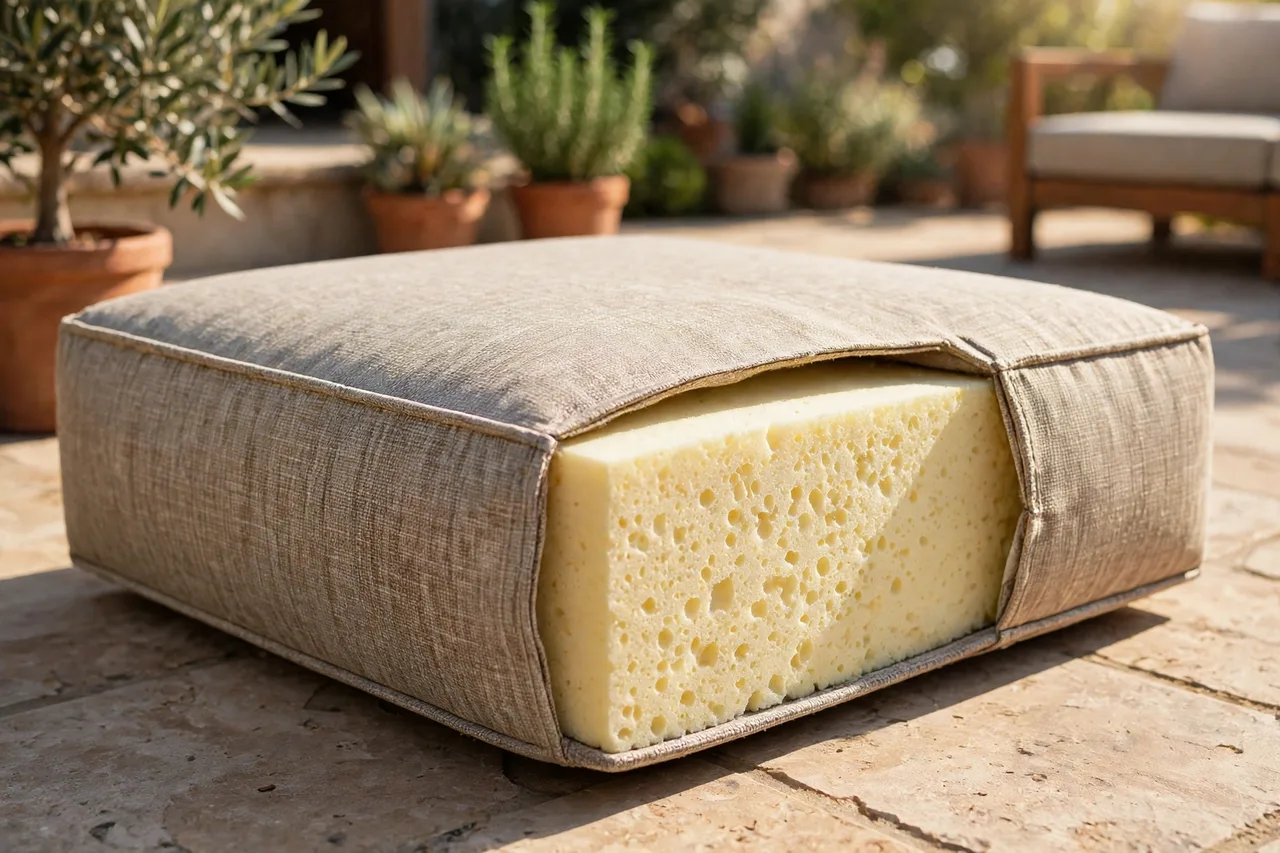
Quick-dry foam is open-cell foam with large pores that let water drain straight through. A rained-on quick-dry cushion dries in hours in the sun. Standard foam is closed-cell or dense foam that traps water inside, so a rained-on cushion stays damp for days and grows mildew in the middle where you cannot see it. If you live anywhere it rains, quick-dry foam is not an upgrade, it is the minimum.
Solution-dyed acrylic is the best cushion fabric. The color is dyed into the fiber before weaving, so it resists fading for years in full sun, and it sheds water and resists mildew. Olefin is the budget pick that still works: it resists water and fading well, costs less, and feels a little stiffer. Plain polyester is the cheapest and the weakest: it fades fast, holds water, and needs a water-resistant coating to survive one season. Spun polyester with a coating works under a covered patio, where the roof does the weather work.
Look for three features on the cushion itself, whatever the fabric. First, a removable cover with a zipper, so you can wash it. Second, ties or hook-and-loop straps underneath, so the cushion does not slide off the frame when someone stands up. Third, a mesh bottom or drain holes, so trapped water escapes instead of pooling under the foam. A cushion without ties slides, a cushion without a removable cover cannot be washed, and a cushion without drainage rots from below. Check all three before you order.
What Most People Get Wrong About Sectional Cushions
Most people get one thing wrong about outdoor sectional cushions: they believe thicker is always more comfortable. It is not. A cushion that is too thick for the frame raises you up until your feet dangle, pushes you forward until your back leaves the backrest, and slides around because it does not fit the seat. Seat cushions are usually 4 to 6 inches thick for a reason: that thickness matches the frame depth the maker designed. Thicker is better only when the frame is deep enough to hold it.
The second wrong belief is that all the cushions on a sectional are the same size. They are not. The corner cushion is a different shape, the chaise cushion is twice as long, and the back cushions are a different thickness from the seats. Measure each piece separately, and never order six identical cushions for a sectional that needs four different ones.
The third wrong belief is that a cushion cover is enough protection. A cover helps, but only if it breathes. A tight plastic cover traps moisture and grows mildew faster than no cover at all, so pick a vented cover and lift it on dry days to air the cushions out. The next section shows you the cleaning routine that keeps the foam and the fabric healthy.
How to Clean and Store Sectional Cushions
Outdoor sectional cushions need a short cleaning routine, and the routine is simple: brush them off, wash the covers, dry the foam fully, and store them dry. Fifteen minutes a month covers most sectionals.
Start with a weekly brush-off. Shake loose dirt and leaves off the cushions, then wipe the covers with a damp cloth and a drop of mild soap. For a deeper clean, unzip the covers and machine wash them on a gentle cycle with cold water and mild detergent, then air dry them or tumble dry on low as the label allows. Never use bleach on Sunbrella or solution-dyed acrylic, because it strips the color and the water resistance.
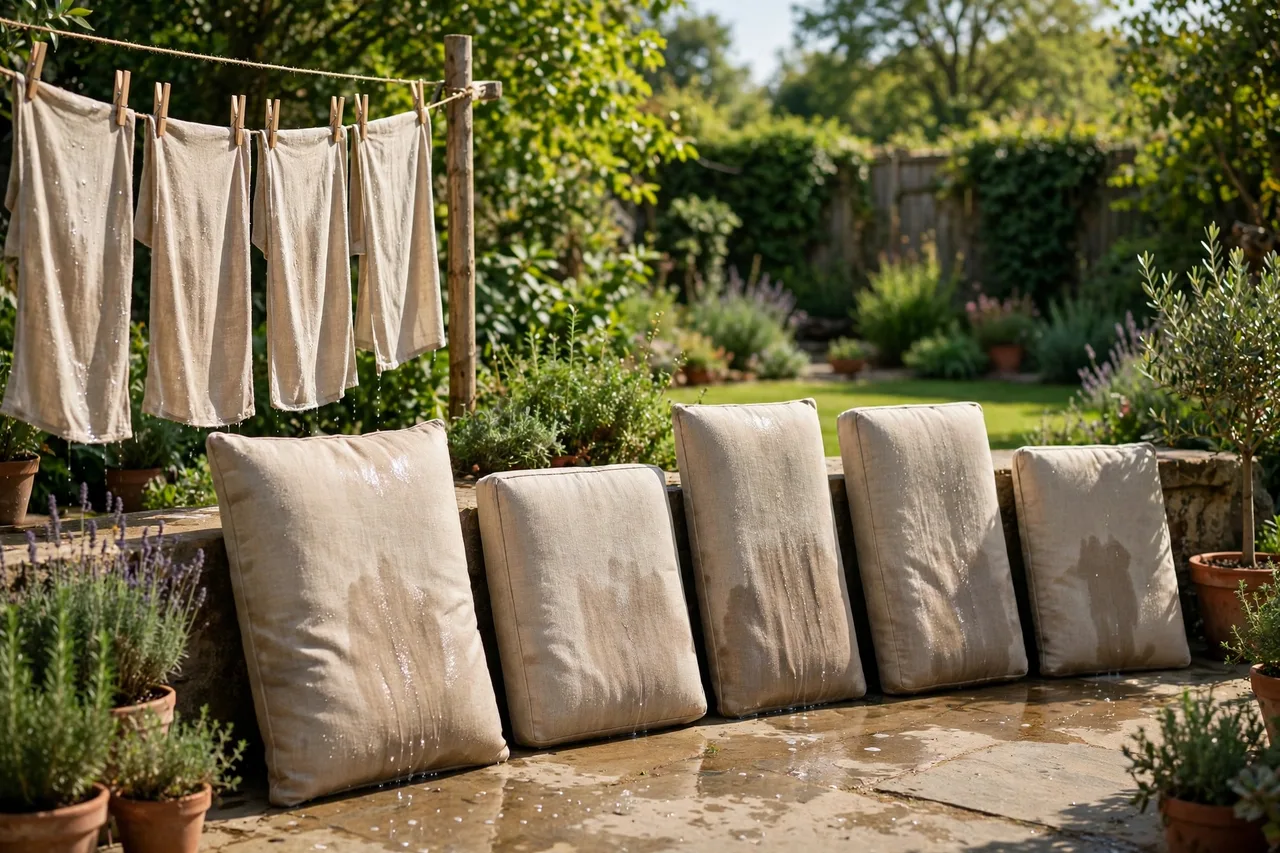
If the foam gets wet, stand the cushion on its edge in the sun so water drains out, and let it dry fully before you put the cover back on. A damp cushion put away in a bin grows mildew in days, and mildew in foam never fully washes out. If the foam already smells, wash it with a mix of mild soap and water, rinse it well, and dry it in the sun for a full day. If the smell stays, replace the foam, because mildew deep inside a cushion is not worth breathing in.
For storage, the rule is dry, covered, and off the ground. Bring the cushions inside for winter or heavy storm seasons, or store them in a vented outdoor storage bin with the lid cracked open on dry days. Never store a damp cushion in a sealed plastic bin. Our guide on how to store outdoor furniture covers the full winter routine, and our outdoor covers for furniture guide shows which covers actually breathe. A outdoor bench with storage works too, as long as the cushions are fully dry before they go in.
Related Guides
If your sectional needs new cushions, these guides answer the next questions most owners ask. Start with our replacement cushions for patio furniture guide for the full measuring and buying decision, then read our outdoor sectional couch guide to pick the right sectional size and material. Our L shaped patio furniture guide covers the layout your cushions sit in, and our patio pillows guide covers the throw pillows that finish the look. For the frame underneath, see our weather-resistant outdoor furniture guide, and for the space around it, our patio garden ideas and our outdoor pouf ottoman guide.
Frequently Asked Questions
How do I measure for replacement cushions?
Measure the furniture frame, not the old cushion. Record seat width, depth, thickness, and backrest height, and be precise to within 1/8 inch for best fit, especially when ordering custom cushions. Use a rigid metal tape measure, measure each section of a sectional separately, and remember that a thick back cushion reduces the usable depth of the seat.
What is the standard thickness for outdoor chair cushions?
Industry standards range from 3 inches to 6 inches thick, and commercial-grade cushions typically use 4 to 5 inches. Thicker cushions of 5 to 6 inches suit deep-seating applications like sectionals and lounge chairs, while 3 to 4 inch profiles work well for dining sets. Thicker is not always better: the thickness must match the furniture depth to prevent slippage.
How do I measure cushion sizes accurately?
Measure the furniture seating areas for width, depth, and height, and add 0.5 to 1 inch to width and depth for proper fitment. For curved furniture, create cardboard templates. Critical measurements include front-to-back depth, seat width, and backrest height for sectional systems, and all materials should have a minimum 600D weight and 1,500 hour UV resistance rating.
Can you buy replacement cushions for outdoor furniture?
Yes, you can buy replacement cushions for almost any outdoor furniture, either ready-made in standard sizes or custom-made to your frame measurements. Ready-made cushions fit most sets, because most patio sets use common dimensions. Custom cushions from companies like FoamOrder or ZIPCushions are best when off-the-shelf sizes do not align with your frame.
When Should You Replace Your Deep Seat Cushions?
Replace your deep seat cushions when the foam stays flat after you fluff it, the fabric has faded through, or the cushion smells of mildew even after washing. A good cushion lasts 3 to 5 years with quick-dry foam and solution-dyed acrylic fabric, and 1 to 2 years with standard foam and plain polyester. Replacing only the cushions is often a simpler way to refresh your outdoor furniture than buying a whole new seating set.
What materials are best for different climates?
Quick-dry foam and solution-dyed acrylic suit every climate, because they drain water and resist sun. In humid and rainy climates, quick-dry foam is essential, since standard foam holds water and grows mildew. In sunny climates, solution-dyed acrylic holds its color longest. In cold climates, HDPE-framed sectionals with quick-dry cushions survive freeze and thaw best. All materials should have a minimum 600D weight and 1,500 hour UV resistance rating.
Outdoor sectional cushions earn their price when you measure the frame, buy quick-dry foam, and pick a fabric that survives the sun. Measure twice, order once, and your sectional will still be the favorite seat on your patio five summers from now.
Note: This guide gives general advice for choosing and caring for outdoor furniture. Check weight limits before you buy, and follow the maker’s washing instructions for your cushions.