The fastest way to improve garage door security is to shield the emergency release cord, because a burglar can fish it with a wire coat hanger through the gap at the top of the door and open the whole garage in seconds. The International Association of Certified Home Inspectors puts the share of home break-ins that happen through the garage at about 9%, and the coat-hanger trick is the reason the garage earns that number. A zip tie on the release lever and a plywood shield over the trolley cost almost nothing and close the most common hole first.
Most homeowners close the overhead door and assume they have locked out the world. They are mostly right, and that is exactly the problem: a garage door connected to an opener is pretty secure, but it has three or four weak spots a burglar already knows. This guide walks through every one of them, from free fixes you can do tonight to the smart controller that texts you when the door opens. One fix on this list costs under a dollar, and it stops the trick that opens most garages.
The Short Answer: The 3 Fixes That Matter Most
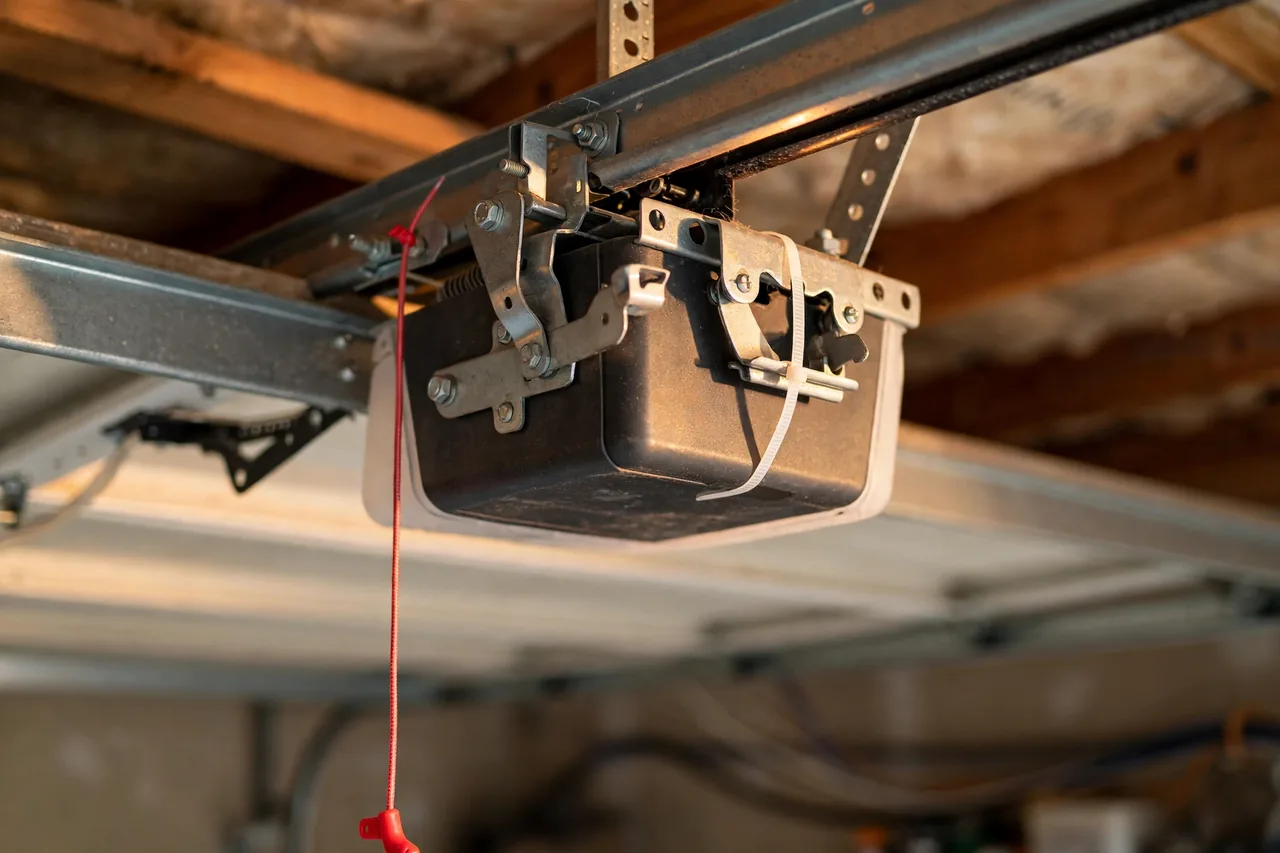
Shield the emergency release cord first, so nobody can fish it open from outside. Put a deadbolt and a reinforced strike plate on the service door, the walk-through door into the garage, because it is the number one weak spot in most garages. Add a smart garage controller with a door sensor, so your phone tells you the moment the door opens and closes it automatically when you forget. Those three fixes close the three ways burglars actually get in, and everything else in this guide is reinforcement.
The release cord is the priority because it defeats the opener itself. The opener motor does not lock the door; it only holds it shut while the trolley stays connected. Pull the release, and the door lifts by hand. The service door matters because burglars kick doors more often than they pick locks, and a hollow service door with a short-strike plate gives way fast. The smart controller matters because the most common garage break-in needs no skill at all: somebody walks through a door somebody left open. Fix those three, and the rest of this guide is cheap insurance on top of a solid base.
How Burglars Actually Get Into Garages
Burglars get into garages three main ways, and none of them needs much skill. The coat-hanger trick works on the emergency release: a burglar pushes the top of the door inward to open a small gap, slides a wire hook through, snags the red release cord, and yanks it. Once the trolley disconnects, the door lifts by hand in seconds, with no power and no remote. Family Handyman notes that fishing is not easy on every door — some releases must be pulled straight down and will not trip from an angle — but on many older doors it works, especially when a window lets the burglar see what they are doing.
The second way is the remote. A garage door remote clipped to a car visor is an open invitation: break into the car, grab the remote, and the garage opens. The registration card in the glove box even hands over the home address. Older fixed-code remotes can also be cloned, though openers made since the late 1990s mostly use rolling codes that change with every press. The third way needs no tools at all: the service door left unlocked, the door into the house left unlocked, or the overhead door left open for hours. Security consultant Chris McGoey, quoted by This Old House, warns that even a garage with nothing valuable in it becomes a hidden workshop where a thief can take his time breaking into the house with your own tools. That is the real risk, and it is why the garage deserves the same locks as the front door.
What Most People Get Wrong About Garage Door Security
The biggest misconception is that the opener locks the door. It does not. The opener motor does not lock the door; it only holds it shut while the trolley stays connected. Pull the release, and the door lifts by hand. Believing the opener is a lock is why so many garages have no other lock at all, and why the coat-hanger trick works so well. A garage door needs a real lock, separate from the opener, just like any other exterior door.
The second mistake is spending money in the wrong place. Home security expert Tom Dix, quoted in This Old House, puts it bluntly: do not spend a lot on high-security knob locks, because most intruders do not pick locks, they kick doors in, so put the money in the deadbolt. A deadbolt that extends into a steel-reinforced strike held by two-inch screws beats a fancy knob lock every time. The third mistake is trusting the remote more than the door: a remote in the car is a key left in the lock. Fix the lock thinking first, and the gadgets second. The cheapest real lock for the overhead door is next, and it costs less than a dollar.
Fix 1: Shield the Emergency Release Cord
Shield the emergency release cord so a wire hook cannot grab it. The simplest version costs almost nothing: if your trolley has a pair of holes, thread a small plastic zip tie through the release lever and around the trolley arm. Use the smallest tie you can find. It is strong enough to resist the tug of a fishing wire, but it breaks away with a hard straight pull on the release cord, so the emergency release still works when you need it. Family Handyman recommends exactly this trick, and it takes about two minutes.
The stronger version is a lock shield: a wood cleat and a scrap of plywood screwed to the opener arm, covering the trolley so a hook cannot reach the cord at all. Family Handyman describes the shield as a simple plywood panel fastened to the cleat with just two brad nails, so it can break away rather than do damage if it runs into something while the door travels. Either fix closes the coat-hanger hole. Test it after you install it: pull the release cord straight down yourself and confirm the door disconnects, because a shield that blocks your own emergency pull is a safety hazard. Never remove the release cord or tie it off permanently — you need it during a power outage, and a firefighter may need it too.
Fix 2: Lock the Track When You Leave
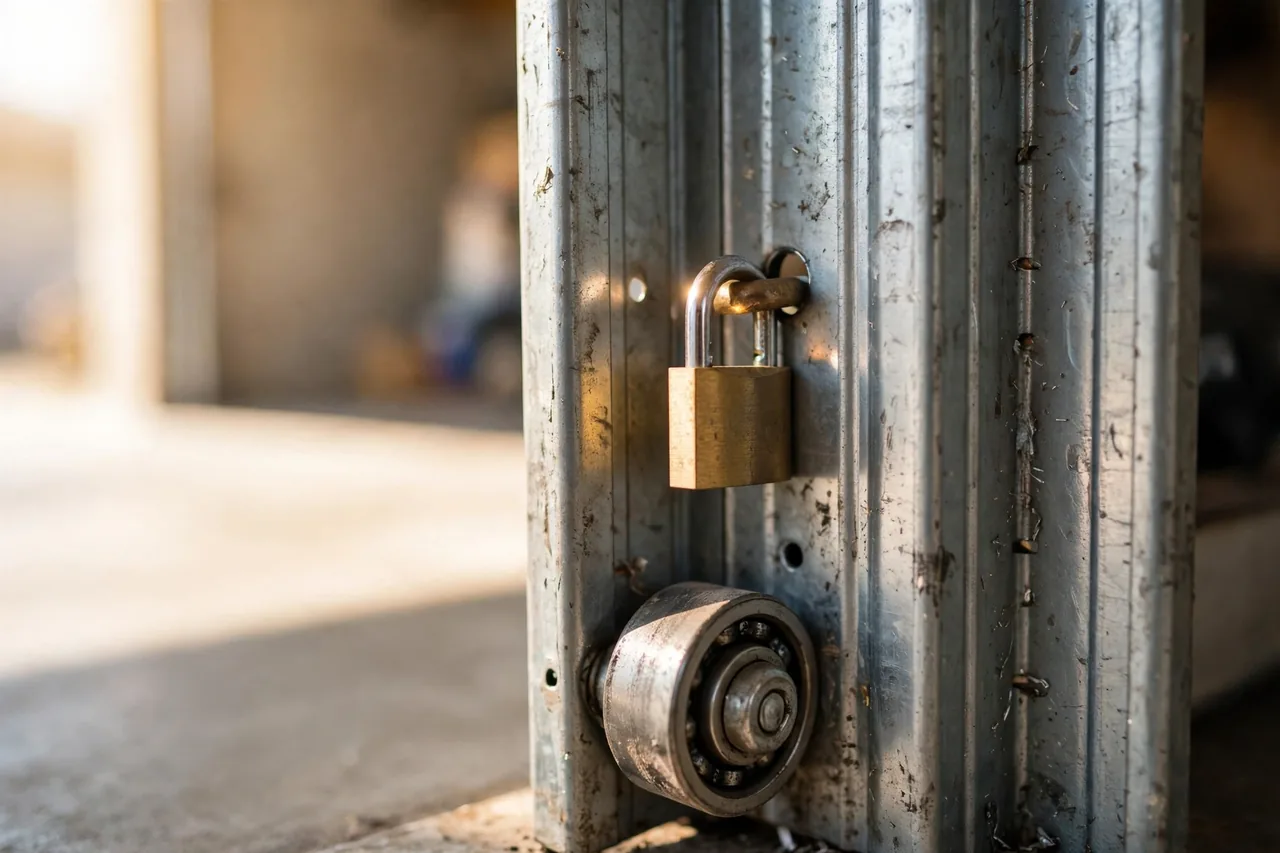
Lock the track when you go away for the weekend or on vacation. If your door does not have a lockable latch, drill a hole in the vertical track just above one of the rollers and slip a padlock through it. The padlock physically stops the door from rising, even if the opener is disconnected or the release is pulled. Family Handyman recommends this as the manual lock for doors without a built-in latch, and it is the most solid lock a garage door can have.
The rule that comes with this fix is absolute: always remove the padlock before you run the opener. An opener that tries to lift a padlocked door will bend the track, burn out the motor, or tear the door off its hardware. Put the padlock key on the same ring as the house key you take with you, so you cannot forget it, and make a habit of checking the track before you press the remote. A slide bolt mounted on the inside of the door works the same way and is easier to remember, because you see it every time you walk through the garage. Either way, the track lock is for trips away, not for daily use, and the daily lock is the one on the service door.
Fix 3: Beef Up the Service Door
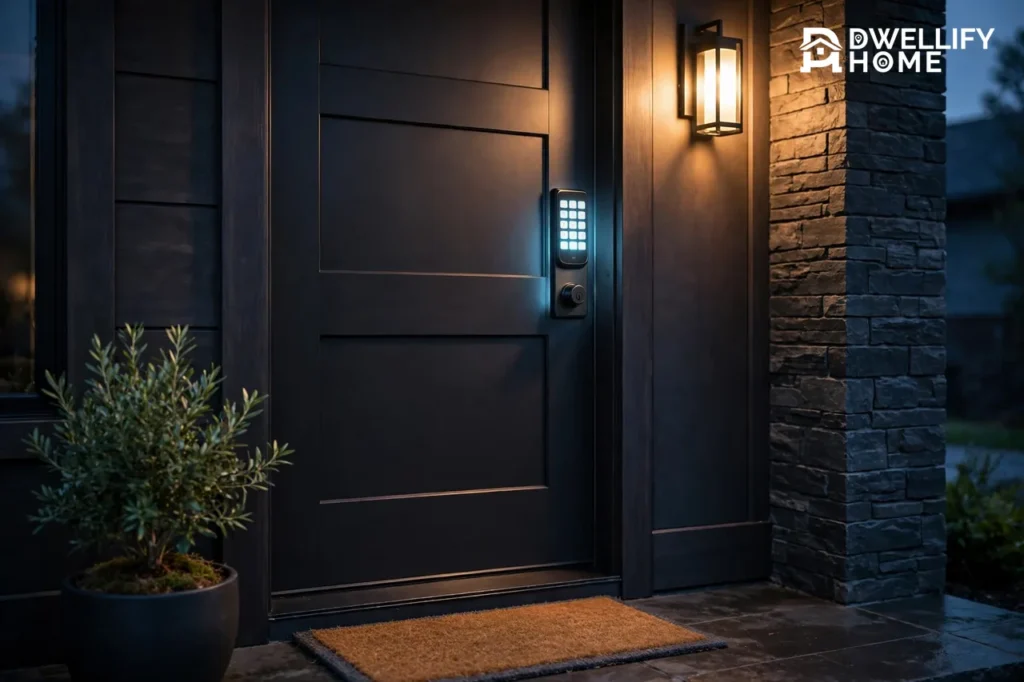
Beef up the service door, the walk-through door into the garage, because it is the number one security weak spot in most garages. Family Handyman ranks it first among garage weaknesses, and This Old House agrees: the service door should carry a deadbolt and a heavy-duty strike plate, just like any other exterior door in the house. A hollow-core interior door has no business here — replace it with a solid-core or steel door if yours is hollow, and fit a deadbolt with a one-inch throw.
The strike plate matters as much as the lock. Replace the short screws that came with the strike plate and the hinges with two-inch steel screws that bite into the wall stud behind the frame, so a kick has to move the whole frame, not just the trim. Tom Dix’s advice, quoted by This Old House, is to make sure the deadbolt extends into a steel-reinforced strike held by at least two-inch screws, and to replace the short screws on the knob assembly the same way. Our door reinforcement guide walks through the full job, including the strike plate and hinge screws, and it is the single best hour you can spend on garage security. A reinforced service door also protects the door into the house, which is the next fix.
Fix 4: Lock the Door Into Your House — Every Time
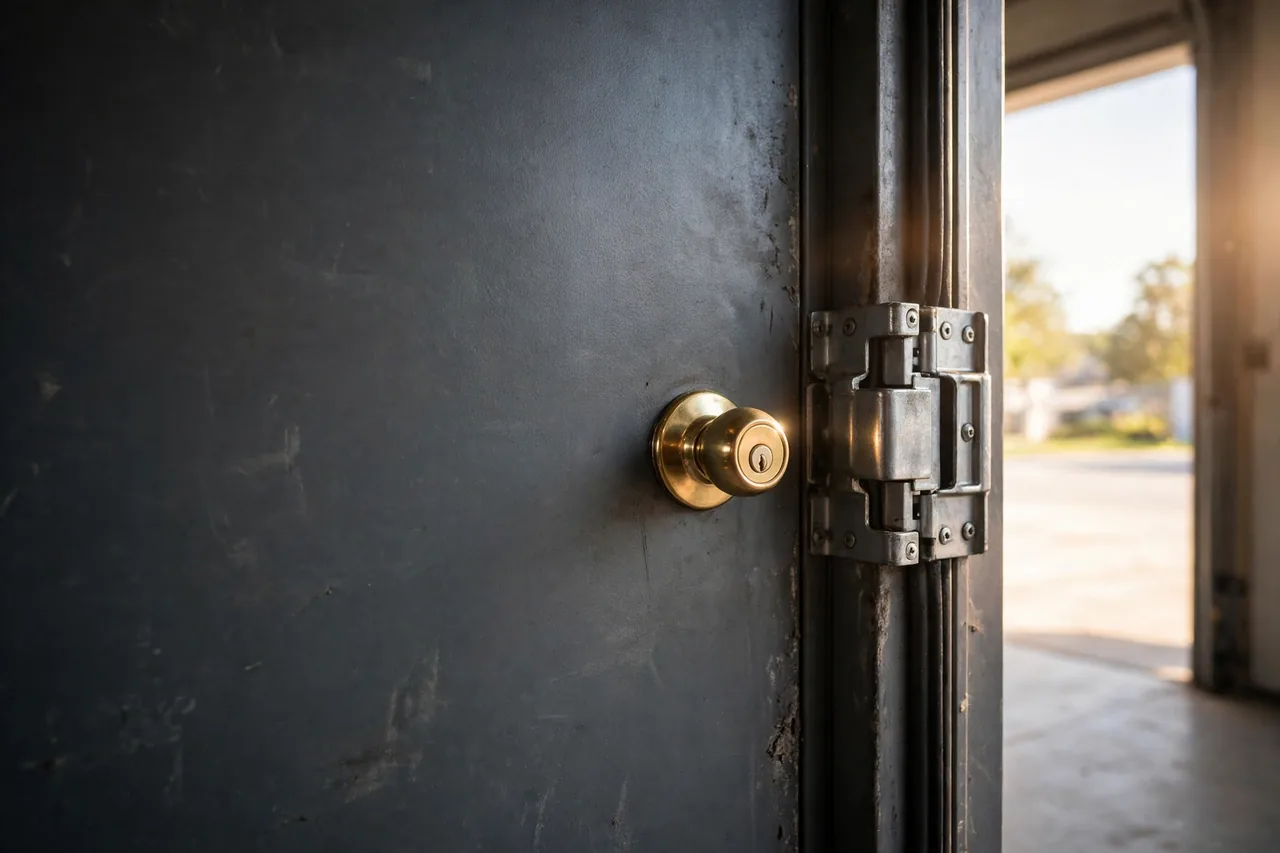
Lock the door from the garage into the house every time you come inside, and treat it as an exterior door, because that is what it is. Too many homeowners lock the service door and leave the interior door unlocked, trusting the garage to protect the house. Once a burglar is inside the garage, that unlocked interior door is a quiet, covered, well-lit entrance with your tools sitting beside it. A deadbolt on the interior door, kept locked, turns the garage from a back door into a lobby.
This is a habit fix, not a purchase, and habits need a trigger. Lock the interior door the moment you step through it, the same way you lock the front door behind you. If your household keeps forgetting, fit a deadbolt with an auto-locking latch or a smart lock that locks itself after a minute. Our best smart lock for the front door guide covers auto-locking options that work just as well on this door. And while you are thinking about doors, cover the windows: if a burglar cannot see the tools and bikes inside, the garage stops advertising itself.
Fix 5: Take the Remote With You
Take the garage remote with you instead of leaving it in the car. A remote clipped to the visor or sitting in a cup holder is a house key left in plain sight: break the car window, grab the remote, and the garage opens. Family Handyman puts it simply — if you take your garage door opener with you, thieves cannot steal it from your car — and recommends a keychain remote you carry like your house keys.
A keychain remote costs little and removes the whole problem, and it also removes the second risk: the registration card in your glove box gives a burglar your home address, so a stolen remote plus a registration card is a guided tour. If your opener is old enough to use fixed codes instead of rolling codes, replace the remote or the opener: rolling-code openers change the signal with every press, so a captured code cannot be reused. Openers made since the late 1990s generally use rolling codes, as Engineer Fix explains in its garage security guide, so check your opener’s manual for the model year. While you are at the car, remember the door itself: the most common break-in is the open door, and the next fix makes forgetting impossible.
Fix 6: Add a Smart Controller and a Door Sensor
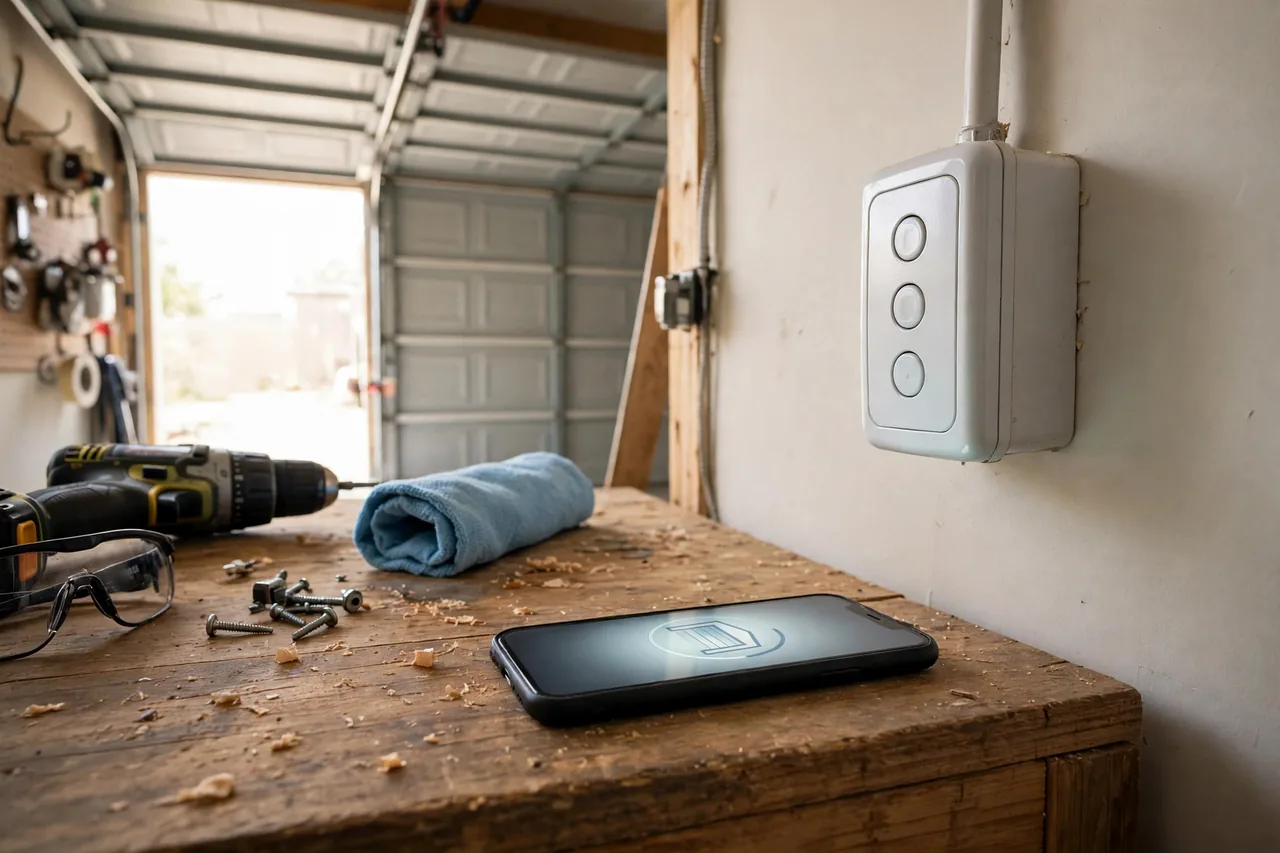
Add a smart garage controller and a door sensor so your phone knows what your garage door is doing. A controller like the universal MyQ system works with your existing opener and a smartphone app, and it adds three things a plain opener cannot do: it tells you whether the door is open or closed from anywhere, it alerts you the moment the door moves, and it closes the door automatically after a set time. This Old House lists exactly those benefits — remote monitoring, automatic closing, activity alerts, and integration with a home security system — and calls the automatic closer the fix for the most common garage security failure, which is simply forgetting to close the door.
A door sensor on its own is cheaper and still useful: a small sensor on the door and the frame, paired with a display or an app alert inside the house, tells you the door’s state at a glance. Pair either option with a camera that watches the driveway and the garage door, because a camera turns an alert into a picture you can act on. Our garage security camera guide shows where to mount it, and our driveway security camera guide covers the approach. The controller closes the door; the camera shows you who opened it. Light does the same job after dark, and it is cheaper than both.
Fix 7: Light It Up and Watch It
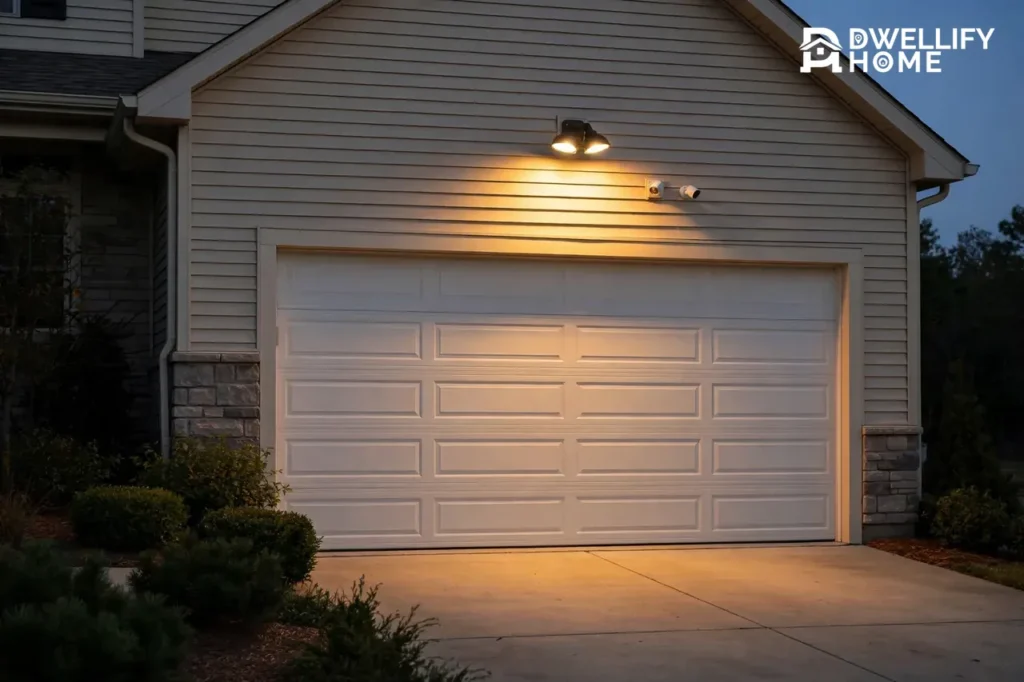
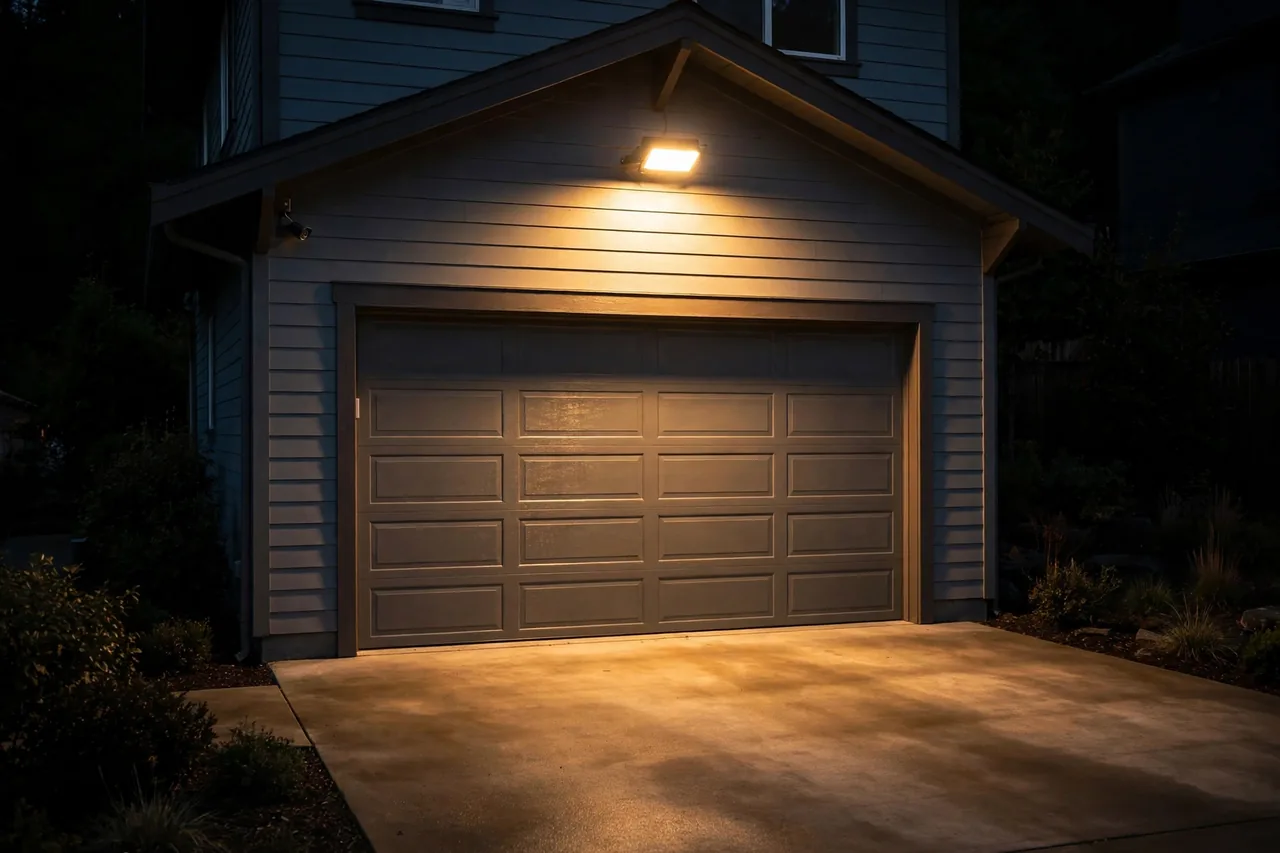
Light the garage and watch it, because darkness is a burglar’s best tool. Mount a motion-activated floodlight above the garage door and keep it aimed at the door and the driveway, so anyone approaching after dark is lit up immediately. This Old House recommends a floodlight above the garage door and notes that motion-activated lights do the job without burning electricity all night. Our best outdoor motion sensor lights guide compares the brightest options, and our security lighting installation guide covers placement and aiming.
Mount a visible security camera near the garage door as well, because a camera is both a witness and a deterrent. A weatherproof camera with night vision, aimed at the driveway approach rather than straight at the door, catches faces early instead of tops of heads late. Our outdoor camera placement guide shows the angles that work, and our best home security camera system guide compares full systems if you want the garage folded into a whole-home setup. If you want the brightest option, our best floodlight cameras guide pairs the light and the camera in one fixture. Light and camera together cost less than one stolen bike, and they protect the windows too — which is the last gap to close.
Fix 8: Cover the Windows and Hide What Is Inside
Cover the garage windows and hide what is inside, because if a burglar cannot see your tools, the garage stops advertising itself. Fit sheer curtains, blinds, or translucent window film on garage windows: they let light in while keeping the contents out of sight. For doors with glass panes, apply privacy film the same way. This Old House recommends exactly this, along with keeping the garage organized and storing anything valuable out of sight.
The same rule applies to the driveway: do not leave bikes, tools, or boxes visible from the street, and keep the overhead door closed even when you are home working in the garage. An open door is an invitation to walk in, grab something, and be gone before anyone notices. Close it between trips, lock the service door behind you, and treat the garage the way you treat the front of the house — because from the street, it is the front of the house. The checklist below turns all eight fixes into a single Saturday job.
The 10-Minute Garage Security Checklist
Run this checklist once, and your garage is harder to break into than most houses on your street. Zip-tie the release lever or fit a plywood shield over the trolley. Put a padlock hole in the track for trips away. Fit a deadbolt and a reinforced strike with two-inch screws on the service door. Lock the interior door into the house every time. Move the remote from the visor to your keychain. Add a smart controller or a door sensor with auto-close. Mount a motion light above the door and a camera on the driveway. Cover the windows with film or curtains. Hide valuables from sight and keep the door closed.
Do the free fixes tonight — the zip tie, the remote, the locked interior door — and the hardware fixes this weekend. Test the emergency release after any shield work by pulling it straight down yourself, and test the opener after any track-lock work by removing the padlock first. A garage that is locked, lit, watched, and closed is a garage burglars walk past, and that is the whole goal: not an unbreakable garage, but a garage that is not worth the effort.
Related Guides
For the camera side of garage security, read our garage security camera guide and our driveway security camera guide. For light, see our best outdoor motion sensor lights guide, and for the door itself, our door reinforcement guide. To plan the whole system, start with our best home security camera system guide.
Frequently Asked Questions
How do burglars break into garages?
Mostly three ways: fishing the emergency release cord with a wire hook through the top of the door, stealing or cloning the garage remote from a car, or simply walking through an unlocked service door or an open overhead door. The release trick and the open door need no skill at all.
Can burglars open a garage door with a coat hanger?
Yes, on many doors. A wire hook slipped through the gap at the top of the door can snag the red emergency release cord and pull it, disconnecting the opener so the door lifts by hand. A zip tie on the release lever or a plywood shield over the trolley stops it.
How can I secure my garage door from the inside?
Drill a hole in the vertical track just above a roller and slip a padlock through it, or fit a manual slide bolt on the inside of the door. Both physically stop the door from rising. Always remove the lock before running the opener, or you will damage the door and motor.
Is a garage door secure when closed?
A garage door connected to an opener is fairly secure, but the opener is not a lock — the emergency release can disconnect it. Add a track lock for trips away, a deadbolt on the service door, and a locked interior door, and the closed door becomes genuinely secure.
Should I lock the door from the garage into the house?
Yes, always. Treat it as an exterior door with a deadbolt, and lock it every time you come inside. An unlocked interior door turns the garage into a quiet, covered entrance to your house, with your own tools sitting beside it.
Do smart garage door openers improve security?
Yes. A smart controller tells you when the door opens, alerts your phone, and closes the door automatically after a set time, which fixes the most common failure — forgetting to close it. Rolling-code remotes also stop code cloning on older openers.
Start tonight with the free fixes: zip-tie the release, move the remote to your keychain, and lock the interior door. This weekend, fit the deadbolt and the strike plate, mount the motion light, and add the smart controller. Then read our garage security camera guide to close the last gap — a garage that is locked, lit, and watched is a garage burglars walk past.