Decluttering means choosing what stays in your home and letting the rest go, room by room, until every item you keep has a place and a purpose. The fastest way to do it is the 4-box method: sort each space into keep, donate, sell, and trash, work in short 15-minute sessions, and finish one room before you start the next. Most homes reach a clear, calm state in about 30 days at that pace.
That sounds simple, and it is. The hard part is not the sorting. It is the deciding. This guide gives you a decision rule for every kind of item, a room-by-room plan, and a way to keep the clutter from coming back. One item on this list voids a warranty if you toss it the wrong way — it is in the table below, so keep reading.
What Decluttering Really Means (and What It Does Not)
Decluttering is the act of removing things you do not use, need, or love from your home. It is not organizing. Organizing arranges what you keep. Decluttering decides what you keep. Sort first, organize second — that order is the whole secret, because no bin or shelf can fix a drawer full of things you never use.
Decluttering does not mean living with almost nothing. Minimalism is a choice some people love, and our guide on how to become a minimalist walks through it, but decluttering works for every lifestyle. A busy family home can be decluttered and still feel warm, full, and lived in. The goal is a home where you can find what you need in seconds, clean without moving piles first, and relax without staring at unfinished jobs.
Decluttering also does not mean throwing everything away. Most of what leaves your home should go to someone who needs it, to a recycler, or to a buyer. Only broken, stained, or truly used-up items belong in the trash. The EPA’s recycling guidance explains what belongs in the recycling bin and what never does, so your purge does not contaminate the recycling stream. Recycling one ton of office paper saves the energy equal to about 322 gallons of gasoline, according to the EPA — your paper pile alone is worth sorting right.
How to Start Decluttering When Every Room Feels Like Too Much
Start with the easiest room, not the worst one. A clear win in the first hour builds the momentum that carries you through the hard rooms. Pick a bathroom drawer, one kitchen shelf, or the top of a dresser — a spot you can finish in 15 minutes. Fifteen focused minutes beat two overwhelmed hours every time.
Set a timer before you touch anything. Work until it rings, then stop, even if you are mid-drawer. Professional organizer Cory Chalmers, co-creator of the show Hoarders, recommends short, focused sessions and stopping before the task turns frustrating, according to Public Storage. Short sessions keep your decisions sharp. Long sessions turn every item into a debate.
Do not start with sentimental items. Photos, gifts from loved ones, and childhood keepsakes slow every decision to a crawl. Leave them for last, when your decision muscle is strong and you have already proven to yourself that letting go feels good. If you work through our decluttering checklist first, you will see the whole job laid out room by room, and the sentimental box becomes one small step near the end instead of the wall you hit on day one.
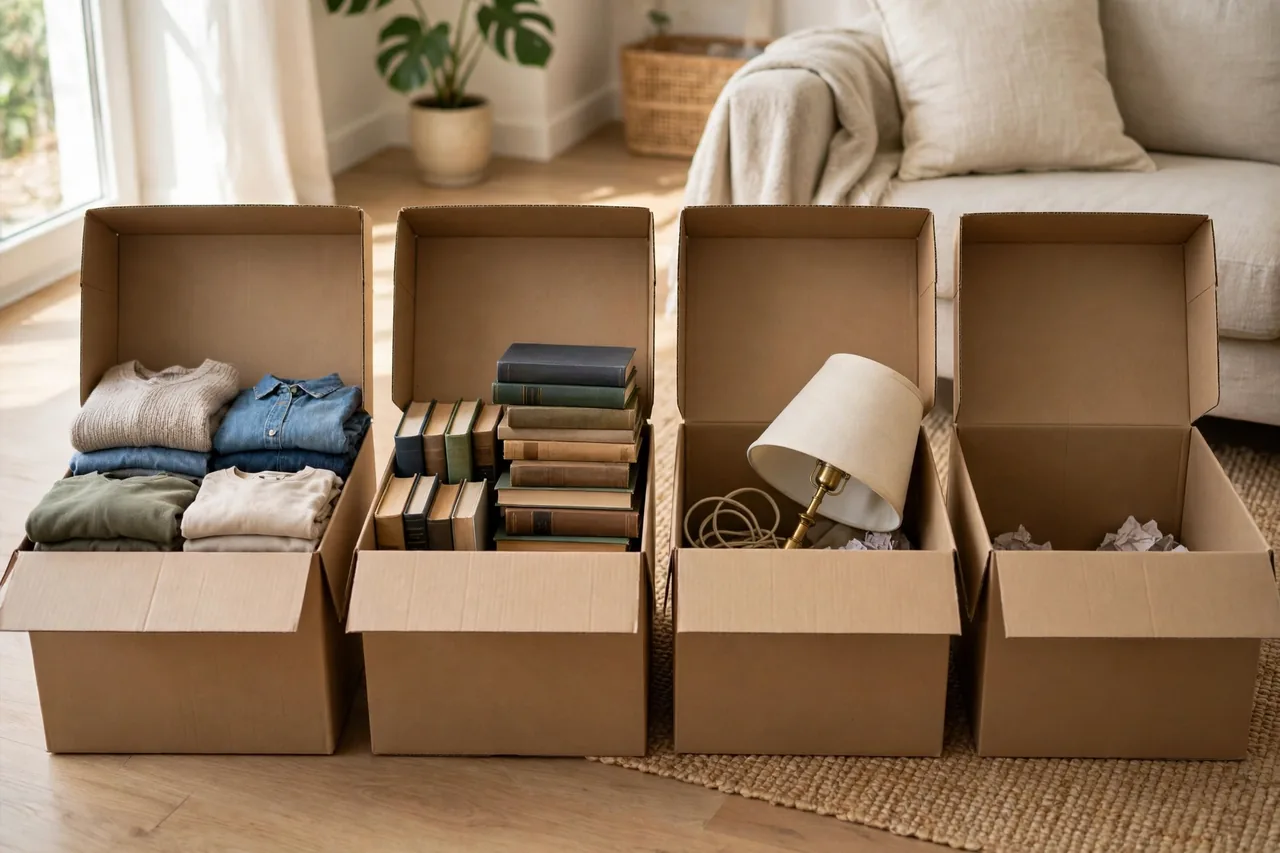
Before you begin, gather four bags or boxes and a marker. Label them Keep, Donate, Sell, and Trash. Put them in the room you are working on so every decision ends with your hands moving, not with you standing still and thinking. If you want the gentlest possible start, try our minimalist decluttering checklist — it trims the job to the essentials and works well for a first pass.
The 4-Box Method: Sort Every Item in One Pass
The 4-box method gives every item exactly one decision and one destination. Pick up each item once, ask the questions below, and drop it in a box. Do not set items aside to decide later. The “maybe” pile is where decluttering goes to die.
Ask these four questions in order:
- Have I used this in the past 6 months? If it is seasonal, have I used it in the past year?
- Would I buy this again today at full price?
- Does it work, fit, and belong in this room?
- Would I miss it if it were gone tomorrow?
Two or more “no” answers means the item leaves. One “no” means it goes in the Donate or Sell box unless it is seasonal, a spare part, or a true keepsake. Handle each item once and decide on the spot.
The six-month rule is the fastest decision tool most people ever learn. If you have not used something in six months and it is not seasonal, let it go. For clothes, stretch the rule to one full year so every season gets its chance. A coat you did not wear all winter will not earn its place next winter either.
Duplicates deserve their own sweep. Gather every can opener, charging cable, water bottle, and towel in one place and look at the pile. Most homes keep three of something they use once a week. Keep the best one, keep one spare if it truly breaks often, and let the rest go. The decluttering and purging guide goes deeper on the purge mindset when you are ready to move faster.
Decluttering Room by Room: Kitchen, Bedroom, Bathroom, and Living Room
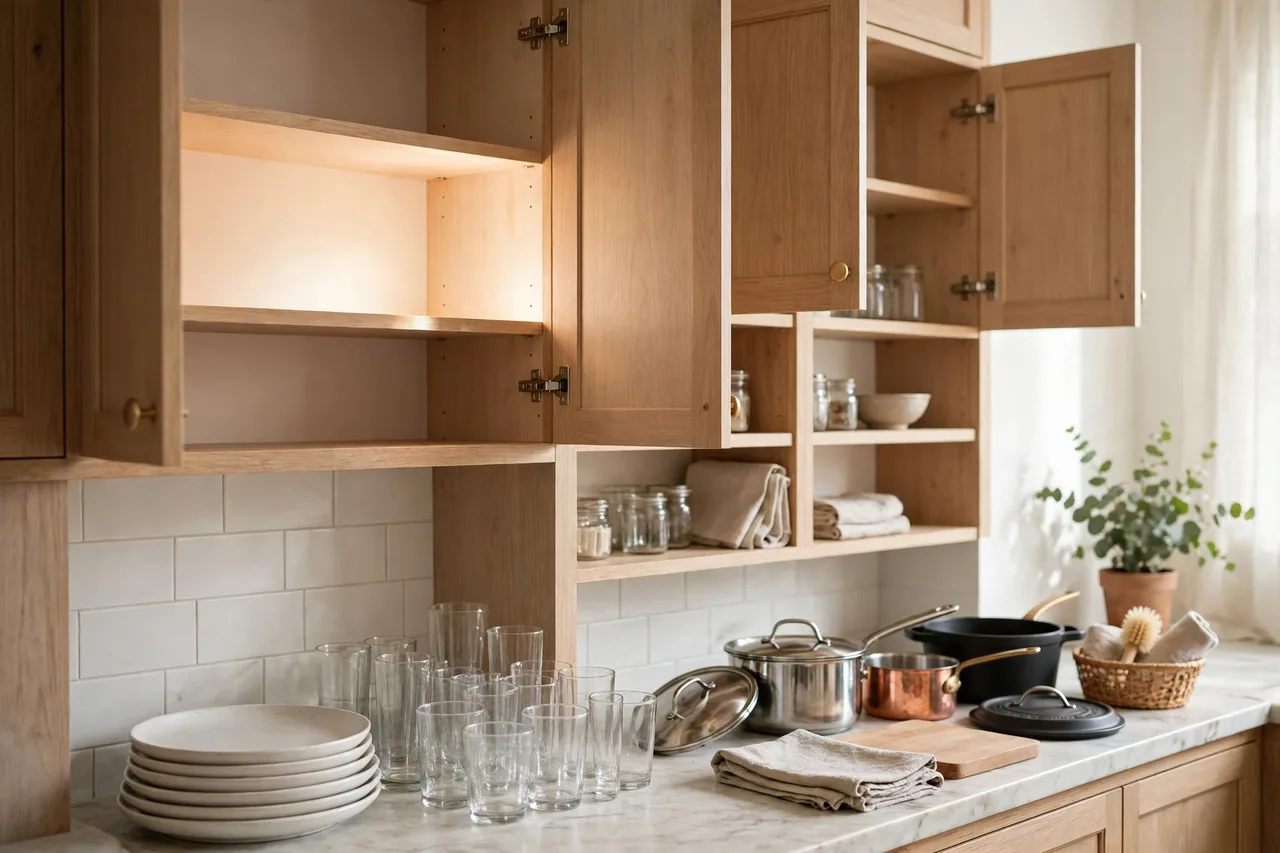
Work one room at a time and finish it completely before you open the next door. A half-finished room teaches you nothing except that the job is endless. A finished room proves the system works. Here is the order that works best for most homes: bathroom, kitchen, bedroom, living room, then storage spaces.
The bathroom first
The bathroom is small, fast, and full of easy decisions. Toss expired medicines, old cosmetics, and dried-out products. Keep one spare of each daily item, not four. A bathroom takes about 30 minutes, and the win feels huge. If your towels are part of the mess, our guide to towel storage for a small bathroom shows how to store what you keep so the room stays clear.
The kitchen next
The kitchen hides the most duplicates in the house. Pull everything out of one cabinet at a time, sort it with the 4-box method, and put back only what you use weekly. Toss expired food from the fridge, freezer, and pantry first — that alone can clear a whole shelf. Our step-by-step plan to declutter your kitchen zone by zone breaks the room into counters, cabinets, pantry, and fridge so you never face the whole kitchen at once.
The bedroom and closet
In the bedroom, clear every flat surface first: nightstand, dresser top, and chair. Clothes come next, and they get their own section below. Under the bed, keep only out-of-season clothes or spare bedding in labeled boxes — never mystery boxes you have not opened in a year.
The living room last
The living room collects other rooms’ overflow: mail, toys, chargers, and “I will deal with this later” piles. Give every stray item a real home in another room or a box to leave the house. Once the room is empty of extras, you will see the walls again — and if they need a lift, these paint color ideas for a small bathroom show how light colors open up a tight space, a trick that works in small living rooms too.
After the living room, the floors deserve attention. A clear floor shows every scuff, so learn how to deep clean hardwood floors the right way before you call the room done — a damp microfiber mop and a hardwood-safe cleaner bring back the shine without harming the finish.
Decluttering Clothes Without Regret
Clothes are the hardest everyday category because each piece carries a memory, a price tag, or a future plan. The one-year rule cuts through all three: if you have not worn it in a full year, including the season when you would most likely wear it, donate it. Your future self will not suddenly start wearing a sweater that sat untouched through two winters.
Try everything on in one session. Keep a full-length mirror nearby and a bag at your feet. If it does not fit today, it goes. If it needs a repair you have put off for months, it goes — or you book the repair this week and set a date. “Someday” repairs are clutter with a nicer name.
Sort clothes by type, not by location. Pull every shirt from every drawer and closet into one pile before you decide. Seeing twelve black T-shirts together makes the decision obvious in a way that opening one drawer never does. Our full guide to decluttering clothes walks through the try-on session step by step, including what to do with formal wear and work clothes.
Vintage and special pieces need a different rule. A 1960s dress or a hand-knitted sweater is not everyday clutter — it is a collection, and collections need proper care, not a donation bag. Read our guide on how to store vintage clothing properly before you decide, so anything you keep survives storage instead of slowly falling apart in a damp box.
Sentimental Items: How to Let Go Without Guilt
Sentimental items are the last box for a reason. By the time you reach them, you have made hundreds of easy decisions, and your judgment is sharper. Still, these items need their own rules, because the usual questions do not work on a gift from someone you loved.
Keep the best, not the most. If your grandmother left you twelve teacups, keep the two most beautiful and photograph the rest. If your child made twenty paintings, keep three and photograph the rest in good light. A photo keeps the memory. A box in the attic keeps the dust. Keep the best one and photograph the rest.
Set a hard limit before you open the box: one shelf, one bin, or one drawer for keepsakes. When the limit fills up, something must leave before anything new enters. Limits turn an endless emotional debate into a simple space question, and space questions have clear answers.
Ask who the item is really for. Many keepsakes stay because throwing them away feels disloyal. But the person who gave you the gift wanted you to enjoy it, not to store it guiltily. If it brings you joy where you can see it, display it. If it lives in a box, the joy already left — only the guilt stayed.
What Most People Get Wrong About Decluttering
Most people believe they need to buy organizers before they start. They do not. Buying bins before sorting is the most common decluttering mistake, because you cannot know what size or shape of storage you need until you know what is staying. Sort first, then buy the box that fits what is left.
The second mistake is organizing before sorting. Neat rows of labeled bins full of things you never use look tidy for a week, then the clutter returns, because nothing actually left the house. Sorting is the work. Organizing is the reward at the end.
The third mistake is decluttering someone else’s things. Tossing a partner’s or child’s belongings without asking builds resentment, not order. Sort your own things first. When others see the result — a calm room, a clear counter — most of them ask how you did it. That is the moment to offer help, not before.
The fourth mistake is treating decluttering as a one-time event. A home is a living system: mail arrives, kids grow, seasons change. Without a small weekly habit, the clutter rebuilds itself in about two weeks. The fix is small and boring, which is exactly why it works — ten minutes a week, covered in the final section below.
Decluttering With Kids and Family: Get Everyone On Board
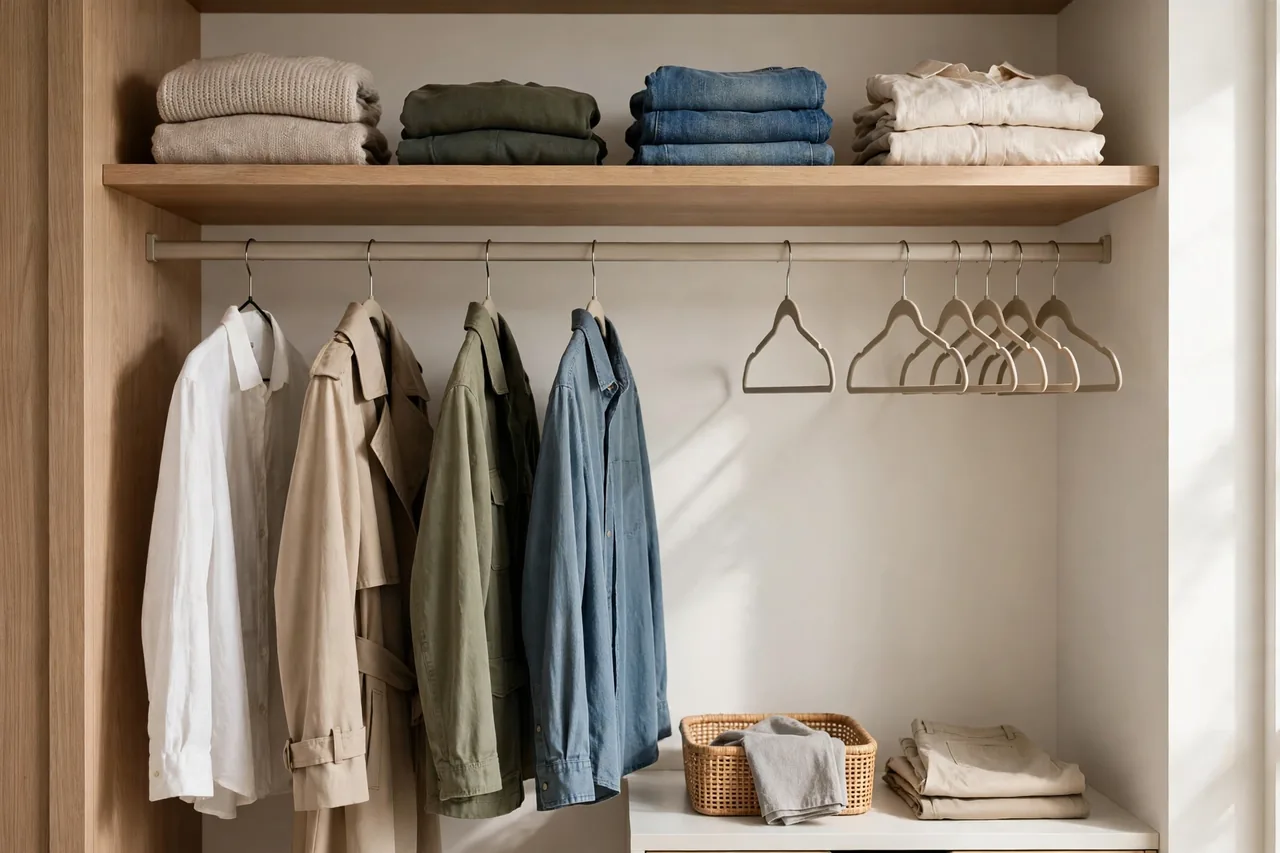
Decluttering a shared home only works when the people who live in it help decide what stays. Start with your own things, in your own spaces, and let the results do the persuading. A clear counter and an empty hallway say more than any lecture about clutter ever will.
For kids, make the job a game with a clear end. Give each child one box and a simple rule: fill it with toys you have outgrown, and we will take it together to children who will love them. Younger kids decide better with a limit than with an open question — “keep your ten favorite stuffed animals” works, while “which ones do you want to keep?” leads to tears. Our guide on how to help kids stay organized shows how to turn the one-time clear-out into a weekly habit they actually keep.
Playrooms need a home for every toy, or the floor becomes the home. Low open bins, one per type of toy, let small kids clean up by themselves — and a room a child can tidy alone stays tidy far longer than a room only adults can fix. See our playroom organization guide for bin systems that survive real kids, and set a simple rule: toys live in the playroom, and one toy comes out only when another goes back in its bin.
For partners and roommates, agree on shared spaces first and personal spaces never. The living room, kitchen, and entryway belong to everyone, so everyone gets a say — and everyone helps. Bedrooms, desks, and closets belong to their owner, and nobody else’s hands go in without permission. Shared spaces get shared decisions; personal spaces stay personal. That one rule prevents most decluttering arguments before they start.
When someone resists, shrink the ask. Do not propose clearing the garage. Propose clearing one shelf, together, for fifteen minutes, this Saturday. Small shared wins build trust, and trust is what turns one shelf into a whole room. If the whole family finishes a room together, celebrate it — cook a favorite meal in the clear kitchen or watch a movie in the clear living room. The reward teaches everyone what the work was for.
The 30-Day Declutter Challenge
A 30-day challenge turns a huge job into one small daily task. Each day takes 15 to 30 minutes, and the days build on each other — easy wins first, hard rooms in the middle, systems at the end. Our full declutter challenge guide lays out the complete 30-day plan with a printable daily list.
Here is the shape of the month:
| Days | Focus | Daily time |
|---|---|---|
| 1–5 | Easy wins: bathroom, junk drawer, entryway, one shelf, fridge | 15 minutes |
| 6–12 | Kitchen zones, pantry, and the bedroom surfaces | 30 minutes |
| 13–19 | Closets, clothes try-on session, and linen storage | 30 minutes |
| 20–25 | Living room, books, media, and sentimental items | 30 minutes |
| 26–30 | Donations out the door, systems set up, and a final walk-through | 15 minutes |
Miss a day? Skip it and keep going. The challenge works because the days are small, not because the streak is perfect. If a full month feels like too much, start with just days 1 to 5. Five finished spots change how your home feels, and that feeling pulls you forward. That fixes the symptom, though. The part that actually keeps the house clear is the system you build in the last five days, covered next.
Where It All Goes: Donate, Sell, Recycle, or Trash
A decluttered pile in the hallway is not decluttering — it is clutter in a bag. Get every bag out of the house within 48 hours, or the bags become furniture. Put the donation bags in your car the same day you fill them, and drop them off on your next trip out.
Donate clean, working items: clothes, books, toys, small appliances, and kitchenware. Check the charity’s list first — most donation centers refuse broken electronics, stained mattresses, and recalled items. Sell items worth your time: anything you could sell for $20 or more in under an hour of effort. Everything else goes to donation or recycling, not to a listing that sits unsold for months.
Recycle with care. Paper, cardboard, glass, and metal go in the bin; plastic bags, electronics, batteries, and paint never do. The EPA’s recycling guidance lists what your bin accepts and where household hazardous waste belongs. Old phones, laptops, and batteries hold materials worth recovering — and one item that voids a warranty if you toss it wrong is a lithium battery, which can catch fire in a trash truck and must go to a battery drop-off, never the bin.
Some items need special handling. Old paint, cleaning chemicals, and medicines never go in the regular trash — your town runs hazardous-waste collection days for them, and a quick search for your town’s name plus “hazardous waste day” gives you the next date. Broken electronics go to an e-waste drop-off, where the metals inside get recovered instead of buried. Mattresses are the hardest item of all: many donation centers refuse them, so check your town’s bulk pickup schedule or a mattress recycling program before you drag one to the curb.
Paper deserves its own session. Do not mix paper sorting with room sorting, or it will swallow the whole day. Book one 45-minute block for paper only: shred old bills and statements, file the few you must keep, and recycle the rest. If paper is your biggest pile, our month-by-month declutter calendar spreads the whole home across the year so paper month never collides with closet month.
How to Keep Your Home Decluttered for Good
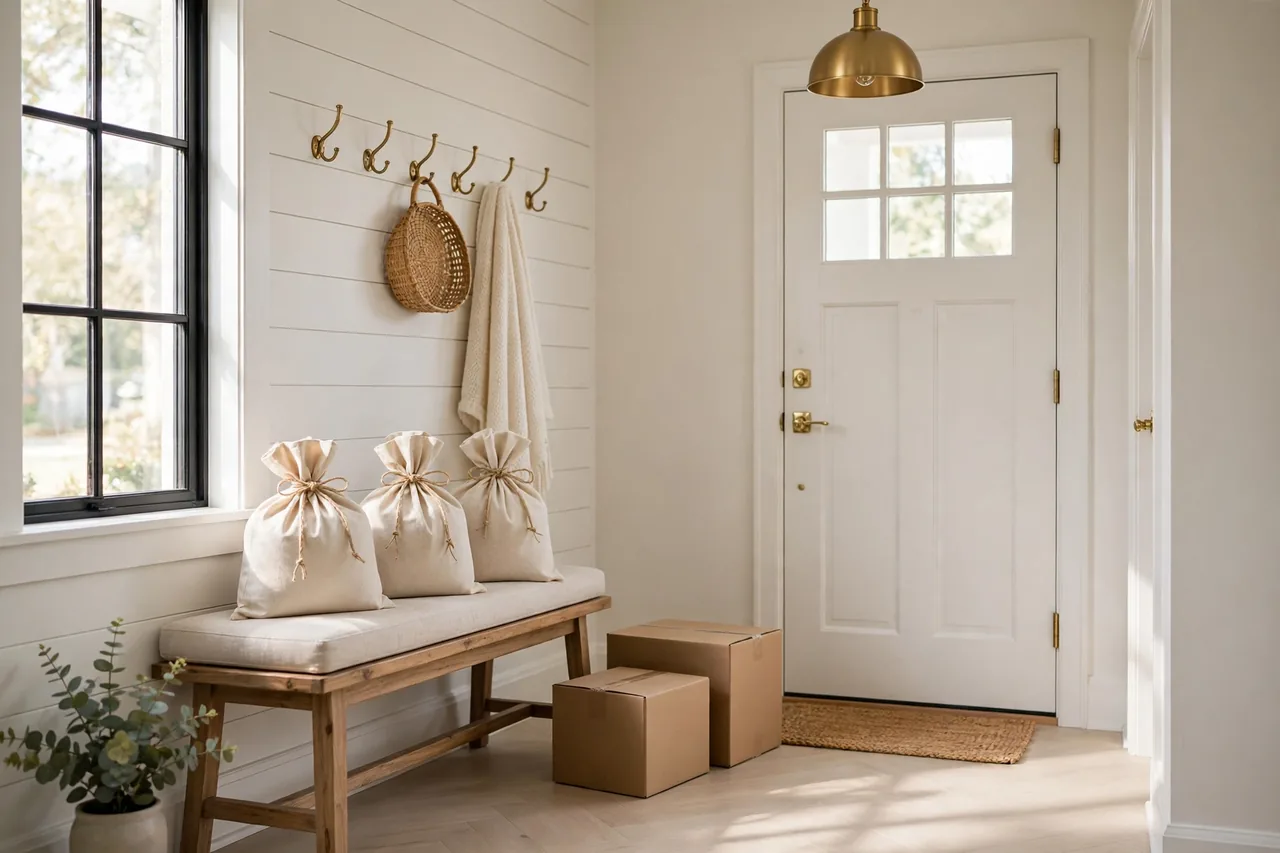
Keeping a home clear takes far less work than clearing it once. Three small habits do almost all of it. First, one in, one out: every new item that enters the house sends one old item out. A new book means an old book leaves. A new kitchen gadget means one leaves the drawer. One in, one out is the habit that stops clutter from rebuilding.
Second, a weekly 10-minute reset. Pick one evening a week, set a timer, and walk the house with a basket: return stray items to their rooms, toss expired food, and take out the donation bag if it has anything in it. Ten minutes a week beats a full weekend every six months.
Third, a monthly calendar check. Put one small decluttering job on the calendar each month — January for the pantry, April for the garage, September for the closet — and the year takes care of itself. Our month-by-month declutter calendar gives you that year at a glance, and our home organization hub ties every room system together when you are ready to organize what you kept.
Finally, watch the front door. Most clutter enters as shopping, gifts, and freebies. Before you bring something home, ask where it will live. If it has no home, it is not a bargain — it is tomorrow’s clutter. A home stays clear not because you declutter harder, but because less enters in the first place.
Related Guides
Keep going with the guides in this family: start with our decluttering checklist, try the 30-day declutter challenge, and work the year with our month-by-month declutter calendar. For the hardest spots, see how to declutter your kitchen zone by zone, declutter your clothes, organize a junk drawer, and declutter and purge the whole house. Round it out with our minimalist decluttering checklist, how to become a minimalist, how to store vintage clothing properly, and our home organization hub.
Frequently Asked Questions
How should you start decluttering your home?
Start by deciding how you want your home to work, then pick the easiest room or drawer and work in 15-minute sessions. Sort items into keep, donate, recycle, or toss, and finish one small area before you move on. Do not begin with sentimental items — save those for last.
What room should you declutter first?
Declutter the easiest room first, such as a bathroom, an entryway shelf, or a single closet. A fast win builds momentum and proves the system works. Save the kitchen, the garage, and sentimental items for later, when your decision-making is stronger.
How can you declutter without feeling overwhelmed?
Set a timer for 15 minutes and focus on one small area, such as one drawer or one shelf. Stop before you feel frustrated, then return for another short session later. Music or a podcast helps, and sorting with a friend makes decisions faster.
How should you sort clutter?
Sort clutter into clear categories so every item has a next step: keep, donate, sell, recycle, or trash. Use the same categories in every room so decisions stay consistent. Handle each item once, decide on the spot, and get donation bags out of the house within 48 hours.
Decluttering is not a weekend project you survive once — it is a small, steady habit that gives you back your rooms, your time, and your calm. Start with one drawer today. By this time next month, your whole home can feel different.