Low maintenance yard ideas cut your weekly yard work by shrinking the lawn, choosing plants that fit your site, and letting mulch and hardscape do the boring jobs for you. No-mow fescue, for example, needs mowing only once or twice a year, according to LawnStarter’s low-maintenance guide updated in October 2026.
That is the whole idea in one line: design the work out of the yard before you plant anything else. A low-maintenance yard is not an empty yard, and it is not a yard you never touch. It is a yard where the three big chores, mowing, watering, and weeding, take far less of your weekend.
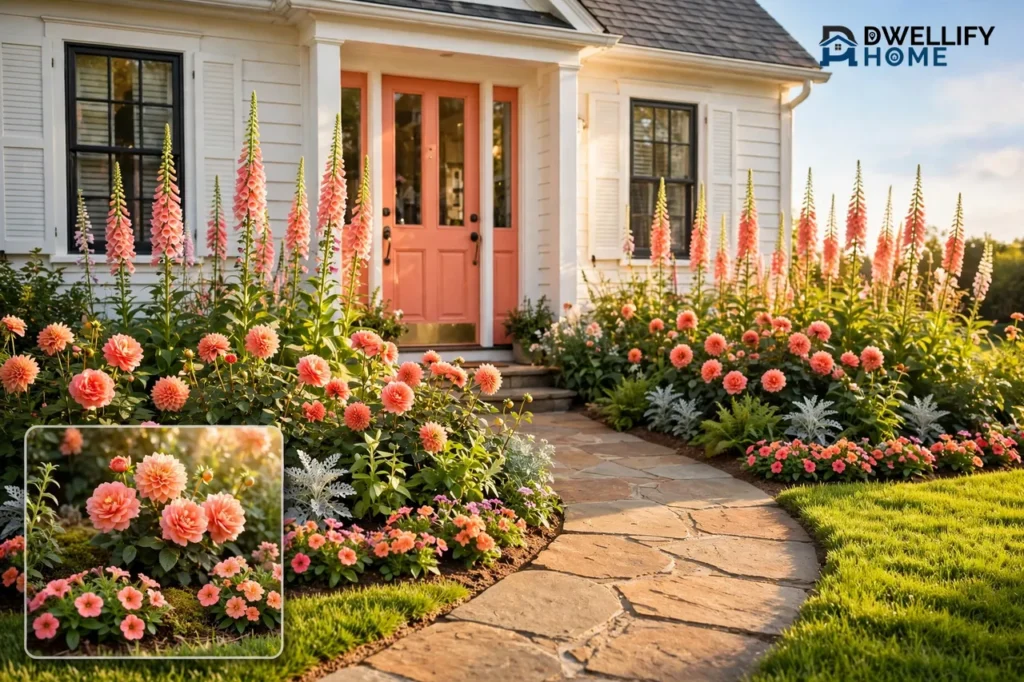
This guide covers the whole yard, front and back, from the lawn to the beds to the paths between them. If you want ideas for the front yard only, our guide to low maintenance front yard landscaping goes deeper on curb appeal. If you want the plant list first, our guide to low maintenance landscaping plants covers the easiest plants in detail. For the full front-yard plan, our front-of-house landscaping guide covers the five rules for a polished, welcoming front yard.
What Makes a Yard Low Maintenance?
A yard stays low maintenance when every part of it asks for little from you. Slow-growing plants need less pruning. Tough plants need less water. Hard surfaces need no mowing at all. The design does the work, so you do not have to.
Start by naming your three biggest chores. For most homeowners, they are mowing, watering, and weeding, in that order. Every idea in this guide attacks one of those three. If an idea does not cut mowing, watering, or weeding, it does not belong in a low-maintenance plan, no matter how pretty it looks in a photo.
One warning up front: low maintenance never means no maintenance. Even the toughest plants need about one growing season of regular water to settle in, and every yard needs a quick check now and then. You trade a little planning and setup now for years of lighter weekends.
Start With a Simple Plan: Shrink the Lawn First
The lawn is usually the biggest source of yard work. It needs mowing, watering, feeding, and weed control, week after week. So the fastest way to a low-maintenance yard is to make the lawn smaller. Keep grass only where you truly use it, and give the rest of the space a job that needs less care.
Walk your yard and mark the spots where people actually sit, play, or walk. That is your real lawn. The narrow strip along the fence, the shady corner under the big tree, and the steep slope by the driveway are not real lawns. They are mowing headaches, and each one can become a bed, a path, or a patio instead.
Draw a rough sketch before you dig anything. Mark the sunny spots, the shady spots, the wet spots, and the paths people already walk. A simple sketch keeps you from planting a sun-loving plant in deep shade or putting a patio where water pools after rain.
Keep Grass Only Where You Use It
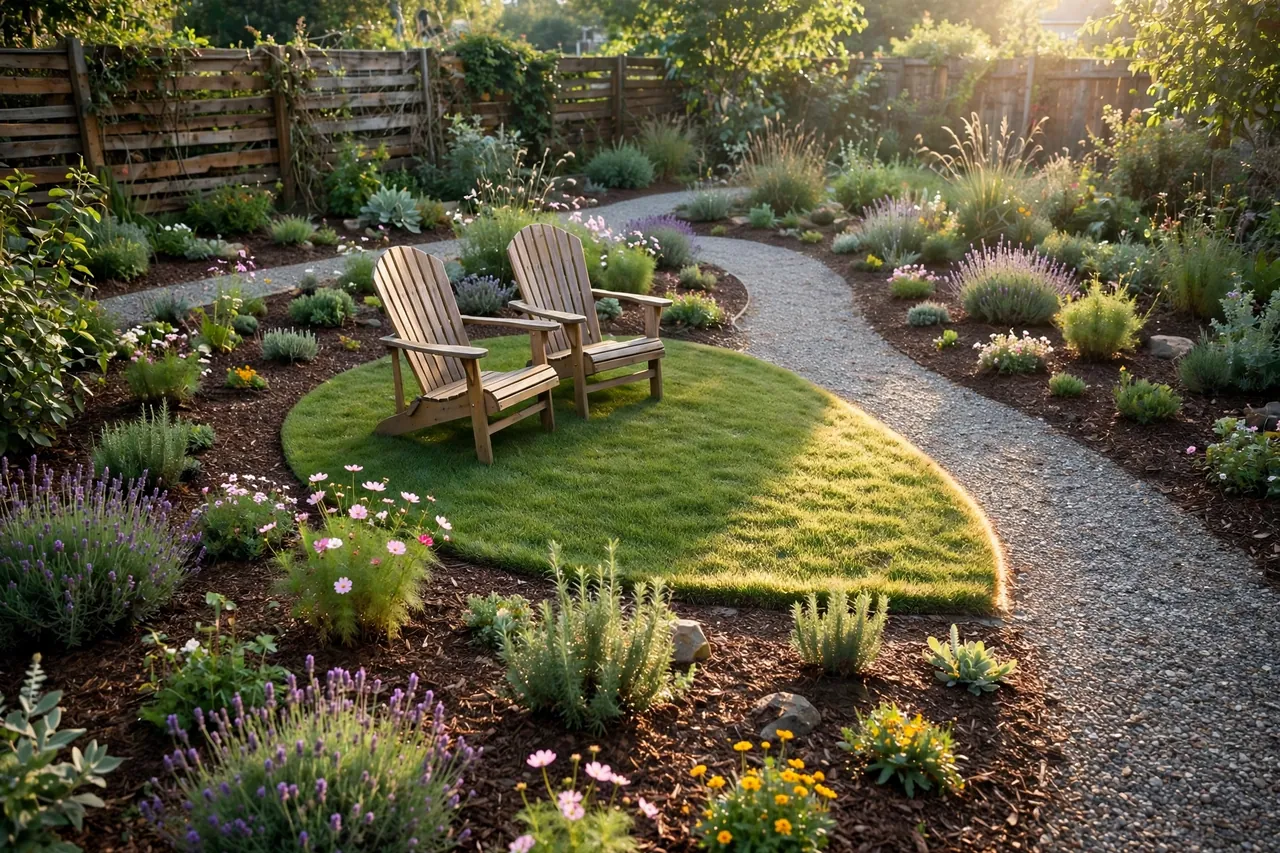
Keep turf where kids play, where you sit outside, and where you walk every day. Let the rest go. A smaller lawn still gives you green space to enjoy, and it cuts mowing, watering, and feeding in the same step. Everything scales with size, so every square foot you remove saves work all season.
Shape the lawn you keep with long, smooth curves. A mower follows a gentle curve easily. Tight corners and sharp angles force you to stop, turn, and trim by hand, and that hand trimming is the chore that eats your Saturday. Wide, sweeping bed edges also keep mulch and plants out of the mower’s path.
Try a No-Mow Lawn or Clover Mix
If you want green ground cover without the weekly mowing, look at no-mow fescue. This slow-growing grass blend forms soft clumps and needs mowing only once or twice a year, according to LawnStarter. It suits areas you look at more than you walk on, and it handles dry spells better than a thirsty traditional lawn.
Clover is another easy swap. Clover stays greener than regular grass in dry weather, feeds the soil with nitrogen, and mixes right in with turf you already have. Microclover, its smaller cousin, makes a thick, even lawn that needs less fuss. Both attract pollinators, so they suit homeowners who like bees and butterflies in the yard.
Pick Plants That Take Care of Themselves
Plants cause most of the extra work in a yard when they sit in the wrong place. A plant that fights your soil, your sun, or your rainfall will need constant help. A plant that fits your site will mostly take care of itself. So match the plant to the spot, not the spot to the plant.
Native plants are the easiest place to start. They already grow in your region, so they handle your weather, your soil, and your local pests better than plants shipped in from far away. They also feed local birds and pollinators.
Buy small and plant for the full-grown size. A shrub that grows six feet tall will need constant pruning if you plant it under a window that sits three feet off the ground. Dwarf and slow-growing varieties stay in bounds on their own. Check the tag for mature height and spread, then give the plant that much room.
Choose Natives and Drought-Tolerant Plants
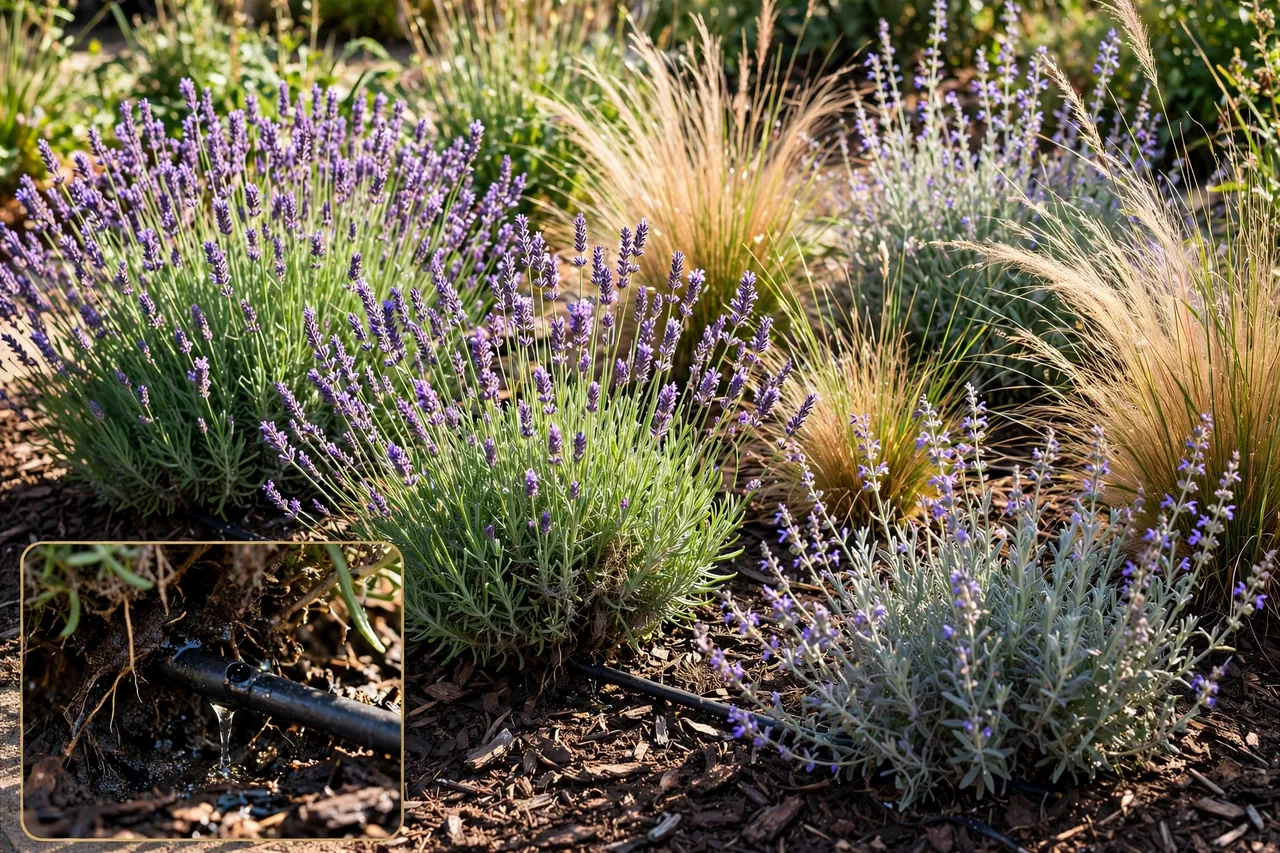
Drought-tolerant plants keep looking good even when you forget the hose for a while. Lavender, Russian sage, sedum, and ornamental grasses all handle dry spells once their roots settle in. They suit sunny, dry spots where thirsty plants would struggle and die back every summer.
Group plants by how much water they need. Put the thirsty plants together near the hose or the drip line, and put the tough, dry-loving plants together in their own zone. This grouping, called hydrozoning by landscape designers, stops you from overwatering the plants that hate wet feet just to keep one thirsty plant alive.
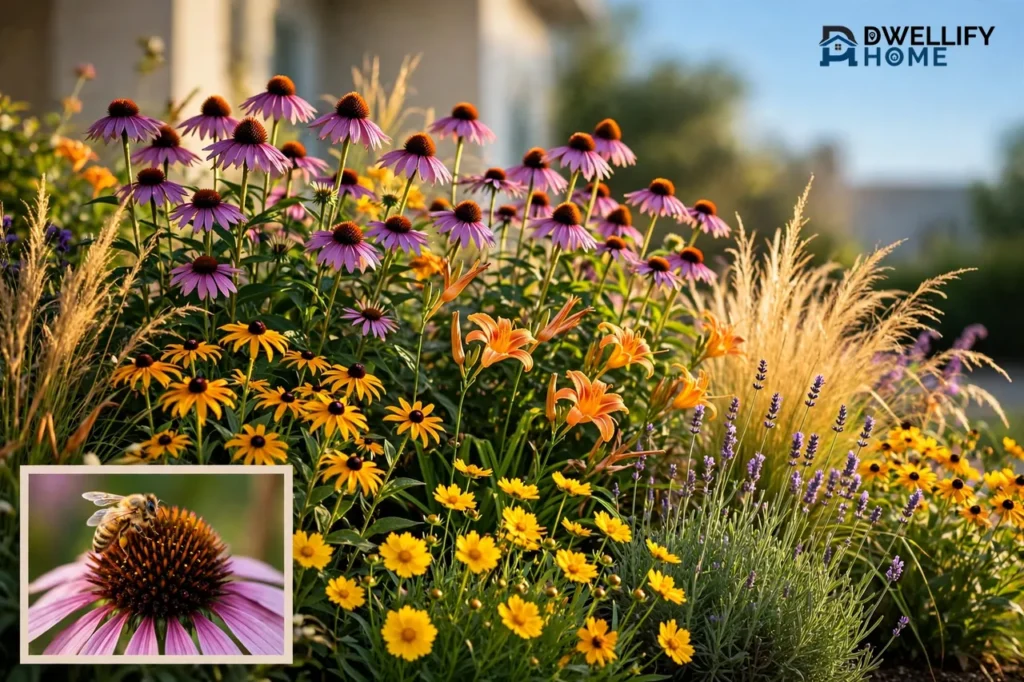
For shade, lean on hostas, ferns, and oakleaf hydrangeas. They thrive in low light and ask for little once they settle in. For full sun, black-eyed Susans, lavender, and shrub roses give bold color with almost no fuss. Our guide to low maintenance landscaping plants lists more easy choices by sun and soil, so use it to fill your beds without repeating the same three plants everywhere.
When you buy plants, start with a trusted seller. Our guide to the best places to buy plants online compares online nurseries, so you can order the right varieties without driving to three garden centers.
Plant Perennials Once and Enjoy Them for Years
Perennials come back year after year, so you plant them once and skip the spring replanting rush. Annuals look bright for one season, then you buy and plant them all over again. A yard built on perennials saves money and weekends at the same time.
Good starter perennials include coreopsis, salvia, catmint, coral bells, and coneflowers. They give color and texture through the season, attract pollinators, and need little more than a spring cleanup. Cut them back once in early spring, and they do the rest.
Repeat a small set of plants instead of buying one of everything. Three or four reliable varieties, repeated in groups through the beds, look calmer and more planned than twenty different plants scattered around. Repeating plants also makes care simpler, because you learn what each one needs.
Cover Bare Ground So Weeds Cannot Start
Weeds need bare soil, light, and water. Take away the bare soil, and most weeds never start. That is why ground cover, mulch, and hardscape matter so much in a low-maintenance yard. Every square foot you cover is a square foot you never have to weed.
Mulch Beds 2 to 3 Inches Deep
A thick layer of organic mulch is the cheapest weed control you can buy. The Old Farmer’s Almanac recommends a layer about 2 to 3 inches deep, and that depth blocks light from weed seeds while it holds moisture in the soil. Bark, shredded leaves, and pine needles all work, and they feed the soil as they break down.
Keep mulch a few inches away from tree trunks and plant stems. Mulch piled against bark holds moisture there and invites rot and pests. A small gap, shaped like a donut around the trunk, keeps the plant safe while the mulch still does its job.
Top up mulch once a year, usually in spring. Organic mulch breaks down over time, and that is a good thing, because it feeds your soil. But a thin, patchy layer stops blocking weeds, so a yearly top-up keeps the bed working. Skip landscape fabric under the mulch in most beds. It tears, it blocks water and air, and weeds root right through it anyway.
Use Ground Cover Instead of Bare Soil
Ground covers are low plants that spread and fill bare spots on their own. Pachysandra and ajuga suit shady spots, creeping thyme suits sunny paths and light foot traffic, and sedum suits dry, rocky places. Once they fill in, they shade the soil and crowd weeds out.
Pick the ground cover for the spot, not just the look. A shade lover will fry in full sun, and a sun lover will sulk in deep shade. Creeping thyme handles light foot traffic between stepping stones, while taller covers like pachysandra suit beds you never walk through.
Compare your options before you plant a large area, because some covers spread fast and some stay polite. Our guide to creeping myrtle vs periwinkle walks through two popular choices, so you can pick the one that fits your sun, soil, and patience.
Let Hardscape Do the Hard Work
Hardscape is any part of the yard that is not alive: patios, paths, walls, gravel, and stone. It never needs watering, feeding, or pruning. Every square foot of hardscape is a square foot that never grows a weed problem or asks for a mower.
Patios, Paths, and Sitting Areas
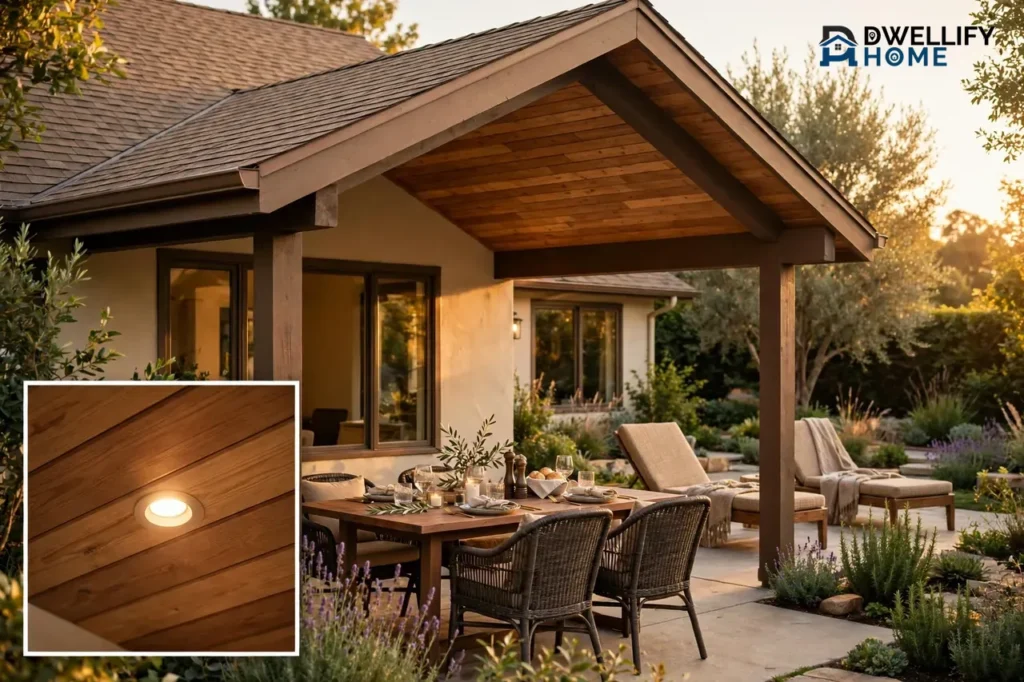
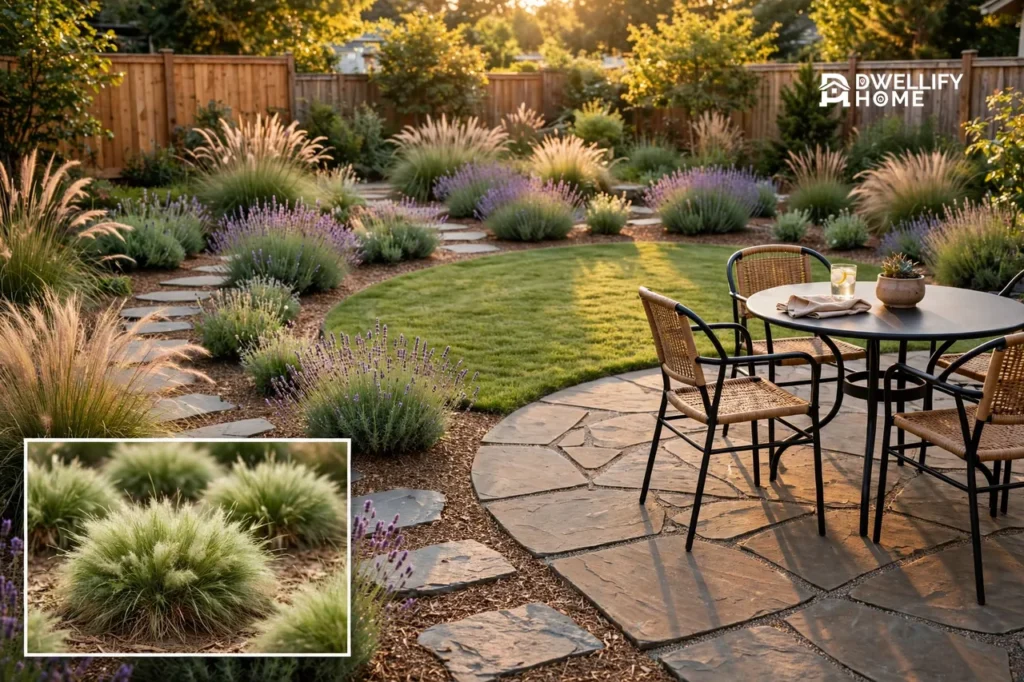
A patio turns a patch of lawn into a room you can use. Pavers, flagstone, and concrete all make durable, low-care surfaces. Sweep them now and then, rinse them after a storm, and they look good for years. A simple gravel patio costs less up front and drains rain well, though you will rake it smooth once in a while.
Paths matter more than most people think. A clear path keeps feet off the lawn and off the beds, which stops worn patches and trampled plants. Gravel paths are cheap, quick to lay, and drain rain naturally. Stepping stones set in gravel or ground cover give a finished look with almost no upkeep. Our guide to cheap DIY garden path ideas shows simple designs you can build in a weekend.
Rocks, Gravel, and Stone Borders
River rocks and gravel are the easiest ground cover of all. They need no water, no mowing, and no feeding. Use them around the foundation, where they also help water drain away from the house, and in dry spots where grass always struggles.
Stone borders and edging keep beds tidy with almost no effort. A row of stone, brick, or concrete edging stops grass from creeping into beds and stops mulch from spilling onto the lawn. Clean edges make the whole yard look cared for, even when you have done little else that week.
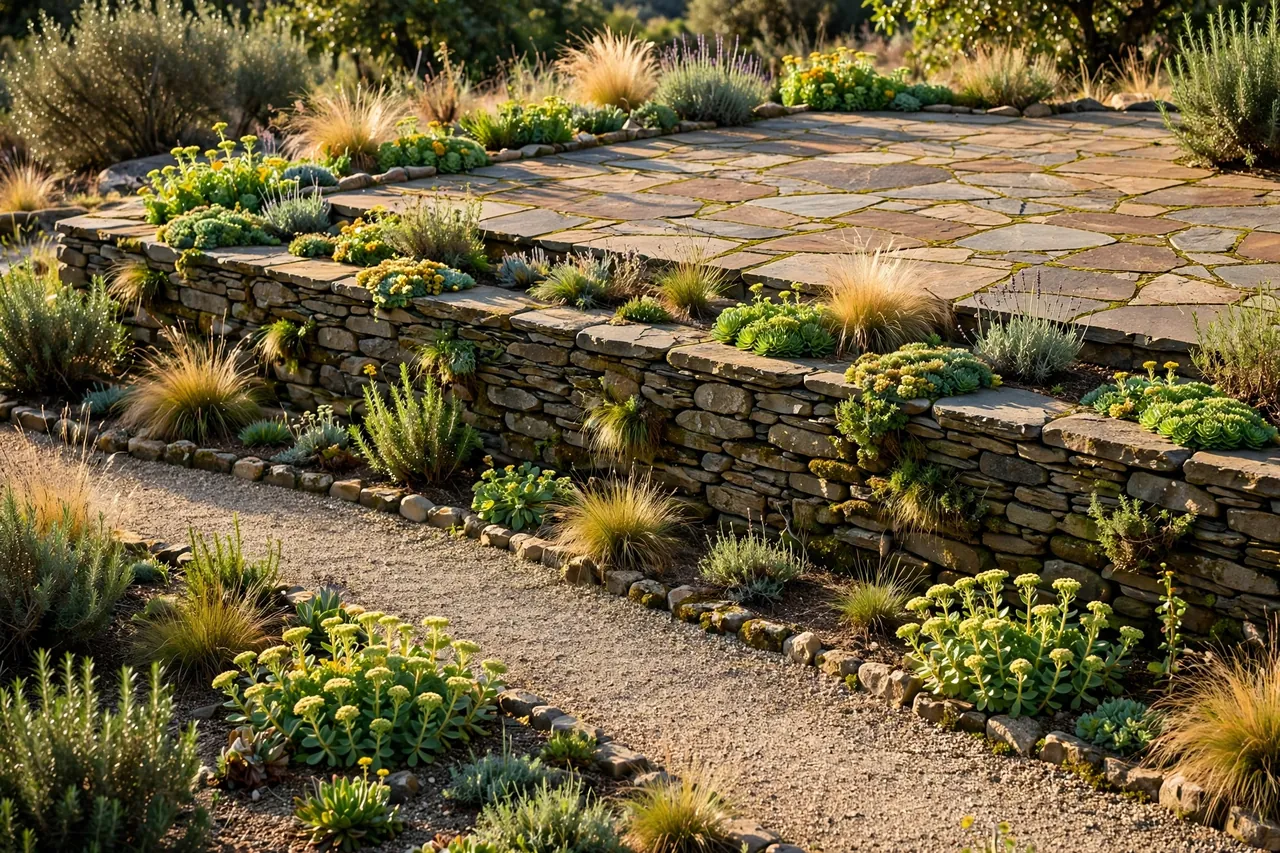
Rock gardens suit sunny, dry slopes and corners. A mix of stones, gravel, and a few tough plants like sedum and ornamental grasses gives texture and color with very little water. Keep the planting simple, though. A rock garden crowded with fussy plants is no easier than a flower bed.
Retaining Walls and Terracing for Slopes
A slope is hard to mow and hard to water, because water runs off before it soaks in. Terracing a slope with low retaining walls turns one steep bank into two or three flat, plantable levels. Each level holds water and soil better, and each one is easier to care for than the slope was.
Keep walls low and simple if you build them yourself. Short walls made from pavers or stacked stone suit most yards. Tall walls hold back serious weight and need proper footings and drainage, so leave those to a professional. Before you buy blocks, read our guide on how to build a retaining wall on a slope, because a wall built without drainage behind it will lean and fail. If your slope sends water toward the house, fix the drainage first, because no wall solves a water problem on its own. Our guide on how to fix a soggy yard explains the drainage side of the problem before you build anything on the slope.
Water Smarter, Not More Often
Watering takes time, and overwatering causes as many problems as underwatering. A low-maintenance yard waters itself as much as possible, and when you do water, you put the water right where the roots are. The EPA WaterSense program notes that outdoor watering makes up about 30 percent of household water use on average, so smarter watering saves water and money at the same time.
Water deeply and less often, not a little every day. Deep watering pushes roots down, and deep roots handle dry spells better. Water in the early morning when you can, so leaves dry before night and less water is lost to evaporation.
Group Plants by Water Needs
Put plants with the same thirst together, and water each group on its own schedule. The dry-loving group may need water only while it settles in, then almost nothing. The thirsty group gets its own zone near the hose. This is the same hydrozoning idea from the planting section, and it is the single easiest way to stop wasting water.
Check the soil before you water, not the calendar. Push a finger two inches into the soil. If it feels damp, wait. If it feels dry, water. This one habit stops more overwatering than any gadget, and it takes ten seconds.
Drip Lines and Smart Controllers
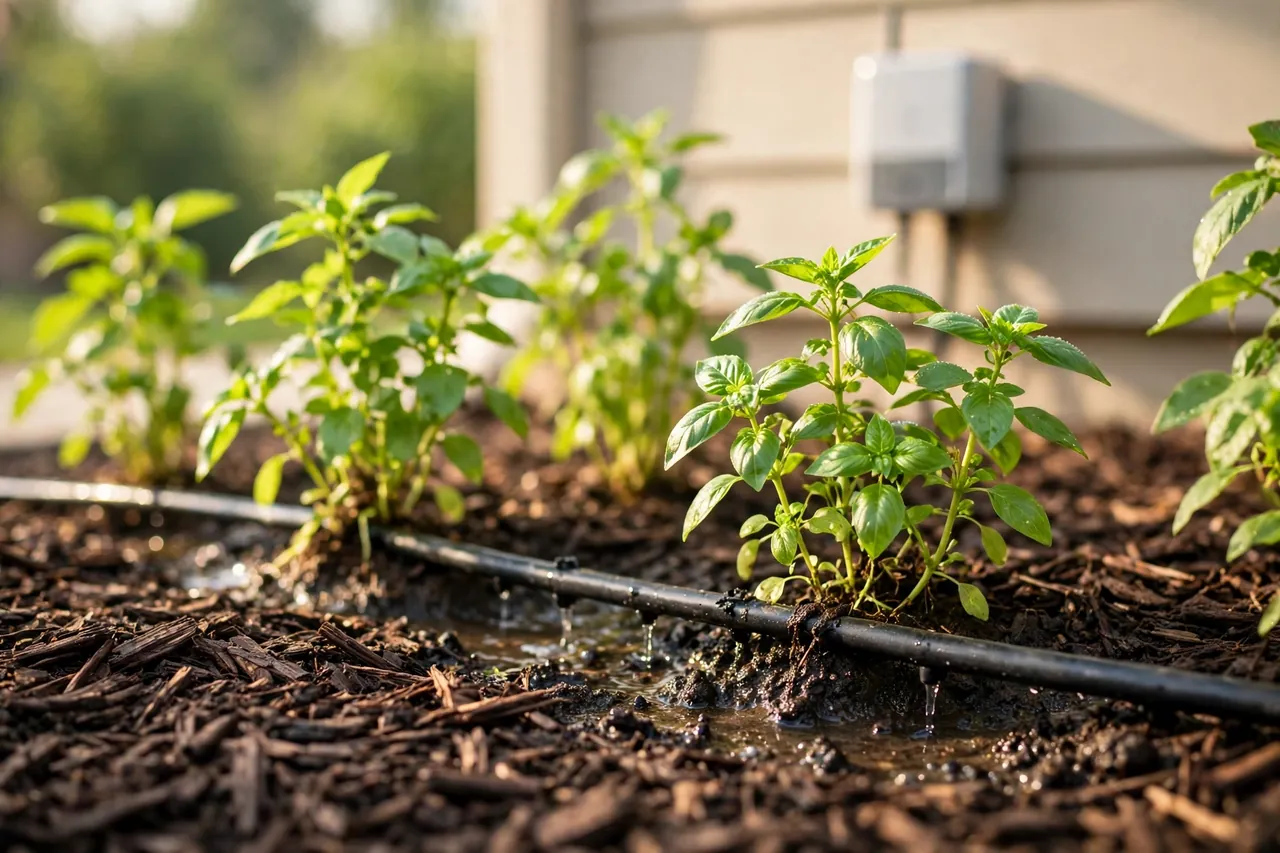
Drip irrigation puts water slowly at the root zone, where plants use it, instead of spraying it into the air. It cuts evaporation and runoff, and it keeps leaves dry, which cuts disease. A simple drip line under the mulch is one of the best upgrades in a low-maintenance yard.
Smart controllers adjust watering based on weather, soil moisture, and plant needs. They skip watering after rain and add a little extra in a heat wave, so you stop guessing. If you already have sprinklers, a weather-based controller is the lowest-effort upgrade you can make.
Rain barrels and soaker hoses suit small beds and containers. They cost little and need no power. Use them where a full drip system would be overkill, like a single herb bed or a row of containers by the door.
Design Zones So Every Part Has One Job
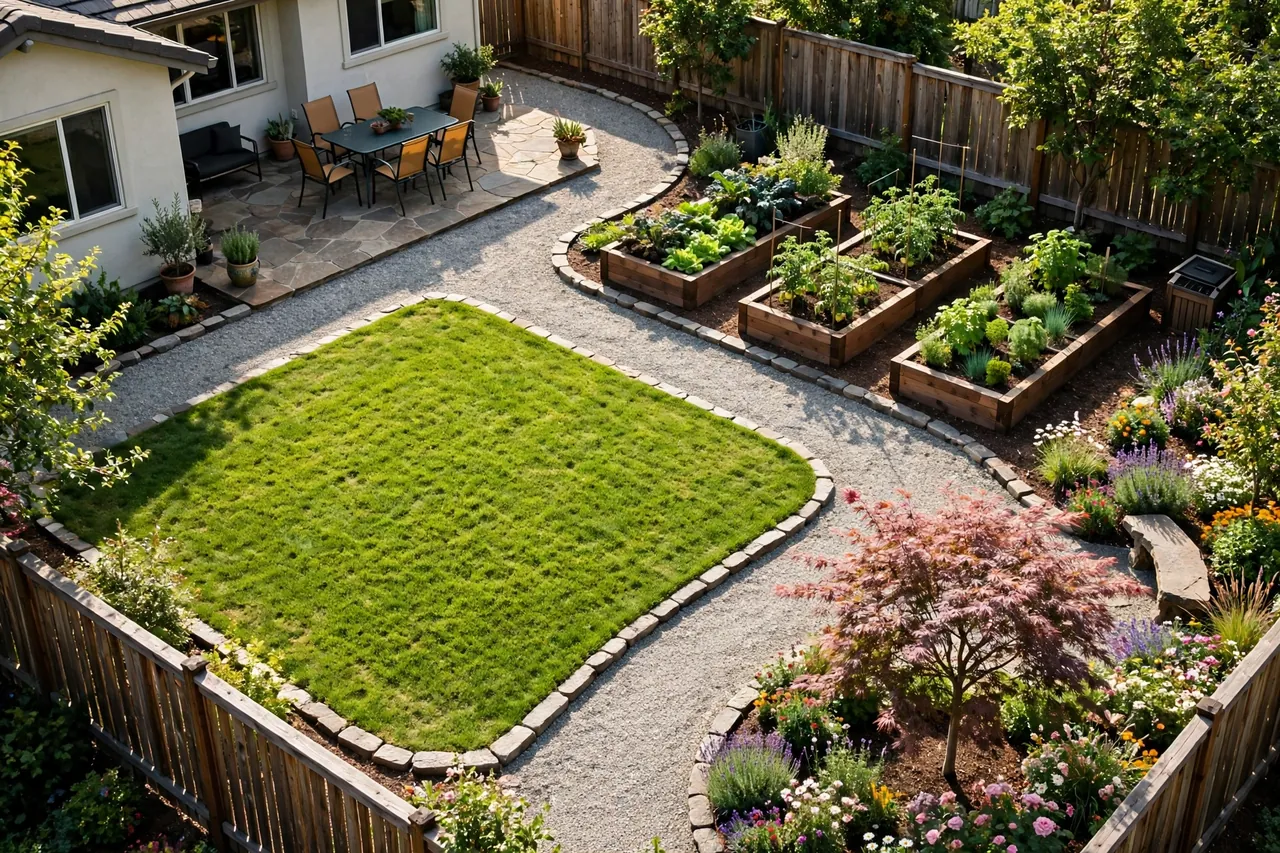
A yard feels messy when every part tries to do everything. A yard feels calm when each part has one clear job. Split your yard into zones: a place to sit, a place to play, a place to grow, and a place to look at. Then give each zone the surface and plants that fit its one job.
The sitting zone gets the patio, the chairs, and maybe a container or two. Hard surfaces suit it, because chairs sink into soft lawn. Keep this zone near the house, where you reach it easily with food, drinks, and a hose.
The play zone keeps the lawn. It needs open, flat grass with no rocks, no low branches, and no hidden holes. Keep it simple and tough, because it takes the most wear.
The growing zone holds the beds, the herbs, and the vegetables if you grow them. Put it where the sun is best and the hose reaches easily. Raised beds suit this zone, because they warm up fast, drain well, and keep the soil contained.
The look-at zone is the view from your window or your chair. Put your prettiest plants, a small tree, or a simple water bowl here. Keep it simple and let a few strong plants do the work.
Connect the zones with one path style and one edging style. Repeating the same materials ties the yard together, and it makes the whole space feel designed, even when each zone is simple on its own. For fresh design direction, our guide to modern landscape design trends shows which styles homeowners are choosing now.
Simple Touches That Stay Pretty With Little Work
A few small features make a yard feel finished without adding weekly chores. The trick is to pick features that need almost nothing from you after setup. A birdbath you rinse once a week beats a pond you clean every weekend. Pick one or two touches, not ten.
Containers and Raised Beds
Containers are the most flexible part of a low-maintenance yard. You can move them, swap the plants, and bring them inside when frost comes. Fill them with succulents, ornamental grasses, or herbs, and they need little water and almost no weeding.
Use the thriller, filler, and spiller rule for pots: one tall focal plant, a few mid plants to fill the soil, and one trailing plant that spills over the edge. This mix looks full and planned with only three plants, and it needs less care than a pot crowded with ten.
Raised beds suit herbs and vegetables because they drain well and keep the soil warm. They also save your back, since you work at waist height instead of kneeling. Fill them with a good soil mix once, mulch the top, and they need little more than watering and a yearly top-up.
Automatic Lighting
Automatic landscape lighting makes a yard look good at night with no daily effort. Timers and motion sensors switch the lights on and off for you, and solar lights need no wiring at all. Light the paths first, then one tree or feature you love, and skip the urge to light everything.
A Low-Maintenance Yard Still Needs a Little Care
Plan for a little care, and the yard will reward you. Most low-maintenance yards need one big cleanup in spring, a quick check in summer, and one tidy-up in fall. That is far less than a weekly routine, but it is not zero. The table below shows the lightest schedule that keeps a yard looking good.
Your low-maintenance year at a glance:
| Season | One Main Job | Why It Helps |
|---|---|---|
| Spring | Clean beds, cut back perennials, top up mulch | Starts the season clean and blocks weeds early |
| Summer | Deep-water new plants, pull the odd weed | Keeps young plants alive through heat |
| Fall | Clear leaves, cut back spent growth | Stops rot and pests over winter |
| Winter | Leave it alone, plan next spring | Plants rest, and so do you |
New plants need the most attention in their first growing season. Water them deeply while their roots settle in, even if they are drought-tolerant types. After that first season, they need far less from you. A plant that dies in year one costs you the price of the plant and the work of replacing it.
Watch for the early signs of trouble, and act while the fix is small. A weed pulled when it is two inches tall takes seconds. The same weed left for a month takes a tool and ten minutes.
Mistakes That Make a Yard Harder to Keep
Most high-maintenance yards got that way by accident. A few common mistakes create years of extra work, and all of them are easy to avoid once you know them.
- Planting fast growers in small spaces, then pruning them every month to keep them in bounds.
- Mixing thirsty plants and dry-loving plants in one bed, so one group always suffers.
- Leaving bare soil between plants, which invites weeds to move in.
- Building narrow beds and tight corners that a mower cannot reach, which forces hand trimming.
- Choosing a lawn bigger than you need, then resenting the mowing all summer.
Fix the biggest mistake first, and leave the rest for later. Shrink the lawn this season. Fix the planting next season. A yard improves one good decision at a time, and you do not need to rebuild everything in one weekend.
Your First Weekend: A Simple Start Plan
You do not need a full redesign to start. One weekend of focused work can cut your yard chores for the whole season. Work in this order, and stop when the weekend ends. The rest can wait.
- Walk the yard and mark the lawn you truly use. Note the spots that cause the most work.
- Edge the beds with clean, wide curves, and pull the weeds you can see.
- Spread mulch 2 to 3 inches deep over every bare bed, keeping it away from trunks and stems.
- Replace one high-care plant with a tougher one that fits the spot.
- Set up one drip line or soaker hose in the bed that dries out fastest.
- Stand back, look at the yard, and write down the next three changes for another weekend.
That is a real start, not a fantasy makeover. Each small change cuts a little work, and the changes add up. By the end of the season, the yard will ask less of you every week, and you will know exactly what to change next.
A short note before you dig: call 811 before you dig anywhere in the yard, so the utility lines get marked first. It is free, and it keeps you safe. If a project changes how water drains near your house, or if a wall will stand taller than four feet, get a professional to check the plan first. Homes, soil, and slopes vary, and a quick expert check beats an expensive fix later.
Related Guides
Low Maintenance Front Yard Landscaping · Low Maintenance Landscaping Plants · Fix a Soggy Yard: Drainage That Works · Cheap DIY Garden Path Ideas · How to Build a Retaining Wall on a Slope · Best Places to Buy Plants Online · Modern Landscape Design Trends Homeowners Love · Xeriscaping Ideas · Affordable Landscaping
Frequently Asked Questions
What is the lowest-maintenance landscaping option?
Native plants, organic mulch, and a smaller lawn are usually the lowest-maintenance mix. Native plants adapt to your climate and need less water and pruning, mulch blocks weeds and holds moisture, and less lawn means less mowing. Add hardscape like patios and paths, and the weekly work drops even further.
How can I reduce yard work quickly?
Start by shrinking the lawn, adding mulch to the beds, and swapping high-care shrubs for dwarf or slow-growing ones. Edge the beds with wide curves so the mower reaches the edge, and set up a drip line in the driest bed. These four moves cut mowing, weeding, and watering in a single weekend.
What plants require the least maintenance?
Native plants, ornamental grasses, sedum, creeping thyme, and dwarf shrubs need the least care once they settle in. They ask for little pruning and little water after their first growing season. Pick the ones that fit your sun and soil, plant them at their mature size, and group them by water needs.
Is mulch really necessary?
Yes. A thick layer of mulch controls weeds, holds moisture, steadies soil temperature, and cuts how often you water and weed. Spread it 2 to 3 inches deep, keep it off trunks and stems, and top it up once a year in spring. It is the cheapest weed control in a low-maintenance yard.
How often should I water a low-maintenance yard?
Water deeply but less often, so roots grow down and handle dry spells better. Check the soil first: if the top two inches feel damp, wait. Established native and drought-tolerant plants may need little extra water at all, except in long hot spells or their first growing season.
Start small, and start this weekend. Shrink one patch of lawn, mulch one bed, and swap one fussy plant for a tough one. Then enjoy the yard more and work in it less, which is the whole point.