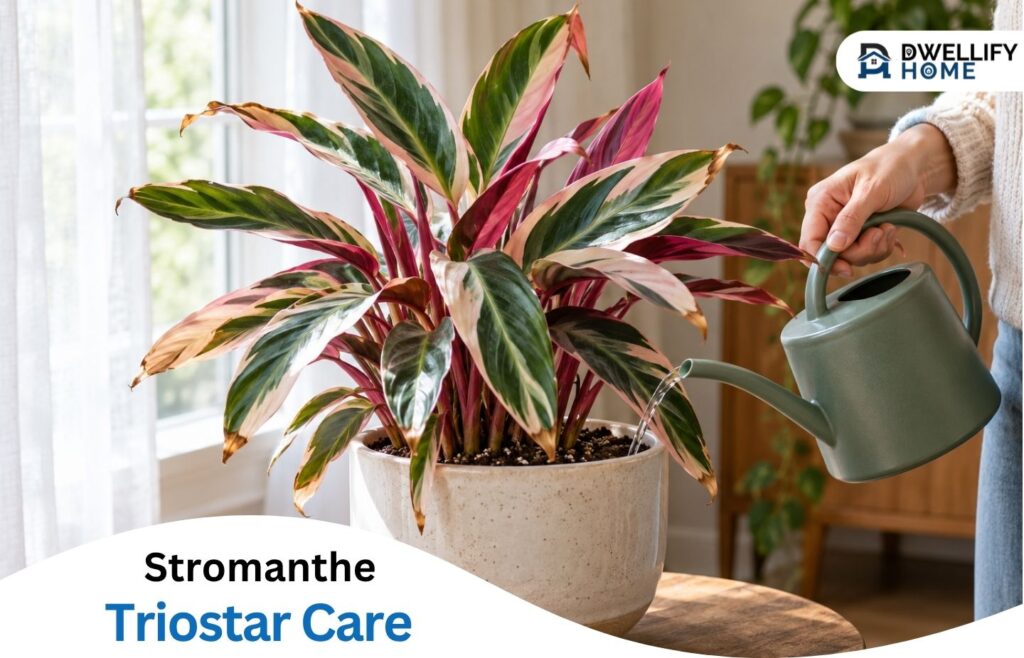
Pink-and-cream leaves can make a Triostar the focal point of a room. A few brown edges, though, can leave you wondering whether it needs more water, less sun, or extra humidity.
Stromanthe triostar care starts with bright, filtered light, a warm spot, and potting mix that stays lightly moist without remaining soggy. Check the plant’s conditions before reacting to a damaged leaf. Several problems look similar, and adding water isn’t always the right response.
A steady routine helps you learn what your plant needs, without turning every change into another treatment.
Short Definition / Direct Answer
Stromanthe Triostar is a tropical houseplant grown for green, cream, and pink leaves. It needs bright, filtered light, warmth, and lightly moist potting mix that drains well.
Practical Home Tip
A decorative outer pot can hide water beneath the nursery pot. Lift the inner pot after watering and empty any collected water. Drainage holes help, but the mix still needs checking before you water again.
Mission Statement
DwellifyHome helps homeowners and renters make informed choices for comfortable, stylish homes, with clear, practical advice that fits everyday needs and routines.
Quick care checklist
- Check moisture below the surface before watering.
- Let excess water drain and empty the saucer or outer pot.
- Keep the plant clear of strong direct sun and drafts.
- Inspect leaf undersides when damage appears.
- Check root space before choosing a larger pot.
Stromanthe Triostar at a Glance
Triostar is a colorful variety of Stromanthe thalia, often sold under the older name Stromanthe sanguinea. Common names include Triostar stromanthe and tricolor stromanthe.
You may also see “Calathea Triostar” on a label. It belongs to the same prayer-plant family, Marantaceae, but Stromanthe is a different genus. The botanical plant profile helps explain these naming differences.
Its leaves combine green, cream, and pink, with darker pink or burgundy undersides. They change position through the day and often lift at night. This movement can make the plant look quite different between morning and evening.
| Care need | Useful starting point |
| Light | Bright, filtered daylight |
| Water | Lightly moist mix with free drainage |
| Humidity | Avoid very dry air; measure conditions before adding humidity |
| Temperature | A warm, steady room away from drafts |
| Size | Often around 2–3 feet tall indoors; containers and conditions affect size |
| Propagation | Divide a healthy plant into rooted sections |
These are starting conditions, not a fixed schedule. Your pot, window, and room will shape the routine.
Find the Right Light for Colorful Leaves
Choose a spot with plenty of daylight where strong sun does not strike the leaves for long periods. A sheer curtain can soften the light from a bright window.
An east-facing window can be a useful starting location. However, window direction alone does not tell you how much light reaches the plant. Trees, nearby buildings, curtains, and distance from the glass all make a difference.
Look at the spot during different parts of the day. A shelf that seems bright in the morning may receive harsh afternoon sun, while a shaded corner may stay dim throughout.
To help maintain colorful growth, provide good light without chasing stronger sun. Variegation—the mix of colors within a leaf—naturally differs between leaves. One greener leaf does not automatically mean the plant needs moving.
Gently remove dust with a damp cloth and turn the pot occasionally for more even growth. When changing its position, make a modest adjustment and watch how it responds.
When and How to Water
Check the Potting Mix Before Watering
Check about an inch below the surface with your finger. This is a useful checking depth, not proof that the whole pot needs watering.
Aim to water as the upper layer begins drying while the mix below remains slightly moist. If it still feels wet beneath the surface, wait and check again. Avoid allowing the entire root ball to become dry and hard.
Pot weight provides another clue. Lift a manageable pot after watering and draining it, then compare its weight as it dries. A larger or deeper container needs extra care because the surface can dry while the lower mix stays wet.
When watering is needed:
- Remove the nursery pot from its decorative outer container.
- Pour water slowly across the potting mix.
- Let excess water run through the drainage holes.
- Allow the pot to finish draining, then empty the saucer or outer container.
A weekly reminder can prompt you to inspect the plant, but it should not automatically trigger watering. For a fuller explanation of the method, see how to water houseplants.
Choose Suitable Water
Use room-temperature water. Water quality is worth reviewing when brown edges keep developing despite reasonable watering and placement.
Distilled water is an option for a plant that appears sensitive to its usual supply. Avoid water treated by a salt-based softener, and remember that household filters differ in what they remove. A filter jug does not necessarily produce low-mineral water.
Also check feeding habits. Mineral deposits and excess fertilizer can contribute to problems, so changing the water alone may not address the cause.
Humidity, Temperature, and Winter Care
Triostar prefers humid conditions, but brown tips alone cannot tell you the room’s humidity. A small humidity meter, also called a hygrometer, gives you something useful to check.
Occasional misting briefly wets the leaves. It does not maintain steady humidity around them. Guidance on raising humidity for houseplants explains why misting is not an effective lasting solution.
A pebble tray may provide some local moisture, but do not assume it will correct dry room air. Keep the pot above the waterline. A humidifier offers more control when extra humidity is needed; follow its cleaning instructions.
Balance plant care with the room itself. Indoor humidity guidance recommends keeping humidity below 60%, ideally between 30% and 50%. Avoid chasing a high plant-care percentage that leaves windows or nearby surfaces damp.
A steady room around 65–80°F is a useful temperature range. Keep leaves clear of cold glass and direct blasts from heating or cooling vents.
Winter brings two separate changes: weaker daylight and, in many homes, drier air. The plant may use water more slowly because growth has slowed, while nearby heating can dry its surroundings. Continue checking the mix instead of assuming winter always means watering at a particular interval.
Soil, Pots, and Feeding
The best soil for stromanthe triostar holds some moisture while allowing excess water to drain. Choose a quality potting mix intended for indoor foliage plants rather than digging soil from the garden.
A suitable peat-free mix can work. Judge the mix by its behavior: it should absorb water evenly and remain loose enough for air to reach the roots. A dense mass that stays saturated needs attention.
Use a pot with open drainage holes. A plastic nursery pot inside a decorative cover is practical because you can lift it out to water and inspect it. Unglazed terracotta dries faster, which can mean more frequent moisture checks.
Do not add a gravel layer as a substitute for drainage holes. Give excess water a clear way out. Feed during active growth using a houseplant fertilizer according to its label. Check whether fresh potting mix already contains fertilizer before adding more.
Reduce or pause feeding when growth slows, especially in weak winter light. Extra fertilizer will not correct unsuitable light, damaged roots, or dry air. Before feeding a struggling plant, work through those conditions first.
Common Problems and What to Check
Leaf symptoms are clues, not a diagnosis. Start with moisture and drainage, then review placement, humidity, recent changes, and signs of pests.
The most useful question is what changed before the damage appeared. A new location, colder window, different watering routine, or recent feeding can help narrow the possibilities.
| What you notice | First check | Possible causes | Suitable next action |
| Leaves lift or change angle, then reposition | Compare morning and evening appearance | Normal leaf movement | Observe before changing care |
| Leaves stay curled or look limp | Feel the mix and check heat exposure | Dry roots, heat stress, or root trouble in wet soil | Water if needed; investigate drainage if the mix is wet |
| Brown tips or crispy edges | Review moisture, humidity, water, and feeding | Dry conditions, uneven watering, or excess salts | Address the supported cause rather than adding water automatically |
| Yellowing leaves with wet soil | Check the outer pot and root area | Poor drainage or root damage | Empty trapped water and inspect further if decline continues |
| Pale patches or scorched areas | Check direct sun and inspect leaf undersides | Sun damage or pest feeding | Filter harsh sun; check for pests before deciding |
| Webbing, cottony patches, or clusters of insects | Inspect both sides of leaves and stems | Spider mites, mealybugs, or aphids | Separate the plant and identify the pest |
Normal movement changes a leaf’s position. Persistent rolling, limp growth, and spreading damage deserve closer attention. Comparing photos taken at similar times of day can help you notice the difference.
Do not unpot a healthy-looking plant because of one brown tip. Root inspection becomes more useful when leaves keep yellowing or wilting while the mix remains wet.
Soft, mushy roots and ongoing decline can indicate root rot. Separate an affected plant, remove standing water, and seek help from a local extension service if the extent or cause is unclear. Severe root loss may prevent recovery.
For visible pests, keep the plant away from others. Gentle washing or wiping can help remove some pests, but inspect again afterward. Any pesticide must be labeled for the pest, indoor use, and the plant concerned. Avoid homemade dish-soap sprays, which can damage foliage.
Brown, dead tissue will not become green again. You can tidy a dry edge with clean scissors without cutting into healthy tissue. Judge progress by whether damage stops spreading and later leaves develop better.
For broader help reviewing the growing setup, use these practical checks on how to keep plants alive.
Repotting and Propagation
When to Repot
Repot when the roots genuinely need more room or the potting mix is no longer functioning well. Look for a crowded root ball, roots filling the container, or unusually rapid drying despite thorough watering.
One root at a drainage hole is a reason to inspect, not an automatic demand for a much larger pot.
For routine repotting, spring or early summer is a useful time because the plant is usually entering stronger growth. Choose a container only slightly larger than the root ball, with drainage holes.
Keep the plant at its previous planting depth and settle fresh mix gently around the roots. Water and drain it, then check moisture before watering again.
A suspected root-health problem needs prompt assessment rather than waiting for the preferred repotting season. Simply moving damaged roots into a bigger pot does not solve the underlying cause.
How to Divide a Healthy Plant
Stromanthe triostar propagation is usually done by division. This means separating a healthy clump into smaller plants, each with roots and growing shoots. A detached leaf is not a suitable substitute.
Choose an established plant with enough growth to separate without reducing it to tiny pieces.
- Prepare clean pots and fresh, suitable potting mix.
- Slide the plant from its container while supporting the root ball.
- Find natural divisions with their own roots and shoots.
- Gently separate those sections. Use a clean, sharp tool only where necessary.
- Pot each division promptly at its previous depth.
- Water, drain, and return the divisions to warm, filtered light.
Keep the mix lightly moist during recovery. Avoid strong direct sun, repeated unpotting, and adding fertilizer in an attempt to force immediate growth. Allow the new divisions time to settle.
Frequently Asked Questions
Is Stromanthe Triostar Hard to Care For?
It needs more attention than a plant that tolerates long dry spells, but a beginner can learn its routine. The main challenge is providing suitable light and moisture consistently. It is a better fit for someone willing to check the pot than someone who needs a plant they can regularly forget.
Is Stromanthe Triostar Toxic to Cats or Dogs?
Triostar is generally considered non-toxic to cats and dogs; Bloomscape’s plant-care listing identifies it as non-toxic to pets.
Still, discourage chewing. The ASPCA advises that eating plant material can cause vomiting or stomach upset, even with non-toxic plants. Contact your veterinarian if your pet becomes unwell after eating it.
Does Stromanthe Triostar Flower Indoors?
It can flower, but indoor blooms are uncommon. The plant is mainly grown for its leaves, so a lack of flowers does not mean your care is failing. Avoid pushing fertilizer or stronger sunlight simply to encourage blooms; maintaining healthy foliage is a more useful goal.
How Fast Does Stromanthe Triostar Grow?
Growth depends on light, warmth, root health, and the season. There is no reliable number of new leaves to expect each month in every home. Check the growing conditions if growth remains stalled during a normally active period, rather than assuming that more fertilizer is the answer.
Build a Care Routine You Can Maintain
Start with a suitable bright spot, a draining pot, and regular moisture checks. Watch the leaf undersides and notice how the plant changes through the day.
When a problem appears, use the surrounding clues before choosing an action. Correct clear issues, then give the plant time to respond. A routine built around observation makes it easier to enjoy the colorful foliage without constantly moving, feeding, or repotting your Triostar.
Disclaimer
This guide provides general plant-care information. Conditions and care needs vary between homes. Follow product labels and seek local extension advice for persistent plant problems. Contact a veterinarian if your pet becomes unwell after chewing a plant.