
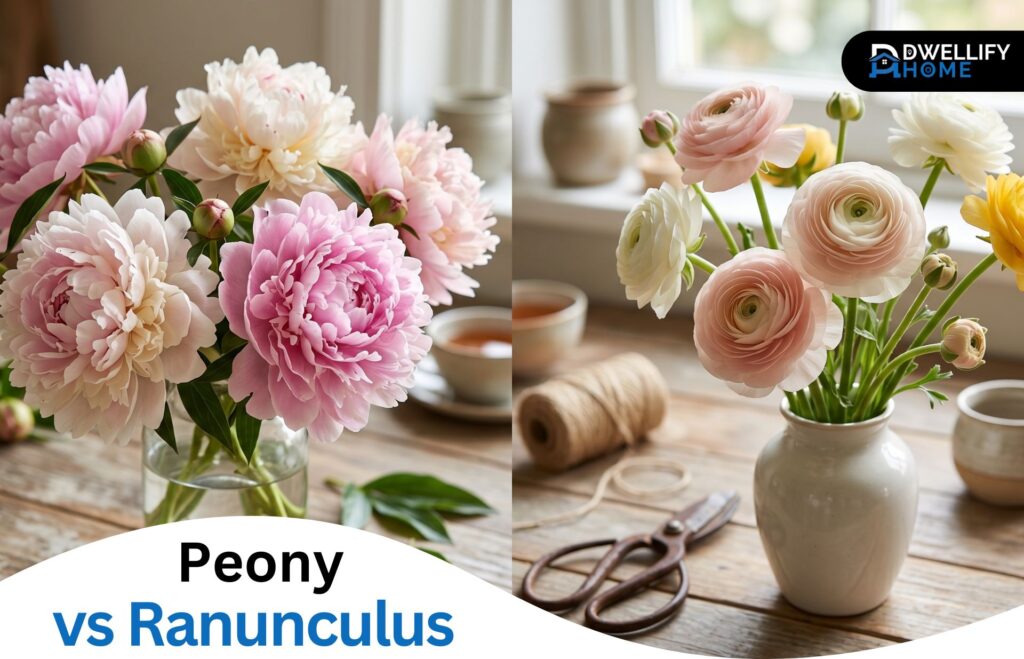
Walk into any flower market in late spring and you’ll see two blooms that get confused more than any others — peonies and ranunculus. Brides point at one and call it the other. Gift buyers pick the smaller bloom thinking they’re saving money on something that looks identical. Even gardeners ordering plants online sometimes mix up the two. The peony vs ranunculus question comes up almost every week in my work, and the honest answer is that while they share a soft, layered look, they behave very differently once you actually grow them, cut them, or carry them down an aisle.
This guide breaks down what really separates these two flowers — appearance, season, care, cost, and the small details that decide which one belongs in your bouquet, your garden, or your living room.
The Short Answer
Peony vs ranunculus is a comparison between two layered, romantic spring flowers. Peonies are larger, fragrant, and bloom in late spring, while ranunculus are smaller, scentless, and bloom earlier with a wider color range.
Mission Statement
At Dwellify Home, we help homeowners make practical, stylish, and informed décor decisions — from modern home upgrades and garden ideas to thoughtful lifestyle choices that turn a house into a place you genuinely love living in.
Peony vs Ranunculus at a Glance
Here’s the quick comparison most readers want before reading further:
| Feature | Peony | Ranunculus |
| Bloom size | 4–10 inches | 2–4 inches |
| Plant height | 22–34 inches | 12–18 inches |
| Fragrance | Strong (varies by variety) | Little to none |
| Bloom season | Late spring to early summer | Late winter to early spring |
| Vase life | 5–7 days | 7–10 days |
| Price per stem | Higher ($6–$15) | Lower ($2–$9) |
| Growth type | Long-lived perennial | Annual or perennial depending on climate |
Both flowers carry that romantic, ruffled feel people love, but the moment you look closely, the differences become obvious.
Key Points at a Glance
- Peonies offer larger blooms, strong fragrance, and a softer color palette
- Ranunculus stay smaller with tighter petals and a wider color range
- Ranunculus bloom earlier and last longer in a vase
- Peonies cost more due to short season and high demand
- Both pair beautifully in the same bouquet for added depth
What Is a Peony?
Peonies belong to the Paeoniaceae family — they’re in a category all their own. Once planted in the right spot, a single peony plant can keep blooming for 50 years or more. I’ve worked with old garden peonies that outlived the homes they were planted next to.
Three main types matter for buyers and gardeners. Herbaceous peonies die back each winter and return every spring. Tree peonies grow on woody stems and stay year-round. Itoh peonies are a hybrid that combines the best of both — strong stems and long bloom time. The blooms are large, lush, and often heavily fragrant, with a softer color range — blush, cream, coral, deep magenta, and the occasional yellow.
What Is a Ranunculus?
Ranunculus, often called Persian buttercup, comes from the Ranunculaceae family — the same family as buttercups and anemones. It originated in southwestern Asia and the eastern Mediterranean before spreading worldwide.
The variety you pick changes everything. Tecolote types are common and affordable. Cloni varieties — especially Cloni Success — produce huge, peony-like blooms and are what florists reach for when they want a high-end look. Pon Pon ranunculus have shaggy, fluffier centers, and Hanoi types lean into pastel two-tone shades. The petals are paper-thin, packed in tight layers, and come in nearly every color imaginable, including jewel tones you’ll rarely find in peonies.
Key Differences Between Peony and Ranunculus
This is where people usually need real clarity. The differences go far beyond size.
Bloom Size, Shape, and Petal Structure
A peony in full bloom can fill the palm of your hand. A ranunculus, even a large Cloni, fits inside a teacup. Peonies open into a soft, cloud-like dome with relaxed, ruffled petals. Ranunculus form a tighter, flatter rosette with sharply layered petals that look almost folded by hand. Look at the center too — peonies show feathery yellow stamens, while ranunculus have a small, dark, contained center.
Plant Height and Stem Length
Peonies grow tall — usually 22 to 34 inches, with thick stems that can hold heavy blooms. Ranunculus stay shorter, around 12 to 18 inches, with slim, slightly curved stems. This matters when you’re arranging — ranunculus often need to be grouped or supported to avoid drooping over the vase rim.
Fragrance and Scent
Peonies are one of the most fragrant cut flowers I work with. Varieties like Sarah Bernhardt and Duchess de Nemours fill an entire room. Ranunculus have almost no scent. For an indoor arrangement on a dining table, peonies bring atmosphere. For a guest with allergies or a small enclosed venue, ranunculus are the safer choice.
Color Range and Visual Style
Peonies stay mostly in the soft, romantic palette — pinks, whites, creams, corals, and occasional reds. Ranunculus goes much further. You’ll find them in brilliant orange, purple, burgundy, lemon yellow, and bicolor mixes. If you want a bold, modern arrangement, ranunculus give you more room to play.
Bloom Season and Availability
Peony season is short and famous — roughly late April through June, depending on your climate. Outside of that window, fresh peonies become scarce and expensive. Ranunculus bloom earlier, usually February through May, and certain growers extend the season much longer with cool greenhouses. South American imports also keep them on the market most of the year.
Vase Life and Cut-Flower Performance
A well-cared-for ranunculus stem holds for 7 to 10 days, sometimes longer. Peonies are more fleeting — about 5 to 7 days once they open from the bud stage. The trick with peonies is buying them tight, almost like marshmallows, and letting them open at home. Ranunculus arrive looking ready and stay that way.
Price and Cost Per Stem
Peonies cost more, often two to three times the price of ranunculus. A bridal-grade peony stem at wholesale typically runs $6 to $15. Ranunculus average $2 to $9 depending on variety and season. Cloni ranunculus cost as much as standard peonies because of their size and quality.
Symbolism and Meaning
Peonies carry meanings of prosperity, romance, and good fortune — which is why they show up in so many wedding traditions, especially in East Asian cultures. Ranunculus symbolize charm, attractiveness, and radiance. Both work for romantic occasions, but peonies tend to feel more formal and lasting in their meaning.
Where Peony and Ranunculus Are Similar
For all their differences, these flowers share enough to explain the confusion. Both have layered, romantic petals. Both bloom in spring. Both prefer well-drained soil. Both are wedding favorites that pair beautifully in the same arrangement. And both come in soft pinks and creams that look almost identical from across the room.
Growing Peonies vs Ranunculus at Home
Growing both teaches you quickly that one is forgiving and the other has a learning curve.
Climate and Hardiness Zones
Peonies need cold winters to bloom well and thrive in USDA zones 3 through 8. They actually struggle in warm climates because they need that winter chill to set buds. Ranunculus are the opposite — they hate hard freezes and grow best in zones 8 through 10, or as cool-season annuals further north.
Soil, Sunlight, and Watering Needs
Both want well-drained soil and full sun. Peonies prefer consistent moisture but hate sitting in wet ground. Ranunculus need to dry out slightly between waterings — overwatering rots the corms faster than anything else.
Planting Bare Roots vs Corms
Peonies come as bare roots that look like ugly sweet potatoes with small pink “eyes.” Plant them shallow — the eyes should sit no more than two inches below the soil surface, or they won’t bloom. Ranunculus come as small corms that look like tiny dried octopuses. Soak them in cool water for three to four hours before planting, then tuck them about two inches deep with the legs pointing down.
Annual or Perennial Behavior
Peonies are firmly perennial — plant them once and they stay for decades. Ranunculus are technically perennial in mild climates but treated as annuals almost everywhere else. In zone 6 and below, most growers replant corms each year.
Common Pests and Diseases
Peonies are mostly trouble-free but vulnerable to fungal issues like botrytis, especially in wet springs. Spraying organically with copper or neem early in the season helps. Ranunculus deal with aphids, slugs, and corm rot. Both attract ants — on peonies, the ants harm nothing and leave once the bud opens.
Best Uses for Peony and Ranunculus
Each flower has scenarios where it clearly outperforms the other.
Weddings and Bridal Bouquets
Peonies dominate as focal blooms. Three to five large peonies can carry an entire bridal bouquet. Ranunculus work better as supporting blooms, filling space and adding texture. For couples on a tighter budget, a ranunculus-led bouquet can imitate that lush peony look at a fraction of the cost.
Home Arrangements and Gifting
Ranunculus are easier to gift. They last longer in a vase, ship well, and arrive looking polished. Peonies make a stronger impression, but they’re more dramatic — open today, dropping petals by the weekend.
Garden Display and Landscaping
Peonies are landscape investments. Once established, they bloom every spring with no work. Ranunculus are seasonal showpieces, perfect for cutting gardens or pots that get refreshed each year.
Formal Events and Corporate Settings
For polished, monochrome arrangements — all-white lobby pieces, refined gala centerpieces — both work, but ranunculus give cleaner lines because of their tighter bloom shape. Peonies feel more abundant and garden-style.
Pairing Peonies and Ranunculus in One Bouquet
Putting them together is where the real magic happens. Peonies bring volume and softness; ranunculus add detail and texture between the larger blooms. A common ratio for a bridal bouquet is three peonies, eight to ten ranunculus, plus secondary flowers like sweet peas, garden roses, or astilbe. Stick to one tight color story — blush and cream, or peach and coral — and the bouquet photographs beautifully without looking busy.
Drying and Preserving: Which Holds Up Better?
Peonies dry remarkably well. Hang them upside down in a dark, dry space for two to three weeks and they hold their shape with only slight color shift. Ranunculus are far more delicate when dried — petals shrivel and the bloom collapses. For preservation, peonies are the better choice. For pressed flowers, ranunculus actually work nicely because their thin petals press flat without bulk.
Safety Notes for Homes With Pets or Children
Both flowers are mildly toxic if eaten, but ranunculus deserve more caution. Their sap contains protoanemonin, which can irritate skin and cause mouth burning if chewed. Curious pets and toddlers should not have direct access. Peonies are less reactive but still cause stomach upset if ingested. Keep arrangements on higher surfaces, and always wash hands after trimming ranunculus stems.
Peony vs Ranunculus vs Lookalike Flowers
Confusion doesn’t stop with these two — several other blooms look similar enough to mix up.
Ranunculus vs Garden Rose
Garden roses and ranunculus often get swapped in photos. Garden roses are larger, more fragrant, and have a fuller, more spherical shape. Ranunculus stay smaller and flatter, with sharper petal definition.
Peonies vs Carnations
Carnations have a similar ruffled look but are much smaller and have a distinct, slightly spicy fragrance. They’re also far cheaper and more readily available year-round, which makes them a popular budget alternative to peonies in casual arrangements.
Other Flowers Often Mistaken for Peonies
Anemones, double tulips, and camellias all get called peony lookalikes. Anemones are flatter with bold dark centers. Double tulips share the layered petal look but have the smooth, waxy feel of regular tulips. Camellias have glossy, evergreen foliage and a more symmetrical bloom shape that gives them away on closer inspection.
Common Mistakes When Buying or Arranging These Flowers
A few patterns come up over and over:
- Buying peonies fully open. A peony at the florist already in full bloom has maybe two or three days left. Buy them tight and closed — the marshmallow stage — and let them open at home.
- Underestimating ranunculus stem fragility. The thin stems bend under the weight of the bloom. Wire them or group them tightly so they support each other.
- Mixing bloom stages without planning. Putting fully open peonies next to closed ranunculus creates an uneven look that ages badly.
- Overcrowding the vase. Both flowers need air. Pack them too tight and the inner stems rot first.
- Ignoring stem grade when ordering wholesale. Peony grades A, B, and C make a real difference. Bridal work needs grade A. Centerpieces can use B comfortably.
How to Choose Between Peony and Ranunculus
Here’s the decision framework I give clients:
Choose peonies when: you want fragrance, you have a late-spring date, the budget allows premium flowers, and the look you want is full, lush, and traditionally romantic. They also win for long-term garden investment.
Choose ranunculus when: your event falls in late winter or early spring, you want a wider color range, you’re working with a tighter budget, scent is a concern, or you need flowers that hold up longer in a vase. They’re also the better choice for compact, modern arrangements.
Choose both when: you want the best of each. The combination delivers the lush peony presence with ranunculus filling in detail and texture — and it costs less than going all-peony.
Frequently Asked Questions
What is the main difference between a peony and a ranunculus?
Size, fragrance, and bloom timing. Peonies are larger, fragrant, and bloom in late spring. Ranunculus are smaller, virtually scentless, and bloom in early spring.
Are ranunculus cheaper than peonies?
Yes, in most cases. Standard ranunculus run about half the price of peonies. Premium Cloni ranunculus, however, can match peony pricing.
Do ranunculus look like mini peonies?
They share the layered, ruffled appearance, but the petal structure and bloom shape are different. Ranunculus look tighter, flatter, and more origami-like.
Which lasts longer in a vase — peony or ranunculus?
Ranunculus last longer — typically 7 to 10 days versus 5 to 7 for peonies.
Can you grow peonies and ranunculus together?
Not really, in the same bed. Peonies want cold winters; ranunculus prefer mild ones. They rarely thrive in the same climate at the same time.
Is ranunculus a good substitute for peony?
Yes, especially the Cloni varieties. They give a similar lush feel when peonies are out of season or out of budget.
Which is easier to grow at home?
Peonies, once established. They need almost no care. Ranunculus involve more effort — soaking, replanting, and protecting from cold snaps.
Are peonies or ranunculus better for weddings?
It depends on your date and budget. Late spring weddings lean toward peonies. Early spring or budget-conscious weddings lean toward ranunculus, often with peonies as accent blooms.
Final Thoughts
The peony vs ranunculus choice usually comes down to season, budget, and the feel you want. Peonies bring drama, fragrance, and that classic romantic weight. Ranunculus bring detail, color variety, and reliability. Neither one is better — they’re built for different moments. Once you understand how each behaves in real life, the decision stops feeling like a comparison and starts feeling like picking the right tool for the right job.
Disclaimer
This article is intended for general informational purposes only. Flower availability, pricing, vase life, and growing results may vary depending on region, season, supplier, and individual care practices. Readers are encouraged to consult a local florist or gardener for advice tailored to their specific needs.