A camera blind spot is any area your security camera cannot see, because it falls outside the lens view or sits behind an object, a corner, or a glare patch. The most common blind spots are directly below a high-mounted camera, around sharp corners, behind pillars and trees, and in the gap between two cameras whose views do not overlap.
Blind spots matter because a camera system is only as strong as its weakest gap. A person who walks through a blind spot never appears on video, so the camera gives you a false sense of safety. This guide shows you how to find every blind spot in your setup, why each one forms, and how to fix it with placement, overlap, and the right camera type.
What Causes Camera Blind Spots?
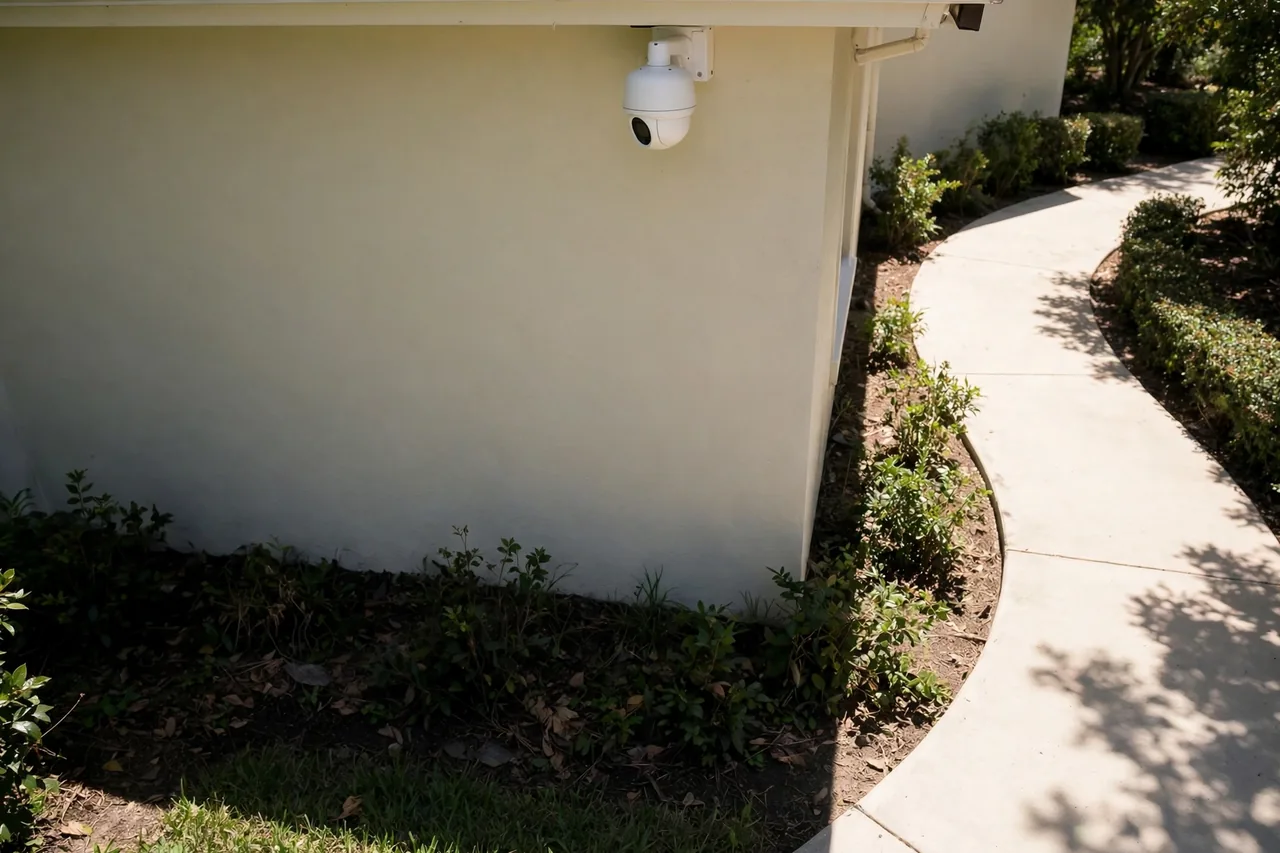
Five things create blind spots, and only one of them is the camera itself. The first is the wrong lens: a narrow lens sees far but misses the sides, while a wide lens sees the sides but loses detail at distance. The second is poor mounting: a camera mounted too high looks down steeply and misses the ground right below it, while a camera mounted too low gets blocked by furniture and people.
The third is physical blockage. Pillars, fences, trees, parked cars, and tall shelves all cast a shadow in the camera’s view, and that shadow grows wider the farther it sits from the lens. The CCTV Planner blind-spot guide shows that a 400 mm square pillar 5 meters from a camera can hide an area over 2 meters wide at 15 meters away. The fourth is a gap between cameras: two cameras that do not overlap leave a strip nobody watches. The fifth is light: glare and backlight can turn a covered area into a useless white or black patch, which works like a blind spot even though the area sits inside the frame.
Most blind spots come from placement, not from buying the wrong camera. That is good news, because placement is free to fix.
The 7 Most Common Blind Spots (and Where They Hide)
Walk your property with this list in hand. Most homes have at least three of these, and most owners have never noticed them.
1. Directly Below the Camera
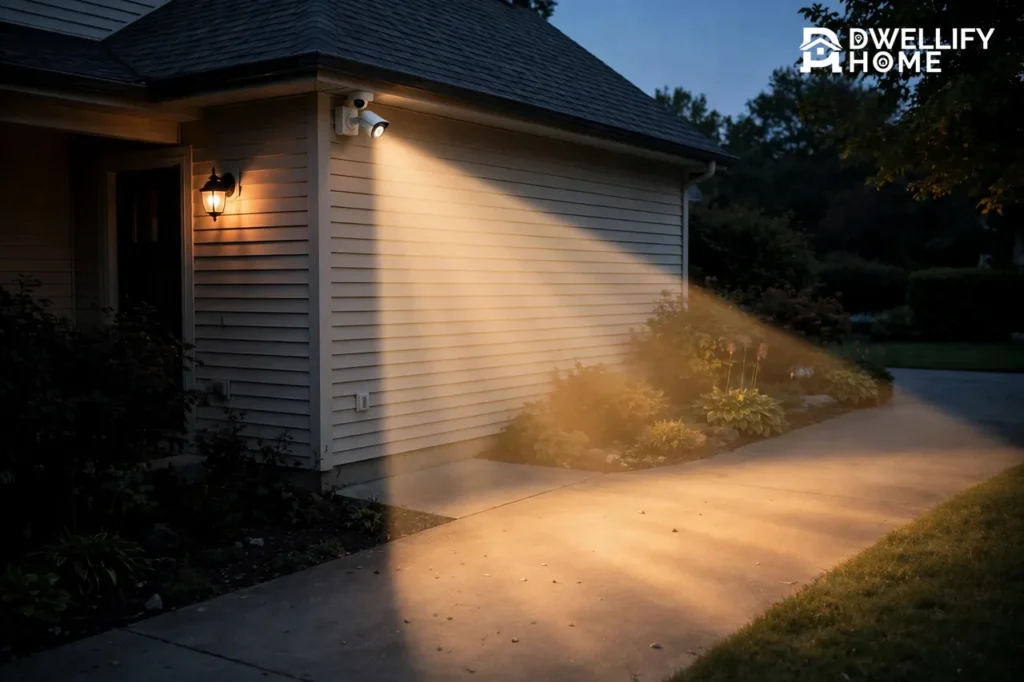
Every fixed camera has a blind cone straight below it. A dome or turret camera that tilts at most 75 to 80 degrees from horizontal leaves a 15 to 20 degree cone with no coverage at all. On a camera mounted 3 meters high, that cone makes a blind circle about 0.8 to 1 meter wide on the ground. A person who stands flat against the wall under your camera can be invisible. Tilt the camera out a little, or add a second camera that watches the wall below the first one.
2. Around Sharp Corners
A camera on the middle of a wall cannot see around the corner on its own side. Corners are where side passages meet the front of a house, and they are a favorite approach because the street cannot see them. Put a camera on the corner itself, or pair two cameras so each one watches the other’s blind corner.
3. Behind Pillars, Fences, and Trees
Anything between the lens and the ground hides the ground behind it. A tree that looks small from the camera can hide a whole person at the far fence. Trim branches that cross the view, and move the camera so its line of sight runs past the obstacle instead of through it.
4. Between Two Cameras
Two cameras that almost meet leave a gap in the middle. That gap is worst at the far end of a yard, where both views are narrow. Overlap the views by a few feet on purpose, so a person walking from one camera to the next never leaves the frame.
5. Recessed Doorways and Alcoves
A door set back from the wall plane hides anyone standing in the recess. The camera sees the wall, not the person in the doorway. Aim a camera down the recess, or mount a small camera or doorbell camera that faces out from the recess itself. A front porch camera placed well solves this for the main entrance.
6. The Far End of a Driveway
A camera at the house sees the near end of a driveway clearly and the far end as a small strip. Plates and faces at the street end need a closer camera or a longer lens. Our driveway security camera guide shows how to catch faces and plates at the far end.
7. Glare and Backlight Patches
A camera aimed at a window, a streetlight, or the low sun turns the bright patch into a white hole. People who walk through that patch vanish. Keep bright lights behind the camera, not in front of it, and never aim a camera due east or west into the sunrise or sunset.
How to Find Your Blind Spots in 20 Minutes
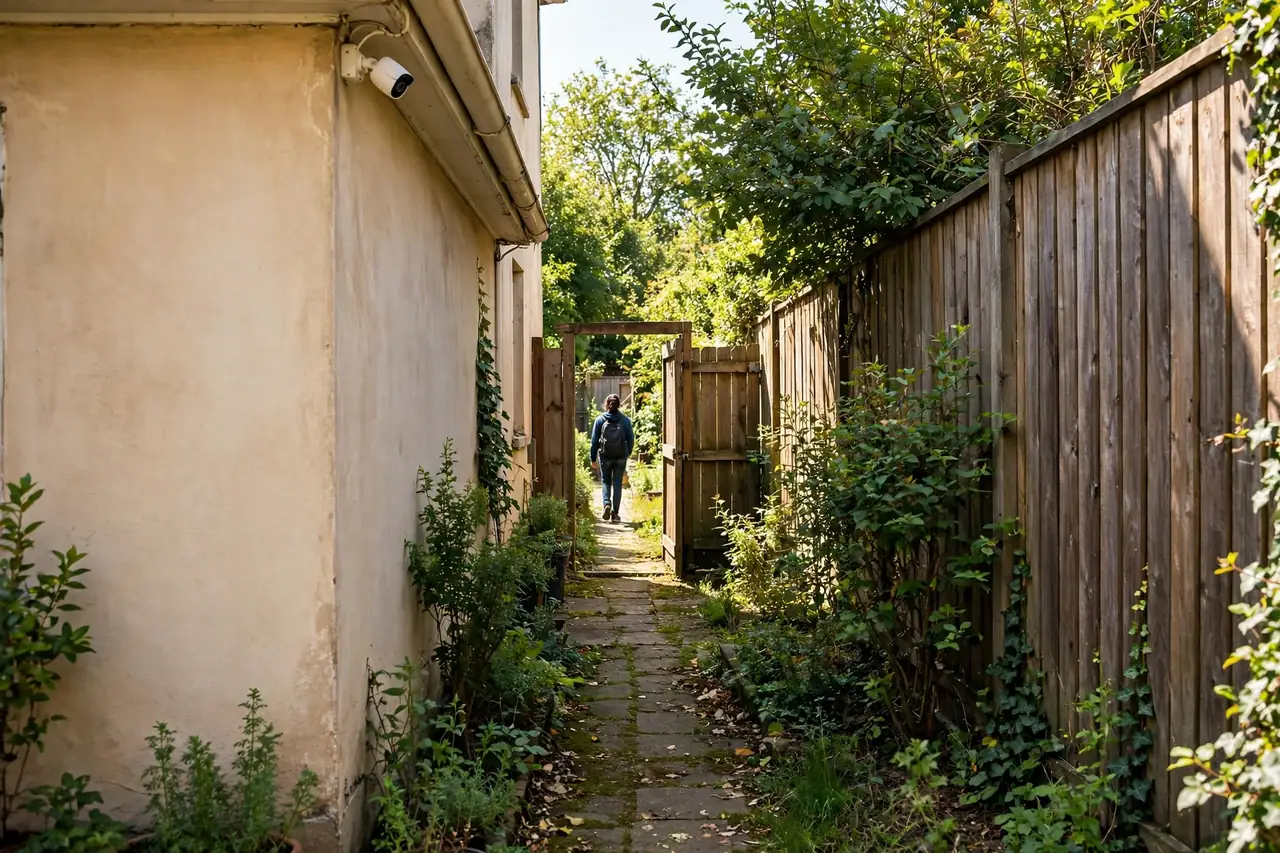
You can find every blind spot with a walk-through test, and it takes about 20 minutes. You need one helper and your phone.
- Open your camera app and check the field of view for each camera in the maker’s spec sheet. Note the horizontal angle, usually 90 to 140 degrees for a fixed camera and 180 degrees for a panoramic camera.
- Ask your helper to walk slowly toward the house from the street, then along each side passage, then across the back yard. Watch the live feed as they walk.
- Ask your helper to stop anywhere they vanish from every camera. Mark each spot on a sketch of your property.
- Ask your helper to stand flat against the wall under each camera, then in each doorway recess, then behind each tree and pillar. Note every place they disappear.
- Repeat the walk at dusk, when glare and shadows change the picture. A spot that is fine at noon can turn into a glare patch at sunset.
Reolink’s own blind-spot guide recommends the same walk-through test, with a helper acting as a visitor or intruder and approaching from every entrance and window while you watch the feed. See Reolink’s guide to finding and avoiding security camera blind spots for the full method.
Draw the result as a simple coverage map. Sketch the house, mark each camera, and draw a wedge for each camera’s view. The white gaps between the wedges are your blind spots. This sketch is the same idea as an outdoor security camera placement diagram, which our placement guide in this cluster shows how to build from scratch.
How to Fix Blind Spots: 6 Methods That Work
Fix the worst blind spots first: the ones at doors and ground-floor windows. A blind spot in the middle of an empty lawn matters far less than one at your back door.
1. Overlap Your Cameras on Purpose
Overlap is the single best fix. Place each camera so its view overlaps the next camera’s view by a few feet. Then a person who leaves one frame is already in the next one. Our best home security camera system guide shows how a full system uses overlap to cover a property.
2. Mount at 7 to 10 Feet, Tilted 10 to 30 Degrees
For most homes, 7 to 10 feet high is the sweet spot. Lower than 7 feet, and the camera is easy to reach and tamper with. Higher than 10 feet, and faces shrink while the blind cone below the camera grows. Tilt the camera down 10 to 30 degrees from horizontal: a 15-degree tilt is a good start for a front door, while a steeper tilt suits a camera that watches a small yard.
3. Use a Wider Lens or a Panoramic Camera
A wide-angle camera sees more from one mount. A 180-degree panoramic camera, like the Reolink Argus 4 Pro, can watch a whole driveway from one spot. Read our wide angle security camera guide to see how much one wide camera really covers, and where it still leaves gaps.
4. Add a Pan-and-Tilt Camera for Big Areas
A pan-and-tilt camera turns to follow movement, so one mount can sweep a whole yard. It is the best fix for a large back yard or a long side passage. The catch is that it looks one way at a time, so pair it with a fixed camera that watches the spot it turns away from.
5. Move the Camera, Not the House
A camera moved two feet to the side can see past a pillar that blocked it before. A camera moved from the middle of a wall to the corner can see down both sides. Before you buy a new camera, try moving the one you have. Test the new spot with your phone held where the lens will go.
6. Trim, Aim, and Clean
Trim branches that cross the view. Aim light panels at your own ground, not at the lens. Clean the lens, because a dirty lens at night turns every light into a starburst that hides the scene. These three free fixes remove more blind spots than most people expect.
Blind Spots by Camera Type
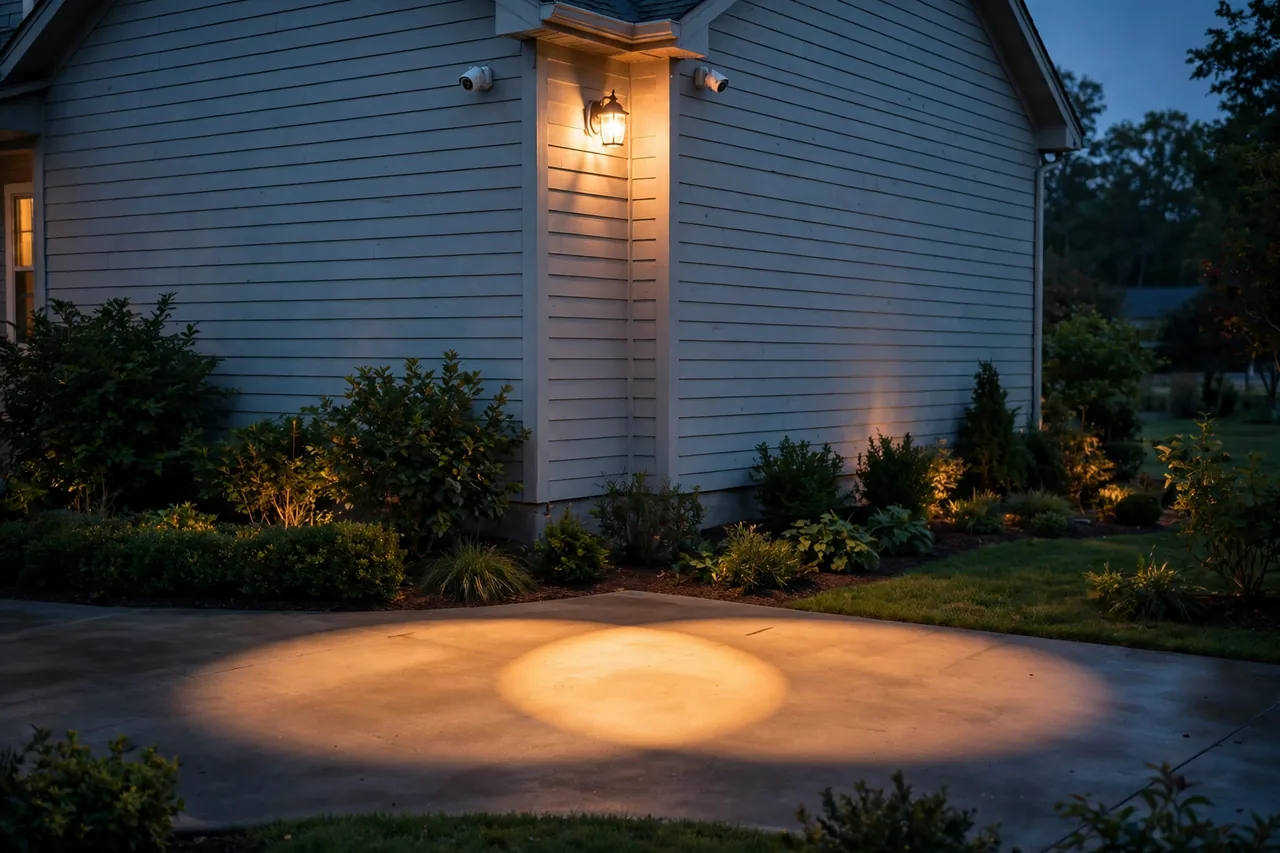
Different cameras hide different gaps. Knowing yours saves you from buying the wrong fix.
Caption: Blind spots by camera type.
| Camera Type | Biggest Blind Spot | Best Fix |
|---|---|---|
| Fixed bullet camera | Directly below it; sides beyond its angle | Overlap with a second camera |
| Dome or turret camera | Blind cone straight below the dome | Mount lower or add a wall camera below |
| Pan-and-tilt camera | Wherever it is not looking right now | Pair with a fixed camera |
| Wide-angle camera | Detail at distance; edges distort | Add a zoom camera for faces and plates |
| Doorbell camera | Sides of the porch; packages low down | Add a porch camera aimed at the steps |
| Battery camera | Gaps while it sleeps between events | Tighten motion zones; add a wired camera |
Battery cameras deserve a special note. They sleep to save power and wake on motion, so a fast-moving person can cross a small yard before the camera wakes. That sleep gap is a blind spot in time, not in space. If a spot needs every second recorded, use a wired camera there. Our battery operated security camera guide explains how long battery cameras last and where they fit, while our PoE security camera guide covers the wired cameras that never sleep.
How Many Cameras Do You Need to Kill Blind Spots?
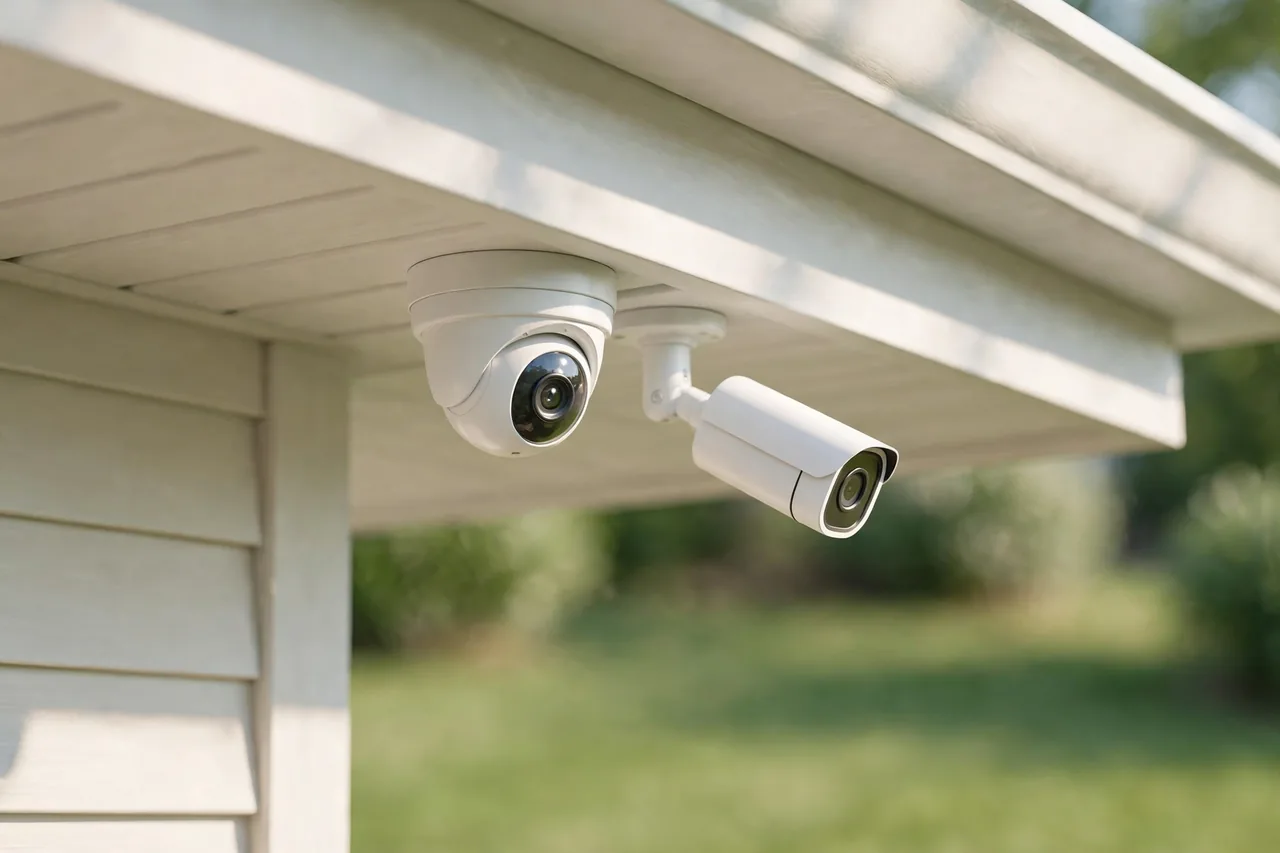
Most single-story homes need four to six cameras for full coverage: front door, driveway, back door, one side passage, and the garage. Two-story homes often need one more for the upper windows or the side yard. The number matters less than the overlap. Four cameras with overlapping views beat six cameras with gaps between them.
Start with the doors. Cover the front door, the back door, and the garage door first, because those are the entries a stranger uses. Then cover the driveway, because it shows cars and faces early. Then cover the side passages, because they are the hidden approach. A garage security camera and a security camera for apartments follow the same rule at a smaller scale: doors first, then the approach.
If you can only add one camera, add it where two views meet. One camera in the gap between two others removes two blind spots at once, because it overlaps both neighbors.
Blind Spots Indoors: The Same Rules Apply
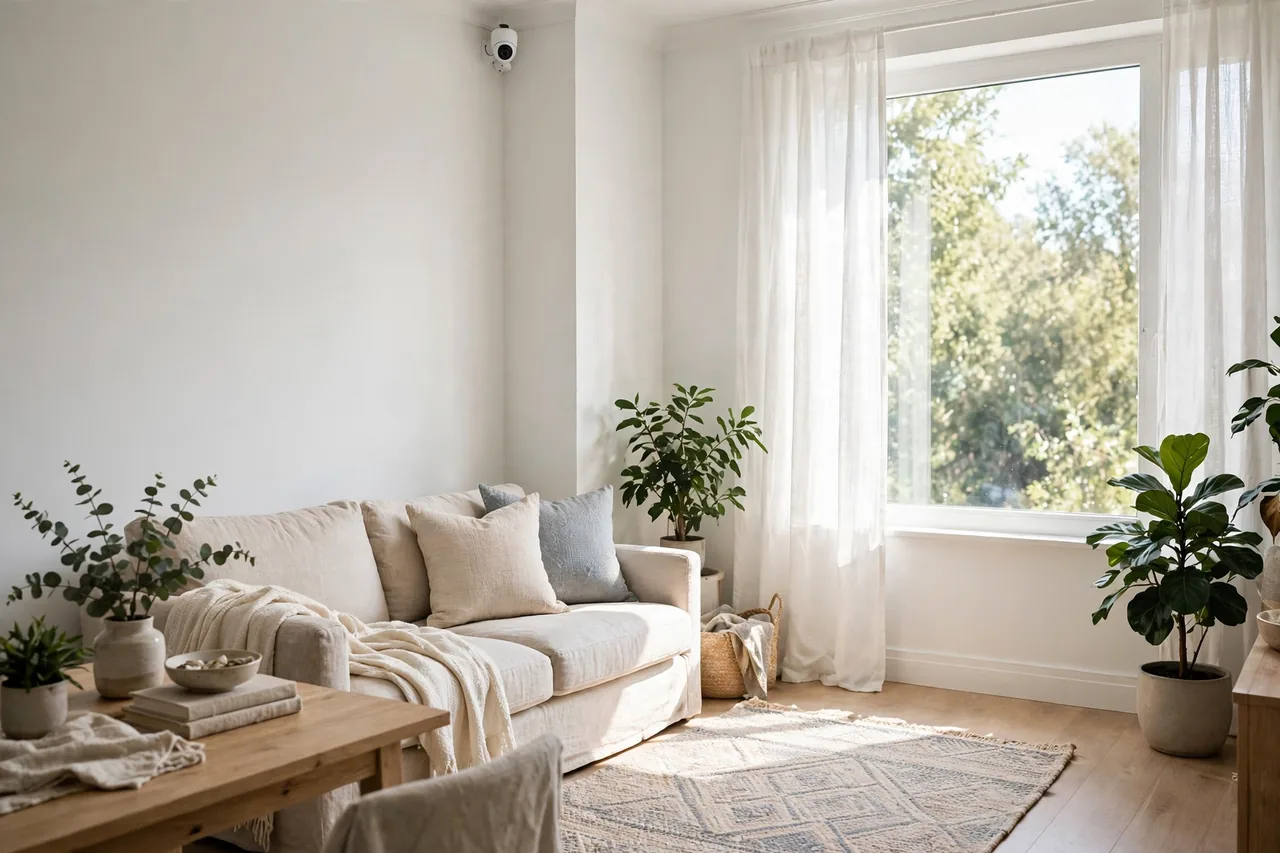
Indoor cameras have the same problem at a smaller scale. A camera in the middle of a living room wall cannot see the corners on its own side, and a tall shelf can hide a whole hallway. Mount indoor cameras in a corner, high up, so one camera sees two walls at once. Keep them 7 to 9 feet high, which is high enough to avoid tampering and low enough to catch faces clearly.
Watch for backlight indoors too. A camera across from a bright window turns everyone into a dark shape. Put the camera on the same wall as the window, so the light falls behind the lens instead of into it. And keep the camera away from ceiling fans, because the moving blades trigger false alerts all day.
When to Call a Professional
Call a professional installer if your home has a complex layout, a large property, or a wired PoE system with many cameras. A pro brings a lens calculator and a coverage plan, and they can run cables through walls without drilling into wires or pipes. A pro also helps when the blind spot sits somewhere you cannot reach safely, like a high gable or a roofline.
For a simple four-camera wireless setup, the walk-through test in this guide is enough. Fix the door and window gaps first, overlap the views, and re-test at dusk. That covers what most homes need.
Related Guides
Plan the full layout with our best home security camera system guide, and draw it out with our outdoor placement diagram guide. If you want a camera that records without gaps, read security camera with SD card and how long cameras keep footage. For a camera that works when the internet drops, see security cameras that connect without Wi-Fi and cellular home security systems.
Frequently Asked Questions
What is a camera blind spot?
A blind spot is any area a security camera cannot see, because it falls outside the lens field of view or sits behind an object, a corner, or a glare patch. The most common blind spots are directly below a high camera, around corners, and between two cameras.
How do I find blind spots in my security cameras?
Ask a helper to walk toward the house from every direction while you watch the live feed. Mark every spot where they vanish. Then ask them to stand under each camera, in each doorway recess, and behind each tree or pillar. Repeat the walk at dusk.
How high should I mount a security camera to avoid blind spots?
Mount it 7 to 10 feet high and tilt it down 10 to 30 degrees. Lower than 7 feet, it is easy to tamper with. Higher than 10 feet, faces shrink and the blind cone below the camera grows.
Can one camera cover a whole house without blind spots?
No. A single camera cannot see around corners or behind objects, and a pan-and-tilt camera can only look one way at a time. Most homes need four to six cameras with overlapping views for full coverage.
Do wide-angle cameras remove blind spots?
They shrink blind spots, but they do not remove them. A 180-degree camera covers more from one mount, yet it still cannot see around a corner or behind a pillar, and its edges distort faces at distance. Pair a wide camera with a zoom camera for detail.
Why does my camera miss people at night?
The usual cause is glare, a dirty lens, or a motion zone that is too tight. Clean the lens, keep bright lights behind the camera, and widen the motion zone. Battery cameras can also miss fast movement while they wake from sleep.
Walk your property with a helper this weekend and mark every spot where they vanish. Fix the door and window gaps first, overlap your cameras, and re-test at dusk. Then read our best home security camera system guide to plan the full setup.