A teak outdoor dining table is a patio dining table made from solid teak heartwood, and it is the longest-lasting outdoor table you can buy: Grade A teak lasts 50 to 100 years outside with almost no care, because its natural oils and dense grain resist rot, insects, and moisture on their own. A good teak dining table costs $1,000 to $3,000 for a four-to-six-seat size, checked November 16, 2026, and the best value is a Grade A, kiln-dried, mortise-and-tenon table from a named maker. This guide covers grades, sizing, prices, the gray-versus-gold choice, and care.
One fact decides whether a teak table is worth its price, and it has nothing to do with the brand on the box. It sits in the grades section below, and it is the difference between a table that lasts 50 years and one that cracks in five. Get that answer first, then shop.
What Is a Teak Outdoor Dining Table?
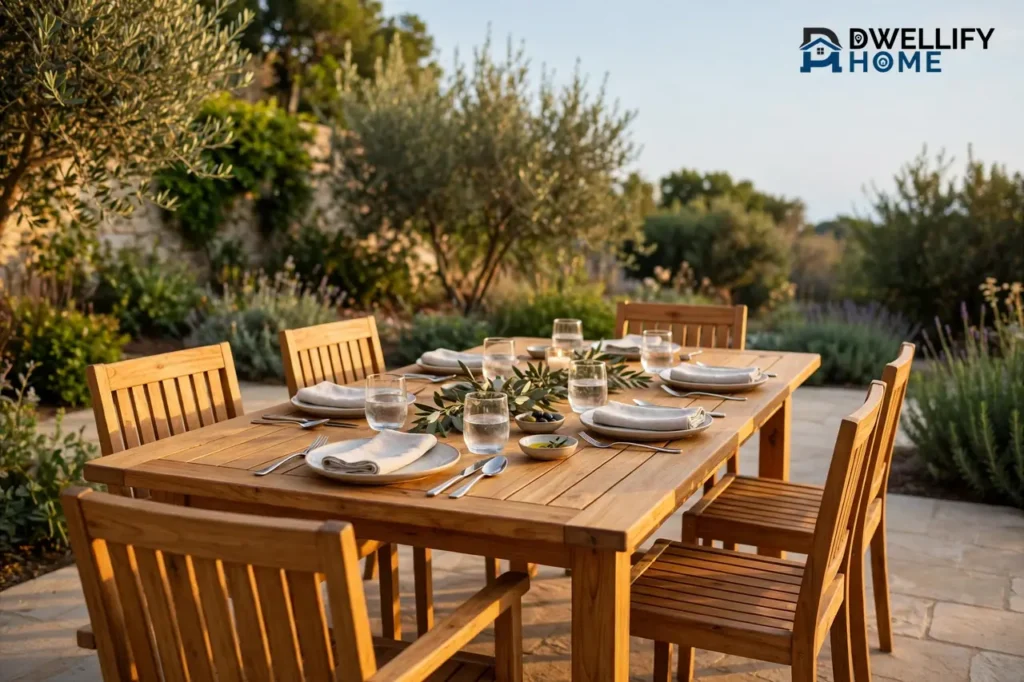
A teak outdoor dining table is a dining table built from teak, a tropical hardwood prized for its exceptional strength, natural oils, and rich golden-brown color, made to live outside year-round on a patio, deck, or garden. Teak has been used for centuries in boat building and outdoor furniture because it is dense, naturally resistant to water, rot, and insects, and it needs very little maintenance compared with other woods.
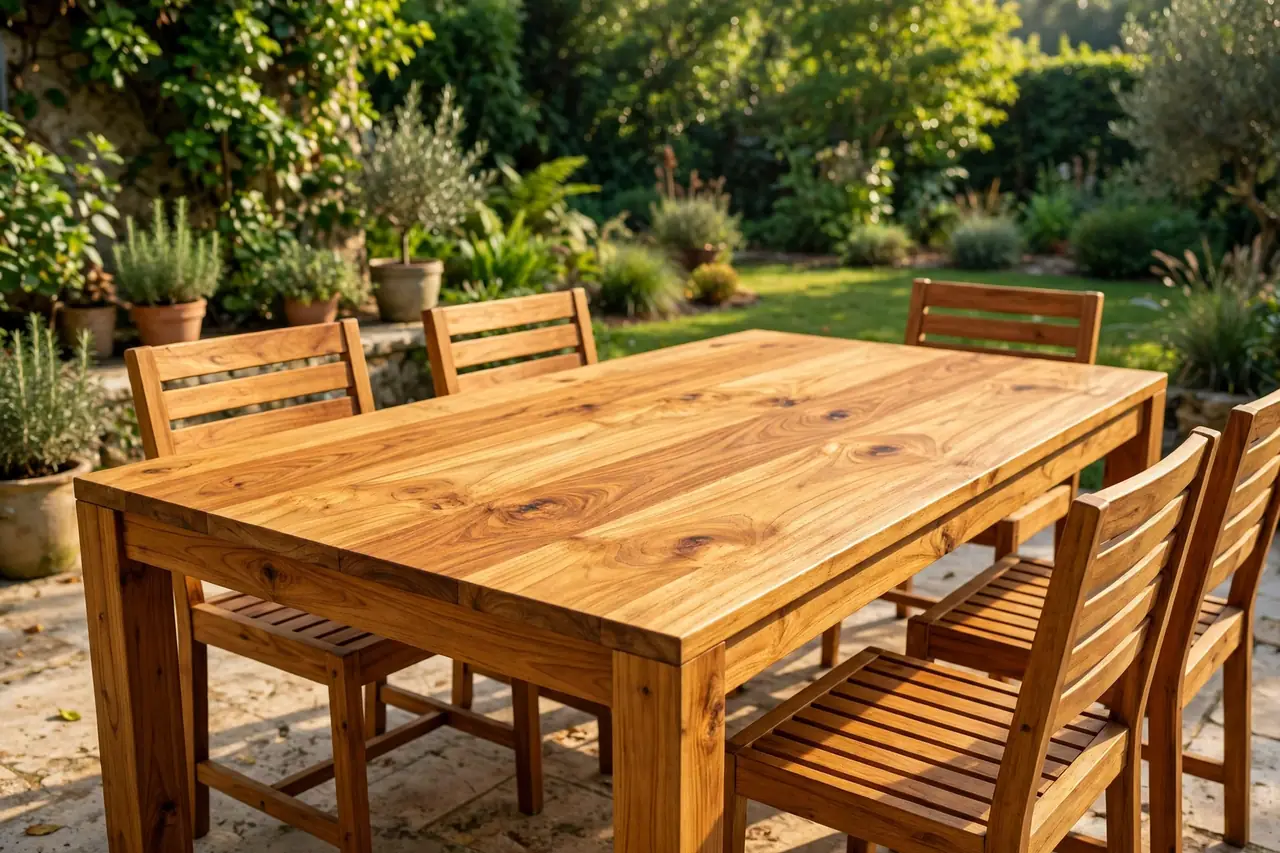
Teak tables come in three shapes. Rectangular tables seat six to ten and suit long patios and big family dinners. Round teak tables seat four to six and suit square patios, because a 60-inch round teak table seats six with everyone facing each other. Square teak tables seat four and suit small patios and balconies. Most teak tables use slatted tops, which let rain drain through and dry fast, while solid-top teak tables look more formal and need a cover in heavy rain.
The wood itself is the story. Teak heartwood holds natural oils and silica that push back moisture and insects with no finish at all, and The Wood Database rates it “very durable” for decay resistance. Left alone, a teak table weathers to a smooth silver-gray within a year or two, and the gray is only the surface layer: the wood underneath stays sound for decades.
A teak table is a lifetime table, not a season table. The wood decides the lifespan, not the maker.
What Does Grade A Teak Mean, and Why Does It Matter?
Grade A teak means solid heartwood from the dense inner core of a mature teak tree, kiln-dried to 8 to 12 percent moisture, with tight grain and high natural oil content, and it matters because only Grade A teak carries the 50-to-100-year lifespan the wood is famous for. Grade B teak comes from the outer heartwood with less oil and a more varied grain, and Grade C teak is sapwood that needs constant care and will not last outdoors.
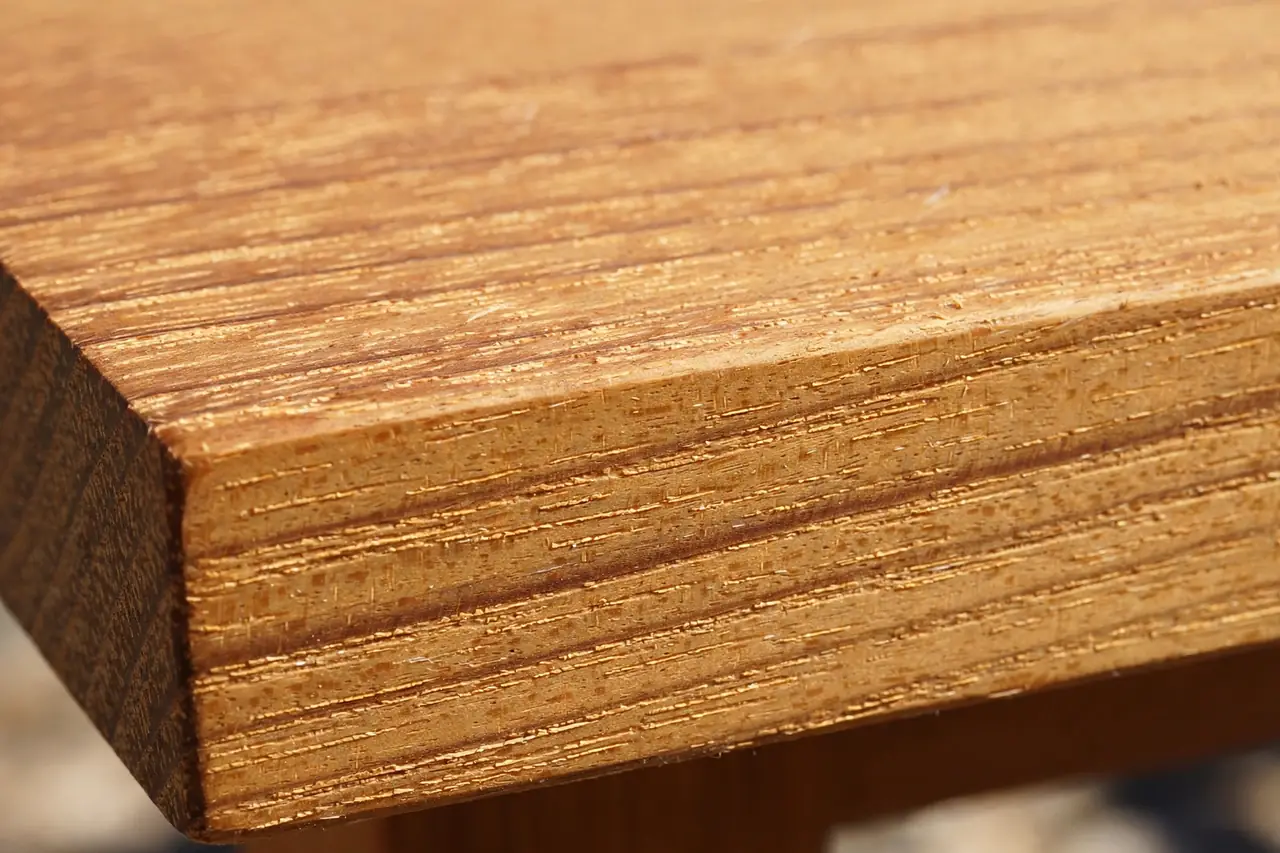
This is the fact from the intro, and it is the one that separates a $1,000 table that lasts 50 years from a $400 table that cracks in five. Grade A teak comes from trees harvested after 45 to 50 years on sustainable plantations, and only the hearts of the trees are used. Windsor Teak’s folding-table guide states it plainly: all Grade A heirloom-quality teak, harvested after 45 to 50 years, only the hearts of the trees used, kiln-dried to 8 to 12 percent moisture so it moves less between seasons. Read their teak guide at Windsor Teak’s Barcelone round drop-leaf teak dining table.
How do you spot Grade A teak? It feels heavy for its size, smells faintly like leather, and shows a tight, even golden-brown grain with no pale streaks. Pale streaks are sapwood, and a table with pale streaks is not Grade A, whatever the listing says. A listing that names only “solid wood” or “teak finish” is hiding something: real teak sellers name the grade, the origin, and the drying method, because those are the facts that justify the price.
Kiln-drying matters as much as grade. Teak dried to 8 to 12 percent moisture moves less between wet and dry seasons, so joints stay tight and the top stays flat. Sun-dried or air-dried teak keeps shrinking for years, and the table checks and cracks no matter how much oil you apply. Ask the seller for the moisture content before you buy.
Grade A heartwood, kiln-dried to 8 to 12 percent. If the listing cannot say that, the table cannot promise 50 years.
What Size Teak Outdoor Dining Table Do You Need?
A 48-inch teak table seats four, a 60-inch round or 72-inch rectangular teak table seats six, and an 84-to-96-inch rectangular teak table seats eight to ten, so pick the size by the number of people first and the patio second. Allow 24 inches of table edge per person and 36 inches of clearance behind every chair, and remember that teak is heavy, so a table that is hard to move is a table that stays where you put it.
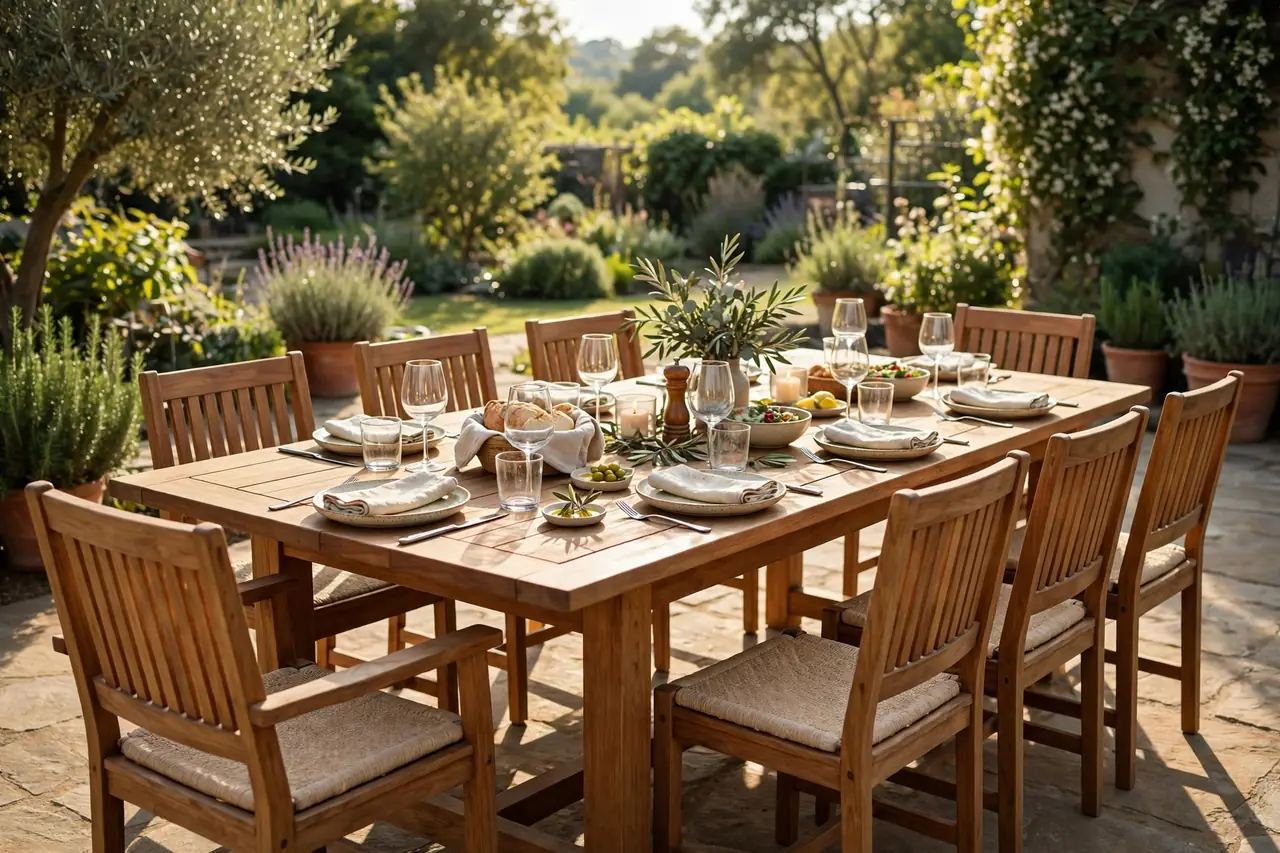
Round teak tables suit square patios. A 47-inch round drop-leaf teak table seats four, folds down when dinner ends, and weighs about 50 pounds, which is light enough for one person to move. A 60-inch round teak table seats six and needs about an 11-by-11-foot patch. Rectangular teak tables suit long patios: an 84-inch table seats eight, and a 106-inch table seats ten, which is why the Harbour Hayman 106-inch teak dining table is built for large gatherings.
Weight is a feature with teak. A solid teak table is heavy, and that weight keeps it planted in wind and steady when someone leans on the edge. A 6-foot teak table can weigh 100 pounds or more, so plan the delivery: check that the table arrives assembled or that two people can carry the parts, and check the doorway it must pass through.
Chairs matter as much as the table. Teak dining chairs run $325 and up each at Teak Patio Store, and a six-chair set adds $2,000 or more to the table price. Buy the chairs from the same maker when you can, because the wood tone matches and the seat height is made for the table. Our patio dining set guide covers sizing a full set so knees and elbows fit.
People first, patio second, chairs from the same maker. A teak table outlives three sets of chairs, so buy the chairs well too.
How Much Does a Teak Outdoor Dining Table Cost?
A teak outdoor dining table costs $700 to $7,000, checked November 16, 2026, with most good four-to-six-seat tables landing between $1,000 and $3,000. Small 47-inch round tables run $1,000 to $1,500, 60-inch round tables run $1,100 to $3,650, 84-inch rectangular tables run $3,000 to $6,000, and 106-inch tables run $5,000 and more.
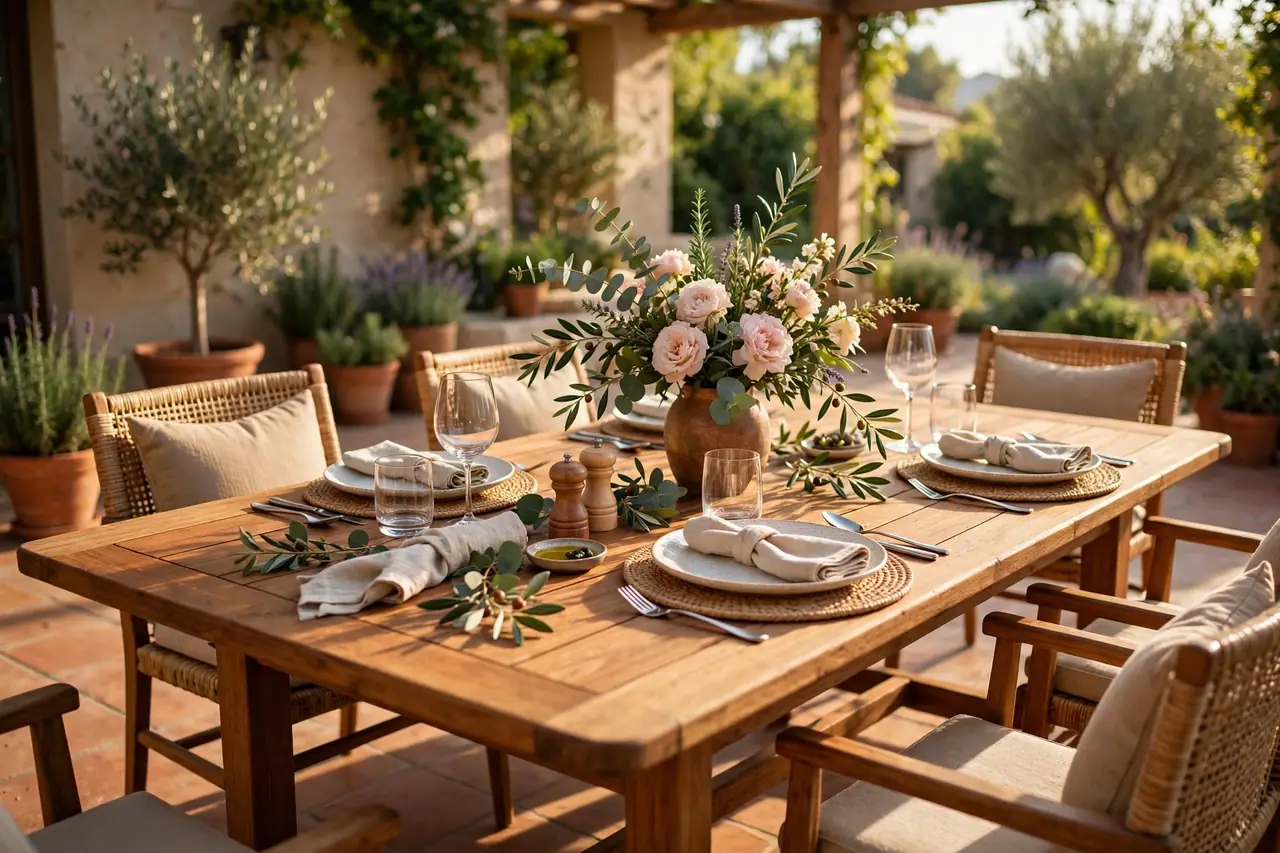
Real prices show the spread. At Windsor Teak, a 47-inch round drop-leaf folding teak dining table lists at $1,150, down from $1,550. At Harbour, a 60-inch Pacific round teak dining table lists at $1,095 in natural teak and $3,650 in charcoal, an 84-inch Newport teak dining table at $5,995, and a 106-inch Hayman teak dining table at $5,095. At Teak Patio Store, teak furniture starts at $175, chairs from $325, and sets from $2,300. See the range at Teak Patio Store’s solid teak furniture.
Three things push the price up. Grade A heartwood costs more than mixed grades, because only the heart of a 45-to-50-year tree qualifies. Size adds cost fast, because a 106-inch table uses more than twice the lumber of a 47-inch table. And joinery adds cost: mortise-and-tenon joints outlast dowels and screws through freeze-thaw winters, and they cost more to build.
Guess which purchase costs less per year: a $1,150 teak table that lasts 50 years, or a $300 acacia table replaced every 8 years? The teak table costs $23 a year, while the acacia table costs $37 a year plus six rounds of shopping and assembly. The expensive table is the cheap one, and the table below proves it.
Budget $1,000 to $3,000 for a four-to-six-seat teak table. Under $700, check the grade before you check the price.
Teak Dining Table Prices and Lifespans at a Glance
The best-value teak outdoor dining table is a Grade A, kiln-dried 60-inch round or 72-inch rectangular table at $1,100 to $3,000, because it seats six, lasts 50 to 100 years, and costs about $23 a year over its life, while a cheaper acacia table costs more per year and a budget “teak-look” table costs the most of all once you replace it twice.
| Table | Seats | Typical price | Realistic life |
|---|---|---|---|
| 47 in round drop-leaf teak | 4 people | $1,000–$1,500 | 50+ years |
| 60 in round teak | 6 people | $1,100–$3,650 | 50+ years |
| 72 in rectangular teak | 6 people | $1,500–$3,000 | 50+ years |
| 84 in rectangular teak | 8 people | $3,000–$6,000 | 50+ years |
| 106 in rectangular teak | 10 people | $5,000+ | 50+ years |
| Acacia dining table (compare) | 6 people | $400–$800 | 5–10 years |
Prices are Harbour, Windsor Teak, and Teak Patio Store listings checked November 16, 2026. The table’s lesson is that teak is the cheapest table per year you can buy, but only if it is Grade A and kiln-dried. A cheap teak table that is not Grade A is the most expensive table in the store, and the next section is about the choice every teak owner faces in the first year.
Gray or Gold: Should You Oil Your Teak Dining Table?
You do not need to oil a teak dining table at all, because teak’s own oils already protect it, and the gray patina that develops is only a surface color change, not damage. Oil or sealer exists only to hold the honey-gold color: a sealer coat once a year keeps the gold, while leaving the table alone lets it weather to a soft silver-gray that many owners prefer.
This is the choice every teak owner faces, and both answers are right. Harbour’s care guide says natural teak weathers to a soft silver-grey over time, and recommends cleaning at the start and end of each season, hosing down periodically, scrubbing along the grain, and a custom weather cover when the piece is not in use. Teak Patio Store puts it even more plainly: leave teak alone and it turns silver, oil it and it stays gold, and neither one is wrong, because neither one weakens the wood.
If you want gold, use a sealer, not “teak oil.” Most bottles labeled teak oil are tung and linseed blends that add a sticky layer, attract dust, and need reapplying every few months, while a proper teak sealer lasts 12 to 18 months per coat. One thin coat each spring, applied while the wood is dry and clean, holds the honey color. If you change your mind later, a teak cleaner brings the warm color back from gray in one afternoon.
What teak does need is cleaning. Wash it with mild soapy water and a soft brush two or three times a year, rinse, and let it dry fully. Never pressure-wash close up, never use steel wool, and never varnish or paint teak, because varnish cracks and peels on teak’s oily surface. Mold washes off with a mild detergent and bleach solution, scrubbed along the grain.
Gold takes one sealer coat a year; silver takes nothing but time. The gray is a color, not a failure.
What Most People Get Wrong About Teak Dining Tables
Most people get teak dining tables wrong in three ways: they believe “teak oil” feeds teak, they believe a higher price always means better teak, and they believe teak needs no care at all. All three beliefs cost money, and the first one is the most common.
The teak-oil myth is the big one. Bottles labeled “teak oil” are mostly tung and linseed blends with a nice name, and real teak does not need feeding: its own oils already protect it, and a bottle of oil adds a sticky layer that attracts dust and needs reapplying every few months. What teak needs is either a sealer, to hold the honey color, or a decision to let it go gray.
The price myth runs the other way: a $400 “teak” table and a $1,500 teak table can look identical in a product photo. The cheap one is usually a teak-colored stain on a softer wood, thin slats, and screws instead of joints, and it shows its true nature after two winters. Weight, joinery, and a stated grade tell you more than the price does: real Grade A teak is heavy, smells faintly like leather, and the listing names the grade.
The no-care myth is the quiet one. Teak survives neglect better than any other wood, but it still needs washing, and it still needs its feet kept out of standing water. Water wicks up through the end grain, the feet rot first, and the frame fails before the top does. Feet on pavers, airflow underneath, and a spot that dries after rain matter more than any oil you buy.
Oil never fixes the wrong grade or the wrong spot. Buy Grade A, then put it where it can dry.
How to Care for a Teak Outdoor Dining Table
Care for a teak outdoor dining table with a 30-minute routine twice a year: wash it with mild soapy water and a soft brush, rinse, let it dry fully for a day, then apply one thin sealer coat if you want the gold color, or leave it bare if you like the silver-gray. Cover it with a breathable cover in winter, keep the feet off bare soil, and bring the cushions inside.
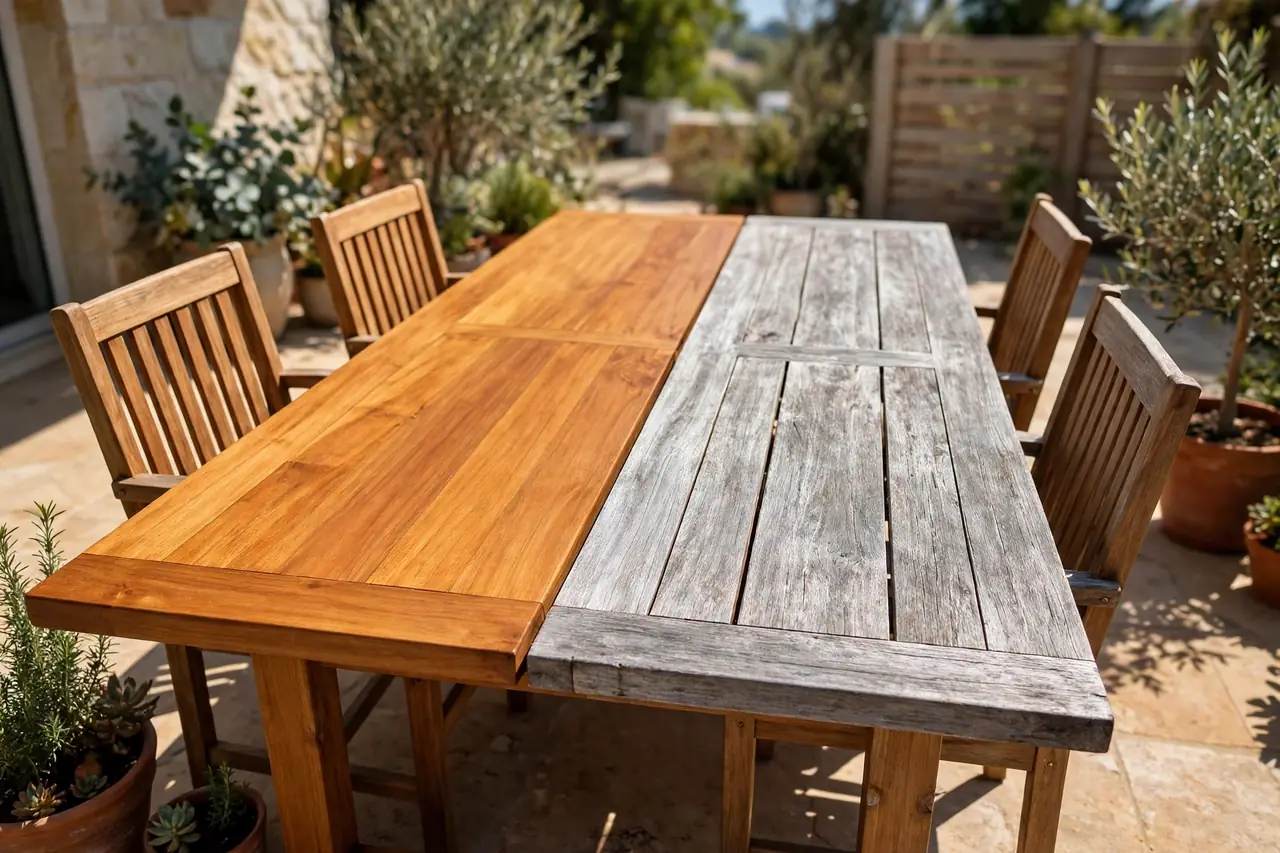
Start each season by washing the table along the grain with mild soapy water and a soft brush, then rinse and let it dry fully. If the table has gone gray and you want the gold back, use a two-step teak cleaner and brightener, then seal while the wood is still slightly damp from the rinse. Check the joints once a year: bolts loosen, and the frame almost always fails before the wood does, so tighten what is loose and replace any rusted fastener with stainless steel.
Winter care is simple because teak is one of the few woods that can stay outside all winter. Clean it first, cover it with something breathable, or tuck it under shelter, and it will be fine. A plastic tarp traps condensation underneath and grows mold exactly where you cannot see it, so use a breathable cover or nothing at all. Our how to store outdoor furniture guide covers the full winter routine, and our balcony cover ideas guide covers covers that keep rain off without trapping damp.
Pair the table with the right setting. A teak table beside a garden bed turns dinner into an occasion, and our patio garden guide shows how to pair seating with plants that do not drop sap onto the table all summer. If your chairs need new cushions, our replacement cushions for patio furniture guide shows how to get the fit right, and our outdoor furniture for small spaces guide shows how a round teak table can anchor a tiny patio.
Wash twice a year, seal once if you want gold, cover in winter. Thirty minutes is the whole job.
Related Guides
If you are planning the whole outdoor dining space, these guides pick up where this one leaves off:
- Patio Dining Set — size a table and chairs so everyone fits.
- Patio Garden — pair your teak table with plants that earn their place.
- Replacement Cushions for Patio Furniture — get the fit, fabric, and price right the first time.
- How to Store Outdoor Furniture — keep it clean, dry, and ready for spring.
- Balcony Cover Ideas — stay dry and cool on a small balcony.
- Outdoor Furniture for Small Spaces — seven layouts that make a tiny patio feel big.
- Outdoor Bench With Storage — extra seats that hide the clutter too.
- Small Patio Decorating Ideas — finish the space once the table fits.
Frequently Asked Questions
How durable and long-lasting is teak wood outdoor furniture?
Teak is one of the toughest, most durable furniture hardwoods out there. Thanks to its high natural oil content, dense grain, and tensile strength, quality teak furniture can easily last 50 to 100 years outdoors, which is why it costs more up front and less per year than any other wood.
Does teak wood require a lot of maintenance for outdoor use?
Teak is surprisingly low-maintenance compared to other woods. The protective oils act as a natural barrier against the elements, and an occasional cleaning every few months is all you need to prevent mildew. No constant sealing or oiling is required — just brush it down with soapy water.
Why are teak wood patio sets more expensive than other wood options?
Teak’s incredible durability, rot-resistance, and longevity make it worth the investment. Grade A teak comes from the heart of trees harvested after 45 to 50 years, it is kiln-dried, and it lasts 50 to 100 years, so the price buys decades that cheaper woods cannot offer.
Will teak wood change color over time when used outdoors?
If you leave teak untreated, it will gradually weather to a stunning silvery-grey patina. The gray is only a surface color change, not damage, and a teak cleaner brings the warm golden color back in one afternoon if you change your mind.
Are teak wood patio sets resistant to moisture, rot, and insects?
Yes. Teak’s natural oils and dense grain provide incredible protection against moisture, making it highly resistant to warping, cracking, and rotting, even in wet climates, and its oils repel insects without any chemical treatment.
Should I apply oil or sealant to my teak patio set? If so, how often?
It depends on the look you want. If you like the natural silvery patina, no treatment is needed, because teak’s own protective oils are enough. If you want the golden color, apply one thin sealer coat once a year, not teak oil, which needs reapplying every few months.
Disclaimer: This guide gives general advice for choosing teak outdoor furniture, not professional woodworking or structural instructions. Check weight limits before use, keep oily rags away from heat and dispose of them safely, and hire a qualified pro for any structural repair or custom build.
Buy Grade A, kiln-dried, mortise-and-tenon teak, size it for Tuesday dinner, and decide gold or gray in the first spring. Do that, and the table you buy this year is still the best seat in the garden when your grandchildren eat at it.