A small outdoor sofa typically seats two people and measures 40 to 60 inches wide, and the best ones pair a powder-coated aluminum or PE rattan frame with quick-dry foam cushions at least 4 inches thick, because the frame decides how long it lasts and the cushion decides how long you sit on it. The mistake most buyers make is shopping for the sofa first and measuring the space second, and this guide reverses that order, according to the small outdoor sofa guide from the Alibaba wellness team.
One measurement decides whether a small sofa works on your balcony, and it is not the width of the sofa. It is the space around it, and most listings never mention it. It sits in the section below, and it takes a tape measure, not a budget, to get right. First, here is what a small outdoor sofa actually is, because the name covers three very different pieces.
What Counts as a Small Outdoor Sofa?
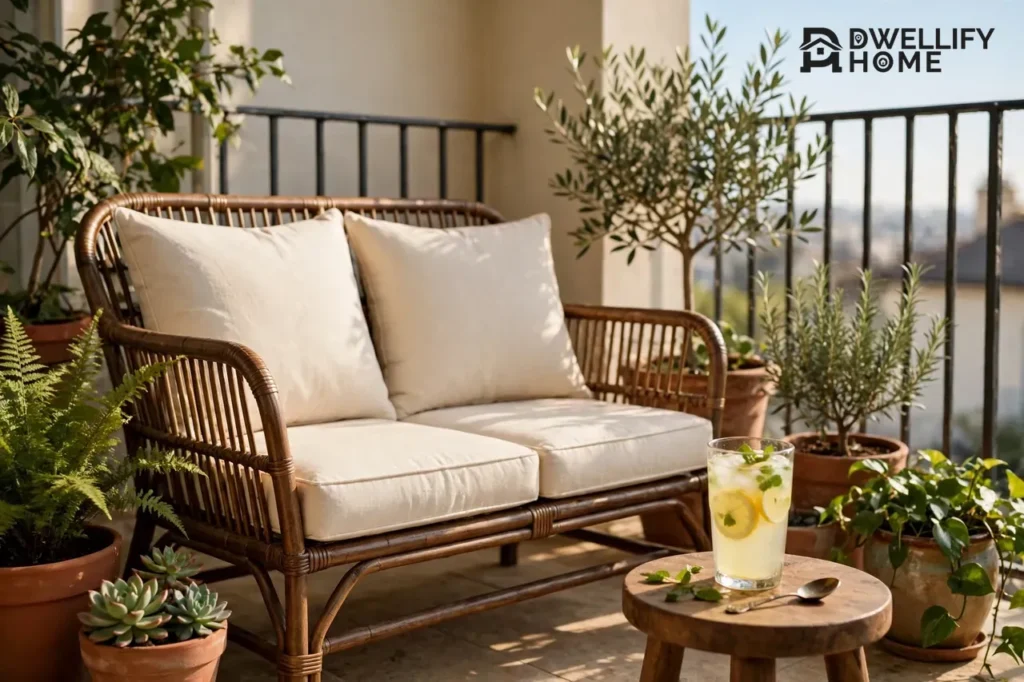
A small outdoor sofa is a compact two-seat couch built for decks, balconies, small gardens, or as part of a larger sectional setup, usually 40 to 60 inches wide, designed for space efficiency without sacrificing comfort. Unlike a full patio set, it emphasizes a small footprint, and its job is to give two people a dedicated relaxation spot outdoors, whether that is morning coffee, reading, or quiet conversation.
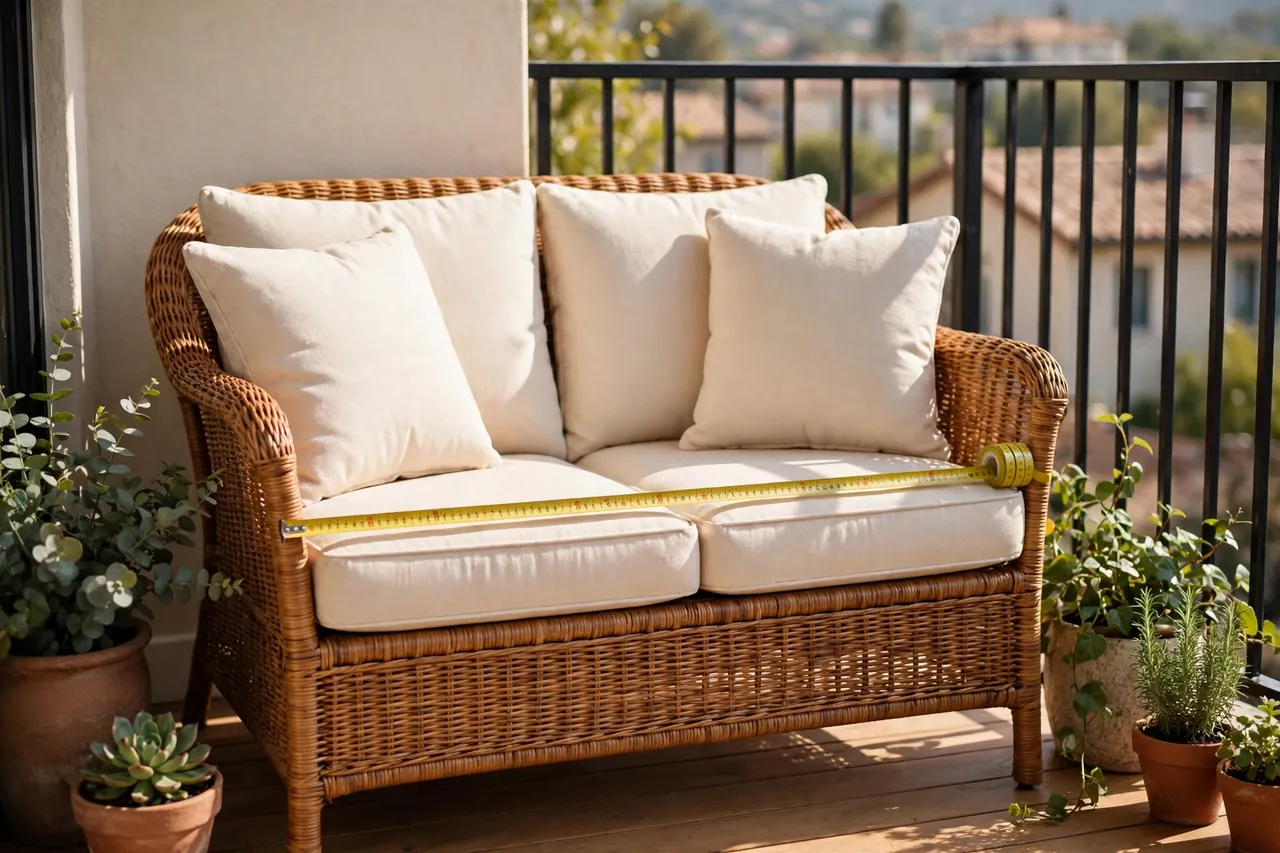
Small outdoor sofas come in four shapes. A loveseat is the classic two-seater, one fixed piece with two seats side by side. A modular unit is made of interchangeable pieces that form L-shapes or U-sections, so you can start small and expand later. A corner unit tucks into an L-shaped corner and uses space a loveseat wastes. A convertible sofa changes shape, with an adjustable backrest that turns a sofa into a lounger, which suits a small space that must do two jobs.
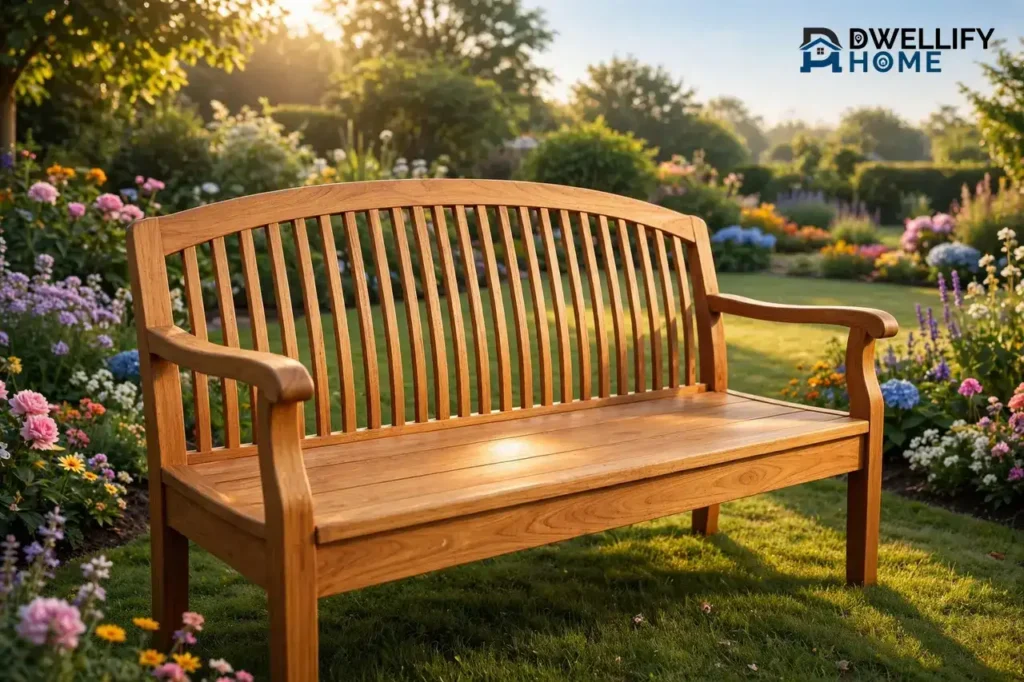
The frame decides the lifespan. Wicker loveseats in PE rattan are lightweight, weather-resistant, and often budget-friendly, and they suit covered porches or semi-sheltered areas best. Metal frame sofas in aluminum or steel look modern and last, with aluminum resisting rust and steel needing a protective coating. Wooden frames in eucalyptus or teak look natural but need maintenance, and they are not ideal for high-moisture climates unless sealed. Our guide to wicker outdoor furniture covers the woven option in depth, and our metal outdoor furniture guide covers the metal frames.
A small sofa is not a small sectional, and the difference matters. A sectional wraps around a corner with three or more seats, while a small sofa seats two in a straight line. If your patio is under 120 square feet, a small sofa plus one chair beats a sectional almost every time, because the sectional swallows the floor and leaves no room to walk. Our guide to outdoor furniture for small spaces shows the full layout logic for tight patios, and our apartment patio ideas guide covers balconies specifically.
Measure First: The 6-Inch Rule
Measure your space first, then shop, and allow at least 6 inches of clearance around all sides of the sofa, plus 24 inches of clear space to walk comfortably around the furniture. A sofa that fits the tape measure but blocks the door is a sofa that will be returned, and the most common small balcony mistake is overcrowding: a four-piece set that looked reasonable on a showroom floor becomes suffocating on a 60-square-foot terrace.
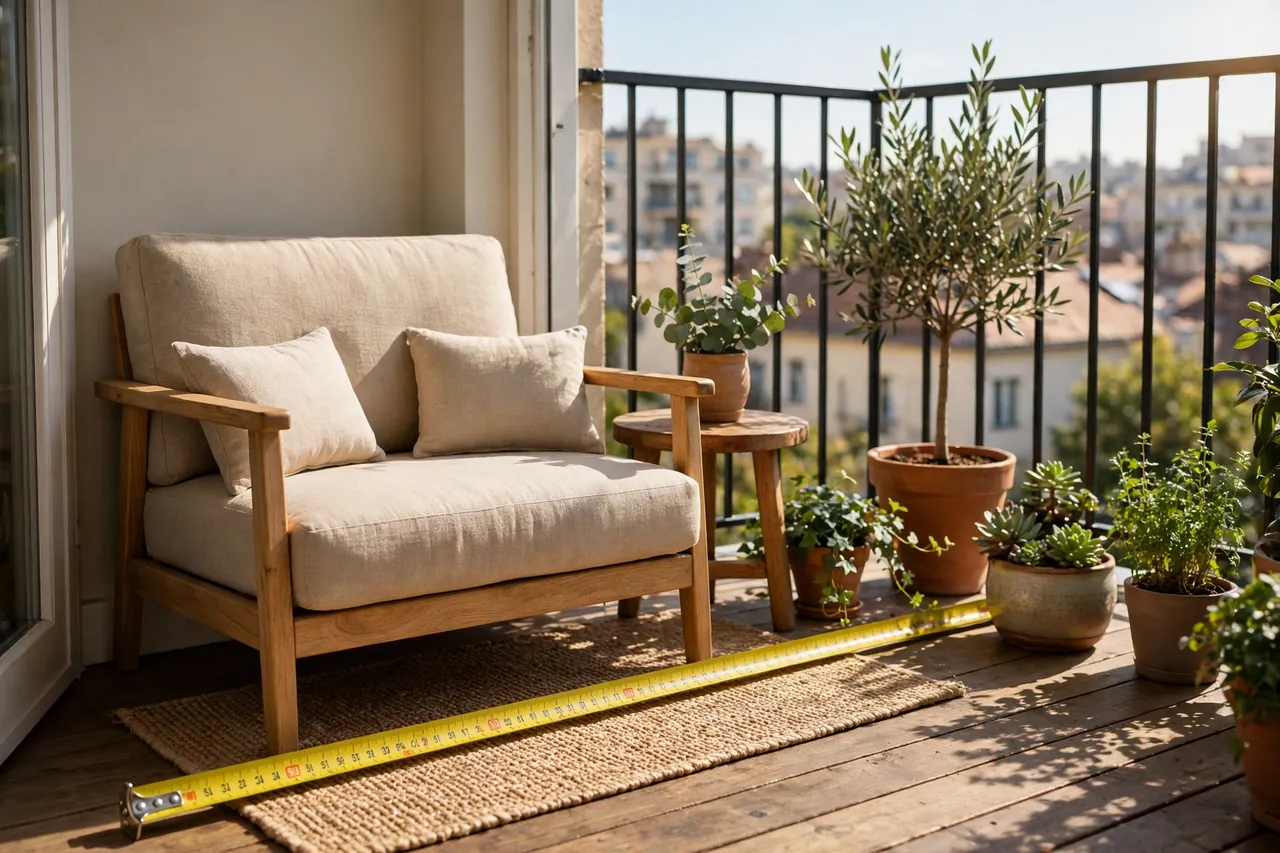
Start with the footprint. Tape the sofa’s outline on the floor with painter’s tape, then walk around it, open the door, and pull out a chair. You need at least 24 inches of clearance to walk comfortably, and you need to account for how your door swings before you place anything near the entry. If the tape outline leaves you squeezing past, the sofa is too big, no matter what the listing says about “apartment size.”
Check the weight limit before you fall in love with a heavy set. Most apartment buildings have load restrictions for balconies, usually buried in the lease, and a heavy stone table or a solid teak sectional may not legally go outside. Aluminum is the practical choice for most balconies, because it is lightweight enough to move around easily, it does not rust, and it needs almost no maintenance beyond an occasional wipe down, according to the balcony furniture guide from Niche Beverly. A quick call to your building manager before you buy saves an expensive return.
Check the sun and the wind too. A balcony that bakes in afternoon sun on the tenth floor has completely different needs than a shaded ground-floor patio, and high-rise balconies get wind that ground-level spaces never see. A light sofa needs weight or a sheltered corner on a windy balcony, and a dark cushion needs shade or it will fade in one summer. The table below shows the three measurements to take before you shop, and the sofa size each one points to.
Measure before you shop
| Measurement | How to take it | What it decides |
|---|---|---|
| Floor space | Tape the sofa outline, walk around it | Whether it fits at all |
| Walkway | 24 inches clear around furniture | Whether you can use the space |
| Door swing | Open the door fully with tape down | Whether the door still opens |
| Balcony load limit | Check the lease or call the manager | Whether a heavy set is allowed |
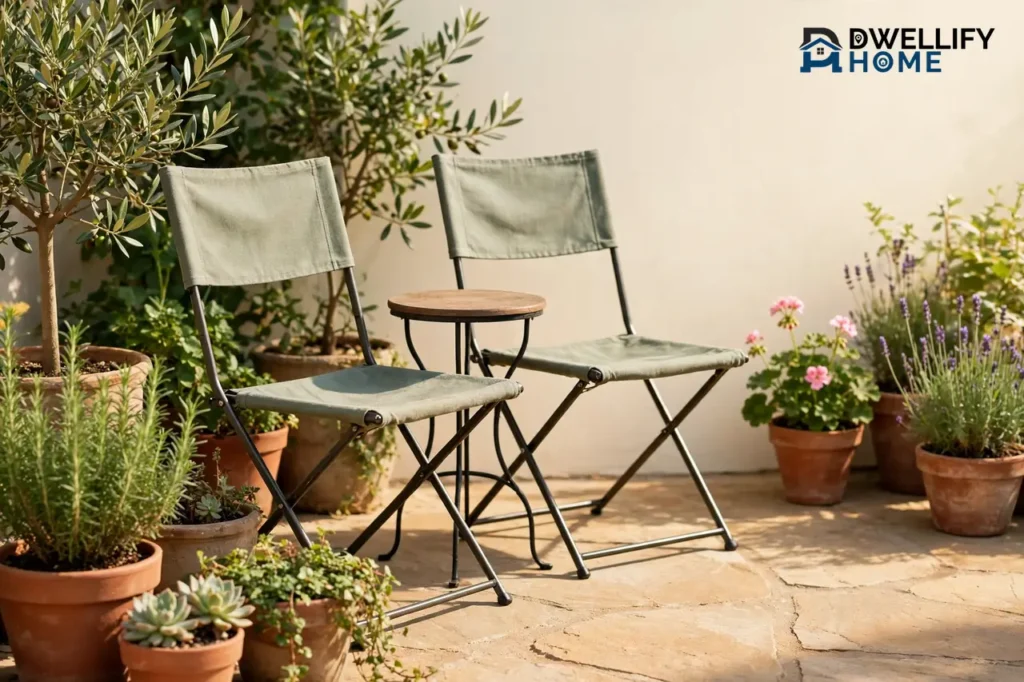
Two or three well-chosen pieces almost always outperform a full suite in a compact space, and they are easier to live with. If it is morning coffee and occasional reading, a small sofa and a side table is genuinely all you need. If you eat outside regularly, a bistro set serves that better than a dining table that seats six. The next section matches the sofa type to the way you actually use the space.
Which Type Fits Your Space?
The right small outdoor sofa type depends on how you use the space: a fixed loveseat for daily sitting, a modular unit for a space that changes, a corner unit for an L-shaped patio, and a convertible for a balcony that must seat and sleep. Pick by the use, not by the photo, because a sofa that fits the wrong use is a sofa that sits empty.
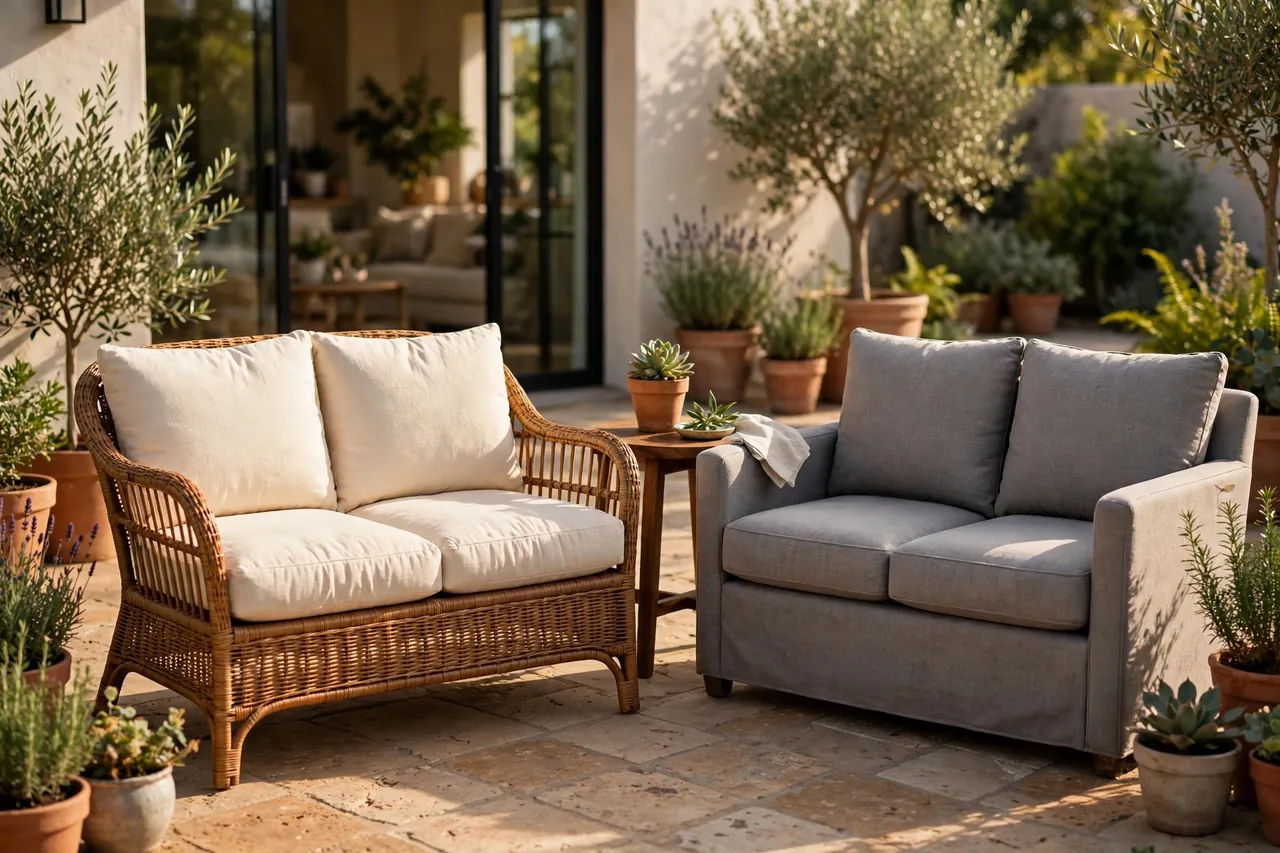
A fixed loveseat is the simplest choice and the best one for daily sitting. It seats two, it needs no rearranging, and it is the cheapest way into a real outdoor sofa. The Amazon Basics outdoor patio loveseat, a 2-seat wicker couch with beige cushions, was listed at $121.79 on Amazon at the time the Terrace Haus outdoor sofa brands guide was published, which makes it the budget benchmark for a small wicker loveseat. Check the seat depth before you buy: 22 to 26 inches is ideal, with cushions at least 4 inches thick, because comfort depends more on cushion thickness and frame ergonomics than on size.
A modular unit suits a space that changes. Interchangeable pieces form L-shapes or U-sections, and you can start small and expand later, which is a low-risk way to experiment with outdoor living. The trade-off is cost: modular pieces cost more up front, and the connections can loosen over time, so check the clips and connectors every season. The Greesum 5-piece small patio sofa, an acacia wood sectional with a tea table, was listed at $349.99 on Amazon, and it shows what a modular small set costs in the mid-range.
A corner unit suits an L-shaped patio or a balcony corner, because it uses space a straight loveseat wastes. Measure the corner carefully, because a corner unit that is 6 inches too long blocks the walkway, and the walkway is what makes the space usable. A convertible sofa suits a balcony that must do two jobs, with an adjustable backrest that turns a sofa into a lounger, but check the mechanism before you buy, because a stiff hinge is a hinge that breaks.
For the pieces around the sofa, our guide to outdoor side tables shows compact tables that fit beside a loveseat, our outdoor coffee tables guide covers the table in front of it, and our outdoor pouf ottoman guide shows a footrest that doubles as a spare seat. The price section next shows what each type should cost.
How Much Does a Small Outdoor Sofa Cost?
A small outdoor sofa costs $180 on average at entry level, $350 in the mid-range, and $800 or more for a premium set, according to the price tiers in the small outdoor sofa guide checked November 16, 2026. Entry-level sets from $100 to $250 last 2 to 3 years, mid-range sets from $250 to $500 last 4 to 6 years, and premium sets over $500 last 7 years or more. Most value sits in the $250 to $400 range, where brands balance quality materials and reasonable price.
The table below shows the three tiers side by side, with what each one buys and who it suits. Spending over $600 rarely improves daily comfort enough to justify the extra cost unless aesthetics are the top priority, because the jump from mid-range to premium buys design and materials, not comfort.
Small outdoor sofa price tiers
| Tier | Average price | Expected lifespan | Best for |
|---|---|---|---|
| Entry level | $180 | 2 to 3 years | Renters, seasonal use |
| Mid-range | $350 | 4 to 6 years | Homeowners, frequent use |
| Premium | $800 or more | 7 years or more | Design-focused, permanent setups |
Check the cushion before you check the price. The biggest pain point owners report is cushion degradation in direct sunlight, even on models labeled UV-resistant, and the most consistent praise in owner reviews is for space optimization and comfort. A sofa with removable, washable cushion covers and quick-dry foam is worth more than a cheaper sofa with fixed cushions, because the cushion is the part that fails first. Our guide to replacement cushions for patio furniture shows what new cushions cost when the originals wear out, so factor that into the price before you buy.
Watch for the hidden costs. Some models ship flat-packed and need assembly, while others arrive pre-assembled, and the assembly time is real. Some listings sell the frame without cushions, so the price you see is not the price you pay. Read the listing fully, check what is included, and confirm the weight capacity, which should be 400 to 500 pounds per seat for a two-seater that two adults will actually use.
What Most People Get Wrong About Small Sofas
Most people get three things wrong about small outdoor sofas: they buy the biggest sofa that fits, they trust the words “all-weather” without checking the specs, and they forget the cushions until they fade. Each mistake costs money, and each one is easy to avoid.
The first wrong belief is that the biggest sofa that fits is the best sofa. It is not. A sofa that fills the whole balcony leaves no room to walk, no room for a table, and no room to enjoy the space. Two or three well-chosen pieces almost always outperform a full suite in a compact space, and a small sofa with room around it is a better seat than a big sofa you have to climb over. Measure the walkway, not just the sofa.
The second wrong belief is that “all-weather” means the same thing on every listing. It does not. The phrase is not standardized, so look for specific fabric and metal specs instead: solution-dyed acrylic fabric, powder-coated aluminum frame, quick-dry foam. If a listing cannot name the fabric or the frame material, it is selling a word, not a specification, and the sofa will show it in the first summer.
The third wrong belief is that cushions last as long as the frame. They do not. Cushions degrade in direct sun, even on UV-resistant models, and they absorb moisture over time, which leads to mold. Budget for a cover or a shaded spot, and check the cushion covers before you buy, because removable covers are the difference between a sofa that lasts and a sofa that stains. Here is the thing most guides skip: the frame is the easy part, and the cushion is the part that decides whether you still love the sofa in year three. The next section shows how to keep both alive.
How to Care for a Small Outdoor Sofa
Care for a small outdoor sofa with a monthly frame wash, removable cushion covers washed on the label’s instructions, and dry storage for cushions in winter. The routine is short, and it is the same for every material, with one change: never store damp cushions, because damp cushions grow mildew and stain the frame beneath them.
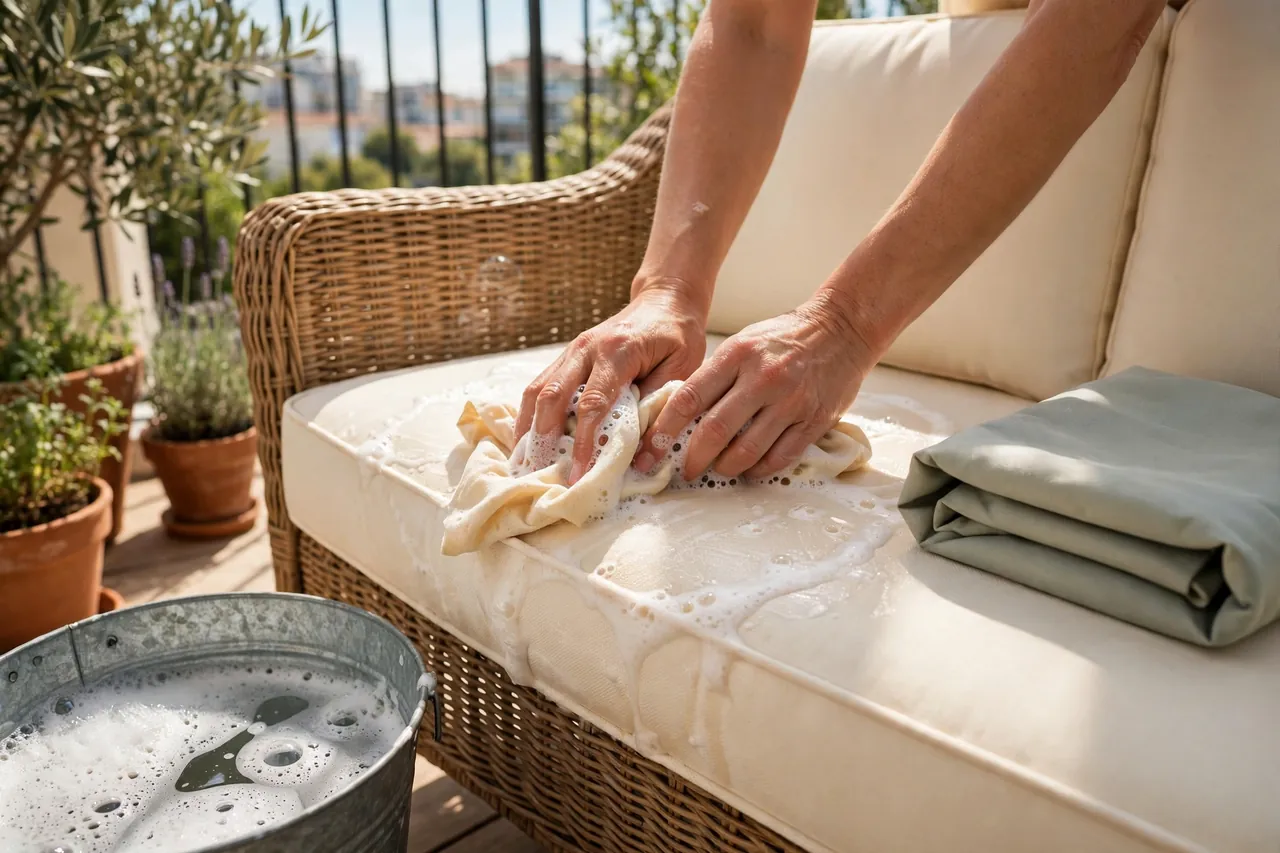
Start with the frame. Clean it with mild soap and water every few months, and inspect the bolts and joints annually for looseness, because bolts loosen through seasonal expansion and contraction. Wipe an aluminum frame dry after rain, and oil a wooden frame once a year if the maker recommends it. A vented cover that lets air move beats a tight plastic cover every time, because trapped moisture is what ruins cushions and rusts steel.
Next, care for the cushions. Remove the covers and wash them according to the label, and let the foam dry fully in the sun before you put the covers back on. Use a breathable, waterproof cover when the sofa is not in use, to prevent debris buildup and UV damage. If the cushions are already worn, our guide to outdoor covers for furniture shows which covers actually protect a small sofa, and our guide on how to store outdoor furniture covers the full winter routine.
Check stability on decks and elevated surfaces, and check local building codes if you place a heavy sofa on a balcony, because some condos limit load capacity. There is no universal certification for residential outdoor furniture, so rely on manufacturer testing claims cautiously, and trust the weight capacity and the warranty more than the marketing words.
Can You Leave a Small Outdoor Sofa Outside All Year?
It is not recommended to leave a small outdoor sofa outside all year unless it is fully protected by a roof and equipped with a waterproof cover. Most cushions absorb moisture over time, which leads to mold, and frames may corrode or weaken. Store the cushions or cover the sofa during winter months for the longest life.
The frame and the cushion have different answers. A powder-coated aluminum frame can stay outside all winter with almost no risk, because aluminum does not rust from rain or snow alone. A steel frame needs its coating checked before the first frost, and a wooden frame needs sealing. The cushion is the part that cannot stay out: even a quick-dry foam cushion absorbs moisture over months, and a damp cushion in a closed cover grows mildew by spring.
The practical routine is simple. Clean the frame, dry the cushions fully, and either bring the cushions inside or cover the whole sofa with a vented, waterproof cover. For a full comparison of how each material handles the cold, our guide to weather-resistant outdoor furniture ranks every frame by climate, and our outdoor sectional couch guide covers the bigger seating option for patios that have the room.
Related Guides
If you are buying a small outdoor sofa, these guides answer the next questions. Start with our outdoor furniture for small spaces guide for the layout, then read our apartment patio ideas guide for balconies. For the pieces around the sofa, see our outdoor side tables guide, our outdoor coffee tables guide, and our outdoor pouf ottoman guide. For the materials, our wicker outdoor furniture guide and our garden chairs small guide cover the rest of the setup.
Frequently Asked Questions
What size is considered a small outdoor sofa?
A small outdoor sofa typically seats two people and measures between 40 and 60 inches wide. Common configurations include loveseats and compact corner units ideal for balconies or narrow patios, and the right size is the one that leaves 24 inches of walkway and 6 inches of clearance on every side.
Are small outdoor sofas comfortable for daily use?
Yes, many models offer deep seating and supportive cushions suitable for regular use. Comfort depends more on cushion thickness and frame ergonomics than size. Look for at least 4-inch thick cushions and a seat depth of 22 inches or more, and sit in the sofa for ten minutes before you buy it.
Can I leave a small outdoor sofa outside all year?
It is not recommended unless fully protected by a roof and equipped with a waterproof cover. Most cushions absorb moisture over time, leading to mold. Frames may corrode or weaken. Store or cover during winter months for longest life, and bring the cushions inside dry.
How do I clean and maintain an outdoor sofa?
Clean frames with mild soap and water every few months. Remove and wash cushion covers according to label instructions. Inspect hardware annually. Use a breathable, waterproof cover when not in use to prevent debris buildup and UV damage, and never store damp cushions.
The right small outdoor sofa is the one that fits your space with room to walk, your use with room to sit, and your budget with room for covers. Tape the outline on the floor, check the seat depth and the cushion, and buy the sofa that leaves you space to enjoy it. The balcony is small, and that is exactly why the sofa should be too.
Note: This guide gives general advice for choosing outdoor sofas. Check balcony weight limits and local building codes before you buy a heavy set, and hire a qualified pro for structural repair or custom builds.