The best night vision security cameras for most homes in 2026 start with the Reolink Argus 4 Pro. Its ColorX starlight sensor records full-color 4K video in near-total darkness with no spotlight, and it saves to a free microSD card with no monthly fee. It usually costs about $170 to $200, as listed in September 2026.
Night vision is the single most important thing a security camera does, because most break-ins happen after dark. The problem is that “night vision” covers two very different technologies: cheap cameras use infrared LEDs that produce grainy black-and-white footage, while the best cameras of 2026 use large starlight sensors that hold full color in near-darkness. This guide compares the five best night vision security cameras for 2026, with dated prices, real specs, and the trade-offs that matter.
The Short Answer: Which Night Vision Camera Should You Buy?
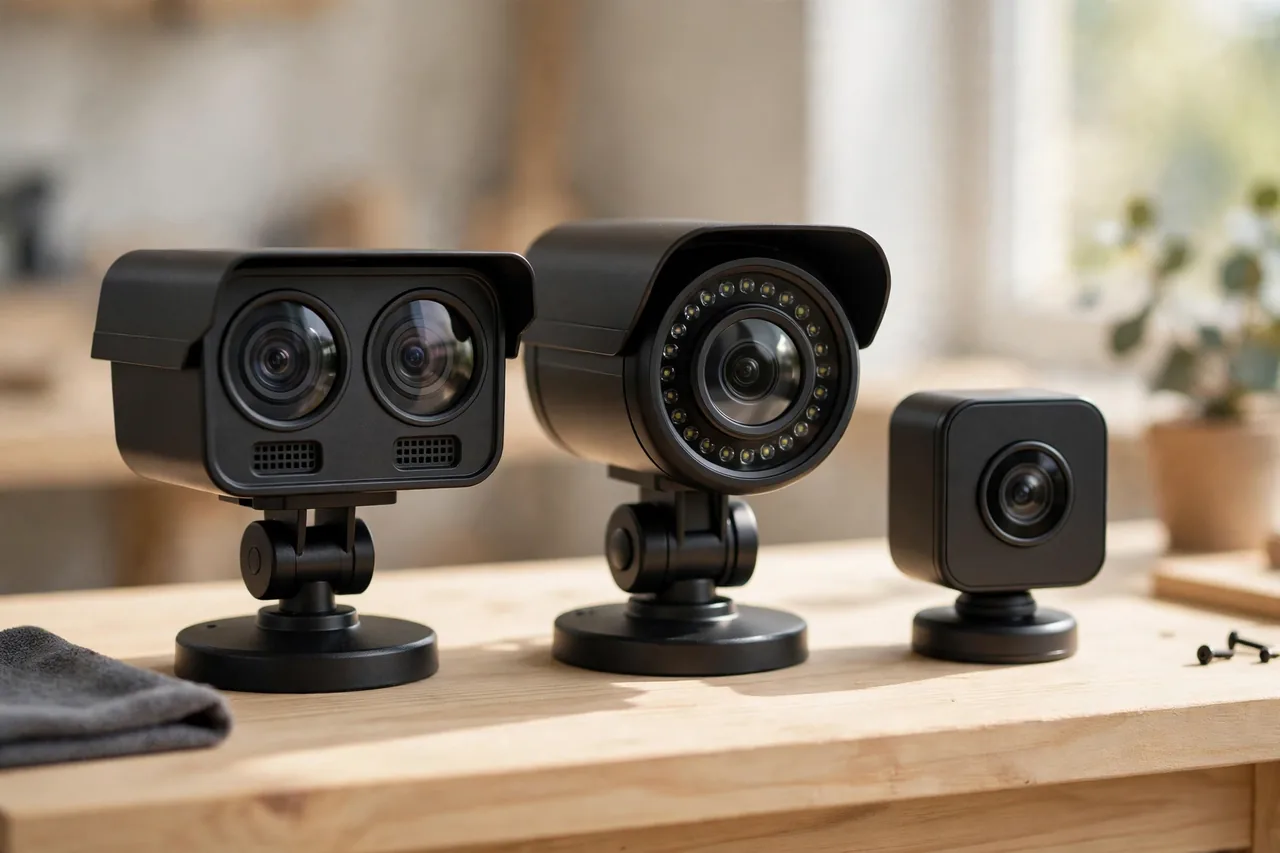
Buy the Reolink Argus 4 Pro if you want the best color night vision with no monthly fee. Its ColorX sensor holds color where rival cameras have long since dropped to grainy black and white, and it does it in 4K.
Buy the Arlo Pro 6 if you want the smartest alerts and a built-in spotlight for total darkness. Buy the eufy SoloCam S340 if you want color night vision with a solar panel and no subscription. Buy the Wyze Cam v4 if your budget is tight and you want color night vision on a porch. Buy the Ring Spotlight Cam 4K Pro if you want a 4K deterrent with the brightest spotlights. The table below makes the choice fast.
Best Night Vision Security Cameras at a Glance
Caption: Best night vision security cameras compared — prices as listed October 2026 unless noted.
| Camera | Night Vision | Video | Price | Best For |
|---|---|---|---|---|
| Reolink Argus 4 Pro | ColorX color, no spotlight | 4K UHD | $170–$200 | Most homes |
| Arlo Pro 6 | Color + spotlight | 2K HDR | $229.99 | Smart alerts |
| eufy SoloCam S340 | Color + spotlight | 3K dual-lens | $219.99 | No-fee solar |
| Wyze Cam v4 | Starlight color | 2.5K QHD | $44.98 | Budget pick |
| Ring Spotlight Cam 4K Pro | Color + spotlights | 4K | $249.99 | Deterrent |
Prices change with sales, so check the live price before you buy. The prices above come from maker pages checked 26 October 2026, as listed by HomeSentinel Reviews, except the Argus 4 Pro range, listed in September 2026, and the Arlo Pro 6 price of $229.99 from SecurityCam Lab.
How We Picked These Night Vision Cameras
A good night vision camera has to do three jobs at once. It must see clearly in the dark, identify the person it sees, and keep recording without a monthly bill. We judged every pick on color accuracy after sunset, infrared range, spotlight behavior, resolution, storage, and subscription cost.
Color comes first. A black-and-white infrared image can tell you someone was there, but a color image tells you they wore a red jacket and drove a white van. Color night vision is worth more than extra resolution, because footage you can use to identify someone beats footage that only detects motion. Infrared range comes second: battery cameras typically reach 25 to 30 feet, while wired cameras push 100 feet or more.
Storage decides your running cost. Cameras with a microSD slot record for free, while Arlo and Ring cameras need a plan to save clips and unlock their smartest alerts. Our best home security camera system guide works out the real five-year cost of each system, so read it before you commit to a subscription camera.
1. Reolink Argus 4 Pro — Best Overall Night Vision Camera
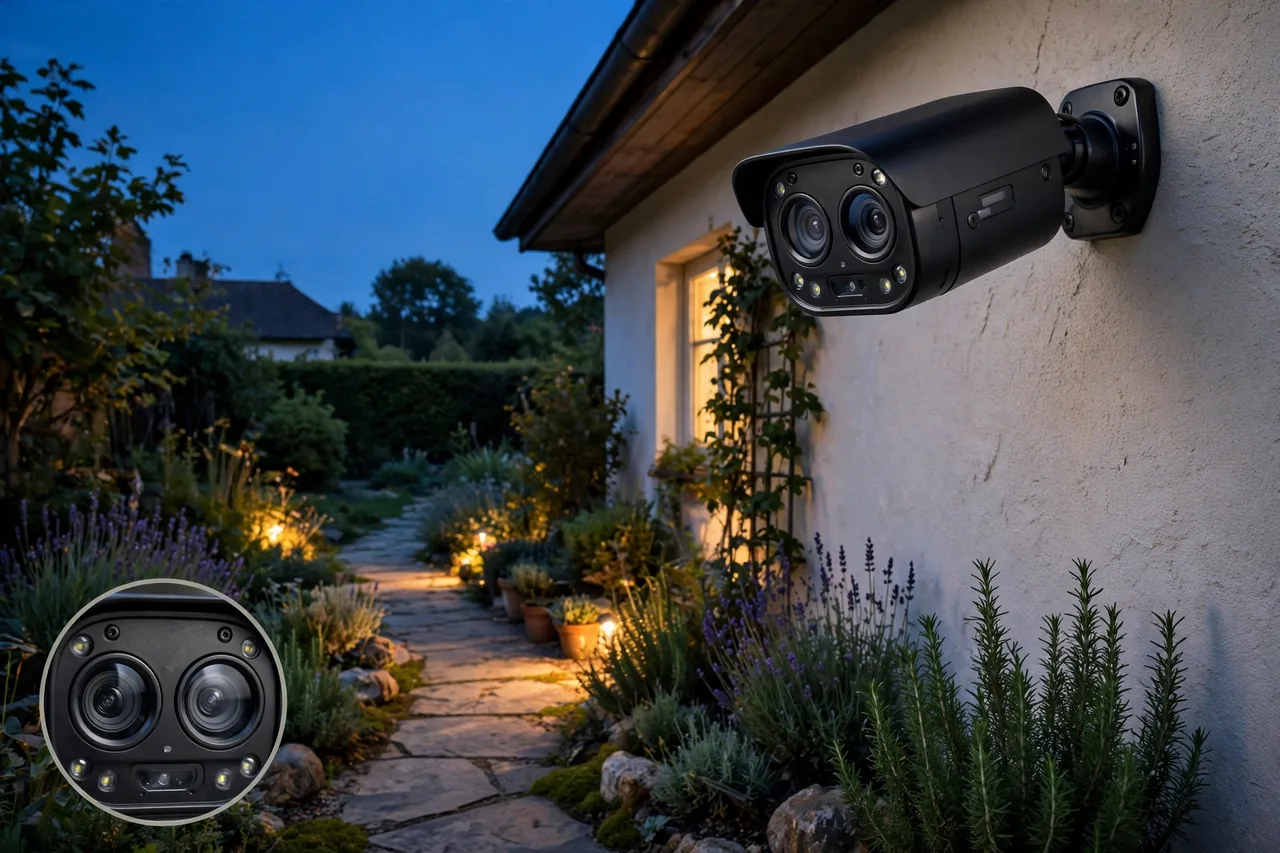
The Reolink Argus 4 Pro is the camera to beat after dark. Its ColorX sensor is a large, high-sensitivity starlight sensor that, according to Reolink, captures full-color footage at light levels as low as 0.01 lux — roughly the brightness of a moonless night with only faint starlight — with no spotlight or infrared.
Caption: Reolink Argus 4 Pro key specs.
| Spec | Detail |
|---|---|
| Price | About $170–$200, listed September 2026 |
| Video | 4K UHD, 180-degree dual-lens view |
| Night vision | ColorX starlight color + IR, full color to ~0.01 lux |
| IR range | About 30 ft |
| Storage | microSD card, free; optional hub, no subscription |
| Power | Battery, optional solar panel |
On top of the color mode, the Argus 4 Pro records true 4K across a 180-degree dual-lens field of view and saves to a microSD card or the optional hub with no monthly fee. Add the matching solar panel and it runs cord-free indefinitely. The catch is that color mode still needs a sliver of ambient light to shine, and the solar panel is sometimes sold separately. Read the SecurityCam Lab night vision comparison for the full head-to-head.
Owners praise the same things reviewers do: the color night vision, the wide 180-degree view, and the lack of a subscription. The common complaints are the price swing across retailers — from about $130 to $220 — and the lack of HomeKit. Buy from a retailer you trust, and confirm what is in the box before you pay.
Pick the Argus 4 Pro if you want the best color night vision with no monthly bill. Skip it if you need HomeKit, or if your yard is pitch black with no ambient light at all.
2. Arlo Pro 6 — Best Night Vision With Smart AI and a Spotlight
The Arlo Pro 6 pairs strong low-light video with the best AI and app in the category. It shoots 2K HDR and offers both standard infrared night vision and a color mode backed by an integrated spotlight, so even in a pitch-black yard with zero ambient light it can switch the light on and capture full color.
Caption: Arlo Pro 6 key specs.
| Spec | Detail |
|---|---|
| Price | $229.99, as listed by SecurityCam Lab |
| Video | 2K HDR, 160-degree view |
| Night vision | Starlight color + integrated spotlight, IR to ~25 ft |
| Storage | Cloud plan needed for saved video and AI alerts |
| Power | Swappable battery, USB-C charging |
| Works with | Alexa, Google Assistant, Apple HomeKit |
Arlo’s person, vehicle, package, and animal detection is the most accurate of the cameras compared here, which cuts down the false alerts that plague cheaper night cameras reacting to bugs and headlights. The Pro 6 also adds USB-C charging and roughly 15 percent longer battery life than the Pro 5S it replaced, per Arlo. The catch is the plan: color recording history and the smart AI alerts need an Arlo Secure subscription. See the SecurityCam Lab comparison for the full breakdown.
Pick the Arlo Pro 6 if you want the sharpest nighttime alerts and do not mind a monthly fee. Skip it if you refuse subscriptions, because a local-storage camera will serve you better.
3. eufy SoloCam S340 — Best No-Fee Color Night Vision
The eufy SoloCam S340 gets you genuinely good color night vision without ever paying a subscription. A built-in spotlight provides full-color footage in the dark, while the dual-camera design — a 3K wide lens plus a 2K telephoto — lets you watch the whole scene and zoom in on a face or plate at the edge of the yard.
Caption: eufy SoloCam S340 key specs.
| Spec | Detail |
|---|---|
| Price | $219.99, checked 26 October 2026 |
| Video | 3K wide lens + 2K telephoto, up to 8x hybrid zoom |
| Night vision | Starlight color + spotlight, IR to ~25 ft |
| Storage | 8 GB onboard, free; optional HomeBase 3 |
| Power | Built-in solar panel, 360-degree pan |
The S340 pans a full 360 degrees to follow motion at night and records to 8 GB of free onboard storage with on-device AI that tells people from cars and animals. With a built-in solar panel on top, it is also self-charging. For most homes that want color after dark and no recurring bill, this is the smart buy. Its maker page lists the $219.99 price, as checked 26 October 2026 by HomeSentinel Reviews.
Pick the S340 if you want a self-charging camera that never bills you. Skip it if you need a wired camera for 24/7 recording, because a battery camera sleeps between events.
4. Wyze Cam v4 — Best Budget Night Vision Camera
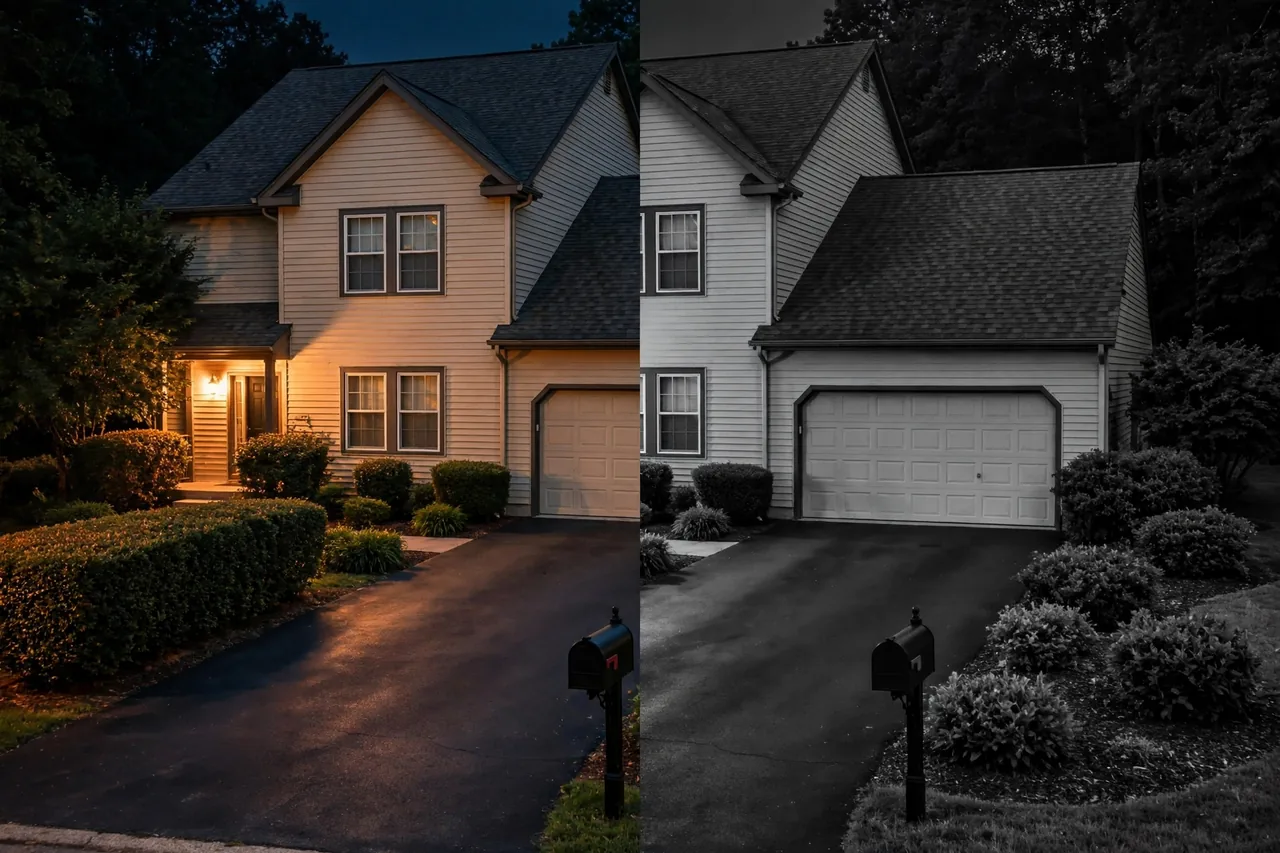
The Wyze Cam v4 delivers color night vision that punches well above its price. It uses a starlight-class sensor for full-color footage in low light, drops to standard infrared in total darkness, and shoots a sharp 2.5K QHD image — all for $44.98.
Caption: Wyze Cam v4 key specs.
| Spec | Detail |
|---|---|
| Price | $44.98, checked 26 October 2026 |
| Video | 2.5K QHD |
| Night vision | Starlight color + spotlight, IR to ~30 ft |
| Storage | microSD up to 256 GB, free; cloud history is an add-on |
| Power | Wired; outdoor use needs the outdoor power adapter |
The v4 records locally to a microSD card with no required subscription, though cloud event history and some AI features are an inexpensive add-on. Wi-Fi range and app polish trail Arlo and Reolink, but for putting capable color night vision on a porch, doorway, or indoor room on a tight budget, nothing else comes close on value. Its maker page lists the $44.98 price, as checked 26 October 2026 by HomeSentinel Reviews.
Pick the Wyze v4 if your budget is tight and you want color night vision now. Skip it if you want the best AI alerts, because those cost extra here.
5. Ring Spotlight Cam 4K Pro — Best 4K Deterrent
The Ring Spotlight Cam 4K Pro is the best night vision camera for homeowners who want the camera itself to scare off a visitor. It pairs 4K video with 600-lumen spotlights and 3D Motion Detection, so the lights fire the moment someone crosses the yard.
Caption: Ring Spotlight Cam 4K Pro key specs.
| Spec | Detail |
|---|---|
| Price | $249.99, checked 26 October 2026 |
| Video | 4K |
| Night vision | Color + 600-lumen spotlights, 3D Motion Detection |
| Storage | Ring Protect plan needed to re-watch recordings |
| Power | Plug-in or hardwired, Wi-Fi 6 |
The 4K Pro is the priciest pick here, and its 600-lumen spotlights are the brightest on this list, which is what makes it a deterrent rather than just a witness. The trade-off is the subscription: re-watching recordings needs Ring Protect, so the five-year cost is far higher than the sticker price. Its maker page lists the $249.99 price, as checked 26 October 2026 by HomeSentinel Reviews.
Pick the Ring 4K Pro if you already use Ring and want the brightest deterrent. Skip it if you want free local storage, because the Reolink and eufy picks record for free.
Color vs Infrared: What Actually Matters After Dark
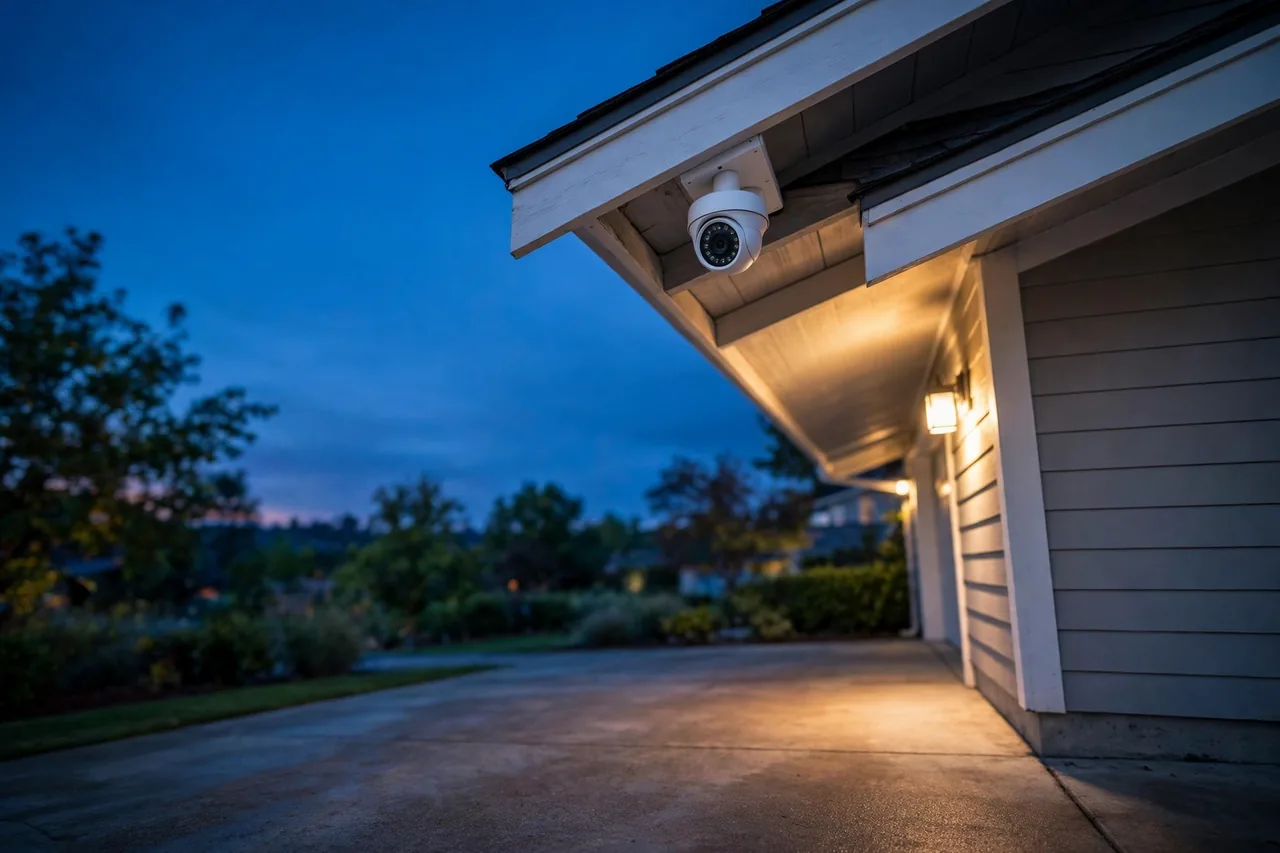
Color night vision and infrared night vision solve different problems, and most buyers confuse them. Infrared uses invisible IR LEDs to light a scene, producing black-and-white footage that works in total darkness but loses color detail. Color night vision uses a large, light-sensitive starlight sensor, sometimes plus a spotlight, to keep footage in full color, which makes it far easier to identify clothing, vehicles, and faces.
The lux rating tells you how little light a camera needs to stay in color. The best 2026 cameras claim full color down to about 0.01 lux, roughly a moonless night. A number near 0 lux means the camera only works in color with a spotlight. Check the lux rating before you buy, because a camera that drops to black and white at dusk is not a color night vision camera.
Infrared range decides how much of a dark property you see. Battery cameras typically reach 25 to 30 feet, while wired cameras like Lorex push 100 feet or more — SafeHome’s night vision guide notes that Lorex cameras offer some of the best night vision in the industry, with long-range color night vision. See SafeHome’s best night vision cameras guide for the wired long-range options. For most homes, 30 feet of color beats 100 feet of black and white, because identification matters more than distance.
How to Choose a Night Vision Camera
Start with your darkest spot, not your brightest. Walk the yard at night and look at what light already exists: a porch light, a streetlight, a neighbor’s floodlight. If some ambient light reaches the area, a starlight camera like the Argus 4 Pro holds color on its own. If the spot is pitch black, you need a camera with a built-in spotlight, like the Arlo Pro 6 or the eufy S340.
How Far Can a Camera See at Night?
It depends on the infrared illuminators. Most consumer cameras see 25 to 30 feet in infrared mode, while many Reolink and Lorex models advertise up to 100 feet, per the manufacturers. Color night vision range is shorter and depends on how much ambient or spotlight light reaches the scene. A wide angle security camera covers more ground with fewer blind spots, but its pixels spread thinner, so read faces at close range only.
Do You Need a Subscription?
Add up the five-year cost before you buy. A $230 camera with a $10 monthly plan costs $830 over five years, while a $200 camera with local storage costs $200. Our security camera with SD card guide shows how local storage works, and our footage retention guide explains how long each system keeps your clips.
Wired or Battery?
Wired cameras record around the clock and never run out of battery mid-night, which is why they win for serious overnight coverage of a big property. Battery cameras are easy to mount anywhere, but they sleep between events and need charging or solar. Our PoE security camera guide explains the wired route that never drops a signal, and our battery operated security camera guide covers how long battery cameras really last.
Where to Mount a Night Vision Camera
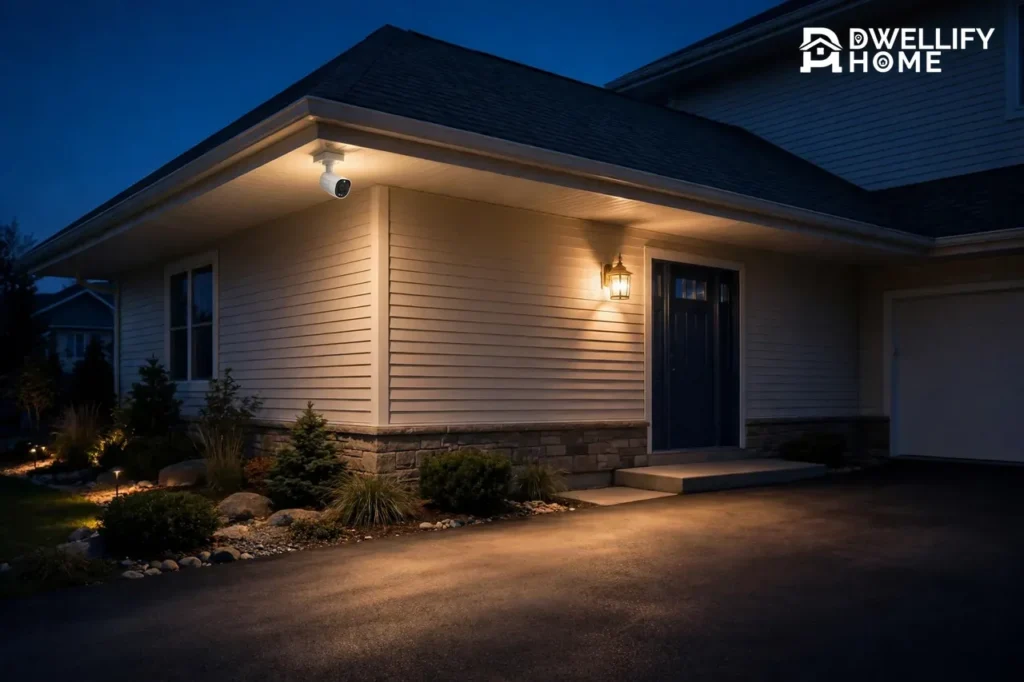
Mount the camera 8 to 10 feet high, on a wall or under an eave, and angle it down about 15 degrees. That height keeps faces in frame and puts the camera out of easy reach. Point it so it sees the approach, not just the door: a camera that watches the walkway catches a person early, while a camera aimed straight at a door only sees them at the last second.
Cover the front door first, then the driveway, then the back door. A front porch camera watches packages and visitors, while a driveway security camera catches cars and faces from farther away. If you have a garage, a garage security camera closes the last big gap.
Keep the lens out of direct light. A camera staring into a streetlight or a bright floodlight turns every person into a dark shape, so keep bright lights behind the camera, not in front of it. The PIR sensor inside the camera decides when to record, and its sensitivity setting decides how often it fires — our PIR motion sensor sensitivity guide explains how to tune it so the camera catches people and ignores moths.
What Most People Get Wrong About Night Vision Cameras
Most people buy for the megapixels and ignore the sensor size. A higher-megapixel camera does not always look better after dark, because smaller pixels catch less light. A big starlight sensor beats a big megapixel number after dark, every time.
The second mistake is mounting the camera too high. Above 12 feet, faces turn into the tops of heads, and the night video loses the detail you bought the camera for. The third mistake is forgetting the subscription: the cheapest camera on the shelf is often the most expensive camera over five years. Check the plan price before you buy, not after the free trial ends.
Related Guides
If you are building a full camera setup, start with our best home security camera system guide. Renters should read security cameras for apartments first, and anyone weighing a full system should compare the best home security systems with cameras. For the yard itself, our wireless outdoor security camera guide covers Wi-Fi range, which matters for every wireless pick.
Frequently Asked Questions
What is the best security camera for night vision in 2026?
The Reolink Argus 4 Pro is the overall pick — its ColorX starlight sensor captures full-color video in near-total darkness with no spotlight, and it records in 4K to a free microSD card. For the best AI plus a built-in spotlight, the Arlo Pro 6 is the top choice, and the Wyze Cam v4 is the best budget color night vision camera.
What is the difference between color and infrared (IR) night vision?
Infrared night vision uses invisible IR LEDs to light a scene, producing black-and-white footage that can see in total darkness but loses color detail. Color night vision uses a large starlight sensor, sometimes plus a spotlight, to keep footage in full color, which makes it far easier to identify clothing, vehicles, and faces.
How far can a security camera see at night?
It depends on the IR illuminators. Most consumer cameras see 25 to 30 feet in infrared mode, while many Reolink and Lorex models advertise up to 100 feet of IR range, per the manufacturers. Color night vision range is shorter and depends on how much ambient or spotlight light reaches the scene.
Do night vision security cameras work in complete darkness?
Infrared cameras do — their IR LEDs provide their own invisible light, so they work in a pitch-black room or yard. Pure color night vision needs some ambient light, but cameras that combine color night vision with a built-in spotlight, like the Arlo Pro 6, get full color even in total darkness by switching the light on.
Does night vision drain a battery camera faster?
Yes. Infrared LEDs and spotlights both use power, so heavy nighttime motion shortens battery life. A camera with a starlight sensor that stays in color without firing a spotlight is more efficient, and pairing any battery camera with a solar panel offsets the extra night-time draw.
Start with the Reolink Argus 4 Pro if you want the best color night vision with no monthly fee, or the Wyze Cam v4 if you want it on a budget. Mount it 8 to 10 feet high, aim it at the approach, and check the subscription cost before you buy. Then read our best home security camera system guide to plan the rest of your setup.