A heat electric thermostat for electric baseboard heat must be a line-voltage thermostat, rated for 120 or 240 volts. It switches the heater’s full power directly, so a standard 24-volt smart thermostat made for a furnace or heat pump will not work on it and can be dangerous if wired to it. The right thermostat matches your heater’s voltage, its total wattage, and the wires in your wall box.
If your home heats with electric baseboards, wall heaters, or radiant ceiling panels, this guide walks you through the whole job. You will learn how to tell line-voltage from low-voltage wiring, how to pick between a simple dial and a smart thermostat, which settings actually save energy, and when to call an electrician instead of doing it yourself.
What Is a Heat Electric Thermostat?
A heat electric thermostat is the wall control for electric resistance heat, such as baseboard heaters, fan-forced wall heaters, and radiant ceiling panels. It turns the heater on when the room cools below your set temperature and turns it off when the room warms back up. Unlike a furnace thermostat, which only sends a small signal to a control board, an electric heat thermostat carries the heater’s full electrical power through itself. The U.S. Department of Energy describes it this way: baseboard heaters often use a line-voltage thermostat, which directly controls the power supplied to the heating device, while other heating equipment uses low-voltage thermostats that work through a relay.
That one difference shapes everything else in this guide. The thermostat is not a remote control for your heat. It is the switch itself, and it must be built to handle the full load of the heater it controls.
Most homes with electric heat have one thermostat per room. Each room is its own heating zone, with its own thermostat and its own breaker. That is why a house with five baseboard-heated rooms needs five thermostats, not one.
Line-Voltage vs Low-Voltage: The Difference That Matters
Every thermostat falls into one of two families, and mixing them up is the most common and most dangerous mistake in electric heating. A low-voltage thermostat runs on 24 volts and sends a small signal to a furnace, heat pump, or air handler, which does the heavy switching. A line-voltage thermostat runs on your home’s full household power, 120 or 240 volts, and switches the heater on and off by itself.
Table: Line-voltage vs low-voltage thermostats at a glance
| Feature | Line-voltage thermostat | Low-voltage thermostat |
|---|---|---|
| Voltage | 120 or 240 volts | 24 volts |
| Used for | Electric baseboard, wall, and radiant ceiling heat | Furnaces, heat pumps, central air |
| How it works | Switches the heater’s full power directly | Sends a small signal to a control board |
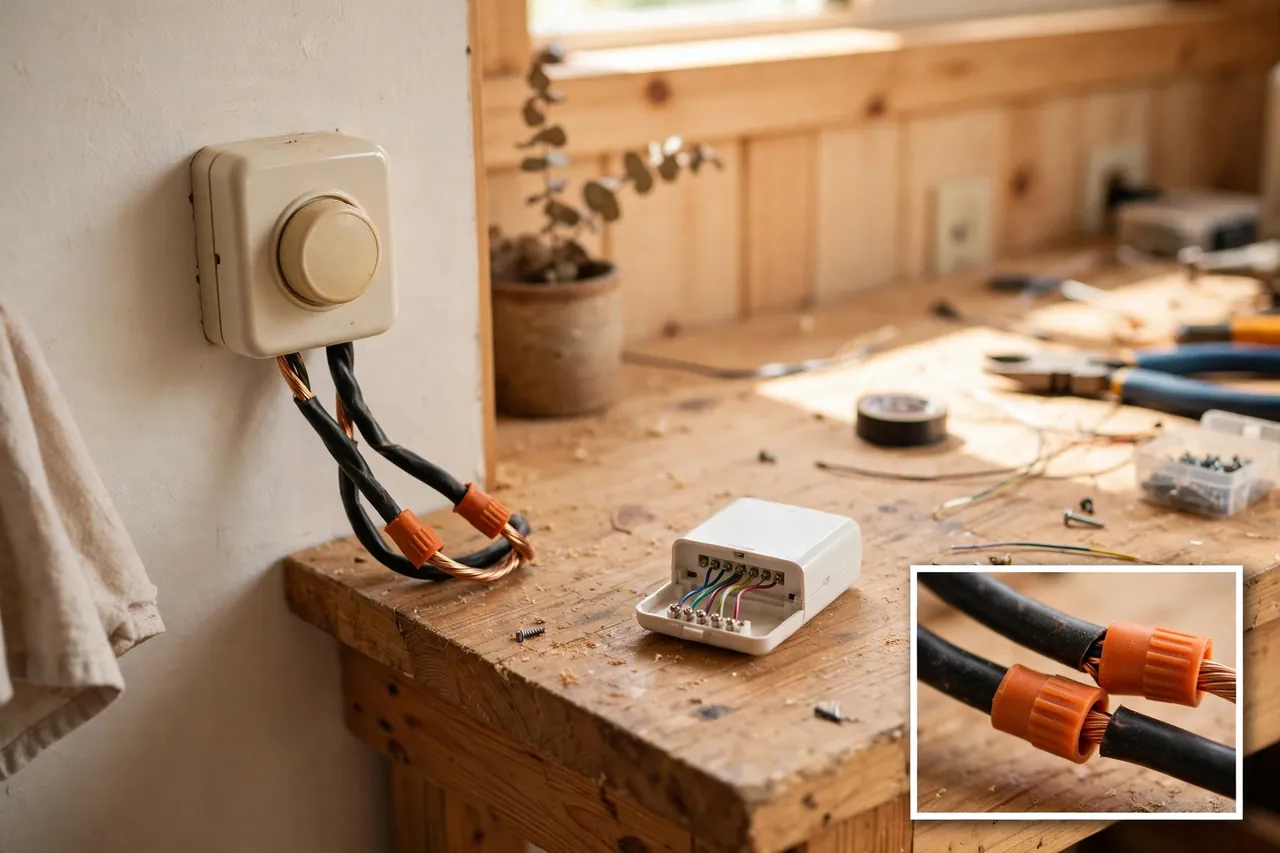
| Wiring | 2 to 4 thick wires, often with wire nuts | Thin 18-gauge wires on small terminals |
| Common smart models | Mysa, Meross, Sinopé | Nest, ecobee, Honeywell T-series |
| Has a C wire | No | Sometimes, for thermostat power |
Here is the rule to remember: a thermostat built for 24 volts cannot safely handle 120 or 240 volts. Wiring one to a baseboard circuit can destroy the thermostat and create a fire risk. The reverse fails too. A line-voltage thermostat on a furnace will not work, because a furnace needs a low-voltage signal, not switched household power.
How to Tell Which Thermostat Your Electric Heat Needs
You do not need special tools to figure out which family your thermostat belongs to. These five checks, done with the power off, tell you what you have.
- Read the label on the old thermostat. Take the cover off and look for a voltage rating printed on the back plate or inside the wiring compartment. A label that says 120 V, 240 V, or 110, 115, 120, or 240 VAC means line voltage. A label that says 24 V or 24 VAC means low voltage.
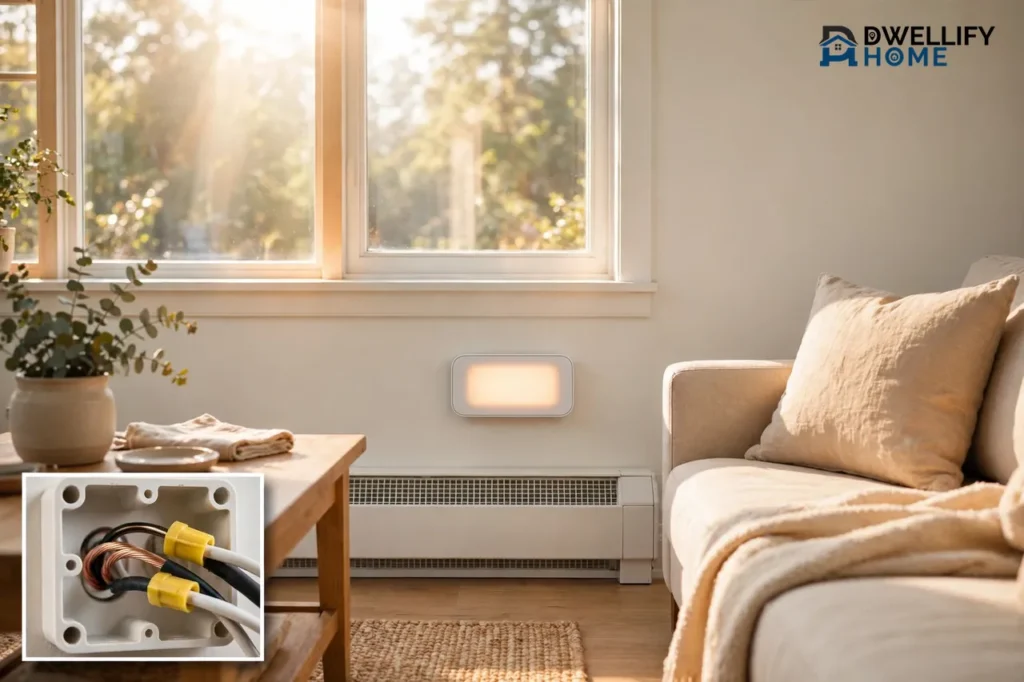
- Look at the wires. Line-voltage thermostats usually have two to four thick wires, often 10- to 14-gauge, joined with wire nuts. Low-voltage thermostats have a bundle of thin wires, usually 18-gauge, connected to small screw terminals marked with letters such as R, W, Y, G, and C.
- Check the breaker. A 240-volt baseboard circuit uses a double-pole breaker, which takes up two slots in your panel. A furnace thermostat circuit runs from the furnace’s own low-voltage transformer, not from a dedicated high-voltage breaker.
- Look at what the thermostat controls. If it controls an electric baseboard heater, a wall heater, or a radiant ceiling panel, it is almost certainly a line-voltage unit. If it controls a furnace or a heat pump, it is a low-voltage unit. If your home heats with a heat pump, read our guide to thermostats for heat pumps instead, because those rules are different.
- Count the heaters on the circuit. Add up the wattage printed on every heater that one thermostat controls. That total is the load your replacement thermostat must be rated to switch. A thermostat rated below that total is unsafe, no matter how good its features are.
If any check leaves you unsure, stop and ask a licensed electrician. Guessing wrong on voltage is not a small mistake. It is the one that causes damage.
Types of Electric Heat Thermostats
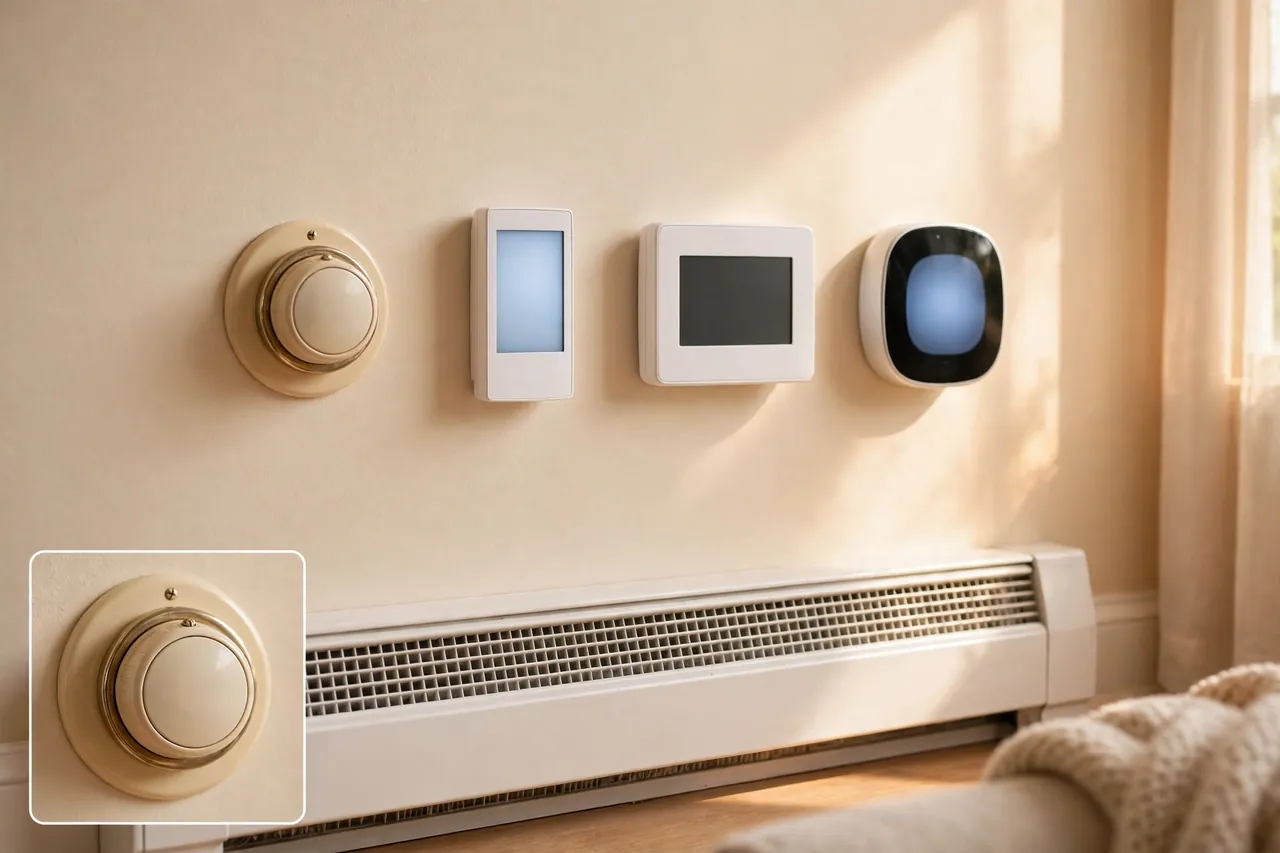
Once you know you need a line-voltage thermostat, you have four types to choose from. They all switch the same power, but they differ in accuracy, comfort, and control.
Mechanical Dial Thermostats
The classic round or rectangular dial is the simplest option. A bimetal coil inside senses the room temperature and physically opens or closes the circuit. Dial thermostats are cheap, tough, and easy to use, but they are also the least accurate. The room temperature can swing several degrees above and below your setting before the heater responds, and the dial’s printed numbers are often only approximate. A single-pole dial has no true off position. It turns down to a low setting, but one wire stays live. A double-pole dial interrupts both hot wires on a 240-volt circuit and gives you a real off.
Digital Non-Programmable Thermostats
A digital line-voltage thermostat uses an electronic sensor instead of a bimetal coil, so it usually holds the room within about one degree of your setting. You set the temperature with buttons and read it on a small display. There is no schedule, so the temperature stays where you set it until you change it. This type suits a room that stays occupied all day, or a homeowner who wants better accuracy without learning any programming.
Programmable Thermostats
A programmable electric heating thermostat adds a schedule to digital accuracy. You set lower temperatures for the night and for hours when nobody is home, and the heat comes back up before you wake or return. The U.S. Department of Energy notes that both line-voltage and low-voltage thermostats are available as programmable models for setting the temperature back at night or while you are away. A schedule only saves energy if you actually use it, so pick a model whose programming you can understand in five minutes, not one you will give up on.
Smart Line-Voltage Thermostats
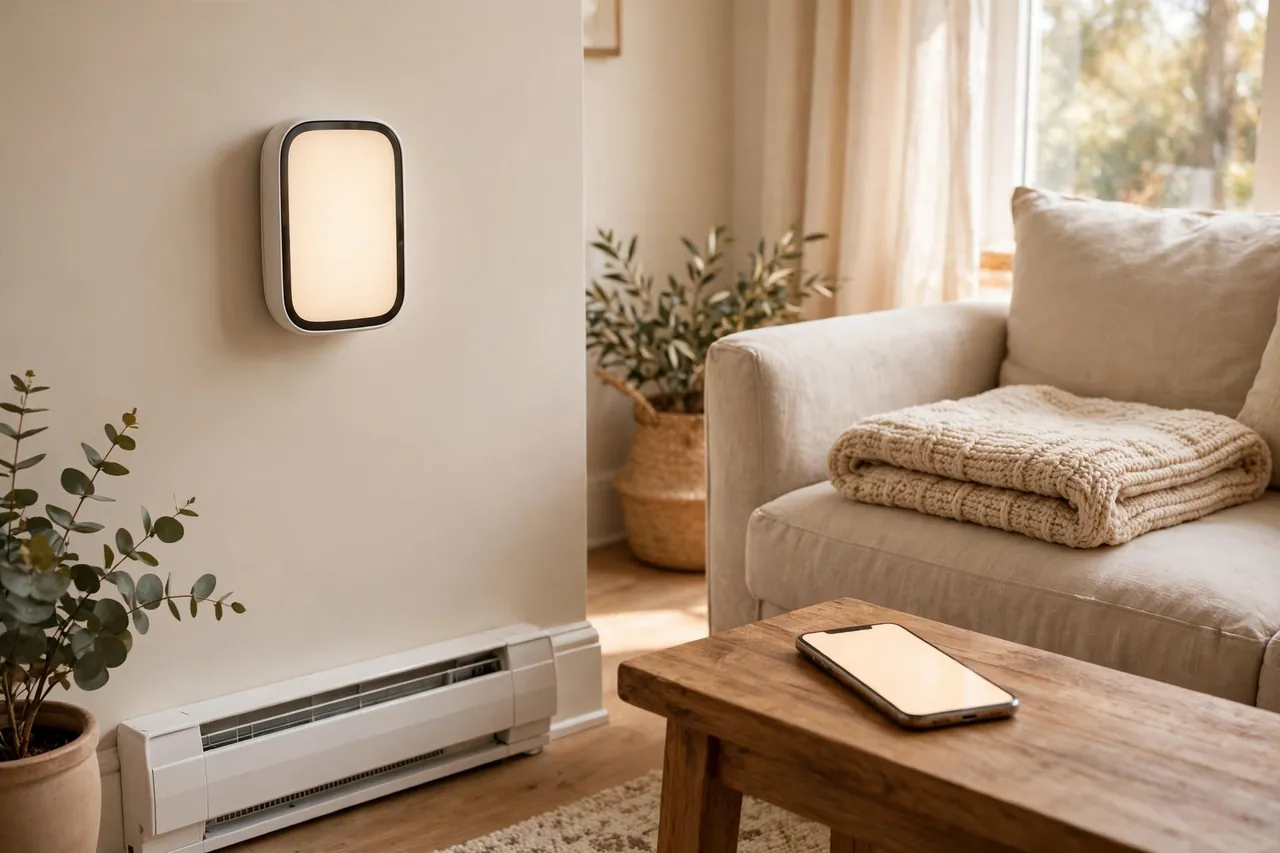
A smart thermostat for electric heat is a programmable thermostat with Wi-Fi, an app, and voice control added. It is built for 120 or 240 volts from the start, so it switches the heater’s full load safely. Good models add energy monitoring, humidity readings, and room-by-room control from your phone. They cost more than a dial or a basic digital model, and they need the right wiring in the wall box, which the next sections cover in detail.
Can a Smart Thermostat Work With Electric Heat?
Yes, a smart thermostat can work with electric heat, but only if it is a smart thermostat built for line voltage. The famous smart thermostats most people know, Google Nest and ecobee, are built for 24-volt central systems and do not work directly with electric baseboard heaters. Google states this plainly on its Nest compatibility page: high-voltage systems, such as electric baseboard heaters, are not compatible with Nest thermostats. The same limit applies to ecobee and to most Honeywell smart models, which are all low-voltage devices.
That does not leave you without smart options. A small group of thermostats is made exactly for this job. Mysa makes the best-known line, with the V2 and LITE models for electric baseboard heaters, fan-forced convectors, and radiant ceiling panels. Meross makes a Matter-based line-voltage thermostat, the MTS215, for baseboard, convector, and fan-forced heat. Sinopé makes Wi-Fi line-voltage models such as the TH1123WF, sold mainly in Canada. These thermostats switch 120 or 240 volts directly, connect to Wi-Fi, and work with Google Home, Alexa, and Apple HomeKit.
There is one workaround for using a 24-volt smart thermostat with electric heat, and it is not a shortcut. A licensed electrician can install a relay with its own 24-volt transformer, so the low-voltage thermostat sends its small signal to the relay, and the relay switches the heater’s power. Each heated zone needs its own relay, its own box, and new thin thermostat wire run to it. Google also notes that a professional can sometimes add a step-down transformer to make a high-voltage system work with Nest. For one room, a purpose-built line-voltage smart thermostat usually does the same job in the existing wall box, for less money and less disruption.
One more wiring fact trips people up. Line-voltage systems have no C wire. The common wire, which powers many 24-volt smart thermostats, belongs to low-voltage systems only. If you are curious about how it works on the furnace side, our explainer on what a common wire in a thermostat is covers it. On electric heat, the question to ask instead is whether your wall box has a neutral wire or a second live wire, because most line-voltage smart thermostats need one of those to power themselves.
Smart Thermostats for Electric Baseboard Heat: What to Compare
Prices below are list prices from each maker’s US store, as reported by EcoHome Intelligence on November 1, 2026, and checked again on November 6, 2026. Prices change, so confirm the current price before you buy. Installation is not included in these prices.
Table: Line-voltage smart thermostats compared
| Model | List price | Voltage and max load | Needs neutral or L2 wire |
|---|---|---|---|
| Mysa V2 | $159 | 120–240 V; up to 3,800 W at 240 V | Yes |
| Mysa LITE | $99 | 120–240 V; up to 3,800 W at 240 V | Yes |
| Meross MTS215 (Matter) | $79.99 | 120–240 V; max load not stated on store page | Check the manual |
| Mysa Gen3 | Check maker’s store | 120–240 V; up to 4,000 W at 240 V | Yes |
The Mysa V2 suits most homes. It handles up to 1,900 watts at 120 volts or 3,800 watts at 240 volts on a 20-amp breaker, and it adds energy monitoring and a humidity sensor over the LITE. Mysa backs both models with a 5-year warranty. Skip the V2 if the heater on that thermostat draws less than 250 watts, because that is the V2’s minimum load. The LITE has no minimum load, which suits small heaters, and it uses the same app and voice assistants with buttons instead of a touchscreen.
The Meross MTS215 is the budget pick for Matter-based smart homes. It works with Apple Home, Alexa, Google Assistant, and SmartThings, and it has energy monitoring and open-window detection that pauses heating. Before you buy it, check the manual for its maximum load and wiring needs, because Meross’s store page does not state them. The newer Mysa Gen3, rated up to 4,000 watts at 240 volts, is sold mainly through Mysa’s own store.
Compare these three things before you compare prices: the maximum load against your heaters’ total wattage, the wiring in your wall box, and the heater types the model lists as compatible. A cheap thermostat that cannot handle your load or your wiring is not a bargain.
How to Choose the Right Thermostat for Baseboard Heating
Choosing well takes ten minutes of checking and saves you a return, a dead thermostat, or worse. Work through these steps in order.
- Confirm line voltage. Read the label on the old thermostat and check the breaker. If it says 120 or 240 volts, you need a line-voltage replacement. If you find thin low-voltage wires and lettered terminals instead, your system is a central system, and our thermostat wiring guide walks through that side.
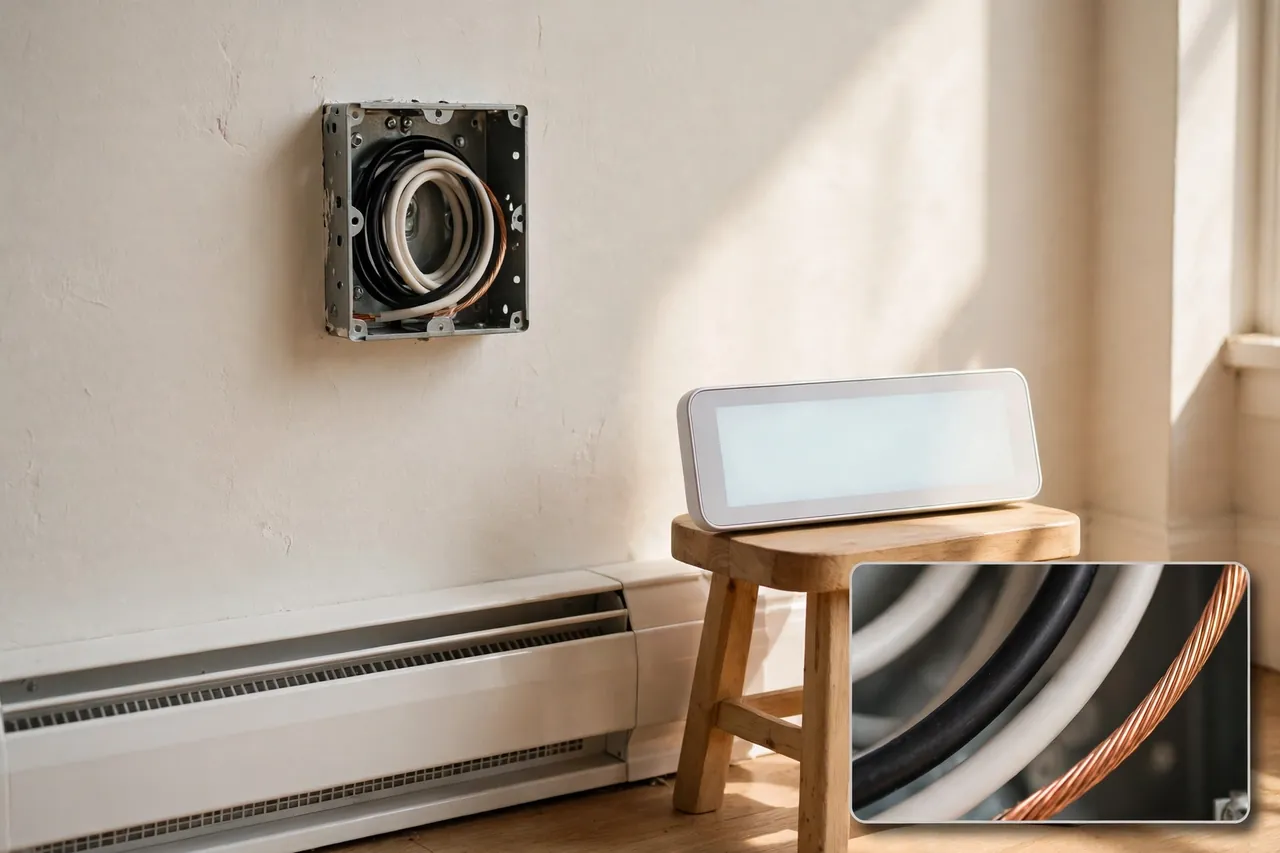
- Count the wires in the wall box. Turn the breaker off first, then take the old thermostat off the wall and count the wires. Most line-voltage smart thermostats need three or four wires, including a neutral wire or a second live wire. Mysa states that its baseboard thermostats cannot work on two-wire setups with a single conductor. Two-wire boxes are the most common reason a smart baseboard thermostat will not fit, and the fix is new wire or a different model, not forcing the install.
- Add up the heater wattage. Read the wattage label on every heater that the thermostat controls and add the numbers together. A 1,500-watt heater on a 240-volt circuit draws about 6.25 amps, and your thermostat must be rated above the total. Keep a safety margin. Never install a thermostat rated below the load it must switch.
- Check the heater type. Electric in-floor heating usually needs a floor-sensor model, and Mysa sells a separate thermostat for it. A baseboard thermostat is made for baseboard, fan-forced convector, and radiant ceiling heat. Match the model’s listed heater types to the heater you actually own.
- Pick single-pole or double-pole. A single-pole thermostat interrupts one hot wire and has no true off, which is fine for many rooms but leaves the heater partly live. A double-pole thermostat interrupts both hot wires on a 240-volt circuit and cuts power to the heater completely when you turn it off. If you want a real off for maintenance or safety, choose double-pole.
- Decide how much control you want. A dial is fine for a spare room. A programmable model suits a bedroom with a regular routine. A smart model earns its price in rooms you heat every day, because you can change the schedule from your phone and see what each room uses.
Energy-Saving Settings for Electric Heat
Electric resistance heat turns every watt of electricity into heat, which sounds efficient until you look at the bill. The heat itself is 100 percent efficient at the heater, but electricity is an expensive fuel, so the savings come from heating less, not from heating better. Three habits do most of the work.
First, heat only the rooms you use. Baseboard heat is already zoned room by room, so turn unused rooms down to about 55 to 60 degrees Fahrenheit, just warm enough to protect pipes and keep damp out. Close the doors of those rooms so the warm air stays where you want it.
Second, use setbacks on a schedule. Lower the temperature at night and while the house is empty, then bring it back up before you wake or return. The U.S. Department of Energy points out that programmable line-voltage thermostats let you set the temperature back at night or while you are away, and that heating only the rooms in use is where the savings come from. A steady 68 degrees while you are home and 60 to 62 degrees while you sleep or are out is a sensible starting point. Adjust from there by comfort, not by a chart.
Third, let the thermostat do its job well. Put the thermostat on an interior wall, away from the heater itself, direct sunlight, drafts, and heat-producing appliances, so it reads the room instead of a hot or cold spot. Keep furniture and curtains clear of the baseboard heater so warm air can rise freely. A thermostat that senses a cold draft will run the heater long after the room is warm.
A smart thermostat helps with all three habits because it holds the schedule for you, room by room, and lets you turn a room down from your phone when plans change. It cannot change the cost of electricity, and no thermostat can make resistance heat cheap. What it can do is cut the hours your heaters run, and the hours are the bill.

Installing a Line-Voltage Thermostat Safely
Replacing a thermostat on a 120- or 240-volt circuit is electrical work, not a gadget upgrade. Many local codes treat it that way, and a mistake can cause a serious shock or a fire. If you are not comfortable working inside an electrical box, hire a licensed electrician. That is the right call, not a failure.
If you do the swap yourself, follow these steps exactly, and stop at any point that feels unclear.
- Turn off the breaker for the heater circuit. Find the double-pole breaker for the room’s heater and switch it off. Then confirm the power is really off with a non-contact voltage tester at the thermostat box. Never trust the breaker label alone.
- Take a photo of the old wiring. Before you disconnect anything, photograph the wires and how they connect. Label each wire with tape if the photo is unclear.
- Remove the old thermostat. Unscrew it from the wall box and gently pull it out. Do not yank the wires. If the wires are short or damaged, stop and call an electrician.
- Match the wires to the new thermostat’s instructions. Connect line wires to line terminals and load wires to load terminals, exactly as the manual shows. Use the wire nuts supplied, twist them tight, and tug each wire to confirm it holds. Loose connections overheat.
- Mount the new thermostat level on an interior wall. Keep it about 48 to 54 inches from the floor, away from the heater, windows, and drafts. A crooked or badly placed thermostat reads the room wrong.
- Turn the breaker back on and test. Set the thermostat above the room temperature and confirm the heater warms up. Then set it below the room temperature and confirm the heater shuts off. If the heater stays on, or the breaker trips, turn the breaker off again and call an electrician.
Never install a low-voltage thermostat on a line-voltage circuit, and never install a line-voltage thermostat on a furnace. If your thermostat has thin wires and lettered terminals, it belongs to a central system, and the steps above do not apply. Our guide to installing smart thermostats covers the 24-volt side.
Troubleshooting: When Your Electric Heat Thermostat Acts Up
Most electric heat thermostat problems have a short list of causes. Start with the safest and cheapest checks first.
Table: Common electric heat thermostat problems and fixes
| Problem | Check first | Next step |
|---|---|---|
| Heater never turns on | Breaker on; thermostat set above room temperature | Check for a tripped breaker or a failed thermostat |
| Heater never turns off | Single-pole thermostat has no true off | Switch to a double-pole model with a positive off |
| Room swings hot and cold | Old dial thermostat accuracy; thermostat placement | Replace with a digital model; move it off a cold wall |
| Thermostat feels hot or smells burnt | Turn the breaker off at once | Call an electrician; do not reuse the thermostat |
| Smart thermostat will not power up | Two-wire box with no neutral or second live wire | Run new wire or choose a model that fits two wires |
| One room cold, others fine | That room’s thermostat setting and breaker | Test the heater and thermostat for that zone only |
A heater that will not shut off deserves special attention. On a single-pole thermostat, that can be normal, because there is no true off position. But a heater that runs with the thermostat turned fully down, or a thermostat that feels hot or smells burnt, is not normal. Turn the breaker off and call an electrician. Do not keep using it.
If the thermostat itself seems fine but the room still will not heat, the problem may sit in the heater or the circuit rather than the control. Our guide to a thermostat that is not working walks through the full check sequence. And if your home also has a furnace that has stopped working, that is a different system with different causes, covered in our guide to a furnace that is not working.
Common Mistakes to Avoid
- Buying a Nest or ecobee for baseboard heat. They are excellent thermostats for the wrong system. Check compatibility before you buy, not after the box is open.
- Skipping the wattage math. A thermostat rated for 3,800 watts cannot safely control 4,500 watts of heaters. Add the numbers up first.
- Ignoring the wire count. A smart thermostat that needs a neutral wire will not work in a two-wire box, no matter how many times you rewire it.
- Mounting the thermostat above the heater or on an outside wall. It will read the heater’s warmth or the wall’s cold instead of the room, and the room will never feel right.
- Blocking the heater with furniture or long curtains. Trapped heat can damage the heater and the wall, and the room stays cold while the heater works hard.
- Working on a live circuit. Always switch the breaker off and test with a voltage tester before you touch a wire. Line voltage does not forgive a slip.
Related Guides
Thermostat Heat Pump Guide: Settings, Aux Heat, and Choosing the Right Thermostat · Furnace Not Working? Fix It Fast With These Safe Checks First · What Is a Common Wire in a Thermostat?
Frequently Asked Questions
Can I use a Nest or ecobee thermostat with electric baseboard heaters?
No. Both are built for 24-volt central systems, and Google states that high-voltage systems such as electric baseboard heaters are not compatible with Nest thermostats. Use a line-voltage smart thermostat such as a Mysa or Meross model instead, or ask an electrician about a relay setup.
What is the best smart thermostat for baseboard heaters?
For most homes, the Mysa V2: 120 to 240 volts, up to 3,800 watts at 240 volts, energy monitoring, and Google, Alexa, and Apple HomeKit support. The Mysa LITE is the cheaper version without energy monitoring, and the Meross MTS215 is the budget pick for Matter smart homes.
Do smart baseboard thermostats need a neutral wire?
Mysa’s do: a Mysa baseboard thermostat needs a neutral wire or a second live wire and will not work on two-wire installs. Other brands differ, so check the manual for your model before you buy. Two-wire boxes are the most common reason a smart baseboard thermostat will not fit.
How many smart thermostats do I need for baseboard heat?
One per zone. Each line-voltage thermostat controls only the heaters wired to it, up to its maximum load. A house with five baseboard-heated rooms needs five thermostats, one for each room, and each room is controlled independently from its own wall thermostat.
Do baseboard heaters need a special thermostat?
Yes. Baseboard heaters use high-voltage line power of 120 or 240 volts, so they need a thermostat made to handle that electrical load directly. Regular low-voltage smart thermostats made for furnaces or central heating are not compatible and can be dangerous if connected to these systems.
Electric heat is simple, honest heat, and its thermostat is the one part you must get exactly right. Match the voltage, add up the watts, count the wires, and pick the control that fits your rooms and your routine. Do that, and a heat electric thermostat will keep every room comfortable all winter, without surprises on the bill or at the breaker box.
Disclaimer: This guide covers general information about electric heating controls. Homes, wiring, and local electrical codes vary. Turn the power off at the breaker before any thermostat work, and hire a licensed electrician for anything you are unsure about, for damaged wiring, or where local code requires a professional.