A flood sensor is a small battery device you place on the floor next to a water heater, washing machine, sink, or other water source. When water touches its metal contacts, it sounds an alarm and sends an alert to your phone, so you learn about a leak in minutes instead of hours. For most homes, start with three to five sensors in the highest-risk spots.
That early warning matters because water spreads fast and hides well. A slow drip under a sink can soak a cabinet for weeks before you see it, and a burst washing machine hose can flood a laundry room in one afternoon. A flood sensor does not stop the water, but it tells you while the problem is still small enough for towels, not a contractor.
What Is a Flood Sensor and How Does It Work?

A flood sensor, also called a smart water leak sensor or water leak detector, watches one spot for unwanted water. Most models are about the size of a hockey puck or a small soap bar. On the bottom, and sometimes on the top, are small metal probes or contacts.
When water pools under the device, it bridges those contacts and completes a simple electric circuit. The sensor reacts at once: it sounds a siren, flashes a light, and sends a signal to an app, a hub, or both. Some models trigger in as little as 1/16 inch of standing water, according to manufacturer guidance from home security providers.
Many smart flood sensors do more than detect water. Better models also report:
- Low temperature: an alert when the spot drops near freezing, often around 40°F, so you can act before a pipe bursts.
- Low battery: a notice weeks before the battery dies, so protection does not lapse in silence.
- Leak history: a log in the app showing when water was detected and when the area dried out. Some models also report humidity, which can point to a slow hidden leak.
The cost of waiting is why these devices exist. According to Insurance Information Institute data reported by This Old House, water damage and freezing made up 22.6% of homeowners insurance claims in 2023 data, the average claim was $15,400, and about 1 in 67 insured homes filed one each year. The U.S. Environmental Protection Agency also estimates that average household leaks waste nearly 10,000 gallons of water a year.
💡 Practical Home Tip: Name each sensor in the app by its exact spot, such as “Water Heater – Left Side” or “Kitchen Sink – Back Corner.” When an alert arrives at 2 a.m., a clear name tells you where to run, flashlight in hand, instead of checking every room.
Where to Place a Flood Sensor in Your Home
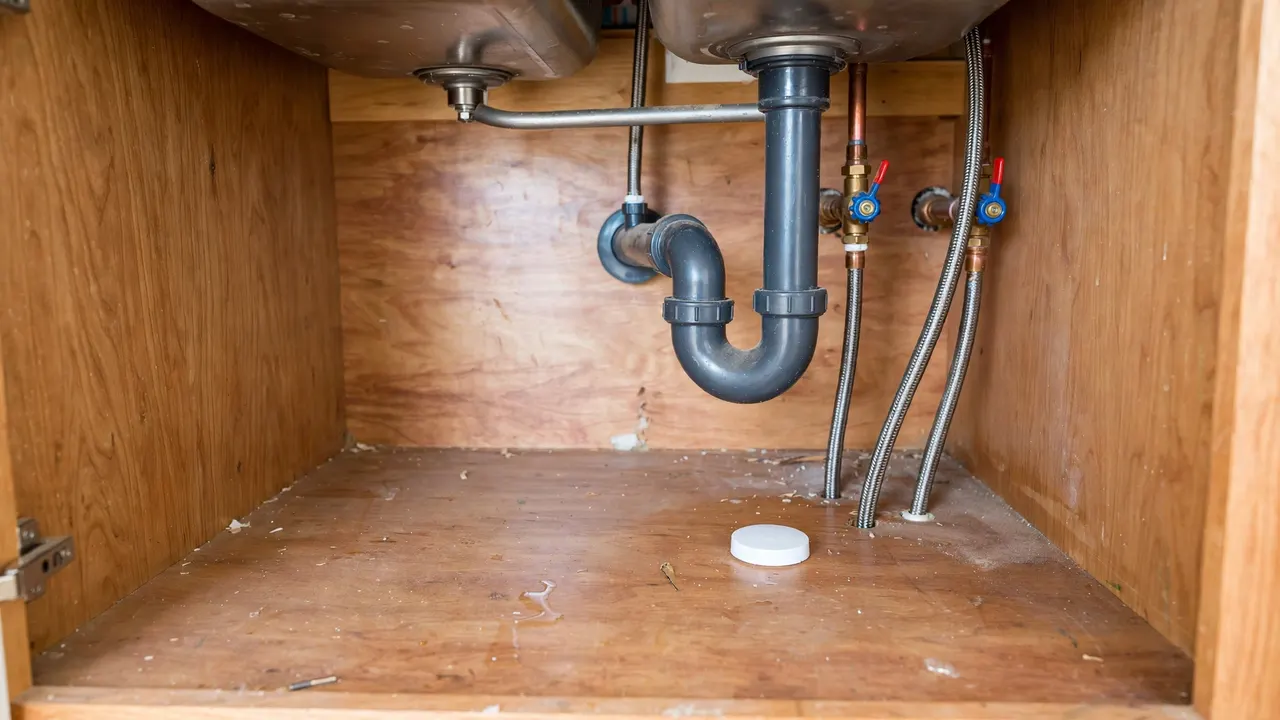
Placement is the whole game. A flood sensor only detects water that actually reaches it, so it belongs on the floor, at the lowest point, where water from that source pools first. Put the contacts flat on a hard, level surface when you can; thick carpet can tilt a sensor, soak up water, and hide a small leak.
Work through your home in this order. These are the spots leak guides and insurers name again and again:
- Water heater: on the floor or in the drain pan beside the tank. Tanks often leak slowly from the base or drain valve first, then fail all at once.
- Washing machine: behind or beside the machine, near the supply hoses and drain. Washer hoses are one of the most common sources of sudden home water damage.
- Under the kitchen sink: at the back of the cabinet floor, under the drain pipes and supply lines, where leaks hide behind cleaning bottles.
- Under bathroom sinks and behind toilets: supply lines, wax rings, and tank fittings leak quietly here.
- Dishwasher and refrigerator: beside each appliance, near the water line. A fridge ice-maker line can drip for months behind the unit.
- Basement low points and near the sump pump: put it at the lowest corner, by a floor drain, or on the edge of the sump pit lid — not inside the pit, where normal water would trigger constant false alarms. If basement water is a recurring problem for you, pair sensors with the bigger fixes in our guide to waterproofing a basement.
- HVAC drain pan and air handler: a clogged condensate line overflows quietly. A sensor in or under the pan catches it before ceiling stains appear below.
- Crawl space: place one near the lowest plumbing runs. Our guide on water in a crawl space covers what to do once you find moisture down there.
Two placement mistakes undo good sensors. First, do not set one where everyday splashes reach it, such as beside a shower door or in a mop path; repeated false alarms train you to ignore the real one. Second, do not wedge it upright against a wall unless the maker designed it that way. Most spot sensors must lie flat, contacts down.
One limit to understand: a floor flood sensor cannot find a leak that is still inside a wall, under a slab, or out in the yard. If your water bill jumps but every floor stays dry, the leak is likely hidden or underground. That is a different job, covered in our guides to choosing an underground water leak detector and how underground water leak detection works step by step.
Types of Flood Sensors: Spot, Probe, Wi-Fi, and Hub-Based
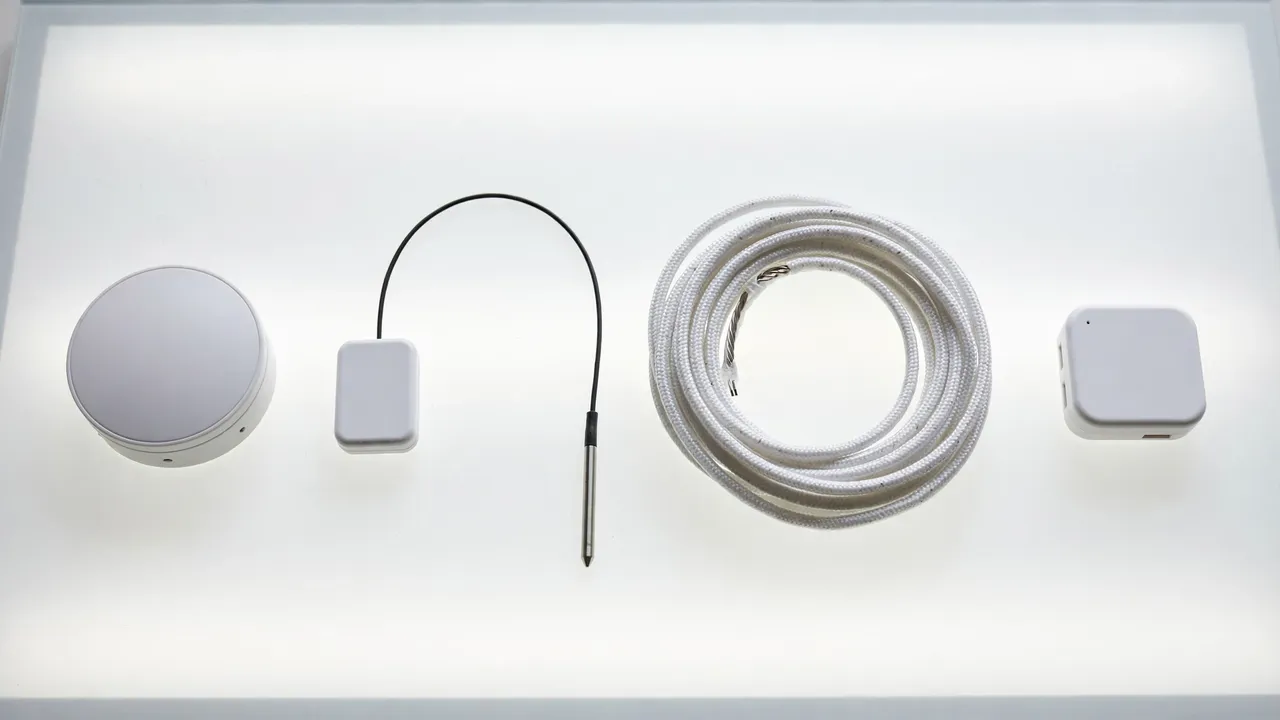
Flood sensors differ in two ways: how they touch the water, and how they reach you. Understanding both helps you buy the right mix instead of five copies of the wrong device.
Spot Sensors vs. Probe Cables and Leak Ropes
A spot sensor is a single small unit that sits in one place and detects water at that exact point. It is cheap, simple, and perfect for a defined target such as a water heater pan or the back of a sink cabinet.
A probe cable sensor splits the job in two. The main unit mounts on a wall or cabinet side, up high and dry, and a thin cable runs down to the floor. This fits tight gaps behind appliances where a puck cannot sit flat. A leak rope goes further: the whole cable detects water, so you can loop it around a water heater or a sump pit edge to guard a zone instead of a single point.
Wi-Fi Direct Sensors
A Wi-Fi flood sensor joins your home router itself and needs no extra hub, so setup is the simplest of any type. The trade-offs are battery life and network limits: Wi-Fi uses more power than low-energy radios, most models only work on 2.4 GHz networks, and if your internet goes down, phone alerts stop even though the local siren may still sound.
Hub-Based Sensors: Z-Wave, Zigbee, Thread, and LoRa
Hub-based sensors talk to a small base station over a low-power radio, and the hub connects to the internet. That is why these sensors often run for years on one battery. Common radios include:
- Z-Wave: used by security systems such as Ring Alarm. The Ring Alarm Flood & Freeze Sensor is a good example: it needs a Ring Alarm or Ring Alarm Pro base station, reaches up to 250 feet to that base station, and alerts when temperature drops below 40°F.
- Zigbee and Thread: common in smart home platforms. Battery life is long, but range through walls and floors is shorter, so hub placement matters.
- LoRa: a long-range radio used by YoLink. YoLink states up to 1/4 mile open-air range from its hub, which is why its sensors suit basements, crawl spaces, and detached garages where Wi-Fi is weak. Some YoLink devices can also trigger a paired device directly, hub feature called Control-D2D, even without internet.
The table below sums up the choice.
Comparison: Flood Sensor Types at a Glance
| Type | Needs a Hub? | Typical Battery Life | Phone Alerts When Away? | Best For |
|---|---|---|---|---|
| Simple alarm-only | No | 1–3 years | No — local siren only | Homes where someone is usually present |
| Wi-Fi direct | No | About 2 years, varies by model | Yes, while internet is up | First sensor, renters, easy setup |
| Z-Wave / Zigbee / Thread hub | Yes | 2–3 years typical; some longer | Yes, through the hub | Homes with an existing smart platform |
| LoRa hub (YoLink type) | Yes | Up to 5 years on some models | Yes, through the hub | Large homes, basements, outbuildings |
| Probe cable / leak rope | Depends on model | Varies | Depends on model | Tight gaps and wide leak zones |
Battery numbers are maker estimates under normal use. Cold basements, weak signals that force repeat sending, and frequent alarms all shorten real life. Treat every estimate as a best case and rely on low-battery alerts.
How Flood Sensor Alerts Work
When water touches the contacts, three things can happen, and a good setup uses all three layers.
First, the local siren sounds on the device itself. Loud models reach about 100–105 dB, roughly lawn-mower volume, which is enough to hear from another floor. This layer works with no internet at all, and it is the only layer an alarm-only sensor has.
Second, the phone alert arrives as an app push notification. Many systems add email, and some add text messages, so the warning reaches you at work or on vacation. Name sensors clearly, as the tip above suggests, because the alert is only useful if it tells you which spot is wet.
Third, automations can fire. A leak event can flash lights, sound a second siren in a bedroom, announce the leak on a smart speaker, or close a motorized water valve. If you are building a wider setup, our overview of DIY smart home automation shows how devices like these fit into one system.
Know the weak points. A phone alert needs a working path: sensor to hub or router, then internet, then your phone. A power cut can break that path, so a hub or router on a small battery backup keeps alerts flowing through a short outage. Test the full chain — wet the contacts with a damp finger and confirm the siren sounds and the alert lands — on install day, not during a real leak.
What to Do When a Flood Sensor Goes Off

An alert only saves money if you act in the right order — safest and fastest first:
- Stop the water. If you know the source, close the nearest fixture valve, such as the angle stop under the sink or behind the toilet. If you do not know the source, or water is spreading, close the home’s main shutoff valve. Every adult in the house should know where that valve is before any sensor ever beeps.
- Cut power if water is near electricity. If water is pooling around outlets, a water heater, or appliances and you can reach the breaker panel without standing in water, switch off the affected circuit. Never step into standing water to reach a panel. If in doubt, stay out and call for help.
- Find the source. Check the appliance or pipe above the sensor first, then follow the water uphill. Water travels along floors, joists, and pipes, so the wet sensor is not always directly under the leak.
- Move what water can ruin, then dry the area. Lift boxes, rugs, and electronics off the floor. Towels, a wet-dry vacuum, and a fan handle small events. Aim for a fully dry space within 24–48 hours, because mold can start growing in that window on wet drywall, wood, and carpet backing.
- Fix the cause, not just the puddle. A sensor that trips twice in one spot is telling you a fitting, hose, or seal is failing. Replace bulging washer hoses and leaking traps or supply lines.
- Document for insurance. Take photos of the source and damage before you clean up, and save receipts. Sudden, accidental damage is the kind standard policies generally respond to; slow, long-ignored leaks are often disputed, which is one more reason the sensor’s alert log helps you.
Call a licensed plumber the same day if the leak is in a pressurized line you cannot isolate, if a water heater tank itself is leaking, or if water has reached ceilings, walls, or electrical fittings. Call an electrician if water has entered outlets, panels, or light fixtures.
Pairing a Flood Sensor With an Automatic Shutoff Valve
A flood sensor tells you. A shutoff valve acts. Pairing the two closes the gap that hurts away-from-home owners most: the alert you cannot act on for six hours.
There are two levels. A single-appliance valve sits on one supply, such as the washing machine hoses, and closes when its paired sensor gets wet. A whole-home motorized valve installs on the main water line and closes the entire supply when any paired sensor reports water. Some main-line systems also watch flow patterns and can close the valve for a burst pipe even where no sensor is present.
The pairing is usually simple in the app: choose the sensor, choose the valve, set the rule “when water is detected, close the valve and notify me.” Systems built on the same radio, including YoLink’s device-to-device pairing and Z-Wave systems, can run this rule locally, so it still works during an internet outage.
Budget honestly. A whole-home valve is a plumber’s job on your main line in most cases, and it costs several times what a set of sensors costs. A sensible path is sensors first, valve later — the right first upgrade for a second home or any house that sits empty for long stretches. For the main-line monitors pros use beyond spot sensors, see our roundup of leak detection equipment.
How Many Flood Sensors Do You Need?
Plan on one sensor per water source, then count your sources. Ranking buying guides land in a similar place: most typical homes do well with five to eight sensors, smaller apartments with three to four, and larger homes with basements often eight to twelve.
If the budget only stretches to a starter set, protect these three first: the water heater, the washing machine, and the kitchen sink. Add bathroom sinks and toilets next, then the dishwasher, fridge line, sump area, and HVAC pan. Multi-packs cost less per sensor than singles, so buying the count your home actually needs is usually cheaper than adding singles later.
Renters can use flood sensors too. Spot and Wi-Fi models need no drilling and no plumbing changes, because they simply sit on the floor. Take them with you when you move.
Flood Sensor Buying Checklist: What Actually Matters
Use this checklist before you compare prices:
- Alert path: local siren plus phone alerts if the house is ever empty. Alarm-only is fine only when someone is almost always home.
- Siren volume: about 100 dB or more if the sensor will live behind a closed basement or laundry door.
- Hub or no hub: Wi-Fi direct is simplest. A hub earns its cost when you want long battery life, long range, or a shutoff-valve rule.
- Battery: look for multi-year estimates, a common replaceable battery, and a low-battery warning in the app.
- Freeze alerts: a sensor that warns near 40°F protects the cold corner a water-only sensor ignores until a pipe bursts.
- Probe or rope option: needed for tight spots behind appliances and for wrapping a zone such as a water heater.
- Water resistance: ratings such as IP66 or IP67 mean the unit survives splashes and brief pooling.
- Subscription: check whether phone, text, or monitoring features sit behind a paid plan.
- Shutoff compatibility: if a valve is in your future, buy sensors and valve from one ecosystem.
Two verified examples show how differently makers answer this list. Prices checked on October 21, 2026, on the manufacturer’s own store:
Comparison: Two Verified Flood Sensor Examples (Checked October 21, 2026)
| Feature | Ring Alarm Flood & Freeze Sensor | YoLink Water Leak Sensor (Hub Systems) |
|---|---|---|
| Price | USD $34.99 on ring.com (shown as out of stock when checked, October 21, 2026) | Sold in single and multi-sensor kits with a required hub on YoLink’s store; kit prices vary by pack size |
| Connection | Z-Wave to a Ring Alarm or Alarm Pro base station (required) | LoRa to a YoLink hub (required); up to 1/4 mile open-air range per YoLink |
| Freeze alert | Yes — below 40°F | Available on temperature-reporting models |
| Battery | 3V lithium, included; up to 3 years per Ring | Up to 5 years on stated models, 2 AAA on the Sensor 4 |
| Siren | Alerts via base station and app | Up to 105 dB on the Water Leak Sensor 4 per YoLink specs |
| Best fit | Homes that already own Ring Alarm | Large homes, weak-Wi-Fi spots, shutoff-valve plans |
Wi-Fi direct kits from makers such as Govee are the third common pattern: no hub, app and email alerts, loud local alarms, and multi-sensor packs. They suit smaller homes well, but verify the current pack price on the maker’s store before you buy, because kit pricing changes often.
Testing, Maintenance, and False Alarms
A flood sensor you never test is a guess, not a safeguard. Test every sensor once a month, when you test smoke alarms: wet two fingers, touch the contacts, and confirm the siren sounds, the app alert arrives, and any shutoff rule actually fires.
Between tests, keep the contacts clean and the sensor flat. Wipe the probes with a dry cloth when you test, since dust and pet hair can coat them over time. Re-check placement after any appliance is moved; a new washer pushed into a corner can crush the sensor behind it.
False alarms have patterns, and each pattern has a fix:
- Mopping and splashes: move the sensor a few inches out of the splash path, not out of the room.
- Condensation: in humid basements, a probe cable lifted slightly or a spot with better airflow usually ends nuisance trips.
- Metal floors and pans: some makers warn that bare metal surfaces can affect detection. Follow your model’s manual for metal pans; many probe models are made exactly for that job.
- Sump pits: never place a spot sensor inside the pit, where normal water cycling guarantees alarms. Guard the pit’s edge or the floor around it instead.
Finally, keep perspective: a flood sensor does not replace flood insurance for rising outdoor water, and it does not fix the worn hose it is guarding. It buys you the one thing water damage never gives you on its own: time.
Related Guides
- Underground Water Leak Detector — for leaks a floor sensor cannot reach.
- Underground Water Leak Detection — how pros locate hidden underground leaks.
- Leak Detection Equipment — monitors used beyond spot sensors.
- Waterproofing a Basement — bigger fixes to pair with basement sensors.
- Water in a Crawl Space — what to do about moisture below the house.
- DIY Smart Home Automation — one connected system around small sensors.
Frequently Asked Questions
What does a flood sensor do?
A flood sensor detects water on the floor using metal contacts. When water touches those contacts, it sounds a built-in alarm, sends an alert to your phone if it is a smart model, and can trigger automations such as closing a main water valve. It warns you early; it does not stop or remove the water by itself.
Where is the best place to put a flood sensor?
The best place is flat on the floor, at the lowest point next to a water source, with the contacts touching the surface. Start beside the water heater, behind the washing machine, and under the kitchen sink. Water pools at the lowest point first, so a sensor placed there detects a leak soonest.
How many flood sensors do I need?
Plan for one sensor per water source. A typical two- to three-bedroom home usually needs five to eight, covering sinks, toilets, the washer, dishwasher, water heater, and basement low points. Small apartments often need three to four. If budget is tight, cover the water heater, washing machine, and kitchen sink first.
Do flood sensors work without Wi-Fi?
Yes, in part. The built-in siren is battery powered and sounds with no network at all. Phone alerts and shutoff automations need a connection path: direct Wi-Fi, or a hub using Z-Wave, Zigbee, Thread, or LoRa that can reach the internet. Some hub systems can still trigger a paired valve locally during an internet outage.
How long do flood sensor batteries last?
Most smart flood sensors run about two to three years on a battery, and long-range hub models can reach up to five years under normal use, according to their makers. Cold rooms, weak signals, and frequent alarms shorten that. Choose models that send a low-battery warning, and test monthly so a dead sensor never goes unnoticed.
Can a flood sensor detect a slow leak?
A floor flood sensor detects a slow leak once water pools and reaches its contacts, which catches most drips under sinks and behind appliances. It cannot sense moisture still hidden inside a wall or pipe. For leaks before water surfaces, you need a main-line flow monitor or a professional leak inspection instead.
Should I get an automatic shutoff valve instead of flood sensors?
They do different jobs, so most homes benefit from both. Sensors tell you where water is; a shutoff valve acts by closing the supply. A valve alone can miss which room is wet, and sensors alone cannot stop water while you are away. Start with sensors, then add a valve if the home sits empty often.
A flood sensor is one of the cheapest forms of water protection you can buy, and one of the few that works while you sleep and travel. Pick your three highest-risk spots today, place a sensor in each, test the alert chain once, and you will hear about the next leak in minutes, while it is still small enough to mop up.
Disclaimer: This guide is general information for homeowners, not professional plumbing or electrical advice. Water near electrical panels, outlets, or appliances can be dangerous; if you are unsure, keep out of standing water and call a licensed plumber or electrician. Product features, battery estimates, and prices change; check the manufacturer’s current listing before you buy.