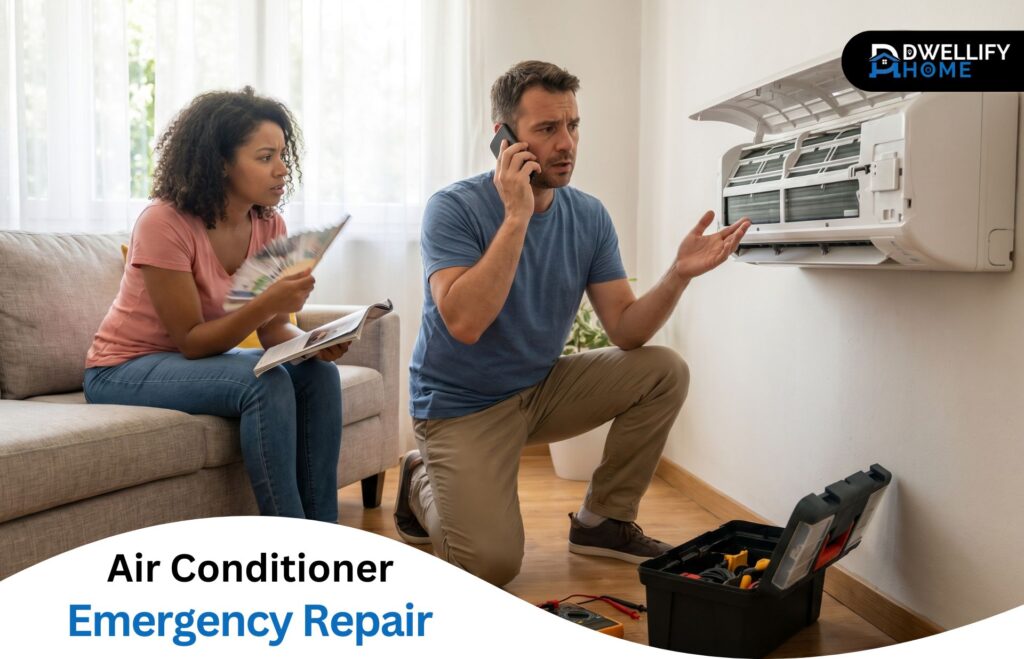
A dead air conditioner on a hot afternoon feels like a crisis, but most of the calls I’ve run over the years turned out to be something a homeowner could have checked in five minutes. A smaller number were the real thing. The trick is knowing which is which before you panic, before you pay an after-hours rate, and before you touch anything that can hurt you. This guide walks you through judging the urgency, trying a few safe checks, recognizing the lines you shouldn’t cross, and understanding what air conditioning emergency repair actually costs.
Snippet-Ready Definition
Air conditioning emergency repair is urgent service for an AC failure that poses a safety hazard, active property damage, or a heat-related health risk. Homeowners use it to restore cooling fast and prevent harm when a problem genuinely can’t wait for a routine appointment.
Our Mission
Dwellify Home helps homeowners and renters make practical, informed decisions about their homes — turning stressful moments like a sudden AC failure into clear, confident next steps grounded in real-world know-how.
Is your AC failure an actual emergency? (60-second triage)
A true AC emergency is one where there’s a safety hazard, active property damage, or a real health risk to someone in the home. Ask three quick questions: Is anything burning, smoking, or leaking? Is the breaker tripping over and over? Is it dangerously hot inside for someone vulnerable? If yes to any, treat it as urgent. If not, you almost certainly have time.
Signs that mean call now, not tomorrow
Some symptoms shouldn’t wait until morning:
- A burning or electrical smell, or any smoke or sparks
- A hissing sound paired with a sweet, ether-like odor, which points to a refrigerant leak
- A breaker that trips again the moment you reset it
- Water actively leaking near a ceiling, light fixture, or electrical panel
- A complete loss of cooling when it’s above roughly 90°F and there’s an infant, an older adult, or someone with a medical condition in the house
Any one of these is a reason to shut the system off and get a professional on the phone.
Signs that can usually wait
Plenty of problems look alarming but aren’t urgent. Slightly weak cooling, air that’s a little warmer than usual, longer run times, one room that won’t keep up, a higher-than-expected power bill, or a single noisy startup that settles down on its own. These are worth a service call, but a scheduled daytime visit will cost you far less than a midnight one. Living with it overnight won’t damage the system.
Who’s affected right now changes everything
The same broken AC can be a minor annoyance or a genuine danger depending on who’s home. The CDC flags older adults, infants and young children, pregnant people, and anyone with a chronic illness or on certain medications as far more vulnerable to heat. If one of them is in the house during a heat wave, move your urgency up a notch regardless of how the equipment looks.
Why ACs suddenly stop — the most common culprits
Most sudden failures fall into two buckets: the system won’t turn on at all, or it runs but blows warm air. Knowing which one you’re dealing with tells you a lot about the cause and whether it’s something simple or something that needs a tech.
When the AC won’t turn on at all
A dead-quiet system usually traces back to power or a safety switch. The usual suspects are a tripped breaker, dead thermostat batteries or a thermostat bumped to the wrong mode, and a tripped float switch that shut the unit down because the condensate drain clogged. Beyond those, a failed capacitor (you’ll often hear a faint hum with no fan movement), a worn contactor, or a blown control board can stop everything. One that surprises people: ants love the warmth of an outdoor contactor and can swarm it enough to keep the system from kicking on.
When the AC runs but won’t cool
If the unit’s running but the air isn’t cold, start with airflow. A clogged filter is the single most common reason a system stops cooling well, followed by a frozen evaporator coil, a dirty outdoor coil, or low refrigerant from a leak. Less often, you’re looking at a failing compressor or, on a heat pump, a stuck reversing valve. The pattern matters here: warm air with the system running is rarely a quick electrical fix and more often points to airflow or refrigerant.
The 3-minute rule
Compressors don’t like being switched off and back on quickly. They need roughly three minutes for internal pressures to equalize, and starting one against high pressure can damage it. Most modern thermostats build in a short delay for exactly this reason. So if you cut the power and turn it right back on and nothing happens, that’s often normal, not a new fault. Wait it out.
First 15 minutes — safe DIY checks before you call anyone
The first thing to check when the AC stops working is almost always power and airflow, in that order. Run through the checks below before you call anyone. They’re safe, they take about fifteen minutes, and on a lot of calls one of them is the whole problem. The moment something feels electrical or smells wrong, stop.
Check the thermostat
Confirm it’s set to “cool,” not “fan” or “off,” and that the target temperature is at least five degrees below the room temperature. Swap the batteries if it’s battery-powered. A surprising number of “dead” systems are just a blank thermostat or one nudged off by a passing elbow.
Reset the breaker — once, and only once
Find your AC’s breaker in the panel. Turn the thermostat off first, then flip the breaker fully off and back on, and wait about 30 minutes before calling for cooling so the compressor can settle. Here’s the rule that matters: reset it one time. If it trips again, leave it off and call a pro. A breaker that keeps tripping is doing its job warning you of a real fault.
Inspect and likely change the air filter
Pull the filter and hold it up to the light. If you can’t see through it, replace it. The EPA and ENERGY STAR suggest checking filters monthly and changing them every one to three months, and the Department of Energy notes a dirty filter can raise a system’s energy use by 10 to 15 percent. A clogged filter chokes airflow and is a frequent cause of both weak cooling and frozen coils.
Look for ice on the coil or refrigerant line
Open the indoor unit’s access or look at the copper line running outside. If you see ice, turn the cooling off, switch the fan to “on,” and let it thaw for one to four hours. Never chip at the ice. The coil walls are thin, and a screwdriver through one means a refrigerant leak and a much bigger bill.
Check the condensate drain and float switch
If the system shut itself off and you notice a musty smell or standing water near the indoor unit, the condensate drain is likely clogged. You can clear the outdoor end with a wet/dry vacuum and flush the line with distilled vinegar. Skip the bleach; it can corrode the line and pan over time.
Clear the outdoor condenser
Walk out to the outside unit and clear away leaves, grass clippings, and anything crowding it. The Department of Energy recommends keeping at least two feet of clearance around the condenser. If the fins are caked with dirt, rinse them gently with a garden hose. Never use a pressure washer, which bends the fins flat and makes things worse.
Find your model’s reset button
Some condensers have a small red reset button behind an access panel, and many window units have a reset built into the LCDI or GFCI plug. Your owner’s manual will tell you whether yours has one and where it lives. When in doubt, the manual is the authority, not a generic video.
When to stop and call a pro immediately (the bright-line list)
There’s a clear line between a homeowner check and a job that needs a licensed technician. Cross it and you risk a serious shock, a fire, a refrigerant exposure, or a federal violation. These are the situations where you stop, step back, and make the call without trying anything else.
Anything you smell
A burning, electrical, gas, or sweet refrigerant odor means hands off. If you smell gas, leave the house, don’t flip any switches, and call your utility from outside. Odors are your nose telling you something is failing in a way you can’t safely diagnose.
Anything sparking or smoking
Kill the power at the breaker if you can reach it safely, then call. Don’t investigate a sparking unit while it’s energized.
Anything refrigerant-related
Refrigerant isn’t a DIY material. Under EPA Section 608 of the Clean Air Act (40 CFR Part 82), only certified technicians may handle it, and violations can carry penalties of up to roughly $45,000 per day. Beyond the law, handling it wrong is dangerous. Leave recharges and leak repairs to a certified tech.
Anything capacitor-related
Capacitors store a serious charge even after the power is off, often in the range of 370 to 440 volts, and they can deliver a fatal shock long after you’ve cut the breaker. A swollen or leaking capacitor is a common, cheap repair for a pro with the right tools. It is not a place for a screwdriver and a hunch.
A breaker that re-trips immediately
If the breaker won’t stay on, leave it off. Repeated tripping can damage equipment and start a fire, and the breaker tripping is the safety system working as designed.
How much does emergency AC repair cost? (2026 ranges)
Plan on $75 to $200 just for a standard diagnostic visit, with an after-hours emergency premium pushing the total higher, and the actual repair on top of that. A common emergency repair often lands somewhere between roughly $220 and $1,800 in 2026, depending entirely on the part. The figures below are typical U.S. ranges and vary by region and equipment age.
The standard service-call fee
A daytime diagnostic visit usually runs $75 to $200, with a median around $150. Many companies credit that fee toward the repair if you go ahead with the work, so it’s worth asking.
The emergency / after-hours premium
Nights, weekends, and holidays cost more. Expect roughly $50 to $200 added to the standard call, or 20 to 40 percent above standard rates, and in some cases up to two or three times the regular hourly rate for true overnight work. This premium is the single biggest reason to confirm whether your problem can wait for morning.
Price ranges for common emergency fixes
| Repair | Typical 2026 cost (U.S.) |
| Capacitor replacement | $150–$450 |
| Contactor replacement | $190–$320 |
| Refrigerant recharge (R-410A) | $100–$320 |
| Refrigerant recharge (R-22, older units) | $180–$600+ |
| Refrigerant leak find and fix | $200–$1,500 |
| Condenser fan motor | $200–$700 |
| Compressor replacement | $800–$2,800+ |
| Evaporator coil replacement | $2,500–$4,500+ |
What “24/7” really means
A “24/7 emergency AC service” line sounds reassuring, but it doesn’t guarantee a truck at your door within the hour. It means someone answers the phone. During a regional heat wave, the queue can be long. Always ask for an arrival window and get the after-hours premium quoted before you agree to anything.
How to stay safe and cool while you wait
While you wait on a tech, your priority is people, not the house. Heat moves faster than most folks expect, and the steps below buy you real time. They lean on guidance from the CDC, the National Weather Service, and Ready.gov.
Cool the people, then the house
Watch for heat stroke: a body temperature of 103°F or higher, hot dry skin, confusion, slurred speech, or fainting. That’s a 911 call. Move anyone vulnerable to a cooling center, library, mall, or the lowest, coolest floor of the home while help is on the way.
Block heat at the windows
Roughly 40 percent of unwanted heat enters through windows. Close blinds, shades, or curtains on the sunny side of the house. It’s the fastest free thing you can do to slow the temperature climb.
Use fans wisely
Head to the lowest floor, since heat rises. One caution worth knowing: the CDC and National Weather Service warn that fans alone don’t prevent heat illness once it’s above about 90°F, and at extreme heat they can actually raise body temperature. Fans help you feel better in moderate heat, not in dangerous heat.
Hydrate and watch for heat illness
Drink water steadily, aiming for around a gallon per person on a hot day, and skip alcohol and caffeine. Check on elderly neighbors and pets, who fade quietly. And don’t run the oven or stovetop; cooking can spike the indoor temperature fast.
What to expect during the emergency service call
Knowing how a visit unfolds helps you tell good service from a rushed upsell. A solid emergency call follows a predictable rhythm, and a tech who skips the diagnosis and jumps straight to a big quote is a flag.
Typical arrival window
In a metro area, expect roughly 60 to 90 minutes. Rural areas run two to four hours, and a regional heat wave stretches everything. Ask for a realistic window when you book.
The on-site flow
A good tech does a quick safety check first, then diagnoses with a multimeter and pressure gauges, then hands you a written, flat-rate quote before doing the work. The repair itself usually takes one to three hours on site. You should always see the price before anyone starts turning wrenches.
Temporary stabilization vs. full repair
Common parts like capacitors, contactors, fan motors, thermostats, and standard refrigerants are usually on the truck, so those get fixed the same visit. Bigger items such as a compressor, a blower assembly, or a specialty control board often mean a follow-up appointment, with the tech stabilizing things as best they can in the meantime.
What to ask before they start
Get the written estimate, a parts-and-labor breakdown, the after-hours premium itemized separately, the diagnostic-fee credit policy, and the warranty on the repair. A reputable company answers all five without flinching.
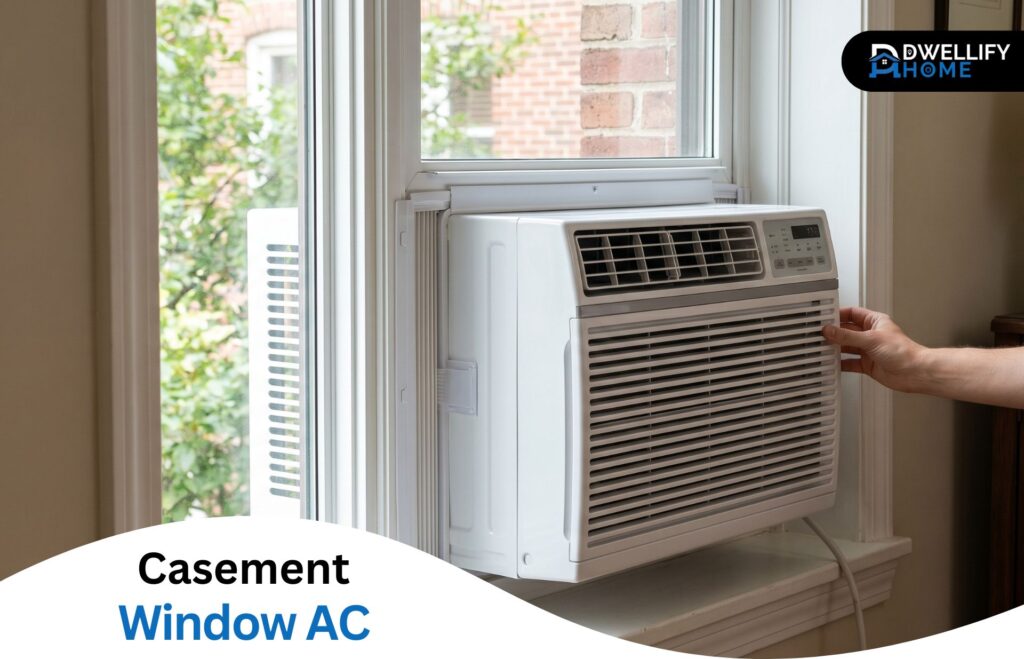
Window air conditioner emergencies — what’s different
With a window unit, the math usually points toward replacement rather than repair. A new window AC runs about $140 to $525, or $300 to $1,100 installed, while the average repair lands around $104 to $354. If a repair quote climbs past roughly half the cost of a new unit, replace it.
What you can safely fix yourself
Window air conditioning emergency repair is more DIY-friendly than central air. You can safely reset the LCDI or GFCI plug, change a dirty filter, clear the small drain hole by adjusting the unit’s tilt, clean the coils, and check a thermostat sensor with a multimeter. These cover the bulk of common failures.
What’s rarely worth fixing
A failed compressor, a sealed-system refrigerant leak (EPA 608 still applies here too), or a dead control board on an older unit usually isn’t worth the cost. At these prices, a new unit is the smarter call.
Installation safety reminder
Mount it on secure brackets, never daisy-chain extension cords, and make sure the GFCI or LCDI plug actually works. A window unit that falls is a genuine injury hazard to anyone below.
Renters — what to do (and not do) when your AC dies
If you rent, your first move is the landlord, not a repair company. Hiring your own tech without permission can leave you eating the bill, and many lease and habitability rules put AC repair squarely on the property owner.
Call the landlord or property manager first
Report it immediately and put the request in writing, by text or email, so there’s a record with a timestamp. That paper trail matters if the repair drags.
What you can safely handle yourself
You can still do the no-tools checks: the thermostat, the filter, and a single breaker reset, as long as your lease allows it. These won’t get you in trouble and might solve the problem on the spot.
When habitability laws apply
Many U.S. jurisdictions require landlords to fix cooling within a set window during a heat emergency, but the rules vary widely by state and city. Look up your local tenant code so you know your timeline and your rights before the situation drags on.
How to prevent the next AC emergency
Most of the emergency calls I’ve run were preventable. A little routine care keeps the small failures from becoming midnight ones, and it’s mostly cheap or free.
A filter cadence that actually works
Check the filter monthly. Change a one-inch pleated filter every one to three months, and a thicker four- or five-inch media filter every six to twelve months. This one habit prevents more breakdowns than anything else on the list.
Two professional tune-ups a year
Have a tech service the system twice a year, in spring for cooling and fall for heating. A maintained system uses less energy and lasts noticeably longer than a neglected one, and a good tech catches a weak capacitor or a dirty coil before it strands you.
Three DIY tasks with the fastest payback
Flush the condensate line with vinegar each quarter, rinse the outdoor coil gently each season, and keep at least two feet of clearance around the condenser. Those three take an afternoon a year and head off the most common warm-weather failures.
One upgrade worth considering
A programmable or smart thermostat reduces strain and runtime. There are also federal ENERGY STAR home-upgrade tax credits worth up to $3,200 a year through 2032 for qualifying improvements, so it’s worth checking what your planned work might recover.
Frequently asked questions about emergency AC repair
What temperature makes an AC failure an emergency?
There’s no single legal number, but once indoor temperatures climb past the mid-80s and stay there, it becomes a health concern, especially above 90°F. The bigger factor is who’s home. With infants, older adults, or anyone with a medical condition present during a heat wave, treat it as urgent.
Should I turn the AC off if it’s blowing warm air?
Yes. If it’s running but only blowing warm air, switch it off at the thermostat. Letting it run can freeze the evaporator coil or strain the compressor, turning a small problem into an expensive one. Check the filter and look for ice, then call if nothing obvious turns up.
Why does my breaker keep tripping when the AC starts?
A breaker that trips at startup usually signals a real electrical fault: a failing capacitor, a shorted compressor, a bad motor, or a wiring problem. Reset it once. If it trips again, leave it off and call a technician. Repeated tripping can damage equipment and is a fire risk, not a nuisance to override.
Can I add refrigerant to my AC myself?
No. Under EPA Section 608, only certified technicians may legally handle refrigerant, and doing it wrong is dangerous. Low refrigerant also means there’s a leak, since a sealed system doesn’t simply use it up. Adding more without fixing the leak wastes money and solves nothing.
How long should I wait to restart the AC after a power outage?
Wait at least three to five minutes before letting the system call for cooling again, so the compressor’s internal pressures can equalize. After a storm or surge, if the unit won’t restart or trips the breaker, leave it off and have it checked rather than forcing repeated restarts.
Is it cheaper to wait until morning to call?
Almost always, yes. After-hours rates add a premium of roughly 20 to 40 percent, and sometimes more. If there’s no safety hazard and no vulnerable person at risk in the heat, waiting for a daytime appointment can save you a meaningful amount on the same repair.
Will a home warranty cover emergency AC repair?
Sometimes, but coverage varies and many warranties exclude after-hours premiums or require you to use their approved contractor. Read your contract before you call, and confirm whether emergency visits qualify. Calling your own tech first can void the claim under some plans.
How long does an emergency AC repair usually take?
Most emergency repairs take one to three hours on site once the technician arrives, including diagnosis. Common parts like capacitors and contactors are typically fixed the same visit. Larger jobs such as a compressor or specialty board often require a follow-up, with the tech stabilizing things in the meantime.
What is considered an emergency AC fix?
An emergency AC fix addresses a safety hazard, active property damage, or a real health risk. That includes burning or electrical smells, smoke or sparks, a refrigerant leak, a breaker that keeps tripping, or a total loss of cooling above 90°F with an infant, older adult, or medically vulnerable person at home.
Is it cheaper to wait until morning to call for AC repair?
Almost always, yes. After-hours rates add a premium of roughly 20 to 40 percent, and sometimes more. If there’s no safety hazard and no vulnerable person at risk in the heat, waiting for a daytime appointment can save a meaningful amount on the exact same repair.
Can I add refrigerant to my AC myself?
No. Under EPA Section 608, only certified technicians may legally handle refrigerant, and doing it wrong is dangerous. Low refrigerant also means there’s a leak, since a sealed system doesn’t use it up. Adding more without fixing the leak wastes money and solves nothing.
Why does my AC breaker keep tripping?
A breaker that trips at startup usually signals a real electrical fault: a failing capacitor, a shorted compressor, a bad motor, or wiring trouble. Reset it once. If it trips again, leave it off and call a technician. Repeated tripping can damage equipment and is a fire risk.
How long does an emergency AC repair take?
Most emergency repairs take one to three hours on site once the technician arrives, including diagnosis. Common parts like capacitors and contactors are usually fixed the same visit. Larger jobs such as a compressor often need a follow-up, with the tech stabilizing things in the meantime.
The bottom line on air conditioning emergency repair
Air conditioning emergency repair comes down to one calm decision made early: is this a hazard, or can it wait? A burning smell, a refrigerant leak, a breaker that won’t stay on, or dangerous heat with someone vulnerable at home means call now. Almost everything else gives you time to check the thermostat, the breaker, and the filter, then book a daytime visit at a fraction of the after-hours cost. Know the bright lines, do the safe checks, and you’ll handle nearly any AC failure without the panic, and usually without the premium.
Disclaimer: This article is for general informational purposes only. Individual situations, equipment, local regulations, and costs vary. When safety is a concern or a repair calls for a licensed professional, contact a qualified HVAC technician.